Overview

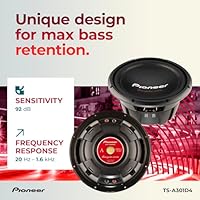
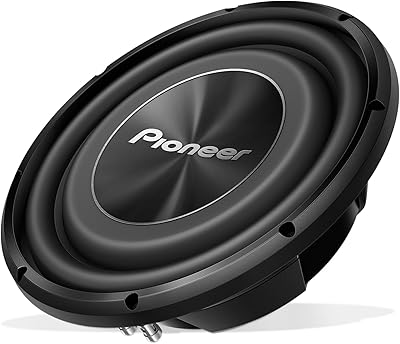
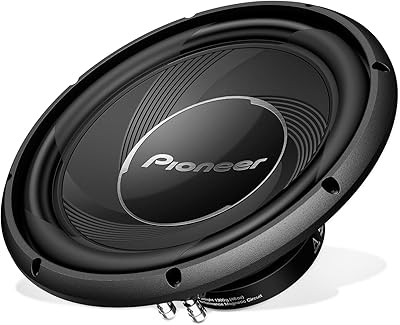
The Pioneer TS-A301D4 12-inch Car Subwoofer carries forward Pioneer's SPL Champion Edition heritage into a more accessible price point, making it one of the more compelling options in the mid-range component sub market. Before anything else, know this: it's a raw driver — you'll need a separate amplifier and an enclosure to get sound out of it. That's not a knock, just a reality check for anyone expecting a plug-and-play solution. Out of the box, you get the sub itself, a gasket, and mounting hardware. Build quality feels solid for the price bracket. The dual 4-ohm voice coil configuration is a genuine asset, giving you real flexibility when matching it to an amp.
Features & Benefits

The Honeycomb IMPP composite cone is worth calling out specifically — it keeps the driver light without sacrificing rigidity, which means cleaner, faster bass rather than the mushy low-end common in cheaper alternatives. The dual 4-ohm voice coil setup lets you wire to either 2 ohms (parallel) or 8 ohms (series) depending on your amplifier, and that flexibility is genuinely useful when building a real system. A double-stacked magnet assembly gives the cone more control at higher excursion levels, while the reinforced aluminum basket contains vibration rather than letting it bleed outward. For bass-heavy genres like hip-hop or EDM, the combination of these design choices produces impactful, well-defined low-frequency output.

Best For

This 12-inch component sub is a natural fit for anyone building their first aftermarket bass system — someone who already has or plans to buy a dedicated amp and wants a reputable driver without spending flagship money. Truck and SUV owners will get the most out of it; the larger cargo areas allow for bigger enclosures, and a ported box in particular lets this driver hit lower and louder than a compact sealed setup ever could. It's also a smart pick for DIY installers who understand how to wire a dual voice coil sub correctly. If you're after studio-accurate, flat bass reproduction, though, this isn't that — it's built for impact.

User Feedback

Owners who've run this Pioneer sub properly — meaning with an amp that can actually deliver adequate power — tend to report strong satisfaction with both bass output and overall build durability after six or more months of use. Brand reliability and perceived value at this price tier come up frequently in positive reviews. On the flip side, buyers who pair it with underpowered or mismatched amplifiers often complain about disappointing performance, which isn't really the sub's fault. A handful of users have also noted that getting the dual voice coil wiring right takes some research if you're new to car audio. Sealed vs ported box choice, multiple reviewers confirm, significantly shapes the sound — ported for volume, sealed for tightness.

Pros

  • Delivers genuine, impactful bass output that competes well above its price class when properly powered.
  • Dual 4-ohm voice coil design gives builders real flexibility to match the driver to a wide range of amplifier loads.
  • Double-stacked magnet assembly keeps bass tighter and more controlled at higher excursion levels than single-magnet alternatives.
  • Aluminum flush-mount basket adds structural rigidity and helps the sub seat cleanly into most standard enclosures.
  • Pioneer brand reliability means long-term durability holds up well under normal daily driving conditions.
  • In a properly tuned ported enclosure, this 12-inch component sub hits lower and louder than its price suggests it should.
  • Honeycomb IMPP composite cone reduces distortion at moderate volumes, keeping bass notes relatively defined.
  • Included gasket and mounting hardware mean you are not chasing parts before the install begins.
  • Truck and SUV owners with ample enclosure space will consistently get the best results from this driver.
  • A strong entry point into the serious car audio world without requiring flagship-level spending on the driver itself.

Cons

  • Requires a separate amplifier and enclosure — the out-of-pocket total is meaningfully higher than the driver price alone.
  • Pairing this Pioneer sub with an underpowered amp is the fastest way to be disappointed with your purchase.
  • The included documentation does not clearly explain dual voice coil wiring options, which trips up inexperienced installers.
  • Bass performance is heavily enclosure-dependent — a generic prefab box will leave significant output on the table.
  • Deep sub-bass extension in sealed enclosures is noticeably limited compared to what a ported build can achieve.
  • Sustained high-volume use near peak power levels has caused voice coil stress issues for a small but notable group of buyers.
  • Finish quality is not perfectly consistent across all units, with occasional cosmetic imperfections reported on arrival.
  • Not a good fit for listeners who prioritize studio-accurate, flat bass reproduction over raw impact.
  • Low-frequency output can feel slightly loose at high volumes, particularly in less-than-ideal enclosure conditions.
  • Buyers coming in with expectations calibrated to Pioneer's higher-end flagship lines may find this driver falls short of those benchmarks.

Ratings

The Pioneer TS-A301D4 12-inch Car Subwoofer scores here reflect AI-driven analysis of verified global buyer reviews, with spam, bot-generated, and incentivized feedback actively filtered out before scoring. Across thousands of real-world installations — from daily commuters to dedicated build enthusiasts — both the genuine strengths and the frustrating limitations of this Champion Series woofer are represented transparently in every category below.

Bass Output
83%
For the price bracket this sub occupies, the low-end punch it delivers consistently impresses buyers who feed it adequate power. Hip-hop and EDM listeners in particular report that kick drums and basslines hit with real authority, especially in ported enclosures with sufficient internal volume.
Output quality drops noticeably when paired with underpowered amplifiers, which is a common misstep among first-time builders. A few users in sealed boxes also report that the very deepest sub-bass frequencies feel slightly rolled off compared to pricier competitors.
Build Quality
79%
21%
The aluminum flush-mount basket and double-stacked magnet assembly feel noticeably more substantial than what you typically find at this price point. Several long-term owners report zero structural issues after a year or more of daily use, including in trucks exposed to heat and vibration.
Some buyers note that the cone surround, while functional, does not inspire the same confidence as the basket itself. A small number of users flagged cosmetic finishing inconsistencies out of the box, though these appear to be isolated rather than systematic.
Value for Money
88%
Getting a Pioneer-branded, dual voice coil 12-inch driver with a legitimate motor assembly at this price is genuinely difficult to beat for buyers entering the aftermarket bass world. Enthusiasts who have owned more expensive subs frequently describe this one as punching well above its cost.
The value calculation changes if you factor in the enclosure and amplifier you still need to buy separately — the total system cost can surprise budget shoppers who did not account for those additions upfront.
Amplifier Compatibility
81%
19%
The dual 4-ohm voice coil setup gives installers real wiring flexibility, letting them choose between a 2-ohm parallel or 8-ohm series load to match what their amplifier handles best. Experienced builders appreciate having that choice rather than being locked into a single impedance.
First-time buyers who are unfamiliar with dual voice coil wiring sometimes wire the sub incorrectly, leading to underwhelming results or amp protection triggers. The included documentation on this topic is minimal, which has frustrated a portion of newer users.
Installation Ease
63%
37%
The 11-1/8-inch cutout diameter and included gasket and mounting hardware cover the basics, and builders with prior sub installation experience typically report a clean, straightforward process. The flush-mount aluminum frame helps seat it squarely into most standard enclosures.
Dual voice coil wiring is a real sticking point for inexperienced installers, and the manual does not walk through impedance configuration in enough depth. Several buyers mention needing to consult online forums or YouTube before feeling confident about the wiring.
Sound Clarity
71%
29%
The Honeycomb IMPP composite cone keeps distortion relatively low at moderate listening volumes, and bass notes in well-recorded tracks retain decent definition. For a sub in this category, clarity at everyday listening levels is a genuine plus.
At higher volumes or when pushed close to its rated power, some listeners detect a looseness in the low-mid bass region. Audiophile-grade accuracy is not this driver's strong suit, and buyers chasing tight, studio-reference bass may find it slightly colored.
Enclosure Sensitivity
58%
42%
In a properly tuned ported enclosure with adequate volume, this Champion Series woofer opens up considerably — extension improves, output increases, and the overall presentation feels livelier than in a sealed setup.
This sub is quite sensitive to enclosure choice, which means a poorly built or undersized box will leave a lot of performance on the table. Buyers who stuffed it into a generic prefab enclosure frequently report underwhelming results that are really an enclosure problem, not a driver problem.
Long-Term Durability
77%
23%
Owners who have run this Pioneer sub for six months to over a year under normal conditions generally report no mechanical failures, no cone separation, and consistent performance over time. The brand's reliability reputation holds up reasonably well here.
A small but notable segment of buyers report surround or voice coil issues when the sub is regularly driven hard near its peak power ceiling. Sustained high-power use appears to be the main durability risk rather than everyday listening.
Magnetic Motor Strength
82%
18%
The double-stacked magnet design gives the driver better control during high-excursion playback compared to single-magnet alternatives at this price. Bass lines in demanding tracks stay tighter and more defined as a result, which experienced listeners pick up on quickly.
While the motor assembly is strong for the price class, it is not in the same league as higher-end designs when it comes to handling truly extreme SPL demands. Buyers expecting competition-level motor force will need to step up significantly in budget.
Heat Management
66%
34%
Under normal daily driving conditions — moderate volumes, well-matched amplification — the voice coil temperature stays manageable and buyers rarely report thermal issues. The aluminum basket also helps dissipate heat away from the motor more effectively than plastic alternatives.
Extended high-volume sessions, particularly in vehicles parked in direct summer heat, have led a handful of buyers to report voice coil stress over time. This is largely avoidable with proper gain setup but worth noting for buyers in hot climates.
Low-Frequency Extension
74%
26%
In a ported enclosure tuned to the right frequency, this 12-inch component sub reaches into the lower bass registers impressively for its price bracket. EDM and cinematic soundtrack listeners specifically call out satisfying rumble on tracks with deep sub-bass content.
In sealed enclosures, extension is noticeably less impressive — the lowest octave of bass feels more constrained. Buyers who need flat, deep extension in a compact sealed box may find the roll-off frustrating without EQ compensation from their head unit or amplifier.
Packaging & Unboxing
69%
31%
The sub arrives well-protected in standard packaging, and the included gasket plus mounting screws mean you are not scrambling for hardware before the install. Most buyers report the driver arriving in perfect physical condition.
Beyond the basic hardware, the box does not include a wiring diagram that clearly explains dual voice coil configuration options. For the price, a more detailed quick-start guide would meaningfully reduce installation confusion for less experienced buyers.
Brand Reputation
86%
Pioneer carries decades of credibility in the car audio world, and buyers frequently cite trust in the brand as a key reason for choosing this sub over lesser-known alternatives at the same price. That brand confidence translates into purchase comfort for first-time buyers.
The Champion Series sits well below Pioneer's flagship lines, and some enthusiasts feel the brand name carries a slight premium that could otherwise go toward pure driver performance. Expectations calibrated against Pioneer's higher-end products can sometimes lead to mild disappointment.
Aesthetic & Visual Finish
72%
28%
The black cone and aluminum basket give this sub a clean, purposeful look that most buyers are happy to show off in a custom build. It does not look out of place next to more expensive drivers in a shared enclosure.
Finish quality is not perfectly consistent across all units — a small number of buyers have noted minor cosmetic imperfections on the cone or surround that do not affect performance but do bother detail-oriented builders.

Suitable for:

The Pioneer TS-A301D4 12-inch Car Subwoofer is an excellent choice for car audio enthusiasts who are ready to build a proper bass system and understand that a component subwoofer is just one piece of a larger setup. It fits especially well with truck and SUV owners who have the cargo space to house a generously sized enclosure — a ported box in particular allows this driver to reach its potential in terms of both depth and output. Buyers who listen to bass-heavy genres like hip-hop, EDM, or hard rock will find the punch and impact genuinely satisfying when the sub is paired with a well-matched amplifier. DIY installers who are comfortable researching dual voice coil wiring will appreciate the flexibility the dual 4-ohm configuration offers, particularly when trying to hit a specific impedance load for their amp. It also makes strong sense for budget-conscious buyers who want a recognizable, trusted brand in their build without spending flagship money on the driver itself.
Not suitable for:

The Pioneer TS-A301D4 12-inch Car Subwoofer is not the right call for anyone expecting to plug it in and hear bass without additional investment — this driver requires a separate amplifier and an enclosure, and those costs add up quickly. Buyers who are after flat, reference-accurate bass reproduction for critical listening will likely find this sub too colored and impact-focused for that purpose. It is also a poor fit for anyone planning to run it off a head unit's built-in power or a weak entry-level amplifier, as underpowering this sub is one of the most consistent sources of disappointment reported by real users. Those working with very compact sealed enclosures may find the low-frequency extension underwhelming without careful EQ work. And if you are completely new to car audio with no interest in researching dual voice coil wiring, the installation learning curve here could genuinely frustrate you before you ever hear a note.
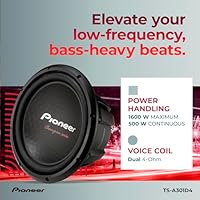
Specifications

  • Driver Size: The subwoofer uses a 12-inch cone driver designed for car and truck installations.
  • Peak Power: The driver is rated to handle up to 1600W peak power when paired with an appropriately matched external amplifier.
  • Voice Coil: A dual 4-ohm voice coil configuration allows wiring to either 2 ohms (parallel) or 8 ohms (series) to suit different amplifier setups.
  • Cone Material: The cone is constructed from a Honeycomb IMPP composite, a rigid yet lightweight material that supports accurate bass reproduction with reduced distortion.
  • Magnet Assembly: A double-stacked magnet motor assembly provides increased magnetic force for tighter low-end control and deeper bass extension.
  • Basket Material: The basket is made from aluminum and uses a flush-mount design that reinforces structural integrity and reduces vibration transfer.
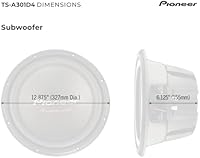
  • Mounting Cutout: The required mounting cutout diameter is 11-1/8 inches, which should be confirmed against your enclosure or vehicle baffle before purchase.
  • Dimensions: The overall product dimensions measure 6.88″ deep by 12.88″ wide by 12.88″ high, making enclosure compatibility planning essential.
  • Weight: The driver weighs 13.1 pounds, which is typical for a double-stacked magnet 12-inch subwoofer in this class.
  • Impedance: When both voice coils are wired in parallel, the resulting load presented to the amplifier is 2 ohms.
  • Connectivity: This is a wired component subwoofer with no wireless connectivity; it requires hardwired integration with an external amplifier.
  • Vehicle Fit: The driver is designed for use in passenger cars and trucks, and is not rated for marine or outdoor environments.
  • Water Resistance: The subwoofer carries no water resistance rating and should be kept dry at all times during installation and use.
  • Warranty: Pioneer includes a 1-year limited warranty covering manufacturing defects from the date of purchase.
  • In the Box: Each package includes one 12-inch component subwoofer, one gasket, and eight mounting screws — no amplifier or enclosure is included.
  • Series: This driver belongs to Pioneer's Champion Series, which traces its lineage back to the brand's SPL Champion Edition lineup.
  • Model Number: The official model designation is TS-A301D4, which identifies it as a 12-inch dual 4-ohm variant within the Champion Series.
  • Mount Type: The driver uses a flush-mount installation style, sitting level with the enclosure baffle surface for a clean finished appearance.
  • Audio Driver Type: This is a dynamic driver subwoofer, relying on a voice coil and magnet assembly to convert electrical signal into mechanical cone movement.
  • Power Source: The subwoofer is powered via corded connection to an external amplifier; it has no built-in amplification or self-powered capability.

Related Reviews
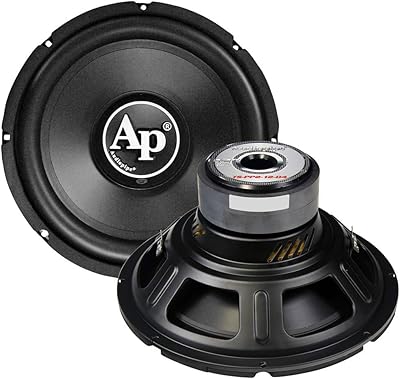
Audiopipe TS-PP2-12-D4 12-inch Car Subwoofer
70%
74%
Value for Money
71%
Bass Output
67%
Build Quality
58%
Power Handling
73%
Voice Coil Quality
More
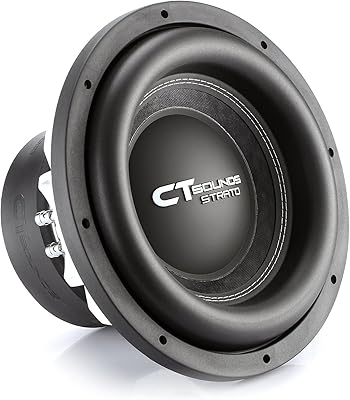
CT Sounds STRATO-12-D4 12 Inch Car Subwoofer
87%
94%
Bass Performance
91%
Power Handling
88%
Build Quality
83%
Ease of Installation
90%
Thermal Management
More
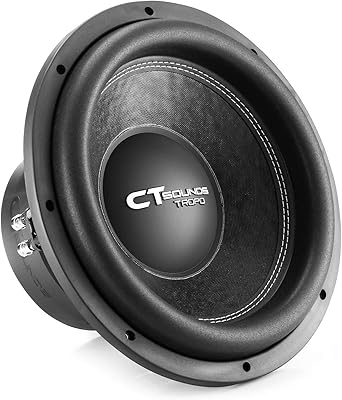
CT Sounds TROPO-12-D4 12 Inch Car Subwoofer Dual 4 Ohm
85%
88%
Bass Performance
91%
Power Handling
85%
Build Quality
80%
Ease of Installation
83%
Cooling System Effectiveness
More
CT Sounds STRATO-12-D2 12 Inch Dual 2 Ohm Car Subwoofer
86%
93%
Bass Performance
89%
Durability
91%
Power Handling
88%
Sound Clarity
84%
Ease of Installation
More
Pioneer TS-WX1210A 12-inch Powered Subwoofer
74%
88%
Ease of Installation
79%
Bass Output Quality
84%
Factory Stereo Compatibility
83%
Value for Money
72%
Tuning & Sound Customization
More
Pioneer TS-A30S4 12″ Component Subwoofer
84%
91%
Bass Performance
88%
Value for Money
82%
Ease of Installation
85%
Durability
87%
Sound Clarity
More
Rockville Punisher 12D1 12-inch Car Subwoofer
83%
92%
Bass Performance
89%
Durability
75%
Installation Ease
88%
Build Quality
83%
Cooling & Heat Management
More
Pyramid WH12 12-Inch Car Subwoofer Speaker
84%
85%
Sound Quality
87%
Bass Performance
91%
Ease of Installation
84%
Build Quality
88%
Power Handling
More
Pioneer TS-A3000LS4 12″ Shallow-Mount Subwoofer
78%
82%
Bass Output vs. Profile Tradeoff
88%
Installation & Fit
74%
Power Handling (Real-World RMS)
83%
Amplifier Compatibility & Wiring
79%
Sound Quality & Clarity
More
Planet Audio AC12D 12-inch Car Subwoofer
85%
88%
Bass Performance
84%
Sound Clarity
90%
Power Output
81%
Ease of Installation
85%
Build Quality
More

FAQ

Yes, absolutely — this is a passive component driver with no built-in amplification. You will need a dedicated external amplifier to power it. Running it off your head unit's internal power is not a viable option and will result in very little usable output.

You have two options with this driver. Wiring the two voice coils in parallel gives you a 2-ohm load, which draws more power from your amp and is the more common choice for maximizing output. Wiring them in series gives you an 8-ohm load, which is lower demand on the amp but also lower output. Choose based on what impedance your amplifier is rated to handle most efficiently.

It depends on what kind of bass you want. A ported enclosure — typically in the range of 1.5 to 2.5 cubic feet tuned to around 35 Hz — will give you more volume and deeper extension, which is ideal for hip-hop or EDM. A sealed enclosure in the 0.75 to 1.25 cubic foot range produces tighter, more controlled bass that suits rock or mixed-genre listening. Either way, building or buying the right box for this driver makes a significant difference in how it performs.

It can be, provided you go in understanding the full picture. You will need to budget for an amplifier and an enclosure on top of the driver cost, so factor that into your total spend before committing. If you are comfortable doing some research on amplifier matching and dual voice coil wiring, this is a rewarding entry point from a trusted brand.

Possibly, but you need to verify the mounting cutout carefully — this driver requires an 11-1/8-inch hole. Many prefab boxes are sized for a 12-inch driver generally, but the actual cutout dimensions vary by manufacturer, so confirm before you buy the box. Also keep in mind that generic prefab enclosures often compromise on internal volume and port tuning, which limits how well this driver can perform.

The Champion Series woofer has a peak rating of 1600W, but you should not chase that number — peak power figures are not a practical target. Look for an amplifier that delivers a clean 400W to 600W RMS at the impedance you plan to wire to, and set your gain properly using a multimeter rather than by ear. That range will push this sub hard enough to get the best out of it without risking voice coil damage.

Absolutely, and a well-built DIY ported enclosure is actually one of the best ways to get the most out of this 12-inch component sub. There are free enclosure design calculators online — look up the Thiele-Small parameters for the TS-A301D4 on Pioneer's website or in the manual, and use those to calculate the ideal box volume and port tuning frequency for your listening preferences.

Based on feedback from owners who have lived with this driver for six months to over a year, it holds up solidly under normal daily listening conditions. The aluminum basket and build quality are among its more appreciated long-term strengths. The main durability risk appears to be sustained use at very high power levels, particularly in hot climates — keeping your gain structure clean and your amp properly ventilated goes a long way toward protecting the voice coil.

It can work well across a variety of bass-heavy genres, but its character leans toward impact and punch rather than flat, reference-accurate reproduction. Rock, reggae, and electronic music of most kinds respond well to what this driver does naturally. If your primary listening is jazz, classical, or acoustic music where deep bass is incidental rather than central, this might be more sub than you need.

The included gasket and eight mounting screws cover the basics of mounting the driver into an enclosure, yes. What you will still need to source separately includes speaker wire, push terminals or a wiring harness compatible with your amplifier, and any tools for cutting or building the enclosure itself. The driver comes ready to drop in, but plan for a full parts list before your install day.

Where to Buy