Overview

The Audiopipe TS-PP2-12-D4 12-inch Car Subwoofer is a budget-tier option that has been quietly holding its place in the affordable car audio market since 2014. Audiopipe has long catered to cost-conscious builders, and this dual voice coil woofer reflects that approach — solid fundamentals at an accessible price. The dual 4-ohm configuration gives you some flexibility when wiring to a mono amplifier, which is a practical touch at this price point. One thing to clarify upfront: the advertised 1000W figure is peak, not continuous. The 300W RMS rating is the number that actually matters for day-to-day use. It's sold as a single unit, so factor in an enclosure and amplifier before finalizing your budget.
Features & Benefits

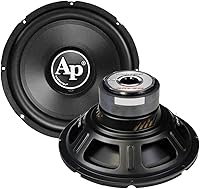
The construction here is fairly solid for the price. A 2.5-inch Kapton voice coil with four layers is built to manage heat better than cheaper alternatives, which matters when you're running the sub at sustained volume. The polypropylene cone and rubber surround combo is a reliable choice — PP cones stay rigid under stress, and rubber surrounds tend to hold up longer than foam over time. A 68-ounce magnet provides meaningful motor force for a woofer at this tier, contributing to tighter bass response rather than the loose, bloomy low end you sometimes get from lighter builds. The flush-mount design sits at 5-5/8 inches deep, so check your enclosure specs carefully before ordering — mounting depth compatibility is a common oversight that trips up first-time installers.

Best For

This budget 12-inch subwoofer makes the most sense for someone just getting into car audio who wants a real upgrade over factory speakers without committing to a high-end build. If you're putting together a sealed or ported enclosure on a limited budget and pairing it with a modest mono amp, this Audiopipe sub can deliver satisfying results. It's also a reasonable pick for a daily driver where you want more bass presence for everyday listening — not competition-level output, just something noticeably better than stock. DIY installers comfortable with dual voice coil wiring will find the 4+4 ohm setup fairly straightforward. Just don't go in expecting audiophile-grade performance; that's not what this woofer is designed or priced for.

User Feedback

With 67 ratings and a 3.7-star average, the reception for this dual voice coil woofer is genuinely mixed. Buyers who set realistic expectations tend to walk away reasonably satisfied — many note that the bass output per dollar is decent, especially for casual listening. The criticism is consistent, though: durability concerns under heavy, sustained use come up repeatedly, and some owners feel the real-world power handling falls short of what the packaging implies. Enclosure choice plays a big role too; reviewers who took time to properly tune their box report noticeably better outcomes. With a sample size this small, sweeping conclusions are hard to justify, but managing expectations upfront appears to be the key factor separating satisfied buyers from disappointed ones.

Pros

  • Dual 4-ohm voice coil gives real wiring flexibility for matching different amplifier configurations.
  • Rubber surround and polypropylene cone are smart material choices that hold up better than cheaper alternatives.
  • A 68-ounce magnet delivers tighter, more controlled bass than you typically find at this price tier.
  • Low-frequency extension down to 29Hz covers the full range most popular music genres actually use.
  • Flush-mount design fits a wide range of standard off-the-shelf enclosures without modification.
  • Heavy-duty steel frame resists flex and keeps distortion in check at moderate output levels.
  • A genuine step up from factory audio — the difference is immediately noticeable on bass-heavy tracks.
  • Reasonable value for a first build where the goal is improvement over stock, not audiophile performance.

Cons

  • Long-term durability under sustained high-volume use is a recurring concern in real owner reviews.
  • The 1000W peak figure is misleading — actual usable continuous power is 300W RMS.
  • Sensitivity at 86dB is on the low side, meaning you need more amplifier headroom to reach satisfying volume.
  • Performance varies dramatically depending on enclosure choice — a mismatched box makes this sub sound noticeably worse.
  • Included documentation is minimal, leaving first-time installers without meaningful setup guidance.
  • The review sample of 67 ratings is small enough that the 3.7-star average may shift meaningfully with more data.
  • Buyers who expect mid-range sound quality based on the peak wattage spec will likely come away disappointed.
  • Quality control inconsistency has been noted by some owners, suggesting unit-to-unit variation is a real factor.

Ratings

The scores below were generated by AI after analyzing verified buyer reviews worldwide for the Audiopipe TS-PP2-12-D4 12-inch Car Subwoofer, with spam, bot-driven, and incentivized feedback actively filtered out. This analysis reflects the honest middle ground of real ownership experiences — the genuine wins and the recurring frustrations. Both strengths and pain points are represented transparently so you can make a genuinely informed call before buying.

Value for Money
74%
26%
For buyers working within a tight budget, this Audiopipe sub delivers a noticeable bass upgrade over factory speakers without demanding a large upfront investment. Many owners feel the overall package — driver size, magnet weight, and dual voice coil flexibility — punches reasonably well for what it costs.
Some buyers who stretched their budget expecting near-mid-range performance walked away disappointed. The gap between what the marketing implies and what you actually get in daily use is wide enough that value perception varies significantly depending on your expectations going in.
Bass Output
71%
29%
For casual listening during daily commutes, this budget 12-inch subwoofer adds genuine low-end weight that makes a real difference after years of factory audio. Users playing hip-hop, EDM, or bass-heavy playlists at moderate volumes report a satisfying improvement in overall sound fullness.
Push it harder or into more demanding material and the output starts to feel limited. Enthusiasts used to higher-tier drivers will find the bass response lacks the punch and depth they expect, particularly in larger vehicle cabins where a stronger motor would make a meaningful difference.
Build Quality
67%
33%
The heavy-duty steel frame and rubber surround combination gives this dual voice coil woofer a reasonably solid physical presence for its price tier. The polypropylene cone feels sturdy out of the box, and the overall assembly does not feel flimsy during initial installation.
Long-term durability is where confidence wavers. A recurring thread in negative reviews involves components showing wear or degradation after months of regular use, particularly under sustained higher-volume conditions. It holds up fine for light use but is not built for punishment.
Power Handling
58%
42%
The 300W RMS rating is workable for a modest mono amplifier setup, and owners running it at sensible power levels report consistent output without immediate issues. Paired correctly, it handles everyday listening without complaint.
The 1000W peak figure on the packaging creates misleading expectations that real-world use quickly corrects. Several buyers reported thermal stress and performance degradation when pushing the sub hard for extended sessions, suggesting the actual thermal ceiling sits closer to the lower end of the rated range.
Voice Coil Quality
73%
27%
The 4-layer Kapton voice coil design is a legitimate engineering choice at this price point, offering better heat resistance than single-layer alternatives found in cheaper competitors. Owners running moderate power loads report stable performance without audible coil stress over normal listening periods.
Under sustained high-output use, the voice coil's heat management reaches its practical limits. A few buyers reported coil-related failure earlier than expected, which suggests this component is appropriately spec'd for casual use but is not suited for extended high-duty-cycle sessions.
Enclosure Compatibility
63%
37%
The 5-5/8-inch mounting depth and standard 12-inch diameter make this Audiopipe sub compatible with a wide range of off-the-shelf sealed and ported enclosures, which is convenient for builders who want a plug-and-play box solution rather than a custom build.
Multiple reviewers noted that performance varied dramatically depending on enclosure choice and tuning, and those who skipped this step or used an ill-matched box were left underwhelmed. The sub is sensitive enough to enclosure design that a poor match can make it sound noticeably worse than its specs suggest.
Installation Experience
78%
22%
The flush-mount design and clearly labeled dual voice coil terminals make physical installation relatively straightforward for anyone with basic car audio experience. DIYers comfortable with wiring a DVC sub to a mono amp report a clean, uncomplicated install process.
First-time installers unfamiliar with dual voice coil wiring occasionally ran into confusion, and the included documentation is minimal. Without some prior knowledge or research, getting the impedance wiring right is a stumbling block that shows up in a handful of reviews.
Frequency Response
69%
31%
A low-end extension down to 29Hz is respectable for this tier, and in practice the sub handles the bass frequencies most music actually uses without obvious roll-off at moderate volumes. It covers the range needed for everyday listening across most popular genres.
The upper boundary of 1500Hz is higher than ideal for a dedicated subwoofer, and crossover setup matters more as a result. Without a properly configured low-pass filter, some buyers noticed a lack of cohesion between the sub and their mid-range speakers.
Magnet & Motor Strength
72%
28%
A 68-ounce magnet is a respectable spec for a budget-tier driver and contributes to reasonably controlled bass rather than the loose, poorly-defined low end that plagues lighter builds in this price range. Owners notice tighter transient response during bass-heavy tracks compared to entry-level competitors.
While the magnet is adequate for the sub's RMS rating, it is not strong enough to keep up when buyers attempt to run the driver at peak loads. Motor-related compression at higher output levels is a limitation that becomes apparent when the sub is asked to work harder than its design intended.
Sensitivity
66%
34%
An 86dB sensitivity rating means this dual voice coil woofer does not demand a massively powerful amplifier to produce audible output, which keeps the overall system cost manageable for budget-focused builds and makes it a reasonable pairing for entry-level mono amps.
86dB is on the lower end for car subwoofers, meaning you need more amplifier power to achieve the same perceived loudness compared to higher-sensitivity competitors. Buyers pairing this sub with a modest amp may find the volume ceiling lower than they hoped for.
Cone & Surround Durability
70%
30%
Polypropylene cones are a practical choice that resists moisture and maintains stiffness over time better than paper alternatives. The rubber surround is a definite plus for longevity, historically outlasting foam surrounds used in cheaper drivers exposed to temperature swings inside a parked car.
Despite the solid material choices, a handful of reviews mention surround integrity issues after extended use, which is puzzling given rubber's reputation for durability. This may reflect quality control inconsistency rather than a universal flaw, but it is worth keeping in mind for long-term ownership.
Wiring Flexibility
76%
24%
The dual 4-ohm voice coil configuration gives installers genuine options: wire the coils in series for an 8-ohm load or in parallel for a 2-ohm load, depending on what the amplifier handles best. That kind of adaptability is genuinely useful when working around existing equipment.
This flexibility is only an advantage if the buyer already understands DVC wiring basics. For complete newcomers, the dual coil setup adds a layer of complexity that has led to incorrect wiring configurations and subsequent performance problems, as noted in a few frustrated reviews.
Packaging & Out-of-Box Condition
72%
28%
Most buyers report the sub arriving well-protected with no visible transit damage. The standard packaging keeps the driver secure without being wasteful, and the unit typically arrives ready to inspect and install without surprises.
The included accessories are minimal — no hardware, no detailed spec sheet, and no meaningful setup guidance. For a standalone driver purchase this is not unusual, but first-time buyers who expected more comprehensive contents were occasionally caught off-guard.

Suitable for:

The Audiopipe TS-PP2-12-D4 12-inch Car Subwoofer is a strong fit for first-time car audio builders who want a genuine bass upgrade without committing serious money to the hobby. If your current setup is factory stock and you simply want more low-end presence on your daily commute, this sub delivers a noticeable and satisfying improvement at a realistic price point. DIY installers who already understand dual voice coil wiring will appreciate the 4+4 ohm configuration, which gives you flexibility to match a mono amplifier you may already own. It also works well for someone building a modest sealed or ported enclosure on a limited budget, as the driver's physical specs are compatible with a wide range of off-the-shelf box options. Casual listeners who enjoy bass-heavy music genres at everyday volume levels — rather than pushing for maximum SPL — will likely find this Audiopipe sub meets their practical needs without any major surprises.
Not suitable for:

Buyers who plan to run this driver hard, for long sessions, or at power levels close to its rated ceiling should look elsewhere before committing. The Audiopipe TS-PP2-12-D4 12-inch Car Subwoofer carries recurring durability concerns in its review history, and owners who treat it like a high-endurance driver tend to be the ones writing the one-star reviews. Car audio enthusiasts who have owned mid-range or higher-tier subwoofers before will almost certainly find the output, transient response, and overall refinement underwhelming by comparison. The 1000W figure on the packaging is a peak number under ideal conditions, and anyone sizing an amplifier based on that headline will end up with a mismatched system. If you are building a serious system intended for competition use, extended high-volume listening, or a vehicle with a large cabin that demands real output to fill, this budget 12-inch subwoofer is simply not designed for that workload.
Specifications

  • Driver Size: This subwoofer uses a 12-inch dynamic driver, delivering broad low-frequency coverage suited to most car audio enclosure types.
  • Peak Power: The driver is rated at 1000W peak (P.M.P.O), a maximum burst figure measured under ideal laboratory conditions rather than sustained real-world use.
  • RMS Power: Continuous RMS power handling is 300W, which is the practical figure to use when selecting and setting up a matching amplifier.
  • Impedance: The dual voice coil configuration presents two independent 4-ohm coils, which can be wired in series for 8 ohms or in parallel for 2 ohms.
  • Frequency Response: The driver covers a frequency range of 29Hz to 1500Hz, providing deep bass extension with enough headroom for a relaxed crossover transition.
  • Sensitivity: Rated sensitivity is 86dB, meaning a moderately powered amplifier is required to achieve satisfying output levels in a typical vehicle cabin.
  • Voice Coil: The voice coil measures 2.5 inches in diameter and uses a 4-layer Kapton former, chosen for its resistance to heat deformation during extended use.
  • Magnet Weight: A single 68-ounce magnet provides the motor force needed for controlled bass reproduction and stable excursion at rated power levels.
  • Mounting Depth: The flush-mount design requires a minimum mounting depth of 5-5/8 inches (142mm), which must be confirmed against your enclosure before installation.
  • Frame Material: The basket is constructed from heavy-duty steel, providing structural rigidity that minimizes cone flex and resonance-related distortion under load.
  • Cone Material: The cone is formed from polypropylene, a lightweight and moisture-resistant material that maintains consistent stiffness across varying temperature conditions.
  • Surround Material: The cone is suspended by a rubber surround, which is more durable than foam alternatives and better suited to the temperature swings inside a parked vehicle.
  • Product Dimensions: Overall dimensions measure 12.2 inches in diameter by 5.65 inches in height, consistent with standard 12-inch subwoofer form factor requirements.
  • Product Weight: The complete driver assembly weighs 9.78 pounds, reflecting the substantial steel frame and 68-ounce magnet structure.
  • Mounting Type: The driver uses a standard flush-mount installation method, compatible with the vast majority of commercially available sealed and ported subwoofer enclosures.
  • Connectivity: Connection is wired via standard push-terminal or spring-clip binding posts on the dual voice coil, with no wireless or amplified components included.
  • Unit Count: The product is sold individually as a single driver; an enclosure, amplifier, and wiring kit are all required separately to complete the installation.
  • Warranty: Audiopipe provides a limited warranty on this driver; buyers should confirm current warranty terms and the claims process directly with the seller at time of purchase.

Related Reviews
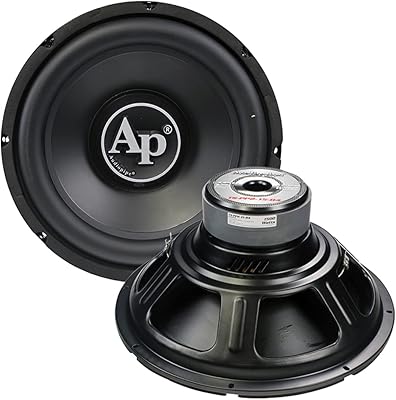
Audiopipe TS-PP2-15-D4 15-inch Car Subwoofer
84%
94%
Bass Output
92%
Power Handling
90%
Durability
87%
Value for Money
89%
Sound Clarity
More
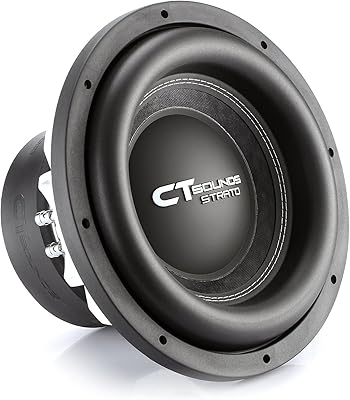
CT Sounds STRATO-12-D4 12 Inch Car Subwoofer
87%
94%
Bass Performance
91%
Power Handling
88%
Build Quality
83%
Ease of Installation
90%
Thermal Management
More
CT Sounds TROPO-12-D4 12 Inch Car Subwoofer Dual 4 Ohm
85%
88%
Bass Performance
91%
Power Handling
85%
Build Quality
80%
Ease of Installation
83%
Cooling System Effectiveness
More
CT Sounds STRATO-12-D2 12 Inch Dual 2 Ohm Car Subwoofer
86%
93%
Bass Performance
89%
Durability
91%
Power Handling
88%
Sound Clarity
84%
Ease of Installation
More
Pioneer TS-A301D4 12-inch Car Subwoofer
75%
83%
Bass Output
79%
Build Quality
88%
Value for Money
81%
Amplifier Compatibility
63%
Installation Ease
More
Planet Audio AC12D 12-inch Car Subwoofer
85%
88%
Bass Performance
84%
Sound Clarity
90%
Power Output
81%
Ease of Installation
85%
Build Quality
More
Pyramid WH12 12-Inch Car Subwoofer Speaker
84%
85%
Sound Quality
87%
Bass Performance
91%
Ease of Installation
84%
Build Quality
88%
Power Handling
More
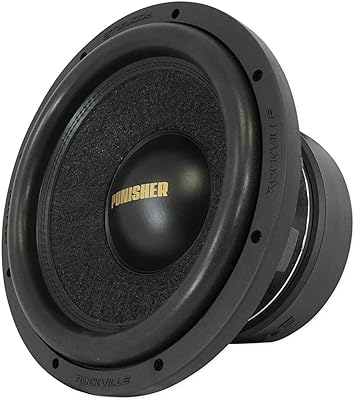
Rockville Punisher 12D1 12-inch Car Subwoofer
83%
92%
Bass Performance
89%
Durability
75%
Installation Ease
88%
Build Quality
83%
Cooling & Heat Management
More
BOSS Audio B12ES 12-Inch Powered Car Subwoofer
72%
88%
Ease of Installation
79%
Bass Output & Impact
83%
Value for Money
63%
Build Quality & Materials
81%
Remote Bass Control Usability
More
Rockville RVB12.1A 500W Active 12-inch Car Subwoofer
85%
92%
Bass Performance
90%
Power Output
85%
Ease of Installation
88%
Durability
87%
Sound Customization
More

FAQ

You want a mono amplifier that can deliver between 200W and 300W RMS at whatever impedance you choose to wire the dual voice coils. Wire both 4-ohm coils in parallel and you get a 2-ohm load; wire them in series and the amp sees 8 ohms. Most budget mono amps are happiest at 2 ohms, so parallel wiring is the more common choice — just confirm your amp is stable at 2 ohms before committing.

No, this Audiopipe sub ships as a bare driver only. You will need to purchase or build a separate enclosure, and you will also need an amplifier and a wiring kit. Factor all three into your budget before buying.

Both sealed and ported enclosures work with this driver, but the right choice depends on your listening preferences. Sealed boxes deliver tighter, more accurate bass and are easier to tune correctly for beginners. Ported enclosures can produce louder, deeper output but require more careful volume and tuning calculations to avoid sounding boomy. If you are new to this, a sealed box is the safer starting point.

That figure is a peak measurement under ideal burst conditions, not a continuous rating. The number that matters for sizing an amplifier is the 300W RMS rating. Running a 1000W amplifier into this driver continuously would almost certainly damage it — stick to the RMS spec when configuring your gain settings.

The driver requires at least 5-5/8 inches (142mm) of mounting depth behind the baffle. Measure your enclosure carefully before ordering, because a box that is too shallow will physically prevent the driver from seating correctly, and in some cases can restrict cone travel and damage the driver.

Technically the driver will function outside a car, but it is engineered for 12-volt automotive electrical systems and requires a separate amplifier regardless of the installation environment. Using it in a home setup would require a car audio amplifier with its own power supply, so it is more hassle than it is worth when purpose-built home subwoofers exist at similar price points.

The rubber surround and polypropylene cone are durable material choices that should hold up well under moderate use. The main longevity concern raised by owners is thermal stress on the voice coil when the driver is pushed hard for extended periods. If you keep the amplifier gain set responsibly and avoid clipping, most owners report reasonable lifespan for the price paid.

Yes, and smaller vehicles can actually work in its favor since the cabin volume is easier for a budget driver to pressurize. Just make sure your chosen enclosure fits your available trunk or cargo space, and keep in mind that the mounting depth means the box itself will be at least 6 to 7 inches deep.

This dual voice coil woofer performs most comfortably with bass-heavy genres like hip-hop, R&B, EDM, and reggae at moderate listening volumes. It covers down to 29Hz, which handles most of what those genres actually use. It is less well-suited to high-fidelity applications like acoustic or classical music where bass accuracy and low distortion matter more than output.

If you are comfortable with basic car audio concepts — running power and ground wires, setting a crossover, and following a wiring diagram — then yes, this is a manageable DIY install. The dual voice coil wiring adds one extra step compared to a single voice coil driver, so spend ten minutes reading about series versus parallel DVC wiring before you start. If you have never done a car audio install before, watching a few tutorial videos first will make the process much less stressful.

Where to Buy