Overview

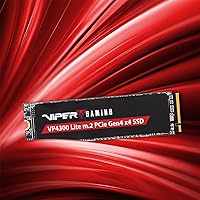
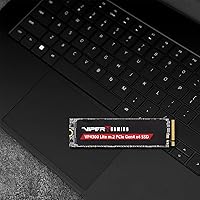
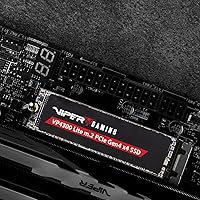
The Patriot Viper VP4300 Lite 500GB M.2 SSD enters the Gen4 NVMe market at a price point that makes fast storage genuinely accessible to budget-minded PS5 owners and PC builders alike. The Lite designation matters here — this is a trimmed-down sibling of the full VP4300, meaning Patriot made deliberate cost-cutting choices to reach that lower price tag. The M.2 2280 form factor drops in without hassle on any compatible platform. At 500GB, though, be realistic: that fills up fast, especially on a PS5 where modern titles routinely consume 50GB or more. Gen4 speeds at this price are real, but so are the trade-offs worth understanding before buying.
Features & Benefits

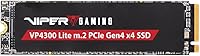
On paper, the VP4300 Lite hits impressive numbers — sequential reads up to 7,000 MB/s and writes up to 4,000 MB/s over a PCIe Gen4 x4 connection. In practical terms, that translates to near-instant load times on PS5 and snappy file transfers on a Gen4-capable PC. NVMe 2.0 compliance adds a degree of future-proofing that cheaper Gen3 drives simply cannot offer. PS5 installation is straightforward — Sony's console accepts the drive without a heatsink, though adding a thin one is worth considering for sustained workloads given the drive's compact, unshielded design. The 5-year warranty is a genuine differentiator at this price tier; many competitors offer only 3 years. One caveat: sustained write performance can taper with certain NAND configurations common in value-tier Gen4 drives.

Best For

This Gen4 NVMe drive makes the most sense for PS5 owners who want to expand their storage without paying for top-shelf performance they likely won't notice in everyday gaming. It also works well as a secondary desktop drive — somewhere to stash games or large files where burst read speed matters more than sustained write endurance. Casual gamers moving up from a SATA SSD will notice a genuine difference. For anyone running a small-form-factor build, the drive's minimal footprint and light weight are practical advantages. Professional creators doing heavy video editing or large sequential file transfers, however, should look higher up the product stack for more consistent performance under extended load.

User Feedback

With a 4.7 out of 5 rating across more than 575 reviews, the Viper VP4300 Lite lands well with most buyers — though that number deserves some context. The majority of positive responses point to painless installation, a noticeable leap in responsiveness compared to older SATA drives, and a strong sense of value for money. PS5 users in particular tend to report clean, trouble-free installs and faster game loading compared to the console's built-in drive. On the critical side, a handful of users mention thermal throttling under sustained workloads and occasional questions about long-term durability. Nothing alarming in aggregate, but worth keeping in mind if you plan to use this Viper SSD for write-intensive tasks regularly. A solid track record for the price — just not without asterisks.

Pros

  • Gen4 PCIe x4 speeds deliver noticeably faster game load times compared to any SATA or Gen3 NVMe drive.
  • Officially PS5-compatible, with a straightforward installation that most users complete without any technical difficulty.
  • The 5-year warranty stands out clearly against the 3-year coverage common among rival budget-tier drives.
  • NVMe 2.0 compliance provides a degree of forward compatibility that most entry-level Gen4 drives skip entirely.
  • The M.2 2280 form factor fits desktops, Gen4 laptops, and the PS5 expansion bay without adapters.
  • Strong user satisfaction across 575-plus ratings suggests consistent real-world reliability for typical gaming use cases.
  • Accessible Gen4 pricing lowers the barrier to entry for first-time NVMe buyers stepping up from SATA.
  • No heatsink is required for PS5 installation, keeping the setup simple and the overall cost down.

Cons

  • 500GB fills up fast on PS5, where just a handful of modern AAA titles can exhaust the capacity.
  • The Lite designation likely reflects cost-cutting NAND or controller choices that reduce sustained write endurance versus the full VP4300.
  • No heatsink is included, so buyers concerned about heat under sustained workloads must source one independently.
  • Sequential write performance can taper noticeably during prolonged transfers, making this a poor fit for data-heavy workflows.
  • Requires a PCIe Gen4 slot — older motherboards and many mid-range laptops will bottleneck the drive significantly.
  • Some lower-star reviews flag early reliability concerns, a pattern worth weighing before committing to a long ownership period.
  • Patriot provides limited publicly available endurance and TBW data for this specific model, complicating direct comparisons.
  • PS5 users with large, rotating game libraries will find themselves managing storage limits more often than they would like.

Ratings

Our scores for the Patriot Viper VP4300 Lite 500GB M.2 SSD were generated by AI after systematically analyzing verified buyer reviews from global sources, with spam, incentivized responses, and bot activity actively filtered out before any category was scored. Each figure reflects the genuine balance of what real users praised and where they consistently ran into friction — nothing has been rounded up to project false confidence. Both the drive's meaningful advantages and its honest shortcomings are transparently represented in the breakdown below.
Value for Money
88%
Getting genuine Gen4 NVMe performance at this price bracket is the single most consistent praise point across buyer feedback. First-time NVMe upgraders switching from aging SATA drives repeatedly describe feeling like they spent their money wisely, particularly when they experience the immediate improvement in game load times without paying premium-tier prices.
The value equation weakens for buyers who need consistent high-throughput performance rather than bursty read speed. Users who pushed the drive with large file transfers or sustained write workloads felt the Lite's cost-cutting decisions become apparent at inopportune moments, reducing the perceived bang for buck in those contexts.
Sequential Read Speed
91%
The near-7,000 MB/s read ceiling produces a tangible difference in game loading on both PS5 and PC — the kind you notice when a level loads before you can glance away from the screen. PS5 users especially call out the improvement over the console's internal storage as immediately obvious from the very first session.
Peak sequential read speeds are achieved only under ideal synthetic benchmark conditions with large, sequential data blocks. Real-world mixed workloads involving smaller files will never approach that number, so buyers anchoring their expectations to the headline figure may find day-to-day transfer speeds more modest than the specification implies.
Sequential Write Speed
79%
21%
A rated write speed of 4,000 MB/s is still a meaningful step above SATA and Gen3 alternatives, and for gaming — which is read-dominant by nature — it handles typical write demands like game installations and save data without any perceptible lag or stutter during normal use.
The write speed rating applies to short, cache-assisted bursts rather than sustained transfers. Users moving large multi-gigabyte folders or performing bulk backups on this Viper SSD report that performance drops measurably once the SLC write cache is exhausted, a limitation that surfaces faster than expected at this capacity level.
Installation Ease
93%
Whether the destination is a PS5 expansion bay or a desktop M.2 slot, installation is universally praised for its simplicity. Multiple reviewers noted completing the entire process — physical fitting, PS5 system formatting included — in under ten minutes, with a small Phillips-head screwdriver being the only tool required.
The drive itself presents no real installation difficulties, but a recurring issue in negative reviews involves buyers discovering post-purchase that their laptop or motherboard only supports PCIe Gen3 or SATA M.2 slots. This is a research gap on the buyer's side, though clearer compatibility communication at the product level would help prevent it.
PS5 Compatibility
87%
The VP4300 Lite clears Sony's minimum sequential read threshold comfortably, and PS5 users consistently report clean installs with no recognition errors or setup friction. The improvement in game load times over the console's built-in storage is tangible for most titles, and the drive integrates into the PS5 storage interface without requiring any third-party software.
PS5 compatibility is not a differentiator at this tier since most Gen4 drives meet Sony's requirements. A subset of users noted that without a heatsink, drive temperatures during extended gaming sessions can climb uncomfortably, occasionally triggering the console's thermal management behavior and causing brief performance adjustments during long play sessions.
Thermal Management
61%
39%
For typical one-to-two-hour gaming sessions, heat is rarely a practical concern. Buyers who use the drive primarily for game loading — rather than sustained read and write cycles — report no heat-related complaints, and the PS5's internal airflow provides enough passive cooling to keep temperatures manageable under moderate, intermittent use.
With no bundled heatsink, the drive depends entirely on surrounding airflow for cooling, which is insufficient during prolonged data transfers or marathon gaming sessions. Several users observed speed throttling consistent with thermal limits being reached, and while adding an aftermarket heatsink resolves the issue effectively, it is an extra cost and step that buyers must handle on their own.
Sustained Write Performance
63%
37%
For gaming — which is overwhelmingly read-dominant — the sustained write limitations of the VP4300 Lite rarely surface as a practical problem. Installing games, saving progress, and handling typical system writes do not stress the drive enough to expose its cache boundaries, making it a functional fit for the majority of its intended audience.
Once the SLC write cache is exhausted, speeds drop to the underlying NAND's native write rate, which is considerably slower and hits abruptly rather than gradually. Users who repurposed the drive for content creation, bulk archiving, or large software deployments described the performance dip as jarring — a direct consequence of the value-tier NAND configuration used in the Lite variant.
Build Quality
76%
24%
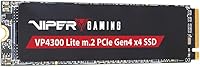
The bare PCB design is clean and compact, and nothing about the physical construction raised reliability red flags for the majority of buyers. The component layout is tidy enough that attaching an aftermarket heatsink is straightforward, and the drive's low weight means it never stresses the M.2 slot or retention screw during installation.
No integrated heatsink or thermal pad is included, which feels like a genuine omission regardless of price tier. The Lite designation is also partly reflected in the component choices — buyers should not expect the same build caliber as the full VP4300, and a small but notable number of reviewers expressed concern about long-term component durability.
Warranty Coverage
86%
A 5-year limited warranty at this price point genuinely distinguishes the VP4300 Lite from most budget Gen4 rivals, which commonly offer only 3 years. Patriot's longer coverage signals meaningful confidence in the drive's longevity and gives cost-conscious buyers measurable long-term protection that factors into the overall value calculation.
The warranty's value depends entirely on the claims process behind it, and buyer experiences with Patriot's support team are inconsistent. Some users report smooth, efficient resolutions while others describe slow response times and a cumbersome RMA process, which takes some of the shine off the otherwise strong headline warranty term.
Storage Capacity
58%
42%
For PC builders using this Gen4 NVMe drive as a curated secondary game volume, or for PS5 owners who rotate a small active library, 500GB can work practically. It serves as a reasonable entry point for buyers who want Gen4 speeds without committing to the higher cost of a 1TB or 2TB option.
Five hundred gigabytes fills up alarmingly fast in a modern gaming context — three or four large AAA titles can consume the entire drive on PS5. Frequent library management and reinstalling games becomes a genuine chore rather than a background habit, and buyers who underestimated how quickly they would hit the ceiling are well-represented in the lower-star reviews.
Platform Versatility
83%
The M.2 2280 form factor and NVMe 2.0 compliance allow this drive to operate across PS5, Gen4 desktops, and compatible laptops without adapters or special configuration. That cross-platform flexibility adds tangible long-term value for buyers who may migrate the drive to a different system after their next hardware upgrade.
The Gen4 requirement is a firm dependency that excludes a significant portion of older or mid-range systems. Buyers with Gen3 motherboards or SATA-only M.2 slots will see none of the speed benefit and may not realize this until after installation, which represents one of the more frustrating compatibility pitfalls mentioned in negative reviews.
Long-term Reliability
72%
28%
The large majority of buyers report no reliability issues across their ownership period, and the strong aggregate rating reflects a consistently positive experience for typical gaming and general storage use. Day-to-day performance stability is not a common complaint, and the drive appears to hold up well under its intended light-to-moderate workload.
A visible minority of lower-star reviewers mention early failures or gradual performance degradation after several months of regular use — a pattern worth acknowledging even if it does not represent the majority experience. The absence of publicly available TBW data for this specific Lite model also makes independent long-term endurance assessment genuinely difficult.
Software and Tooling
67%
33%
For most buyers, no additional software is needed at all — the PS5 formats the drive automatically, and Windows recognizes it on first boot without drivers. Patriot offers a basic SSD toolbox utility for PC users who want to monitor drive health or update firmware, which covers the essentials without requiring a steep learning curve.
Patriot's software tooling is functional but noticeably behind what brands like Samsung and WD offer for drives in competitive categories. Features like drive cloning, detailed performance diagnostics, and granular wear-level monitoring are either absent or underdeveloped, which matters to enthusiast users even if it is invisible to the casual gaming audience this drive primarily targets.
NVMe Protocol Modernity
84%
NVMe 2.0 compliance is a genuine technical advantage that most value-tier Gen4 drives skip entirely, and it brings improved I/O determinism and better multi-queue handling. Buyers building systems intended to last several years will appreciate the forward compatibility this offers as platform software catches up to the newer standard.
In practical day-to-day use — especially for gaming — the real-world difference between NVMe 1.4 and NVMe 2.0 compliance is marginal for most users today. The advantage is more future-oriented than immediately tangible, and treating it as a primary purchase driver over more impactful factors like sustained write performance or thermal design would be misplaced.

Suitable for:

The Patriot Viper VP4300 Lite 500GB M.2 SSD is a practical pick for PS5 owners who want to stop juggling game installs without committing to a premium-priced drive. If your library leans toward a handful of go-to titles rather than dozens of massive open-world games, 500GB can realistically serve you well. First-time NVMe upgraders coming from a SATA SSD will feel an immediate and meaningful difference in load times — Gen4 speeds at this tier are genuinely fast for everyday gaming, even if they don't fully max out the theoretical ceiling. PC builders using the VP4300 Lite as a secondary drive for game storage or large file archiving will also find the value proposition compelling. The 5-year warranty adds a layer of confidence that many budget competitors simply don't match, making it a reasonable long-term investment for cost-conscious buyers.
Not suitable for:

The Patriot Viper VP4300 Lite 500GB M.2 SSD is not the right call for anyone who regularly writes large volumes of data — video editors, content creators, and data professionals will likely encounter performance throttling once the drive's cache is exhausted, a common reality with value-tier Gen4 designs. The 500GB ceiling is a genuine concern for PS5 users with expansive libraries; modern titles can individually consume 80–130GB, meaning a few installs may fill this Viper SSD entirely. Anyone planning to use this as a primary boot and work drive for a demanding workstation should invest more for a drive with better sustained write endurance and a proven high-endurance NAND configuration. Laptop users should verify their device has a PCIe Gen4 slot, since installing a Gen4 drive in a Gen3 system will cap speeds and undermine the core value argument. If you are building a high-end rig where maximum, consistent performance matters under pressure, the Lite's cost-optimized design choices will eventually show.
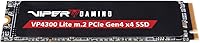
Specifications

  • Capacity: The drive provides 500GB of usable storage, suited for light-to-moderate game libraries or use as a secondary PC storage volume.
  • Form Factor: Built to the M.2 2280 standard, measuring 22mm wide by 80mm long, ensuring compatibility with the vast majority of modern M.2 slots.
  • Interface: Connects via PCIe Gen4 x4, utilizing four full-bandwidth lanes to reach its rated peak throughput on compatible host platforms.
  • Protocol: NVMe 2.0 compliant, offering improved command efficiency and forward compatibility beyond the older NVMe 1.x specification.
  • Sequential Read: Rated for sequential read speeds up to 7,000 MB/s under benchmark conditions, well above Sony's 5,500 MB/s PS5 minimum threshold.
  • Sequential Write: Rated for sequential write speeds up to 4,000 MB/s, though sustained performance under heavy workloads may vary based on thermal conditions and cache state.
  • PS5 Compatible: Officially compatible with the PlayStation 5 internal expansion bay, requiring only standard in-console formatting before use.
  • Installation: Designed for internal installation into any PCIe Gen4 x4 M.2 slot on a compatible desktop, select laptop, or PS5.
  • Warranty: Covered by a 5-year limited warranty from Patriot Memory, applicable under normal operating conditions with valid proof of purchase.
  • Weight: The bare drive weighs approximately 1.06 oz, adding negligible mass to any system in which it is installed.
  • Drive Type: A solid-state drive with no moving parts, providing silent operation and greater shock resistance compared to mechanical hard drives.
  • Brand: Manufactured by Patriot Memory, a California-based storage and memory brand with a long history in the consumer PC market.
  • Product Series: Part of the Viper VP4300 Lite lineup, a value-optimized sub-line within Patriot's performance-oriented Viper storage family.
  • Compatible Platforms: Works with PlayStation 5, PCIe Gen4-equipped desktop PCs, and laptops that include a PCIe Gen4 M.2 expansion slot.

Related Reviews
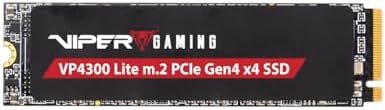
Patriot Memory Viper VP4300 Lite 2TB M.2 PCIe Gen4 x4 SSD
86%
94%
Performance (Speed)
89%
Ease of Installation
78%
Thermal Management
91%
Compatibility with PS5
88%
Compatibility with PCs
More
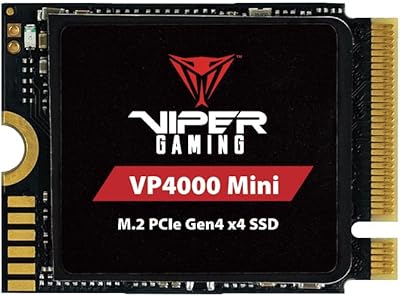
Patriot Memory Viper VP4000 Mini 500GB M.2 2230 PCIe Gen4 x4 SSD
86%
94%
Performance
92%
Speed (Read/Write)
88%
Compatibility with Gaming Devices
85%
Ease of Installation
76%
Size/Form Factor (M.2 2230)
More
Patriot Viper VP4300 Lite 1TB M.2 SSD
82%
91%
Sequential Read Speed
83%
Sequential Write Speed
78%
PS5 Compatibility
88%
Value for Money
71%
Thermal Management
More
Patriot Memory Viper VP4000 Mini 2TB M.2 2230 SSD
80%
88%
Read Speed Performance
81%
Write Speed Performance
94%
Form Factor Fit
91%
Installation Experience
89%
Compatibility
More
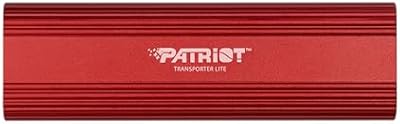
Patriot Transporter Lite 512GB Portable SSD
77%
78%
Transfer Speed Performance
91%
Portability & Form Factor
67%
Build Quality & Durability
86%
Cable & Connectivity
83%
Value for Money
More
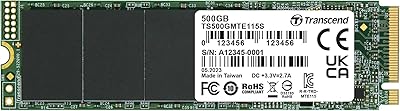
Transcend MTE115S 500GB NVMe SSD
80%
93%
Value for Money
84%
Read Speed Performance
67%
Write Speed Performance
88%
Reliability & Longevity
79%
Compatibility
More
Kingston NV3 500GB NVMe SSD
81%
91%
Read Performance
78%
Write Performance
94%
Value for Money
63%
Thermal Management
93%
Installation Ease
More
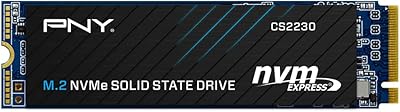
PNY CS2230 500GB M.2 NVMe SSD
82%
93%
Value for Money
84%
Read/Write Performance
91%
Installation Ease
88%
Compatibility
89%
Warranty & Support
More
PNY CS1030 M.2 NVMe SSD 500GB
86%
89%
Performance
92%
Value for Money
84%
Installation Process
90%
Boot Time Improvement
87%
File Transfer Speed
More
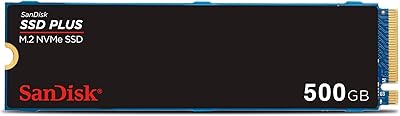
SanDisk SSD Plus 500GB M.2 NVMe SSD
81%
83%
Read Performance
64%
Write Performance
96%
Installation Ease
88%
Value for Money
84%
Compatibility
More

FAQ

Yes, it meets Sony's minimum sequential read requirement for PS5 expansion storage. After physical installation, the console will prompt you to format the drive — a guided process that takes about two minutes and requires no technical knowledge.

Sony does not require a heatsink, and the PS5 chassis provides passive airflow over the drive bay. That said, adding a thin, low-profile M.2 heatsink is a sensible precaution if you play in long sessions, since heat buildup can cause the drive to throttle its speeds over time. Most compatible heatsinks cost very little and fit the PS5 bay without clearance problems.

For some players, yes — for others, not really. A few large modern titles can consume 80GB to 130GB each, meaning four or five installs can fill this drive. If you actively manage your library, delete completed games, and rotate titles, 500GB is workable. If you like keeping a large collection installed and ready at all times, you will feel constrained fairly quickly.

The Lite designation signals a cost-optimized variant, which typically means a different controller, a more value-oriented NAND grade, or both compared to the full VP4300. Peak sequential speeds are competitive, but sustained write endurance under heavy, continuous workloads is where the differences tend to surface. For gaming and everyday use, most buyers will not notice; for intensive creative workloads, it is worth comparing more carefully.

Only if your laptop has a PCIe Gen4 x4 M.2 slot. If your machine supports only PCIe Gen3 or SATA M.2, the drive will still physically fit and function, but speeds will be capped at that lower standard — which removes most of the performance reason to buy a Gen4 drive in the first place. Check your laptop's specifications before purchasing.

Absolutely — boot times will be fast and everyday responsiveness will be excellent. The one caveat is sustained write performance: if your workflow involves regularly moving very large files, encoding video, or running database-heavy applications, the sustained write speeds of this value-tier drive may not keep up as consistently as higher-endurance options in the same price band.

It can, particularly during long sequential write tasks. For gaming — which is primarily read-heavy with shorter write bursts — thermal throttling is rarely a practical concern. During prolonged large-file transfers or write-intensive work, temperatures can climb and speeds may drop noticeably. A basic heatsink addresses this issue inexpensively and effectively.

Patriot Memory handles warranty claims through their official support portal, where you will need to submit proof of purchase and a description of the issue. Depending on the situation, they may request you return the defective unit before issuing a replacement. Registering the drive after purchase and keeping your receipt on hand will make the process smoother if you ever need it.

At this price tier, it competes with several well-regarded options, and the VP4300 Lite holds its own on peak sequential speeds. Its standout advantage is the 5-year warranty, which many rivals at the same level do not offer. The main area of uncertainty is sustained write consistency and long-term endurance data, which are less thoroughly documented for this specific model than for some more established competitors. Comparing TBW ratings across candidates is a worthwhile step before deciding.

Just a small Phillips-head screwdriver. You use it to remove the expansion bay cover and to secure the drive with the standoff screw already built into the PS5 chassis. No adapters or additional hardware are needed for the M.2 2280 size. The whole process typically takes under five minutes, even for someone doing it for the first time.