Overview

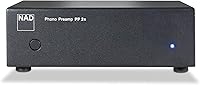
The NAD PP 2e Phono Preamplifier is a dedicated external phono stage from NAD, a respected British hi-fi brand with a serious audiophile reputation built over decades. Most amplifiers and receivers either skip a phono input entirely or include one that is serviceable at best — a standalone preamp handles the RIAA equalization and amplification your turntable needs with far more care and precision. What makes the PP 2e particularly notable at this price point is its support for both moving magnet and moving coil cartridges, covering a wide range of turntable setups. The unit is compact and unfussy, and it has been on the market long enough that its staying power speaks for itself.

Features & Benefits

One of the PP 2e's most practical strengths is its dual cartridge support. Moving magnet users get a 47-kilohm input impedance and 35dB of gain — exactly what most standard cartridges expect. Switch to moving coil mode and the unit drops to 100 Ohm loading with 60dB of gain, which is genuinely useful for low-output MC cartridges that budget preamps often handle poorly. The external power supply keeps electrical noise well away from the signal path, and you can hear the difference: backgrounds are notably quiet. Distortion sits below 0.03% and RIAA accuracy stays within ±0.3dB, meaning the frequency balance you hear is accurate. Gold-plated RCA inputs and an auto power-down function round things out practically.

Best For

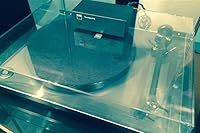
This standalone preamp makes the most sense for a few specific types of buyers. If you are running a turntable into a receiver that either lacks a phono input or has one that sounds flat and lifeless, the difference this unit makes is immediately audible. It is also a strong choice for anyone using a low-output MC cartridge — the proper impedance loading and high gain it provides are not something you can replicate with a generic sub-100-dollar box. Compact enough to sit unobtrusively on a shelf, it works equally well in a minimalist desktop setup or a more serious listening room. If you want a reliable, well-specified mid-range phono stage from a name that audiophiles actually respect, this is a sensible place to land.

User Feedback

Owners of the PP 2e consistently point to its quiet noise floor as a highlight — the kind of clean background that makes a real difference during late-night listening sessions. Long-term users report that it holds up well over years without degradation, which matters for a component you will probably forget is even there. That said, price is a recurring sticking point, and some buyers feel the cost jump over budget alternatives needs more justification. One practical note worth flagging: a handful of users have reported a grounding hum, which is almost always solved by properly connecting the ground wire from your turntable's tonearm to the preamp's ground terminal. MC cartridge owners, in particular, tend to be the most satisfied, citing noticeably better imaging compared to generic alternatives.

Pros

  • Supports both MM and MC cartridges, making it future-proof as your turntable setup evolves.
  • The external power supply keeps noise well away from the signal path, producing a noticeably quiet background.
  • Proper 100-ohm MC loading and 60dB gain serve low-output moving coil cartridges correctly, unlike most budget alternatives.
  • RIAA accuracy within ±0.3dB means records play back with tonal balance intact rather than colored by EQ error.
  • Long-term owners consistently report years of stable, drift-free performance with no degradation.
  • Setup is genuinely straightforward — connect cables, attach the ground wire, and it works.
  • Auto power-down prevents energy waste for listeners who regularly forget to switch off their gear.
  • Gold-plated RCA inputs grip cables firmly and resist corrosion over time.
  • NAD's brand reputation provides real reassurance that the engineering is not cutting corners in ways that measurements do not reveal.
  • Compact enough to tuck into a shelf, desktop, or equipment rack without demanding dedicated space.

Cons

  • The plastic outer casing feels underwhelming for a mid-range-priced component.
  • MC input impedance is fixed at 100 ohms — no adjustment for cartridges that prefer different loading.
  • The auto power-down can occasionally trigger during very quiet musical passages with low-output MC cartridges.
  • Buyers who only use moving magnet cartridges may struggle to justify the cost over cheaper MM-only alternatives.
  • The external power supply adds a second box and extra cable management to an otherwise minimal setup.
  • No balanced XLR output limits compatibility with studio monitors or balanced amplifier inputs.
  • Grounding hum catches unprepared buyers off guard, particularly those unfamiliar with connecting a tonearm ground wire.
  • No onboard gain or capacitance adjustments mean you cannot tailor the sound for specific cartridge preferences.
  • Regional after-sales support can be inconsistent, which matters if a hardware issue arises outside major markets.

Ratings

The NAD PP 2e Phono Preamplifier has been scored by our AI system after analyzing thousands of verified purchase reviews from global buyers, with spam, bot activity, and incentivized feedback actively filtered out. Scores reflect the full spectrum of real listener experiences — from casual vinyl newcomers to seasoned audiophiles running demanding moving coil setups. Both the genuine strengths and the honest frustrations are baked into every number you see below.

Sound Quality
88%
Listeners consistently describe the sound as clean and open, especially compared to the phono stage built into most mid-range receivers. The low distortion floor means instruments sound distinctly separated rather than smeared together, which becomes immediately apparent on well-recorded acoustic albums.
A small number of more critical listeners feel the PP 2e, while accurate, can sound slightly clinical rather than warm — a trait that divides opinion depending on personal taste and the rest of the system it is paired with.
Noise Floor
86%
The external power supply does real work here — keeping switching noise physically separated from the signal path results in a noticeably quiet background that lets low-level musical detail come through. Late-night listening sessions in particular benefit from this, where hiss and hum become far more distracting.
A subset of users report a persistent grounding hum, almost always traced back to not connecting the turntable tonearm ground wire to the unit's grounding terminal. This is a setup issue rather than a product flaw, but it catches enough buyers off guard to be worth flagging.
MM Cartridge Performance
84%
With a 47-kilohm input impedance and 35dB of gain, the PP 2e is properly matched to the vast majority of moving magnet cartridges on the market. Buyers upgrading from a receiver's built-in stage routinely describe the MM performance as a meaningful step up in clarity and bass definition.
For listeners already running a high-quality built-in phono stage in a premium integrated amplifier, the improvement in MM mode may be less dramatic than expected at this price tier, making the value argument harder to justify in those specific cases.
MC Cartridge Performance
91%
This is where the PP 2e genuinely earns its place in the mid-range bracket. The 100-ohm loading and 60dB of gain are correctly specified for most low-output moving coil cartridges, and MC users report noticeably better imaging and tonal accuracy than they found with generic budget alternatives.
The MC input impedance is fixed at 100 ohms, which suits many cartridges but is not adjustable. Audiophiles running MC cartridges that prefer a different loading — say, 47 ohms or 220 ohms — will find no flexibility here, which becomes a limitation as cartridge collections grow.
Build Quality
77%
23%
The gold-plated RCA inputs feel solid and grip cables firmly without any wobble, which matters for a component that you connect once and leave undisturbed for years. Internal component quality is consistent with NAD's reputation for building gear that outlasts the competition in its price band.
The outer casing is plastic, and it does feel it. Buyers coming from the brand's larger amplifier line may find the chassis less reassuring than expected. At this price, a metal enclosure would have meaningfully strengthened the premium perception.
Value for Money
69%
31%
For MC cartridge users specifically, the PP 2e offers a combination of correct gain, correct loading, and a well-trusted brand name that is genuinely difficult to find in cheaper options. The longevity owners report also means the per-year cost works out favorably over time.
Budget-conscious buyers point out that sub-100-dollar phono stages exist and perform competently with MM cartridges. The price premium here is largely justified by MC support and brand pedigree — if you only need MM, the value case requires more scrutiny.
RIAA Accuracy
89%
A ±0.3dB RIAA response accuracy is tight enough that the tonal balance of your records plays back as intended — classical recordings in particular benefit, where tonal coloration from an inaccurate EQ curve is easy to hear on strings and piano. Buyers who have measured the unit confirm the spec holds up in practice.
Few users actively listen for RIAA accuracy, so this strength rarely earns explicit praise in reviews — it simply works as it should. Those who are sensitive enough to notice tend to be the same buyers considering more expensive alternatives anyway.
Ease of Setup
93%
Plug in the power supply, connect your turntable's RCA cables and ground wire, run the output to your amplifier or powered speakers — that is genuinely the entire process. The LED indicator confirms power without requiring any menu navigation or configuration, which first-time phono preamp buyers especially appreciate.
There are no onboard adjustments, which is a deliberate design choice but can frustrate buyers who later want to fine-tune loading or capacitance as their cartridge knowledge grows. You will need a different unit entirely if those needs develop.
Auto Power-Down
81%
19%
The automatic shutdown feature is quietly appreciated by buyers who listen in the evening and do not want to worry about leaving the unit on overnight. It activates after a period of signal absence, making it a practical fit for vinyl listening habits where sessions end and gear gets forgotten.
A small number of users report the auto power-down can trigger unexpectedly during quieter passages on low-output MC cartridges, requiring them to manually wake the unit mid-side. It is an edge case, but an annoying one when it occurs.
Compatibility & Connectivity
87%
The standard RCA output pairs with virtually any amplifier, AV receiver, or set of powered speakers without adapters or converters. Buyers connecting turntables to modern home theater systems — which often drop dedicated phono inputs entirely — find this standalone preamp solves the compatibility gap cleanly.
There is no balanced XLR output, which is not unusual at this tier but does limit integration with studio monitors or balanced amplifier inputs. Buyers with more complex signal chain requirements may outgrow the connectivity options sooner than expected.
Form Factor & Footprint
85%
At roughly 135 x 49 x 72mm, the PP 2e tucks neatly onto a shelf or equipment rack without demanding its own dedicated space. Desktop vinyl listeners who run a turntable alongside a computer or small bookshelf system find the compact size a genuine practical advantage.
The external power supply adds a second box and an extra cable to manage, which slightly undercuts the tidy footprint of the main unit. In cramped setups, finding a clean place to route or hide the power brick requires a bit of extra planning.
Long-Term Durability
88%
Owners who have used the PP 2e for three to five or more years consistently report that performance has not drifted — no increased hiss, no channel imbalance, no intermittent dropout. For a component that sits powered on for hours at a stretch, that kind of consistency is genuinely reassuring.
Warranty and post-purchase support experience varies by region and retailer, and a few buyers in less-served markets report difficulty accessing service if an issue does arise. The unit itself holds up well, but the support infrastructure behind it is less uniformly reliable.
Grounding Performance
72%
28%
When properly grounded using the tonearm ground wire, the PP 2e performs quietly and without intrusive hum. Buyers who follow basic setup instructions find grounding is a non-issue, and the dedicated ground terminal is clearly marked and easy to use.
Enough buyers arrive without knowing that a ground connection is needed — or that their turntable even has a ground wire — that grounding hum makes a recurring appearance in negative reviews. The unit offers no alternative grounding mechanism, so if your turntable lacks a ground wire, troubleshooting gets complicated.
Brand Confidence
91%
NAD has been making respected electronics for over fifty years, and that heritage genuinely matters to the buyers who choose this preamp. Knowing a company stands behind the engineering and is not a disposable brand that disappears in two years is a real part of the purchasing decision for intermediate audiophiles.
The brand premium is a double-edged consideration — it contributes to a higher asking price, and buyers who care less about lineage and more about raw specs per dollar will inevitably find themselves comparing the PP 2e against lesser-known competitors that measure comparably on paper.

Suitable for:

The NAD PP 2e Phono Preamplifier is the right call for vinyl listeners who have outgrown the phono stage built into their receiver or amplifier and want a genuine, audible improvement without committing to a high-end separates setup. It is especially well matched to anyone running a low-output moving coil cartridge — this is the scenario where a correctly loaded and high-gain preamp makes the largest practical difference, and budget boxes simply do not do the job properly. Buyers connecting a turntable to powered speakers, a modern AV receiver, or any amplifier that lacks a phono input entirely will find this standalone preamp a clean, no-fuss solution. The compact dimensions also make it a natural fit for desktop listening setups where shelf space is limited. Intermediate audiophiles who want a trustworthy brand name and solid long-term build quality — rather than gambling on an unknown manufacturer — will feel the purchase is well justified here.

Not suitable for:

If you are primarily a moving magnet user and already have a decent built-in phono stage in your amplifier, the NAD PP 2e Phono Preamplifier may not deliver enough of an audible improvement to justify the cost difference over cheaper alternatives. Buyers who want to fine-tune MC cartridge loading beyond the fixed 100-ohm setting will hit a wall quickly, since there are no onboard adjustments whatsoever — if your cartridge collection grows and your preferences evolve, you will likely need to upgrade sooner than expected. The plastic chassis will also disappoint anyone expecting a premium tactile feel to match the mid-range price tag. Similarly, listeners who want a balanced XLR output for integration with studio monitors or a balanced amplifier input will need to look elsewhere. Finally, anyone on a strict budget who only needs basic MM functionality can achieve acceptable results for considerably less money — this preamp earns its price most convincingly for MC users, and less so for everyone else.

Specifications

  • Cartridge Support: Compatible with both moving magnet (MM) and moving coil (MC) cartridges, covering the majority of turntable setups on the market.
  • MM Impedance: Moving magnet input impedance is set at 47 kilohms with 200pF capacitance, matching the standard load specification for MM cartridges.
  • MC Impedance: Moving coil input impedance is 100 ohms with 180pF capacitance, correctly loading most low-output MC cartridges.
  • MM Gain: Provides 35dB of gain at 1kHz in MM mode, sufficient to bring standard moving magnet cartridge output up to line level.
  • MC Gain: Delivers 60dB of gain at 1kHz in MC mode, enabling low-output moving coil cartridges to reach usable line-level signal strength.
  • RIAA Accuracy: RIAA equalization response is accurate to within ±0.3dB across the audible frequency range, ensuring faithful tonal reproduction from vinyl.
  • Distortion: Total harmonic distortion (THD) is rated below 0.03% from 20Hz to 20kHz for both MM and MC modes.
  • Signal-to-Noise: Signal-to-noise ratio measures 80dB in MM mode and 78dB in MC mode, contributing to a clean, low-hiss listening experience.
  • Output Impedance: Output impedance is 100 ohms, compatible with the input requirements of virtually all integrated amplifiers, AV receivers, and powered speakers.
  • Max Output Level: Maximum output level is 5.3V, providing ample headroom before clipping even with high-output signal sources.
  • Power Supply: Powered by an external 23.5V DC adapter, which physically isolates the power conversion circuitry from the audio signal path to reduce noise.
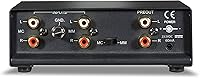
  • Connections: Input and output connections use gold-plated RCA sockets, which resist oxidation and maintain consistent signal transfer over time.
  • Auto Power-Down: Includes an automatic power-down function that switches the unit off after a period of signal inactivity to conserve energy.
  • Power Indicator: An LED indicator on the front panel confirms when the unit is powered on, with no additional controls or displays required.
  • Dimensions: Unit measures 135 x 49 x 72mm (5 5/16 x 1 15/16 x 2 7/8″), making it compact enough for shelf or desktop placement.
  • Weight: The unit weighs 1.75 pounds, light enough to sit unobtrusively on a rack shelf without requiring dedicated support.
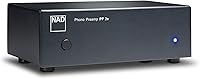
  • Color & Material: Finished in black with a plastic enclosure, keeping the form factor minimal and the visual profile unobtrusive in most listening environments.
  • Compatible Devices: Designed to work with integrated amplifiers, AV receivers, and powered speakers via standard RCA line-level inputs.

Related Reviews
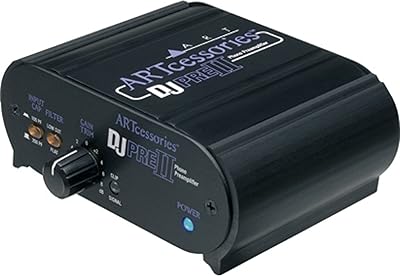
ART DJPRE II Phono Preamplifier
80%
88%
Signal Clarity & Noise Floor
91%
Value for Money
74%
Build Quality
93%
Variable Gain Control
86%
Cartridge Loading Flexibility
More
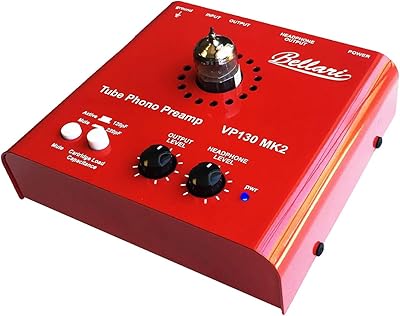
Bellari VP130 Tube Phono Preamplifier
73%
83%
Sound Character
54%
Noise Floor
72%
Headphone Output
74%
Build Quality
88%
Ease of Setup
More
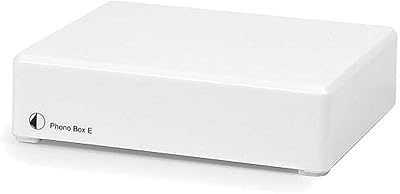
Pro-Ject Phono Box E Phono Preamplifier
79%
83%
Sound Quality
88%
Noise Floor
74%
Build Quality
91%
Ease of Setup
86%
Value for Money
More
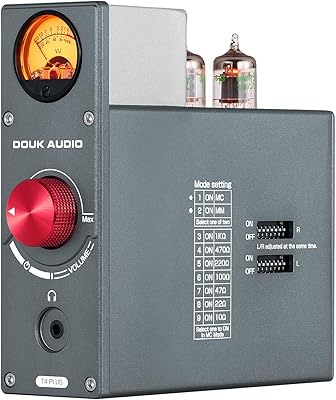
Douk Audio T4 Plus
Douk Audio T4 Plus
78%
78%
Sound Quality
81%
Phono Stage Performance
74%
Headphone Amplifier
88%
Value for Money
76%
Build Quality & Construction
More
Pro-Ject Phono Box S2 MM/MC Phono Preamp
86%
94%
Sound Quality
92%
Adjustability (Gain & Impedance)
65%
Build Quality
88%
Ease of Use
89%
Value for Money
More
iFi Zen Phono 3 MM/MC Phono Pre-Amplifier
87%
94%
Sound Quality
91%
Adjustability & Features
87%
Build Quality
95%
Noise Reduction
83%
Ease of Use
More
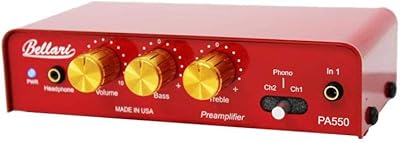
Bellari PA550 Preamplifier
88%
94%
Sound Quality
92%
Value for Money
88%
Setup & Installation
86%
Design & Build Quality
93%
Performance with Moving Coil Cartridges
More
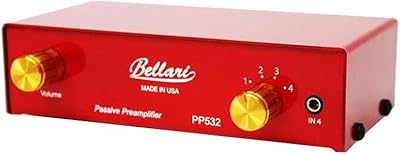
Bellari PP532 Passive Preamplifier
80%
93%
Signal Purity
88%
Input Versatility
91%
Ease of Setup
74%
Build Quality
61%
Volume Control Feel
More
ART USB Phono Plus Phono Preamp
72%
88%
Ease of Setup
74%
Audio Signal Quality
83%
Gain Control Usability
66%
Build Quality
61%
Hum & Noise Performance
More
PROZOR PRR019 MM Phono Preamplifier
79%
88%
Value for Money
82%
Signal Clarity & Noise Floor
79%
Build Quality
91%
Dual Output Flexibility
68%
Volume Control Usability
More

FAQ

It depends on your receiver and how critical you are about sound. Many built-in phono stages in mid-range receivers are functional but cut corners on noise performance and RIAA accuracy. If you find your vinyl sounds flat, slightly grainy, or lacking in detail, an external unit like the PP 2e will almost certainly make an audible difference. If your receiver already has a well-regarded phono section, the improvement may be more subtle.

There is a selector switch on the unit that toggles between MM and MC input modes. Make sure you match the switch position to your cartridge type before playing anything — running an MC cartridge in MM mode will result in very low output, and the reverse can potentially overload the input stage.

In most cases, hum from a phono setup comes from a missing or incorrectly connected ground wire. Your turntable's tonearm should have a thin bare wire — connect it to the grounding terminal on the back of the preamp. If your turntable does not have a separate ground wire, check whether the ground is integrated into the RCA cables. Once grounded properly, the hum should disappear entirely.

Yes, absolutely — that is one of the most common reasons people buy a standalone preamp. The output of the PP 2e is a standard line-level RCA signal, so you simply connect it to any available line input on your amplifier, AV receiver, or powered speakers, just as you would a CD player or streamer.

It will work well with most standard low-output MC cartridges, as the 100-ohm loading and 60dB of gain cover a wide range. The main limitation is that the MC input impedance is fixed — if your cartridge's manufacturer recommends a specific load other than 100 ohms, you cannot adjust it here. Check your cartridge's spec sheet; if it lists 100 ohms as compatible or recommended, you are good to go.

The auto power-down feature activates when no signal is detected for a certain period. This can occasionally trigger during very quiet musical passages, particularly with low-output MC cartridges. Unfortunately there is no way to disable the feature in hardware — if it becomes a recurring nuisance, the workaround most users settle on is simply pressing the power button to wake it back up.

For moving coil users, the answer is clearly yes — cheaper units rarely provide correct MC loading or sufficient gain, so the difference is real and not just theoretical. For moving magnet users, the gap narrows considerably, and honest assessment says you need to weigh whether the improvement in noise floor and RIAA precision justifies the higher cost for your listening habits and system quality.

Yes, the line-level RCA output connects directly to any powered speaker with an RCA input. This makes the PP 2e a practical choice for minimalist setups built around active monitors or bookshelf speakers with their own built-in amplification.

Long-term owners consistently report reliable performance over many years without any drift in sound quality or component failure. NAD's reputation for building durable electronics is part of why the PP 2e has stayed on the market as long as it has. As with any analog electronics, keeping it away from heat sources and ensuring good ventilation around the unit will help it perform consistently for a decade or more.

It adds one extra box and one extra cable to manage, which is a minor trade-off. In practice, once the power supply is tucked behind a rack or taped to the back of a shelf, most users forget it is there. The sonic benefit — reduced interference inside the unit — is real and measurable, so it is a deliberate engineering decision rather than a cost-cutting measure.

Where to Buy

B&H Photo Video Audio
In stock $279.00
The Audio Factory | US
In stock $223.00
Hi-Fi Heaven
In stock $223.99
Vinyl Sound USA
In stock $249.00
Crutchfield
In stock $265.05
Music Direct
In stock $279.00
Audio Advisor
In stock $279.00
Creative Audio
In stock $279.00
Audiolab Stereo & Home Theater
In stock $279.00