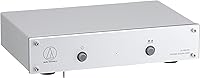
Overview

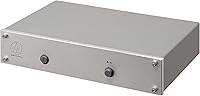
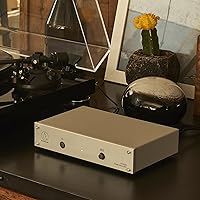
The Audio-Technica AT-PEQ30 Phono Equalizer sits in an interesting spot — serious enough for dedicated vinyl listeners, but not so specialized that it becomes intimidating. This is a mid-range phono preamp from a brand that has earned its credibility across decades of cartridge and audio hardware design. Pick it up and the metal chassis with its aluminum machined front panel immediately signal that this isn't a flimsy plastic box. It supports both MM and MC cartridge types, which most entry-level units simply don't offer. With over 140 user ratings averaging 4.5 stars, it has a track record worth taking seriously.

Features & Benefits

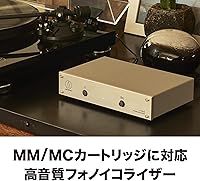
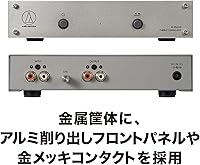
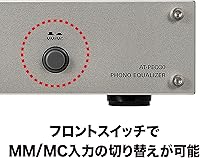
The most practical feature is the front-panel MM/MC toggle — a small switch that lets you flip between moving magnet and moving coil cartridge modes without rewiring anything. If those terms are new: MM cartridges are the standard type on most mid-range turntables, while MC cartridges are higher-end, lower-output devices that need considerably more amplification. This phono preamp handles both. Its FET-based circuit keeps the noise floor impressively low on MM inputs, so you hear music instead of background hiss. The gold-plated contacts and shielded metal housing also help reject interference from nearby electronics — something that matters more than most buyers initially expect.

Best For

This Audio-Technica unit suits vinyl listeners who are ready to step beyond the built-in preamp on their turntable. Many mid-range decks include an onboard phono stage, and while convenient, those rarely match the noise performance of a dedicated external unit. If you own an MC cartridge — or plan to upgrade to one — this preamp becomes especially relevant, since most budget options don't support them at all. It's also a natural fit for anyone who values a tidy, permanent setup: flip the switch for your cartridge type, plug it in, and leave it alone. No configuration menus, no ongoing adjustments required.

User Feedback

Most buyers describe a clear, immediate improvement switching from a turntable's built-in stage to the AT-PEQ30 — quieter backgrounds and better overall clarity are the consistent takeaways. MC cartridge owners tend to be particularly satisfied, since getting adequate gain without a separate step-up transformer is a genuine convenience. Value is where opinions split, though. Some reviewers feel the price is hard to justify given capable alternatives at lower cost, and a handful expected more sonic character for the investment. Long-term reliability feedback leans positive, though the product is still relatively young, so multi-year durability data remains limited.

Pros

  • Supports both MM and MC cartridges with a simple front-panel switch — no rewiring needed.
  • Exceptionally low noise floor on MM inputs makes a noticeable difference at higher volumes.
  • Built-in MC amplification eliminates the need for a separate, often expensive step-up transformer.
  • Metal chassis and aluminum front panel feel genuinely solid and hold up well on a shelf.
  • Gold-plated contacts help maintain signal integrity and resist corrosion over time.
  • Tight RIAA accuracy means vinyl playback sounds faithful to the original recording's tonal balance.
  • Compact enough to fit into most existing stereo rack or shelf configurations without rearranging.
  • Simple setup with no complex configuration — plug in, set your cartridge type, and you're done.
  • Backed by a reputable audio brand with established support and a strong owner community.
  • Consistent positive feedback from MC cartridge owners specifically, which is where this unit stands out most.

Cons

  • No adjustable cartridge loading or gain options limits fine-tuning for demanding audiophile setups.
  • The price gap over budget alternatives is hard to justify if you only use a standard MM cartridge.
  • MC signal-to-noise ratio of 74 dB is noticeably lower than the MM figure — audible in very quiet listening environments.
  • Long-term reliability data is still limited given the product's relatively recent release date.
  • The included AC adapter is basic and some users prefer a higher-quality external power supply option.
  • No balanced output option, which matters for listeners running longer cable runs to amplifiers.
  • Grey colorway and utilitarian styling may not suit setups where aesthetics are a priority.
  • Heavier than expected for its size, which can be inconvenient in tightly packed component stacks.

Ratings

The scores below were generated by AI after analyzing verified owner reviews of the Audio-Technica AT-PEQ30 Phono Equalizer from buyers worldwide, with spam, bot submissions, and incentivized feedback actively filtered out. Each category reflects the honest balance of praise and frustration found across real listening setups — from casual home stereos to more dedicated vinyl rigs. Where buyers consistently agreed, scores lean high; where opinions split or recurring complaints surfaced, that tension is reflected transparently.

Noise Performance
93%
MM users consistently report hearing a noticeably blacker background compared to built-in turntable preamps — subtle instrumental details and quiet passages between tracks come through without distracting hiss. This is the single most praised aspect across owner reviews, particularly for listeners using sensitive bookshelf speakers at moderate to high volumes.
The MC noise floor is measurably less impressive than the MM side, and a small number of users running high-efficiency speakers in quiet rooms report faint background noise in MC mode. It is not a dealbreaker for most, but it is a real limitation worth acknowledging.
MM/MC Versatility
91%
The ability to flip between MM and MC cartridges from the front panel without tools or cable changes is something owners genuinely value — especially those who run two tonearms or swap headshells between cartridge types. MC users in particular highlight that avoiding a separate step-up transformer simplifies their setup considerably.
The fixed loading values (47 kilohms for MM, 120 ohms for MC) mean there is no room to fine-tune for cartridges with unusual impedance requirements. Owners of exotic or high-end MC cartridges occasionally note that the fixed 120-ohm MC load is not optimal for their specific model.
Build Quality
88%
The metal chassis and machined aluminum front panel make a strong first impression — buyers regularly mention that it feels heavier and more substantial than the price suggests, comparing it favorably to plastic-bodied competitors. Gold-plated contacts reinforce the sense that this is built to last rather than be replaced in two years.
A few owners note that the grey finish, while clean, can show fingerprints and light scratches over time, and the overall aesthetic is functional rather than refined. The unit does not feel boutique, and buyers expecting premium visual detailing at this price may find it slightly underwhelming.
RIAA Accuracy
89%
Owners with trained ears and measurement tools confirm that the RIAA curve is tight and consistent, which translates to vinyl playback that sounds tonally balanced rather than artificially bright or dull. Records that previously sounded thin or overly bass-heavy through a lesser preamp tend to snap into proper perspective through this unit.
This benefit is difficult to perceive without a quality amplifier and speakers downstream — listeners on budget systems may not notice the accuracy gains. It is a strong spec, but its real-world impact depends entirely on the quality of the rest of the signal chain.
Value for Money
67%
33%
For buyers who actively use MC cartridges, the value equation makes sense — comparable MC-capable preamps from other brands often cost significantly more, and this unit delivers genuinely good performance at its price tier. Those who know exactly what they are buying tend to feel satisfied with the investment.
MM-only users frequently question whether the price premium over budget alternatives is justified, and it is a fair point — the performance gap for standard MM playback is real but not always dramatic enough to feel obvious. Buyers comparing it casually against cheaper options on spec sheets alone often leave unconvinced.
Ease of Setup
86%
Setup is genuinely simple: connect the RCA cables, set the front switch to MM or MC, plug in the AC adapter, and you are done. Owners who have dealt with complicated phono stages requiring DIP switches or software configuration appreciate how frictionless this process is.
New vinyl listeners occasionally struggle with understanding whether to disable their turntable's built-in preamp before connecting, and the manual could do more to guide this step. A handful of early owners report brief confusion about grounding, though this is a universal phono preamp issue rather than a specific fault.
Interference Rejection
84%
The shielded metal enclosure performs well in typical living room setups where routers, power strips, and other electronics sit nearby. Owners who previously dealt with hum or buzz from an unshielded plastic preamp report a clean improvement after switching to this unit.
In setups with particularly noisy power environments or close proximity to switching power supplies, some low-level hum has been reported even with this unit. Ground loop issues are not unique to this preamp, but a small number of users needed a ground loop isolator to fully resolve the problem.
MC Gain & Headroom
81%
19%
The 59 dB of MC gain handles most low-output moving coil cartridges confidently, bringing them to a usable line level without audible strain or dynamic compression. Owners using popular MC cartridges in the 0.3 to 0.5 mV output range report clean, full-bodied sound with no need for additional amplification.
Very low-output MC cartridges below 0.2 mV push the preamp closer to its noise ceiling, and a few owners report that the background noise in those configurations becomes just noticeable enough to be distracting. A dedicated MC stage or step-up transformer may still be preferable for ultra-low-output cartridges.
Physical Footprint
82%
18%
At roughly 8 by 5 by 2 inches, this phono preamp fits neatly on most shelves and into standard component racks without requiring a dedicated shelf tier. Its compact profile is appreciated by owners working within tight equipment setups who do not want to reorganize their entire rack for one addition.
The unit is heavier than its size suggests, which can make it shift slightly on smooth shelf surfaces without grip pads underneath. It does not include any mounting hardware or feet upgrades, which some buyers at this price tier feel would have been a thoughtful inclusion.
Long-Term Reliability
74%
26%
The majority of owners who have used this unit for one to two years report no performance degradation or hardware issues, and the metal chassis shows no signs of wear in typical home audio use. Audio-Technica has a reasonable reputation for producing durable hardware in this category.
The product is still relatively young in market terms, and the pool of multi-year reliability data is limited compared to legacy phono preamps with decade-long track records. A small number of isolated unit failures have been reported, though it is unclear whether these represent a pattern or individual outliers.
AC Adapter Quality
61%
39%
The included AC adapter is functional and powers the unit cleanly in most home environments. For the majority of buyers, it performs its job without introducing noise or complications.
Several technically experienced owners note that the stock adapter is basic in quality and have replaced it with a cleaner linear power supply to squeeze additional noise floor improvement from the unit. It is not a necessary upgrade, but the fact that owners feel the need to make it suggests the included adapter is a weak link.
Cartridge Compatibility Range
78%
22%
The AT-PEQ30 covers the vast majority of real-world cartridge pairings without issue — most popular MM and MC models from brands like Ortofon, Nagaoka, and Audio-Technica itself are well-served by the fixed input values. For buyers running standard or mid-range cartridges, compatibility is simply not a concern.
The lack of adjustable loading is a real limitation for audiophiles using cartridges with specific or unconventional impedance preferences. Buyers who like to experiment with different cartridges over time may eventually find the fixed values a constraint as their setup evolves.
Sound Character
79%
21%
Owners describe the sound signature as neutral and transparent rather than colored or romantic — records sound like records, which is exactly what an accurate phono stage should deliver. Classical and jazz listeners in particular appreciate that the unit does not impose its own tonal character on the music.
Listeners who prefer a warmer or more textured presentation sometimes find the AT-PEQ30 slightly clinical compared to tube-based alternatives in a similar price range. It is an honest preamp rather than a flattering one, which is a matter of taste as much as performance.

Suitable for:

The Audio-Technica AT-PEQ30 Phono Equalizer is the right choice for vinyl listeners who have outgrown the convenience of a built-in turntable preamp and want a meaningful, lasting upgrade without crossing into boutique audiophile pricing. It's particularly well-suited for anyone running a moving coil cartridge, since the AT-PEQ30 handles MC amplification natively — no extra step-up transformer required, which saves both money and rack space. If you're the kind of listener who prioritizes a quiet, clean signal and notices background hiss during soft passages, the low noise floor on MM inputs alone makes a strong case. Buyers who own both MM and MC cartridges, or who plan to upgrade their cartridge down the road, also benefit from the front-panel toggle that removes any future compatibility headaches. Finally, anyone who values a unit that looks and feels like it belongs in a serious setup — rather than a lightweight plastic afterthought — will appreciate the solid metal construction.

Not suitable for:

The Audio-Technica AT-PEQ30 Phono Equalizer is not the right fit for casual listeners who are just getting started with vinyl and already have a turntable with a perfectly functional built-in preamp. At this price point, the performance gains are real but incremental, and someone spinning records occasionally for background listening is unlikely to notice the difference in day-to-day use. It's also a poor match for buyers primarily focused on value per dollar — there are capable phono stages available at significantly lower prices that handle MM cartridges competently, and the AT-PEQ30 only justifies its cost when you're actively using the MC input or demanding very low noise performance. Buyers expecting a unit with adjustable loading options or cartridge fine-tuning settings will also find this preamp too straightforward, since it offers no such controls. If your turntable setup is temporary or experimental, investing at this level doesn't make practical sense.

Specifications

  • Input Types: Accepts both moving magnet (MM) and moving coil (MC) cartridge signals, switchable via a front-panel toggle.
  • MM Impedance: Moving magnet input impedance is 47 kilohms, matching the standard load requirement of most MM cartridges.
  • MC Impedance: Moving coil input impedance is 120 ohms, suited for low-output MC cartridges without additional loading adapters.
  • MM Gain: Provides 35 dB of gain in MM mode, bringing standard cartridge output up to line level for amplifier input.
  • MC Gain: Delivers 59 dB of gain in MC mode, sufficient for low-output moving coil cartridges without a separate step-up transformer.
  • Signal-to-Noise: MM mode achieves a 100 dB signal-to-noise ratio; MC mode achieves 74 dB, measured against rated output.
  • RIAA Accuracy: RIAA equalization deviation is held within ±0.5 dB across the full 20 Hz to 20,000 Hz audible frequency range.
  • Rated Output: Delivers a rated output of 250 mV in both MM and MC modes, compatible with standard line-level amplifier inputs.
  • Circuit Type: Uses an NF-type (negative feedback) FET-input phono equalizer circuit designed for low noise and accurate RIAA response.
  • Enclosure: Housed in a shielded metal chassis with an aluminum machined front panel and gold-plated input and output contacts.
  • Dimensions: Unit measures 47 mm (1.85″) high by 197.5 mm (7.78″) wide by 125.5 mm (4.94″) deep, excluding protrusions.
  • Weight: Weighs 890 g (31.4 oz), giving it a noticeably solid feel compared to lighter plastic phono stage alternatives.
  • Power Supply: Powered by DC 15V at 1.2A via the included AC adapter; no batteries or USB power option is provided.
  • Power Draw: Consumes 2.5 watts during operation, making it suitable for continuous use in a powered stereo rack.
  • Signal Format: Processes analog audio signals exclusively; no digital outputs, USB audio, or Bluetooth connectivity is included.
  • Color & Style: Finished in grey with a modern aesthetic that suits both contemporary and traditional stereo equipment setups.
  • In the Box: Package includes the phono equalizer unit and an AC adapter; no interconnect cables are included.

Related Reviews
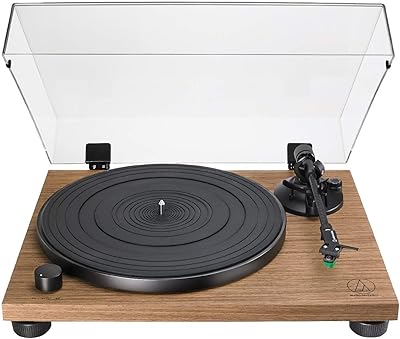
Audio-Technica AT-LP3XBT
82%
88%
Sound Quality (Wired)
74%
Bluetooth Audio Quality
93%
Ease of Setup
91%
Fully Automatic Operation
67%
Build Quality
More
Audio-Technica AT-LPW40WN
82%
91%
Sound Quality
88%
Build Quality
89%
Tonearm Performance
86%
Speed Accuracy & Stability
74%
Ease of Setup
More
Audio-Technica ATH-M50xWH
87%
94%
Sound Quality
89%
Build Quality
82%
Comfort for Extended Use
91%
Noise Isolation
88%
Durability of Detachable Cable
More
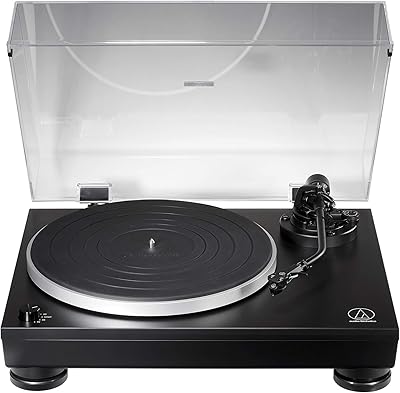
Audio-Technica AT-LP5X
84%
93%
Build Quality
91%
Sound Quality
94%
Motor & Speed Stability
88%
Cartridge & Stylus
89%
Tonearm Performance
More
Audio-Technica ATH-M30x
78%
83%
Sound Accuracy
88%
Mid-Range Clarity
61%
Bass Response
72%
Comfort & Fit
74%
Build Quality
More
Audio-Technica AT-LP7 Turntable
86%
94%
Sound Quality
92%
Build Quality
80%
Ease of Setup
88%
Manual Control Experience
90%
Tracking Accuracy
More
Planet Audio PEQ10 Car Equalizer
85%
88%
Sound Quality
91%
Ease of Installation
87%
Bass Control
85%
Versatility in Setup
72%
Remote Control Functionality
More
Audio-Technica AT829CW Lavalier Microphone
80%
88%
Sound Quality
89%
Voice Intelligibility
84%
Noise Rejection
93%
Discreetness
91%
Wearability
More
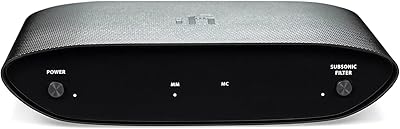
iFi Zen Air Phono Preamplifier
82%
91%
Noise Floor & Signal Clarity
88%
MM & MC Cartridge Compatibility
86%
Subsonic Filter Performance
93%
Value for Money
89%
Ease of Setup
More
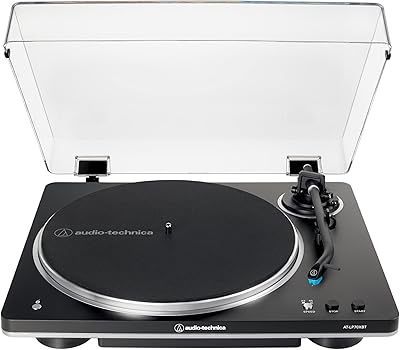
Audio-Technica AT-LP70XBT
81%
92%
Ease of Setup
78%
Sound Quality
74%
Bluetooth Performance
71%
Build Quality
89%
Automatic Mechanism
More

FAQ

Not strictly, but the difference is often worth it once you listen. Built-in preamps are designed for convenience, not performance — they tend to have higher noise floors and less accurate RIAA equalization. If you're hearing low-level hiss between tracks or your music sounds slightly dull, an external unit like this one will usually resolve both issues.

MM (moving magnet) cartridges are the standard type bundled with most turntables — they're sturdy, easy to replace, and work with almost any phono preamp. MC (moving coil) cartridges are a step up in design and output a much weaker signal, which is why they need a high-gain preamp like this one. Check your turntable's manual or the cartridge model online — it will clearly list whether it's MM or MC.

Yes, as long as your turntable has standard RCA output connections, this preamp will work with it. If your turntable has a built-in phono stage, make sure to disable it (most decks have a grounding switch or internal bypass option) before routing the signal through any external preamp to avoid double-amplification.

At 74 dB signal-to-noise ratio in MC mode, it's solid but not exceptional — you may notice a slightly higher noise floor compared to MM mode, especially in very quiet passages. For most home listening environments, it won't be a problem. If you're in a recording studio context or running very sensitive speakers at high volume, you may want to compare it against higher-spec MC-dedicated stages.

Like most solid-state audio equipment, the AT-PEQ30 benefits from a few minutes of warm-up time after powering on, but it's not a tube unit requiring extended settling. Most users find it sounds consistent after about 10 minutes. Leaving it powered on during a listening session is perfectly fine given its low 2.5-watt power draw.

Yes, that is one of its real practical advantages. The shielded metal enclosure and gold-plated contacts are specifically there to reject electromagnetic interference from nearby devices — routers, power supplies, and other amplifiers. If you've had hum issues with a plastic-bodied preamp sitting close to other gear, the shielding here typically makes a noticeable improvement.

That's exactly what this phono preamp is designed for. With 59 dB of gain in MC mode, it brings even low-output MC cartridges up to line level on its own. A dedicated step-up transformer is not needed, which keeps your signal chain simpler and saves you the additional cost of a quality SUT.

It's right on the front panel, which is genuinely convenient. You can see and switch it without moving the unit or reaching around the back. If you occasionally swap between a standard MM setup and an MC cartridge on a second headshell, this placement makes the process quick and straightforward.

The loading values are fixed — 47 kilohms for MM and 120 ohms for MC. There are no user-adjustable DIP switches or loading plugs. For most cartridges this is completely fine, but if you're working with an MC cartridge that has specific or unusual loading requirements, you may want a preamp that offers adjustable impedance settings.

Budget phono stages can handle basic MM playback adequately, but most skip MC support entirely and use cheaper components that show up as higher noise at volume. This Audio-Technica unit sits in a different tier — the FET circuit, metal enclosure, and tighter RIAA accuracy are tangible differences you can hear. Whether the price gap is worth it depends on how seriously you approach vinyl listening and whether you need MC support. If you just want background music from a budget deck, a cheaper option will do; if your setup is more deliberate, this is a better long-term investment.

Where to Buy