Overview

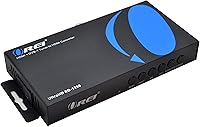
The OREI XD-1290 is a specialized piece of kit aimed at a very specific problem — you have an American TV, you are living abroad, and the local broadcast signal simply will not work with your display. PAL and NTSC are the two dominant television signal standards worldwide; PAL runs at 50Hz across Europe, Africa, Asia, and Australia, while NTSC runs at 60Hz and is standard in North America. This PAL-to-NTSC converter bridges that gap, and unlike basic adapters, it includes a built-in DVB-T tuner so you can actually receive over-the-air digital channels — not just convert a signal you have already captured. The worldwide voltage support means no bulky transformer is needed. This is a niche device solving a real, frustrating problem.

Features & Benefits

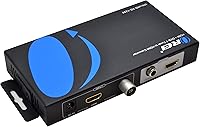
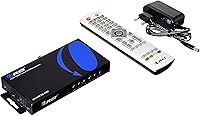
What sets this TV tuner and converter box apart from cheaper alternatives is the combination of conversion and reception in a single unit. Connect a coaxial RF antenna, run a channel scan, and the device outputs a clean HDMI signal at up to 4K resolution — or scales down to 720p if your display requires it. It handles DVB-T, DVB-T2, and DVB-C tuning standards, covering the vast majority of over-the-air and cable digital broadcasts across PAL regions. A coaxial digital audio output adds flexibility for home theater setups. The included remote makes channel navigation simple. It is a compact box — roughly the footprint of a paperback — that packs in considerably more functionality than its size suggests.

Best For

This is not a device you will find much use for if you live and watch television in North America. The OREI signal converter is purpose-built for a specific scenario: you have an NTSC television and you have moved — or are moving — to a PAL country. That means expats in the UK, Germany, India, or Australia, as well as international students or military families stationed abroad who want to avoid the expense of a new TV. It is also a practical pick for users in countries like Ghana or Nigeria seeking free-to-air digital channels on an American-standard screen. For short trips, this is overkill. For longer stays, it is a reasonable and cost-effective fix.

User Feedback

With a 4-star average across more than 200 ratings, the overall picture is positive but grounded. Buyers consistently highlight easy initial setup — connect an antenna, run a scan, and channels populate quickly in most cases. The small footprint and included remote earn frequent mentions as genuine practical positives. Where things become less consistent is in weaker signal areas; some buyers report incomplete channel scans or intermittent drop-outs, a limitation worth knowing before purchasing. A small number of users found the instruction manual light on detail. UK and Australian buyers tend to report the most reliable experiences. This PAL-to-NTSC converter is not without its quirks, but real-world performance holds up well for its intended use.

Pros

  • Converts PAL broadcast signals to NTSC HDMI output reliably, solving a real and frustrating compatibility problem.
  • Built-in DVB-T, DVB-T2, and DVB-C tuner means no separate tuner box is required.
  • Channel scans are fast and accurate in areas with strong DVB-T signal coverage.
  • Universal 100-240V power input works across virtually every country without a separate voltage adapter.
  • Compact size makes it easy to pack, move, and place discreetly near any TV setup.
  • Supports output resolutions up to 4K, with practical upscaling from lower-resolution sources.
  • Coaxial digital audio output adds flexibility for connecting to home theater receivers.
  • Included remote control handles channel navigation and menu settings without touching the unit.
  • Performs especially well in UK and Australian DVB-T broadcast environments, per verified buyer feedback.
  • Bidirectional conversion covers both PAL-to-NTSC and NTSC-to-PAL scenarios in a single device.

Cons

  • Channel scan reliability drops noticeably in weak-signal or rural reception areas.
  • The instruction manual lacks sufficient detail for buyers unfamiliar with antenna-based TV setups.
  • Firmware quirks — including occasional reboots and channels disappearing after re-scans — surface often enough to be a genuine concern.
  • No documented firmware update process makes software issues difficult to resolve once encountered.
  • Plastic housing feels utilitarian and port areas show wear for some long-term users.
  • Supports only 16 channels, which may feel limiting in markets with richer free-to-air digital lineups.
  • The remote control layout is not intuitive and requires trial and error for new users.
  • No satellite or DVB-S input means dish-based signal users need additional hardware.
  • SECAM compatibility, while listed, has limited real-world confirmation from buyers in SECAM-primary markets.
  • Minor processing delay is noticeable in live TV contexts for buyers with more complex AV configurations.

Ratings

The OREI XD-1290 has been evaluated by our AI review engine after processing verified buyer feedback from multiple international markets, with spam, bot-generated, and incentivized reviews actively filtered out. What emerges is a clear picture of a capable, purpose-built device that delivers real value for a specific type of buyer — though not without a few rough edges worth knowing about. Both the genuine strengths and the recurring frustrations are reflected honestly in the scores below.

Signal Conversion Accuracy
83%
The core job — converting a PAL broadcast signal to a watchable NTSC HDMI output — is handled reliably in the majority of real-world setups. Buyers in the UK and Australia in particular report clean, stable output with no noticeable color distortion or frame-rate judder on their American TVs.
A smaller share of users, typically in regions with weaker or less standardized DVB-T infrastructure, report occasional artifacts or inconsistent conversion quality. The experience is not perfectly uniform across all PAL countries.
Channel Scan Reliability
71%
29%
In areas with strong DVB-T signal coverage, the automatic channel scan is quick and populates a solid list of free-to-air channels without manual intervention. Users in major UK and German cities frequently describe the scan process as straightforward and complete.
Weak-signal environments expose the tuner's limitations — some buyers in rural areas or markets with patchy DVB-T rollout report missing channels or scans that simply stop mid-process. This is a known recurring complaint and worth factoring in depending on your location.
Setup & Installation
86%
The physical hookup is about as simple as it gets: coax antenna in, HDMI out, power on. Most buyers report being up and running within minutes, which matters when you are setting up a TV in a new country without a lot of patience or local tech support to fall back on.
The included instruction manual is thin on detail, and a subset of buyers — particularly those less familiar with signal-based TV setups — found themselves confused about antenna requirements or initial scan settings. A clearer guide would reduce friction considerably.
HDMI Output Quality
81%
19%
The HDMI output is clean and handles a wide resolution range capably, with upscaling from standard-definition sources looking respectable on modern flat-panel displays. Buyers using the device with 1080p televisions consistently report sharp, stable images without obvious processing lag.
At 4K output levels, performance is more variable and dependent heavily on the quality of the incoming antenna signal. Do not expect the upscaler to perform miracles with a weak or noisy source feed.
Built-in DVB-T Tuner
78%
22%
Having a DVB-T, DVB-T2, and DVB-C tuner built directly into the unit is what separates this device from basic signal converters. For an expat who just wants to plug in an antenna and watch local news on their American TV, not needing a separate tuner box is a genuine practical advantage.
The tuner supports up to 16 channels, which covers typical free-to-air lineups in many markets but may feel limiting in regions with richer digital broadcast ecosystems. DVB-S satellite support is absent, so users relying on dish-based signals will need a separate solution.
Build Quality & Durability
68%
32%
The compact form factor — roughly the size of a thick deck of cards — makes it easy to place discreetly near a TV or entertainment unit. For a device in this price range, the construction feels adequate and the unit runs without excessive heat under normal use.
The housing is plastic and does not feel particularly premium to the touch. A few long-term users have flagged wear around the input ports over time, and the overall build does not inspire full confidence for buyers expecting something more robust.
Remote Control
74%
26%
The included remote is a functional bonus — it handles channel navigation, volume passthrough commands, and basic menu settings without requiring you to interact with the box directly. For a device tucked behind a TV, that convenience is real and appreciated.
The remote itself is basic and lightweight, and the button layout is not particularly intuitive for first-time users. Several buyers mention having to reference the manual just to understand what certain buttons do, which hints at a design that prioritized cost over usability.
Resolution Flexibility
79%
21%
The ability to scale signal output from legacy 640x480 sources all the way up to 4096x2160 gives this converter a wide compatibility range. If you are dealing with an older PAL source or a very modern 4K display, the device can adjust without additional equipment.
Downscaling from 4K sources works but is not the primary strength of the unit. Buyers testing it in more complex AV setups noted that the conversion pipeline introduces a slight processing delay that may be noticeable in live TV contexts.
Worldwide Voltage Compatibility
91%
The 100-240V universal power input is a small but meaningful detail for international users. You can move this device between a home in the US, a flat in London, and an apartment in Sydney without ever touching a voltage converter or worrying about frying the unit.
There is little to criticize here. The voltage range covers virtually every market where this device would be used. The only minor note is that the power cable supplied may require a simple plug adapter depending on your destination country.
Antenna Compatibility
72%
28%
The standard coaxial RF input works with the vast majority of indoor and outdoor antennas already available in PAL countries, meaning most buyers do not need to purchase any additional hardware beyond what is locally available at a basic electronics shop.
Signal sensitivity varies and the device does not amplify a weak antenna feed. Buyers in fringe reception areas or inside buildings with poor RF penetration will need to invest in a quality amplified antenna separately to get reliable results.
Value for Money
76%
24%
Given that a comparable NTSC television in a PAL country could cost several hundred dollars more than simply converting the one you already own, the price point here is defensible. For the specific problem it solves, most buyers feel they got a fair return on the investment.
As a general-use media device, the value proposition weakens considerably. Buyers who expected broader functionality — streaming support, USB playback, or smart TV features — were disappointed. The price is justifiable only when viewed through the narrow lens of signal conversion.
Firmware & Software Stability
63%
37%
Under standard operating conditions — scan channels, watch TV, switch inputs — the device performs without obvious crashes or freezes for the majority of users. Everyday use in a straightforward setup tends to be uneventful.
Occasional firmware quirks surface in user feedback: unexpected reboots, channels disappearing after a scan refresh, and menu navigation bugs are reported often enough to be a genuine concern. There is no clear firmware update path publicly documented, which makes these issues harder to resolve.
Portability
82%
18%
At under 1.5 pounds and with a footprint smaller than most external hard drives, this TV tuner and converter box is easy to pack in checked luggage or a carry-on. Military families and international students who move frequently seem particularly appreciative of how little space it takes up.
The coaxial cable and HDMI cable requirements mean you are still travelling with a small bundle of wires, and the device is meaningless without an antenna signal to feed it. It is portable in the physical sense but not exactly plug-and-play in every new location.
Compatibility Breadth
77%
23%
Supporting PAL, NTSC, SECAM, DVB-T, DVB-T2, and DVB-C across a single unit means this PAL-to-NTSC converter can handle a notably wide range of broadcast environments. That versatility is a real asset for users who move between multiple international postings.
SECAM support, while listed, generates less buyer confirmation in reviews than PAL and DVB-T performance does. Users in SECAM-primary markets like parts of France or Russia should verify compatibility with their specific local broadcast setup before purchasing.

Suitable for:

The OREI XD-1290 is purpose-built for one scenario, and within that scenario it performs admirably: you own an NTSC television — the standard used in North America — and you have relocated or are relocating to a country that uses PAL or DVB-T broadcast standards, such as the UK, Germany, Australia, India, Ghana, or Nigeria. Expats, international students, and military families stationed abroad are the core audience here, particularly those who want to avoid the expense and hassle of buying a new TV in a foreign country. If you want to plug in a local antenna and watch free-to-air broadcast channels on an American TV without any additional tuner hardware, this device handles both the reception and the signal conversion in a single compact box. The universal power supply also makes it a sensible long-term companion for anyone who moves between countries regularly, since there is no risk of voltage mismatch wherever you land. Anyone needing a clean HDMI output from a PAL antenna feed — whether for a living room setup or a spare bedroom display — will find this TV tuner and converter box a practical, no-drama solution.

Not suitable for:

If you are not navigating a PAL-versus-NTSC compatibility problem, the OREI XD-1290 simply has nothing to offer you — and it is worth being direct about that. This is not a streaming device, not a media player, and not a smart TV add-on; buyers who expected USB playback, app support, or internet connectivity were consistently disappointed. It is also not ideal for users in areas with weak or poorly developed DVB-T signal infrastructure, since the tuner relies entirely on a strong incoming antenna signal and does not amplify or compensate for poor reception. Anyone looking for a short-term travel gadget will likely find the price hard to justify for occasional use. If your existing television is already a multi-standard or region-free model — which many modern sets are — you probably do not need this device at all and should verify your TV's specifications before purchasing. Buyers expecting a premium-grade build or polished user interface should also recalibrate their expectations, as this is a functional workhorse rather than a refined consumer electronics product.

Specifications

  • Brand & Model: Manufactured by OREI (Orei Global), model number XD-1290.
  • Signal Conversion: Converts PAL 50Hz signals to NTSC HDMI 60Hz output, and NTSC 60Hz signals to PAL HDMI 50Hz output, bidirectionally.
  • Built-in Tuner: Integrated tuner supports DVB-T, DVB-T2, and DVB-C digital standards as well as ATV analog signals in PAL, NTSC, and SECAM formats.
  • Video Input: Accepts one RF antenna signal via a standard coaxial input connector.
  • Video Output: Provides one HDMI output carrying the converted video signal at resolutions up to 4K.
  • Audio Output: Includes one coaxial digital audio output for connection to home theater receivers or soundbars.
  • Max Resolution: Capable of outputting up to 4096x2160 at 24, 25, or 60Hz for 4K-compatible displays.
  • Min Resolution: Accepts and upscales input signals from as low as 640x480 at 60Hz.
  • Channel Support: Stores and manages up to 16 channels after an over-the-air antenna scan.
  • Power Supply: Universal switching power supply accepts 100-240V AC input, covering electrical standards in virtually every country worldwide.
  • Dimensions: Unit measures 3.94″ in length by 3.74″ in width, making it roughly the footprint of a compact paperback book.
  • Weight: Complete unit weighs 1.48 pounds, light enough to pack in carry-on luggage without concern.
  • Remote Control: A handheld infrared remote control is included for channel navigation, menu access, and settings management.
  • Interface Types: Connectivity is handled via HDMI and coaxial interfaces; no USB, Ethernet, or wireless connections are present.
  • Operating Temperature: Rated for safe operation at ambient temperatures up to 50 degrees Celsius.
  • Tuner Standards: Fully compatible with DVB-T and DVB-T2 digital terrestrial broadcasting standards used across Europe, Africa, Asia, and Australia.
  • UPC: Universal Product Code for this unit is 854339007427, corresponding to manufacturer Orei Global.
  • Availability: First made available for purchase in June 2018 and remains an active, non-discontinued product as of the latest available information.

Related Reviews
OREI EX-500IR HDMI Extender
88%
94%
Transmission Distance
92%
Signal Quality
89%
Ease of Installation
85%
Build Quality
88%
Power over Cable (PoC) Functionality
More
GIGABYTE AORUS 15P XD-73US224SO
83%
92%
Gaming Performance
89%
Display Quality
88%
Build Quality
86%
Cooling Efficiency
65%
Battery Life
More
xDuoo XD-05 Basic
xDuoo XD-05 Basic
82%
88%
Sound Quality
91%
DAC Chip Performance
67%
Build Quality
83%
Portability & Form Factor
84%
Battery Life
More
OREI UHDS-401A
OREI UHDS-401A
71%
74%
4K Signal Reliability
83%
Audio Extraction Quality
51%
ARC Functionality
86%
Format Compatibility
62%
Build Quality & Design
More
Line 6 XD-V35 Handheld Wireless Microphone
88%
94%
Sound Quality
91%
Ease of Setup
89%
Range & Connectivity
88%
Build Quality
72%
Battery Life
More
Line 6 XD-V75HS Digital Wireless System
86%
88%
Performance in Crowded Environments
91%
Audio Clarity & Quality
85%
Ease of Setup
92%
Signal Reliability
70%
Battery Life
More
OREI UKM-301C 3-Port KVM Switch
86%
91%
Ease of Setup
87%
Switching Performance
89%
Video Quality (4K@60Hz)
65%
USB Compatibility
88%
Build Quality
More
OREI EX-230PRO-KVM HDMI Over Ethernet Extender
85%
92%
Video Quality
89%
Ease of Installation
85%
Reliability
77%
Compatibility
80%
USB KVM Performance
More
OREI BK-402A 8K eARC HDMI Matrix Switch 4x2
80%
88%
Signal Reliability & Handshake
84%
Audio Extraction Quality
91%
Routing Flexibility
82%
EDID Management
89%
Value for Money
More
OREI UHD-402D 4x2 HDMI Matrix Switch
78%
88%
Video Signal Quality
84%
Audio Extraction
71%
ARC Implementation
82%
EDID Management & Downscaling
86%
Setup & Ease of Use
More

FAQ

Yes, that is exactly what it is designed for. You connect a standard UK TV antenna to the coaxial input, run a channel scan, and the device converts the DVB-T signal into an HDMI output your NTSC television can display. Buyers in the UK consistently report solid channel scan results in areas with decent aerial signal strength.

No. The power supply handles 100-240V automatically, which covers the electrical standards used in virtually every country. You may need a basic plug shape adapter depending on the country — the kind that costs a few dollars — but no bulky voltage converter is required.

Yes, and this is one of the more common use cases buyers describe. Both countries use DVB-T for digital terrestrial broadcasting, so as long as you have a reasonable antenna signal in your area, the device will scan available channels and output them to your American television via HDMI.

This is one of the more consistent criticisms in buyer feedback, so it is worth being upfront: the tuner does not amplify a weak signal. If your area has poor DVB-T coverage or you are in a building that blocks reception, scans may be incomplete or channels may drop out. An amplified outdoor antenna will give you the best chance of reliable results.

No, it does not. This is a pure signal converter and tuner — there is no internet connection, no app support, and no media player functionality. If you need streaming, you would need a separate device like a smart TV stick alongside it.

Most buyers describe the physical setup as quite simple: antenna in, HDMI out, power on, run a scan. Where some people hit a snag is in the instruction manual, which several buyers found lacking in detail — particularly around antenna setup and initial scan settings. If you have ever connected a cable box to a TV, you will likely manage fine.

Yes, the conversion is bidirectional. It can take an NTSC 60Hz source and output a PAL HDMI 50Hz signal, which covers the less common but real scenario of needing PAL-compatible output from an NTSC device.

Absolutely. The device handles a wide resolution range and the output at 1080p is where most buyers report the cleanest, most stable results. You do not need a 4K television to benefit from this converter; a standard 1080p NTSC display works perfectly well with it.

The remote handles channel navigation, volume commands passed through to the TV, and access to the on-screen settings menu where you manage scan options and output configuration. It is a basic remote rather than a feature-rich one, and the button layout is not immediately obvious, so expect a short learning curve.

The unit is listed as non-discontinued by the manufacturer and has been available since 2018, which suggests it remains an active product in OREI's lineup. That said, firmware update documentation is not publicly detailed, so if you run into a software-related bug, resolution options may be limited. For most buyers using it in a straightforward antenna-to-TV setup, this has not been a practical issue.