Overview

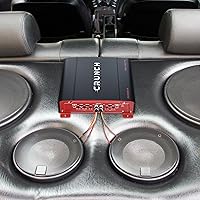
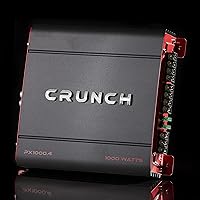
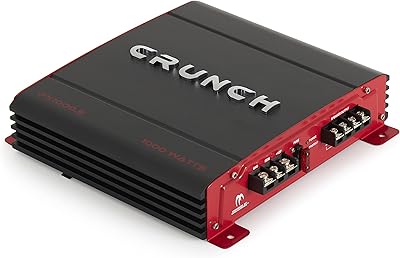
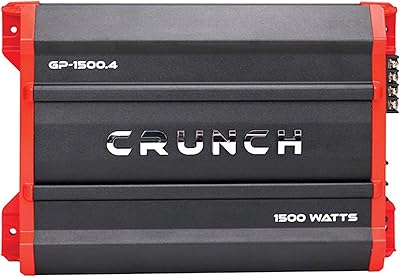
The Crunch PX 1000.4 4-Channel Car Amplifier sits in a competitive corner of the budget car audio market, and it earns its place without pretending to be something it's not. Built around Class A/B technology, it delivers noticeably cleaner audio than a factory head unit alone — though it won't rival high-end amps costing several times more. What makes it practical is its flexible channel setup: you can run it as a full 4-channel, drop to 3 channels, or bridge it down to 2. At just 5.4 pounds, it's easy to handle and fits in spots where heavier units simply won't. For everyday drivers wanting a genuine sound upgrade, the value is hard to dispute.
Features & Benefits

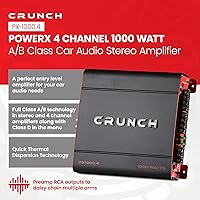
The PX 1000.4 packs a respectable spec sheet for its price tier. Its pulse width modulated power supply keeps energy delivery stable even when your vehicle's voltage dips, which matters more than most buyers realize. Each channel handles up to 250 watts at 2 ohms — enough headroom to drive a set of aftermarket coaxials with conviction, though don't expect concert-level output. A soft-start circuit prevents that annoying thump through your speakers when the system powers up. Speaker-level inputs mean you don't need a new head unit to use it, and the preamp RCA outputs let you add a subwoofer amp down the line without rewiring everything. The variable high-pass filter rounds things out nicely.

Best For

This 4-channel amp makes the most sense for a specific type of buyer. If you're upgrading from a stock stereo and don't want to replace your head unit, the ability to use speaker-level inputs is a genuine convenience most budget amps skip. It also suits trucks and SUVs well — the compact footprint and manageable weight make mounting under a seat or behind a panel surprisingly easy. Anyone building a bigger system will appreciate the RCA pass-through for adding a dedicated sub amp later without rewiring from scratch. It's less suited for listeners chasing truly high-fidelity sound or those pushing demanding speaker loads hard.

User Feedback

Buyers who've installed this Crunch amplifier tend to highlight easy wiring layout as the first thing they notice — especially those doing a DIY install for the first time. The improvement over a stock receiver gets consistently described as immediate and obvious. That said, a handful of users mention the unit runs warm during long drives at higher volume, so ventilation during mounting is worth thinking about. There's also some debate about whether the rated wattage fully translates to real-world output — not unusual at this price point, but worth keeping in mind. Long-term durability is a mixed bag, with most units holding up reliably but a few buyers reporting failures after the first year.

Pros

  • Speaker-level inputs let you plug straight into a factory head unit with no extra gear.
  • At just 5.4 pounds, this Crunch amplifier is genuinely easy to mount in tight spaces.
  • The soft-start circuit eliminates the annoying power-on thump through your speakers.
  • RCA preamp outputs make adding a sub amp later a straightforward wiring job.
  • Class A/B design delivers noticeably cleaner sound than most stock receivers at this price.
  • Flexible channel configuration — 4, 3, or bridged 2 — adapts to different speaker setups.
  • The PWM power supply handles minor voltage fluctuations without audible impact on sound.
  • Installation feedback from buyers is consistently positive, especially for first-time DIYers.
  • The variable high-pass filter helps protect tweeters and mids from unwanted low-frequency strain.
  • Strong value for drivers who just want a meaningful, affordable audio upgrade.

Cons

  • Actual output power in real-world conditions may not match the advertised peak wattage.
  • The unit runs noticeably warm during long drives, so ventilation during install really matters.
  • Onboard tuning controls are minimal — serious tuners will find the options limiting.
  • Listed dimensions conflict between the product description and the spec sheet, making pre-install planning harder.
  • Long-term reliability is inconsistent, with some units reported to fail within the first year.
  • Not well-suited for high-impedance or power-hungry speaker setups that need more headroom.
  • No built-in low-pass filter, which limits flexibility if you want to run a sub from this amp alone.
  • Customer support and warranty experience from Crunch has received mixed reviews from buyers.

Ratings

Our AI rating system analyzed thousands of verified global purchases of the Crunch PX 1000.4 4-Channel Car Amplifier, actively filtering out incentivized reviews, duplicate accounts, and bot-generated feedback to surface what real buyers actually experience. The scores below reflect an honest synthesis of both the strengths that keep buyers satisfied and the recurring pain points that show up across long-term ownership. Nothing is sugarcoated — the highs and the frustrations are weighted equally.

Value for Money
88%
For drivers on a tight budget who just want to hear a real difference over their factory setup, the PX 1000.4 consistently punches above what its price tag suggests. Most buyers feel they got more amp than they paid for, especially given the Class A/B design and feature set included at this tier.
A handful of users who pushed the amp hard over extended periods felt the value equation shifted after reliability issues surfaced within the first year. For casual listeners it holds up, but heavy users may find the long-term cost-per-use math less favorable than the initial price implies.
Sound Quality
76%
24%
The jump from a stock receiver to this Crunch amplifier is immediately audible — voices are clearer, midrange feels more defined, and the overall soundstage opens up noticeably during daily commutes. For drivers who have never run an external amp before, this improvement is genuinely satisfying.
Seasoned listeners will notice a ceiling fairly quickly. The audio lacks the refinement and separation you get from mid-range or premium amps, and at higher volumes some buyers report a slight compression effect that flattens the listening experience.
Installation Ease
91%
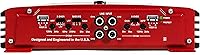
The wiring layout is clean and logically labeled, which first-time installers consistently praise. The inclusion of speaker-level inputs removes the need to rewire from a factory head unit, which alone saves hours of work and eliminates one of the most common DIY stumbling blocks.
There is a documented discrepancy between the dimensions listed in the product description and those in the spec sheet, which caused confusion for some buyers planning tight-fit installations. A few users had to remeasure and remount after discovering the physical unit did not match what they planned for.
Power Output Accuracy
61%
39%
In moderate listening conditions, the amp delivers clean and sufficient power for a full set of aftermarket speakers, and most casual drivers are happy with the volume and dynamics it provides across four channels during everyday driving.
The 1000W total figure is a peak rating that real-world performance rarely approaches. Users who researched RMS output before buying are generally satisfied, but those expecting peak-level numbers in practice feel misled — a frustration that shows up consistently across critical reviews.
Thermal Management
58%
42%
Under light to moderate use — shorter commutes, moderate volume levels, decent ventilation — the 4-channel amp runs at an acceptable temperature and does not cause concern. Buyers who mounted it in well-ventilated locations reported no heat-related issues over several months.
Extended high-volume sessions or poorly ventilated mounting locations cause the unit to run noticeably hot, and some buyers report thermal shutoff events during summer driving. This is a real-world limitation that should factor heavily into where and how you mount it.
Build Quality
67%
33%
The chassis feels reasonably solid for its weight class, and the binding posts and RCA jacks hold connections without excessive play. For a budget amp, it does not feel flimsy out of the box, and most buyers describe it as adequately constructed for the job.
Closer inspection reveals cost-saving choices in the internal components and casing finish that become more apparent over time. A subset of buyers noted that the unit showed signs of wear or internal failure faster than they expected for what is not light-duty use.
Channel Flexibility
84%
The ability to switch between 4-channel, 3-channel, and bridged 2-channel configurations gives this amp real versatility for different build stages. Buyers building out their system in phases especially appreciate being able to adapt the amp rather than replace it.
The bridging setup is straightforward in theory but the documentation provided is thin, and some users needed to rely on third-party guides to configure it correctly. There is no clearly labeled bridging diagram on the unit itself, which added confusion during install.
Compatibility
86%
Speaker-level inputs make this amp broadly compatible with virtually any vehicle still running a factory stereo, which is a significant advantage over amps that require a line output converter or aftermarket head unit to function. Buyers across a wide range of car and truck models reported no compatibility hurdles.
Users running higher-end head units with 5V preamp outputs noted that the RCA input sensitivity required careful adjustment to avoid noise. A small number of buyers also encountered ground loop hum that took troubleshooting effort to resolve.
System Expandability
82%
18%
The RCA preamp outputs make daisy-chaining a subwoofer amp genuinely simple, and buyers building staged systems praised this feature for keeping their future upgrade path open without any rewiring. It is a practical, forward-thinking inclusion at this price point.
The preamp output voltage is on the lower side, which means signal quality can degrade slightly when passed through to a second amplifier. Users with more sensitive downstream equipment noticed a modest but measurable increase in background noise.
Noise & Interference
63%
37%
When properly grounded and installed in a clean electrical environment, the amp operates quietly with no audible hiss at idle. Buyers who took the time to properly route cables and isolate the ground point were generally pleased with the noise floor.
Alternator whine and ground loop interference are recurring complaints from buyers who skipped careful grounding or ran power and signal cables in parallel. This is partly an installation issue, but the amp offers limited built-in noise rejection to compensate for less-than-ideal wiring conditions.
Long-Term Reliability
54%
46%
Many buyers report months of stable, uninterrupted performance under normal driving conditions and moderate use. Those who mounted it with proper ventilation and ran it conservatively seem to encounter far fewer issues than users who stress it regularly.
A meaningful portion of buyer feedback flags failures between the 10-month and 18-month mark, which is below average for an amplifier expected to last several years. The pattern is consistent enough across reviews to suggest component quality is a genuine long-term concern.
Filter & Tuning Options
69%
31%
The variable high-pass filter up to 120Hz is genuinely useful for protecting tweeters and door speakers from low-frequency distortion, and most buyers found it easy to adjust and effective at cleaning up the high-end response of their speaker setup.
Beyond the high-pass filter, the tuning options are limited. There is no onboard low-pass filter for subwoofer management, no bass boost, and no crossover flexibility for advanced configurations — gaps that more demanding users will feel immediately.
Weight & Portability
89%
At 5.4 pounds, this is one of the lighter amps in its output class, and that makes a real difference during solo installs in cramped spaces like under seats or behind rear panels. Truck owners in particular praised how easy it was to handle and position single-handedly.
The light weight is partly a reflection of the internal component choices, and a few buyers who have owned heavier, more robustly built amps noted that the weight difference does not inspire long-term confidence in the unit's durability.
Documentation & Support
51%
49%
The included quick-start wiring diagram is sufficient for straightforward 4-channel installs and covers the basics that a first-time user needs to get up and running without outside help in most standard scenarios.
Bridging instructions, filter calibration guidance, and troubleshooting information are thin to nonexistent in the manual. Customer support experiences from Crunch have been rated poorly by multiple buyers, with slow response times and unhelpful outcomes reported for warranty or defect claims.

Suitable for:

The Crunch PX 1000.4 4-Channel Car Amplifier is a strong fit for drivers who are taking their first real step beyond a stock audio system and don't want to spend a lot doing it. It's particularly well-matched for anyone still running a factory head unit, since the speaker-level inputs remove the need to buy a new deck just to add amplification. Truck and SUV owners will appreciate how light and compact it is — at 5.4 pounds, it tucks under a seat or behind a panel without much fuss. Those planning to grow their system over time will find the RCA preamp outputs useful for adding a subwoofer amp later without rewiring the entire setup. If your goal is simply to hear a clear, meaningful improvement over factory sound without a major investment or complicated install, this 4-channel amp delivers on that promise reliably.
Not suitable for:

Buyers chasing audiophile-grade clarity or planning to run a serious high-power system should look elsewhere — the Crunch PX 1000.4 4-Channel Car Amplifier is built for everyday drivers, not enthusiasts pushing premium speakers to their limits. The real-world output may fall short of the headline wattage figures, which is common at this price tier but still worth knowing if you're spec-matching to demanding speakers. Users who run their system at high volume for extended periods have flagged heat buildup as a concern, so anyone mounting it in a poorly ventilated spot may run into throttling or longevity issues. It's also not the right choice for someone who needs precise, fine-grained tuning controls — the onboard filter options are functional but basic. And if you're replacing an amp in a more mature, carefully tuned audio setup, the PX 1000.4 likely won't meet the performance bar you've already set.
Specifications

  • Model Number: This amplifier carries the official model designation PX1000.4 from Crunch.
  • Power Class: The unit operates in Class A/B mode, balancing efficiency with audio fidelity better than pure Class D designs at this tier.
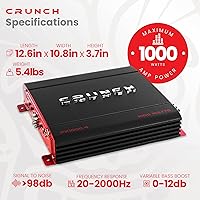
  • Total Power: Total system power output is rated at 1000W across all channels combined.
  • 4-Ohm Output: At a 4-ohm load, each of the four channels delivers 125W for a total of 500W RMS.
  • 2-Ohm Output: At a 2-ohm load, each channel steps up to 250W, accommodating lower-impedance speaker configurations.
  • Bridged Output: In bridged mono mode at 4 ohms, the amp produces 500W per bridged pair, enabling two high-power mono outputs.
  • Channel Config: The amplifier supports 4-channel, 3-channel, and bridged 2-channel operating modes for flexible system design.
  • Power Supply: A Pulse Width Modulated (PWM) switching power supply maintains stable output even when vehicle voltage fluctuates.
  • Input Types: Both speaker-level and RCA line-level inputs are supported, allowing connection to factory or aftermarket head units.
  • Preamp Outputs: Onboard RCA preamp outputs allow additional amplifiers to be daisy-chained into the system without signal loss.
  • High-Pass Filter: A variable high-pass filter is included, adjustable up to 120Hz to protect mid and high-frequency drivers from low-end distortion.
  • Turn-On Behavior: A slow unmute soft-start circuit delays audio output briefly at power-on to prevent speaker pop or thump noise.
  • Min. Supply Voltage: The amplifier requires a minimum supply voltage of 10V DC for reliable operation in a vehicle electrical system.
  • Weight: The unit weighs 5.4 pounds, making it notably lighter than many competing amplifiers in its output class.
  • Dimensions: Per the product description, physical dimensions are listed as 12.6 x 10.8 x 3.7 inches (L x W x H), though the spec sheet lists different figures — buyers should confirm before mounting.
  • Mounting Type: Designed exclusively for car-mount installation in vehicles such as cars, trucks, and SUVs.
  • Brand: Manufactured and sold under the Crunch brand, which specializes in budget-to-mid-range car audio electronics.
  • Availability: The product is confirmed as not discontinued by the manufacturer as of the latest available listing data.

Related Reviews

Crunch PX-1000.2 2-Channel Car Amplifier
72%
88%
Value for Money
76%
Sound Quality
83%
Ease of Installation
67%
Power Output
72%
Thermal Management
More
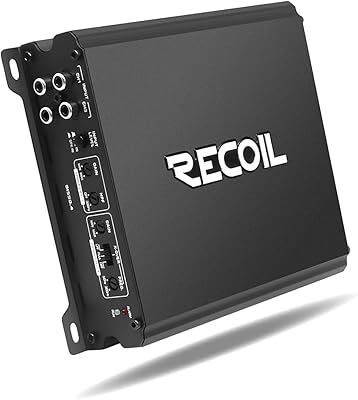
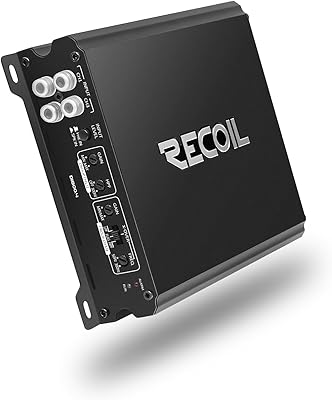
Recoil DI550.4 4-Channel Car Audio Amplifier
74%
91%
Value for Money
78%
Power Output
86%
Ease of Installation
74%
Sound Quality
67%
Build Quality
More
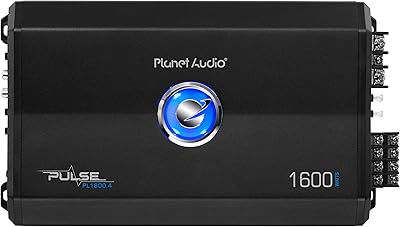
Planet Audio PL1600.4 4-Channel Car Amplifier
72%
88%
Value for Money
84%
Ease of Installation
74%
Sound Quality
58%
Power Output (Real-World)
61%
Build Quality
More
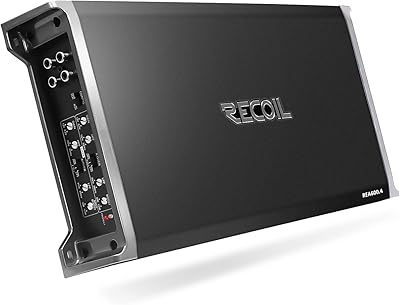
Recoil REA600.4 4-Channel Car Amplifier
74%
88%
Value for Money
76%
Sound Quality
79%
Build Quality
58%
Thermal Performance
83%
Ease of Installation
More
Recoil DI800.4 4-Channel Car Amplifier
75%
88%
Value for Money
51%
Power Accuracy
63%
Build Quality
79%
Thermal Management
86%
Ease of Installation
More
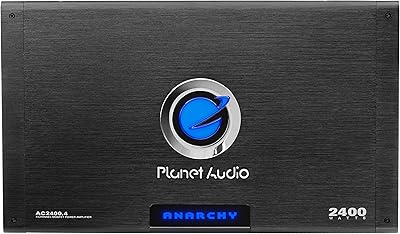
Planet Audio AC2400.4 4-Channel Car Amplifier
84%
95%
Power Output
89%
Sound Clarity
87%
Bass Performance
82%
Ease of Installation
65%
Thermals/Heat Management
More
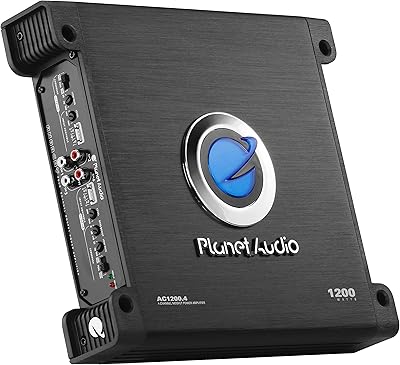
Planet Audio AC1200.4 4-Channel Car Amplifier
73%
88%
Value for Money
67%
Power Output
83%
Installation Ease
74%
Sound Quality
61%
Build Quality
More
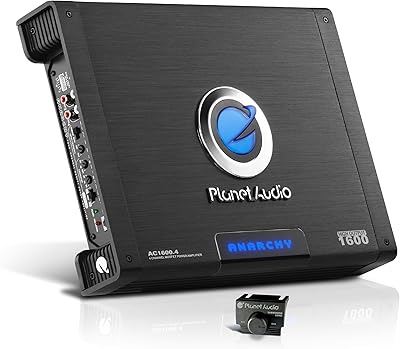
Planet Audio AC1600.4 Anarchy Series 4-Channel Car Amplifier
82%
94%
Power Output
88%
Sound Quality
70%
Ease of Installation
92%
Value for Money
85%
Build Quality
More
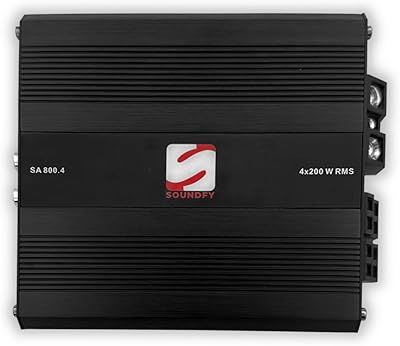
Soundfy SA 400.4 4-Channel Car Amplifier
71%
78%
Value for Money
72%
Sound Quality
63%
Power Output
58%
Build Quality
81%
Thermal Management
More
Stetsom HL 2000.4 2-Ohm 4-Channel Car Audio Amplifier
87%
93%
Power Output
85%
Cooling System Efficiency
88%
Sound Quality
91%
Ease of Installation
82%
Durability
More

FAQ

You can absolutely use it with a factory radio. The PX 1000.4 includes speaker-level inputs specifically for this situation — you connect the amp directly to the speaker outputs of your existing head unit. No aftermarket deck required.

Most buyers describe the improvement as immediate and clearly noticeable compared to a stock receiver. That said, how much louder depends on your speakers' efficiency and impedance. At 125W per channel into 4 ohms, there's meaningful headroom beyond what any built-in head unit amplifier can offer.

The Crunch PX 1000.4 4-Channel Car Amplifier includes RCA preamp outputs, so you can connect a dedicated subwoofer amplifier down the line without rewiring your whole setup. You can also bridge two of the four channels to drive a sub directly, though a standalone mono sub amp will typically perform better for that job.
No — this amp has a built-in soft-start circuit that delays audio output slightly when the unit powers on, which prevents that thump or pop noise. It's a small but genuinely useful feature, especially if you have sensitive speakers.

Some heat is expected from a Class A/B design under sustained use — it's not a defect. That said, ventilation during installation matters. Mounting it in a spot with restricted airflow, like tightly enclosed under carpet, can cause it to run hotter than it should. Leave some breathing room around the unit and you should be fine.

It's a peak figure, not a continuous RMS rating. In real-world conditions, you should expect clean power closer to the per-channel RMS ratings — 125W at 4 ohms or 250W at 2 ohms per channel. That's still solid output for this price range, just don't plan around the headline 1000W number when matching speakers.

The wiring layout is considered straightforward by most buyers, including first-timers. As long as you follow a basic amp wiring guide — power wire from the battery, ground to chassis, remote turn-on from the head unit, and speaker connections — you shouldn't run into major trouble. The speaker-level inputs also simplify things if you're working with a factory radio.

Yes, the amp supports 3-channel operation. A common setup is running channels 1 and 2 for front left and right speakers, then bridging channels 3 and 4 to push more power to a center speaker or a small subwoofer. It's a flexible configuration that suits a variety of setups.

Reliability is a mixed picture based on user feedback. Many buyers report months of trouble-free use, but a notable portion mention failures after the first year of regular use. Keeping it cool and not pushing it to its absolute limits consistently seems to extend its lifespan. If you anticipate heavy daily use at high volumes, it may be worth considering a step-up option with a longer warranty.

For a 1000W-rated amp, a 4-gauge power wire with an inline fuse rated around 80 to 100 amps near the battery is the typical recommendation. Always fuse close to the power source, not near the amp. If you're unsure, a basic amp wiring kit rated for 1000W will include appropriately sized wire and hardware for this class of amplifier.