Overview

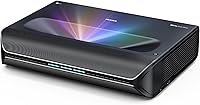
The NexiGo Aurora Pro MKII 4K UST Projector entered the market in early 2025 as a serious TV-replacement contender built for home theater enthusiasts who want cinematic scale without a ceiling mount. Its defining advantage over lamp-based or single-color laser rivals is the tri-color laser engine, which produces visibly richer, more accurate colors right out of the box. At 35.8 pounds, this is not something you reposition casually — it assumes a permanent spot on a media credenza or dedicated stand. That heft reflects genuine build quality, but prospective buyers need to settle on placement before the unit arrives.
Features & Benefits

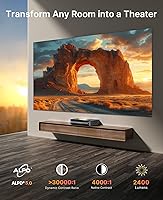
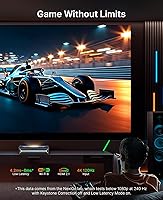
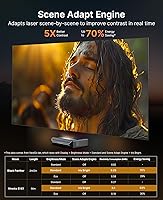
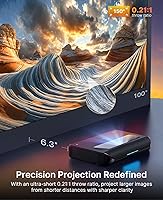
The Scene Adapt Engine is one of the Aurora Pro MKII's more technically impressive features, though it runs quietly in the background. It continuously adjusts laser output and the iris based on what is on screen, meaning dark scenes produce genuinely deep blacks rather than the washed-out grey common on cheaper projectors. The 0.21:1 throw ratio lets it sit just inches from the wall and still fill up to 150 inches of screen. Gamers get 4K at 120Hz with latency as low as 4.2ms, but that figure only applies when Gaming Mode is active — not every input automatically benefits. Dolby Vision and HDR10+ add real highlight punch for compatible streaming content.

Best For

This laser UST projector makes the most sense for homeowners who want a 100-inch-plus image without mounting hardware overhead or permanently blocking window light. It is especially appealing to Dolby Vision subscribers — Apple TV 4K, Disney+, Netflix — where proper HDR tone-mapping noticeably improves what you see. Gamers willing to configure the projector correctly will get genuine low-latency performance. That said, ambient light control is non-negotiable: pair this with an ALR Fresnel screen if your living room sees any daytime sun, or picture quality will disappoint. The 30,000-hour laser lifespan also makes it an unusually strong long-term investment compared to lamp-based alternatives.

User Feedback

With a 4.5-star average from over 260 early buyers, this tri-color laser projector has built a solid reputation quickly. Color accuracy and depth are the most common praises, with multiple reviewers noting it was the first projector that truly replaced their television. On the critical side, the unit's weight makes solo setup genuinely awkward, and some buyers report a real calibration learning curve before the image looks right. The dynamic dimming has drawn mixed opinions during sports viewing — some find it aggressive when scenes shift rapidly. A consistent note across critical reviews: the ALR screen is sold separately, adding meaningfully to an already significant total investment.

Pros

  • Tri-color ALPD 5.0 laser produces color accuracy that visibly outperforms single-color laser and lamp-based rivals.
  • The Scene Adapt Engine delivers genuinely deep blacks rather than the muddy grey typical of lower-contrast projectors.
  • A 0.21:1 throw ratio means it sits just inches from the wall while filling up to 150 inches of screen.
  • Dolby Vision and HDR10+ support adds real punch and detail to compatible streaming and disc content.
  • Gaming Mode brings latency down to as low as 4.2ms — quick enough to satisfy most competitive and console gamers.
  • The 30,000-hour laser lifespan means no lamp replacements for over 18 years of typical use.
  • Built-in 60W speakers with Dolby Atmos are genuinely capable for casual viewing without a separate audio system.
  • HDMI eARC support makes integrating a soundbar or AV receiver clean and straightforward.
  • Early owners consistently praise out-of-box color accuracy, with minimal calibration needed for a great picture.
  • 4K at 120Hz refresh rate support keeps this Aurora Pro MKII relevant for current-generation console gaming.

Cons

  • An ALR Fresnel screen is essential for decent daytime performance but is not included and costs extra.
  • At 35.8 pounds, solo setup is genuinely awkward and permanent placement is a real commitment.
  • The dynamic dimming behavior can feel aggressive during fast-moving sports content with rapidly shifting scenes.
  • Getting the lowest latency figures requires manually enabling Gaming Mode — it is not automatic on all inputs.
  • The calibration process has a learning curve that frustrates buyers who expect ideal picture quality immediately.
  • Total investment climbs significantly once you factor in a quality ALR screen and any audio upgrades.
  • No ambient light rejection screen in the box means the real-world setup cost is higher than the sticker price suggests.
  • Buyers in smaller apartments may find the unit physically large relative to the furniture available to support it.
  • Limited early ownership data means long-term reliability beyond the first year is still an open question.

Ratings

The NexiGo Aurora Pro MKII 4K UST Projector has been scored by our AI system after analyzing verified global buyer reviews, with spam, bot-generated, and incentivized feedback actively filtered out before any scoring was applied. The ratings below reflect a transparent synthesis of both what users genuinely loved and where they ran into frustration, so you get an honest picture of real-world ownership rather than a highlight reel.
Picture Quality
93%
Color accuracy is the single most praised attribute across verified reviews — owners consistently describe the image as noticeably richer and more lifelike than what they expected from a projector at any price. Dolby Vision content in particular draws strong praise, with dark scenes retaining shadow detail that competitors at this tier typically lose.
A small but consistent group of reviewers notes that out-of-box calibration does not always match the advertised color performance, and some initial settings can make skin tones look slightly oversaturated until the picture mode is properly tuned.
Contrast & Black Levels
91%
The Scene Adapt Engine earns specific praise from users who previously owned DLP or LCD projectors — the difference in black depth during night scenes or dark cinema content is immediately apparent and frequently cited as the feature that justified the purchase price.
During live sports or content with rapid scene transitions, a small number of users report that the dynamic dimming adjustment is visible as a brief flicker or brightness shift, which some find distracting enough to partially disable the feature in settings.
Gaming Performance
82%
18%
Verified gaming users report that once Gaming Mode is correctly activated, the response feel is surprisingly close to a traditional monitor — console gameplay at 4K and 120Hz on a 100-inch image is a combination that is difficult to replicate any other way at a comparable cost.
The low-latency figures require deliberate setup; Gaming Mode is not auto-detected on all inputs, and buyers who do not configure it manually will experience noticeably higher lag than advertised. The projector does not make this setting obvious during initial setup.
Ambient Light Performance
63%
37%
In controlled or dim lighting, this tri-color laser projector produces a bright, vivid image that holds up well — reviewers with dedicated media rooms or heavy curtains are generally very satisfied with how the picture performs in their environment.
In living rooms with natural daylight, the picture washes out significantly without an ALR Fresnel screen, which is not included in the box. Multiple buyers expressed surprise at this dependency, feeling the marketing understated how critical the right screen is for daytime use.
Setup & Installation
61%
39%
Once the Aurora Pro MKII is properly positioned and calibrated, the setup feels permanent and polished — users who invested the time report feeling genuinely satisfied with the result, and the physical footprint on a media console is manageable for most living rooms.
The 35.8-pound weight makes solo setup genuinely difficult, and several reviewers recommend having a second person present for the initial placement. The calibration process also has a real learning curve that frustrated buyers expecting a plug-and-play experience.
Color Accuracy
92%
The ΔE≈1 color accuracy rating translates into visibly faithful color reproduction that reviewers with calibrated display backgrounds specifically call out as a strength. Content that is well-mastered — particularly nature documentaries and premium streaming films — looks especially impressive.
Achieving the full accuracy potential requires time with the picture settings, and the default modes do not always represent the hardware at its best. Buyers without prior calibration experience may underestimate how much the initial tuning session matters.
Built-in Audio
74%
26%
The 60W speaker system with Dolby Atmos support is consistently described as more capable than expected for a projector, handling casual movie nights and streaming without requiring an immediate external audio purchase. Dialogue clarity draws positive mentions.
Buyers who use the Aurora Pro MKII as a primary home theater system typically upgrade to a soundbar or AV receiver within a few months, noting that bass response and room-filling sound require external hardware to reach their full potential.
Build Quality & Design
84%
The physical construction feels appropriately premium for the price tier — reviewers note the chassis feels dense and well-finished, and the unit does not produce the rattles or vibration some cheaper laser projectors develop over time.
The large footprint and significant weight mean it demands a sturdy, wide surface — a flimsy TV stand or narrow console is not a realistic placement option. A few users noted that finding furniture that fits both the unit dimensions and their room layout was an unexpected challenge.
Value for Money
78%
22%
Buyers who factor in the 30,000-hour laser lifespan and the elimination of lamp replacement costs over many years tend to view this laser UST projector as a reasonable long-term investment when compared to the recurring cost of lamp-based alternatives or the price of equivalent-size televisions.
The all-in cost — projector, ALR screen, potential soundbar, and any furniture to support it — adds up substantially beyond the sticker price, and several reviewers felt the total investment required was not made sufficiently clear at the time of purchase.
HDR Performance
88%
Dolby Vision tone-mapping on supported content — particularly through Apple TV 4K — earns strong praise from users who previously watched HDR content on standard televisions and were surprised at how different a properly tone-mapped laser image looks at this screen size.
HDR10+ performance, while technically supported, receives less attention in user feedback, and results vary depending on the source device and content platform. Not all HDR content sources fully trigger the projector's HDR processing pipeline.
Throw Distance Flexibility
89%
The 0.21:1 throw ratio is a practical advantage that multiple reviewers highlight — being able to produce a 100-inch image from a normal media console position, without any ceiling mounting or room reconfiguration, was a key decision factor for many buyers.
The ultra-short-throw design also means the projector is sensitive to placement precision — slight shifts in the unit's position can noticeably affect image alignment and keystone correction, so the final placement really does need to be locked in permanently.
Long-Term Reliability
77%
23%
The laser light source rated at 30,000 hours gives buyers confidence about long-term ownership, and early adopters from the March 2025 launch report no hardware issues in the months following purchase, with picture quality remaining consistent.
The product is still relatively new to the market, and the long-term track record of NexiGo hardware over multiple years is thinner than more established brands in the UST projector space — buyers prioritizing proven longevity may want to wait for a larger ownership data set.
Connectivity & Compatibility
79%
21%
HDMI eARC support is well-received among buyers who connect the unit to existing AV systems — the integration with soundbars and receivers works reliably, and compatibility with major streaming devices like Apple TV 4K and Fire TV Stick is consistently reported as trouble-free.
The HDMI-only input configuration leaves some buyers wishing for additional connectivity options, and a few reviewers noted that getting the full Dolby Vision signal chain to work required specific HDMI cable upgrades that were not mentioned in the setup documentation.
Ease of Calibration
58%
42%
For buyers with prior home theater experience or a willingness to invest a few hours at setup, the picture controls are comprehensive enough to dial in an excellent image — enthusiasts appreciate having that level of adjustability available.
For mainstream buyers expecting a ready-to-watch experience, the calibration process is a genuine friction point. Several reviewers describe spending significant time adjusting settings before the picture looked as good as reviews had led them to expect.
Energy Efficiency
83%
The Scene Adapt Engine dynamically reduces laser output based on content brightness, which reviewers who track home energy usage noted results in meaningfully lower power draw during typical movie-watching compared to always-on full-brightness operation.
In maximum brightness mode, the unit draws considerably more power, and the fan noise increases noticeably under heavy load — buyers in small, quiet rooms may find the combination of fan volume and heat output more noticeable than expected during extended sessions.

Suitable for:

The NexiGo Aurora Pro MKII 4K UST Projector is purpose-built for homeowners who want a genuinely large-screen cinematic experience without the complexity of a ceiling-mounted throw projector. If your living room or dedicated media room has a flat wall, a media console to rest this on, and reasonable control over incoming light, this laser UST projector can deliver an image that a flat-panel television simply cannot match at comparable screen sizes. Dolby Vision subscribers who stream regularly via Apple TV 4K, Disney+, or Netflix will notice a real difference in how highlights and shadow detail are handled compared to lesser projectors. Gamers who want massive screen real estate and are willing to enable Gaming Mode and configure their input settings properly will find the low-latency performance genuinely competitive. Buyers thinking long-term will also appreciate that the 30,000-hour laser lifespan eliminates the lamp replacement costs that make traditional projector ownership quietly expensive over time.
Not suitable for:

The NexiGo Aurora Pro MKII 4K UST Projector is a poor fit for anyone expecting a plug-and-play experience in a sun-filled room. Without an ALR Fresnel screen — which is sold separately and adds meaningfully to the total cost — daytime viewing in a bright living room will look washed out and disappointing. At 35.8 pounds, this is not a projector you move from room to room or set up for occasional movie nights; it is a permanent installation, and buyers who want flexibility will find that constraint frustrating. Anyone on a tighter budget should think carefully about the full cost of ownership, since the projector itself, an appropriate ALR screen, and potentially a soundbar or AV receiver add up quickly. Renters or anyone uncertain about their long-term living situation may also find committing to a fixed, heavy, wall-dependent setup impractical.
Specifications

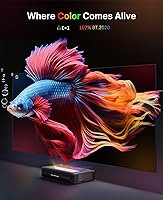
  • Projection Technology: Uses an ALPD 5.0 tri-color laser engine, which produces more accurate and vibrant color than single-color laser or traditional lamp-based systems.
  • Native Resolution: Outputs a native 3840 x 2160 (4K UHD) image, delivering sharp detail across the full projected area.
  • Brightness: Rated at 2,400 lumens, which is sufficient for controlled-light environments but benefits significantly from an ALR screen in brighter rooms.
  • Contrast Ratio: Achieves a dynamic contrast ratio exceeding 30,000:1 via the Scene Adapt Engine, which adjusts laser output and iris in real time based on on-screen content.
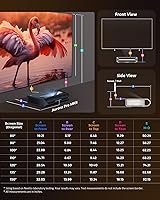
  • Throw Ratio: Features a 0.21:1 ultra-short throw ratio, allowing the unit to sit just inches from the wall while projecting images up to 150 inches diagonally.
  • Color Gamut: Covers 107% of the BT.2020 color space, exceeding standard wide-color-gamut requirements for professional and consumer HDR content.
  • Color Accuracy: Rated at ΔE≈1, meaning colors on screen are extremely close to the original source signal with minimal deviation visible to the human eye.
  • HDR Support: Compatible with Dolby Vision and HDR10+, enabling proper tone-mapping for high-dynamic-range content from supported streaming services and players.
  • Refresh Rate: Supports 4K resolution at up to 120Hz, keeping motion smooth during fast-paced gaming and high-frame-rate video content.
  • Gaming Latency: In Gaming Mode, input lag measures between 4.2ms and 8ms, which is competitive with many dedicated gaming monitors at this resolution.
  • Audio System: Equipped with 60W built-in speakers and Dolby Atmos decoding, with HDMI eARC support for connecting external soundbars or AV receivers.
  • 3D Support: Supports 3D projection formats, making it compatible with 3D Blu-ray content and other 3D-capable source devices.
  • Laser Lifespan: The laser light source is rated for 30,000 hours of use, which equates to roughly 18 or more years at typical household viewing habits.
  • Connectivity: Connects to source devices via HDMI, with HDMI eARC available for audio pass-through to external sound systems.
  • Dimensions: Measures 21.54 x 16.04 x 4.81 inches, requiring a wide, stable surface such as a media console or dedicated projector stand.
  • Weight: Weighs 35.8 pounds, making it a permanent-installation unit that is not practical to move between rooms or set up temporarily.
  • Max Screen Size: Capable of projecting a maximum image size of 150 inches diagonally when placed at the correct distance from a compatible screen surface.
  • Model Number: Sold under model number PJ92 MKII, which is the second-generation variant of NexiGo's Aurora Pro laser UST projector line.

Related Reviews
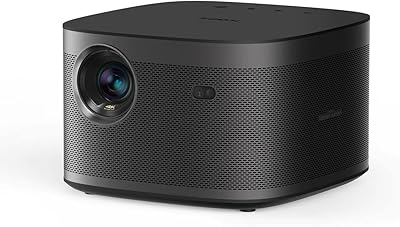
ONOAYO ONO3 Pro Portable Projector
80%
83%
Image Quality
71%
Brightness Performance
78%
Auto-Focus & Keystone Correction
86%
Built-in Smart OS & App Access
74%
Audio Quality
More
Lisowod L61 Pro Portable Projector
78%
83%
Image Clarity & Sharpness
61%
Brightness & Ambient Light Performance
92%
Auto-Focus & Setup Speed
78%
Built-in Streaming & App Ecosystem
81%
Audio Quality
More
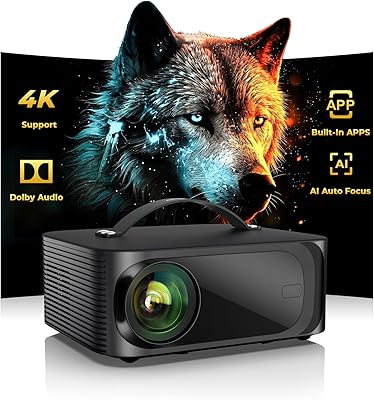
XGIMI Horizon Pro 4K Home Theater Projector
75%
91%
Picture Quality
67%
Brightness & Ambient Light Performance
88%
Auto-Setup & Keystone Correction
79%
Built-in Audio Quality
82%
App Ecosystem & Smart TV Experience
More
Epson Home Cinema 5050UB 4K PRO-UHD Projector
85%
94%
Picture Quality
90%
Brightness
93%
Color Accuracy
85%
Setup & Installation
91%
HDR Performance
More
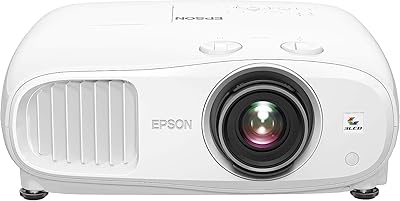
Epson Home Cinema 3800 4K Projector
75%
93%
Color Accuracy
91%
Brightness Performance
78%
Image Sharpness & 4K Detail
82%
HDR Performance
84%
Contrast & Black Levels
More
Epson Home Cinema 3200 4K PRO-UHD Projector
83%
93%
Image Quality
89%
Brightness Performance
74%
Ease of Setup
91%
HDR Performance
88%
Gaming Performance
More
Hisense PX3-PRO Ultra Short Throw 4K Laser Projector
86%
94%
Image Quality
88%
Setup & Installation
91%
Brightness in Ambient Light
92%
Color Accuracy
85%
Sound Quality
More
NexiGo TriVision Ultra 4K Portable Projector
78%
91%
Picture Quality
93%
Color Accuracy
88%
Gaming Performance
67%
Brightness & Ambient Light Handling
74%
Portability & Form Factor
More
AWOL Vision LTV-3500 Pro UST Triple Laser Projector
86%
93%
Image Quality
90%
Brightness in Daylight
89%
Audio Performance (Dolby Atmos)
92%
Color Accuracy
68%
Ease of Setup
More
Epson LS11000 4K Laser Home Theater Projector
79%
91%
Picture Quality
93%
Color Accuracy
83%
Brightness Performance
88%
HDR Performance
86%
Gaming Performance
More

FAQ

A flat white wall will work in a fully darkened room, but it is far from ideal. For the best picture — especially if your room gets any natural light during the day — you really want an ALR (Ambient Light Rejecting) Fresnel screen. These screens are designed specifically for ultra-short-throw projectors and dramatically improve contrast and color in mixed-light conditions. Just keep in mind the screen is not included and adds to your total cost.

With a 0.21:1 throw ratio, the Aurora Pro MKII can sit as little as a few inches from the wall to produce a large image. For a 100-inch screen, you are looking at roughly 20 to 25 inches of distance from the screen surface. Most standard media consoles will place it at a workable depth, but it is worth measuring your setup before purchasing.

You need to manually switch into Gaming Mode to access that low-latency figure. It is not automatic across all inputs or content types. Once enabled, most users find the process straightforward, but do not assume the projector defaults to its lowest latency setting out of the box — check your input settings and activate Gaming Mode before your first gaming session.

It can, but with a few honest caveats. If your living room has controllable lighting and you are willing to invest in an ALR screen, the image quality at 100 inches or more is genuinely impressive and hard to match with any flat-panel TV at a comparable size. If you watch a lot of content in a bright, sunny room without the ability to dim it, you will likely be frustrated — a TV will outperform this projector in those conditions.

Dolby Vision delivery depends on both your streaming app and your connected device, not just the projector itself. When paired with a Dolby Vision-capable source like an Apple TV 4K, you can access Dolby Vision streams from Netflix, Disney+, and Apple TV+, among others. Make sure your source device and HDMI cable are both Dolby Vision compatible for the full signal chain to work correctly.

Honestly, yes — having a second person during initial setup makes a meaningful difference. The unit is wide and heavy, and positioning it accurately on a media console while keeping cables managed is awkward solo. Once it is placed and calibrated, you likely will not move it again, but plan for a two-person setup day.

Ultra-short-throw laser projectors generally run quieter than lamp-based models because the laser engine produces less heat overall. The Aurora Pro MKII is not silent, but most users report the fan noise stays in the background during movies and is rarely distracting. In a very quiet room at low volume, you may notice it — but during normal playback it is not a common complaint.

The 60W built-in speaker system with Dolby Atmos is more capable than what you find in most projectors, and for casual viewing it holds up reasonably well. That said, if you are building a dedicated home theater setup, a soundbar or AV receiver will noticeably improve dialogue clarity, bass response, and overall immersion. Think of the built-in speakers as a solid convenience feature rather than an audiophile-grade system.

There is a learning curve, and several early buyers have flagged this. The projector offers enough picture controls that you can spend real time dialing it in, which is great for enthusiasts but potentially overwhelming for buyers who just want to plug in and watch. Starting with the default picture preset and adjusting from there in small steps is the most practical approach for most users.

For movies and narrative television, the Scene Adapt Engine tends to work unobtrusively — you notice better contrast, not the adjustment itself. Where some users have flagged it as slightly aggressive is during live sports or content with rapid scene changes, where the dimming can occasionally feel like a brief flicker as the system recalibrates. It is adjustable in the settings, so if it bothers you, you have options to tune the behavior.