Overview

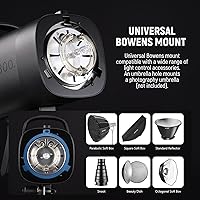
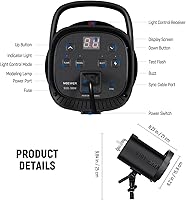
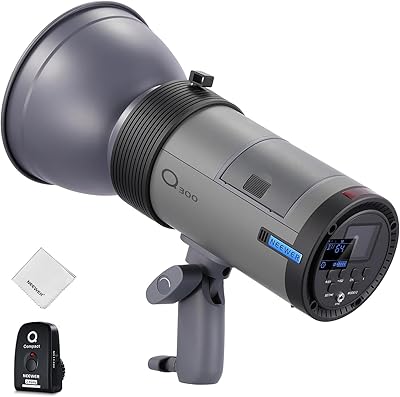
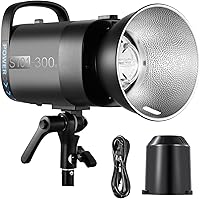
The NEEWER S101-300W 300W Studio Monolight Flash sits in a practical sweet spot for photographers who have outgrown their speedlights but aren't ready to invest in high-end professional strobes. With 300Ws of output and a consistent 5600K color temperature, it delivers daylight-balanced light that holds up reliably across a full shoot. At just under 6.6 pounds, the unit is compact enough to move around a small studio without much hassle. The standard Bowens mount is arguably its most strategic feature — it plugs you into a vast ecosystem of modifiers from day one. Capable results at an enthusiast-friendly price point.
Features & Benefits

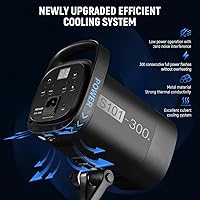
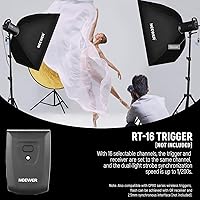
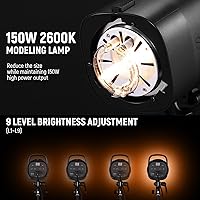
The 150W modeling lamp is one of the more useful practical touches here. With nine brightness levels, you can shape and preview your light before ever firing a flash — a genuine time-saver during portrait or product setups. The S1/S2 optical slave modes make it easy to fold this unit into an existing multi-light rig without needing a dedicated radio trigger, though Neewer's RT-16 trigger (sold separately) extends range and adds 16-channel radio sync up to 100 feet. Flash duration lands between 1/2000s and 1/800s depending on power, which is quick enough for most commercial work. The cooling fan runs quietly during extended sessions, and the memory function means your power settings survive the power switch.

Best For

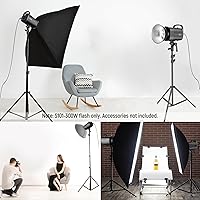
This studio monolight makes the most sense for home studio photographers who shoot portraits, products, or food and need a light source that behaves predictably session after session. It's a natural upgrade path for anyone still relying on speedlights — the jump in output and control is immediately noticeable. Photographers who already own a Bowens-compatible softbox or beauty dish will find the transition effortless. Small commercial studios on a tight budget could put it to work as a reliable fill or background light. Wedding and event photographers building a portable studio kit might appreciate its light weight, though the recycle time at full power is worth factoring into fast-turnaround shooting plans.

User Feedback

With a 4.4-star average across roughly 80 reviews, the S101-300W has a generally positive reception, though the sample size is modest enough that you shouldn't read too deeply into any single trend. Buyers most often praise the consistent light output and the build quality relative to the price — this Neewer flash unit genuinely punches above what the price tag might suggest. A handful of users have flagged slower recycle times when running at full power, and a few mention wanting more reliable optical triggering in mixed-light environments. The cooling fan earns favorable mentions for staying quiet during longer shoots. Several reviewers compared it favorably to the Godox SK300II, citing similar performance at a comparable price.

Pros

  • Consistent 5600K color temperature holds steady across a full shoot, reducing color correction work in post.
  • The 150W modeling lamp with nine brightness levels makes light shaping genuinely previewable before you fire.
  • Standard Bowens mount works out of the box with a wide range of third-party softboxes, grids, and beauty dishes.
  • At under 6.6 pounds, the S101-300W is easy to reposition solo without needing help or heavy-duty stands.
  • Memory function retains your last-used power settings, which cuts setup time on repeat shoot configurations noticeably.
  • S1 and S2 optical slave modes let you expand into multi-light setups without buying triggers right away.
  • The cooling fan handles sustained full-power shooting sessions without becoming an audible distraction in quiet studios.
  • Guide number of 58 (at 1m, ISO 100) gives you meaningful flexibility in aperture and flash distance calculations.
  • Build quality consistently surprises buyers who expect less solidity at this price tier.

Cons

  • Recycle time at full 300Ws output stretches noticeably — a real issue during fast-paced portrait or event work.
  • Radio sync requires purchasing the NEEWER RT-16 trigger separately; nothing wireless is included in the box.
  • Optical slave triggering becomes unreliable in mixed ambient light conditions or if the sensor isn't aimed correctly.
  • Third-party radio trigger compatibility is inconsistent — some systems sync cleanly, others produce intermittent misfires.
  • Flash duration at full power drops to around 1/800s, which limits usefulness for high-motion or splash photography.
  • The modeling lamp can feel underpowered at lower brightness settings when used with larger, more diffusive modifiers.
  • No TTL or HSS support means photographers coming from an automated speedlight workflow face a manual-only adjustment curve.
  • Some external panels use plastics that feel noticeably lighter than comparable units in adjacent price brackets.
  • With only 82 reviews in circulation, long-term reliability data is still limited compared to more established competing models.

Ratings

The NEEWER S101-300W 300W Studio Monolight Flash has been scored across 12 categories by our AI system after analyzing verified buyer reviews from global markets, with spam, bot-generated, and incentivized submissions actively filtered out. The scores reflect real-world photographer experiences — from home portrait setups to small commercial studios — and don't shy away from the friction points buyers consistently flagged alongside the genuine strengths.

Light Output Consistency
88%
Photographers repeatedly note that this studio monolight holds its color temperature and power level reliably across a full shoot — a genuinely important trait when shooting tethered or matching exposures across a product catalog. At 5600K, skin tones and product colors render predictably without post-processing corrections.
A small number of users noticed minor output variance when rapidly firing at higher power levels during burst-style sequences. It's not a dealbreaker for most workflows, but photographers running demanding commercial schedules may notice it in critical side-by-side comparisons.
Build Quality
83%
For its price tier, the S101-300W feels more solid than buyers expect. The housing doesn't flex or creak, the control dial has a firm, tactile response, and the flash tube housing looks and feels properly protected. Several reviewers upgraded from cheaper units and were pleasantly surprised.
A few buyers noted that some external plastic panels feel a step below what you'd get from higher-end brands like Profoto or even Godox's premium lines. It's a cosmetic and tactile observation rather than a functional one, but worth knowing if longevity under heavy professional use is a concern.
Value for Money
92%
This is consistently the most praised aspect across reviews. Photographers who compared the S101-300W against similarly priced competitors — including the Godox SK300II — frequently landed on this unit as the better overall package when weighing output, modeling lamp quality, and mount compatibility together.
The value equation holds up well at the entry-to-mid level, but photographers who start pushing the unit hard in demanding commercial environments may find themselves eyeing a step-up investment sooner than expected. At this price point, some compromise in long-term durability is always a possibility.
Modeling Lamp Usefulness
86%
The 150W modeling lamp with nine discrete brightness steps is a genuine working tool, not just a checkbox feature. Photographers use it to preview shadow placement and modifier falloff before committing to a shot, which saves real time when fine-tuning softbox or beauty dish setups.
At its lower brightness settings, the modeling lamp output can feel insufficient in well-lit studios or when working with larger modifiers that diffuse the light significantly. A handful of users wished for a brighter ceiling, particularly for fine-tuning modifier shapes in detail-sensitive product work.
Recycle Time
71%
29%
At low to mid power settings, the recycle time is responsive enough for steady portrait work — most users report snappy performance that keeps up comfortably with natural shooting rhythms when the unit isn't pushed to full power.
At or near full 300Ws output, the recycle time stretches toward the longer end of its 0.4–2.5s range, which some photographers found disruptive during fast-paced portrait sessions or event work. This is one of the most consistently mentioned friction points across verified reviews.
Cooling System & Fan Noise
84%
The silent fan design genuinely earns its label in real-world use. Photographers shooting in quiet studio environments — including video-adjacent setups with live audio — noted that the fan noise doesn't register as intrusive, even during extended continuous-fire sessions.
Under prolonged high-power use, the fan audibly ramps up to manage heat, which a few reviewers found noticeable in very quiet environments. It's not loud by any objective measure, but it's worth factoring in if your studio doubles as a sound-sensitive recording space.
Optical Slave Reliability
72%
28%
In controlled studio environments with a single master trigger, both S1 and S2 optical slave modes work reliably and allow photographers to build out multi-light setups without spending extra on radio triggers right away. It's a practical entry point for photographers building a lighting kit incrementally.
In mixed ambient light conditions or when the slave sensor isn't well-positioned toward the master flash, triggering inconsistencies surface more often than users would like. Several reviewers recommend investing in the RT-16 radio trigger — sold separately — if reliable sync is a priority in unpredictable lighting environments.
Bowens Mount Compatibility
91%
The standard Bowens mount works cleanly with third-party modifiers — softboxes, beauty dishes, snoots, and grids from a wide range of brands snap on without adapters or fitment issues. For photographers who already own a Bowens-compatible modifier collection, this unit integrates immediately.
There's very little to fault here. The only minor complaint from a small subset of users involves slight rotational play with some third-party modifiers, which can require repositioning mid-shoot. It's a fitment tolerance issue common across affordable Bowens-mount units, not unique to this one.
Ease of Setup & Use
89%
The control panel is logically laid out and doesn't require consulting a manual after the first use. The memory function is a practical touch — power settings are retained after switching off, which reduces setup friction noticeably when returning to recurring shoot configurations.
New monolight users occasionally find the power adjustment increments less intuitive than expected when coming from a TTL-based speedlight background. There's a brief learning curve around manual exposure adjustment, though it's more a discipline shift than a product design flaw.
Flash Duration Performance
82%
18%
A flash duration ceiling of 1/2000s at lower power settings gives this studio monolight genuine utility for freezing motion — useful for product photographers shooting reflective objects or portrait photographers capturing expressive movement without relying on high shutter speeds alone.
At full power, flash duration drops to around 1/800s, which is adequate but not exceptional. Photographers specifically targeting splash or high-motion product photography may find this limiting compared to purpose-built high-speed units, though for typical portrait and still-life work it's a non-issue.
Portability & Weight
80%
20%
At 6.59 pounds, this Neewer flash unit is manageable enough for solo photographers to set up, reposition, and break down without needing a second pair of hands. The 180-degree tilt range adds flexibility when working in tight spaces or unconventional angles.
It's not a unit you'd choose for run-and-gun location work — it requires a sturdy light stand and a power source. Compared to battery-powered monolights, portability is inherently limited, which is an expected constraint at this product tier rather than a design shortcoming.
Trigger & Sync Ecosystem
68%
32%
Compatibility with the NEEWER RT-16 radio trigger extends the unit's range and reliability significantly, and photographers already within the Neewer ecosystem can integrate it without friction. The 16-channel radio sync supports clean operation across multi-light setups in larger spaces.
The RT-16 trigger is not included, which means out-of-box radio sync isn't available — a point that catches some buyers off guard. Third-party trigger compatibility is functional but not universally consistent, and a few users report intermittent sync issues with non-Neewer radio systems.

Suitable for:

The NEEWER S101-300W 300W Studio Monolight Flash is a strong fit for photographers who have hit the ceiling of what speedlights can offer and are ready for a proper studio lighting setup without committing to a high-end investment. Home studio shooters — whether they're doing portraits, product flats, or food photography — will appreciate the reliable, repeatable output that makes it easier to match exposures across a session and cut down on post-processing corrections. Photographers who already own a collection of Bowens-compatible modifiers will find this unit integrates into their existing kit without any adapter headaches. Small commercial studios operating on tight budgets can put the S101-300W to work as a reliable fill or background light alongside more powerful key lights. It's also a reasonable choice for event or wedding photographers building a portable studio kit for on-location portrait setups, as long as they have access to a power outlet and a sturdy light stand.

Not suitable for:

The NEEWER S101-300W 300W Studio Monolight Flash is not the right tool for photographers who need a fully portable, battery-powered solution for outdoor or remote location shoots — it requires a mains power source, full stop. Photographers who regularly work at full power in fast-paced, high-volume shooting environments may find the recycle time at maximum output disruptive, particularly during live events where missed moments matter. If your work demands pinpoint-accurate exposure control or highly consistent output at the level required for fine art printing or calibrated commercial catalog work, a higher-tier unit from Godox's AD or QT series — or a step up to Profoto — will serve you better in the long run. The optical slave triggering, while functional in clean studio conditions, isn't reliable enough for photographers who need bulletproof sync in ambient-heavy environments without purchasing the RT-16 trigger separately. Advanced users expecting TTL automation or high-speed sync beyond 1/200s will also need to look elsewhere, as this studio monolight operates entirely in manual mode.
Specifications

  • Max Power Output: The unit delivers a maximum flash energy of 300Ws, providing sufficient power for a wide range of studio lighting scenarios including portraits, product flats, and commercial still life.
  • Guide Number: Rated at GN58 measured at 1m with ISO 100, giving photographers a reliable baseline for calculating aperture and flash-to-subject distance in manual exposure setups.
  • Color Temperature: Maintains a consistent 5600K daylight-balanced color temperature across all power levels, minimizing color shift between shots and reducing the need for white balance corrections in post.
  • Flash Power Range: Power is adjustable across a 7.0–10 scale corresponding to 1/8 through full power (1/1), offering meaningful control over output for diverse exposure scenarios.
  • Flash Duration: Flash duration ranges from 1/2000s at lower power settings to 1/800s at full power, providing useful motion-stopping capability for most portrait and product work.
  • Recycling Time: Recycling time ranges from 0.4s at minimum power to 2.5s at maximum output, with longer waits at full power being a noted real-world consideration for high-volume shooting.
  • Modeling Lamp: A 150W modeling lamp with 9 discrete brightness levels (L1 through L9) allows photographers to preview light shaping, shadow placement, and modifier falloff before committing to a flash exposure.
  • Mount Type: Equipped with a standard Bowens mount and a secondary umbrella socket, making it compatible with a broad ecosystem of third-party light modifiers including softboxes, beauty dishes, and snoots.
  • Trigger Modes: Supports S1 optical slave mode for triggering by a manual master flash, and S2 optical slave mode for use with TTL master units that emit a pre-flash signal.
  • Sync Speed: Supports camera sync speeds up to 1/200s when used with the NEEWER RT-16 radio trigger (sold separately) operating within a 100ft (30m) range across 16 selectable channels.
  • Cooling System: Uses a silent fan cooling design with optimized intake vents and an enlarged air inlet area to manage heat during extended shooting sessions without audible disruption.
  • Memory Function: Retains the last-used power and modeling lamp settings after the unit is powered off, eliminating the need to manually reconfigure settings at the start of each new session.
  • Tilt Range: The light stand mount adapter supports 180-degree tilt adjustment, giving photographers flexible angle positioning for overhead, angled, or ground-level lighting configurations.
  • Dimensions: The unit measures 6.2 x 10.6 x 10.6 inches, making it compact relative to its power class and manageable within smaller home studio spaces.
  • Weight: Weighs 6.59 pounds, which is light enough for a single photographer to mount, reposition, and break down without needing assistance during a typical studio session.
  • Included Accessories: Ships with a standard reflector and a sync cable; the NEEWER RT-16 radio trigger is not included and must be purchased separately for wireless radio triggering functionality.

Related Reviews
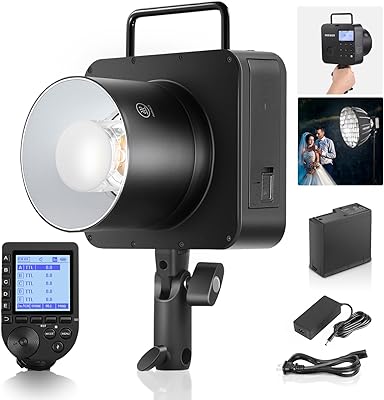
NEEWER Q6 600Ws Outdoor Studio Flash
86%
92%
Flash Power and Performance
85%
Wireless Control and App Integration
88%
Color Consistency and Temperature Stability
90%
Recycle Time and Burst Shooting Capability
87%
Build Quality and Durability
More
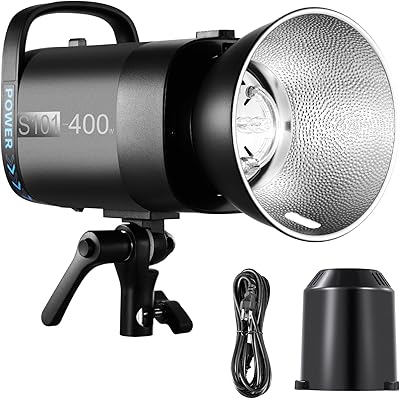
NEEWER S101-400W Strobe Flash Light
85%
91%
Lighting Power & Performance
86%
Ease of Use
80%
Recycle Time
88%
Build Quality
85%
Cooling Efficiency
More
NEEWER Q4 400Ws Outdoor Flash Strobe
81%
91%
Output Power & Performance
88%
Battery Life
86%
Recycle Speed
83%
TTL Accuracy
87%
High Speed Sync (HSS)
More
NEEWER Q300 300Ws Outdoor Battery Strobe Monolight
82%
91%
Battery Life & Endurance
87%
Flash Output Consistency
74%
Wireless Performance
78%
Recycle Speed
83%
Build Quality & Durability
More
NEEWER Q200 200Ws Outdoor Studio Monolight
79%
88%
Light Output & Power
71%
Battery Life
76%
HSS Performance
69%
TTL Accuracy
63%
App Control & Connectivity
More
NEEWER Z160 Camera Flash
81%
94%
Portability & Form Factor
83%
Build Quality
61%
Flash Output Power
88%
Battery Life & Charging
86%
Recycle Time
More
NEEWER TT560 Speedlite Flash
75%
91%
Value for Money
74%
Ease of Use
83%
Build Quality
78%
Compatibility
77%
Light Output & Power Range
More
NEEWER NW620 Speedlite Flash
75%
88%
Value for Money
84%
Flash Output & Power
79%
Build Quality
91%
LCD Display & Controls
62%
Recycling Time
More
Godox AD600Pro Outdoor Studio Strobe Flash
81%
93%
Output Power & Consistency
78%
High-Speed Sync Performance
71%
Battery Life & Real-World Endurance
89%
Build Quality & Durability
84%
Wireless System & TTL Accuracy
More
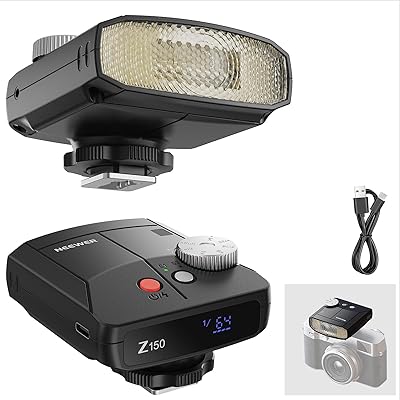
NEEWER Z150 Mini Hot Shoe Flash
81%
94%
Portability & Form Factor
91%
Battery Life & Charging
71%
Light Output & Power
89%
Ease of Use
86%
S2 Optical Slave Performance
More

FAQ

No radio trigger is included in the box — you get the flash unit and a standard reflector. If you want wireless radio sync, you'll need to pick up the NEEWER RT-16 trigger separately. Out of the box, you can trigger it optically using the built-in S1 or S2 slave modes, which work well in a controlled studio with no competing ambient light.

Yes, the standard Bowens mount is one of the most widely used fitting types in studio photography, and third-party modifiers from brands like Godox, Neewer, Glow, and many others will fit without adapters. A small number of users have noted minor rotational play with some third-party accessories, but functional compatibility is broadly reliable.

Most users describe the fan as genuinely quiet during normal shooting, and it doesn't register as intrusive in typical studio conditions. That said, if you're recording synchronized audio in a very quiet room, you may notice the fan audibly spin up after sustained full-power sequences. For dedicated video production with live audio capture, it's worth testing in your specific environment first.

Yes — any camera with a standard PC sync port or a hot shoe sync cable connection can fire the unit directly. For wireless triggering, the S1 optical slave mode will fire the flash when it detects another flash firing, including your camera's pop-up flash if it has one. For cleaner operation, a radio trigger like the RT-16 gives you more reliable control.

At full 300Ws output, expect recycle times toward the upper end of the rated 0.4–2.5s range — typically around 2 to 2.5 seconds. At mid-range power settings, it's noticeably faster and more comfortable to shoot with. If your work involves rapid-fire portrait sequences or high-volume event shooting, that full-power lag is worth factoring into your workflow expectations.

It requires a mains power connection, so fully remote outdoor shoots without a generator or AC power source aren't practical. For on-location work indoors — hotel ballrooms, rented studios, or venues with accessible outlets — it works fine. If you regularly shoot outdoors without power access, a battery-powered monolight is a better fit for your needs.

The 150W lamp with nine brightness levels is genuinely useful for previewing shadow placement and seeing how a modifier shapes the light before you start firing flashes. At lower brightness settings it can feel a bit dim when working with large diffusive modifiers, but at mid to high levels it gives you a clear, practical preview of your final look.

Absolutely — this is one of the more practical aspects of its design. You can set one unit to fire from your camera sync or trigger and set the others to S1 slave mode so they pop simultaneously. For more complex setups or when working in environments with mixed ambient light, using radio triggers on each unit gives you more reliable and consistent results.

In typical portrait or product shooting conditions, the cooling system handles sustained use well. Neewer rates it for 300 consecutive full-power flashes without overheating under test conditions. In real-world use, photographers report comfortable extended sessions without thermal issues, though the fan does ramp up more audibly as the unit works harder over time.

Both units are closely matched in their core specs and price positioning, and buyers who have tried both tend to compare them favorably. The S101-300W is frequently noted for its modeling lamp quality and build feel, while the Godox SK300II benefits from a larger established user community and broader third-party trigger ecosystem. Either is a solid choice — the decision often comes down to which trigger system you're already invested in or plan to build around.

Where to Buy