Overview

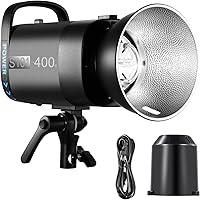
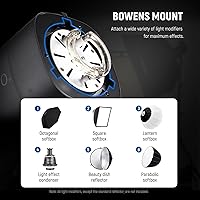
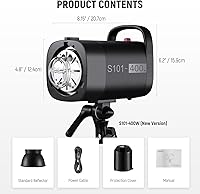
The NEEWER S101-400W Studio Monolight sits squarely in the mid-range strobe category — capable enough for serious hobbyists and semi-professionals, without the eye-watering price tags of Profoto or Godox AD600 Pro territory. NEEWER has built a large, loyal following by delivering functional gear at accessible price points, and this studio monolight continues that tradition. It is particularly appealing for solo shooters piecing together a home studio or a small commercial space. The standard Bowens mount is arguably its biggest long-term selling point — your existing softboxes, beauty dishes, and grids all carry over. Expect a strong feature set for the price tier, with a few real-world trade-offs worth knowing before you buy.

Features & Benefits

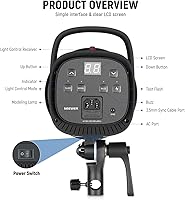
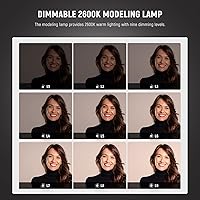
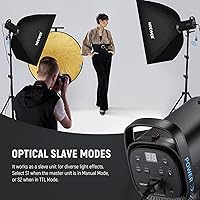
At 400Ws with a GN65 guide number, the S101-400W gives you enough power to work comfortably at f/8 or tighter, even when shooting through a large softbox at moderate distances — genuinely useful headroom for product tables or portrait setups. The 150W modeling lamp runs across nine brightness levels, making it practical for positioning your light and reading shadows before you ever fire a flash. Flash durations between 1/2000s and 1/800s handle most motion-freezing needs in controlled studio work. The optical slave modes are worth understanding: S1 responds to any manual flash trigger, while S2 is designed to ignore the pre-flash from TTL systems — handy if you are mixing this strobe with a TTL speedlight. The memory function quietly saves your last settings, which matters more than you would expect once you are running repeat product sessions.

Best For

This studio monolight makes the most sense for photographers graduating from speedlights who want their first real studio strobe — specifically those doing portraits, headshots, or small-product work in a controlled space. E-commerce shooters will appreciate how repeatable the output is across a long session; consistent exposure from frame to frame matters when you are editing batches. Food and still-life photographers will get real mileage from that nine-level modeling lamp, since precise shadow placement is often a manual, eyes-open process. If you already own Bowens-compatible modifiers, this strobe is an easy drop-in. It is less suited to on-location work where portability matters, or to high-volume commercial studios where durability demands justify spending more on a Profoto or Broncolor unit.

User Feedback

Across its 82 ratings, the S101-400W holds a 4.4-star average — a score that reflects genuine satisfaction rather than hype. Buyers most consistently praise the consistent color output, noting that 5600K holds steady across power levels, which saves time in post-processing. Build quality draws positive comments too, especially for a strobe at this price tier. The more nuanced feedback centers on full-power recycling time — approaching 2.8 seconds — which can interrupt a shooting rhythm during high-energy portrait sessions. A few users also note that there is no built-in wireless receiver; you will need NEEWER's RT-16 trigger set sold separately to go cable-free. Trigger compatibility with third-party systems comes up occasionally as a point of friction worth researching before committing.

Pros

  • 400Ws of output provides real working headroom when shooting through large light modifiers.
  • The 5600K color temperature stays consistent across power levels, cutting down on color correction in post.
  • Nine dimming levels on the modeling lamp make it genuinely useful for previewing and adjusting light before shooting.
  • Standard Bowens mount means this strobe is compatible with the vast majority of studio light shapers on the market.
  • S2 optical slave mode correctly ignores TTL pre-flashes, so mixing the S101-400W with a TTL speedlight actually works as intended.
  • The memory function saves your last power settings, a small but real time-saver during repeat studio sessions.
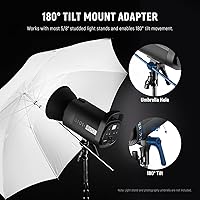
  • At 6.62 pounds with a 180-degree tilt range, positioning the strobe on a standard light stand is straightforward.
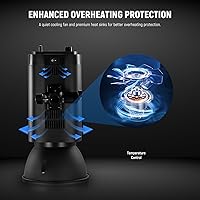
  • The cooling system handles 260 consecutive full-power flashes without overheating, which is a credible endurance figure for this class of strobe.
  • Build quality consistently draws positive comments from buyers relative to the price tier.
  • Sync speed up to 1/200s covers the shutter sync ceiling of most studio-oriented camera bodies without issue.

Cons

  • No built-in wireless receiver means you must budget separately for a compatible trigger system to go cable-free.
  • Recycling time at full power approaches 2.8 seconds, which can interrupt the shooting rhythm in lively portrait sessions.
  • Third-party trigger compatibility is inconsistent and has caused friction for some buyers using non-NEEWER systems.
  • The flash duration tops out at 1/800s, which is adequate for most studio work but falls short for freezing fast motion like splashing water.
  • Long-term modeling lamp longevity has been a concern for a subset of users, and replacement lamp availability should be verified before buying.
  • Being a mains-only unit, it is completely unsuitable for location or outdoor shoots where power access is limited.
  • Only one unit is included in the box, so building a two-light setup requires a second purchase plus separate trigger investment.
  • Customer support experience with NEEWER can be inconsistent compared to more established professional lighting brands.

Ratings

The scores below reflect an AI-driven analysis of verified global buyer reviews for the NEEWER S101-400W Studio Monolight, with spam, bot activity, and incentivized feedback actively filtered out before scoring. Each category is weighted against real-world usage patterns reported by photographers across portrait, product, and commercial studio contexts. Both the genuine strengths and the recurring frustrations are represented transparently so you can make a confident buying decision.

Light Output Consistency
88%
Buyers consistently praise how repeatable the exposure is from shot to shot, particularly during long e-commerce or product batch sessions where color drift would mean extra editing time. The 5600K color temperature holding steady across the power range is a genuine workflow benefit that photographers notice quickly.
A minority of users shooting at the very bottom of the power range report slightly less predictable output, which can matter for low-key still-life setups requiring precise shadow control. This is not unique to this strobe but is worth knowing if you plan to work regularly at minimum power.
Build Quality
79%
21%
For a strobe at this price point, the physical construction draws more positive feedback than you might expect — buyers describe the body as solid and well-assembled, with controls that feel deliberate rather than flimsy. The metal stand mount adapter in particular earns good marks for stability during tilt adjustments.
Some users who have handled higher-end monolights note that the plastics and finish feel one tier below what brands like Godox or Profoto offer. There are occasional mentions of cosmetic imperfections out of the box, which do not affect function but can disappoint buyers expecting a polished premium feel.
Recycling Speed
61%
39%
At lower power settings — roughly half power and below — the recycling time drops to under one second, which keeps a portrait session feeling fluid and responsive. For product and still-life work where you are not rushing between frames, the recycling performance is rarely a practical obstacle.
At full 400Ws output, the wait stretches toward 2.8 seconds, which is long enough to break momentum during energetic portrait sessions or when working with subjects who are difficult to re-engage. Photographers used to the snap of a battery-powered location strobe will feel this limitation most acutely.
Modeling Lamp Usability
84%
The nine-level dimming gives food and still-life photographers genuinely fine control over shadow placement before committing to a flash exposure — something that a simple on/off modeling lamp simply cannot offer. Users who do hybrid photo-video work also appreciate being able to dial the modeling lamp down to a level that does not overwhelm ambient light.
A subset of users have raised concerns about long-term lamp longevity, particularly when running the modeling lamp at high levels for extended sessions. Sourcing a replacement lamp outside major markets has also proven difficult for some buyers, which is worth factoring in before purchasing.
Bowens Mount Compatibility
93%
The standard Bowens mount is genuinely one of the strongest arguments for choosing this strobe — it unlocks a vast ecosystem of modifiers from dozens of manufacturers without any adapters or workarounds. Photographers who are already invested in Bowens-mount softboxes, beauty dishes, or grids can simply transfer their existing kit directly.
A small number of users report minor play or looseness with ultra-budget third-party modifiers, which can shift light direction subtly during a session. This is rarely a fault of the strobe itself and is generally solved by using modifiers from reputable brands with tighter manufacturing tolerances.
Trigger & Sync Flexibility
67%
33%
The S1 and S2 optical slave modes work reliably in controlled studio environments, and the S2 mode handling TTL pre-flashes correctly is a genuine advantage when mixing this strobe with a TTL speedlight master. Wired sync via the PC port provides a bulletproof fallback option that more experienced photographers appreciate.
The absence of a built-in wireless receiver is the most consistently cited limitation in user feedback — it means an additional purchase is required before you can operate the strobe cable-free. Third-party trigger compatibility beyond the NEEWER RT-16 is inconsistent, and a handful of users have experienced unreliable sync with non-NEEWER radio systems.
Ease of Setup
86%
First-time monolight users repeatedly describe the initial setup as intuitive, with controls that are clearly labeled and logically arranged on the back panel. The memory function that restores previous settings on power-up is a small but practical detail that speeds up the start of repeat studio sessions.
Users coming from TTL-only speedlight systems sometimes find the manual power adjustment workflow unfamiliar at first, though this is a learning curve inherent to studio monolights in general rather than a specific design flaw. The separate trigger purchase requirement adds a step to the initial setup that is not always clearly communicated at point of sale.
Heat Management
82%
18%
The strobe handles sustained shooting sessions well — the rated 260 consecutive full-power flashes without overheating holds up in real-world batch product sessions, according to multiple buyers who stress-tested it. The cooling fan runs quietly enough that most studio photographers do not find it disruptive.
A small number of users shooting in warmer climates or poorly ventilated spaces report the unit running hotter than expected during very long continuous sessions. The fan noise, while generally described as acceptable, is audible enough in a very quiet studio environment to occasionally register in sensitive microphone recordings.
Flash Duration Performance
71%
29%
For the majority of studio portrait and product applications — where subjects are relatively still and you are controlling the environment — the flash duration range is entirely adequate and produces sharp, clean results. Buyers shooting beauty and fashion work at moderate power settings report no issues with subject sharpness.
At higher power settings where flash duration slows toward 1/800s, photographers attempting to freeze fast movement — splashing liquids, thrown objects, or highly animated subjects — may encounter motion blur that is not fixable in post. This ceiling is a real constraint for any work that demands the ultra-short flash durations that purpose-built action strobes provide.
Value for Money
85%
The feature-to-price ratio is the central reason most buyers choose this strobe, and the overwhelming consensus is that it delivers well above its price-tier expectations in terms of output power, modeling lamp quality, and mount versatility. Photographers who have previously paid significantly more for comparable wattage from other brands often express genuine surprise at the performance.
Once you factor in the additional cost of a wireless trigger set to unlock cable-free shooting, the total investment climbs closer to competing options that include a receiver in the box. Buyers who anchor their evaluation purely on the unit price without accounting for required accessories may feel the value proposition shifts somewhat.
Portability & Form Factor
58%
42%
At 6.62 pounds, the strobe sits within a manageable weight range for moving around a fixed studio space and repositioning on a standard light stand. The 180-degree tilt range gives you practical flexibility for high-angle overhead product shots or low dramatic portrait lighting without needing a separate adapter.
As a mains-only unit, this strobe is entirely unsuitable for location work, outdoor shoots, or any scenario where AC power is not available — a hard constraint that some buyers only fully realize after purchase. Its physical footprint also means it requires dedicated storage space, which matters in smaller home studio setups.
After-Sales Support
63%
37%
NEEWER's large global user base means there is a substantial community of photographers sharing troubleshooting tips, compatible accessory recommendations, and workarounds across forums and social platforms. For common setup questions, peer knowledge is often faster and more practical than official support channels.
Direct customer support from NEEWER receives mixed reviews — responses can be slow, and resolution quality varies depending on the nature of the issue and the buyer's region. Warranty claims in particular have been a friction point for a meaningful number of users, with some reporting difficulty getting timely replacements for defective units.

Suitable for:

The NEEWER S101-400W Studio Monolight is a practical choice for photographers who have outgrown speedlights and are ready to build a proper studio setup without committing to professional-tier pricing. Portrait photographers shooting headshots, family sessions, or beauty work in a home or small commercial studio will find the 400Ws output gives them meaningful flexibility — enough power to push light through a large softbox and still land at a comfortable working aperture. E-commerce and product photographers benefit especially from the consistent 5600K color temperature, which keeps white balance predictable across a long batch-shooting session and reduces color-correction work in post. Still-life and food photographers will appreciate the nine-level modeling lamp, which lets you fine-tune shadow placement by eye before ever firing a flash. If you already own Bowens-mount modifiers — softboxes, grids, beauty dishes — this strobe plugs right into that existing system without requiring new accessories.

Not suitable for:

The NEEWER S101-400W Studio Monolight is not the right tool for photographers who need to work quickly at full power, since the recycling time can stretch close to three seconds in that scenario — long enough to miss spontaneous expressions in a fast-paced portrait session. There is no built-in wireless receiver, so cable-free triggering requires purchasing the NEEWER RT-16 trigger set separately, which adds to the total cost and limits compatibility with third-party trigger systems. Photographers who work on location or need a battery-powered option will find this strobe entirely unsuitable, as it is strictly a mains-powered studio unit. High-volume commercial studios or working professionals who depend on absolute consistency, long-term durability, and manufacturer support at a premium level will likely find the trade-offs frustrating over time and would be better served by investing in Godox, Profoto, or Broncolor alternatives. If you shoot action, sports, or any subject requiring rapid, repeated full-power bursts, the recycling lag and flash duration ceiling will work against you.

Specifications

  • Flash Power: Maximum output is 400Ws, adjustable across a 7-stop range from 1/8 to full power.
  • Guide Number: Rated GN65 at 1 meter and ISO 100, giving practical flexibility for aperture selection at typical studio working distances.
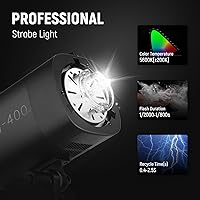
  • Color Temperature: Outputs a consistent 5600K daylight-balanced flash across all power levels.
  • Flash Duration: Flash duration ranges from 1/2000s at lower power to 1/800s at higher power settings.
  • Recycling Time: Recycles in as little as 0.4 seconds at low power and up to 2.8 seconds at full power.
  • Modeling Lamp: A 150W lamp with 9 discrete brightness levels (L1 through L9) provides continuous light for composition and shadow preview.
  • Sync Speed: Supports flash sync up to 1/200s when used with a compatible camera and trigger system.
  • Trigger Modes: Offers S1 optical slave mode for manual master triggers, S2 optical slave mode for TTL master triggers, and wired sync via PC port.
  • Wireless Range: When paired with the separately sold NEEWER RT-16 trigger receiver set, wireless triggering works reliably up to 100ft (30m).
  • Mount Type: Fitted with a standard Bowens mount and an integrated umbrella socket for broad modifier compatibility.
  • Tilt Range: The metal stand mount adapter allows 180-degree vertical tilt for flexible light angle positioning.
  • Heat Tolerance: Engineered to sustain 260 consecutive full-power flashes without triggering thermal shutdown, supported by an optimized cooling fan and enlarged air inlet.
  • Unit Weight: Weighs 6.62 pounds (approximately 3 kg), typical for a mains-powered monolight in this power class.
  • Dimensions: Package measures 15.94 x 10.31 x 8.11 inches, making it manageable for storage in a mid-size gear bag or case.
  • Power Source: Mains-powered only; there is no battery or portable power option built into this unit.
  • Memory Function: Automatically retains the last used power and modeling lamp settings when powered off, restoring them on next startup.
  • Brand: Manufactured by NEEWER, a consumer and semi-professional photography gear brand with a broad global distribution footprint.
  • Box Contents: The package includes one S101-400W monolight unit; no trigger, light stand, or modifier is included.

Related Reviews
NEEWER Q4 400Ws Outdoor Flash Strobe
81%
91%
Output Power & Performance
88%
Battery Life
86%
Recycle Speed
83%
TTL Accuracy
87%
High Speed Sync (HSS)
More
NEEWER Q300 300Ws Outdoor Battery Strobe Monolight
82%
91%
Battery Life & Endurance
87%
Flash Output Consistency
74%
Wireless Performance
78%
Recycle Speed
83%
Build Quality & Durability
More
NEEWER Q6 600Ws Outdoor Studio Flash
86%
92%
Flash Power and Performance
85%
Wireless Control and App Integration
88%
Color Consistency and Temperature Stability
90%
Recycle Time and Burst Shooting Capability
87%
Build Quality and Durability
More
NEEWER S101-300W 300W Studio Monolight Flash
82%
88%
Light Output Consistency
83%
Build Quality
92%
Value for Money
86%
Modeling Lamp Usefulness
71%
Recycle Time
More
NEEWER 16″ Photo Studio Light Box
75%
83%
Lighting Quality
61%
Interior Size & Shooting Space
91%
Ease of Setup
86%
Portability & Storage
72%
Backdrop Variety & Quality
More
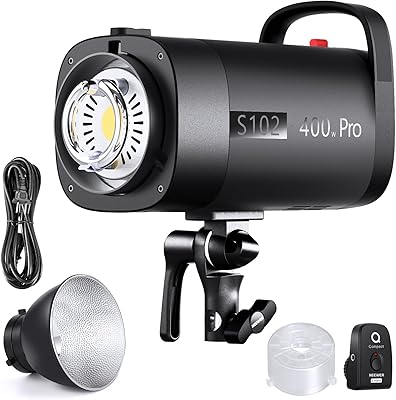
NEEWER S102-400W PRO Studio Monolight
80%
88%
Value for Money
91%
Flash Output & Power
84%
Color Consistency
86%
Recycle Time
74%
Wireless Trigger Performance
More
NEEWER 6x9ft Collapsible Photography Backdrop
75%
93%
Value for Money
58%
Wrinkle Performance
79%
Surface Quality
91%
Portability & Storage
74%
Size & Coverage
More
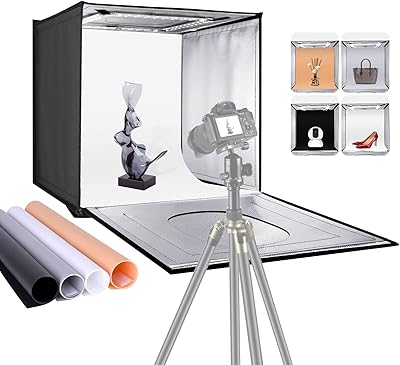
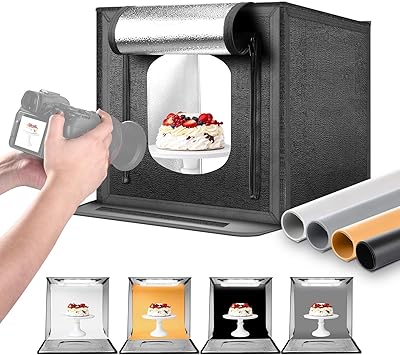
NEEWER LP60 24″x24″ Photography Light Box
79%
91%
Light Output & Brightness
88%
Color Accuracy
86%
Glare & Reflection Control
72%
Build Quality & Materials
74%
Backdrop Quality & Variety
More
NEEWER Q200 200Ws Outdoor Studio Monolight
79%
88%
Light Output & Power
71%
Battery Life
76%
HSS Performance
69%
TTL Accuracy
63%
App Control & Connectivity
More
NEEWER LP40 40CM Photography Light Box
81%
93%
Lighting Brightness
91%
Color Accuracy
88%
Glare & Shadow Control
74%
Build Quality
92%
Ease of Setup
More

FAQ

Yes. The NEEWER S101-400W Studio Monolight does not include a built-in wireless receiver, so you will need to purchase a compatible trigger — NEEWER's own RT-16 set is the recommended pairing. Without it, you can still fire the strobe using the optical slave modes or a wired PC sync cable, but neither gives you the convenience of a dedicated radio trigger.

S1 mode fires the strobe the moment it detects any flash, which works perfectly when your master trigger is a manual speedlight or another studio strobe. S2 mode is designed for TTL systems — it ignores the pre-flash that TTL cameras emit to meter exposure and only fires on the actual flash pulse. If you are using a TTL-capable speedlight on your camera as the master, use S2. If everything in your setup is manual, S1 is the right choice.

Generally, yes. The Bowens mount is an industry-standard fitting, so softboxes, beauty dishes, grids, and snoots from Godox, Glow, Westcott, and most other major brands should mount without issue. That said, it is always worth double-checking the mount tolerances with ultra-budget modifiers, as some lower-end accessories can have slightly loose fits on any strobe.

NEEWER describes it as a silent fan, and real-world users generally confirm it runs quietly enough that it does not disrupt a normal studio session. It is noticeable if you are standing directly next to the strobe in a very quiet room, but it is unlikely to interfere with audio recording or cause distraction during a portrait session.

The modeling lamp can serve as a basic continuous light source, and the nine dimming levels give you useful control over output. However, at 150W it is not a substitute for a dedicated LED panel or HMI light in a serious video production context. It is better suited to hybrid shooters who want a reference light for framing and composition rather than a primary continuous source for video capture.

It depends on your shooting style. At full power, you are waiting up to 2.8 seconds between flashes, which can break the flow during energetic lifestyle portraits or when working with children. If you typically shoot at half to three-quarter power, recycling drops significantly and the pace becomes much more manageable. Many photographers find that 400Ws at partial power still provides more than enough output for typical portrait work.

The modeling lamp is a replaceable component, and NEEWER does offer a compatible replacement lamp for the S101 series. Before purchasing the strobe, it is worth confirming current replacement lamp availability in your region, since some buyers outside major markets have reported difficulty sourcing them locally. A quick search for the NEEWER G6.35 base modeling lamp will point you in the right direction.

Yes, 400Ws is sufficient for most common octabox sizes used in portrait and product work. A 47-inch or 60-inch octabox will eat up some output, but you will still have practical working apertures at normal studio distances. If you plan to push light through a very large 7-foot parabolic or a heavily diffused double-baffle softbox at distance, you may find yourself working at or near full power more often than you would like.

Yes, because this strobe fires via optical slave or wired PC sync rather than through a camera's hot shoe directly, it is camera-brand agnostic in its basic operation. For wireless triggering via the RT-16 set, confirm that the trigger's transmitter is compatible with your specific camera body, as trigger-to-camera compatibility varies by brand and model.

In the 400Ws mid-range class, the S101-400W competes with options from Godox, Flashpoint, and Julius Studio. Buyers who have compared them tend to highlight the S101-400W's modeling lamp control and build feel as positives, while noting that some competitors in a similar price bracket include a wireless receiver in the box. If built-in wireless is important to you, factor the cost of a separate trigger into your total budget when making comparisons.

Where to Buy