Overview

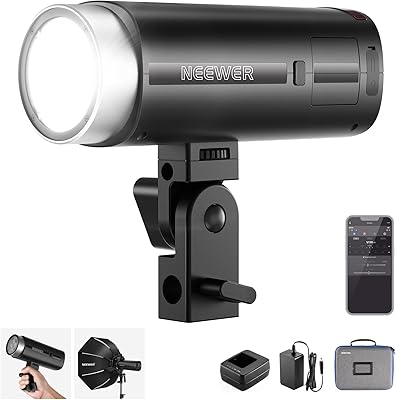
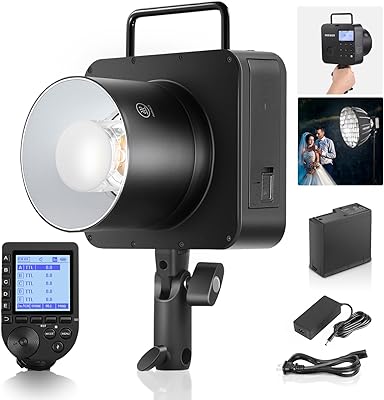
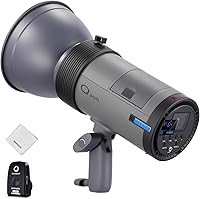
The NEEWER Q300 300Ws Outdoor Battery Strobe Monolight is built for photographers who have outgrown their speedlights but aren't ready to haul a generator to every location shoot. It runs entirely on a built-in lithium battery, which means no power outlets, no extension cords, and no compromises on where you set up. At 300Ws, it sits comfortably in the range most portrait and commercial photographers rely on for well-exposed, professional results. The included Q Compact wireless trigger is a genuine bonus rather than an afterthought, and the standard Bowens mount means you can pair it with virtually any modifier on the market. One important heads-up before you order: the flash tube is sold separately, so budget for that from day one.
Features & Benefits

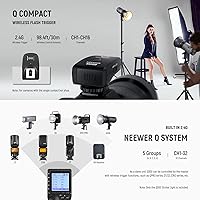
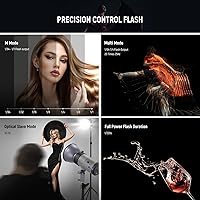
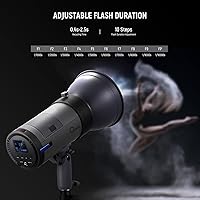
The Q300's 7800mAh battery is rated for 1000 full-power flashes per charge — enough for a solid day of shooting without anxiety. Recycle time ranges from 0.4 to 2.5 seconds depending on power level, which handles most portrait sessions comfortably but can feel sluggish at full output during rapid-fire sequences. The unit offers Manual, Multi (stroboscopic), and optical S1/S2 modes. No TTL or HSS here — that's a deliberate trade-off for manual workflow photographers, not an oversight. Quick mode compresses flash duration to as short as 1/10000s for freezing motion without needing high-speed sync. The 2.4G wireless system runs across 32 channels and five groups, with a 30-meter range spec that holds up reasonably well outdoors, assuming clean line-of-sight.

Best For

This battery strobe is a natural fit for outdoor portrait photographers and working wedding photographers who need reliable power far from any outlet. Solo content creators who want proper strobe quality without an assistant or power pack will find it practical and portable enough for run-and-gun setups. It also works well as a supplemental light in smaller studios, particularly for photographers already using NEEWER's Q ecosystem who want to add a compatible slave unit. That said, it's not the right tool for everyone. Action and sports shooters who depend on HSS will find the 1/200s sync speed limiting. And if you're shooting with a Canon Rebel SL3, T7, T100, or similar entry-level Canon body, check compatibility carefully — these models are explicitly not supported.

User Feedback

Buyers have responded warmly to this cordless monolight, with ratings sitting solidly above 4.5 stars across a meaningful number of reviews. The most common praise centers on battery life in real shoots — many users report getting through full portrait sessions without needing a recharge. Setup is consistently described as straightforward. On the other side, a recurring frustration is the discovery that the flash tube isn't included in the box; it's sold separately, and that catches some buyers off guard at checkout. A handful of users have noted occasional inconsistencies with wireless trigger connectivity at longer ranges, particularly outdoors in open environments. Compared to similarly priced battery monolights, most reviewers feel the Q300 holds its own on output and build quality.

Pros

  • Self-contained battery means no power outlets needed — ideal for remote location shoots.
  • Rated for 1000 full-power flashes per charge, enough for most full-day portrait sessions.
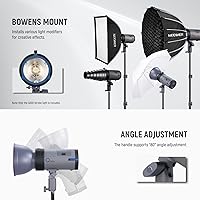
  • Standard Bowens mount unlocks compatibility with a huge range of third-party modifiers.
  • Wireless trigger is included in the box, so you're ready to shoot right out of the gate.
  • Quick mode compresses flash duration to as short as 1/10000s for freezing motion without HSS.
  • Five control groups and 32 wireless channels make multi-light setups clean and flexible.
  • At under 8 pounds with the battery built in, this battery strobe is far more portable than a mains head plus external pack.
  • Stroboscopic Multi mode adds creative flexibility well beyond what most entry-level lights offer.
  • The adjustable handle supports both stand-mounted and handheld use for fast-moving outdoor work.
  • Output consistency at mid-range power levels earns consistent praise from portrait photographers.

Cons

  • The flash tube is sold separately — a surprise cost that catches many buyers off guard at checkout.
  • Full-power recycle time reaches 2.5 seconds, which can slow down fast-paced event sequences noticeably.
  • No HSS or TTL support makes the Q300 a poor fit for run-and-gun or automatic-exposure flash workflows.
  • Wireless range drops significantly in real-world conditions with obstacles or bright sunlight interference.
  • Canon Rebel SL3, T7, T100, and similar entry-level Canon bodies are explicitly not compatible.
  • The unit is not weather-sealed, which limits confidence during unpredictable outdoor shooting conditions.
  • The modeling lamp runs at 3050K, noticeably warmer than the 5600K flash output, making precise lighting previews unreliable.
  • Battery capacity has been reported to degrade faster than expected after extended months of regular heavy use.
  • No mobile app or Bluetooth control means remote parameter adjustments require physical access or the wireless trigger.
  • The included standard reflector is basic and unlikely to satisfy photographers wanting quality light shaping from day one.

Ratings

The NEEWER Q300 300Ws Outdoor Battery Strobe Monolight has been evaluated by our AI rating system after analyzing verified buyer reviews from global markets, with spam, bot-generated, and incentivized feedback actively filtered out. The scores below reflect the honest distribution of real photographer experiences — from working wedding pros to solo content creators — and do not smooth over the friction points buyers actually encountered. Both the strengths that make this cordless monolight compelling and the limitations that may give certain photographers pause are transparently represented in every category.
Battery Life & Endurance
91%
Most photographers report completing full portrait and wedding sessions — often running three to four hours of active shooting — without needing a recharge. The 1000-flash-per-charge rating appears to hold up in real conditions at mid-range power levels, giving shooters genuine confidence when working far from a power source.
At full 300Ws output, recycle times stretch closer to 2.5 seconds and battery drain accelerates noticeably. A small number of users report that battery capacity degraded faster than expected after several months of regular use, which is worth monitoring over the long term.
Flash Output Consistency
87%
Color temperature stays close to its 5600K rating across most power levels, which means skin tones hold up reliably from frame to frame without heavy correction in post. Photographers using it for product and portrait work specifically praised the consistency during multi-light setups where matching output matters.
A subset of users noted slight color shifts at the lowest power settings, which can affect critical work where precise white balance matching is required. This is unlikely to bother most photographers but could matter in tightly controlled commercial scenarios.
Wireless Performance
74%
26%
The 2.4G wireless system with 32 channels and five control groups works reliably in typical outdoor portrait environments with clear line-of-sight. Photographers using it in open fields and parks report solid triggering at distances well within the 30-meter range spec.
Real-world range drops considerably when obstacles like trees, walls, or crowds are in play, and some users report occasional misfires in bright sunlight conditions. The system also lacks cross-brand wireless compatibility, so it only plays nicely within the NEEWER Q ecosystem.
Recycle Speed
78%
22%
At lower power settings — say, half to quarter power — the Q300 recycles fast enough to keep up with most portrait sessions, and the 0.4-second floor is genuinely quick for a battery-powered unit in this class. For photographers who dial down power and compensate with closer positioning or larger modifiers, this is rarely an issue.
Full-power recycle at 2.5 seconds becomes a real constraint during fast-paced event coverage or any scenario requiring rapid successive shots. Shooters accustomed to mains-powered monolights may find this ceiling frustrating during busy editorial or reception sequences.
Build Quality & Durability
83%
The physical construction feels solid for the price tier, with a well-balanced weight distribution that handles confidently on a light stand. The protective cover included in the box adds genuine peace of mind when transporting the unit between locations in a bag or car trunk.
It is not weather-sealed, which is a real limitation for photographers who shoot in light rain or dusty outdoor environments. A few users noted that the mount interface and dial buttons feel slightly plasticky compared to higher-end European or Japanese alternatives.
Portability & Handling
82%
18%
At under 8 pounds with the battery integrated, the Q300 is meaningfully more portable than traditional mains-powered studio heads paired with external battery packs. The adjustable handle with 180-degree rotation adds flexibility for handheld use during fast location work without a stand.
It is still a relatively bulky unit compared to dedicated portable strobes like the Godox AD400Pro, and fitting it alongside modifiers and stands in a standard camera backpack requires planning. Photographers who prioritize truly compact travel kits may find it just large enough to be inconvenient.
Ease of Setup
89%
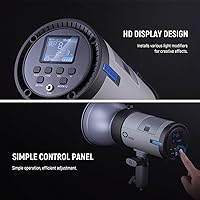
Nearly every reviewer who mentioned setup described it as intuitive out of the box, with the high-definition display and clearly labeled controls making power adjustments quick even when working in dim or outdoor conditions. The included Q Compact trigger paired reliably without complex configuration steps.
New users unfamiliar with manual flash systems may need a short learning curve to understand group and channel assignments, especially when adding the Q300 as a slave to an existing multi-light setup. The manual, while functional, is sparse on examples for multi-unit workflows.
Value for Money
86%
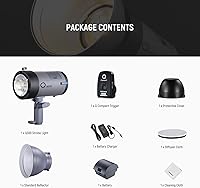
The bundle includes the wireless trigger, standard reflector, diffuser cloth, battery, charger, and protective cover, which represents genuine value compared to buying components separately. For the output and feature set offered, most buyers feel the price point is competitive against comparable battery monolights from other brands.
The flash tube being sold separately is the single most cited frustration in the value conversation — buyers who don't catch this note before checkout feel misled, and the additional cost stings when factored into the total spend. This one omission significantly affects first-impression satisfaction.
Bowens Mount Compatibility
93%
The standard Bowens mount is arguably one of the strongest long-term arguments for this light, giving photographers access to an enormous ecosystem of softboxes, beauty dishes, grids, and reflectors from dozens of manufacturers. Users who already own Bowens-compatible modifiers report a completely friction-free experience adapting their existing accessories.
The included standard reflector is functional but basic, and photographers expecting a quality modifier in the box to get started immediately may feel underwhelmed. Investing in better modifiers is essentially required to unlock the unit's full potential, which adds to the real-world cost.
Modeling Lamp Usefulness
71%
29%
The 13W modeling lamp is genuinely useful for checking light placement and shadow direction during setup, particularly in shaded outdoor environments or indoor locations with low ambient light. Several users appreciated being able to use it as a rough compositional guide before committing to a test shot.
At 3050K, the modeling lamp color temperature diverges noticeably from the 5600K flash output, which makes precise lighting previews less reliable in mixed-light situations. Outdoors in bright daylight, the modeling lamp is effectively invisible and provides no useful feedback at all.
Mode Versatility
77%
23%
Having Manual, Multi (stroboscopic), and optical S1/S2 modes in one unit at this price covers the vast majority of what working photographers actually need day-to-day. The Quick mode, which compresses flash duration down to 1/10000s, is a practical tool for freezing motion without relying on HSS.
The absence of TTL and HSS support is a real limitation for photographers who rely on these modes for run-and-gun event work or fill-flash in harsh sunlight. It is a deliberate design choice for manual-workflow shooters, but buyers should go in with eyes open rather than expecting those features.
Display & Controls
84%
The backlit display reads clearly in a wide range of lighting conditions, and the physical buttons provide tactile feedback that makes adjustments without looking down genuinely feasible during a shoot. Several users specifically praised how quickly they could navigate between power levels compared to touch-only interfaces on competing units.
The button layout takes a short adjustment period for users migrating from other brands, and there is no dedicated mobile app or Bluetooth pairing for remote parameter control. In situations where the flash is mounted high on a boom, adjusting settings remotely requires the wireless trigger rather than the unit itself.
Flash Duration (Quick Mode)
79%
21%
The ability to dial flash duration between 1/1000s and 1/10000s across ten incremental levels gives manual photographers a meaningful tool for controlling motion freeze without HSS, which is a technically sound alternative for many studio-style setups. Product photographers shooting liquid splashes or similar subjects will find this especially practical.
Flash duration control in Quick mode trades off some output power, meaning you cannot run at full 300Ws while using the shortest durations. This is a physics constraint, not a product flaw, but users expecting both maximum power and maximum freeze capability simultaneously will be disappointed.
Camera Compatibility
68%
32%
Compatibility with the major camera systems — Canon, Nikon, Sony, Fujifilm, and Panasonic DSLRs and mirrorless bodies — covers the overwhelming majority of photographers likely to consider this unit. The optical S1/S2 modes also offer a camera-agnostic triggering option that sidesteps wireless compatibility concerns entirely.
The explicit incompatibility with several popular entry-level Canon bodies — including the Rebel SL3, T7, T100, and similar models — is a genuine issue that NEEWER highlights in fine print but buyers frequently miss. The maximum 1/200s sync speed with the Q Compact trigger may also feel restrictive to photographers used to faster sync on higher-end systems.

Suitable for:

The NEEWER Q300 300Ws Outdoor Battery Strobe Monolight is purpose-built for photographers who regularly work away from reliable power sources — think outdoor portrait sessions in parks, beach engagement shoots, or wedding ceremonies in countryside venues where extension cords simply aren't an option. Portrait and editorial photographers who shoot manually and want a full shoot day's worth of power in a single charge will find the battery endurance genuinely practical rather than just a spec-sheet claim. Solo content creators and influencers who need to set up, adjust, and shoot without an assistant will appreciate how the included wireless trigger and intuitive controls keep the workflow moving. Small studio owners looking to add a second or third light without committing to a high-end system will find this cordless monolight punches above its weight as a supplemental or background light. Photographers already using NEEWER's Q ecosystem — Z1, Z2, or similar speedlights — will benefit the most, since the Q300 slots naturally into those multi-light setups as a controllable slave unit with zero compatibility friction.

Not suitable for:

The NEEWER Q300 300Ws Outdoor Battery Strobe Monolight is not the right tool for every photographer, and it's worth being clear about where it falls short before you commit. Sports and action photographers who depend on High Speed Sync to shoot wide open in bright sunlight will hit a hard wall here — HSS is not supported, and the 1/200s maximum sync speed with the included trigger is a real constraint in those scenarios. TTL shooters who work in fast-moving event environments, relying on automatic flash metering to keep exposure consistent without stopping to adjust manually, will find this unit's strictly manual control system more burden than benefit. If your primary camera is a Canon Rebel SL3, T7, T100, or another entry-level Canon body in that family, compatibility is explicitly not supported — this is a firm dealbreaker, not a minor caveat. Photographers who travel ultra-light and need everything to fit in a carry-on or a small backpack will also find the Q300's footprint a genuine logistical challenge compared to more compact portable strobe alternatives.
Specifications

  • Flash Output: The unit delivers a maximum flash output of 300Ws, adjustable across six stops from 1/64 to full 1/1 power.
  • Color Temperature: Flash color temperature is rated at 5600K with a tolerance of ±200K, producing daylight-balanced light suitable for natural-looking portraits and product shots.
  • Modeling Lamp: A 13W modeling lamp operating at 3050K provides up to 5010 lux at 0.5m, useful for checking light placement before shooting.
  • Battery Capacity: The integrated 10.8V 7800mAh lithium-ion battery delivers up to 1000 full-power flashes on a single charge.
  • Charge Time: A full charge from empty takes approximately 5 hours using the included dedicated charger.
  • Recycle Time: Recycle time ranges from 0.4 seconds at lower power settings to 2.5 seconds at full 300Ws output.
  • Flash Duration: In Quick mode, flash duration is adjustable across 10 levels from 1/1000s to 1/10000s for motion-freezing control without HSS.
  • Wireless System: The built-in 2.4G wireless receiver supports 32 channels and 5 control groups (A/B/C/D/E) with an advertised range of up to 30m (98ft).
  • Sync Speed: Maximum sync speed is 1/200s when used with the included Q Compact single-contact wireless trigger.
  • Flash Modes: Supported modes include Manual, Multi (stroboscopic up to 20Hz), and optical triggering via S1 and S2; TTL and HSS are not supported.
  • Mount Type: Features a standard Bowens mount, compatible with the vast majority of third-party softboxes, umbrellas, reflectors, and grids on the market.
  • Handle & Rotation: The adjustable handle supports 180-degree rotation and can be mounted on a standard light stand or used handheld for portable shooting.
  • Weight: The unit weighs 7.78 lbs (approximately 3.53 kg) with battery installed.
  • Package Dimensions: The box measures 20 x 11 x 9 inches, accommodating the unit and all included accessories.
  • Box Contents: Package includes the Q300 strobe body, Q Compact wireless trigger, standard reflector, diffuser cloth, battery, battery charger, protective cover, and a cleaning cloth.
  • Flash Tube: The flash tube is not included and must be purchased separately — this is a critical detail buyers should confirm before first use.
  • Camera Compatibility: Compatible with Canon, Nikon, Sony, Fujifilm, and Panasonic DSLRs and mirrorless bodies; explicitly incompatible with Canon Rebel SL3, T7/1500D, T100/3000D, and 4000D models.
  • Multi Mode Rate: Stroboscopic Multi mode fires at up to 20 pulses per second (20Hz), useful for motion-sequence and creative multi-exposure photography.

Related Reviews

NEEWER Q200 200Ws Outdoor Studio Monolight
79%
88%
Light Output & Power
71%
Battery Life
76%
HSS Performance
69%
TTL Accuracy
63%
App Control & Connectivity
More
NEEWER Q4 400Ws Outdoor Flash Strobe
81%
91%
Output Power & Performance
88%
Battery Life
86%
Recycle Speed
83%
TTL Accuracy
87%
High Speed Sync (HSS)
More
NEEWER S101-400W Strobe Flash Light
85%
91%
Lighting Power & Performance
86%
Ease of Use
80%
Recycle Time
88%
Build Quality
85%
Cooling Efficiency
More
NEEWER Q6 600Ws Outdoor Studio Flash
86%
92%
Flash Power and Performance
85%
Wireless Control and App Integration
88%
Color Consistency and Temperature Stability
90%
Recycle Time and Burst Shooting Capability
87%
Build Quality and Durability
More
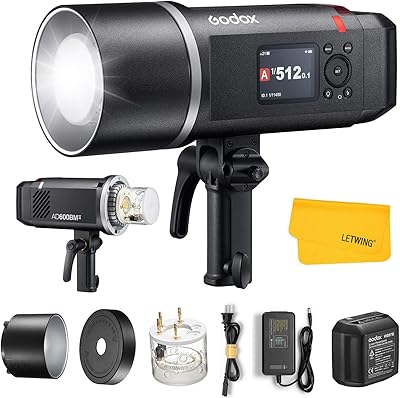
Godox AD600BM II Outdoor Flash Strobe
84%
93%
Performance
88%
Battery Life
90%
Recycle Time
85%
Ease of Use
82%
Build Quality
More
NEEWER S101-300W 300W Studio Monolight Flash
82%
88%
Light Output Consistency
83%
Build Quality
92%
Value for Money
86%
Modeling Lamp Usefulness
71%
Recycle Time
More
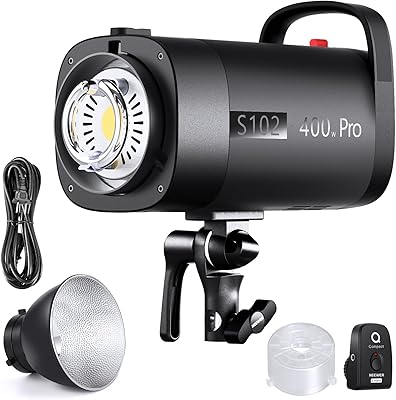
NEEWER S102-400W PRO Strobe Flash Light
86%
88%
Performance
92%
Build Quality
85%
Ease of Use
90%
Cooling System
86%
Wireless Capabilities
More
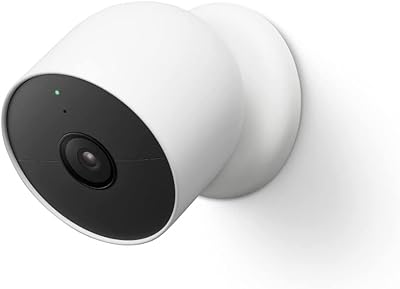
Google Nest Cam 2nd Gen Battery Camera
72%
91%
Ease of Setup
84%
Video Quality
72%
Night Vision
61%
Battery Life
83%
Motion Detection & AI Alerts
More
LimoStudio AGG1756 160W Photo Monolight Flash Strobe Light
81%
87%
Value for Money
91%
Recharge Speed
85%
Build Quality
88%
Ease of Setup
84%
Light Consistency
More
RELI Light Cam Battery D1 Security Camera
71%
83%
Battery Life
78%
Night Vision Quality
89%
Ease of Setup
57%
App Experience
72%
Video Clarity
More

FAQ

It is sold separately, which surprises a lot of buyers. Before you shoot a single frame, you will need to order a compatible replacement flash tube — NEEWER sells one designed for the Q300 specifically. Factor that into your budget before checkout.

Yes, the NEEWER Q300 300Ws Outdoor Battery Strobe Monolight is compatible with Sony mirrorless and DSLR systems. You can trigger it wirelessly using the included Q Compact trigger or optically via the S1/S2 modes. Just keep in mind there is no TTL support, so you will be working in full manual flash mode.
Almost certainly yes. The Q300 uses a standard Bowens mount, which is the most widely adopted modifier mount in the industry. Any softbox, beauty dish, grid, or umbrella bracket designed for Bowens will attach without issue, regardless of brand.

Most photographers report getting through a full portrait or engagement session — typically two to four hours of active shooting at mid-range power — on a single charge. At full 300Ws power, you get fewer flashes and slower recycle times, so dialing back to half or quarter power extends your shooting window considerably.

No, neither TTL nor HSS is supported. This is a deliberate design choice for photographers who prefer full manual control over their flash output. If your workflow depends on automatic flash metering or shooting above 1/200s sync speed, this unit will not meet that need.

In open environments with clear line-of-sight, the 2.4G wireless system is generally reliable at reasonable distances. That said, the 30-meter range spec is a best-case figure — strong ambient light, obstacles like trees or crowds, and radio interference can all reduce effective range in real-world outdoor use. Staying within 15 to 20 meters tends to keep things consistent.

Yes, the Q300 can operate as a slave unit within the NEEWER Q wireless ecosystem, controlled by compatible master units like the Z1 or Z2. You can assign it to one of five groups (A through E) and adjust power remotely. Note that QPRO-F triggers are not compatible, and some QPRO triggers require separate purchase.

The battery includes built-in protections against overcharging, overheating, and overvoltage, which reduces the risk of damage from long charge sessions. That said, NEEWER specifically recommends fully charging the unit before first use, and most battery experts would advise against routinely leaving any lithium battery on a charger indefinitely.

Yes, the adjustable handle is designed for exactly that. It rotates 180 degrees and gives you a comfortable grip for handheld use, which is practical for on-the-move outdoor portraits or situations where setting up a stand is not feasible. The roughly 8-pound weight is manageable for short periods but can fatigue your arm during longer handheld sessions.

Multi mode fires the flash repeatedly at a set rate — up to 20 times per second — during a single shutter exposure. It is most commonly used for creative multi-exposure effects, like capturing multiple positions of a moving subject in a single frame, or for analyzing motion patterns in sports or dance photography. It is a niche feature, but a genuinely useful one when the situation calls for it.

Where to Buy