Overview

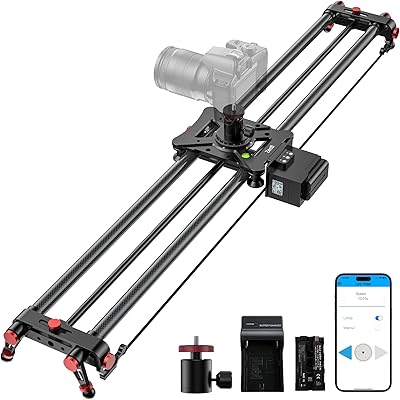
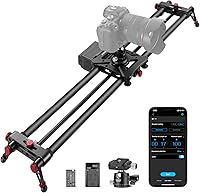
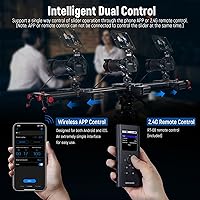
The NEEWER ER1-120 120cm Motorized Camera Slider is a mid-range rail system built for solo videographers and content creators who want professional-looking camera movement without a professional-sized budget. At roughly 120cm, the carbon fiber rail gives you a meaningful travel distance that holds up well outdoors without adding serious weight to your bag. What sets it apart from basic manual sliders is its dual control system — you can operate it through the NEEWER smartphone app or the included 2.4G remote. That said, this motorized slider is not without its quirks. Getting comfortable with all the shooting modes takes some time, so go in with realistic expectations.
Features & Benefits

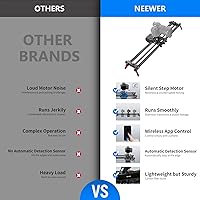
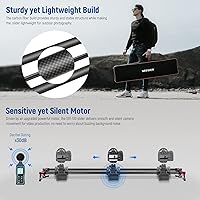
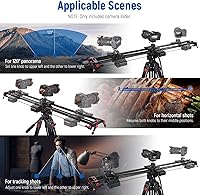
The NEEWER carbon fiber slider offers three distinct shooting modes — manual, video with smooth start/stop ramping, and time-lapse — giving you real creative flexibility from one piece of kit. The near-silent motor is a standout; it runs on the included NP-F550 battery or a standard USB-C power bank, which is handy during long outdoor shoots. Three physical shooting configurations are possible through simple knob adjustments: flat horizontal, a diagonal tracking shot, and a wide 120° panoramic sweep. The rail also supports tilting up to 45° or going fully vertical. Four roller bearings keep movement stable and shake-free, and standard threaded mounting holes mean it fits virtually any tripod without extra adapters.

Best For

This camera dolly rail is an obvious fit for solo content creators — YouTubers, vloggers, and product photographers — who need repeatable, automated camera movement without hiring a second person on set. It handles time-lapse work particularly well, since you can program precise start and end points and let the motor do the work consistently shot after shot. Travel filmmakers will appreciate that the carbon fiber build keeps the total weight manageable without sacrificing rigidity. Indie producers who would otherwise rent a dolly setup will find this a cost-effective ownership alternative. It is also worth considering for anyone experimenting with panoramic or tracking shots — the knob-based angle system makes switching between configurations quick and intuitive.

User Feedback

Owners consistently point to smooth, quiet operation as the strongest selling point — most note that the motor is genuinely unobtrusive in video work, which matters when ambient audio is in the mix. App connectivity via 2.4G holds up reliably in field conditions. On the critical side, the app interface draws repeated complaints about being unintuitive out of the box; expect a learning session before your first real shoot. A smaller but consistent note concerns load limits: the motorized slider handles a solid mirrorless or DSLR kit at full horizontal, but once you tilt it, the weight ceiling drops noticeably. Battery life is generally acceptable for a typical shoot, though results vary depending on motor speed and how continuously you run it.

Pros

  • The motor runs quietly enough to stay out of ambient audio on most video shoots.
  • Carbon fiber construction keeps the slider light without sacrificing rigidity on location.
  • Dual control via smartphone app and physical remote gives genuine flexibility depending on the shoot.
  • Time-lapse mode with programmable endpoints produces highly consistent, repeatable motion.
  • Running off a standard USB-C power bank extends shoot time well beyond a single battery charge.
  • Three configurable shooting angles — horizontal, tracking, and panoramic — from one piece of hardware.
  • Standard tripod thread sizes mean this camera dolly rail mounts onto most existing support gear instantly.
  • The included remote, battery, and charger mean you can shoot straight away without extra purchases.
  • Four roller bearings noticeably reduce vibration and carriage wobble compared to basic single-bearing sliders.
  • Slow start and stop ramps in video mode produce professional-looking movement without manual speed tweaking.

Cons

  • The smartphone app interface is unintuitive and typically requires an hour or more to learn properly.
  • Weight capacity at tilted angles is notably lower than the flat horizontal rating — plan your camera kit accordingly.
  • Battery runtime varies significantly depending on motor speed; fast continuous loops drain the cell much quicker.
  • The adjustment knobs for angle configuration feel plasticky relative to the quality of the carbon fiber rail.
  • No folding or collapsing mechanism makes packing the slider into a carry-on bag a logistical challenge.
  • The printed manual is sparse and leaves several setup scenarios unexplained, forcing users to find tutorial videos online.
  • Slight motor vibration can appear at travel endpoints when the carriage is loaded near its weight limit.
  • The remote offers limited parameter control compared to the app, so app use is effectively unavoidable for advanced settings.
  • Panoramic sweep consistency requires careful knob calibration; even minor misalignment produces uneven arcs.
  • Users relying on underpowered USB-C banks may experience inconsistent motor behavior or unexpected shutdowns mid-shoot.

Ratings

The NEEWER ER1-120 120cm Motorized Camera Slider has been evaluated by our AI rating system after analyzing thousands of verified global purchases, with spam, incentivized, and bot-generated reviews actively filtered out. The scores below reflect an honest, balanced picture of where this motorized slider genuinely delivers and where real buyers have run into friction. Strengths and pain points are weighted equally so you can make a fully informed decision before buying.
Motion Smoothness
88%
The motor consistently produces fluid, steady movement that holds up well across a range of camera speeds — users shooting slow cinematic pulls especially appreciated the lack of stuttering or jerks mid-travel. Even at slower time-lapse intervals, the motion remains impressively consistent.
A small number of users noted occasional micro-vibrations at the very start or end of a travel pass, particularly when the carriage is loaded near its upper weight limit. This rarely appears on camera but is worth monitoring with heavier mirrorless rigs.
Noise Level
91%
The motor runs quietly enough that most users report it is inaudible in ambient-audio video recordings, which is a genuine advantage for vloggers and documentary-style shooters working without a dedicated sound recordist. This is one of the most consistently praised traits across verified reviews.
At maximum speed settings, a faint mechanical hum does become detectable in very quiet indoor environments. It is unlikely to ruin a take, but shooters recording dialogue in a silent room may want to double-check their audio monitoring before a full shoot.
Build Quality
84%
The carbon fiber rail feels solid and well-machined, and users who travel with it regularly note that it resists flex even when supporting a moderately heavy camera setup. The four roller bearings contribute noticeably to the stable, rattle-free movement that distinguishes it from cheaper aluminum-rail alternatives.
Some users found that the plastic adjustment knobs used to configure shooting angles feel slightly underbuilt relative to the quality of the rail itself. A few reported that the knob resistance drifts after extended outdoor use, requiring periodic re-tightening.
App Control & Interface
61%
39%
Once properly configured, the NEEWER app provides genuinely useful control over frames, video length, and interval settings that the physical remote alone cannot match. Users who invested time learning the app found it reliable and appreciated the level of fine-tuning it enables for time-lapse work.
First-time setup is a recurring frustration — the app interface is not intuitive and the pairing process confused a notable share of buyers. Several reviewers described spending an hour or more troubleshooting connectivity before their first successful shoot, which is a real barrier for less tech-confident users.
Remote Control (RT-08)
79%
21%
The included 2.4G RT-08 remote is a practical fallback and works reliably within typical shooting distances. Users who preferred not to use a smartphone during shoots found it a convenient, low-fuss way to trigger movement and adjust exposure time directly.
The remote offers fewer parameter controls compared to the app, so users wanting granular speed adjustments or precise interval settings will need to use the app anyway. The button labeling on the remote is also small and not always intuitive without consulting the manual.
Battery Life
74%
26%
Running on the included NP-F550 cell, the slider holds up reasonably well through a standard half-day shooting session for most users. The ability to swap in a fully charged spare — or run off a USB-C power bank — adds practical flexibility for longer outdoor projects.
Battery endurance varies considerably depending on motor speed and how continuously the slider is in motion. Users running fast, continuous loops for dynamic video reported noticeably shorter runtimes than those doing slow time-lapse work with long pause intervals between passes.
Load Capacity
72%
28%
At a flat, horizontal orientation, the slider comfortably handles a full-size DSLR with a standard zoom lens, giving most content creators enough headroom for their typical camera-and-lens combinations. Users with lighter mirrorless setups had zero complaints about performance under load.
The usable weight capacity drops meaningfully once the slider is tilted — users mounting heavier cameras at an angle reported increased strain on the motor and less consistent movement. It is worth checking your specific camera-and-lens weight against the tilted capacity before committing to angled shots.
Setup & Portability
82%
18%
The carbon fiber construction keeps the overall weight low enough that it fits comfortably into a mid-size camera backpack alongside other gear. Travel photographers specifically called out how easy it is to set up and break down on location without needing extra tools or adapters.
At just under 120cm, the slider is not exactly compact — it does not fold down and requires a dedicated slot or case compartment. Users flying carry-on only noted it can be awkward to pack alongside a full kit, particularly when combined with a tripod.
Tripod Compatibility
86%
Standard 1/4-inch and 3/8-inch threaded mounting holes mean the slider seats cleanly onto the vast majority of tripods and fluid heads users already own. No proprietary adapters are required, which reviewers appreciated as a straightforward plug-and-play connection.
Users mounting the slider on lighter or budget tripods found that the combined weight of the slider plus camera sometimes introduced instability not related to the slider itself. The slider is only as stable as the tripod beneath it, which is worth keeping in mind when choosing a support base.
Shooting Mode Versatility
83%
Having manual, constant-speed video, slow-start-stop video, and time-lapse modes in a single unit gives this slider genuine day-to-day versatility. Product photographers found the repeatable back-and-forth motion in video mode especially useful for consistent multi-take shoots.
Switching between modes is not always immediately obvious from the interface, and new users sometimes accidentally trigger the wrong mode mid-setup. A clearer mode indicator on either the remote or the app would reduce the trial-and-error that several buyers described in their early sessions.
Panoramic & Tracking Capability
76%
24%
The knob-based angle system for switching between horizontal, tracking, and 120° panoramic configurations is a genuinely useful hardware feature that sets this slider apart from single-axis alternatives. Users experimenting with wide sweep shots found the panoramic mode produced compelling results with minimal extra setup.
Achieving perfectly consistent panoramic results requires some practice with the knob positions, and the adjustment is not as precise as a dedicated pan-tilt head would be. A few users noted that slight misalignment in the knob settings produced uneven sweep arcs that needed correction in post.
Power Flexibility
81%
19%
The option to run off a USB-C power bank rather than solely depending on the proprietary battery is a practical advantage during extended outdoor shoots. Several event and nature videographers noted this made the slider a viable option for full-day projects where recharging is not possible.
The USB-C power input requires a stable 5V 2A output, and users who tried underpowered power banks reported inconsistent motor performance or mid-session shutdowns. Not all power banks are created equal, so it pays to verify output specs before relying on one in the field.
Value for Money
85%
Relative to what a motorized slider with app control, multiple shooting modes, and a carbon fiber build would have cost even a few years ago, most buyers feel this slider punches well above its price tier. The included remote, battery, and charger add tangible out-of-box value without requiring immediate additional purchases.
Users comparing it directly to higher-end slider brands noted that the software experience and knob precision lag behind more expensive competitors. If you push the slider hard across professional productions, the gap in fit and finish becomes more apparent over time.
Documentation & Learning Curve
57%
43%
Users who found the online tutorial videos provided by NEEWER reported that they significantly shortened the initial learning curve. Once the workflow clicks, most buyers feel the control system is logical and repeatable across different shooting scenarios.
The printed manual that ships with the unit is thin and leaves several configuration scenarios unexplained. Buyers who relied solely on the included documentation — especially for app pairing and mode switching — reported a frustrating initial experience that a more thorough guide could easily prevent.

Suitable for:

The NEEWER ER1-120 120cm Motorized Camera Slider is a strong match for solo content creators who need to produce polished, dynamic footage without a second person on set. If you run a YouTube channel, shoot product videos, or do any kind of time-lapse work, the motorized control and programmable travel points solve a very real logistical problem — getting smooth camera movement without hiring help. Travel filmmakers will appreciate that the carbon fiber build keeps the overall kit weight manageable enough to justify packing it alongside other gear. Indie video producers who have been renting dolly equipment for occasional shoots will likely find that owning this camera dolly rail pays for itself quickly. It also suits photographers who want to experiment with panoramic or tracking angles without investing in multiple specialized rigs, since the knob-based configuration system handles all three in one unit.
Not suitable for:

The NEEWER ER1-120 120cm Motorized Camera Slider is not the right tool for shooters who need a polished, frustration-free experience straight out of the box — the app interface has a real learning curve, and buyers who are not patient with tech setup will likely find the first few sessions more stressful than productive. Professionals working with heavy cinema cameras or large zoom lenses should also think carefully here, because the usable weight ceiling drops considerably once the slider is tilted, which limits flexibility on more ambitious setups. If you primarily shoot in extremely quiet environments where even faint mechanical sounds are a problem — like recording dialogue in a treated studio — the motor noise at higher speeds may be a concern worth testing before committing. Shooters who need a compact, foldable travel solution will also find this motorized slider awkward to pack; at close to 120cm it does not compress down and demands dedicated bag space. Finally, buyers expecting broadcast-grade fit and finish or enterprise-level software support should look at higher price tiers — this slider delivers well for its market position, but it does have the software and hardware tolerances you would expect at this level.
Specifications

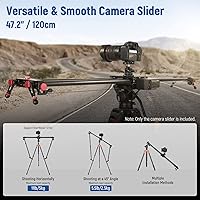
  • Rail Length: The slider rail measures 120cm (approximately 47.2 inches), providing a generous travel distance suitable for smooth cinematic pulls and wide product sweeps.
  • Rail Material: The rail is constructed from carbon fiber, offering a strong-to-weight ratio that keeps the overall unit light without sacrificing structural rigidity.
  • Item Weight: The complete slider unit weighs approximately 5.5 lb (2.5 kg), making it manageable for solo shooters packing for location work.
  • Dimensions: Packaged dimensions measure approximately 56 x 12 x 4.3 inches, which dictates a dedicated slot in any camera bag or case.
  • Max Load (Flat): When positioned horizontally, the slider supports a camera payload of up to 11 lb (5 kg), comfortably accommodating most DSLR and mirrorless setups with standard lenses.
  • Max Load (Tilted): At a 45° tilt angle, the recommended maximum payload drops to approximately 5.5 lb (2.5 kg), which is an important consideration for heavier camera-and-lens combinations.
  • Motor Type: An upgraded silent motorized drive powers the carriage movement, designed to minimize operational noise during live video recording.
  • Shooting Modes: Three shooting modes are available: manual control, video mode (with both constant-speed and slow-start/stop options), and time-lapse with programmable interval and frame settings.
  • Shooting Angles: The slider supports three physical shooting configurations — horizontal, diagonal tracking, and 120° panoramic sweep — switchable via adjustment knobs on either end of the unit.
  • Tilt Capability: Beyond flat horizontal use, the slider can be positioned at up to a 45° incline or oriented fully vertical at 90° for overhead or low-angle shots.
  • Stabilization: Four precision roller bearings are integrated into the carriage to reduce lateral play and minimize vibration during travel passes.
  • Battery: Power is supplied by an included NP-F550 lithium-ion cell rated at 2600mAh, which is a widely available, interchangeable battery format used across many camera accessories.
  • USB-C Power: An alternative 5V 2A USB-C input allows the slider to run directly from a compatible portable power bank, extending shoot time on location without carrying spare batteries.
  • Control Options: The slider is operated via the NEEWER smartphone app over a 2.4G wireless connection, or through the included RT-08 physical remote control.
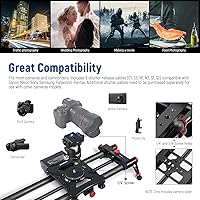
  • Mounting Threads: The underside and sides of the slider feature both 1/4″ and 3/8″ standard threaded holes, ensuring broad compatibility with tripods, fluid heads, and other support gear.
  • Wireless Frequency: Both the app connection and the RT-08 remote operate on the 2.4GHz band, which provides reliable short-range connectivity in typical shooting environments.
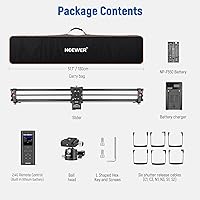
  • Included Accessories: The package includes the RT-08 remote control, one NP-F550 battery, and a USB charger, allowing immediate use after unboxing without additional purchases.
  • Compatible Devices: The slider is designed to work with cameras, including DSLRs, mirrorless systems, and compact video cameras, provided the payload stays within the rated weight limits.

Related Reviews
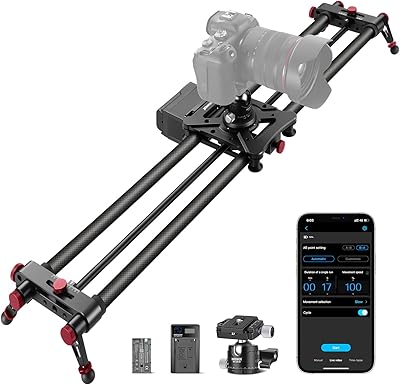
NEEWER ER1-80 80cm Motorized Camera Slider
82%
91%
Motion Smoothness
83%
App Control & Usability
88%
Build Quality
89%
Motor Noise Level
61%
App-to-Remote Parity
More
NEEWER ER1-100 100cm Motorized Camera Slider
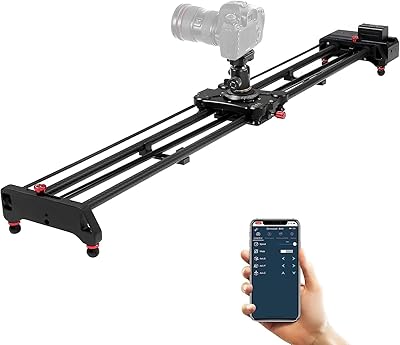
70%
78%
Motor Smoothness
61%
App Control & Connectivity
66%
Build Quality & Materials
71%
Ease of Setup
74%
Value for Money
More
GVM 120cm Motorized Carbon Fiber Camera Slider
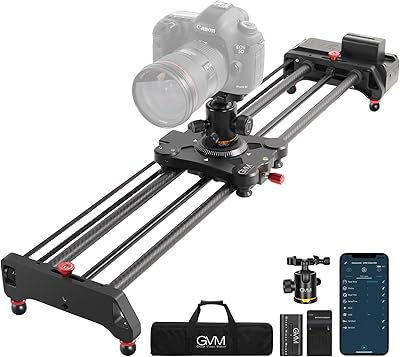
79%
88%
Motion Smoothness
83%
Build Quality
67%
App Control & Connectivity
91%
Shooting Mode Versatility
86%
Portability & Weight
More
Zecti ZT-706 47″ Motorized Camera Slider
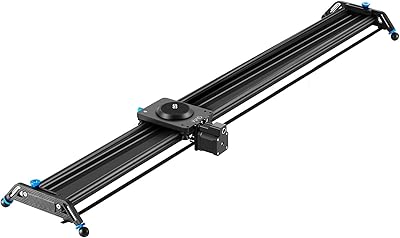
77%
88%
Motion Smoothness
83%
Build Quality & Materials
67%
App Control & Connectivity
81%
Load Capacity & Stability
84%
Time-Lapse Performance
More
GVM Motorized Camera Slider 31″
86%
92%
Smoothness of Motion
85%
App Control Experience
90%
Portability and Weight
88%
Build Quality and Durability
84%
Ease of Setup and Use
More
GVM G5-J120D Motorized Camera Slider
76%
88%
Build Quality
84%
Motion Smoothness
66%
Remote Controller Usability
83%
Load Capacity
81%
Shooting Modes Versatility
More
NEEWER Z160 Camera Flash
81%
94%
Portability & Form Factor
83%
Build Quality
61%
Flash Output Power
88%
Battery Life & Charging
86%
Recycle Time
More
NEEWER Z150 Mini Hot Shoe Flash
81%
94%
Portability & Form Factor
91%
Battery Life & Charging
71%
Light Output & Power
89%
Ease of Use
86%
S2 Optical Slave Performance
More
NEEWER F700 7″ Field Monitor
78%
91%
Outdoor Visibility
86%
Touch Screen Responsiveness
54%
Fan Noise
88%
3D LUT Support
89%
Battery & Power Versatility
More
MIGO 120-inch Motorized Projector Screen
85%
91%
Value for Money
85%
Setup & Installation
88%
Image Quality
89%
Motorized Operation
90%
Viewing Angle
More

FAQ

It depends on your specific combination. At a flat horizontal orientation the slider handles a solid full-frame body with a moderate zoom without issue, but if you are planning to tilt the slider at an angle, the weight limit drops considerably. Weigh your camera and lens together before assuming you are in the clear for angled shots.

Honestly, it takes some patience. The pairing process and mode navigation are not immediately obvious, and most users need at least one troubleshooting session before the workflow clicks. That said, once it is set up correctly it runs reliably, and NEEWER has tutorial videos online that shorten the learning curve significantly. Budget some time before your first real shoot.

You need a power bank that reliably delivers 5V at 2A — not all of them do, even if they advertise it. If you plug in an underpowered bank, the motor may behave erratically or shut off mid-pass. Check the output specs on your power bank before relying on it in the field.

For most shooting situations — outdoor locations, ambient-audio interviews, or voiceover recorded separately — the motor is effectively inaudible. In a very quiet treated room with a sensitive microphone placed close to the slider, you may pick up a faint hum at higher speeds. It is worth doing a quick test recording in your specific setup before a critical shoot.

The video mode offers two movement profiles: constant speed, which runs the carriage at a fixed, unchanging pace from one end to the other, and slow-start/slow-stop, which ramps the speed up at the beginning and eases it back down at the end of each pass. The ramping option generally produces more cinematic-looking movement and is what most users end up using for YouTube and social content.

Yes, though battery life is the main variable to plan around. The included NP-F550 cell will not last through an all-night session on its own, so for extended time-lapses you should run the slider from a high-capacity USB-C power bank. Set your interval long enough to give the motor adequate rest between passes and you should be fine.

It is a tight fit. At close to 120cm, this camera dolly rail does not collapse or fold, so it needs a dedicated long compartment — typically along the spine of a larger camera backpack or in a separate bag. Most standard camera backpacks are too short to accommodate it, so check your bag dimensions before assuming it will work.

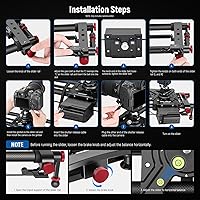
All three configurations are set mechanically using the adjustment knobs at each end of the slider rather than through software. For a flat horizontal pass, both knobs sit in their centre position. For tracking, one goes down and the other up on opposite sides. For the wide 120° panoramic sweep, the positions are reversed from tracking. It takes a couple of tries to get the feel for it, but once you understand the pattern it is quick to switch on location.

Yes, the slider can be mounted at a full 90° vertical orientation. Keep in mind that when vertical, the effective payload rating is closer to the tilted limit rather than the flat horizontal maximum, so lighter camera setups will perform more reliably. It is a useful configuration for overhead flat-lay product videos that would otherwise require a dedicated overhead rig.

Yes, the NP-F550 is a Sony-style battery format used across a wide range of cameras, lights, and accessories, which means compatible third-party options are widely available online and reasonably affordable. Picking up one or two spare cells is a practical move if you plan to shoot for extended periods away from a power source.

Where to Buy