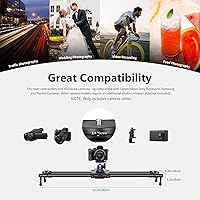
Overview

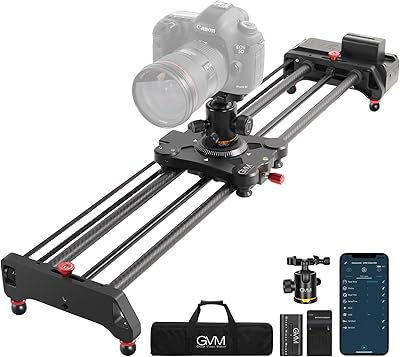
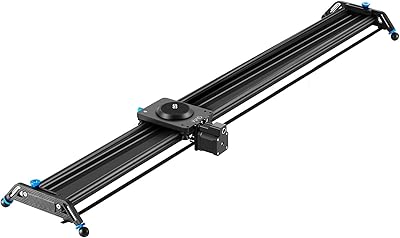
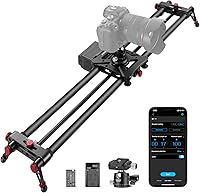
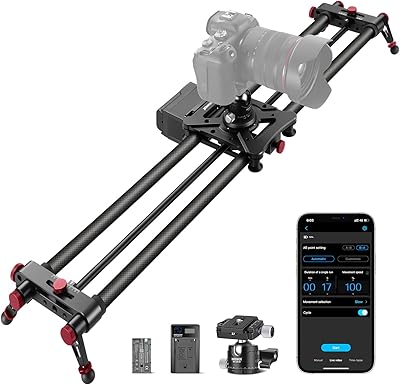
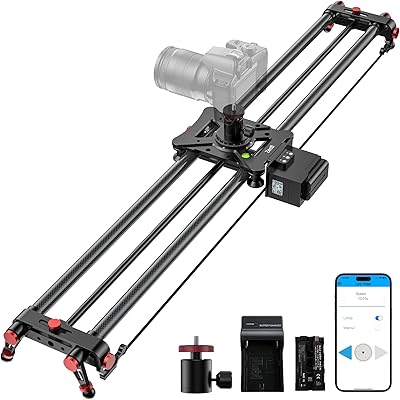
The NEEWER ER1-80 80cm Motorized Camera Slider sits in a genuinely useful middle ground — capable enough for working videographers, yet approachable enough that hobbyists won't feel out of their depth. Built on a carbon fiber rail, it's notably light at 5.5 pounds, which matters when you're hauling gear to a location shoot. The silent stepper motor is what separates it from cheaper manual sliders; you actually hear the difference during a dialogue-heavy indoor scene. It handles horizontal, 45° tilted, and vertical setups, giving you more placement options than most single-axis sliders offer. One thing worth flagging upfront: the 2.4G remote is sold separately, so factor that into your budget.

Features & Benefits

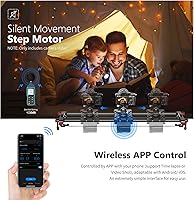
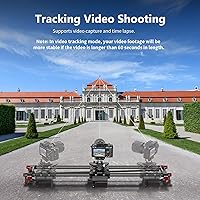
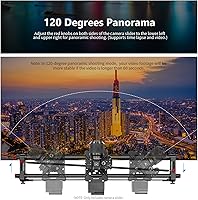
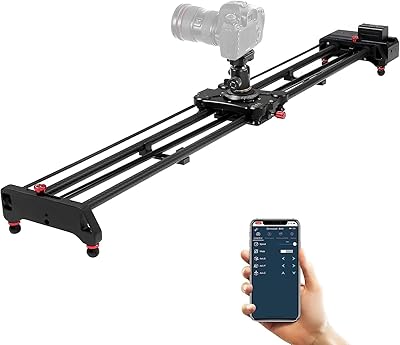
What makes this motorized slider genuinely practical day-to-day is the level of control you get from a phone. The NEEWER app manages time-lapse intervals, video speed, and shutter settings without you needing to touch the rig mid-shot — that matters when the camera is mounted somewhere inconvenient. The adjustable knobs on each end of the rail let you switch between tracking shots and a 120° panoramic arc without swapping hardware. Power-wise, the included NP-F550 battery handles most sessions, and the USB-C port means you can run it off a power bank when needed. At 11 lb load capacity horizontally, it comfortably supports a mirrorless body with a mid-size lens. Four roller bearings keep movement steady and shake-free.

Best For

This carbon fiber dolly rail is built with solo shooters in mind. If you're producing product reviews, travel vlogs, or cinematic B-roll on your own, automated camera movement removes the need for a second operator entirely. Travel videographers will appreciate the weight — 5.5 pounds is genuinely packable without sacrificing rail stability in the field. Time-lapse photographers get real precision: frame count, interval timing, and shutter control all sit inside the app before you step away from the shot. Photographers moving into video will also find the learning curve short. The NEEWER slider rewards experimentation with shooting angles without punishing you with a complex setup process.

User Feedback

Buyers consistently highlight motion smoothness as the standout strength, and app reliability gets strong marks across reviews, with most users finding it stable enough for professional use. Setup also gets positive mentions — people report being operational within minutes, not hours. The most repeated gripe is the 2.4G remote not being included, which catches some buyers off guard when they realize they need to purchase it separately. A smaller subset notes that battery performance dips noticeably in colder conditions. On durability, the carbon fiber build earns consistent praise even from users who shoot regularly outdoors. The overall tone skews positive, though buyers who prefer hardware controls over app-based ones may want to weigh that trade-off carefully.

Pros

  • The silent stepper motor produces genuinely noiseless movement, making it viable for dialogue scenes and quiet indoor shoots.
  • App control is stable and well-organized, with real-time adjustment of speed, intervals, and shutter settings from your phone.
  • At 5.5 pounds, this carbon fiber dolly rail is light enough to pack for location work without feeling like a compromise.
  • Setup is fast — most users report being operational within a few minutes of unboxing.
  • Dual power options (included NP-F550 battery plus USB-C) give you flexibility to run on a power bank when needed.
  • The adjustable knobs on both ends switch between tracking and 120° panoramic modes without swapping any hardware.
  • Four roller bearings keep movement smooth and vibration-free even during longer slider passes.
  • The 1/4-inch and 3/8-inch threaded holes make tripod mounting straightforward with standard gear.
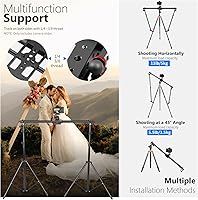
  • Multiple shooting orientations — horizontal, 45° tilt, and vertical — give you more placement flexibility than most similarly priced sliders.
  • Carbon fiber construction holds up well to repeated outdoor use, according to long-term buyer feedback.

Cons

  • The RT-08 wireless remote is sold separately, which adds to the real cost and isn't made obvious at the point of purchase.
  • Battery life shortens noticeably in cold temperatures, limiting outdoor winter shooting sessions.
  • The 80cm rail length won't satisfy shooters who need wide lateral camera travel for larger scenes.
  • Load capacity drops to 5.5 lb at a 45° tilt, which can be restrictive for mirrorless bodies with larger lenses.
  • App dependency means a phone update or connectivity glitch can interrupt your workflow at an inconvenient moment.
  • No built-in display or onboard controls — all settings require the smartphone app or a separately purchased remote.
  • The included NP-F550 battery, while functional, is a proprietary format that requires dedicated spares for all-day shoots.
  • Users who prefer dedicated hardware controls may find the app-first design a constant friction point in the field.

Ratings

The scores below for the NEEWER ER1-80 80cm Motorized Camera Slider were generated by our AI system after analyzing verified buyer reviews from multiple global markets, with spam, bot-submitted, and incentivized feedback actively filtered out. Each category reflects the honest distribution of praise and frustration real shooters reported after using this slider in the field. Where the experience is split, both sides are represented transparently.

Motion Smoothness
91%
This is consistently the most praised aspect across buyer reviews. Shooters report that the stepper motor produces fluid, stutter-free movement even at slower speeds — exactly where cheaper sliders tend to jerk or hesitate. Time-lapse sequences and slow product reveal shots benefit most noticeably.
A small subset of users note that at very low speed settings, there can be a faint micro-vibration that shows up on longer focal lengths. It's not common, but shooters using telephoto lenses on the upper end of the load limit are more likely to encounter it.
App Control & Usability
83%
Most buyers find the NEEWER app well-structured and responsive, with easy access to speed, interval, and shutter settings from a single screen. For time-lapse work especially, being able to dial in frame count and interval without touching the rig mid-shot is a genuine workflow advantage.
App-dependent gear always carries the risk of connectivity hiccups, and this slider is no exception. Some users report occasional Bluetooth dropouts when the phone screen locks, requiring a reconnect before shooting can resume. App updates have occasionally introduced minor UI changes that briefly confused established users.
Build Quality
88%
The carbon fiber rail draws consistent praise for feeling premium relative to the price tier. Long-term buyers who use this carbon fiber dolly rail repeatedly on outdoor shoots report that the rail stays straight and the carriage movement remains smooth without noticeable degradation over months of use.
The end caps and adjustment knobs feel slightly less refined than the rail itself — a few users describe them as plasticky by comparison. Nothing has been reported as breaking under normal use, but the perceived quality gap between the carbon rail and the plastic hardware components is a recurring observation.
Motor Noise Level
89%
Buyers shooting in quiet indoor environments — interviews, product demos, and ambient sound recordings — specifically call out how much quieter this slider is compared to belt-driven alternatives they previously owned. In most real-world shooting contexts, the motor is inaudible on camera audio.
In a completely silent room with a sensitive microphone placed close to the slider, a faint stepper motor hum can be picked up. This isn't a dealbreaker for most shooters, but audio-first creators recording voice-over or acoustic content alongside slider movement should test placement carefully.
App-to-Remote Parity
61%
39%
For users who are comfortable keeping their phone nearby during a shoot, the app delivers more granular control than the optional remote ever could — including shutter speed and exposure time settings that the remote cannot replicate.
The RT-08 remote being sold separately genuinely frustrates a significant portion of buyers who assumed it was included. Those who prefer hardware controls over app-based operation feel the pricing doesn't fully account for this gap, and the remote's absence is the single most frequently mentioned complaint in user reviews.
Battery Performance
72%
28%
Under normal conditions — indoor studio work or moderate outdoor sessions — the included NP-F550 gets most shooters through a solid half-day of intermittent use. The USB-C backup option is practically useful and works reliably with standard power banks, which extends runtime significantly.
Battery performance drops more than expected in cold weather, and several buyers who shoot outdoors in winter report sessions cut noticeably short. The NP-F550 is a proprietary format, so owning a spare is essentially a requirement for all-day shoots rather than a nice-to-have.
Setup & Calibration
84%
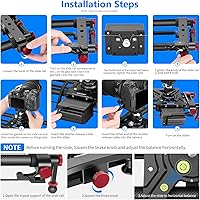
The majority of buyers report being fully operational within five to ten minutes of opening the box. Mounting to a standard tripod via the 1/4-inch or 3/8-inch threaded holes is tool-free, and setting start and end points for automated motion is intuitive even for first-time motorized slider users.
Users who want to use panoramic mode or diagonal tracking shots need to spend a bit more time understanding how the dual adjustment knobs interact. The documentation is functional but thin, and a few buyers needed to consult tutorial videos to understand the knob configuration for non-horizontal shooting angles.
Portability
87%
At 5.5 pounds, this motorized slider is genuinely packable for travel videographers. Multiple buyers mention fitting it into a carry-on alongside other gear, which is not something they could say about heavier aluminum-rail alternatives they previously used on location.
At 31.5 inches, the rail length means it doesn't fit neatly into most standard camera bags without a dedicated slot or a separate case. A small number of travel shooters find the length — not the weight — to be the bigger logistical friction when moving between locations.
Load Capacity
78%
22%
For mirrorless shooters running a standard body with a prime or mid-range zoom, the 11 lb horizontal limit is more than adequate and gives meaningful headroom. Most popular Sony, Canon, and Nikon mirrorless setups with everyday lenses fall comfortably within range.
The capacity reduction to 5.5 lb at 45° tilt catches some buyers off guard. Shooters with heavier rigs — larger zooms, follow-focus systems, or on-camera lights — can find themselves disqualified from angled setups even if their horizontal configuration works fine.
Shooting Angle Versatility
82%
18%
The ability to switch between horizontal, tracking, 120° panoramic, and vertical orientations without swapping hardware is a genuine differentiator at this price level. Buyers who do both product photography and video content particularly appreciate not needing multiple accessories to cover different shot types.
Switching between angle configurations requires physical adjustment of both end knobs and sometimes repositioning the entire slider on the tripod, which takes a few minutes. On fast-moving shoots where conditions change quickly, this isn't the most agile system to reconfigure on the fly.
Value for Money
79%
21%
When evaluated against what comparable motorized sliders with app control and silent motors cost, most buyers land on this motorized slider as a fair exchange. The carbon fiber construction and multi-angle versatility are features that typically appear at significantly higher price points.
Once you factor in the separately purchased remote, a spare battery, and potentially a carrying case, the real ownership cost is higher than the initial listing suggests. Buyers who budget only for the base unit sometimes feel the value equation is less compelling than it first appeared.
Long-Term Durability
81%
19%
Users who have owned this slider for a year or more largely report that rail smoothness and motor responsiveness hold up well with regular use. The carbon fiber construction appears to resist the warping and flex that affect aluminum rails over time, especially in variable humidity conditions.
There are scattered reports of the motor controller becoming less consistent after extended heavy use, though these are a clear minority. Buyers who use the slider in dusty or sandy outdoor environments note that carriage maintenance — cleaning the rail surface regularly — is more important than the manual implies.
Time-Lapse Precision
86%
For dedicated time-lapse shooters, the app's ability to set interval timing, frame count, and shutter speed from a phone represents a meaningful step up from entry-level sliders with fixed or limited automation. Sunrise and architectural time-lapses with slow, controlled camera travel are where this capability shines most.
The time-lapse mode works well within its defined parameters, but more advanced users who want to program multi-point motion paths or ramped speed changes will hit the ceiling of what the app currently offers. It's a capable system for standard time-lapse, not a replacement for dedicated motion control rigs.

Suitable for:

The NEEWER ER1-80 80cm Motorized Camera Slider is purpose-built for solo content creators who need repeatable, automated camera motion without hiring a second operator. Travel videographers will find the carbon fiber build genuinely practical — at 5.5 pounds, it doesn't demand a dedicated case or an extra checked bag. If you shoot time-lapses regularly, the app's granular control over intervals, frame count, and shutter timing removes a lot of the guesswork that cheaper sliders force you to work around manually. YouTubers and vloggers adding motion to product shots or talking-head setups will get consistent, smooth results without a steep learning curve. Photographers transitioning into hybrid or video work are also well-served here, since the setup process is straightforward and the range of shooting angles — horizontal, tracking, 120° panoramic — covers most creative scenarios without requiring additional accessories.

Not suitable for:

The NEEWER ER1-80 80cm Motorized Camera Slider is not the right fit for shooters who need physical, tactile control over every movement and don't want to depend on a smartphone app to operate their gear. Videographers running heavy cinema rigs should also recalibrate expectations — the 11 lb horizontal load limit rules out larger mirrorless setups with heavy glass or matte boxes. At 80cm, the rail length is adequate for most solo shoots but will frustrate anyone who needs wide lateral movement across a larger scene. Cold-weather shooters should also take note: battery performance dips in low temperatures, which can cut sessions short in outdoor winter conditions. Finally, buyers who want a full wireless remote solution out of the box will need to budget separately for the RT-08 remote, since this motorized slider ships without one.

Specifications

  • Rail Length: The slider rail measures 80cm (31.5″) in total travel length, providing enough range for smooth cinematic pans in studio and location setups.
  • Load Capacity: Maximum load is 11 lb (5 kg) when mounted horizontally and drops to 5.5 lb (2.5 kg) when tilted up to 45°.
  • Item Weight: The complete slider unit weighs 5.5 pounds, making it manageable for solo shooters carrying gear to outdoor locations.
  • Rail Material: The rail is constructed from carbon fiber, which provides a high strength-to-weight ratio and resistance to flex under load.
  • Motor Type: A silent stepper motor drives the carriage, delivering precise, repeatable positioning with minimal audible noise during operation.
  • Bearings: Four roller bearings support the carriage along the rail, reducing lateral play and dampening vibration during movement.
  • Control Options: The slider is operated via the NEEWER app on iOS or Android, or via an optional 2.4G RT-08 wireless remote sold separately.
  • Shooting Modes: Three shooting modes are supported: manual, video mode (with constant or gradual speed), and time-lapse with adjustable interval and frame settings.
  • Shooting Angles: Supported orientations include horizontal, 45° tilt, 90° vertical, tracking, and 120° panoramic, selectable via adjustment knobs on the rail ends.
  • Power Source: The slider runs on the included NP-F550 2600mAh lithium-ion battery or via a 5V 2A USB-C connection to a compatible external power bank.
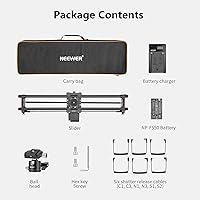
  • Battery Included: One NP-F550 lithium-ion battery and a USB charger are included in the box.
  • Mount Compatibility: The underside and sides of the slider feature both 1/4-inch and 3/8-inch threaded holes for standard tripod and head mounting.
  • Compatible Devices: Designed for use with cameras and camcorders; compatible with any camera body within the stated load capacity limits.
  • Model Number: The official model designation is ER1-80, as assigned by the manufacturer NEEWER.
  • Dimensions: The slider measures 6.3″ deep by 31.5″ wide by 3.15″ tall in its operational configuration.
  • Availability: This product was first made available for purchase in January 2022 and is manufactured by NEEWER.

Related Reviews
NEEWER ER1-120 120cm Motorized Camera Slider
79%
88%
Motion Smoothness
91%
Noise Level
84%
Build Quality
61%
App Control & Interface
79%
Remote Control (RT-08)
More
NEEWER ER1-100 100cm Motorized Camera Slider
70%
78%
Motor Smoothness
61%
App Control & Connectivity
66%
Build Quality & Materials
71%
Ease of Setup
74%
Value for Money
More
GVM Motorized Camera Slider 31″
86%
92%
Smoothness of Motion
85%
App Control Experience
90%
Portability and Weight
88%
Build Quality and Durability
84%
Ease of Setup and Use
More
GVM 120cm Motorized Carbon Fiber Camera Slider
79%
88%
Motion Smoothness
83%
Build Quality
67%
App Control & Connectivity
91%
Shooting Mode Versatility
86%
Portability & Weight
More
Zecti ZT-706 47″ Motorized Camera Slider
77%
88%
Motion Smoothness
83%
Build Quality & Materials
67%
App Control & Connectivity
81%
Load Capacity & Stability
84%
Time-Lapse Performance
More
GVM G5-J120D Motorized Camera Slider
76%
88%
Build Quality
84%
Motion Smoothness
66%
Remote Controller Usability
83%
Load Capacity
81%
Shooting Modes Versatility
More
NEEWER N55CR Carbon Fiber Camera Tripod
81%
88%
Build Quality
86%
Stability at Normal Heights
67%
Stability at Maximum Extension
93%
Weight & Portability
74%
Ball Head Performance
More
NEEWER Z160 Camera Flash
81%
94%
Portability & Form Factor
83%
Build Quality
61%
Flash Output Power
88%
Battery Life & Charging
86%
Recycle Time
More
NEEWER Z150 Mini Hot Shoe Flash
81%
94%
Portability & Form Factor
91%
Battery Life & Charging
71%
Light Output & Power
89%
Ease of Use
86%
S2 Optical Slave Performance
More
NEEWER 750II TTL Camera Flash Speedlite
84%
88%
Flash Power & Performance
85%
Ease of Use
72%
Build Quality
90%
TTL Functionality
80%
Portability & Weight
More

FAQ

No, it does not. The slider ships with the NP-F550 battery and USB charger, but the 2.4G RT-08 remote is sold separately. If you prefer physical remote control over using a smartphone app, budget for that add-on before purchasing.

In most cases, yes. A typical full-frame mirrorless body with a mid-range zoom lens will come in well under the 11 lb horizontal load limit. That said, if you're adding a heavy gimbal or a large telephoto lens, you'll want to weigh your full rig before assuming it qualifies.

Noticeably quieter than most belt-driven or gear-driven sliders in this price range. The stepper motor produces a low, consistent hum rather than a mechanical grinding sound, so it won't bleed into dialogue audio in most indoor shooting situations. That said, in a completely silent room with a sensitive on-camera mic, you may still catch faint motor noise.

Most users get up and running within a few minutes. The app connects via Bluetooth and gives you direct access to speed, interval, frame count, and shutter settings. It's well-organized, though like any app-dependent gear, you may occasionally need to reconnect if your phone goes to sleep mid-shoot.

Yes. The 5V 2A USB-C port lets you power the motor directly from a compatible power bank, which is useful for extended time-lapse sessions where you don't want to monitor battery levels. Just confirm your power bank outputs at least 2A on its USB-C port.

You can shoot horizontally, tilt the rail up to 45°, mount it vertically at 90°, or use the adjustable end knobs to achieve tracking shots or a 120° panoramic sweep. Switching between modes is mostly mechanical — you adjust the knobs and reposition the slider — no special attachments required.

Based on consistent user reports, the carbon fiber rail holds its shape and smoothness well over time, even with repeated outdoor sessions. The bearings don't seem to develop noticeable play quickly. The main thing to watch is keeping the rail clean, since dust and grit on the carriage surface will affect motion quality before anything else does.

Yes, and this is worth planning around if you shoot outdoors in winter. Lithium-ion batteries lose capacity in low temperatures, and several users have noted shorter run times in cold conditions. Carrying a spare NP-F550 or running off a power bank tucked inside your jacket is a practical workaround.

Yes, without any adapter. Both 1/4-inch and 3/8-inch threaded holes are built into the underside and sides of the slider, so it mounts directly to most tripod heads and fluid heads. For overhead or vertical setups, the side-mounted holes give you additional rigging options.

For the vast majority of solo shooting scenarios — product videos, talking-head B-roll, time-lapses, close-up nature footage — 80cm is plenty. Where it starts to feel limiting is if you need wide lateral movement across a large scene or want to do very long dolly-in shots. For those situations, you'd need to look at longer rail options.

Where to Buy