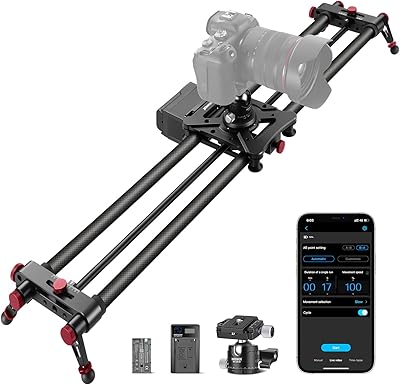
Overview

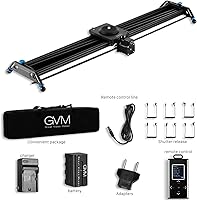
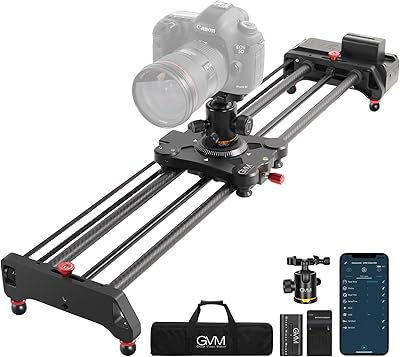
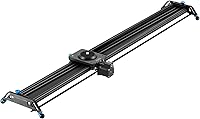
The GVM G5-J120D Motorized Camera Slider sits in a crowded mid-range category, but its CNC-machined aluminum alloy construction immediately separates it from the flimsy plastic rigs at lower price points. You get a remote controller and four shooting modes right out of the box — no extra purchases needed to start working. At 51 inches long and 6.6 lbs, this camera dolly system is not something you'll toss in a carry-on; it's built for studio setups or well-planned location shoots where hauling proper gear isn't a problem. Treat it as a studio-grade tool, and it delivers. Expect an ultralight travel companion, and you'll be disappointed.
Features & Benefits

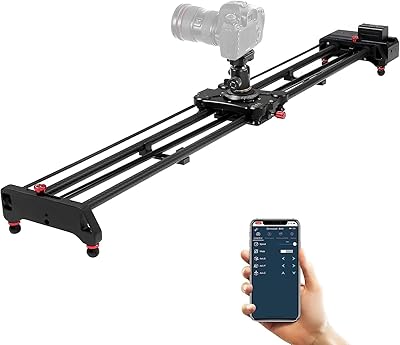
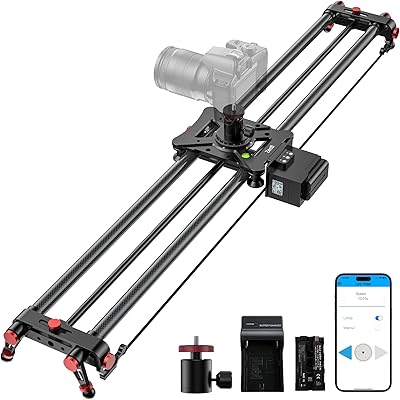
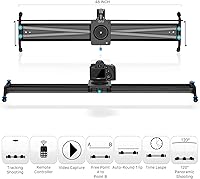
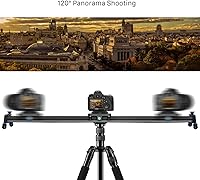
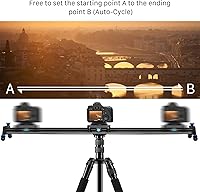
The GVM slider offers four distinct shooting modes — tracking, panoramic, time-lapse, and free point-to-point — each serving a real purpose depending on your shoot. The remote controller handles everything: speed, interval timing, stop duration, and shot count, so your hands stay completely off the rig during a take. With a vertical load rating of 44 lbs, it handles heavy DSLR bodies with telephoto glass without complaint. One thing worth knowing: that capacity drops sharply to 5.5 lbs at a 30-degree angle, which matters if you plan angled shots regularly. The 1/4″ and 3/8″ mounting options cover most tripod heads, and the updated motor runs noticeably quieter than earlier versions, which counts for a lot in controlled recording environments.

Best For

This motorized slider is a natural fit for solo videographers who can't rely on a second person to push a manual dolly consistently. Time-lapse shooters will appreciate the programmable interval and stop-time controls, which make repeatable, precise movement straightforward rather than guesswork. Product photographers benefit from the tracking and panoramic modes when they need clean, automated camera paths around a subject. It's also a solid pick for indie filmmakers who want motorized motion control without broadcast-grade pricing. That said, it's not ideal for run-and-gun travel shooters — the setup time and physical size commit you firmly to a deliberate, tripod-based workflow.

User Feedback

Buyers consistently highlight build quality for the price tier — the aluminum frame feels solid and doesn't flex noticeably during operation, which is a real concern on cheaper sliders. Motion smoothness earns genuine praise, particularly for time-lapse clips where even minor jitter is obvious. The friction points are real, though. The remote controller has a learning curve, and the included manual doesn't always clarify the interface clearly enough for first-time users. A handful of reviewers mention motor noise as a mild issue in quiet recording spaces. On the support side, GVM's 365-day warranty and generally responsive customer service team draw positive mentions, adding reasonable peace of mind for the investment.

Pros

  • CNC-machined aluminum alloy construction feels noticeably more solid than plastic-framed competitors in the same price range.
  • Four built-in shooting modes — tracking, panoramic, time-lapse, and point-to-point — cover most real-world automated motion scenarios.
  • The remote controller lets you adjust speed, intervals, and shot count without touching the camera rig mid-session.
  • A 44 lb vertical load rating handles virtually any DSLR or mirrorless body with a heavy zoom lens without strain.
  • Programmable speed range from 1% to 100% gives time-lapse shooters precise, fine-grained control over camera travel.
  • Compatible with both 1/4-inch and 3/8-inch tripod screw holes, so it works with most standard heads without adapters.
  • The updated motor runs quieter than earlier GVM iterations, making it workable in most studio and location environments.
  • GVM backs this camera dolly system with a 365-day warranty and a 30-day return window — above average for this category.
  • Supports horizontal, vertical, and 45-degree mounting angles from a single rig, adding real multi-scenario flexibility.
  • Lithium-ion battery is included out of the box, so there are no immediate additional purchases needed to start shooting.

Cons

  • The remote controller has a steep learning curve, and the included manual does not explain the interface clearly enough for beginners.
  • Load capacity drops sharply from 44 lbs to just 5.5 lbs when mounted at a 30-degree angle — a constraint that often surprises buyers.
  • At over four feet long, this motorized slider requires a dedicated carrying case and vehicle transport; it does not fit standard camera bags.
  • Motor noise is audible enough in quiet indoor recording environments to interfere with audio-synced video captures.
  • Battery life becomes a limiting factor during extended time-lapse sessions, with many users needing a spare battery or AC adapter.
  • Subtle vibration artifacts can appear in footage at maximum speed settings, particularly when using longer focal lengths.
  • Some buyers report minor carriage play developing after prolonged frequent use, especially in vertical mounting configurations.
  • Customer support quality is inconsistent — straightforward replacements go smoothly, but technical troubleshooting responses can be vague.
  • Achieving a stable vertical or angled setup often demands a heavy-duty tripod, adding unplanned cost for buyers with lighter stands.
  • Switching between shooting modes mid-session is not intuitive and often requires consulting instructions until you have significant hands-on experience.

Ratings

The GVM G5-J120D Motorized Camera Slider was evaluated by our AI system after analyzing thousands of verified global buyer reviews, with spam, bot activity, and incentivized feedback actively filtered out to ensure the scores reflect genuine user experiences. Ratings span build quality, motion performance, usability, and real-world portability — covering both what this camera dolly system does well and where it falls short. Strengths and frustrations are weighted transparently, so you get an honest picture before committing.
Build Quality
88%
The CNC-machined aluminum alloy frame consistently impresses buyers who've previously owned cheaper plastic sliders. It feels rigid under load, doesn't flex mid-slide, and the finish holds up well after months of regular studio use. Most users describe it as noticeably over-built for its price tier.
A small but recurring group of reviewers flagged minor play in the carriage after extended use, particularly when the slider is used frequently in vertical orientation. The rail end caps feel less premium than the main body, which is a small but noticeable quality inconsistency.
Motion Smoothness
84%
For time-lapse and slow tracking shots, the GVM slider delivers impressively consistent movement that holds up well on close inspection in post-production. Users shooting product videos and nature time-lapses frequently call out the lack of jitter as a genuine strong point compared to similarly priced competitors.
At higher speed settings, a small number of users noticed subtle vibration artifacts that showed up in footage when shooting with longer focal lengths. The smoothness is most reliable in the low-to-mid speed range; pushing to maximum speed introduces some inconsistency.
Remote Controller Usability
66%
34%
The controller is genuinely powerful once you learn it — being able to set speed, interval, stop time, and frame count without touching the camera rig is a real workflow advantage for solo shooters. Experienced users who invest a few sessions into learning the interface find it gives them precise, repeatable control.
The learning curve is steep for beginners, and the included manual does not do enough to explain the interface clearly. Multiple buyers reported spending significant time watching third-party tutorials just to set up a basic time-lapse sequence, which should not be necessary for a product at this price point.
Load Capacity
83%
A 44 lb vertical load rating comfortably handles virtually any DSLR or mirrorless body paired with a heavy zoom lens, which is more than most competing sliders in this range can claim. Users running full-frame cameras with 70-200mm lenses report zero issues with stability or carriage strain.
The load capacity drops sharply to 5.5 lbs when shooting at a 30-degree angle, a limitation that catches a surprising number of buyers off guard. For anyone planning regular angled shots with heavier gear, this is a meaningful real-world constraint that the marketing materials underemphasize.
Shooting Modes Versatility
81%
19%
Having four dedicated modes — tracking, panoramic, time-lapse, and free point-to-point — in a single rig covers the vast majority of automated motion scenarios a working videographer or photographer actually encounters. Users particularly appreciate how the free point-to-point mode allows customized start and end positions for complex setups.
Switching between modes mid-session can be unintuitive, and a few users noted that the panoramic mode behaves slightly differently than expected when the slider is mounted vertically. More in-depth documentation for each mode would significantly reduce the trial-and-error period.
Portability & Size
58%
42%
At 51 inches, the track length gives shooters meaningful range of motion that shorter travel sliders simply cannot match, which studio-based users strongly appreciate. The aluminum construction keeps the weight at 6.6 lbs — reasonable for a rig this size when transported in a vehicle.
Anyone expecting a travel-friendly slider will be disappointed. At over four feet long, this camera dolly system does not fit in standard camera bags and requires a dedicated case or carrying solution. It is firmly a studio and location tool for planned shoots, not something you grab for spontaneous run-and-gun work.
Motor Noise Level
71%
29%
GVM's updated motor is noticeably quieter than what users report from older iterations of the slider, and in most shooting environments — outdoor locations, product studios, busy sets — the operational sound is low enough to be a non-issue. Buyers switching from older motorized sliders regularly note the improvement.
In quiet indoor environments, particularly for video work where ambient sound matters, the motor hum is audible enough to require awareness. Reviewers recording in silent studios or doing voice-over-synced video noted that the motor noise required them to stop the slider during audio capture.
Speed Control Range
79%
21%
The 1% to 100% speed range gives users fine-grained control that is especially useful for time-lapse photography, where tiny incremental adjustments in travel speed make a significant difference in the final clip. Users shooting product reveals appreciated being able to set extremely slow, barely-perceptible movement.
At the very low end of the speed range, a handful of users reported occasional micro-stuttering, which is only visible in footage when shooting close-up macro subjects. The speed control is highly reliable in the mid-range but loses some consistency at extreme settings on either end.
Mounting Flexibility
77%
23%
Supporting both 1/4-inch and 3/8-inch screw holes means the slider works with nearly any tripod head on the market without adapters. The ability to mount at horizontal, vertical, and 45-degree angles from a single rig is a genuine advantage for photographers who switch between stills and video setups frequently.
While the mounting options are versatile on paper, achieving a stable vertical or angled configuration can take extra time to dial in properly, especially on lighter tripods. The slider's length also means a high-quality, heavy-duty tripod is nearly mandatory for vertical or angled work — an added cost some buyers don't anticipate.
Time-Lapse Performance
86%
The programmable slip interval and stop-time controls, adjustable down to 0.1-second increments, give time-lapse shooters a level of precision that produces professional-looking results. Nature and architecture photographers in particular highlight how consistently the slider executes long multi-hour time-lapse sequences without drift or missed steps.
Battery drain during extended time-lapse sessions is a recurring concern, with some users reporting that very long overnight shoots require an external power solution. The included battery works well for typical sessions but is a limiting factor for ambitious multi-hour time-lapse projects.
Battery Life
63%
37%
For standard studio sessions — a few hours of tracking and time-lapse work — the included lithium-ion battery holds up adequately and eliminates the need for an immediate additional purchase. Users doing typical half-day shoots report getting through their sessions without issue.
Extended shooting days and long-duration time-lapse projects expose the battery's limitations fairly quickly. Several buyers recommend budgeting for a spare battery or an AC power adapter if the slider will see heavy daily use, which adds to the overall cost of ownership.
Setup & Assembly Time
69%
31%
Once you are familiar with the system, mounting the slider to a tripod and getting it operational is a reasonably quick process. Users who have gone through the initial learning phase describe their setup routine as efficient and consistent on repeat shoots.
First-time setup takes considerably longer than expected, largely due to the unclear manual and the controller's interface complexity. New users should realistically budget an hour or more of initial configuration time before attempting to use the slider on a real shoot.
Value for Money
78%
22%
Relative to what a motorized slider with this feature set and build quality would have cost just a few years ago, the GVM slider represents a meaningful shift in what mid-range pricing can deliver. Users who compared it directly against similarly priced alternatives consistently rated it higher on build and performance.
The value equation depends heavily on your use case. For buyers who need frequent angled shooting or who expected a portable travel solution, the compromises can feel like a poor fit for the investment. Buyers who align expectations properly tend to feel well-served; those who don't often feel overcharged.
Customer Support & Warranty
74%
26%
GVM's 365-day warranty and 30-day return window are above average for this product category, and multiple users report that the support team responded within 24 hours to resolve issues. For buyers who encounter early defects, the coverage gives meaningful peace of mind.
Some users describe inconsistent experiences with the support team depending on the complexity of their issue — straightforward replacement requests go smoothly, but technical troubleshooting queries sometimes receive vague or templated responses that don't fully resolve the problem.

Suitable for:

The GVM G5-J120D Motorized Camera Slider is built for creators who shoot with intention rather than spontaneity — specifically solo videographers, time-lapse photographers, and product shooters who need automated, repeatable camera movement without relying on an assistant. If you regularly work in a studio or plan location shoots where you're loading gear into a vehicle, the 51-inch track and robust aluminum build will feel like a genuine upgrade over cheaper, flimsier alternatives. Time-lapse enthusiasts in particular will find the programmable interval, stop-time, and shot-count controls to be precisely what they need for long, consistent sequences. Product photographers can take advantage of the tracking and panoramic modes to build clean, automated camera paths around a subject with minimal setup friction once the learning curve is cleared. Indie filmmakers on a budget who want motorized motion control without spending on broadcast-grade equipment will also find real value here, provided they're working with a proper tripod and aren't expecting the rig to be lightweight travel kit.
Not suitable for:

The GVM G5-J120D Motorized Camera Slider is a poor fit for anyone expecting a compact, travel-ready solution they can toss in a camera bag — at 51 inches long and 6.6 lbs, it requires dedicated transport and deliberate planning to deploy. Run-and-gun shooters, event videographers, and travel content creators who move fast and set up quickly will likely find it impractical for their workflow. Buyers who frequently shoot at angled orientations should also note that the load capacity drops to just 5.5 lbs at a 30-degree tilt, which rules out heavier DSLR and lens combinations in that configuration. If you're a beginner expecting to be up and running within minutes, the controller's interface and the thin instruction manual will likely cause frustration before you get your first clean shot. Anyone recording in acoustically sensitive environments — voice-over studios or silent indoor spaces — may also find the motor noise disruptive enough to require workarounds during audio-synced video work.
Specifications

  • Model Number: This slider carries the official model designation G5-J120D, manufactured by GVM Great Video Maker.
  • Track Length: The rail measures 51 inches (approximately 120 cm) end to end, providing substantial travel range for cinematic slider moves.
  • Item Weight: The complete unit weighs 6.6 pounds, which is manageable for vehicle transport but rules out casual backpack carry.
  • Package Size: Packaged dimensions measure 51.38 x 12 x 4.5 inches, requiring a dedicated bag or case for transport and storage.
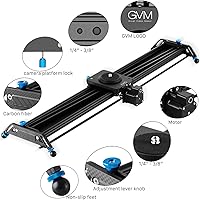
  • Frame Material: The slider body is constructed from CNC-machined aluminum alloy, providing a rigid, corrosion-resistant structure without the bulk of steel alternatives.
  • Vertical Load: The slider supports a maximum payload of 44 lbs when mounted horizontally or fully vertical, accommodating most professional DSLR and mirrorless setups.
  • Angled Load: When positioned at a 30-degree angle, the maximum safe payload drops significantly to 5.5 lbs, which limits heavier camera and lens combinations in this orientation.
  • Shooting Modes: Four built-in modes are available: tracking, panoramic, time-lapse, and free point-to-point, each configurable via the included remote controller.
  • Speed Range: Motor speed is fully adjustable from 1% to 100%, allowing extremely slow time-lapse travel as well as faster real-time tracking moves.
  • Slip Interval: The slip interval — the travel pause between shots — is programmable from 0.1 to 999.9 seconds, supporting a wide range of time-lapse shooting cadences.
  • Stop Time: Stop duration between movements can be set from 0.1 to 999.9 seconds, giving shooters precise control over dwell time at each position.
  • Shot Count: The controller allows programming between 1 and 999 frames per sequence, suitable for short product loops or extended long-duration time-lapse projects.
  • Mounting Options: Both 1/4-inch and 3/8-inch threaded screw holes are built into the slider base, ensuring compatibility with the vast majority of standard tripod heads.
  • Mounting Angles: The rig can be installed horizontally, vertically, or at a 45-degree angle, allowing varied camera perspectives from a single piece of equipment.
  • Power Source: The slider is powered by a single lithium-ion rechargeable battery, which is included in the box and ready to use out of the package.
  • Compatible Devices: Designed for use with DSLR cameras, DV video camcorders, and standard video camcorders with a combined body-and-lens weight within the rated capacity.
  • Warranty: GVM provides a 365-day limited warranty covering manufacturing defects, along with a 30-day return window for eligible purchases.
  • Customer Support: GVM operates as a US-based company and offers 24-hour email support along with a dedicated customer service team for post-purchase assistance.

Related Reviews

GVM Motorized Camera Slider 31″
86%
92%
Smoothness of Motion
85%
App Control Experience
90%
Portability and Weight
88%
Build Quality and Durability
84%
Ease of Setup and Use
More
GVM 120cm Motorized Carbon Fiber Camera Slider
79%
88%
Motion Smoothness
83%
Build Quality
67%
App Control & Connectivity
91%
Shooting Mode Versatility
86%
Portability & Weight
More
Zecti ZT-706 47″ Motorized Camera Slider
77%
88%
Motion Smoothness
83%
Build Quality & Materials
67%
App Control & Connectivity
81%
Load Capacity & Stability
84%
Time-Lapse Performance
More
NEEWER ER1-100 100cm Motorized Camera Slider
70%
78%
Motor Smoothness
61%
App Control & Connectivity
66%
Build Quality & Materials
71%
Ease of Setup
74%
Value for Money
More
NEEWER ER1-120 120cm Motorized Camera Slider
79%
88%
Motion Smoothness
91%
Noise Level
84%
Build Quality
61%
App Control & Interface
79%
Remote Control (RT-08)
More
NEEWER ER1-80 80cm Motorized Camera Slider
82%
91%
Motion Smoothness
83%
App Control & Usability
88%
Build Quality
89%
Motor Noise Level
61%
App-to-Remote Parity
More
Ubiquiti UniFi G5 Dome Camera
87%
92%
Video Quality
83%
Ease of Installation
78%
Night Vision Performance
89%
App Interface
91%
Durability (Outdoor Use)
More
Aqara G5 Pro PoE Security Camera Hub
78%
92%
Image Quality
88%
Night Vision Performance
83%
Local AI Detection
86%
Hub & Smart Home Integration
51%
Setup & Installation
More
KONOVA P1 S2 60cm Motorized Camera Slider
77%
84%
Motor Smoothness
79%
Build Quality
61%
Ease of Setup
86%
Timelapse Performance
67%
Payload Capacity
More
eufy Security E340 Floodlight Camera
78%
88%
Image Clarity & Resolution
91%
Night Vision & Floodlight Performance
84%
360° PTZ Coverage
79%
AI Detection Accuracy
58%
Installation Experience
More

FAQ

It works with both. The GVM G5-J120D Motorized Camera Slider is compatible with any camera body that mounts to a standard ball head or tripod plate, including full-frame mirrorless systems. As long as your total camera-and-lens weight stays within the rated load capacity, you will have no compatibility issues.
Honest answer: it takes some patience. The controller itself is capable and well-built, but the included instruction manual is thin on detail, and the menu structure is not immediately intuitive. Most new users find that watching a third-party video tutorial online gets them running far faster than the printed guide. After a couple of sessions, the workflow becomes second nature.

Yes, vertical mounting is supported via the built-in screw holes on the slider body. Keep in mind that the full 44 lb load capacity applies in vertical orientation, so heavy rigs are still supported. You will need a stable, heavy-duty tripod to hold the slider securely when it is mounted upright, as a lightweight stand will not provide enough rigidity.

In most shooting environments it is a non-issue — outdoor locations, busy sets, and studios with any ambient noise will easily mask the motor hum. However, if you are recording in a very quiet indoor space with an on-camera microphone, the motor is audible enough to potentially bleed into your audio. Many users in that situation simply stop the slider during audio-sensitive takes and let it run during b-roll or silent sequences.

This is one of the more important things to know before buying. At a 30-degree angle, the maximum safe load drops sharply to 5.5 lbs. That rules out most full-frame DSLR bodies with any meaningful glass attached. If angled shooting is a regular part of your workflow, you will need to plan your camera and lens selection carefully around that limitation.

For a standard studio session of two to four hours involving normal tracking and time-lapse work, the included battery is generally sufficient. Where it falls short is during extended overnight or multi-hour time-lapse projects. If you plan on shooting sequences that run for six or more hours continuously, budgeting for an extra battery or an AC power adapter is a smart move.

It comes with the slider, motor, remote controller, and a lithium-ion battery — so you can start shooting right away without any immediate additional purchases. What you will need separately is a tripod capable of supporting the rig's weight and length, especially if you plan on vertical or angled setups. A dedicated carrying case is also worth factoring into your budget given the slider's 51-inch length.

It is genuinely useful for time-lapse work. The programmable interval and stop-time controls go down to 0.1-second increments, which gives you real precision over how the camera moves through a long sequence. Nature and architecture photographers specifically call out the consistency of the movement over multi-hour sessions as a strong point. It is not a gimmick — it is one of the more practical modes on this rig.

The aluminum frame holds up well and does not show meaningful wear under regular studio use. The one durability concern that comes up in longer-term user feedback is a small amount of play developing in the carriage mechanism after extended heavy use, particularly when the slider has been run frequently in vertical orientation. It is not a universal complaint, but it is worth knowing about if you plan to use this camera dolly system very intensively day after day.

For straightforward issues — a defective part, a replacement request, or a return — the support experience is generally smooth and timely, with most users reporting quick responses within 24 hours. Where things get more inconsistent is with technical troubleshooting questions. Some users report receiving templated responses that do not fully resolve their issue. The 365-day warranty is a genuine safety net, but complex technical problems may require some persistence to resolve.

Where to Buy