Overview

The NEEWER N55CR Carbon Fiber Camera Tripod sits in an interesting middle ground — capable enough for serious enthusiast work, light enough to actually take on a plane or a long hike. What separates it from the usual crowd of travel tripods is the built-in ability to convert into a monopod, giving you a second tool without carrying extra gear. With over 4,600 ratings averaging 4.6 stars, there is clearly a large, satisfied user base behind this one. The carbon fiber construction is the defining material choice here — it keeps the weight down while maintaining enough rigidity to hold heavier camera setups. That said, this is an enthusiast-tier tool, not a replacement for a professional studio support system.
Features & Benefits

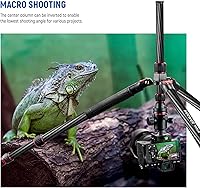
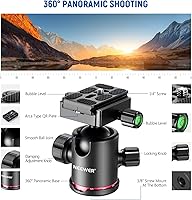
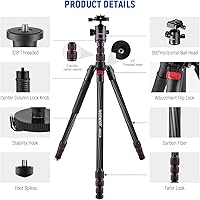
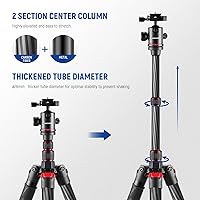
The reach on this tripod-monopod combo is genuinely useful — extended to its full height, you can comfortably shoot above a crowd or capture wide landscapes without craning the camera. The 28mm diameter columns give a solid, confidence-inspiring feel when you have got a heavy lens attached, and the twist locks on the leg sections are fast to operate once you get the hang of them. The 36mm ball head handles 360° rotation smoothly for panoramic work, and two locking knobs let you fine-tune position independently. The ability to invert the center column for low-angle shooting is a genuinely practical feature — no extra adapters needed for macro work or ground-level compositions. The center column hook for sandbag attachment is a small but smart touch for outdoor use.

Best For

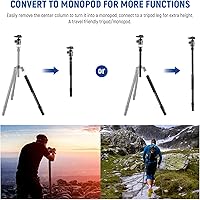
This carbon fiber tripod makes most sense for photographers who actually move — hikers covering terrain with a full camera bag, travel shooters navigating airports, or wildlife photographers who need height without the arm fatigue of a heavier aluminum rig. Vloggers and content creators who want to cut pack weight will also find it compelling, especially since the monopod conversion is a genuine bonus on longer shoots or trail walks — though it is most useful if you are already comfortable with how monopods handle. Macro and low-angle shooters get real value from the inverted column. It is also a strong first step up for anyone who has outgrown a flimsy beginner tripod and wants meaningful build quality without the steep price of professional alternatives.

User Feedback

Among buyers who have put this tripod-monopod combo through regular use, the most consistent praise centers on build quality — people are frequently surprised by how solid the carbon fiber feels and how reliably the leg locks hold under load. Setup is generally described as quick and intuitive. On the flip side, a noticeable portion of reviewers flag some wobble at maximum extension, particularly when the center column is fully raised — a known limitation across most travel tripods at this height range. The included carrying bag gets mixed feedback, with some finding it adequate and others wishing for better padding. The monopod conversion works, but several buyers note it takes a few tries before it feels natural.

Pros

  • Carbon fiber construction keeps the total weight well under four pounds, a real advantage on multi-hour hikes.
  • Build quality feels noticeably above average for the price tier — joints are solid and legs lock with confidence.
  • The tall maximum reach covers scenarios most travel tripods in this class simply cannot handle.
  • Inverted center column enables macro and low-angle shooting without purchasing any additional accessories.
  • Arca-type quick release plate is compatible with a wide range of third-party clamps and L-brackets.
  • Twist locks deploy quickly once you build muscle memory, making field setup fast when light is changing.
  • The center column hook for sandbag attachment is a practical outdoor stability feature rarely seen at this price.
  • Dual bubble levels provide two independent reference points for reliable horizon alignment.
  • The monopod conversion adds genuine secondary utility for event and wildlife photographers who already use monopods.
  • Over 4,600 global ratings averaging 4.6 stars reflects a broad and largely satisfied real-world user base.

Cons

  • Micro-vibration at full height extension makes long exposures unreliable without additional damping techniques.
  • Ball head tension adjustment has a narrow sweet spot — fine-tuning under heavier lenses can feel imprecise.
  • The included carrying bag has thin padding and questionable stitching durability under regular travel stress.
  • Monopod conversion requires deliberate disassembly steps and is not as quick to execute as the marketing suggests.
  • Twist locks can collect dust and grit in sandy or dry outdoor environments more readily than flip-lever alternatives.
  • Minor quality control variation between units means leg lock resistance can feel inconsistent across the same tripod.
  • Folded length is slightly bulky compared to ultra-compact travel-focused competitors designed specifically for airline carry-on.
  • The smaller bubble level is difficult to read accurately in low-light or overcast outdoor shooting conditions.
  • Pushing close to the rated load ceiling with long telephoto glass puts noticeable stress on the head and column joints.
  • Phone shooters and smartphone-first creators will need to source a separate threaded adapter, as none is included.

Ratings

The NEEWER N55CR Carbon Fiber Camera Tripod has accumulated thousands of verified purchases across multiple global markets, and the scores below reflect an AI-driven analysis of that real-world feedback — with spam, incentivized reviews, and bot activity actively filtered out before scoring. The result is an honest snapshot of where this tripod genuinely delivers and where buyers have run into friction. Both standout strengths and recurring frustrations are reflected transparently in every category.
Build Quality
88%
Buyers consistently describe a build that punches above its price tier — the carbon fiber tubes feel dense and well-finished, the leg locks click into position with authority, and nothing rattles during transport. Hikers and travel photographers in particular note that after months of regular use, the joints and column sections show minimal wear.
A small but consistent group of reviewers reports minor quality control inconsistencies — occasionally a twist lock that feels slightly looser than the others, or a leg section with marginally less resistance. These appear to be batch-level variations rather than a systemic flaw, but they do surface often enough to mention.
Stability at Normal Heights
86%
At mid-range and lower heights — which covers the majority of real shooting scenarios — this tripod-monopod combo holds a mounted DSLR and lens confidently. Reviewers shooting portraits, landscapes, and product work at standard tripod heights report very little vibration after the shutter settles.
Stability is noticeably more dependent on technique at normal heights than users expect from thicker-legged aluminum alternatives. On soft ground like grass or sand, the legs can sink slightly, and without the sandbag hook loaded, gusty outdoor conditions require extra care.
Stability at Maximum Extension
67%
33%
Reaching full height is genuinely useful in practical scenarios — shooting over crowds, capturing tall architecture, or getting an elevated perspective on a landscape without climbing anything. Photographers who need that extra reach and understand how to manage it report satisfying results.
At full column and leg extension, visible micro-vibration is the most commonly flagged complaint in the review pool. Long exposures become risky without mirror lock-up and a remote shutter. This is partly a physics issue common to all travel-class tripods at extreme heights, but buyers expecting studio-level rigidity at max extension will be disappointed.
Weight & Portability
93%
This is where the carbon fiber choice pays off most clearly. Reviewers switching from aluminum rigs consistently call out how much of a difference the reduced carry weight makes over a full day of hiking or street photography. At under four pounds fully assembled, it slides into a backpack without dominating the load.
The folded package is slightly longer than some competing travel tripods, which can be awkward in overhead airplane bins depending on orientation. The included carrying bag, while functional, does not compress the tripod as compactly as purpose-built travel cases from competing brands.
Ball Head Performance
74%
26%
The 36mm ball head covers a wide range of shooting positions and the dual-knob system gives meaningful independent control over pan and tilt locking. For standard landscape and portrait orientations, most users find the range of motion more than adequate and appreciate the smooth drag feel during adjustment.
Tension calibration is the most debated aspect of the ball head. Some users find the friction knob range too coarse — there is a noticeable jump between too loose and too tight with limited sweet spot in between. Under heavier telephoto lenses, a few reviewers also report the head drifting slightly before the lock fully engages.
Tripod-to-Monopod Conversion
71%
29%
For photographers who genuinely use monopods — event shooters, wildlife trackers, or birders who follow moving subjects — the conversion adds real utility without extra bag weight. The resulting monopod reaches a practical working height and feels stable enough for handheld-support use cases.
The conversion process involves detaching a leg and threading it onto the center column, which is not especially fast or intuitive the first several times. Reviewers note that until it becomes muscle memory, it is not the quick swap the marketing implies — more of a deliberate setup change than a rapid field adaptation.
Height Range & Versatility
89%
The combination of a two-section center column and four-section legs produces a height range that genuinely covers most shooting scenarios from ground-level macro work to above-head perspectives. The inverted column for low-angle shooting is a particularly appreciated feature among macro and product photographers who would otherwise need a separate low-profile tripod.
The minimum collapsed height is not as compact as ultra-travel-focused competitors, and users with very specific low-angle needs — like shooting flat lays directly overhead — may find the geometry of the inverted column slightly limiting depending on their exact camera body size.
Leg Lock Mechanism
84%
Twist locks get broadly positive marks for speed once users build familiarity with the resistance feel. Landscape photographers who need to set up quickly at golden hour appreciate being able to deploy all sections in a few seconds without fiddling with flip levers.
New users frequently note an initial learning curve in gauging how tight to turn the locks — undertightening leads to slow leg creep, and overtightening causes the mechanism to feel gritty over time. A handful of reviewers also mention that the locks can accumulate dust in sandy environments more readily than lever-style alternatives.
Quick Release System
82%
18%
The Arca-type quick release plate is a meaningful upgrade over proprietary systems found on cheaper tripods — it is genuinely compatible with third-party clamps and L-brackets that many serious photographers already own. The three extra threaded holes add useful flexibility for accessory mounting.
The QR plate itself is on the smaller side, which can feel slightly insecure with larger mirrorless bodies or DSLRs with heavy battery grips. A few users also report that the plate retention mechanism requires careful alignment before it seats reliably, adding a small friction point to an otherwise efficient system.
Setup Speed
85%
From bag to shooting-ready, most users describe the setup as refreshingly fast — particularly compared to tripods with more complex leg-angle adjustment systems. The straightforward design means there is very little to think about during deployment, which matters when light is changing fast.
The center column adjustment, while functional, requires both hands to operate smoothly when repositioning at awkward heights. A small number of reviewers wish the column locks were slightly more positive-clicking to confirm a secure position without a visual double-check.
Carrying Bag Quality
58%
42%
The included bag does its job at a basic level — it keeps the tripod contained, protects against surface scratches during transport, and has a shoulder strap for short carries between shooting locations. For casual users, it is a perfectly adequate accessory inclusion.
The bag quality is among the most consistent complaints in user reviews. The padding is minimal, the stitching on the strap attachment points raises durability concerns with heavy daily use, and the zipper feel is noticeably below the standard of the tripod itself. Many buyers end up replacing it after a few months.
Bubble Level Accuracy
81%
19%
Both bubble levels — one on the ball head and one on the base — read consistently and help users establish a reliable horizon without guesswork. Architectural and landscape photographers particularly appreciate having two reference points to cross-check against.
The smaller of the two bubble levels is tight to read in low-light conditions, and a few reviewers note a slight discrepancy between the two indicators when the tripod is set up on uneven ground, requiring a judgment call on which to prioritize.
Load Capacity in Practice
83%
In real-world use, the rated capacity holds up well for the equipment most buyers are actually running — a mid-range mirrorless body with a standard zoom, or an entry-level DSLR with a portrait prime. The thicker columns make a tangible difference in feel compared to slimmer travel tripods in the same category.
Pushing toward the upper end of the stated capacity with long telephoto lenses adds noticeable stress to the ball head and column joints — usable, but clearly operating closer to the limit than most professionals would prefer for critical work. The rated number is achievable but not comfortable at that ceiling.
Value for Money
91%
For photographers who want the material benefits of carbon fiber without spending on a professional-tier brand, this tripod hits a compelling price-to-performance ratio. Reviewers who previously owned budget aluminum tripods consistently describe this as a meaningful quality jump that justifies the cost difference.
Buyers coming from premium brands will notice the areas where cost reduction shows — the ball head tension range, the bag quality, and minor fit-and-finish details. It is not a hidden bargain that beats everything above it; it is well-priced for what it is, with clear trade-offs at the extremes.

Suitable for:

The NEEWER N55CR Carbon Fiber Camera Tripod is built for photographers and videographers who are constantly on the move and have grown frustrated with the arm fatigue and bulk of heavier aluminum rigs. Landscape and travel photographers who cover long distances on foot will immediately appreciate how little this tripod adds to a loaded camera bag, while still trusting it to hold a DSLR or mirrorless body steady at the end of the day. Wildlife and birding photographers who need to reach above vegetation or shoot at significant height without lugging heavy gear will find the tall maximum reach genuinely practical. Content creators and vloggers looking to consolidate their kit will also benefit from the monopod conversion — not as a gimmick, but as a real secondary tool for situations where a full tripod setup is impractical or too slow. Anyone upgrading from a flimsy entry-level tripod who wants noticeably better build quality and material refinement without crossing into professional-grade pricing will find this carbon fiber tripod hits a compelling middle ground. The inverted center column is a quiet but meaningful feature for macro shooters or product photographers who occasionally need ground-level or overhead perspectives without carrying a second support.
Not suitable for:

The NEEWER N55CR Carbon Fiber Camera Tripod is not the right tool for photographers who demand rock-solid stability at full extension, particularly for long-exposure work in windy conditions or with heavy telephoto lenses. Studio photographers or content creators who shoot in controlled indoor environments will likely find the ball head tension range too imprecise for the fine adjustments that critical commercial work demands, and would be better served by a dedicated studio tripod with a fluid or geared head. Professional cinematographers or broadcast videographers who need consistent, repeatable pan-and-tilt movement will outgrow the ball head almost immediately. Buyers expecting a carry solution that protects their investment during travel should know the included bag is thin and basic — it is adequate for casual use but not suitable for checked luggage or rugged transit without additional padding. Anyone who values plug-and-play simplicity and does not want to spend time learning the nuances of twist locks, sandbag balancing, or monopod conversion mechanics may find the overall experience more hands-on than expected for a travel-oriented product.
Specifications

  • Material: Legs and center column are constructed from carbon fiber, chosen for its high strength-to-weight ratio over aluminum alternatives.
  • Item Weight: The fully assembled tripod weighs 3.88 pounds (62 oz), making it one of the lighter options in its height and load class.
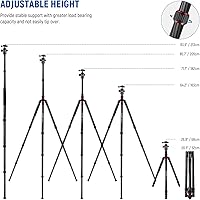
  • Max Height: With legs and dual-section center column fully extended, the tripod reaches a maximum working height of 80.7″ (205cm).
  • Min Height: With legs spread and column retracted, the minimum usable height is 26.8″ (68cm), suitable for low-angle and seated compositions.
  • Load Capacity: The tripod is rated to support camera equipment weighing up to 26.5 lb (12kg) under stable, level conditions.
  • Column Diameter: The center column measures 28mm in diameter, contributing to the rigidity needed to support heavier camera and lens combinations.
  • Leg Sections: Each of the three legs features four telescopic sections, allowing for incremental height adjustment and a compact folded profile.
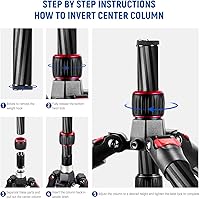
  • Center Column: The center column has two telescopic sections and can be fully inverted for low-angle or macro shooting without additional accessories.
  • Ball Head Size: The included ball head measures 36mm in diameter and rotates a full 360° for panoramic compositions and flexible camera positioning.
  • Head Controls: Two independent locking knobs provide separate control over ball movement and panning, enabling precise and repeatable camera positioning.
  • Quick Release: The tripod ships with a 1/4″ Arca-type quick release plate and includes three additional 1/4″ threaded screw holes for accessory mounting.
  • Bubble Levels: Two bubble levels are built into the head assembly, giving photographers two independent reference points for accurate horizon alignment.
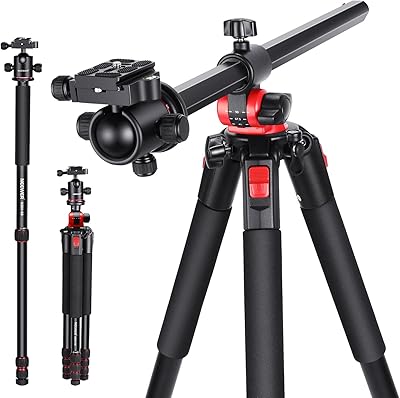
  • Monopod Range: When one leg is detached and combined with the center column for monopod use, the height ranges from 22.2″ (56.5cm) to 83.8″ (213cm).
  • Compatibility: The 1/4″ mounting system is compatible with DSLR cameras, mirrorless bodies, camcorders, and smartphones using a separately purchased threaded adapter.
  • Center Column Hook: An integrated hook at the base of the center column allows a sandbag or counterweight to be suspended for added stability in outdoor conditions.
  • Leg Locks: All leg sections are secured with twist-style quick-release locks, enabling rapid single-handed height adjustment across all four leg sections.
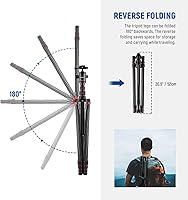
  • Folded Dimensions: The tripod folds down to approximately 56.5″ in length, which fits most full-size camera backpacks and the included carrying bag.
  • Carrying Bag: A soft carrying bag with shoulder strap is included in the box, providing basic protection and transport convenience for day-to-day use.
  • Model Number: The official model designation for this tripod is N55CR, as listed by the manufacturer NEEWER on the product and packaging.
  • Screw Standard: All mounting interfaces use the industry-standard 1/4″-20 thread pitch, ensuring broad compatibility with mainstream camera brands and accessories.

Related Reviews
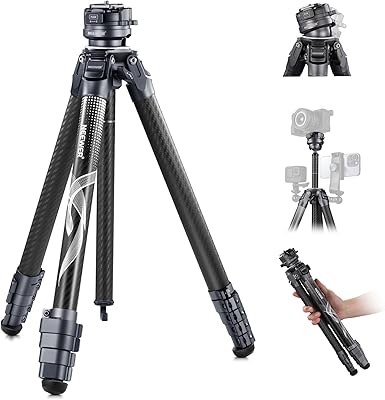
NEEWER LITETRIP LT32 Carbon Fiber Travel Tripod
81%
88%
Build Quality
93%
Portability & Pack Size
71%
Stability at Full Extension
82%
Ball Head Performance
84%
QR Plate & Compatibility
More
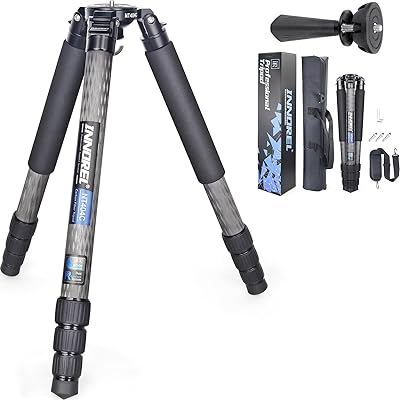
INNOREL NT404C Carbon Fiber Tripod
85%
89%
Stability
93%
Portability
87%
Build Quality
80%
Ease of Use
85%
Value for Money
More
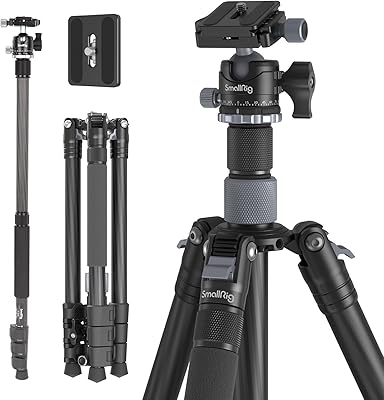
SmallRig AP-20 Carbon Fiber Tripod
78%
86%
Build Quality
92%
Weight & Portability
79%
Stability & Rigidity
74%
Ball Head Performance
88%
Ease of Setup & Height Adjustment
More
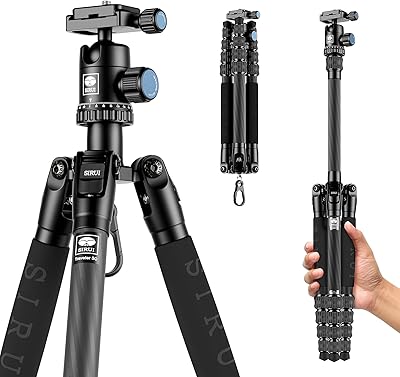
Sirui Traveler 5C Carbon Fiber Tripod
85%
94%
Portability & Weight
88%
Build Quality & Durability
85%
Ease of Use
90%
Stability & Support for Larger Cameras
72%
Leg Locking System
More
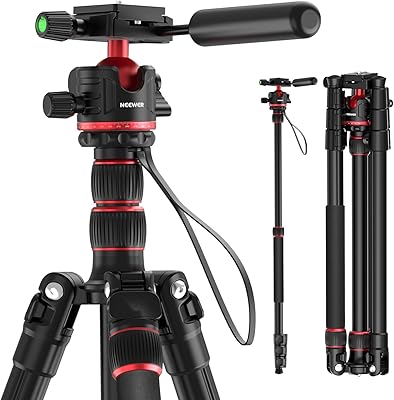
NEEWER Basics Camera Tripod Monopod TP08
85%
88%
Ease of Use
91%
Portability
83%
Stability in Windy Conditions
90%
Versatility (Tripod & Monopod)
87%
Build Quality
More
Vanguard VEO3GO265HCB Compact Carbon Fiber Travel Tripod
87%
94%
Portability & Weight
88%
Build Quality & Durability
85%
Ease of Use
91%
Versatility & Features
82%
Stability & Load Capacity
More
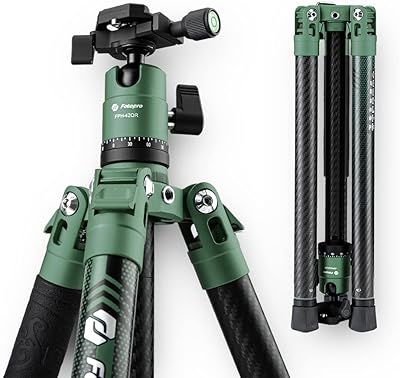
Fotopro X-Aircross 3 Carbon Fiber Tripod
89%
94%
Portability & Weight
89%
Build Quality
90%
Ease of Use
85%
Stability with Heavy Cameras
91%
Setup Speed
More
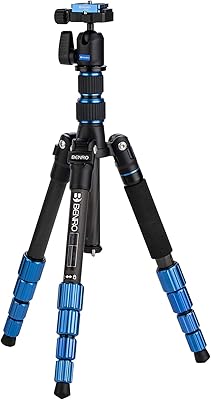
Benro Slim Travel Kit FSL09CN00 Carbon Fiber Tripod
87%
93%
Portability
89%
Build Quality
85%
Ease of Setup
87%
Stability on Uneven Ground
70%
Ballhead Adjustment
More
NEEWER 72-inch Aluminum Camera Tripod Monopod
78%
78%
Build Quality
74%
Stability & Rigidity
88%
Maximum Height & Reach
67%
Ball Head Performance
86%
Center Column Versatility
More
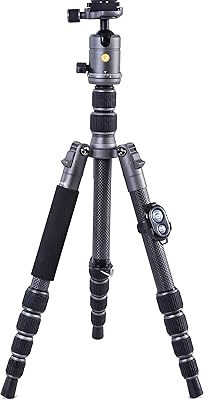
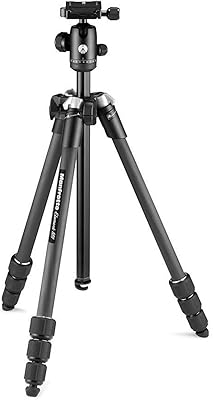
Manfrotto Element MII Mobile Bluetooth Carbon Fiber Tripod
87%
93%
Portability
88%
Ease of Setup
90%
Build Quality
62%
Stability in Wind
85%
Bluetooth Remote Performance
More

FAQ

It genuinely converts into a functional monopod — you detach one leg and thread it onto the center column. The process takes a minute or two the first few times until you get familiar with it. It is most useful for event photographers or wildlife shooters who already rely on monopods for moving subjects, rather than as a quick swap mid-shoot.

The rated load capacity covers most DSLR and lens combinations you would realistically carry into the field. That said, the closer you get to the upper weight limit, the more stress you place on the ball head and column joints — expect usable but not perfectly rigid performance with very heavy telephoto glass. For lighter mirrorless setups or standard zoom lenses, it handles confidently.

At mid-range heights with a lightweight camera body, it performs well for long exposures — especially if you use a remote shutter and give the tripod a moment to settle after setup. At full extension, micro-vibration becomes a real factor, so if night sky or architecture photography at maximum height is your main use case, temper expectations and consider using the sandbag hook for added mass.

You simply loosen the column, pull it downward through the tripod head, and re-lock it in the reversed position so the camera hangs below the apex. It is straightforward once you have done it once. The main practical consideration is that you will need to crouch or kneel to access the controls, and clearance between the camera and the ground depends on how wide you splay the legs.

It uses the Arca-type profile, so it will seat in most standard Arca-Swiss compatible clamps. Compatibility across brands in this standard is generally very high, but if you use a particularly narrow or non-standard clamp jaw, do a quick check against the plate width before assuming a perfect fit.

It is a basic soft bag — it keeps the tripod together and protects against light scratches during transport, but the padding is thin and the strap hardware is not particularly heavy-duty. For carry-on travel or day hiking it is fine, but if you are checking luggage or want serious impact protection, most buyers end up sourcing a more padded case separately.

Carbon fiber in this class typically saves you anywhere from half a pound to over a pound compared to a comparably sized aluminum tripod. Over a full day of hiking with a loaded camera bag, that difference is more noticeable than it sounds on paper. It is one of the most frequently mentioned reasons buyers cite for choosing this tripod over an aluminum alternative at a similar price.

You can, but you will need a separate phone holder or adapter with a 1/4″ threaded screw — one is not included in the box. Once you have a compatible mount, the tripod itself works fine for phone-based video. The ball head and height range are actually quite practical for vlogging setups.

The twist locks perform reliably for the vast majority of users once correctly tightened. The key is learning the right amount of rotation for a secure lock — undertightening causes slow leg creep, particularly on warm days when materials expand slightly. After a brief break-in period, most users report consistent and trustworthy performance from the leg locks.

It is functional but not especially refined. The friction knob works, but the range between too loose and too tight is narrower than on premium heads, which means micro-adjustments under a heavy lens require a bit more patience. For standard shooting angles with moderate-weight setups it is perfectly adequate — it is really only under demanding telephoto or video pan work that the limitations become apparent.

Where to Buy