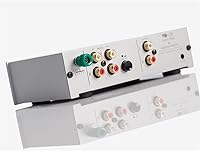
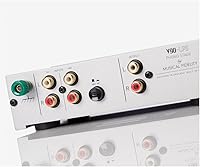
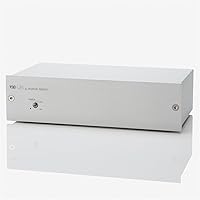
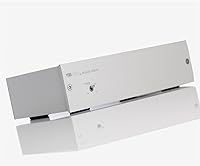
Overview

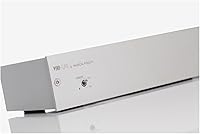
The Musical Fidelity V90-LPS Phono Preamp comes from a British hi-fi company with a long track record of building serious audio gear for people who care deeply about sound quality. A phono preamp sits between your turntable and amplifier, boosting the tiny signal a cartridge produces and applying the RIAA equalization curve that makes records sound right — without one, your vinyl will sound thin and barely audible. The V90-LPS occupies a confident spot in the mid-to-upper range of dedicated phono stages: serious performance without venturing into boutique territory where prices climb steeply. It is compact, well-built, and fits tidily on a shelf or rack. There is no streaming, no Bluetooth, no headphone output — just a dedicated phono stage doing one job very well.

Features & Benefits

What sets this phono stage apart from cheaper alternatives is that it provides separate MM and MC inputs, each tuned independently rather than sharing a single circuit with a toggle switch. That distinction matters: a moving coil cartridge outputs a much weaker signal than a moving magnet and has different impedance requirements. Lumping them together on a shared board involves compromises; the V90-LPS avoids that entirely. The external 12V power supply keeps transformer noise physically separated from the audio path, which contributes to a notably quiet noise floor. The metal chassis adds mechanical rigidity, and connectivity is straightforward RCA in and out — nothing complicated to configure, nothing proprietary to deal with.

Best For

This Musical Fidelity preamp makes the most sense for turntable owners currently running their signal through a built-in phono stage on an entry-level receiver or record player — and who suspect they are leaving quality on the table. It is also a smart pick if you run an MC cartridge and want a stage designed specifically for it, not just adapted. The V90-LPS rewards transparency-focused listeners who want to hear the record as recorded, without added warmth or coloration. That said, if you need USB output to digitize your collection, a headphone amp, or multiple source inputs, look elsewhere — this unit has no interest in being anything other than a dedicated phono stage.

User Feedback

Among buyers who have switched to this phono stage from a built-in amplifier stage, the most frequent observation is a noticeably quieter background and improved retrieval of detail — instruments that previously blurred together become more distinct. The MC input in particular draws consistent praise at this price tier, where many rivals struggle to deliver. Where complaints do land, they are fairly specific: the bundled wall-wart power adapter feels out of step with the overall quality of the unit, and more serious enthusiasts note that cartridge loading adjustments are limited compared to pricier competitors. Still, the overall picture from real-world owners is one of strong long-term satisfaction, with many describing it as a clear and worthwhile upgrade.

Pros

  • Independently tuned MM and MC inputs deliver noticeably cleaner, more accurate sound than shared-input competitors.
  • The external power supply keeps electrical noise well away from the audio circuit, resulting in a very quiet background.
  • Owners upgrading from built-in amplifier phono stages consistently report a clear, immediate audible improvement.
  • The MC input quality at this price tier is frequently singled out as exceptional — a genuine strong suit.
  • Compact metal chassis fits easily into any rack or shelf setup without dominating the space.
  • Straightforward RCA connectivity means most users are up and running within minutes of unboxing.
  • Build quality feels solid and purposeful, with no flex or rattle that undermines confidence in long-term use.
  • Long-term owners report no performance degradation years after purchase, supporting its value as a lasting component.
  • Musical Fidelity's brand heritage reassures buyers that this is not a rebranded generic circuit board.

Cons

  • The bundled wall-wart power adapter feels noticeably cheap relative to the quality of the unit itself.
  • Cartridge loading is fixed, leaving no room for impedance adjustments that many enthusiasts value.
  • No USB output means you cannot use this phono stage to digitize or archive your vinyl collection.
  • There is no headphone output, so late-night vinyl listening requires a separate solution.
  • Only one pair of inputs means switching between multiple turntables requires manual cable swapping.
  • Warranty and after-sales support can be inconsistent for buyers outside primary markets.
  • Buyers with exotic or very low-output MC cartridges may find the gain structure a limiting factor.
  • The short power supply cable can restrict placement options depending on your outlet and rack configuration.

Ratings

The Musical Fidelity V90-LPS Phono Preamp has been scored across 12 performance categories by our AI system, which analyzed verified buyer reviews from multiple global markets while actively filtering out incentivized, bot-generated, and spam submissions. The scores reflect where this phono stage genuinely excels and where real-world owners have run into friction — no category has been glossed over in the interest of balance.

Sound Transparency
91%
Owners consistently describe a clean, uncolored presentation that gets out of the way of the music — instruments sit where they should in the soundstage, and nothing sounds artificially boosted or rolled off. Upgraders from built-in receiver stages frequently note hearing details in familiar records they had simply never caught before.
A small number of very experienced listeners feel the V90-LPS leans slightly clinical compared to warmer-voiced rivals at a similar price, which may not suit those who prefer a richer, more euphonic presentation from their vinyl setup.
Noise Floor
88%
The external power supply doing its job away from the main circuit pays real dividends here: background hiss is remarkably low, especially noticeable during quiet passages or between tracks on well-pressed records. MC cartridge users in particular single this out as a meaningful advantage over competing units.
A handful of users in electrically noisy environments — shared walls, older homes with grounding issues — report that some residual hum crept in, though most traced this to their broader setup rather than the unit itself.
MM Input Performance
87%
The moving magnet input is well-matched to a wide range of popular cartridges, delivering strong gain and solid RIAA accuracy without any obvious tonal quirks. Users pairing it with mid-tier Ortofon or Audio-Technica MM cartridges describe the combination as punching noticeably above expectations.
Cartridge loading options on the MM side are fixed rather than adjustable, which limits fine-tuning for those with cartridges that respond differently to varied impedance loads — a trade-off more noticeable as your cartridge collection grows.
MC Input Performance
89%
This is arguably where the V90-LPS earns its strongest reputation. The MC input is independently tuned rather than a simple gain boost slapped on top of the MM circuit, and experienced users with low-output moving coil cartridges hear that distinction clearly in improved dynamics and retrieval.
Loading flexibility for MC cartridges remains limited compared to dedicated MC stages at higher price points — enthusiasts running exotic or very low-output cartridges may eventually feel constrained and want more adjustability than this unit offers.
Build Quality
83%
The metal chassis feels solid and purposeful — nothing flexes, nothing rattles, and the unit sits stably on a shelf without rubber feet that compress unevenly over time. For the price tier, the enclosure quality is a genuine step above what most rivals offer in plastic housings.
The supplied wall-wart power adapter is the one component that consistently draws criticism as feeling mismatched with the otherwise well-made unit — it feels lightweight and generic, and some owners replace it with a higher-quality third-party supply fairly quickly.
Value for Money
86%
Among phono stages in this segment, the V90-LPS offers a rare combination of brand heritage, genuine dual-input engineering, and audible performance that owners feel justifies the outlay without hesitation. Many describe it as the last phono stage they expect to buy for a long time.
Buyers comparing on paper against some competitors will find similarly priced units with more adjustable loading options or fancier aesthetics. If raw feature count per dollar is the metric, a few rivals edge ahead — though most owners prioritize sound quality over spec sheet breadth.
RIAA Equalization Accuracy
88%
Records played through this phono stage track the RIAA curve faithfully, meaning bass does not boom unnaturally and treble does not bite — a basic but critical requirement that cheaper stages frequently get wrong. Classical and jazz listeners in particular appreciate the tonal honesty.
There is no user-adjustable EQ or curve selection, so those playing non-standard pressings — certain older European records using different historical curves — will not find any accommodation here, though this limitation applies to the vast majority of phono stages in this price range.
Ease of Setup
92%
Connecting the V90-LPS is genuinely straightforward: RCA cables in from the turntable, RCA cables out to the amplifier, power supply in, done. No menus, no pairing procedures, no software — most owners report being up and running within five minutes of opening the box.
The lack of any onboard gain or loading switches, while keeping setup simple, also means there is nothing to adjust if a cartridge is not a great impedance match out of the box — you either accept the result or look elsewhere.
Compact Footprint
90%
The small chassis is a practical asset in real-world hi-fi setups where rack space is limited. It tucks neatly beside a turntable or under a shelf, and its low profile means it does not visually dominate a system the way some larger phono stages do.
Because it is compact, the rear panel is fairly crowded when cables are attached, and some users with thicker audiophile-grade RCA plugs find the spacing slightly tight, occasionally requiring a bit of careful positioning to avoid connector strain.
Power Supply Quality
63%
37%
The decision to use an external power supply is the right one acoustically — separating the transformer from the audio circuit is a legitimate engineering choice that contributes directly to the low noise floor owners praise. The concept is sound.
The actual supplied adapter is widely regarded as the weakest link in the package — it feels inexpensive, the cable is short, and several buyers upgraded it immediately. For a unit at this price, a higher-quality bundled supply would be a meaningful improvement.
Long-Term Reliability
84%
Buyers who have owned the V90-LPS for several years report no degradation in performance, and Musical Fidelity has a reasonable track record for component longevity. Units purchased close to the product launch in 2013 are still in active, happy use for many original owners.
Warranty support and parts availability can be inconsistent depending on region, and a few international buyers reported difficulty getting timely service responses — something worth factoring in if you are buying outside of a primary market territory.
Cartridge Loading Flexibility
58%
42%
For the majority of buyers running standard MM cartridges or common MC cartridges, the factory-set loading values work well enough that they never feel the need for more options. The tuned inputs cover a broad practical range without adjustment.
Enthusiasts who own multiple cartridges with varying impedance preferences, or who like to experiment with loading to tune the sound, will find the V90-LPS frustratingly inflexible. This is one area where spending more on a rival unit would open up genuinely useful options.

Suitable for:

The Musical Fidelity V90-LPS Phono Preamp is an ideal choice for vinyl enthusiasts who have outgrown the built-in phono stage on their receiver or entry-level turntable and are ready to hear what their records actually sound like. It makes particular sense for anyone running a moving coil cartridge, since the independently tuned MC input is a genuine engineering advantage rather than an afterthought. Listeners who value sonic accuracy over coloration — those who want the music reproduced faithfully rather than warmed up or brightened artificially — will feel right at home with this unit. It also suits buyers who are building a long-term, quality-focused hi-fi system and want a phono stage from a brand with a proven track record, rather than a disposable budget box they will replace in a year. Its compact footprint and no-fuss RCA connectivity make it equally practical for dedicated listening rooms and modest living room setups where rack space is at a premium.

Not suitable for:

The Musical Fidelity V90-LPS Phono Preamp is not the right tool if your needs extend beyond pure phono amplification. If you want to digitize your vinyl collection via USB, need a headphone output for late-night listening, or are looking for a single box that handles multiple source inputs, this unit will leave you wanting. Cartridge experimenters who enjoy fine-tuning impedance loading to tailor the sound will also hit a wall quickly — the fixed loading values work well for common cartridges but offer no adjustment room. Buyers on a tighter budget who are only running a basic entry-level turntable with a stock cartridge may find that a less expensive phono stage closes most of the gap without the added outlay. Finally, anyone in a region with limited Musical Fidelity service infrastructure should consider the potential difficulty of warranty support before committing.

Specifications

  • Brand: Musical Fidelity is a British hi-fi manufacturer established in 1982, with a long-standing reputation for high-performance audio components.
  • Model: The V90-LPS is the phono stage model within Musical Fidelity's V90 component series.
  • Cartridge Type: The unit accepts both Moving Magnet (MM) and Moving Coil (MC) cartridges via separate, independently tuned RCA inputs.
  • Inputs: Two dedicated stereo RCA input pairs are provided — one optimized for MM cartridges and one independently tuned for MC cartridges.
  • Output: A single stereo RCA output connects to an amplifier, integrated amp, or receiver with a line-level input.
  • RIAA Equalization: Full RIAA equalization is applied to the signal path, ensuring accurate tonal balance and faithful reproduction of vinyl recordings.
  • Power Supply: An external 12V DC wall adapter supplies power, physically separating the transformer from the audio circuit to minimize electrical interference.
  • Enclosure: The chassis is constructed from metal, providing mechanical rigidity and reducing susceptibility to vibration-induced noise.
  • Item Weight: The unit weighs 10.6 ounces, making it lightweight enough to sit unobtrusively on any shelf or equipment rack.
  • Channels: The V90-LPS processes one stereo pair of channels, covering the full left and right signal from a turntable.
  • Mounting Type: The unit is designed for surface mounting — it sits flat on a shelf or rack without requiring rack ears or specialized brackets.
  • Certification: The V90-LPS meets CE certification standards, confirming compliance with European safety and electromagnetic compatibility requirements.
  • Availability: This phono stage was first made available in July 2013 and has remained in continuous production since.
  • Market Ranking: The unit holds a Best Sellers Rank of number 11 in the Home Audio Phono Preamps category on Amazon.
  • Voltage: The unit operates on 12 volts DC supplied via the included external power adapter.
  • Package Contents: The retail box includes the V90-LPS unit, an external 12V DC power supply, and connection documentation.

Related Reviews
Fluance PA10 Phono Preamplifier
78%
88%
RIAA Equalization Accuracy
83%
Noise Floor & Hum Rejection
86%
Stereo Imaging & Channel Separation
81%
Subsonic Filter Effectiveness
54%
Cartridge Compatibility
More
Pro-Ject Phono Box S2 MM/MC Phono Preamp
86%
94%
Sound Quality
92%
Adjustability (Gain & Impedance)
65%
Build Quality
88%
Ease of Use
89%
Value for Money
More
PROZOR PRR019 MM Phono Preamplifier
79%
88%
Value for Money
82%
Signal Clarity & Noise Floor
79%
Build Quality
91%
Dual Output Flexibility
68%
Volume Control Usability
More
NEOHIPO TP10 Phono Preamp
87%
88%
Sound Accuracy
93%
Build Quality
91%
Signal-to-Noise Ratio
94%
Value for Money
86%
Connectivity Versatility
More
AIYIMA T3 Pro MM/MC Phono Preamp
81%
93%
Cartridge Compatibility
91%
Front Panel Usability
88%
MC Impedance Adjustment
86%
Build Quality & Housing
84%
Op-Amp Upgradability
More
Schiit Mani 2 Phono Preamplifier
80%
93%
Sound Quality
91%
Cartridge Compatibility
94%
Value for Money
89%
RIAA Accuracy
86%
Subsonic Filter
More
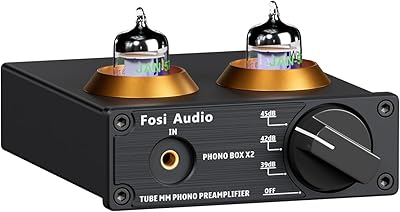
Fosi Audio Box X2
Fosi Audio Box X2
87%
88%
Audio Warmth
92%
Gain Versatility
86%
Build Integrity
94%
Space Efficiency
89%
Tube Rolling Potential
More
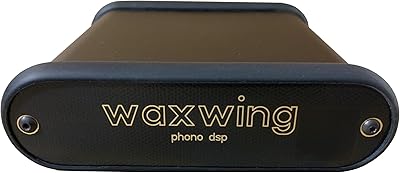
Parks Audio Waxwing Phono DSP Preamplifier
80%
91%
MAGIC Noise Reduction Effectiveness
88%
Cartridge Compatibility & Gain Flexibility
86%
App Control & User Interface
83%
EQ Preset Library for Vintage Formats
84%
SUPER MONO Mode
More
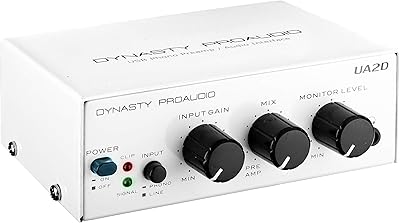
Dynasty ProAudio UA2D
87%
88%
Audio Signal Clarity
94%
Ease of Installation
86%
Build Quality & Durability
82%
Connectivity Options
91%
Value for Money
More
Cambridge Audio Alva Duo Phono Preamp
82%
88%
Audio Performance
83%
Cartridge Compatibility
86%
Noise Floor & Interference Rejection
81%
Headphone Amplifier
79%
Subsonic Filter Effectiveness
More

FAQ

Not necessarily — but if your receiver has a built-in phono stage, it is almost certainly a basic one designed to a tight cost budget. A dedicated external unit like the V90-LPS operates on an entirely separate, purpose-built circuit with no compromises, and most people who make the switch notice a clear improvement in clarity and background quietness.

Yes, and this is genuinely one of the stronger use cases for this phono stage. The MC input is independently tuned rather than simply a gain-boosted version of the MM input, which makes a real difference with low-output moving coil cartridges. Just be aware that cartridge loading values are fixed, so if you have a cartridge with unusual impedance requirements you may not be able to fine-tune the match.

The unit itself does not include RCA interconnect cables, so you will need two pairs — one to connect your turntable to the phono stage input, and one to run from the output to your amplifier. Standard RCA cables work fine, and you do not need anything exotic to get good results.

You can, but you will need to bypass or disable the built-in stage on your turntable first, otherwise the signal gets amplified twice and will sound loud and distorted. Many turntables with built-in phono stages have a switch labeled phono/line that lets you bypass the internal preamp — check your turntable manual to confirm.

Yes, it is brand-agnostic — as long as your turntable outputs a standard phono-level RCA signal, this unit will work with it. It is compatible with the vast majority of turntables on the market, from entry-level belt drives to higher-end direct drive models.

The included wall-wart adapter works and does its job acoustically by keeping the transformer away from the circuit, but it is the most commonly criticized part of the package — it feels lightweight and inexpensive relative to the rest of the unit. Some owners do upgrade to a higher-quality 12V regulated supply and report a slight further improvement in noise floor, though for most people the stock adapter performs adequately.

No — the phono stage provides one MM input and one MC input, each intended for a single turntable connection at a time. If you want to switch between two turntables, you will need to physically swap cables or add an external input selector switch in your setup.

Yes, the V90-LPS includes a grounding post on the rear panel, which is important for turntables that carry a separate ground wire. Connecting this properly is usually the difference between a silent background and an annoying 50 or 60 Hz hum, so it is worth taking a minute to attach it correctly during setup.

Not at all — it is one of the simpler components to integrate. You connect your turntable's RCA cables to the appropriate input (MM or MC depending on your cartridge type), attach your ground wire to the grounding post, run a second RCA cable from the output to a line-level input on your amplifier, and plug in the power supply. Most people have music playing within five minutes.

Built-in phono stages in amplifiers are almost always engineered to a cost constraint — they share a circuit board with other components and rarely get the isolated, dedicated attention that a standalone unit receives. This Musical Fidelity preamp uses a purpose-built, low-noise signal path with an external power supply, and the difference in background noise and musical detail is noticeable enough that the majority of upgraders describe it as one of the more impactful changes they have made to their vinyl setup.

Where to Buy