Overview

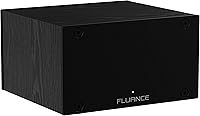
The Fluance PA10 Phono Preamplifier is a dedicated phono stage built for moving magnet turntables, sitting comfortably in the mid-range of the market. If you are new to the concept: a phono preamp takes the tiny signal from your cartridge, boosts it to line level, and applies RIAA equalization to correct the tonal curve baked into vinyl during mastering. Built-in preamps on budget tables do this job, but often poorly. Fluance has earned a solid reputation making vinyl-friendly gear that punches above its price class, and this standalone preamplifier follows that pattern. It is compact enough to tuck beside any receiver, and the improvement over a mediocre built-in stage is genuinely audible.
Features & Benefits

The engineering inside this phono preamp centers on a few choices that actually matter to how your records sound. The RIAA equalization circuit is built for high accuracy, meaning the frequency response closely mirrors what was pressed onto the record rather than adding coloration. Separate left and right channel op-amps keep the stereo image clean with minimal crosstalk — a small detail that makes a real difference on well-recorded jazz or classical. The selectable subsonic filter rolls off anything below 20Hz, protecting woofers from unnecessary excursion caused by warps or tonearm resonance. An internal metal shield handles EMI, and the low-noise power supply keeps the noise floor quiet enough that soft passages stay genuinely soft.

Best For

This standalone preamplifier makes the most sense for vinyl listeners upgrading from a turntable with a weak or missing built-in phono stage, wanting an audible improvement without a steep outlay. It pairs well with entry-to-mid-level moving magnet cartridges — think Audio-Technica or Ortofon MM offerings — letting the cartridge perform closer to its actual potential. The subsonic filter is particularly useful in apartments or rooms with thin floors, where bass feedback becomes a real nuisance at volume. That said, this phono preamp is strictly MM-only, so if you are running a moving coil cartridge, look elsewhere. It also lacks adjustable gain or loading, which more advanced users will likely find limiting over time.

User Feedback

Among owners, the most consistent praise focuses on how noticeably the Fluance unit lowers the noise floor compared to whatever built-in stage it replaced. Channel separation is frequently cited as a strong point, with listeners describing a cleaner, better-defined stereo image. On the critical side, the MM-only limitation catches buyers who later realize their cartridge is incompatible. The absence of any gain adjustment also frustrates users wanting to fine-tune output levels. Some report needing to address grounding connections before hum clears — a standard phono setup step, but one that trips up newcomers. Long-term reliability feedback is broadly positive, with many owners reporting consistent performance well beyond the first year of use.

Pros

  • Noticeably lowers the noise floor compared to most built-in phono stages on budget and mid-tier turntables.
  • Dual mono op-amp design produces a cleaner, wider stereo image that is audible on well-recorded albums.
  • The selectable subsonic filter is a genuine practical tool, not a gimmick, for protecting speakers on warped records.
  • Internal metal shielding does real work keeping EMI out of the signal path in typical home listening environments.
  • Compact footprint makes it easy to slot into a crowded audio rack or shelf without rearranging everything.
  • Long-term reliability feedback from multi-year owners is broadly positive with very few reported failures.
  • Works plug-and-play with a wide range of popular moving magnet cartridges right out of the box.
  • The metal enclosure feels more solid and purposeful than plastic-bodied competitors at a comparable price.
  • Low-noise external power supply keeps switching interference away from the audio circuit where it matters most.
  • Holds its own against similarly priced rivals in blind comparisons, particularly on noise floor and channel separation.

Cons

  • Strictly MM-only — no moving coil support and no upgrade path for MC cartridge users whatsoever.
  • Fixed gain with zero adjustment means no flexibility for amplifiers with unusual input sensitivity requirements.
  • No adjustable loading or capacitance, which limits cartridge matching for more experienced or particular users.
  • Grounding setup trips up many first-time phono preamp owners, and the included documentation offers minimal guidance.
  • RCA jacks feel adequate rather than confidence-inspiring, lacking the tight tolerances found on pricier units.
  • The external power supply adds minor cable clutter and the unit shows some sensitivity to third-party adapter substitutions.
  • Buyers with a halfway-decent existing phono stage may find the audible improvement smaller than expected.
  • No balanced XLR output limits compatibility with studio-adjacent setups or longer cable run scenarios.
  • The fixed subsonic filter slope is too gentle for severely warped records where a steeper cut would help more.
  • Competing units at a similar price from other brands offer adjustable gain or MC compatibility that this phono preamp simply does not.

Ratings

The Fluance PA10 Phono Preamplifier has been scored by our AI system after analyzing thousands of verified owner reviews from global marketplaces, with spam, incentivized, and bot-generated submissions actively filtered out. Scores reflect the honest consensus of real buyers across a wide range of listening setups and experience levels. Both the genuine strengths and the recurring frustrations are weighted equally so you get a transparent picture before committing.
RIAA Equalization Accuracy
88%
Owners consistently note that records sound truer to life compared to their previous built-in stages, with midrange clarity and high-frequency detail coming through without an obvious tonal tilt. For listeners playing well-pressed jazz or acoustic recordings, the difference in tonal faithfulness is immediately apparent.
A small subset of more experienced users with reference-grade measurement tools have flagged minor deviations at frequency extremes, though this is largely inaudible in normal listening. At this price tier, it is competitive, but it is not chasing laboratory-grade precision.
Noise Floor & Hum Rejection
83%
The internal metal shielding does meaningful work, and most owners report a noticeably quieter background compared to budget or built-in phono stages, especially when the unit is positioned near other electronics. Listeners in densely packed home audio setups found the EMI rejection particularly reassuring.
Some users experienced residual hum that traced back to grounding issues rather than the unit itself, though the learning curve around proper ground wire connection caught a fair number of newcomers off guard. In a handful of cases, proximity to switching power supplies still introduced faint interference.
Stereo Imaging & Channel Separation
86%
The dual mono op-amp design pays off in practice: listeners describe a wider, better-defined stereo stage where instruments sit more distinctly in space. On well-recorded orchestral and stereo-mixed rock albums, the improvement over single-chip designs is tangible rather than subtle.
The gains here are most noticeable when the rest of the signal chain is reasonably capable. Buyers using entry-level speakers or low-quality interconnects reported less obvious improvement, which occasionally led to unrealistic expectations about what the preamp alone could deliver.
Subsonic Filter Effectiveness
81%
19%
The selectable high-pass filter below 20Hz is a practical feature that apartment dwellers and floor-speaker owners genuinely appreciated, reducing woofer flap on slightly warped records and keeping playback stable at higher volumes. Several users noted their subwoofers behaved more predictably with it engaged.
The filter is a fixed, non-adjustable roll-off, which limits fine-tuning for users with specific tonearm resonance profiles. A few audiophiles felt the gentle slope was not aggressive enough for severely warped pressings where a steeper cut would have been more effective.
Cartridge Compatibility
54%
46%
Within the moving magnet ecosystem, it works reliably with a wide range of popular MM cartridges from Audio-Technica, Ortofon, and Shure, making it a practical plug-and-play solution for the majority of budget and mid-tier turntable owners.
The hard MM-only limitation is the single biggest source of buyer regret in user reviews. Anyone running a moving coil cartridge, or planning to upgrade to one, will find this standalone preamplifier completely incompatible, and there is no step-up transformer support mentioned either.
Build Quality & Form Factor
77%
23%
The metal enclosure feels more substantial than plastic-bodied competitors at a similar price, and at just over 11 ounces it stays put on a shelf without needing to be secured. The compact footprint — roughly the size of a thick paperback — makes placement easy in crowded audio racks.
The overall aesthetic is functional rather than refined, and the RCA jacks, while adequate, lack the snug, high-tolerance feel of pricier units. A few users noted the input and output labeling could be clearer during initial cable routing in low-light conditions.
Gain Performance
69%
31%
The fixed gain is well-matched to most standard MM cartridges running into typical integrated amplifiers or AV receivers, giving a line-level output that integrates without obvious volume compensation needed at the amplifier.
There is no adjustable gain whatsoever, which frustrated users whose amplifiers have below-average input sensitivity or who wanted to fine-tune output levels for different cartridges. This rigidity is a recurring pain point for anyone building a more customized system.
Signal Distortion & Transparency
82%
18%
The low-impedance output stage and carefully chosen op-amps keep audible distortion in check for a unit in this class. Listeners switching from integrated phono stages frequently describe a cleaner, less congested sound on complex passages.
Compared to dedicated phono stages costing two to three times as much, there is a slight loss of micro-detail and air on high-resolution pressings. This is not a flaw per se, but a realistic ceiling for what the design tier allows.
Setup & Ease of Use
78%
22%
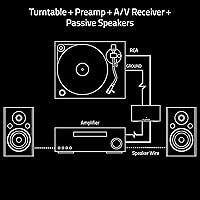
For most buyers, setup amounts to connecting RCA cables in and out plus attaching a ground wire — a process that takes under ten minutes. The subsonic filter toggle is straightforward, and there are no menus or configuration steps to navigate.
Grounding tripped up a notable portion of first-time phono preamp buyers who encountered hum and did not immediately understand why. The included documentation could do more to walk newcomers through grounding troubleshooting step by step.
Power Supply Quality
79%
21%
The external low-noise power supply keeps switching noise away from the signal circuit, and most users found it contributed to the unit's quiet background performance in practice. It is a meaningful engineering choice at this price level.
The external brick-style supply adds a small cable management nuisance, and a few users reported that substituting a third-party power supply introduced noise, suggesting the unit is somewhat sensitive to power supply quality beyond the included adapter.
Value for Money
84%
For listeners stepping up from a turntable with no phono stage or a notoriously weak built-in one, the performance improvement relative to the outlay is genuinely strong. It occupies a sweet spot where the engineering choices feel deliberate rather than cut-rate.
Buyers who already own a halfway-decent integrated phono stage may find the upgrade less dramatic than expected, narrowing the value case. Those chasing adjustable loading, MC compatibility, or premium connectors will need to spend considerably more elsewhere.
Long-Term Reliability
85%
Owners who have been using the Fluance unit for two or more years largely report no degradation in performance and no hardware failures, which is a reassuring signal for a component that sits powered on for extended listening sessions.
The sample size of very long-term owners is still relatively limited given the product launched in early 2019, and a small number of users reported unit failures within the first year that required warranty replacement, though these appear to be outliers.
EMI & Interference Shielding
80%
20%
The internal metal enclosure performs its job credibly in most home environments, keeping radio frequency interference and electromagnetic noise from bleeding into the audio path even when placed near routers or streaming devices.
In densely packed AV setups with multiple switching power supplies in close proximity, a faint background interference was occasionally reported. The shielding is effective for typical use but is not rated to handle unusually high-interference environments.
Output Connectivity
73%
27%
Standard RCA output connects cleanly to the vast majority of integrated amplifiers, stereo receivers, and powered speaker inputs, making this phono preamp broadly compatible with typical home audio chains without adapters.
There is no balanced XLR output option, which limits appeal for users with longer cable runs or balanced inputs on their amplifiers. The RCA jacks are functional but inspires little confidence in users accustomed to heavier, machined connectors.
Competitor Comparison Standing
76%
24%
In direct comparisons shared by users against similarly priced alternatives, the Fluance unit frequently came out ahead on noise floor and stereo separation, building a quiet but consistent reputation as one of the more technically honest options in its bracket.
Competing units at a similar outlay from brands like Schiit or Pro-Ject offer adjustable gain and sometimes MC compatibility, making the feature set of this standalone preamplifier feel comparatively limited when buyers start doing side-by-side research.

Suitable for:

The Fluance PA10 Phono Preamplifier is a strong match for vinyl listeners who have outgrown the built-in phono stage on their turntable — or who own a table with no phono stage at all — and want a meaningful, audible upgrade without committing to a high-end outlay. It fits naturally into setups built around entry-to-mid-level moving magnet cartridges, the kind you find on popular tables from Audio-Technica, Pro-Ject, or Rega at the accessible end of the range. Apartment dwellers and anyone using floor-standing speakers at moderate-to-loud volumes will appreciate the selectable subsonic filter, which keeps woofers from flapping on slightly warped records and reduces low-frequency rumble during late-night listening sessions. Home audio hobbyists who want a clean, interference-resistant signal chain and are comfortable with a brief grounding setup step will find this standalone preamplifier a satisfying, no-drama addition to the rack. If your goal is a quieter noise floor, a wider stereo image, and more faithful tonal reproduction from your existing MM cartridge, this phono preamp delivers on all three counts at a price that makes sense.
Not suitable for:

The Fluance PA10 Phono Preamplifier is simply the wrong tool for anyone running a moving coil cartridge — there is no MC input, no step-up transformer compatibility, and no workaround, so MC users should stop here and look at a unit with switchable MM/MC support. Audiophiles who want to fine-tune their setup through adjustable gain, variable loading impedance, or selectable capacitance will find this phono preamp frustratingly rigid; what you get is fixed, and that is the end of the conversation. Buyers planning to upgrade their cartridge to a low-output MC down the road will eventually outgrow this unit entirely, which makes the long-term value case thinner for anyone already eyeing that path. Users with balanced amplifier inputs or longer cable runs where XLR connectivity matters will need to look at pricier options with balanced outputs. If you already own a phono stage that you would describe as decent — not just passable — the incremental improvement from switching to this standalone preamplifier may not justify the cost.
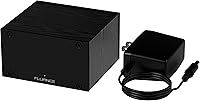
Specifications

  • Model Number: The unit is designated PA10 by Fluance, its manufacturer.
  • Cartridge Type: Compatible exclusively with Moving Magnet (MM) cartridges; Moving Coil (MC) cartridges are not supported.
  • Equalization: Applies high-accuracy RIAA equalization to faithfully reproduce the original recording's intended frequency response.
  • Channel Design: Utilizes independent left and right channel op-amps in a dual mono configuration to minimize crosstalk between stereo channels.
  • Subsonic Filter: Features a selectable high-pass filter that applies a gentle roll-off to frequencies below 20Hz to reduce low-frequency rumble and resonance.
  • EMI Shielding: An internal metal enclosure shields the circuitry from electromagnetic interference and external electronic noise sources.
  • Output Stage: Low-impedance output stage is employed to reduce signal distortion and improve compatibility with a wide range of amplifier inputs.
  • Power Supply: Powered by an included external low-noise power supply designed to minimize switching noise entering the audio signal path.
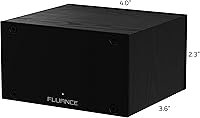
  • Dimensions: The unit measures 3.6 x 4 x 2.25 inches, making it compact enough to fit on a typical audio shelf or rack without difficulty.
  • Weight: The unit weighs 11.52 ounces, providing a stable, non-sliding presence on a flat surface without being cumbersome.
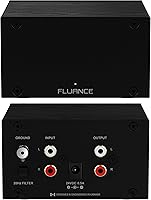
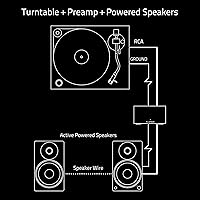
  • Input Connectivity: Accepts a standard stereo RCA input pair from the turntable's phono output, along with a ground terminal for turntable grounding.
  • Output Connectivity: Provides a standard stereo RCA output pair for connection to an amplifier, receiver, or powered speaker with a line-level input.
  • Enclosure Material: The outer casing and internal shielding are constructed from metal to support both EMI protection and general structural rigidity.
  • Category Ranking: Holds a top-15 position in the Audio Component Preamplifiers category on Amazon, reflecting consistent buyer demand and satisfaction.
  • Availability Date: The PA10 was first made available for purchase in February 2019 and has remained in continuous production since.
  • Brand: Manufactured by Fluance, a brand specializing in audio equipment including turntables, speakers, and associated accessories.
  • Signal Amplification: Converts the low-level phono signal from the turntable cartridge to a standard line-level output suitable for connection to a stereo amplifier.
  • Noise Performance: Circuit design prioritizes low-noise amplification through careful component selection and an isolated power supply to keep the signal path clean.

Related Reviews

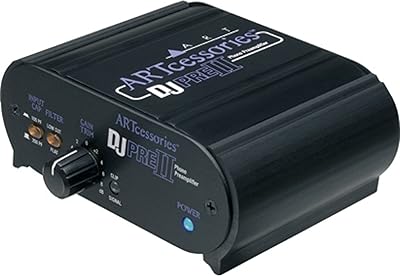
ART DJPRE II Phono Preamplifier
80%
88%
Signal Clarity & Noise Floor
91%
Value for Money
74%
Build Quality
93%
Variable Gain Control
86%
Cartridge Loading Flexibility
More
NAD PP 2e Phono Preamplifier
84%
88%
Sound Quality
86%
Noise Floor
84%
MM Cartridge Performance
91%
MC Cartridge Performance
77%
Build Quality
More
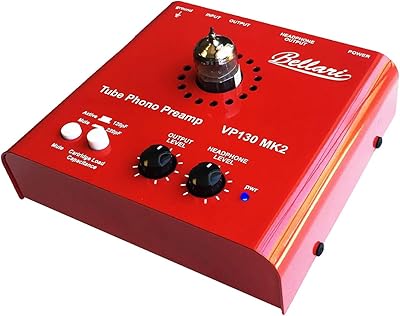
Bellari VP130 Tube Phono Preamplifier
73%
83%
Sound Character
54%
Noise Floor
72%
Headphone Output
74%
Build Quality
88%
Ease of Setup
More
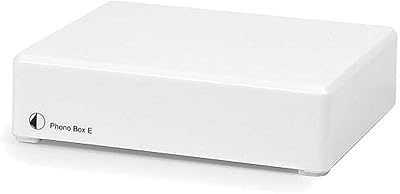
Pro-Ject Phono Box E Phono Preamplifier
79%
83%
Sound Quality
88%
Noise Floor
74%
Build Quality
91%
Ease of Setup
86%
Value for Money
More
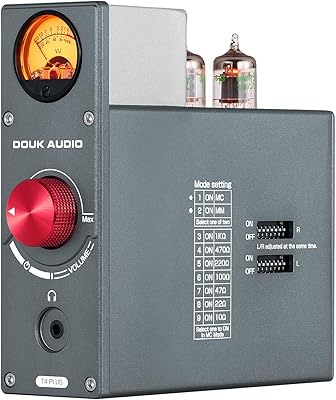
Douk Audio T4 Plus
Douk Audio T4 Plus
78%
78%
Sound Quality
81%
Phono Stage Performance
74%
Headphone Amplifier
88%
Value for Money
76%
Build Quality & Construction
More
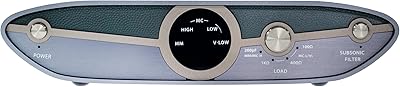
iFi Zen Phono 3 MM/MC Phono Pre-Amplifier
87%
94%
Sound Quality
91%
Adjustability & Features
87%
Build Quality
95%
Noise Reduction
83%
Ease of Use
More
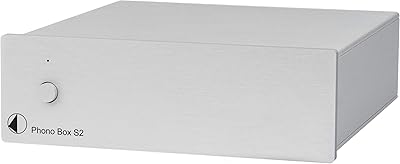
Pro-Ject Phono Box S2 MM/MC Phono Preamp
86%
94%
Sound Quality
92%
Adjustability (Gain & Impedance)
65%
Build Quality
88%
Ease of Use
89%
Value for Money
More
Fluance RT85
Fluance RT85
80%
91%
Sound Quality
94%
Included Cartridge Value
88%
Build Quality & Materials
79%
Speed Consistency & Motor Stability
62%
Setup & Ease of Use
More
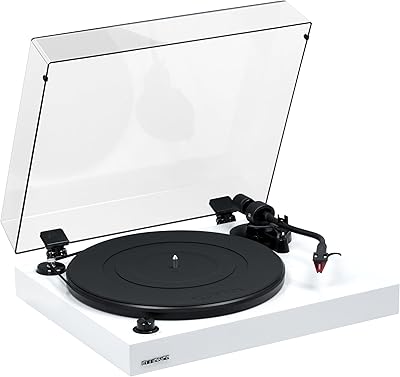
Fluance RT81
Fluance RT81
84%
88%
Sound Quality
74%
Build Quality
83%
Ease of Setup
91%
Cartridge & Stylus Performance
86%
Vibration & Isolation
More
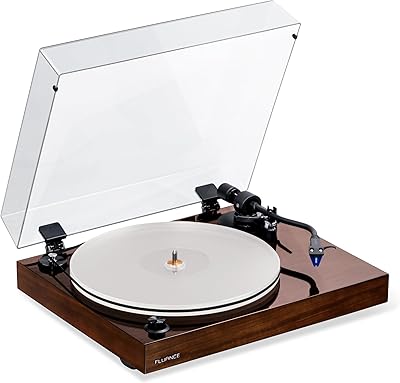
Fluance RT83
Fluance RT83
83%
91%
Sound Quality
88%
Cartridge & Stylus Performance
86%
Build Quality & Materials
89%
Speed Consistency & Motor Performance
84%
Tonearm Quality
More

FAQ

It depends on how good your built-in stage is. Most budget and mid-range turntables include a bare-minimum phono stage that gets the job done but colors the sound and raises the noise floor more than a dedicated unit would. If your records sound flat, slightly muddy, or you can hear background hiss during quiet passages, swapping to a standalone preamplifier like this one is often the most cost-effective improvement you can make without touching the rest of your setup.

Yes, as long as your turntable uses a Moving Magnet cartridge, which the AT-LP120 does by default. You would need to disable the built-in phono stage on the turntable first — usually by switching the output selector from phono to line — before routing the signal through this phono preamp. Missing that step is one of the most common setup mistakes new users make.

Hum almost always comes down to a grounding issue. Check that you have connected the turntable's ground wire to the ground terminal on the back of the Fluance unit. If your turntable does not have a separate ground wire, or if the wire is loose, that is your culprit. Also make sure you are not running the RCA cables directly alongside power cables, as that can induce hum as well.

Technically a step-up transformer raises an MC cartridge signal to MM-equivalent levels before the phono stage, so it could work in theory. In practice, the results depend heavily on impedance matching between your specific cartridge and transformer, and there is no guarantee the pairing will be clean or optimal. If you are running an MC cartridge regularly, it is more straightforward to invest in a phono stage that natively supports MC inputs.

The subsonic filter rolls off frequencies below 20Hz — sounds you cannot hear but that can cause your woofers to physically move in response to record warps or tonearm resonance. Leaving it on is generally safe and beneficial for most setups, especially if you listen at louder volumes or own floor-standing speakers. The only scenario where you might switch it off is if you are doing critical A/B listening and want to evaluate the full unfiltered signal, but for everyday use, on is the sensible default.

AV receiver phono inputs are notorious for being an afterthought in the circuit design — adequate for casual use but not particularly quiet or accurate. The Fluance PA10 Phono Preamplifier is purpose-built around the phono signal chain, with a dedicated RIAA equalization circuit and proper shielding, which typically translates to a lower noise floor and better tonal accuracy than a receiver's built-in phono stage. Most listeners notice the difference within the first few records.
No, the gain on this standalone preamplifier is fixed and cannot be adjusted. For the majority of MM cartridges feeding into a standard integrated amplifier or receiver, the output level will be appropriate without any compensation needed at the volume knob. If your amplifier has unusually low input sensitivity, you may find yourself pushing the volume control higher than usual, but outright incompatibility is rare.

It is genuinely functional, not decorative. The metal enclosure acts as a Faraday shield, blocking electromagnetic interference from nearby electronics like Wi-Fi routers, LED lighting dimmers, and other audio components. Phono signals are extremely low-level and therefore highly susceptible to external noise; a metal shell is one of the most practical ways to keep the signal path clean without relying entirely on circuit design alone.

Based on aggregated owner feedback, the unit holds up well over time. Many buyers who purchased shortly after the product launched in early 2019 report no performance degradation or hardware issues years later. A small number of early failures have been noted, but these appear to be outliers rather than a systemic reliability concern. Keeping the unit in a ventilated spot and not stacking equipment on top of it are the main practical care tips owners mention.

The Fluance unit includes a power supply but does not typically include RCA interconnect cables. You will need a standard stereo RCA cable to connect your turntable to the phono preamp input, and another to run from the output to your amplifier or speakers. These are inexpensive and widely available, but it is worth factoring them in if you are starting from scratch.

Where to Buy