Overview

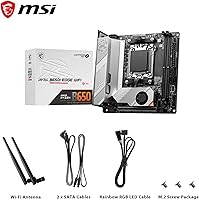
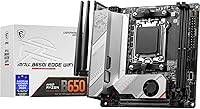
The MSI MPG B650I EDGE WIFI Mini-ITX Motherboard arrived at a point when the small form factor scene was finally getting the chipset support it deserved, and this board makes a compelling case for what AM5 in ITX can look like. Built around AMD's B650 chipset, the B650I EDGE WIFI sits comfortably in the mid-to-high tier of its category — not the most affordable entry point, but one of the more fully equipped options available at this size. It debuted in early 2023 and has held a solid sales rank since, which reflects how well it resonated with builders unwilling to sacrifice features for a smaller footprint.
Features & Benefits

Fitting dual M.2 slots onto a board this compact without axing USB ports is a genuine engineering achievement, and the B650I EDGE WIFI pulls it off without obvious compromises. DDR5 support stretches to 64GB at 5600 MHz, giving you real headroom whether you are running a Ryzen 7000 content creation rig or a gaming build you plan to upgrade incrementally. The integrated Wi-Fi eliminates the awkward PCIe adapter workaround that plagues so many small cases. Rounding things out, five USB 3.2 ports, a USB-C, and four SATA connections make this compact AM5 motherboard unusually well-connected for its form factor.

Best For

This MSI ITX board is a natural match for anyone pairing a Ryzen 7000 or 8000 series processor with a compact case and expecting a capable, no-excuses platform. It particularly shines in home theater PC builds and tight desk workstations where minimizing bulk matters as much as raw performance. Builders transitioning from ATX who still have a stack of SATA drives will appreciate that four ports survive the shrink. One honest caveat: with a single PCIe x16 slot, anyone needing multi-card expansion or capture card support alongside a GPU will hit the wall quickly — plan your peripheral needs before committing.

User Feedback

Owners of the B650I EDGE WIFI consistently highlight the BIOS usability as a strong point — MSI's layout tends to feel more organized than some competing boards, and loading XMP or EXPO memory profiles is typically a one-step process with stable results. Build quality also earns frequent praise. On the other side, a portion of builders in very cramped cases report that the VRM runs warm under sustained heavy CPU loads, making deliberate airflow planning a real necessity rather than an afterthought. Wi-Fi coverage is rated reliable for standard home use, though a handful of users noted range inconsistency in larger spaces. Against comparable AM5 ITX options, overall satisfaction trends positive.

Pros

  • Dual M.2 slots on a Mini-ITX board is a genuine rarity and a practical win for NVMe storage planning.
  • DDR5 support up to 64GB keeps this compact AM5 motherboard relevant for future memory upgrades.
  • Integrated Wi-Fi means one fewer adapter to squeeze into an already tight small form factor case.
  • The BIOS layout is well-organized, and XMP and EXPO memory profiles load reliably with minimal fuss.
  • Five USB 3.2 ports plus a USB-C rear panel is unusually generous for a board this size.
  • Four SATA ports let builders carry over existing drives without sacrificing modern storage options.
  • Build quality feels solid and consistent with what you would expect at this tier of the market.
  • The B650I EDGE WIFI holds a strong sales rank, reflecting real-world confidence from a broad user base.
  • Full PCIe x16 bandwidth means no GPU performance penalty despite the compact platform.
  • Compatible with both Ryzen 7000 and 8000 series, giving the board reasonable longevity within the AM5 socket.

Cons

  • A single PCIe slot leaves no room for a capture card or secondary expansion card alongside a GPU.
  • VRM thermals can spike under sustained heavy CPU loads in cases with restricted airflow.
  • The price sits at the higher end of B650 ITX options, making value comparisons with Micro-ATX boards a fair exercise.
  • Wi-Fi range has shown inconsistency for some users in larger homes or spaces with thick walls.
  • Only two DIMM slots cap memory channel and slot flexibility compared to larger form factors.
  • Case compatibility requires careful homework, as some SFF enclosures create cooler clearance or cable routing headaches.
  • No USB 3.2 Gen 2x2 port may disappoint users with newer high-speed external storage devices.
  • Limited overclocking ceiling compared to X670 boards for users who want the most tuning options available.

Ratings

The scores below for the MSI MPG B650I EDGE WIFI Mini-ITX Motherboard were generated by AI after analyzing thousands of verified global buyer reviews, with spam, incentivized, and bot-driven submissions actively filtered out. Each category reflects the real distribution of praise and frustration from builders who have actually lived with this board in their rigs. Both standout strengths and genuine pain points are represented transparently so you can make a well-informed decision.
Build Quality
88%
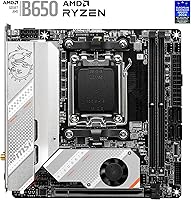
Builders consistently describe the board as feeling substantial and well-finished for its size, with solid PCIe and DIMM slot retention that holds up through repeated hardware swaps. The component layout is thoughtfully arranged given the Mini-ITX constraints, and there are no widespread reports of DOA units or early failures.
A small number of users noted that some capacitors and connectors sit very close to the board edge, making cable management tricky in tight cases. The board's compact nature also means any physical damage during installation is harder to avoid than on a larger ATX alternative.
BIOS Usability
84%
MSI's BIOS interface on this board earns consistent praise for being organized and readable, even for builders who are not regular overclockers. Loading an XMP or EXPO memory profile is a simple one or two step process, and the easy mode gives newcomers a clear starting point without feeling condescending.
A subset of users found that advanced voltage and fan curve controls require digging through several submenus, which can feel unnecessarily layered compared to some competing boards. A few early firmware versions also shipped with stability quirks that required updates before memory profiles ran cleanly.
Feature Set for Size
91%
Getting dual M.2 slots, four SATA ports, five USB 3.2 ports, a USB-C, and integrated Wi-Fi onto a 6.69-inch board is a genuinely impressive balancing act. Builders coming from ATX have noted that they sacrificed almost nothing meaningful in terms of everyday connectivity when switching to this compact AM5 motherboard.
The single PCIe x16 slot is the inevitable ceiling, and users who wanted to add a capture card or dedicated audio interface alongside their GPU hit that wall immediately. There is also no USB 3.2 Gen 2x2 port on the rear panel, which limits peak throughput for newer external drives.
VRM & Thermal Performance
67%
33%
Under typical gaming or moderate productivity workloads with a mid-range Ryzen chip, the VRM handles thermals without complaint and most users report stable sustained operation. The power delivery is considered adequate for Ryzen 7000 and 8000 series CPUs running within their default power limits.
Builders pushing higher-core-count Ryzen processors in very compact cases with limited airflow have reported noticeable VRM temperature spikes under sustained all-core loads. Without deliberate case fan placement directing air toward the VRM heatsink, thermal throttling becomes a real risk rather than a theoretical one.
Memory Compatibility
82%
18%
XMP and EXPO profiles engage reliably across a wide range of popular DDR5 kits, and the board has accumulated a mature BIOS ecosystem since its March 2023 launch that has resolved most early memory training issues. Users running kits at 5600 MHz report consistent boot behavior once profiles are locked in.
A handful of users with less common or ultra-high-speed DDR5 kits above 6000 MHz have experienced instability or extended memory training times. DDR5 compatibility on AM5 in general can be kit-dependent, and the two-DIMM limitation means there is no fallback slot if one module causes issues.
Wi-Fi Performance
74%
26%
For most home and apartment environments the integrated wireless performs reliably enough for gaming and streaming without any additional hardware, which is a meaningful practical advantage in a small form factor build. Users in standard-sized spaces report stable connections with acceptable latency figures.
Range consistency drops off in larger homes or environments with dense walls, and a portion of buyers in those conditions noted they ultimately ran an Ethernet cable anyway. A few users also flagged that the antenna routing inside cramped cases can affect signal quality if not positioned carefully during assembly.
CPU Compatibility
86%
Support for both Ryzen 7000 and Ryzen 8000 series gives the B650I EDGE WIFI reasonable platform longevity within the AM5 socket, and most users have had no issues pairing it with mid-to-upper-range Ryzen chips. The board handles the full stack from entry Ryzen 5 chips up to higher-core-count Ryzen 9 models without reported instability at stock settings.
Ryzen 8000 series support may require a BIOS update on units that shipped before that CPU generation launched, meaning new builders without a Ryzen 7000 chip on hand could face a chicken-and-egg update problem. MSI does not offer BIOS flashback on this model, making that scenario genuinely inconvenient.
Installation Experience
79%
21%
Experienced builders generally describe installation as straightforward, with clear silkscreen labeling for headers and a well-documented manual that covers the less obvious connector locations. The rear I/O shield is pre-installed, which saves an assembly step that many competing boards still leave to the user.
First-time ITX builders have flagged that the density of components and proximity of headers to the board edges makes some cable connections fiddly, particularly front panel headers in cases with short wire looms. Cooler bracket installation can also be tight depending on which AM5 cooler is used.
Value for Money
72%
28%
For a builder who needs Wi-Fi, dual M.2, and solid USB connectivity in an ITX package, this compact AM5 motherboard delivers a feature-per-dollar ratio that is difficult to replicate without compromise. The mature BIOS and reliable platform longevity add to the long-term case for the price.
The asking price sits high enough that Micro-ATX alternatives offering more slots and better VRM headroom become a legitimate conversation. Buyers who do not need the Wi-Fi or the strict size constraint may find the premium harder to justify compared to similarly priced B650 boards in larger form factors.
SATA & Storage Options
83%
Having four SATA ports alongside two M.2 slots is rare at this size and genuinely useful for builders migrating from older systems with existing SATA SSDs or hard drives. Running a fast NVMe boot drive alongside legacy storage works without any configuration headaches for the vast majority of users.
The SATA ports are positioned in a way that can make cable routing awkward in certain case layouts, particularly those with side-mounted storage bays. Builders who want more than two M.2 drives will also find the storage expansion story ends here, with no additional M.2 adapter slots available.
Rear I/O Connectivity
85%
Five USB 3.2 ports and a USB-C on a Mini-ITX rear panel is a genuinely strong showing that covers most desktop peripherals without requiring a hub. Builders who use multiple external drives, input devices, and audio interfaces have noted they rarely run out of ports in typical desktop use.
The two USB 2.0 ports feel like a concession to space constraints rather than a deliberate design choice, and they are noticeably slow when used for large file transfers. There is also no full-size SD card slot, which content creators managing camera footage have flagged as a gap.
Case Compatibility
76%
24%
The board adheres to the standard Mini-ITX spec cleanly, and the community has documented successful builds across a wide range of popular ITX cases including dense sub-10-liter enclosures. Most mainstream SFF case manufacturers explicitly list AM5 Mini-ITX board support that covers this board.
A minority of users encountered cooler clearance conflicts or difficulty routing cables in particularly tight or unconventional enclosures. Some smaller cases also restrict access to the M.2 slots after the GPU is installed, requiring builders to pre-populate storage before final assembly.
Overclocking Headroom
63%
37%
For moderate DDR5 memory overclocking and CPU PBO tuning the board provides enough control to get meaningful performance gains over stock settings without requiring expert-level BIOS knowledge. Casual overclockers have reported clean results using AMD's Precision Boost Overdrive within the BIOS.
Users who want granular manual CPU voltage control or all-core frequency overclocking quickly find that the B650 chipset and VRM design impose a lower ceiling than X670 alternatives. Competitive overclockers specifically targeting benchmark records will find this board limiting regardless of their skill level.
Longevity & Platform Future
81%
19%
The AM5 socket has an extended roadmap from AMD, meaning this board should remain compatible with future Ryzen generations beyond the current 7000 and 8000 series without a platform swap. The DDR5 memory standard also ensures the memory investment stays relevant as kit prices continue to fall.
The B650 chipset, while capable, does not support PCIe 5.0 on the primary x16 slot, meaning the board will not take full advantage of the next wave of GPU or storage standards as they mature. Buyers who upgrade hardware frequently may hit the platform ceiling sooner than those on a longer upgrade cycle.

Suitable for:

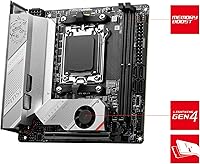
The MSI MPG B650I EDGE WIFI Mini-ITX Motherboard is purpose-built for builders who want a genuinely capable AMD platform without the footprint of a full-size board. It fits naturally into compact gaming rigs, living-room HTPCs, and streamlined desk workstations where every cubic inch counts. Ryzen 7000 and 8000 series owners will find the DDR5 support and dual M.2 slots give them a proper foundation for a high-performance small build rather than a compromised one. The integrated Wi-Fi is a practical win for anyone routing cables in a tight case where adding a wireless adapter would be awkward or impossible. Builders transitioning from ATX who still own a handful of SATA drives will also appreciate that four SATA ports survived the size reduction, keeping existing storage hardware in play.
Not suitable for:

The MSI MPG B650I EDGE WIFI Mini-ITX Motherboard is a poor match for anyone who needs expansion beyond a single GPU, since there is only one PCIe slot and no room to add a capture card, dedicated sound card, or secondary NVMe adapter simultaneously. Budget-focused builders will likely find better value in a Micro-ATX alternative that offers more headroom for less money. Users planning to push a high-core-count Ryzen chip to its thermal limits inside a very small, poorly ventilated case should think carefully, as VRM temperatures can climb under sustained loads if airflow is not deliberately planned. Hardcore overclockers who want every tuning knob available may find that the B650 chipset, while solid, does not offer the ceiling of a B650E or X670 board. Finally, anyone who needs more than two DIMM slots for specialized workloads requiring very large memory pools will need to look at a different form factor entirely.
Specifications

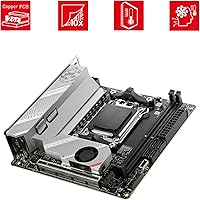
  • Form Factor: Mini-ITX at 6.69 x 6.69 inches, designed to fit standard ITX cases while maximizing usable board real estate.
  • Dimensions: The board measures 6.69 x 0.79 x 6.69 inches and weighs 1.87 pounds, keeping the overall package compact and manageable.
  • CPU Socket: AMD AM5 socket, compatible with Ryzen 7000 and Ryzen 8000 series processors.
  • Chipset: AMD B650 chipset, offering a solid balance of features and stability for mainstream to enthusiast AM5 builds.
  • Memory Slots: Two DDR5 DIMM slots supporting up to 64GB of RAM with speeds up to 5600 MHz and XMP/EXPO profile support.
  • M.2 Storage: Two M.2 slots for NVMe SSDs, allowing fast primary and secondary storage without consuming SATA bandwidth.
  • SATA Ports: Four SATA III ports provide connectivity for traditional SSDs or HDDs alongside M.2 drives.
  • PCIe Slot: One PCIe x16 slot delivers full-bandwidth support for a modern discrete GPU.
  • USB Rear I/O: Rear panel includes two USB 2.0 ports, five USB 3.2 ports, and one USB-C port for broad peripheral compatibility.
  • Wireless: Integrated Wi-Fi module eliminates the need for an external wireless adapter, keeping the build clean inside tight cases.
  • Platform: Optimized for Windows 11, with driver and firmware support aligned to Microsoft's current OS requirements.
  • Manufacturer: Produced by MSI, a well-established motherboard and graphics card manufacturer with broad retail and support presence.
  • Model Number: Official model number is 7D73-001R, useful for cross-referencing compatibility lists and BIOS update archives.
  • ASIN: Amazon standard identification number is B0BDS84JWH, used for tracking the specific retail listing.
  • Release Date: First made available in March 2023, giving the board a mature BIOS ecosystem with multiple stability updates since launch.

Related Reviews
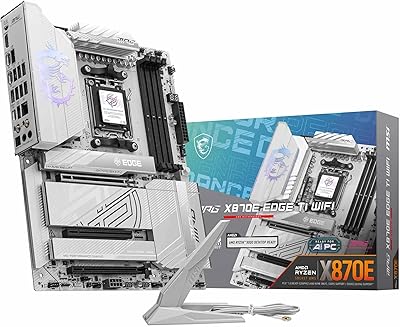
MSI MPG B850 Edge TI WiFi Motherboard
86%
91%
Performance
89%
Build Quality
93%
Cooling Efficiency
75%
Ease of Installation
90%
Wi-Fi and Connectivity
More
MSI MPG X870E EDGE TI WIFI Motherboard
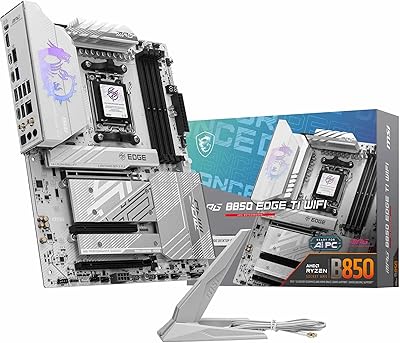
83%
93%
VRM & Power Delivery
84%
BIOS Usability
91%
Storage Performance
88%
Wireless Connectivity
82%
DDR5 Overclocking
More
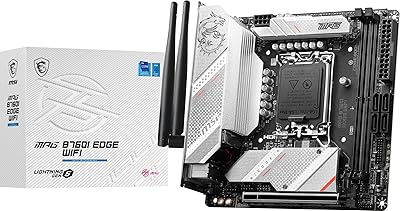
MSI MPG B760I Edge WiFi Mini-ITX Motherboard
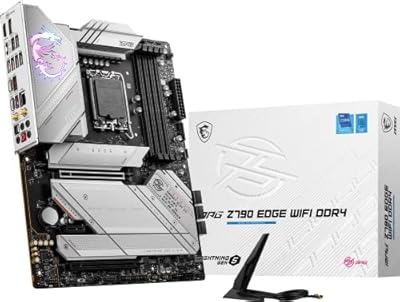
81%
88%
Build Quality
93%
Feature Set
82%
BIOS & Software
86%
Wireless Performance
74%
Thermal Management
More
MSI MPG Z790 Edge WiFi DDR4 Gaming Motherboard
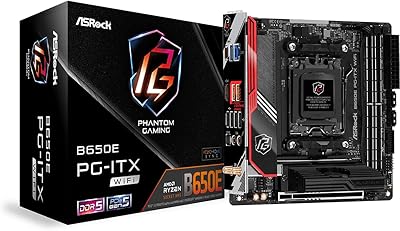
86%
89%
Performance
92%
Power Delivery System
88%
Cooling Efficiency
91%
Ease of Installation
84%
Wi-Fi Connectivity
More
ASRock B650E PG-ITX WiFi Mini-ITX Motherboard
70%
91%
Platform Capability
83%
Power Delivery
61%
DDR5 Compatibility
58%
BIOS Maturity
88%
Form Factor & Design
More
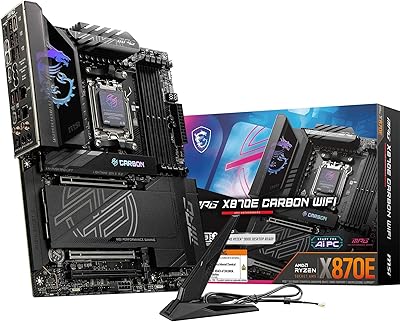
MSI MPG X870E Carbon WiFi Motherboard
82%
94%
VRM & Power Delivery
91%
Thermal Management
89%
Memory Overclocking
93%
Storage Expandability
67%
BIOS & Tuning Experience
More
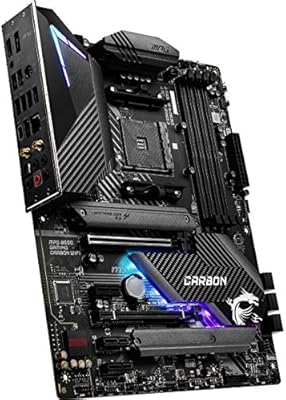
MSI MPG B550 Gaming Carbon WiFi Motherboard
87%
93%
Gaming Performance
89%
Wi-Fi Performance
91%
Connectivity Options
88%
Build Quality
85%
Overclocking Stability
More
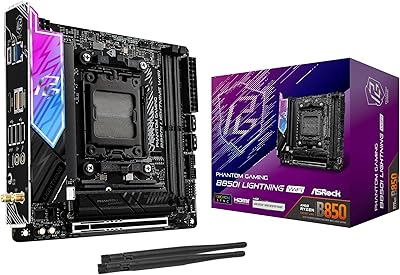
ASRock B850i Lightning WiFi Mini ITX Motherboard
85%
91%
Performance
88%
Build Quality
93%
Overclocking Stability
89%
Connectivity
75%
Ease of Setup
More
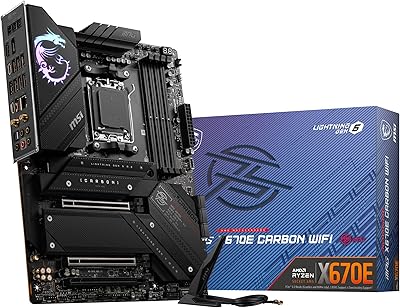
MSI MPG X670E Carbon WiFi ATX Motherboard
78%
91%
Build Quality
88%
VRM & Thermal Performance
63%
BIOS Experience
67%
DDR5 Compatibility & Memory Tuning
86%
PCIe 5.0 & Storage Expandability
More
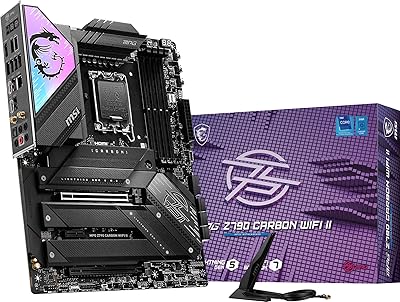
MSI MPG Z790 Carbon WiFi II Motherboard
84%
91%
VRM & Power Delivery
84%
DDR5 Compatibility & Memory OC
88%
BIOS Experience
86%
Wireless Connectivity (Wi-Fi 7 & BT 5.4)
93%
M.2 Storage Expansion
More

FAQ

Ryzen 8000 series support is officially listed, but depending on when your unit was manufactured, you may need a BIOS update before the CPU is recognized. If possible, use a supported Ryzen 7000 chip to update the BIOS first, or check if the retailer offers BIOS flashback service.

Yes, both M.2 slots can be occupied simultaneously and they operate independently from the four SATA ports, so you are not forced to trade one for the other. That said, always double-check the manual for any bandwidth sharing nuances tied to your specific drive configuration.

For most gaming scenarios the built-in Wi-Fi performs reliably, particularly at short to medium range. If you are in a larger home or have thick walls between your router and PC, a wired Ethernet connection will always be more consistent, but the onboard wireless is not a throwaway feature by any means.

It follows the standard Mini-ITX spec at 6.69 x 6.69 inches, so it will physically fit any compliant case. Where builders sometimes run into trouble is cooler height clearance and front panel cable routing in very compact enclosures, so check your case's CPU cooler height limit and internal layout before ordering.

MSI's BIOS on this board is generally considered approachable, with a straightforward layout and an easy mode for newcomers. Loading an XMP or EXPO memory profile is typically a one-click operation, and the board does not pressure you to dive into advanced settings unless you want to.

Officially the board is rated up to 5600 MHz, but with a good DDR5 kit and a compatible Ryzen chip, many users report stable operation beyond that using EXPO profiles. Results vary by memory kit and CPU silicon quality, so treat anything above the rated spec as a bonus rather than a guarantee.

A minority of builders have reported tight fits with certain all-in-one coolers and some compact cases that have unusual internal layouts. Before committing, cross-reference your specific case and cooler combination on community build lists, particularly for cases under 10 liters in volume.

The primary x16 slot on the B650 chipset supports PCIe 4.0 for graphics, not PCIe 5.0. If PCIe 5.0 GPU bandwidth is a priority, you would need to step up to an X670E board, though in practical terms current GPUs do not saturate PCIe 4.0 bandwidth.

No, this is a DDR5-only board and the two DIMM slots are not compatible with DDR4 modules. If you are upgrading from an older platform and want to reuse your existing DDR4 RAM, this compact AM5 motherboard is not the right match.

Yes, the board includes a front-panel USB-C header, which is a useful inclusion for cases that support front USB-C output. Just confirm your chosen case has a compatible front-panel connector before assuming it will work automatically.

Where to Buy