Overview

The MeLE PCG02 N100 Mini PC Stick is one of the more capable entries in a form factor that has historically underwhelmed — a stick PC that actually earns its place in specific, practical setups. The Intel N100 chip is a genuine upgrade over the old Atom and Celeron sticks that made this category feel like a compromise. It handles light workloads without constant frustration. That said, 4GB of RAM and eMMC storage set a real ceiling here — this is not a desktop replacement, and pretending otherwise will lead to disappointment. Its niche is real, though: digital signage, IoT terminals, silent kiosks, and compact home media setups where near-zero footprint matters more than raw power.

Features & Benefits

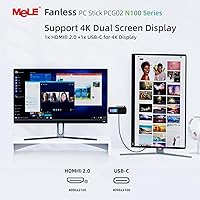
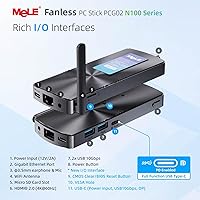
What separates this stick PC from its predecessors is how thoughtfully the I/O is configured. The N100's single-core speed keeps Windows 11 responsive for office apps and 4K video playback, and the dual 4K output — one via HDMI 2.0 and one through USB-C with DisplayPort 1.4 — is a genuine differentiator in this category. That USB-C port pulls triple duty: display output, 10Gbps data transfer, and PD3.0 charging through a single cable. The fanless chassis runs completely silent, which matters when this fanless mini computer is tucked behind a retail display or inside a kiosk. Add Gigabit Ethernet, fast dual-band Wi-Fi, and support for RTC Wake scheduling and Wake-on-LAN, and you have a surprisingly pro-level feature set at this size.

Best For

The PCG02 makes the most sense in a few very specific scenarios. Digital signage deployments are the obvious fit — mounting this silently behind a display, running 24/7 without a fan to fail or make noise, is exactly what it was designed for. IT teams rolling out lightweight WMS or MES terminals in warehouses will appreciate the Gigabit LAN, Wake-on-LAN support, and the unlocked BIOS. Home theater users who want a quiet, hidden Plex client behind the TV will find it capable for that job. Smart home tinkerers and astrophotography hobbyists who need a low-power always-on device will also find it a natural fit. If you need heavy multitasking, local AI inference, or fast SSD speeds, look elsewhere.

User Feedback

Buyers who put this fanless mini computer into real deployments consistently highlight the truly silent operation — no coil whine, no fan noise, just a warm chassis under sustained load. The dual 4K output also earns consistent praise in signage and multi-display setups. Where feedback gets more measured is around the 4GB RAM ceiling: users who push past a handful of browser tabs or background apps report noticeable slowdowns, which is an honest reflection of the spec. USB-C charging works reliably for most, though a few note it requires a quality PD-capable adapter to behave correctly. Linux compatibility and BIOS accessibility get positive mentions from technically experienced buyers, while general setup is described as straightforward even for less technical users.

Pros

  • Fanless passive cooling delivers truly silent 24/7 operation — a genuine advantage in kiosks, signage walls, and home theaters.
  • The Intel N100 chip offers meaningfully better single-core performance than older Atom or Celeron stick PCs.
  • Dual 4K output via HDMI 2.0 and USB-C DP1.4 is a rare capability at this form factor and price tier.
  • The full-function USB-C port handles video output, 10Gbps data transfer, and PD3.0 charging through a single cable.
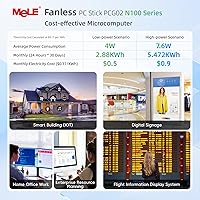
  • A 7W TDP keeps energy costs minimal for always-on deployments compared to any traditional desktop hardware.
  • RTC Wake and Wake-on-LAN support enable automated startup schedules — a pro-grade feature rarely found in stick PCs.
  • Gigabit Ethernet alongside fast dual-band Wi-Fi gives this stick PC reliable connectivity for both fixed and flexible setups.
  • Windows 11 Home comes preinstalled, and Linux support gives technically inclined users real flexibility from day one.
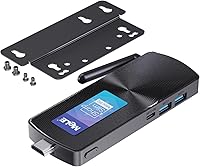
  • The included VESA mount and HDMI extension cable make clean, behind-monitor installations straightforward right out of the box.

Cons

  • 4GB of soldered RAM cannot be upgraded, and multitasking beyond a handful of apps or browser tabs shows the strain quickly.
  • eMMC storage is noticeably slower than the NVMe SSDs found in competing mini PCs at comparable price points.
  • The fanless chassis can get warm to the touch during prolonged CPU-intensive tasks, which may concern users in enclosed installs.
  • USB-C PD charging requires a quality 12–20V PD-capable adapter; underpowered or generic chargers may not work reliably.
  • 128GB of onboard storage fills up faster than expected once Windows 11 updates and a few applications land on the drive.
  • The PCG02 tops out at two simultaneous displays — there is no path to a third monitor regardless of adapters used.
  • This stick PC is not suited for video editing, local AI inference, or any workload demanding sustained CPU or memory throughput.
  • No active cooling means the system may throttle under prolonged heavy loads, limiting consistent performance in edge-case scenarios.

Ratings

Our AI-generated scores for the MeLE PCG02 N100 Mini PC Stick were produced by systematically analyzing verified global buyer reviews, with spam, incentivized submissions, and bot activity actively filtered out before any scoring took place. The ratings reflect the full picture of real user experience — from the strengths buyers consistently highlight to the frustrations that emerge after weeks of actual use. Both standout advantages and genuine trade-offs are transparently represented in every category score below.

Silent Operation
94%
There is genuinely no fan noise — not a quiet hum, not a low whisper, just nothing. Buyers who have deployed this fanless mini computer in home theaters, hospital digital signage, or library kiosks consistently single out the silence as the feature that makes the purchase worthwhile, especially in sound-sensitive environments where any mechanical noise is simply not acceptable.
The silence comes entirely from the absence of active cooling, which is a design trade-off rather than an engineering breakthrough. Under heavier loads the processor must throttle itself to stay within thermal limits, meaning the device cannot sustain peak clock speeds the way an actively cooled system can — silence and maximum sustained performance are mutually exclusive here.
Power Efficiency
93%
A 7W TDP is exceptional for a full Windows 11 computer, and buyers running this stick PC around the clock in signage walls, IoT setups, or home automation hubs will see genuinely negligible electricity consumption. Compared to leaving a budget laptop or a traditional desktop idling in a kiosk role, the energy savings over months of continuous operation are substantial.
The reliance on USB-C PD for power introduces a compatibility variable — the device requires a 12–20V PD3.0-capable adapter, and not all USB-C chargers meet that specification. Users deploying multiple units in locations with limited adapter availability may need to pre-provision compatible chargers separately, which adds a small but real logistical step to larger rollouts.
Display Output
88%
Dual 4K output — one via HDMI 2.0 and one through USB-C with DisplayPort 1.4 — is the single most compelling reason to choose this stick PC over competing options in its class. Running a 4K signage display and a 4K monitoring panel simultaneously from a device you can hold in one hand is a capability that stands out sharply in this form factor.
The dual 4K capability depends entirely on having a USB-C cable and display that support DisplayPort Alt Mode — a detail that catches some buyers off guard. Plugging in a standard USB-C charging cable and expecting video output will not work; you need the right cable and a DP1.4-compatible display, and that requirement is not always clearly communicated at the point of purchase.
RAM & Multitasking
46%
54%
For single-purpose deployments — a kiosk running one dedicated app, a signage display looping content, or a Plex client streaming to a single room — 4GB of fast LPDDR4x is genuinely sufficient. Users who match the workload to the hardware will find daily performance perfectly acceptable, and in IoT or automation roles the RAM ceiling is rarely a real-world constraint.
Four gigabytes of soldered, non-upgradeable RAM is the single biggest limitation buyers will encounter in real use. Open a browser with several tabs, keep a Teams call running, and let Windows Update run in the background, and the system slows to a noticeable crawl — a frustration that no amount of startup optimization or software tuning fully resolves given the hardware ceiling.
Value for Money
76%
24%
Given the dual 4K display output, the N100 chip, Gigabit Ethernet, full-function USB-C, and enterprise-friendly features like Wake-on-LAN and RTC Wake scheduling, the PCG02 packs a competitive feature set for its price tier. Buyers deploying multiple units for signage or IoT installations will find the per-unit cost holds up well against alternatives with similar connectivity.
At a similar price point, compact mini PCs with 8GB of RAM and NVMe storage are available — slightly larger in form factor, but meaningfully more capable for general productivity. The value equation is strong only when the stick form factor and fanless silent operation are genuine requirements, not optional preferences, otherwise better-specified alternatives become the smarter financial choice.
Performance
72%
28%
The N100 chip handles Windows 11 day-to-day tasks with solid responsiveness for its category — opening documents, streaming video, and running a couple of background apps feels fluid enough that most users in signage or basic office deployments will not feel held back. Single-core speed is a meaningful and noticeable step up from older Atom or Celeron-based stick PCs.
Push past light productivity — run a video call alongside a spreadsheet with a browser open in the background — and the ceiling becomes apparent quickly. The N100 is efficient rather than powerful, and users expecting desktop-class responsiveness will be disappointed, especially during Windows Update cycles when background processes compete aggressively for the limited available resources.
Connectivity
84%
Having both Gigabit Ethernet and dual-band Wi-Fi on a device this compact is a genuine asset for IT deployments. The wired Gigabit LAN handles reliable always-on network connections in warehouse terminals or kiosks, while the WiFi AC9560 with 2T2R and 160MHz channel support performs competently in home and small office wireless environments.
Wi-Fi and Bluetooth share the same combo card, which means in dense wireless environments — a crowded office floor or a busy retail space — interference can occasionally affect both simultaneously. There is also no USB hub built in, and with only two USB-A ports available, users who need to connect multiple wired peripherals will hit the limit quickly.
Thermal Management
78%
22%
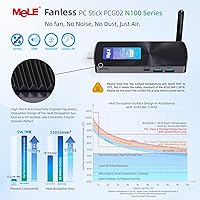
For the target workloads — signage loops, media playback, light browsing — the passive cooling keeps the chassis at an acceptable temperature with zero noise. Long-term deployments benefit from the absence of a fan, since there is no mechanical component to fail, seize, or accumulate dust over months of continuous operation in kiosks or behind-screen installs.
Under sustained CPU load, such as running a browser-heavy dashboard or continuous background data sync, the aluminum shell gets noticeably warm and the processor may throttle slightly to stay within its thermal budget. Users planning to mount this inside a fully enclosed cabinet should ensure adequate ambient ventilation to prevent heat buildup during extended high-demand sessions.
Port Versatility
79%
21%
The multi-function USB-C port is the highlight here — handling 4K display output, 10Gbps data transfers, and bidirectional PD3.0 charging through a single connector is a genuine convenience in tight installs where cable management is a priority. Combined with two USB 3.2 Type-A ports and Gigabit Ethernet, the I/O coverage for a device this size is genuinely well-considered.
Three USB ports total is a thin selection once you factor in a keyboard, a mouse, and external storage. Without an external hub, users in typical office or lab setups will run short on connections quickly, and dedicating the USB-C port to display output means giving up its data or charging function simultaneously — a real trade-off in constrained installs.
Setup & Ease of Use
81%
19%
Windows 11 Home ships preinstalled and ready to use from first boot, meaning most buyers are up and running within minutes of plugging in. The included VESA mount and HDMI extension cable make the physical installation equally straightforward, with no additional hardware required for a standard clean behind-monitor deployment.
Technical buyers who want to install Linux or configure PXE boot will need some familiarity with BIOS navigation, which — while accessible — is not as polished or well-documented as mainstream laptop firmware. A number of users also report that getting simultaneous dual-display output to work reliably requires some initial troubleshooting around cable and port compatibility.
Build Quality
74%
26%
The compact chassis feels solid enough for behind-screen or kiosk mounting, and the included VESA bracket makes for a clean, stable installation right out of the box. For a device designed to be hidden and left alone, the build quality is appropriate — it handles regular installation and removal without any obvious signs of structural weakness.
The casing blends aluminum and plastic, and while it holds together well, it does not feel premium compared to dedicated mini PCs at a comparable price. The port area feels slightly snug, and repeated cable connections in cramped behind-monitor installs can feel awkward, raising mild long-term durability questions around the USB and HDMI connectors.
Storage Speed
57%
43%
The 128GB eMMC is sufficient for the operating system, a modest app library, and signage content without constantly reaching for external drives. For deployments where the primary role is displaying content or running a single dedicated application, the storage capacity holds up better in practice than the raw speed specification might initially suggest.
eMMC is measurably slower than even a budget SATA SSD, resulting in longer Windows boot times, slower application launches, and noticeably sluggish behavior when the drive is close to capacity. Users who work with larger files, install many applications, or expect fast system responsiveness will find the storage performance a persistent and difficult-to-ignore friction point.
Software & OS
68%
32%
Windows 11 Home is fully licensed and functional from day one, and the unlocked BIOS gives technically experienced users genuine flexibility — including PXE boot and Linux installation — that is rarely available on consumer-grade stick PCs. For enterprise IoT or education deployments needing custom OS images, that BIOS access is a meaningful and practical differentiator.
Windows 11 on 4GB of RAM is workable but not comfortable — Microsoft system overhead leaves limited headroom for running applications smoothly, and background update processes can bog the system down at inconvenient moments. Users who do not actively manage startup tasks and scheduled maintenance will find the OS regularly consuming more resources than the hardware can comfortably spare.

Suitable for:

The MeLE PCG02 N100 Mini PC Stick was built for a specific type of buyer, and those buyers will find it genuinely well-matched to their needs. Digital signage operators who need a silent, always-on display driver that mounts discreetly behind a screen will appreciate the fanless design and dual 4K output more than almost any other feature on the market at this size. IT professionals deploying lightweight WMS, MES, or IoT gateway terminals in warehouses and industrial environments will value the Gigabit Ethernet, Wake-on-LAN, and unlocked BIOS for remote management and automated scheduling. Home theater enthusiasts who want a noiseless Plex client or streaming box hidden behind their TV — without the bulk of a traditional mini PC — will also find this a practical, low-effort solution. Small offices, classroom labs, and educators running basic productivity tasks or web-based workflows on limited desk space round out the ideal audience for this fanless mini computer.

Not suitable for:

If you are expecting a general-purpose desktop replacement, the MeLE PCG02 N100 Mini PC Stick will frustrate you quickly. The 4GB RAM is soldered to the board with no upgrade path, and once a video call is running alongside several browser tabs and a background sync service, performance visibly degrades. The eMMC storage is noticeably slower than even a budget NVMe drive, which affects application load times and file-heavy workflows in ways that become hard to ignore day to day. Anyone planning to run local AI models, light video editing, or CAD work should look at a proper mini PC with expandable RAM and a faster storage interface. Gamers, power users, and anyone who treats 8GB of RAM as a baseline will find this stick consistently falling short, and the 128GB storage fills up faster than expected once Windows 11 updates and a handful of apps are installed.

Specifications

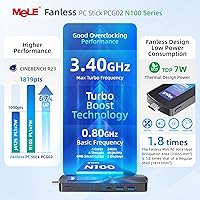
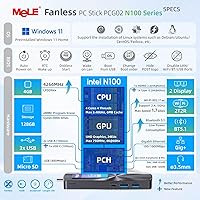
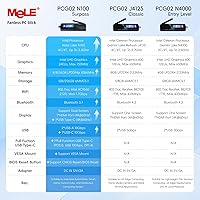
  • Processor: Intel N100 (Alder Lake), 4 cores, up to 3.4GHz turbo frequency, 6MB cache.
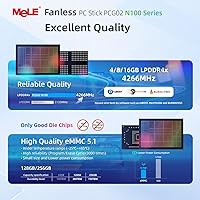
  • RAM: 4GB LPDDR4x at 4266MHz, soldered to the board with no upgrade path available.
  • Storage: 128GB eMMC internal storage, supplemented by a microSD card slot for expansion.
  • Operating System: Windows 11 Home comes preinstalled; Linux is also officially supported.
  • Display Output: Dual 4K output via HDMI 2.0 (4K@60Hz) and USB-C DisplayPort 1.4 (4K@60Hz), both operable simultaneously.
  • Graphics: Intel UHD Graphics (integrated), capable of driving two 4K displays at 60Hz at the same time.
  • USB Ports: Two USB 3.2 Type-A ports plus one full-function USB-C port supporting 10Gbps data and PD3.0 charging.
  • Networking: Gigabit Ethernet port paired with Intel WiFi AC9560 dual-band wireless (2T2R, 160MHz channel support).
  • Bluetooth: Bluetooth 5.1 for connecting peripherals and IoT devices with low latency.
  • Cooling: Fully fanless passive thermal design enabling completely silent 24/7 continuous operation.
  • Power Input: Powered via USB-C PD3.0, accepting 12–20V input — no proprietary power adapter required.
  • TDP: 7W thermal design power, making this one of the most energy-efficient Windows 11 PCs available.
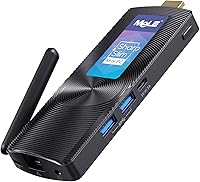
  • Dimensions: 5.79 x 2.09 x 0.59 inches — roughly the footprint of a large thumb drive.
  • Weight: 4.5 oz (approximately 0.28 lbs), light enough to mount discreetly behind any standard monitor.
  • Smart Wake: RTC Wake and Wake-on-LAN support allow fully automated power-on scheduling without physical intervention.
  • Mounting Kit: Includes a VESA mount bracket and HDMI extension cable for clean behind-monitor or wall-mounted installs.
  • Audio: 3.5mm combo audio jack for direct connection to headphones, speakers, or PA system inputs.
  • Color: Available in black with a compact aluminum-composite fanless chassis construction.

Related Reviews
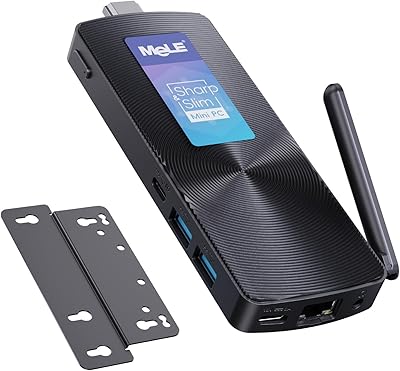
MeLE PCG02 Mini PC Stick, Celeron N100, 8GB RAM, 128GB Storage
82%
94%
Portability & Size
85%
Performance for Everyday Tasks
72%
Thermal Management
88%
Wi-Fi Connectivity
90%
Ease of Setup
More
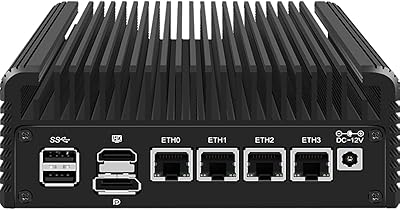
Beelink Mini S12 Pro (N100, 16GB, 500GB)
83%
83%
Everyday Performance
91%
Value for Money
76%
Build Quality & Design
84%
Thermal Management & Noise
88%
Connectivity & Ports
More
CWWK N100 4-Port Firewall Mini PC
76%
92%
NIC Performance
89%
OS Compatibility
86%
Value for Money
74%
Thermal Management
83%
Build Quality
More
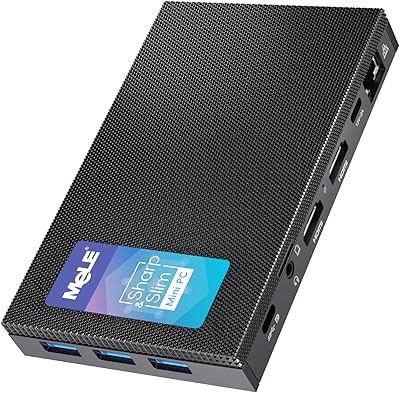
AKLWY Mini PC Stick 4GB/128GB Computer
74%
93%
Portability
78%
Value for Money
47%
Performance
84%
Setup & Ease of Use
71%
Build Quality
More
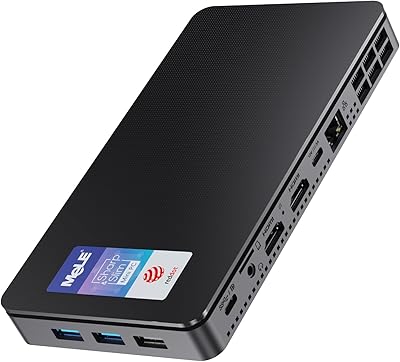
MeLE Quieter3C Mini PC N5105 16GB/512GB
80%
97%
Noise Level
83%
Build Quality & Design
71%
Thermal Management
74%
Everyday Performance
68%
Memory & Storage Configuration
More
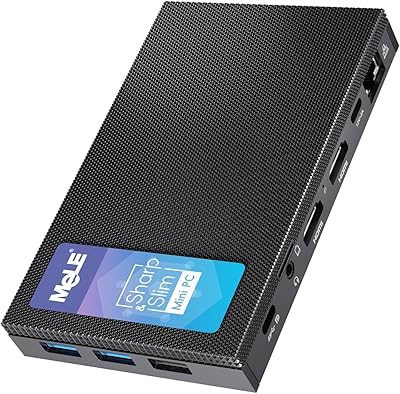
MeLE Overclock 4C Mini PC, 32GB RAM, 512GB Storage
89%
89%
Performance
91%
Build Quality
96%
Portability
90%
Display Support
88%
Connectivity
More
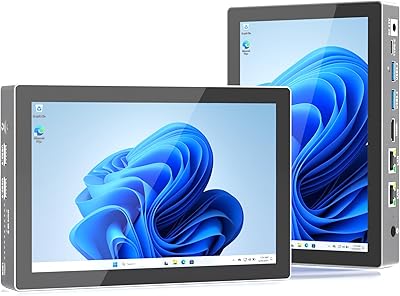
MeLE Mini PC Quieter 4C, 16GB RAM, 512GB SSD
87%
85%
Performance
90%
Build Quality
88%
Display Quality
93%
Energy Efficiency
92%
Noise Level
More
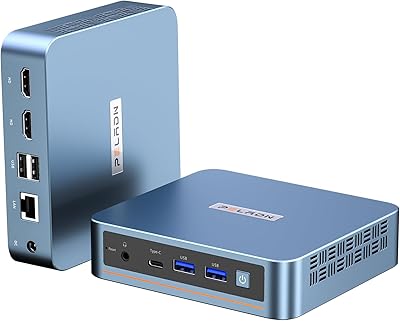
HEIGAOLAPC Mini PC 12th Gen N100 16GB RAM 256GB Storage
85%
88%
Performance
92%
Value for Money
90%
Portability
87%
Connectivity
93%
Setup and Installation
More
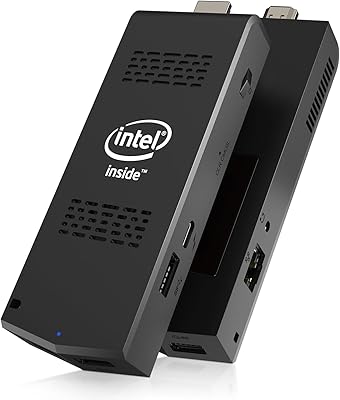
PELADN WI-6 Mini PC (N100, 16GB DDR4, 512GB SSD)
79%
88%
Value for Money
83%
Performance for Daily Tasks
91%
Triple-Display Support
74%
Build Quality & Design
71%
Setup & Out-of-Box Experience
More
AIOEXPC S7 J4125 8GB 128GB PC Stick
76%
72%
Everyday Performance
94%
Portability
88%
Setup Experience
91%
Connectivity
74%
Thermal Management
More

FAQ

Yes — this stick PC supports simultaneous dual 4K output, one via HDMI 2.0 and one through the USB-C port using DisplayPort 1.4. Both screens can run at 4K@60Hz at the same time, which is one of the more impressive capabilities at this size and price point.

No on both counts, unfortunately. The 4GB of RAM is soldered directly to the board with no upgrade slot, and the eMMC storage is also fixed. Your best option for more space is a microSD card or an external USB drive — just keep that in mind before buying if storage is a concern.

The casing does get warm under sustained CPU load, but the fanless design is engineered for 24/7 operation within its thermal limits. For typical workloads like digital signage, media playback, or light browsing, heat is generally not a problem. Push it hard for extended periods and the aluminum body will be noticeably warm to the touch, though not dangerously so.

It is far more than a power port. The USB-C handles 4K video output via DisplayPort 1.4, 10Gbps data transfer, and PD3.0 charging simultaneously through a single cable. It can also charge other devices in a pinch, as long as you are using a quality PD-capable adapter rated for 12–20V.

For light Plex duty — serving one or two streams at 1080p with direct play — it handles the job quietly and efficiently. If you need to transcode multiple 4K streams simultaneously or serve a busy household, the 4GB RAM and N100 CPU will hit their ceiling. Think of it as a capable single-room media client or a modest always-on server, not a heavy transcoding machine.

Yes, Linux is officially supported, and technically experienced users have had success with a range of distributions. The BIOS is unlocked, which also enables PXE boot — useful for network-based OS deployment in education labs or enterprise environments where multiple units need remote provisioning.

Both wired and wireless are available. The PCG02 has a full Gigabit Ethernet port alongside dual-band Wi-Fi and Bluetooth 5.1. For kiosk or signage deployments where reliability matters most, wired Ethernet is the better choice — the Wi-Fi is capable, but nothing beats a cable for 24/7 uptime.

It comes with a VESA mount bracket and an HDMI extension cable, so you can attach it directly to the back of most monitors or flat-screen TVs without buying anything extra. At under 5 ounces, the stick is light enough that mounting feels completely solid once it is in place.

It is actually one of the better fits for that use case. The 7W power draw keeps electricity costs low, the fanless design means no noise in living spaces, and Wake-on-LAN plus RTC Wake support allow scheduled automation without leaving the PC running all the time. Gigabit Ethernet and Bluetooth 5.1 round out the connectivity you would need for most smart home setups.

For a focused workload it is fine: email, a word processor, and a video call can run together without obvious frustration. The trouble starts when you stack several browser tabs, a cloud sync app, and a background task on top of each other — the 4GB RAM starts showing strain at that point. If your day involves heavy tab switching or multiple demanding apps open at once, a proper mini PC with 8GB or more would serve you better.

Where to Buy