Overview

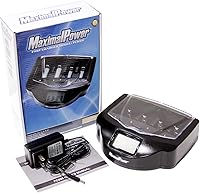
The MaximalPower FC999 Mark I Universal Battery Charger has been quietly holding its own in a crowded market since 2012 — a lifespan that says something real about its staying power. Most households accumulate a chaotic mix of battery sizes: AA remotes, D-cell flashlights, 9V smoke detectors. This universal charger addresses that reality directly by handling nearly every common size and chemistry in a single unit. At its price tier, the addition of an LCD status display and built-in charge protection puts it a step above bare-bones options. It won't win speed contests, but it covers ground that most single-chemistry chargers simply can't.
Features & Benefits

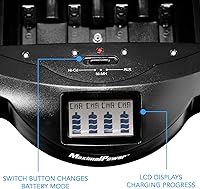
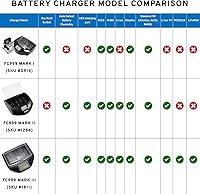
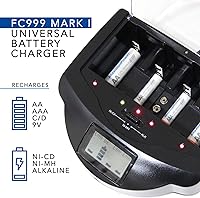
The FC999 Mark I fits five batteries at once — four slots for AA, AAA, C, or D cells, plus a dedicated bay for 9V. What genuinely sets it apart is the mode switch that lets you toggle between Ni-MH, Ni-CD, and Alkaline or RAM chemistries, which is uncommon at this price point. The spring-loaded poles self-adjust to different battery lengths, so you're never hunting for adapters. The LCD readout shows live charge status and flags dead or non-rechargeable cells before you waste time waiting. At under 1.5 pounds with a compact footprint, it tucks away easily between uses.

Best For

This multi-chemistry charger suits households where battery sizes vary widely — think kids' toys alongside kitchen thermometers and outdoor flashlights. It's also a practical pick for photographers who cycle through C or D cells in older flash units and need a dependable backup. Emergency-preparedness minded buyers will appreciate the breadth; one charger covers nearly every common type without needing a second unit. And if you're new to rechargeables, the guided LCD feedback removes the guesswork for first-time users making the switch away from disposables, making the learning curve genuinely manageable.

User Feedback

Across nearly 2,800 ratings, this universal charger holds a 4.2-star average — broadly positive, with a few recurring notes worth knowing. Buyers consistently highlight solid build quality and straightforward performance: it charges multiple sizes without drama. The Alkaline charging mode earns special mention as a differentiator, though it extends battery life rather than fully restoring depleted cells, so tempered expectations help. Charging speed runs slower than dedicated single-chemistry units, and the absence of a USB output port is a real gap given what competitors sometimes include at this price. A smaller share of long-term users have flagged durability concerns after 12 to 18 months of heavy daily use.

Pros

  • Charges five batteries simultaneously across four size types plus a dedicated 9V slot.
  • One of the few chargers at this price that handles Alkaline and RAM chemistries, not just Ni-MH.
  • Spring-loaded poles self-adjust to battery length, eliminating the need for any manual adapter swapping.
  • LCD display actively identifies dead or non-rechargeable cells so you are not left waiting on a failed charge.
  • Built-in protection against overcharging, overheating, and voltage spikes adds meaningful peace of mind.
  • Compact and light enough to store in a drawer or travel bag without taking up meaningful space.
  • Has maintained a strong sales rank since 2012, which suggests consistent real-world reliability across a broad user base.
  • The mode switch between Ni-MH, Ni-CD, and Alkaline or RAM is a practical differentiator that most single-chemistry chargers skip.
  • Comes backed by a one-year warranty and brand customer service support.

Cons

  • Charging speed is noticeably slower than dedicated single-chemistry or fast-charge alternatives.
  • No USB output port, which feels like a missed opportunity given what some competing units offer at this price.
  • Alkaline charging extends partial battery life but cannot fully restore deeply discharged cells — easy to misunderstand.
  • A subset of long-term users report reliability issues after sustained heavy use past the 12 to 18 month range.
  • No indication of individual slot charging current, so you cannot verify or adjust charge rate per battery.
  • The unit requires an AC adapter rather than running on USB-C power, limiting flexibility in travel or off-grid scenarios.
  • Packaging does not include any batteries, so new rechargeable users need a separate purchase to get started.
  • No mobile app or smart integration for users who want remote monitoring of charge status.

Ratings

Our AI rating system analyzed thousands of verified global reviews for the MaximalPower FC999 Mark I Universal Battery Charger, actively filtering out incentivized, duplicate, and bot-generated feedback to surface what real buyers actually experience. The scores below reflect a balanced picture — genuine strengths are credited where earned, and recurring pain points are scored honestly without softening. If you want a clear-eyed read on where this multi-chemistry charger delivers and where it falls short, this is it.

Chemistry Compatibility
91%
Buyers consistently single out the ability to charge Ni-MH, Ni-CD, Alkaline, and RAM batteries as a standout feature. In households where device types range from smoke detectors running 9V cells to kids' toys burning through C batteries, having one charger cover all those chemistries is a real, daily convenience most competing units do not offer.
The mode switch requires manual selection, and a few users have noted accidental mis-selection when swapping between battery types in a hurry. There is no automatic chemistry detection, so attentive use is required to avoid charging a battery on the wrong setting.
Size Versatility
88%
The spring-loaded pole mechanism genuinely impresses users who juggle multiple battery sizes at home. Being able to load a D cell next to a AAA without any adapter swap is the kind of friction-free experience that earns repeat praise across hundreds of reviews.
Some buyers note that fitting larger C or D cells can feel a bit snug depending on brand tolerances, and the spring tension occasionally feels inconsistent between slots. It is a minor gripe, but it comes up often enough to warrant mention.
LCD Display Clarity
84%
The real-time charge status readout is routinely praised for giving users actual visibility into what is happening rather than relying on a single blinking LED. The defective battery detection feature is especially valued by users who inherited old rechargeable cells and need a quick way to sort functional from dead stock.
The display is functional rather than polished — text is small and the contrast is modest in bright ambient lighting. A handful of buyers mention the readout can be hard to parse at a glance from across a room, which limits its usefulness as a set-and-forget monitoring tool.
Charge Protection
89%
Users who have left this multi-chemistry charger running overnight report confidence in its built-in overcharge and overheating safeguards. The protection circuitry is cited frequently in long-term reviews as a reason for continued trust in the unit, particularly among buyers charging batteries for smoke detectors or emergency kits.
While the protection features work as intended, there is no audible or push alert when a charge cycle completes or a fault is detected — you have to physically check the display. For users charging in another room, this passive-only feedback is a noticeable gap.
Charging Speed
52%
48%
For casual household use — topping off remote batteries or refreshing a set of AAs before a camping trip — the charging pace is entirely acceptable. Users who are not in a rush rarely flag speed as an issue, and the steady charge rate is partly what enables the protection circuitry to function well.
Against dedicated fast-chargers, the FC999 Mark I is noticeably slower, and this is the single most common complaint across the review pool. Users cycling through batteries for high-drain devices like cameras or game controllers frequently describe the wait times as a real inconvenience that pushed them toward supplementary chargers.
Build Quality
76%
24%
The physical construction is generally described as solid and sturdy for the price tier. The dock feels planted when in use, the slots do not wobble, and the overall assembly inspires reasonable confidence for a device that will sit on a shelf and be used repeatedly over months or years.
A meaningful minority of long-term users — particularly those charging batteries daily — report that the unit begins to show wear or functional inconsistency after 12 to 18 months of heavy use. The quality holds up well under moderate use but may not be suited for very high-frequency charging cycles.
Ease of Use
87%
Setup is minimal: plug it in, set the chemistry mode, and insert the batteries. First-time rechargeable users cite the guided LCD feedback and simple mode switch as genuinely helpful tools for building confidence with rechargeables, rather than having to guess whether a charge is working.
The manual mode switch for chemistry selection adds a small but real cognitive step that fully automatic chargers eliminate. New users occasionally express confusion about which setting applies to their battery type, and the included manual is basic rather than comprehensive.
9V Slot Utility
78%
22%
Having a dedicated 9V slot in the same unit is a practical feature that buyers of smoke detector or guitar pedal battery users specifically appreciate. It means one less single-purpose charger to own, and users in that niche note it works reliably for that specific application.
The 9V slot is physically isolated from the main four-slot bay, and a few buyers have noted that its positioning makes simultaneous use with a full four-slot load feel slightly awkward on a narrow shelf. It is a layout quirk rather than a functional flaw, but it does affect day-to-day placement.
Defective Battery Detection
81%
19%
The ability to identify non-rechargeable or deeply degraded cells before wasting a full charge cycle is appreciated most by users sorting through inherited battery collections or buying second-hand rechargeables. It saves real time and prevents the frustration of pulling out a battery that never actually charged.
The detection is a pass-fail indicator rather than a health gauge — it tells you a battery is bad but not how bad, or whether it might still hold a partial charge. Users looking for a more diagnostic read on battery capacity will find this feature informative but ultimately limited.
Compact Footprint
83%
At under 1.5 pounds and a 7 by 6 by 2 inch profile, the FC999 Mark I stores tidily in a kitchen drawer or on a utility shelf without dominating the space. Users in smaller apartments or with limited counter space mention this as an underrated practical advantage over bulkier multi-bay units.
The compact body does limit the total number of slots to five, which some power users find restrictive. Households managing large rechargeable battery inventories sometimes find themselves needing to run multiple charge sessions, which undercuts the convenience the form factor otherwise provides.
Value for Money
69%
31%
For buyers who genuinely need multi-chemistry support across a wide range of battery sizes, the breadth of compatibility justifies the price better than a cheaper single-chemistry alternative would. Users who view it as a one-stop solution for a mixed-battery household tend to rate the value more favorably.
At its price point, the absence of a USB output port and the slower-than-average charge speed do create some friction when comparing against competitors that offer one or both of those features. Buyers who only need Ni-MH AA and AAA charging will likely find better value elsewhere.
USB Output Absence
41%
59%
The lack of a USB port does not affect the core charging function, and some users prefer a focused single-purpose device without added circuitry that could complicate the charging environment or add failure points.
Competing chargers at a similar price increasingly include at least one USB-A output port for charging phones or small devices alongside batteries. The omission here is a genuine gap that buyers notice, and it comes up repeatedly in comparative reviews as a reason to consider alternative units.
Alkaline Charging Realism
63%
37%
For users who understand its scope, the Alkaline charging capability is a useful add-on — extending the remaining life in partially discharged cells before the next shopping run, for example. Buyers who treat it as a supplementary feature rather than a primary one tend to be satisfied.
Expectations misalignment is the main issue here. A number of reviews reflect disappointment from buyers who expected to fully restore dead Alkaline batteries and found the feature did not deliver that. The charger can only work with cells that still hold residual charge, and the product description does not always make this distinction clear enough.
Long-Term Reliability
61%
39%
For light-to-moderate household use — a few charge cycles per week — the unit holds up acceptably over its warranted one-year period. Users who use it for occasional topping off rather than daily high-volume cycling tend to report satisfactory longevity.
A notable subset of long-term reviewers flags performance degradation or outright failure in the 12 to 18 month range under heavy use, which is a real concern for buyers expecting multi-year service. The one-year warranty covers the documented risk window, but it offers no buffer beyond that.

Suitable for:

The MaximalPower FC999 Mark I Universal Battery Charger is a strong fit for households where battery-powered devices come in every shape and size — remote controls, kids' toys, lanterns, and 9V smoke detectors all coexisting under one roof. If you've ever kept three different chargers in a drawer just to cover your bases, this unit consolidates that clutter into one slot-based dock. Photographers who still rely on C or D cells in older flash equipment will appreciate having a charger that doesn't demand a separate purchase for every chemistry type. It's equally well-suited for people building out emergency kits, since covering Ni-MH, Ni-CD, Alkaline, and RAM in one device means fewer single-purpose gadgets to maintain. First-time rechargeable users will find the LCD feedback genuinely helpful for understanding what's happening during a charge cycle rather than guessing.
Not suitable for:

Buyers who primarily need to charge AA and AAA batteries at high volume — think competitive photographers or heavy device users burning through cells daily — will likely find the FC999 Mark I too slow for their rhythm. This multi-chemistry charger is not engineered for speed; it prioritizes breadth of compatibility over rapid turnaround, which is a real trade-off if fast replenishment matters to you. Users hoping for a modern charging hub with a USB output port to top off devices alongside their batteries will need to look elsewhere, as this unit offers no such port despite competitors at a similar price sometimes including one. Those expecting Alkaline charging to fully revive deeply discharged cells should also recalibrate: it can extend remaining life in partially used batteries, but it is not a resurrection tool. Anyone putting a charger through punishing daily cycles should weigh the minority of long-term user reports that flag reliability concerns beyond the 12 to 18 month mark.

Specifications

  • Model Number: This unit is manufactured under model number FC999 Mark I by America Digital Accessories.
  • Compatible Sizes: Charges AA, AAA, C, and D batteries in the four main slots, plus a dedicated fifth slot for 9V batteries.
  • Battery Chemistries: Supports four chemistry types: Nickel-Metal Hydride (Ni-MH), Nickel-Cadmium (Ni-CD), Alkaline, and RAM (Rechargeable Alkaline Manganese).
  • Charging Slots: Includes four independent slots for AA, AAA, C, or D cells, and one separate slot dedicated to 9V batteries.
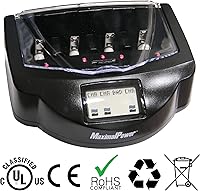
  • Display: An LCD screen provides real-time charge status readout and can detect defective or non-rechargeable batteries before a cycle completes.
  • Charge Protection: Built-in circuit protection covers overcharging, over-discharging, and overheating, and guards against sudden current fluctuations.
  • Mode Switch: A manual switch allows the user to select between Ni-CD, Ni-MH, and Alkaline/RAM charging modes depending on the battery type in use.
  • Dimensions: The unit measures 7″ long by 6″ wide by 2″ high, making it compact enough for a shelf or drawer.
  • Weight: The charger weighs 1.34 pounds, including the docking unit without batteries or accessories.
  • Output Voltage: Operates at 12 Volts AC via the included AC power adapter.
  • USB Port: This unit does not include a USB output port for charging external devices.
  • Pole Mechanism: Sliding spring-loaded negative poles self-adjust to accommodate the varying lengths of different battery sizes without manual adapters.
  • In the Box: Package includes one charger unit, one AC power adapter, and one printed user manual; batteries and other accessories are not included.
  • Warranty: MaximalPower provides a one-year limited warranty and customer service support on this product.
  • Availability: This model has been available on the market since May 2012, indicating a long and stable product lifecycle.
  • Manufacturer: Designed and distributed by America Digital Accessories under the MaximalPower brand.

Related Reviews
Tenergy TN299 Universal Battery Charger
74%
83%
Chemistry Compatibility
88%
Slot Independence
71%
Ease of Use
81%
Display & Monitoring
62%
Battery Fit & Compatibility
More
Tenergy TN456 Universal Battery Charger
82%
93%
Battery Chemistry Compatibility
91%
Independent Slot Operation
88%
LCD Display & Data Readouts
86%
Capacity TEST Mode
79%
Charging Speed & Current Control
More
Intelligence 8 Bay Universal Battery Charger
86%
90%
Charging Speed
88%
Usability
93%
Safety Features
85%
Display Clarity
87%
Build Quality
More
Tenergy TN486U 5-Bay Universal Battery Charger
80%
91%
Versatility
88%
USB Connectivity
84%
LCD Display
87%
Safety Features
58%
Charging Speed
More
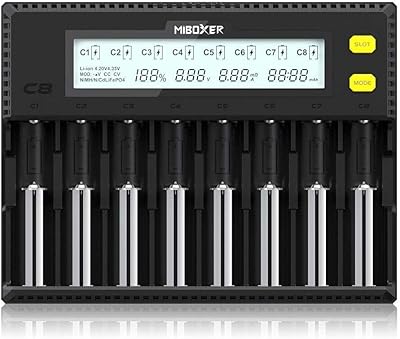
MiBOXER C8 8-Bay Battery Charger
82%
88%
Charging Performance
91%
Battery Compatibility
93%
LCD Display Clarity
86%
Internal Resistance Measurement
89%
Safety Features
More
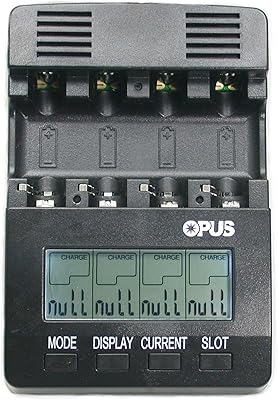
Opus BT-C2400 Battery Charger Analyzer
77%
91%
Measurement Accuracy
88%
Internal Resistance Testing
93%
Channel Independence
54%
Charging Speed
83%
Refresh Mode Effectiveness
More
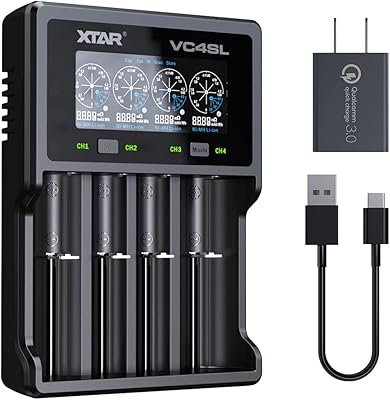
XTAR VC4SL 4-Bay Battery Charger
82%
88%
Charging Accuracy
91%
LCD Display Quality
93%
Battery Compatibility
84%
Grade Mode Usefulness
82%
Build Quality
More
Koshore Universal Rechargeable Battery Charger
72%
88%
Format Versatility
83%
LCD Display Clarity
61%
Build Quality
69%
Charging Speed
78%
Discharge Function
More
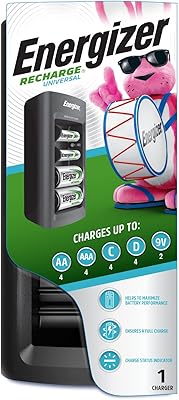
Energizer Recharge Universal Charger
86%
88%
Charging Speed
93%
Battery Compatibility
91%
Ease of Use
86%
Build Quality
92%
Value for Money
More
XTAR VC2SL Battery Charger
84%
85%
Charging Performance
88%
Ease of Use
80%
Build Quality
90%
Portability
92%
Battery Compatibility
More

FAQ

It is a real feature, but it comes with an important caveat. The charger can extend the remaining life in partially used Alkaline batteries by topping them back up, but it cannot fully restore a deeply discharged or dead cell. Think of it as a way to squeeze more use out of a battery that still has some charge left, not as a way to revive dead ones.

Yes, the four main slots operate independently, so you can mix sizes freely across them. You could charge a AA, a AAA, a C, and a D cell all at once without any conflict. The only caveat is that you need to make sure the mode switch is set to the right chemistry for the batteries you are loading.

The LCD display shows the charging status for each slot in real time, so you can check at a glance. When a battery has completed its charge cycle, the display will reflect that. It will also flag a battery as defective or non-rechargeable if the cell is not responding correctly, which saves you from waiting on a charge that will never finish.

No batteries are included in the package. You get the charger unit, the AC power adapter, and a user manual, but you will need to source your rechargeable batteries separately.

The built-in overcharge and overheat protection circuits are designed to stop the charge cycle before damage occurs, which makes overnight charging reasonably safe for most users. That said, as a general best practice with any battery charger, it is worth checking on it periodically and not leaving it unattended indefinitely, especially during the first few uses.

Yes, the RAM mode on this multi-chemistry charger is specifically intended for Rechargeable Alkaline Manganese batteries, which is the chemistry used by brands like Rayovac RENEWAL and similar products. Just make sure you switch the mode selector to the Alkaline/RAM setting before charging.

Charge times vary depending on the battery capacity and chemistry, and this charger prioritizes safe, steady charging over speed. In practice, most users find it slower than dedicated fast-chargers designed for Ni-MH AA cells. If rapid turnaround is important to you, that is worth factoring into your decision.

You can absolutely charge a single battery on its own — the slots work independently, so there is no requirement to fill them all. Just place the battery in any of the four main slots or the 9V bay and it will begin charging on its own.

The 9V slot is a dedicated bay separate from the four standard slots, and it is compatible with the supported chemistry types when you select the appropriate mode. It functions the same way in terms of protection and status display, but it physically cannot fit any other battery size, so it is exclusively for 9V cells.

If the display flags a battery as defective or non-rechargeable, it generally means the cell is not responding to the charge cycle — either it is a standard non-rechargeable battery placed in by mistake, or the rechargeable battery has degraded beyond recovery. Remove it, double-check that it is actually a rechargeable type, and if it still shows as defective on a retry, the battery itself has likely reached the end of its useful life.

Where to Buy