Overview

The Tenergy TN456 Universal Battery Charger has been a steady presence in the mid-range charger market since 2015 — and that kind of staying power usually means something. Rather than chasing the latest trend, it solves a genuinely common problem: most people who use rechargeable batteries don't stick to a single chemistry. NiMH AAs in remotes, Li-ion 18650s in flashlights, NiCd cells in older power tools — this intelligent charger handles all three without requiring you to own a separate unit for each. It's not flashy, but it's practical and well-designed, built around real-world battery management rather than impressive-sounding spec sheets.
Features & Benefits

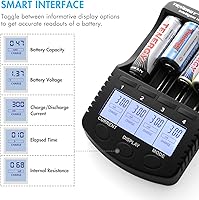
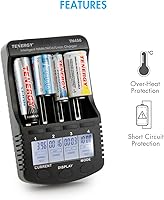
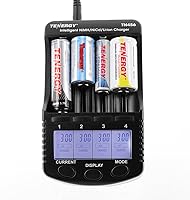
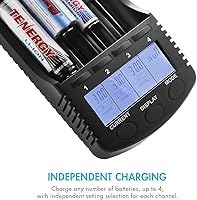
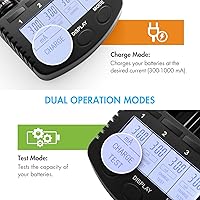
What separates the TN456 from basic chargers is its four independent slots. You're not forced to charge in matched pairs or with the same battery type across all slots — each one operates on its own, and you can set the current anywhere from 300mA to 1000mA depending on the cell. The backlit LCD gives you per-slot readouts of voltage, capacity, internal resistance, and elapsed time, which is far more informative than a single LED indicator. There's also a TEST mode that runs a discharge-then-recharge cycle to measure real capacity — useful for aging cells you're not sure are worth keeping. A dual AC/DC input means it works at home or in a car.

Best For

This multi-chemistry charger is an especially good fit for flashlight and RC enthusiasts who constantly cycle through 18650 Li-ion cells alongside standard AA or AAA NiMH batteries. It also makes sense for anyone trying to consolidate — instead of separate chargers for different chemistries, one unit covers everything. Frequent travelers will appreciate the 100–240V AC input, which works worldwide without any adapter, plus the 12V DC option when you're in a car. And if you've got a drawer of aging batteries you're not sure about, the capacity test mode gives you an actual data-based answer rather than a guess. That diagnostic value alone sets it apart.

User Feedback

With a 4.4-star average across more than 460 ratings, the TN456 earns its reputation without much controversy. Buyers consistently highlight the accurate capacity readouts and the reliability of having truly independent slots — being able to charge a half-dead 18650 in one slot while an AA NiMH trickles along in another is a practical convenience that adds up over time. The TEST mode gets called out repeatedly as a feature people didn't expect to rely on. On the critical side, the USB port's 1A output is slow by today's standards, and a few users report occasional contact fit issues with non-standard or smaller cylindrical cells. Long-term owners generally report solid build durability.

Pros

  • Charges NiMH, NiCd, and Li-ion batteries in the same session without swapping chargers or matching slot pairs.
  • All four slots operate completely independently — different battery types and current levels simultaneously.
  • The LCD shows voltage, capacity, internal resistance, and elapsed time per slot, not just a single charge indicator.
  • TEST mode runs a real discharge-recharge cycle to reveal actual remaining capacity on aging cells.
  • Selectable charge current per slot — 300mA to 1000mA — lets you prioritize battery longevity or speed.
  • Dual AC/DC input means the TN456 works off a wall outlet worldwide or from a 12V car power port.
  • Covers an unusually wide range of cylindrical cell sizes, from AAA NiMH through 26650 Li-ion.
  • Long market history since 2015 with a consistent 4.4-star average suggests genuine, sustained reliability.
  • Lightweight at 6.8 ounces — easy to pack without adding meaningful weight to a travel or field kit.

Cons

  • The USB output at 5V/1A is too slow to be useful as a phone charger by any current standard.
  • Maximum charge current of 1000mA per slot is limiting for high-capacity Li-ion cells that can safely handle much more.
  • Smaller cylindrical cells like 10440 can sit loosely in the slots, causing detection failures without repositioning.
  • Per-slot settings can reset after a power interruption, which is irritating during long overnight sessions.
  • Third-party safety certifications are not clearly documented, which is a legitimate concern for cautious Li-ion users.
  • Navigating between display metrics requires repeated button presses — there is no single-screen data view per slot.
  • The included 12V DC cable is short, making in-car use awkward depending on your vehicle layout.
  • TEST mode occupies a slot for several hours during a discharge cycle, reducing available charging capacity in the meantime.
  • The plastic housing feels purely functional — nothing about the build suggests it would survive a hard drop.

Ratings

The scores below for the Tenergy TN456 Universal Battery Charger were generated by our AI system after analyzing verified global user reviews, with spam, bot-submitted, and incentivized feedback actively filtered out. Across hundreds of real-world buyer experiences — from hobbyists managing flashlight cells to households consolidating multiple chargers — both the strengths and the genuine frustrations are reflected here without sugarcoating.
Battery Chemistry Compatibility
93%
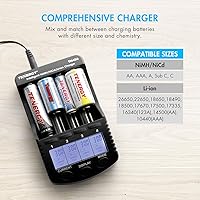
The ability to charge NiMH, NiCd, and Li-ion cells in the same session — without swapping chargers or even matching slots — is consistently praised as the TN456's most practical advantage. Users who keep 18650 Li-ion cells for flashlights and AA NiMH batteries for remotes report that this single unit genuinely replaced two or three older chargers.
A small number of users expected broader support for less common formats like flat-top Li-ion cells or button-top variants, and found fit to be inconsistent. The charger does cover an impressive range, but edge-case battery formats can occasionally cause contact uncertainty.
Independent Slot Operation
91%
Unlike budget chargers that force you to pair batteries or match chemistries across slots, the TN456 lets each of its four slots function completely independently — different battery types, different currents, all at once. Photographers and RC hobbyists in particular appreciate not having to wait for a full set to finish before pulling one cell.
While the independent operation works reliably for most users, a handful report that the per-slot current settings occasionally reset after a power interruption, requiring manual reconfiguration. It is a minor inconvenience but worth knowing if you run long overnight charging sessions.
LCD Display & Data Readouts
88%
The backlit LCD earns consistent praise for giving real, actionable data — voltage, charging current, internal resistance, capacity, and elapsed time — at a glance per slot. Users who came from single-LED chargers describe it as a substantial step up, particularly for monitoring Li-ion cells where overcharging is a genuine concern.
The display is not large by modern standards, and a few users note that reading all the metrics at once requires cycling through button presses rather than seeing everything simultaneously. In low-light conditions the backlight helps, but the text is small enough that older users have flagged readability as a mild issue.
Capacity TEST Mode
86%
The TEST mode — which runs a controlled discharge followed by a recharge to calculate actual remaining capacity — is one of the most talked-about features in buyer reviews. Users with drawers full of aging NiMH AAs find it invaluable for sorting cells worth keeping from those ready to be retired, saving money on unnecessary replacements.
It is worth being clear: the TEST mode measures capacity through a full discharge cycle, which takes significantly longer than a standard charge. A few buyers expected a quick diagnostic and were surprised by the time commitment. It is also not a substitute for a full battery analyzer — it gives you capacity, not a complete health profile.
Charging Speed & Current Control
79%
21%
Having four selectable current levels per slot — 300mA, 500mA, 700mA, and 1000mA — gives users meaningful control over charge speed versus battery longevity. Users who prefer slow-charging NiMH cells overnight for better cycle life appreciate the 300mA option, while those in a hurry can push to 1000mA.
The top charging current of 1000mA is adequate but not fast by current standards, especially for high-capacity 26650 Li-ion cells that could safely accept much higher rates. Power users coming from dedicated Li-ion chargers may find the maximum speed limiting during time-sensitive situations.
Build Quality & Durability
76%
24%
For a mid-range charger that has been on the market since 2015, the TN456 has accumulated a solid track record of long-term use without catastrophic failures. Many reviewers mention using the same unit for several years without issues, which is a meaningful signal for a device handling multiple battery chemistries under varying conditions.
The plastic housing feels functional rather than premium — it does the job without inspiring much confidence purely from handling it. A subset of longer-term users report that the spring tension in one or two slots can loosen slightly over time, affecting contact reliability with thinner cells like AAAs.
Slot Contact Reliability
72%
28%
For the most common battery sizes — 18650 Li-ion, standard AA, and AAA NiMH — the contacts engage firmly and consistently, and most users never experience a contact issue throughout years of use. The adjustable slot design accommodates a wide length range without requiring manual tools.
Smaller cylindrical cells, particularly 10440 (AAA-sized Li-ion) and some 14500 formats, occasionally sit loosely enough that the charger fails to detect them properly. A handful of users describe needing to reposition cells or add a small spacer, which is an inconvenience that more expensive chargers tend to handle better.
USB Output for Device Charging
58%
42%
Having a USB output port on a battery charger is genuinely useful in situations where outlet space is limited — one plug handles batteries and a device simultaneously. Occasional users who mostly charge overnight report it as a handy bonus for topping up a phone or small Bluetooth device.
At 5V/1A, the USB port is slow — noticeably so by today's standards when even budget phone chargers offer 2A or more, and fast charging has become the norm. Users who expected to use it as a primary phone charger are often disappointed; it is best treated as a low-priority trickle port rather than a serious charging option.
Input Versatility (AC & DC)
89%
The dual-input design — accepting both 100–240V AC for worldwide wall use and 12V DC for car or portable power — makes the TN456 unusually practical for travelers and outdoor users. Campers who keep Li-ion cells for lanterns frequently call out the 12V DC compatibility as a feature they actively rely on.
The 12V DC cable is included but on the shorter side, which can be awkward depending on where your vehicle's power port is positioned. A longer cord would make in-car use considerably more comfortable, especially in larger vehicles.
Ease of Use & Setup
83%
Most users report getting the TN456 up and running without consulting the manual, which is a genuine sign of intuitive design. The button-based interface for switching modes and adjusting current is straightforward, and the charger automatically detects battery chemistry in most cases, reducing the potential for user error.
Navigating between all the display metrics per slot requires multiple button presses, and without referencing the manual, it is not immediately obvious how to toggle between CHARGE and TEST modes on first use. The learning curve is short but exists, particularly for less tech-savvy buyers.
Value for Money
84%
Considering the breadth of chemistry support, the independent slot architecture, and the diagnostic TEST mode, the TN456 delivers a feature set that competes meaningfully with chargers sold at notably higher prices. Users who previously owned single-chemistry or single-slot chargers consistently describe this as a worthwhile upgrade.
Buyers comparing it strictly on charging speed or USB output capability may feel the pricing is less justified — dedicated fast chargers exist at similar price points. The value argument is strongest for users who actually need multi-chemistry support; for single-chemistry users, it may be more charger than necessary.
Portability & Form Factor
74%
26%
At 6.8 ounces, the TN456 is light enough to toss in a bag without much thought, and its footprint is compact relative to how much it handles. Travelers who bring it internationally appreciate that it does not take up much luggage space despite its capability range.
The unit is not small enough to be considered truly pocketable, and with the power adapter attached it becomes bulkier. Users who compared it to ultra-compact single-slot chargers note the size difference as a real tradeoff for the added slot count.
Safety & Overcharge Protection
87%
Long-term users report a strong track record of the TN456 terminating charges accurately without overcharging cells, which is critical for Li-ion safety. The per-cell monitoring via the LCD helps users spot anomalies — like a cell drawing unexpectedly low current — before they become a problem.
The charger does not come with a certification like UL or CE prominently documented in the packaging, which makes safety-conscious buyers uncertain despite the unit's practical track record. For those who charge high-drain Li-ion cells heavily, the absence of visible third-party safety certification is a legitimate concern.
Internal Resistance Measurement
81%
19%
The ability to read internal resistance per slot is a feature typically found on more expensive dedicated analyzers, and enthusiasts who understand battery health metrics find it genuinely useful for spotting degraded cells early. Flashlight hobbyists mention using it to match cells in battery packs by resistance.
The internal resistance readings are useful as a rough indicator rather than a precise measurement — they can vary slightly between readings and are not accurate enough to replace a dedicated battery analyzer. Casual users may not know how to interpret the numbers without some background research.

Suitable for:

The Tenergy TN456 Universal Battery Charger is the right pick for anyone who regularly juggles more than one battery chemistry — think flashlight hobbyists running 18650 Li-ion cells, photographers cycling through AA NiMH packs, or RC enthusiasts who keep Sub-C and larger cylindrical cells in rotation. If you have been keeping two or three separate chargers on your desk just to cover different formats, this intelligent charger consolidates all of that into one unit without forcing compromises on either chemistry. It is also a strong choice for households that want to actually understand their batteries, not just recharge them blindly — the TEST mode gives you real capacity data on aging cells, which is genuinely useful before you decide to replace an entire set. Frequent travelers will find the 100–240V AC input and 12V DC compatibility meaningful, since the charger works off a wall outlet anywhere in the world or from a car's power port without any additional hardware. Anyone who values per-slot control over charging current and wants to monitor what each cell is actually doing during a charge will get real use out of the LCD readouts.
Not suitable for:

If you only ever charge one battery chemistry — say, standard AA NiMH batteries for household remotes and toys — the Tenergy TN456 Universal Battery Charger is almost certainly more charger than you need, and simpler options exist at lower cost with less setup. Power users who charge high-capacity Li-ion cells like 26650s under time pressure will likely find the 1000mA per-slot ceiling frustratingly slow, since dedicated Li-ion chargers routinely push two to four times that rate per slot. The USB output, at 5V/1A, is too slow to be a practical phone charger in 2025 and should not factor into your buying decision as a genuine benefit. Buyers who want confirmed third-party safety certifications prominently documented will have reason to pause, as the TN456 does not make that information easy to verify. Finally, if you primarily use non-standard or less common cylindrical formats, the contact fit can be inconsistent enough that this multi-chemistry charger becomes a source of frustration rather than convenience.
Specifications

  • Brand & Model: Manufactured by Tenergy under the model designation TN456.
  • Charging Slots: Features four fully independent charging slots, each configurable separately for chemistry, mode, and current.
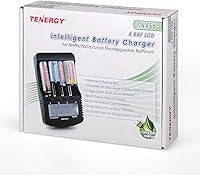
  • Supported Chemistries: Compatible with NiMH, NiCd, and Li-ion (3.7V) rechargeable battery chemistries.
  • NiMH/NiCd Sizes: Accepts NiMH and NiCd cells in AA, AAA, A, Sub-C, and C form factors.
  • Li-ion Sizes: Supports cylindrical Li-ion cells including 26650, 22650, 18650, 18500, 18490, 17670, 17500, 17335, 16340, 14500, and 10440.
  • Charge Modes: Offers two operating modes: CHARGE for standard replenishment and TEST for a full discharge-then-recharge capacity measurement cycle.
  • Charge Current: Each slot supports four selectable charge current levels: 300mA, 500mA, 700mA, and 1000mA.
  • Display: Backlit LCD screen shows per-slot data including voltage, capacity, charge/discharge current, internal resistance, and elapsed time.
  • AC Input: Accepts AC input from 100V to 240V, making the unit compatible with wall outlets worldwide without a voltage converter.
  • DC Input: Also accepts 12V DC at 3.0A input, suitable for use with a car power port or portable DC power supply.
  • NiMH/NiCd Output: Delivers 1.48V per slot for NiMH and NiCd cells at selectable currents up to 1000mA.
  • Li-ion Output: Delivers 4.2V per slot for Li-ion cells at selectable currents up to 1000mA.
  • USB Output: Includes one USB-A port outputting DC 5V at 1A for simultaneous low-speed charging of portable devices.
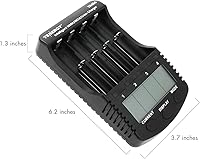
  • Dimensions: Unit measures 5 x 5 x 10 inches (approximately 2″ deep, 7″ wide, and 11″ tall depending on reference axis).
  • Weight: Weighs 6.8 ounces (approximately 192 grams), making it lightweight enough for travel use.
  • Market Entry: First made available in January 2015, giving the product over a decade of verified consumer track record.
  • Discontinuation: As of the latest available data, the TN456 has not been discontinued by Tenergy and remains in active production.

Related Reviews
Tenergy TN299 Universal Battery Charger
87%
87%
Charging Performance
91%
Ease of Use
85%
Display Clarity
90%
Portability
92%
Versatility (Battery Types)
More
Tenergy TN486U 5-Bay Universal Battery Charger
87%
91%
Value for Money
85%
Charging Performance
89%
Portability & Design
93%
Safety Features
88%
Ease of Use
More
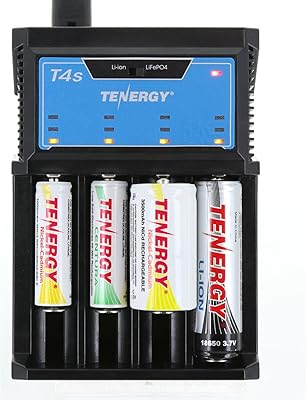
Tenergy T4s Intelligent Universal Charger
86%
96%
Battery Compatibility
75%
Charging Speed
91%
Safety Features
88%
Ease of Use
84%
Build Quality
More
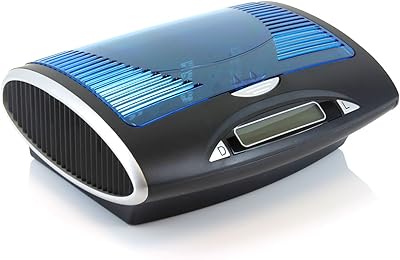
Tenergy T9688 Universal Battery Charger
78%
88%
Charging Versatility
91%
Ease of Use
86%
LCD Display & Readability
72%
Charging Speed – AA, AAA, C, D
41%
9V Charging Speed
More
Intelligence 8 Bay Universal Battery Charger
86%
90%
Charging Speed
88%
Usability
93%
Safety Features
85%
Display Clarity
87%
Build Quality
More
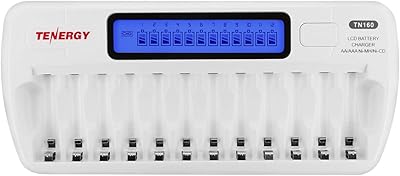
Tenergy TN160 12-Bay AA/AAA Battery Charger
83%
91%
Charging Reliability
58%
Battery Compatibility
83%
Per-Slot Display Clarity
86%
Refresh & Conditioning Function
88%
Build Quality & Durability
More
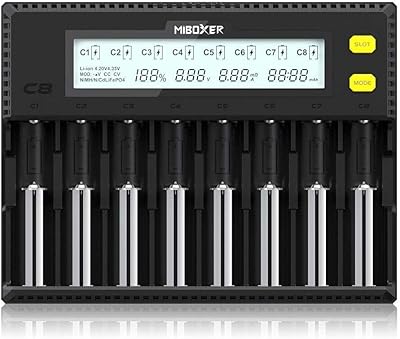
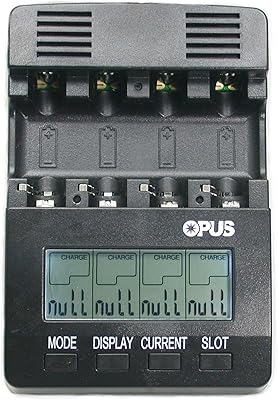
MiBOXER C8 8-Bay Battery Charger
82%
88%
Charging Performance
91%
Battery Compatibility
93%
LCD Display Clarity
86%
Internal Resistance Measurement
89%
Safety Features
More
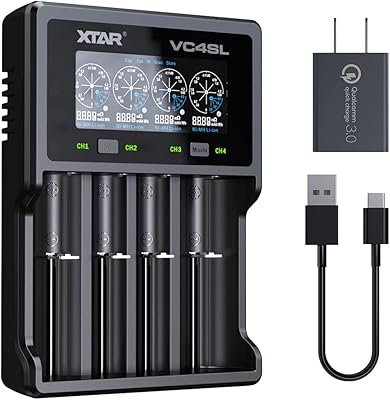
Opus BT-C2400 Battery Charger Analyzer
77%
91%
Measurement Accuracy
88%
Internal Resistance Testing
93%
Channel Independence
54%
Charging Speed
83%
Refresh Mode Effectiveness
More
XTAR VC2SL Battery Charger
84%
85%
Charging Performance
88%
Ease of Use
80%
Build Quality
90%
Portability
92%
Battery Compatibility
More
Energizer Recharge Universal Charger
86%
88%
Charging Speed
93%
Battery Compatibility
91%
Ease of Use
86%
Build Quality
92%
Value for Money
More

FAQ

Yes, and this is one of the TN456's most practical strengths. Each of the four slots operates completely independently, so you can have an 18650 Li-ion cell in slot one, a pair of AA NiMH batteries in slots two and three, and a Sub-C NiCd in slot four — all running simultaneously without any interference between them.

The TEST mode runs a controlled discharge of the battery down to a safe cutoff voltage, then recharges it fully, measuring how much capacity (in mAh) the cell actually delivered during that discharge. It gives you a real-world capacity number, which is great for evaluating aging batteries. That said, it is not a full battery analyzer — it does not profile internal resistance trends over time or provide cycle-count estimates, so treat it as a useful diagnostic tool rather than a lab-grade instrument.

Technically yes, but it will be noticeably slow. The USB port outputs 5V at 1A, which is roughly half the speed of a standard wall charger and a fraction of what modern fast-charging standards deliver. It is best thought of as a convenience port for overnight trickle-charging a small device — not a primary phone charger you would rely on before heading out.

Yes, the AC input accepts 100V to 240V, which covers virtually every country's standard wall voltage. You may need a plug shape adapter depending on the outlet type in your destination, but no separate voltage converter is required. The 12V DC input also means you can run it from a car outlet if wall access is unavailable.

The TN456 is designed to accommodate both button-top and flat-top 18650 cells in most cases, since the slot contacts are spring-loaded and adjustable in length. Most users report no issues with standard 18650 formats. However, protected 18650 cells with a longer overall length can occasionally be tight, so it is worth measuring your specific cell against the charger's listed compatibility if you are using protected cells.

Yes. Each slot has its own current setting, selectable between 300mA, 500mA, 700mA, and 1000mA. This means you can slow-charge a sensitive or older cell at 300mA in one slot while pushing a healthy 18650 at 1000mA in another. The settings are applied per slot and do not affect the others.

The LCD displays voltage, charge or discharge capacity, current, internal resistance, and elapsed time — but for one slot at a time. You cycle through slots and display metrics using the buttons on the unit. It is more informative than any LED-only charger, but you cannot see all four slots simultaneously on a single screen, which can feel slightly tedious if you are actively monitoring a full charge cycle.

Yes, this is exactly the scenario where the TEST mode earns its keep. Run each questionable cell through a TEST cycle and the charger will tell you the actual remaining capacity in mAh. If a cell that is rated at 2000mAh only delivers 900mAh during the test, you have a clear signal it is time to retire it. It is a much more reliable method than just guessing based on how quickly a device dies.

For the most popular sizes — 18650 Li-ion and AA or AAA NiMH — contact reliability is consistently good. Where some users run into trouble is with the smaller cylindrical Li-ion formats like 10440 (AAA-sized) and certain 14500 cells, which can sit loosely in the spring contacts. If the charger fails to detect the battery, try repositioning the cell or gently adjusting its seating before assuming the slot is faulty.

Generally yes. The TN456 has been on the market since 2015 and many reviewers report using the same unit for three to five or more years without failure. The plastic housing is functional rather than rugged, and a small number of long-term users note that slot spring tension can soften over time with very heavy use. But for typical hobbyist or household use, the durability track record is solid for the price tier.

Where to Buy