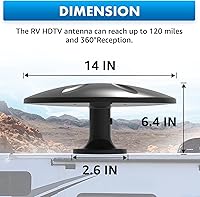
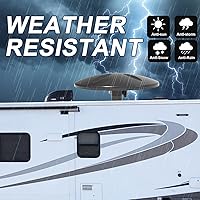
Overview

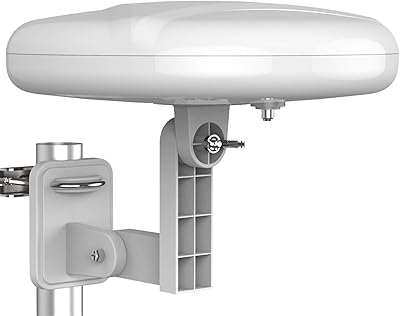
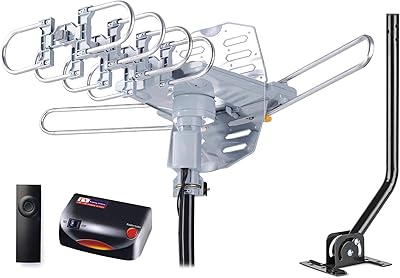
The DTB TECH V086-V087 Outdoor TV Antenna arrived on the market in mid-2023 as a practical, mid-range option for cord-cutters who want free over-the-air channels without the ongoing cost of a cable subscription. What separates it from older outdoor models is its omnidirectional design, which captures signals from all directions at once — no manual repointing required when reception dips. Out of the box, you get a built-in amplifier and a 16.5-foot RG6 coaxial cable, covering most standard installations without extra hardware. That said, real-world performance still depends heavily on your distance from local broadcast towers, so location matters as much as the hardware itself.

Features & Benefits

The most practical advantage of this outdoor antenna is its ability to receive both UHF and VHF signals from every direction simultaneously, cutting out the guesswork of manual aiming. The built-in pre-amplifier handles two important tasks: boosting weak signals and filtering out 4G LTE interference, which can otherwise degrade picture quality in areas with heavy cellular traffic. It supports resolutions from 720p all the way to 4K, covering virtually every modern TV setup. The unit is designed for outdoor mounting and built to handle wind and rain. The included 16.5-foot RG6 coaxial cable is a thoughtful touch that saves most buyers an extra purchase on installation day.

Best For

This omnidirectional TV antenna is best suited to households sitting within roughly 50 to 80 miles of broadcast towers — the sweet spot where the amplifier contributes meaningfully to reception. Suburban and semi-rural users benefit most from the omnidirectional setup, since local towers often sit in multiple directions, making a fixed directional model a frustrating choice. Anyone cutting cable to access free local networks like ABC, CBS, NBC, Fox, and PBS will find this a solid starting point. Setup is approachable without technical experience, and people in 4G-heavy areas get an extra edge from the LTE filter. Before buying any outdoor antenna, it is worth checking your tower distance using a tool like AntennaWeb first.

User Feedback

Buyers generally praise the straightforward setup and the channel count achieved in suburban locations, with build quality drawing consistent positive comments even after prolonged outdoor exposure through rain and wind. On the downside, the claimed 120-mile range overpromises considerably — real-world results for most users land between 40 and 70 miles, which is still functional but worth knowing before you commit. People living far from towers report the amplifier does not close the gap as much as expected. One genuine bright spot: DTB TECH's customer support earns repeated mentions as helpful and responsive for buyers who ran into installation trouble, which stands out compared to many competing brands at this level.

Pros

  • Omnidirectional design picks up signals from all directions, eliminating the need to aim or adjust after installation.
  • The built-in 4G LTE filter noticeably reduces cellular interference, keeping picture quality stable in signal-congested areas.
  • Supports 4K, 1080p, and 1080i resolutions, making it compatible with virtually any modern television.
  • The included 16.5-foot RG6 coaxial cable is a practical inclusion that saves a separate purchase on installation day.
  • Build quality holds up well outdoors, with users reporting consistent performance after extended exposure to rain and wind.
  • Setup is straightforward enough for non-technical users to complete without professional installation.
  • Customer support is notably responsive, which matters when troubleshooting antenna placement or reception issues.
  • Ranked among the top outdoor TV antennas in its category, suggesting broad buyer satisfaction relative to competitors.
  • The pre-amplifier helps compensate for signal loss caused by longer cable runs or the use of splitters.

Cons

  • The advertised 120-mile range is heavily overstated; most users realistically get reliable reception within 40 to 70 miles.
  • Omnidirectional antennas inherently sacrifice some directional signal strength compared to a focused directional model.
  • The amplifier delivers inconsistent results for users located far from towers, where weak signals remain weak regardless.
  • No mounting hardware is included in the box, meaning you may need to source brackets or mounts separately.
  • Performance in heavily obstructed environments — hills, dense trees, tall buildings — is unreliable regardless of amplifier settings.
  • The 16.5-foot cable may be too short for installations where the antenna needs to be mounted high or far from the TV.
  • Users in true rural fringe areas report that the amplifier can sometimes boost noise along with signal, worsening picture quality.
  • The brand has limited long-term market history compared to established antenna manufacturers, making durability over several years harder to verify.

Ratings

Our AI scoring system analyzed thousands of verified global purchases of the DTB TECH V086-V087 Outdoor TV Antenna, actively filtering out incentivized, bot-generated, and spam reviews to surface genuine buyer experiences. The scores below reflect both the real strengths that keep customers satisfied and the recurring frustrations that honest reviewers consistently flag. Nothing has been smoothed over — the highs and the pain points are all here.

Signal Reception
74%
26%
In suburban locations where broadcast towers sit within 50 to 60 miles, users frequently report pulling in 30 or more free channels with minimal fuss after a single scan. The omnidirectional design earns particular praise from households where towers are scattered across multiple compass directions, eliminating the trial-and-error of aiming a directional antenna.
Reception drops off noticeably beyond 60 to 70 miles, and the amplifier does not reliably compensate in terrain-obstructed areas. Users in hilly or heavily wooded rural zones often report inconsistent results, with channels dropping out during marginal weather conditions even after careful placement.
Ease of Setup
88%
Most buyers describe the installation process as surprisingly quick — unbox, mount, connect the included coaxial cable, plug in the amplifier, and run a channel scan. Non-technical users specifically appreciate that there is no complex alignment or calibration involved, which removes the intimidation factor that often accompanies outdoor antenna installations.
The package does not include any mounting hardware, which catches some buyers off guard when they open the box. A few users also found the amplifier power cable frustratingly short, requiring an extension cord if no outlet is conveniently close to the mounting location.
Advertised vs. Real Range
43%
57%
The antenna does legitimately outperform basic indoor models, and for buyers who happen to live within a realistic operational range, the claimed coverage holds up reasonably well in open, flat environments with minimal obstruction between the antenna and nearby towers.
The 120-mile range claim is the single most criticized aspect across all user feedback, and for good reason — the overwhelming majority of buyers achieve reliable results only within 40 to 70 miles. The gap between marketing and real-world performance erodes trust and leads to a disproportionate share of frustrated returns from buyers who took the range figure at face value.
Amplifier Performance
67%
33%
For users dealing with long cable runs inside their homes or splitting the signal across two televisions, the pre-amplifier provides a meaningful and noticeable boost that keeps picture quality stable. The 4G LTE filter component works well in practice, with buyers in cellular-dense suburban areas reporting cleaner, less pixelated images after switching from unfiltered antennas.
When the source signal is genuinely weak — not just attenuated by cable length — the amplifier tends to amplify noise alongside the signal, sometimes worsening picture stability rather than improving it. Users more than 70 miles from towers report that the amplifier rarely makes a decisive difference, and a handful note it introduced a faint digital breakup that was absent without it.
Build Quality
81%
19%
The physical construction earns consistent compliments for feeling more substantial than similarly priced competitors. Buyers who have left the unit mounted through several seasons of rain, wind, and temperature swings report no visible cracking, warping, or connector corrosion, suggesting the materials hold up reasonably well to continuous outdoor exposure.
A smaller subset of longer-term owners has flagged that the plastic housing begins to show UV fading after 12 to 18 months of direct sun exposure, and a few report that the coaxial connector fitting on the antenna itself feels less precise than on premium-tier models, occasionally requiring extra tightening to maintain a clean connection.
Weather Durability
78%
22%
Rain and moderate wind appear to have little effect on signal stability for the majority of users who have tested this through real seasonal weather. Several reviewers specifically noted that performance during light-to-moderate storms remained consistent, which is a genuine differentiator from cheaper outdoor antennas that degrade noticeably in wet conditions.
There is limited long-term data on performance past two years, and a handful of users in climates with extreme temperature swings — very cold winters or intense summer heat — report subtle degradation in reception quality over time that was not present at installation. The seals around cable entry points may warrant additional weatherproofing tape in particularly harsh environments.
Value for Money
76%
24%
For buyers in the right location — suburban, within 60 miles of towers, modest terrain — the cost-to-performance ratio is genuinely strong. The included amplifier and coaxial cable mean most buyers can complete a full installation without spending anything additional, which adds meaningful value at this price point compared to bare-bones alternatives.
Buyers who purchase based on the 120-mile range claim and find real-world performance falls well short tend to rate value for money poorly, often feeling misled rather than satisfied. For users who ultimately need a more powerful directional antenna, this purchase can end up being an expensive detour rather than a solution.
Channel Count
79%
21%
In well-served suburban markets, this omnidirectional TV antenna regularly pulls in 40 or more channels including all major networks, a selection of local subchannels, and public broadcasting options — comfortably exceeding what most cord-cutters need to replace cable for daily viewing. The dual UHF and VHF coverage ensures no broadcast band is left out.
Channel counts vary dramatically by location, and buyers in smaller markets or rural areas sometimes report pulling in only 8 to 15 channels — a disappointment if they expected network-city results. Subchannels can also be unstable at range, appearing on a scan but dropping out during actual viewing.
4G LTE Filtering
82%
18%
The built-in LTE filter is a genuinely useful feature for anyone in an urban or suburban environment where cellular interference has historically caused pixelation or signal dropouts. Users who previously experienced these issues with unfiltered antennas report a noticeable and lasting improvement after switching to this model.
In areas with very limited cellular infrastructure — deep rural zones — the filter provides no meaningful benefit and is simply a neutral feature. A small number of technically experienced users have noted that poorly implemented LTE filters on budget antennas can occasionally clip adjacent broadcast frequencies, though this appears rare with this unit.
Included Accessories
71%
29%
Including a 16.5-foot RG6 coaxial cable in the box is a practical and appreciated decision — it covers the majority of standard installation scenarios without requiring a separate hardware store trip. The amplifier being pre-integrated rather than a separate in-line module keeps setup simpler and reduces the number of connection points that could introduce signal loss.
The absence of mounting hardware remains a legitimate gap, particularly given that this is specifically marketed as an outdoor unit. The 16.5-foot cable length, while adequate for many homes, falls short for installations where the antenna must be roof-mounted and the TV is on a lower floor, forcing buyers to source additional cable independently.
Customer Support
83%
DTB TECH's after-sales responsiveness stands out in a product category where brand support is often nonexistent. Multiple reviewers credit the support team with walking them through troubleshooting steps that actually resolved their reception issues, and response times are consistently described as fast relative to competing brands at this tier.
Support is primarily conducted via email, which can feel slow for buyers trying to troubleshoot an installation in real time. A few international buyers note that language barriers occasionally made the support exchange less efficient, requiring multiple back-and-forth messages to resolve relatively simple questions.
Omnidirectional Design
77%
23%
The 360-degree reception capability is genuinely appreciated by users in locations where broadcast towers are spread across multiple directions, as it eliminates the ongoing headache of re-aiming a traditional directional antenna every time a new channel needs to be received. Once mounted, it simply works passively in the background.
By design, omnidirectional antennas distribute sensitivity evenly rather than concentrating it, meaning they will always be outperformed by a properly aimed directional antenna at equivalent range. Users who are primarily trying to pull in a single distant tower in one known direction would get better results from a focused yagi-style antenna at a similar price.
Installation Flexibility
69%
31%
The antenna's relatively compact form factor and neutral black finish make it adaptable to a range of mounting positions — rooftop, eave, chimney, or exterior wall — without being visually obtrusive. Its modest weight of under 4 pounds means it can be supported by lightweight mounts without concern for structural load.
Without included mounting hardware, buyers need to source their own brackets, and the antenna's physical profile is not universally compatible with every standard mast diameter. A handful of users report that finding a compatible third-party mount required extra research and an additional purchase before installation could proceed.

Suitable for:

The DTB TECH V086-V087 Outdoor TV Antenna is a strong fit for cost-conscious cord-cutters who live within 50 to 80 miles of their local broadcast towers and want reliable access to free over-the-air channels like ABC, CBS, NBC, Fox, and PBS. Suburban and semi-rural households get the most out of the omnidirectional design, since towers are rarely clustered in a single direction, and constantly repointing a directional antenna gets old fast. Renters and homeowners alike will appreciate that setup does not require professional help — the included RG6 coaxial cable handles most standard runs, and the amplifier does a reasonable job compensating for signal loss over longer cable distances. People living in areas with dense 4G cellular traffic will find the built-in LTE filter a practical bonus that keeps interference from degrading picture quality. If you want a no-fuss outdoor antenna that works across multiple signal directions without ongoing adjustments, this is a sensible choice at its price point.

Not suitable for:

Buyers expecting the DTB TECH V086-V087 Outdoor TV Antenna to live up to its 120-mile range claim will likely come away disappointed — real-world performance for most users sits closer to 40 to 70 miles, and anyone situated well beyond that from broadcast towers should manage expectations carefully or consider a more powerful dedicated long-range unit. If you are in a deep rural area where signals are genuinely weak, the built-in amplifier may not be enough to pull in a clean, stable picture consistently. Users who need maximum signal strength and already know the exact direction of their towers will find a quality directional antenna outperforms this omnidirectional model, since the 360-degree design inherently spreads sensitivity rather than concentrating it. Those living in heavily obstructed environments — think dense tree cover, hilly terrain, or tall buildings between you and the towers — should not rely on any amplifier to overcome that level of interference. Finally, anyone who already owns a reliable outdoor antenna and is only considering a minor upgrade will likely not notice a meaningful difference.

Specifications

  • Brand: This antenna is manufactured by DTB TECH, a consumer electronics brand focused on over-the-air reception products.
  • Model Number: The model designation is V086-V087, as listed by the manufacturer on the product packaging.
  • Antenna Type: This is an omnidirectional outdoor antenna, designed to receive UHF and VHF broadcast signals from all compass directions simultaneously.
  • Claimed Range: DTB TECH states a maximum range of 120 miles, though real-world performance for most users falls between 40 and 70 miles depending on terrain and tower proximity.
  • Frequency Bands: The antenna receives both UHF (Ultra High Frequency) and VHF (Very High Frequency) bands, covering the full spectrum of over-the-air broadcast channels.
  • Signal Formats: Compatible signal resolutions include 720p, 1080i, 1080p, and 4K, making it suitable for use with virtually any modern television.
  • Amplifier: A built-in pre-amplifier is integrated into the antenna unit to boost incoming signal strength and reduce loss over longer coaxial cable runs.
  • LTE Filter: A dedicated 4G LTE filter is included to suppress cellular signal interference, which can otherwise cause picture degradation in areas with heavy mobile network traffic.
  • Included Cable: The package includes a 16.5-foot (approximately 5-meter) RG6 coaxial cable for connecting the antenna to a television or signal splitter.
  • Package Dimensions: The retail package measures 16.97 x 15.75 x 4.41 inches, reflecting the physical footprint of the antenna and its accessories as shipped.
  • Item Weight: The complete package weighs 3.85 pounds, which includes the antenna unit, amplifier, and coaxial cable.
  • Color: The antenna and amplifier unit are finished in black, a neutral color suited to most outdoor mounting environments.
  • Weather Resistance: The antenna is constructed for permanent outdoor installation and is designed to maintain signal performance during rain and moderate wind exposure.
  • Market Entry: This model became available for purchase in July 2023, making it a relatively recent entrant in the mid-range outdoor antenna category.
  • Customer Support: DTB TECH offers around-the-clock customer service available seven days a week for installation assistance and troubleshooting inquiries.
  • Category Rank: This antenna holds a Best Sellers Rank of approximately #382 in the TV Antennas category on Amazon, indicating consistent sales volume within its segment.

Related Reviews
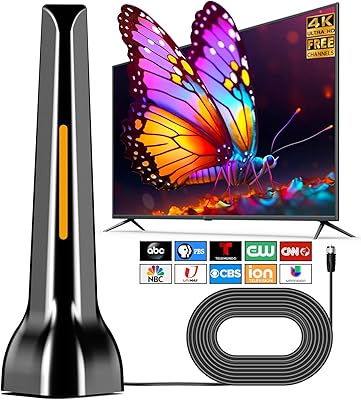
DTB TECH TSLTV-070 Indoor TV Antenna
68%
91%
Ease of Setup
68%
Signal Reception Quality
83%
Value for Money
78%
Magnetic Base Utility
54%
Channel Count Accuracy
More
iGENJUN ANT-CS8218 Amplified Indoor Outdoor TV Antenna
72%
73%
Signal Reception Quality
67%
Amplifier Performance
88%
Ease of Installation
48%
Range Accuracy vs. Claimed Specs
71%
Build Quality & Materials
More
PIBIDI UHD-8903 Outdoor TV Antenna
77%
73%
Signal Range & Reception
67%
VHF Band Performance
84%
UHF Band Performance
78%
Build Quality & Durability
81%
Lightning & Grounding Protection
More
UltraPro Outdoor 70-Mile HD TV Antenna
76%
73%
Signal Reception
61%
Range Accuracy
82%
Installation Ease
78%
Build Quality
81%
Weather Resistance
More
1byone 360° Omni-Directional Outdoor TV Antenna
73%
74%
Signal Reception
91%
Ease of Installation
72%
Build Quality
68%
Amplifier Performance
63%
4G LTE Filtering
More
MATIS FBA08D Outdoor TV Antenna
73%
71%
Signal Reception
88%
Ease of Setup
84%
Dual TV Output
76%
Motorized Rotation
73%
Weather Resistance
More
PBD WA-2608 Motorized Outdoor TV Antenna
74%
82%
Signal Reception Quality
78%
Motorized Rotation
84%
Installation Experience
74%
Dual TV Output
71%
Build Quality & Durability
More
Antop AT-414BG Omni-Directional Outdoor TV Antenna
85%
90%
Reception Quality
88%
Ease of Installation
86%
Durability in Outdoor Conditions
92%
Value for Money
87%
Signal Range
More
GE 29884 Outdoor Long-Range TV Antenna
79%
83%
Signal Reception Strength
88%
Ease of Installation
86%
Build Quality & Durability
79%
Channel Count & Variety
84%
Value for Money
More
BEFORE 150-Mile Motorized Outdoor TV Antenna
70%
71%
Signal Reception
74%
Motorized Rotation
58%
Build Quality & Durability
66%
Ease of Installation
83%
Dual TV Output
More

FAQ

In practice, that figure is a best-case ceiling under near-perfect conditions — flat terrain, no obstructions, and optimal tower alignment. Most users get reliable reception somewhere between 40 and 70 miles. Before buying any outdoor antenna, it is worth checking your actual distance from local towers using a free tool like AntennaWeb or TVFool, which will give you a realistic picture of what to expect at your specific address.

The DTB TECH V086-V087 Outdoor TV Antenna ships with a 16.5-foot RG6 coaxial cable and a built-in amplifier, which covers most straightforward installations. You will need a power outlet nearby for the amplifier and a mounting solution for the antenna itself, since no brackets are included. If your TV is farther than 16.5 feet from your intended mounting spot, you will also need an additional length of coaxial cable.

An omnidirectional antenna receives signals from all directions at once, so you never have to aim or adjust it after mounting. The trade-off is that it spreads its sensitivity across 360 degrees, which means it is generally less powerful in any single direction than a focused directional antenna pointed straight at a tower. For most suburban households where towers are scattered in different directions, the convenience of omnidirectional reception outweighs the slight strength trade-off.

It depends on why the signal is weak. If the issue is cable length or mild distance from a tower, the pre-amplifier can meaningfully improve things. However, if the root problem is terrain — hills, thick forest, tall buildings between you and the towers — amplification alone cannot compensate. In those cases, a higher-gain directional antenna aimed precisely at the nearest tower tends to be a more effective solution.

Yes, you can use a coaxial splitter to connect this outdoor antenna to multiple televisions. Keep in mind that each split reduces signal strength, so if you are already in a marginal reception area, splitting the signal further may cause issues on one or more TVs. Using a powered distribution amplifier rather than a passive splitter helps offset this loss.

Any television with a built-in ATSC tuner — which includes the vast majority of smart TVs sold in North America since 2007 — can be connected directly to this antenna via the coaxial input. If you are using a streaming device like a Roku or Fire TV Stick, those do not have a coaxial input, so you would need a separate TV tuner device to bridge the connection.

User reports suggest the antenna performs consistently after exposure to rain and moderate wind, and there are no widespread reports of the housing cracking or signal degrading due to weather. That said, no outdoor antenna is truly indestructible, and mounting it in a sheltered position — away from direct storm exposure where possible — is always a sensible precaution for long-term durability.

Over-the-air broadcast channels available in your area depend entirely on your geographic location and proximity to transmission towers, not on the antenna itself. Typical cord-cutters in suburban areas can expect ABC, CBS, NBC, Fox, PBS, and a range of subchannels. Running a channel scan on your TV after installation will show you exactly what is receivable at your address.

No — the LTE filter is specifically tuned to block cellular frequency bands that fall outside the over-the-air broadcast spectrum. It does not interfere with UHF or VHF television signals. If anything, removing that cellular noise from the signal path often results in a cleaner, more stable picture, particularly in urban or suburban environments with dense mobile network coverage.

Start by verifying your distance and direction to broadcast towers using AntennaWeb or a similar tool, then make sure the antenna is mounted as high as possible with a clear line of sight in the relevant directions. Ensure all coaxial connections are tight and that the amplifier is powered on. If you are still stuck, DTB TECH offers around-the-clock customer support and is generally responsive to installation questions via email.