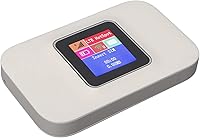

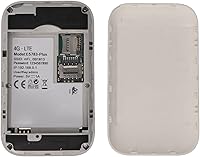

Overview

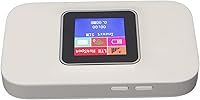
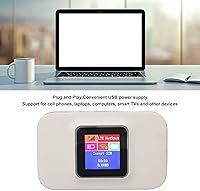
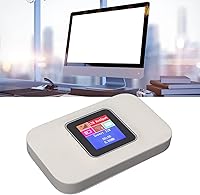
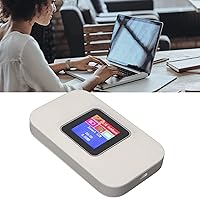
The Luqeeg Pocket 5G Mobile Router is a compact, USB-powered device aimed at travelers and light home users across Europe who need quick, contract-free internet without the hassle of a fixed broadband plan. One thing worth flagging upfront: despite the 5G branding, this mini travel router operates on 4G LTE networks — a distinction that matters if you are expecting next-generation speeds. Setup is genuinely simple; insert a SIM card, connect a USB power source, and you are online. It supports dual-band 802.11n Wi-Fi with WPA/WPA2 encryption, and at roughly 140 grams, it barely registers in a bag or jacket pocket.

Features & Benefits

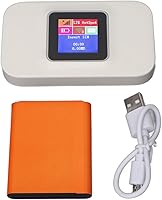
The most practical aspect of this USB SIM router is how it fits into everyday carry without demanding its own charger — plug it into a standard USB port, a phone charger, or a portable power bank, and it is ready to go. It handles up to 10 simultaneous users, which covers a small apartment or a group of travelers reasonably well. The SIM card slot lets you pick up a local data plan abroad and share it across phones, laptops, and a smart TV without any contract obligations. WPA/WPA2 encryption keeps the connection reasonably secure, and the Linux-based firmware requires zero driver installation.

Best For

This mini travel router makes the most sense for people heading to Europe who want to grab a prepaid SIM card and share the connection across a handful of devices or travel companions. It also suits remote workers or students stuck with poor fixed broadband but decent 4G mobile coverage. If your household wants to share a single data plan across multiple screens without signing up for a new broadband contract, this pocket router covers that scenario adequately. Just do not approach it expecting the throughput or build quality of a dedicated mobile broadband device at a notably higher price point — that is not what it is built for.

User Feedback

With a 3.3-star average across 92 ratings, buyer sentiment on this USB SIM router is decidedly mixed. Positive reviewers tend to highlight how easy it is to get up and running, and the compact size earns genuine appreciation from frequent travelers. But the negatives are hard to overlook. The misleading 5G label frustrates buyers who expected faster speeds, and several users ran into SIM compatibility issues with specific regional carriers. A number of people also felt the plastic housing felt cheaper than anticipated. Dropped connections under moderate load came up repeatedly in critical reviews — not an isolated complaint, but a recurring pattern worth factoring into your decision.

Pros

  • Genuinely plug-and-play setup — no software installation, no technical knowledge required
  • USB-powered design works with any standard phone charger or power bank, no extra adapter needed
  • Supports up to 10 devices simultaneously, practical for small groups or a multi-device household
  • SIM card slot lets you use affordable local prepaid data plans without a carrier contract
  • Weighs just 140g, so it fits easily in a jacket pocket or small travel bag
  • WPA/WPA2 encryption provides a solid baseline of wireless security for shared connections
  • Compact form factor makes it a low-effort backup internet option for travel or emergencies
  • No driver installation means even non-technical users can be online within minutes of unboxing

Cons

  • The 5G branding is misleading — actual connectivity is limited to 4G LTE networks only
  • Several buyers report inconsistent connection drops, particularly when multiple users are active at once
  • SIM card compatibility issues have been flagged with certain European carriers and regional networks
  • The plastic housing feels noticeably cheap to the touch and lacks confidence-inspiring build quality
  • 802.11n is an older Wi-Fi standard that limits maximum throughput compared to modern alternatives
  • At a 3.3-star average across nearly 100 reviews, real-world satisfaction is well below expectations
  • Network performance outside Europe is unreliable, making it a poor choice for global travel
  • No dedicated mobile app or intuitive web interface reported by users for managing connected devices
  • Customer support from the Luqeeg brand appears limited based on buyer feedback patterns

Ratings

Our editorial team used AI analysis to process verified global buyer reviews for the Luqeeg Pocket 5G Mobile Router, actively filtering out incentivized, bot-generated, and outlier feedback to surface what real users consistently experience. The scores below reflect an honest synthesis of both what works and what genuinely frustrates buyers — nothing is glossed over. Strengths in portability and setup ease are balanced transparently against documented pain points around connectivity reliability and misleading branding.

Ease of Setup
81%
19%
Users consistently highlight how quick and painless the initial setup is — insert a SIM card, connect a USB cable, and the device broadcasts a Wi-Fi signal within minutes. For non-technical buyers, especially travelers unfamiliar with router configuration, this zero-installation experience is a genuine relief.
A portion of users ran into APN configuration issues depending on their carrier, which required navigating a basic admin panel that is not particularly intuitive. Those who expected truly zero-configuration setup occasionally hit a wall with less common European SIM providers.
Portability
88%
At roughly 140g and small enough to slip into a jacket pocket, this mini travel router is one of the easier connectivity tools to carry daily. Travelers appreciate that it adds almost no noticeable weight or bulk to a bag, making it a genuinely low-friction companion on the road.
The compact size does come with trade-offs in antenna performance — the smaller the device, the more it struggles in areas with marginal 4G signal. A few users noted that in rural European locations with weaker coverage, the pocket size worked against reliable reception.
Connectivity Reliability
47%
53%
When conditions are right — strong 4G signal, compatible SIM card, light load — the router performs adequately for browsing and video calls. Users in well-covered urban European areas with mainstream carrier SIMs tend to report a more stable experience than the average score suggests.
Dropped connections under moderate multi-device load is one of the most frequently cited complaints across reviews. Several buyers described the connection as inconsistent enough to make it unreliable for sustained remote work, with random disconnects occurring even without heavy usage.
Accurate Product Labeling
29%
71%
A small number of buyers who researched the device beforehand and understood it was a 4G router were not surprised by the performance and found the feature set matched their needs. For that informed subset, expectations were met without issue.
The 5G label on a device that runs exclusively on 4G LTE is a significant trust problem and the single most recurring complaint in negative reviews. Many buyers felt actively misled, and the frustration this creates colors their overall perception of the entire product — fairly or not.
Value for Money
54%
46%
For buyers who genuinely only need basic shared 4G access for light tasks while traveling in Europe, the price point makes this USB SIM router accessible without a major financial commitment. As a short-trip backup device, the cost-to-utility ratio is defensible.
Given the connectivity inconsistencies, the plasticky build, and the misleading branding, a meaningful segment of buyers felt they overpaid relative to what they received. Comparable devices with better band support and more honest specifications exist at similar or slightly higher price points.
Build Quality
41%
59%
The ABS plastic construction does serve its primary purpose of keeping the device lightweight, and for users who handle it carefully during travel, it holds up well enough for occasional use. The compact molding is clean and pocket-friendly in shape.
The tactile experience of holding this router is a frequent disappointment — multiple reviewers independently described it as feeling cheap or flimsy. For a device that travels with you, the lack of any rubberized grip or reinforced casing makes it feel vulnerable to even minor drops.
Multi-Device Performance
52%
48%
For light use cases — two or three devices checking email or browsing social media — this pocket router manages the load without obvious strain. Small households or couples traveling together on light data tasks reported reasonable results within this narrow window.
The theoretical 10-device maximum is far from realistic under normal usage. Users attempting to connect five or more active devices noticed speed degradation quickly, and the 802.11n standard limits total throughput in ways that make heavy simultaneous use genuinely frustrating.
SIM Compatibility
51%
49%
Major European carrier SIM cards from countries like Germany, France, Spain, and Italy generally work without issue, which covers the most common travel scenarios this device is designed for. Buyers using well-known prepaid travel SIMs from large operators reported smooth pairing.
Regional or lesser-known carrier SIMs produced compatibility problems for a notable share of users, and the device offers no clear guidance on which LTE bands it supports. Outside Europe, compatibility drops sharply, making it a poor option for multi-continent travel.
Security
71%
29%
WPA2 encryption is the current baseline standard for wireless security, and this router implements it correctly. For travelers connecting in hotels or public spaces, having a private encrypted network rather than relying on public Wi-Fi is a meaningful practical benefit.
The security feature set does not go beyond the basics — there is no VPN pass-through support, no advanced firewall configuration, and no app-based monitoring. For users with heightened security needs, the feature set is too thin to inspire real confidence.
Power Flexibility
77%
23%
USB-powered operation is a genuine convenience win — any phone charger, laptop USB port, or power bank can keep this device running without hunting for a dedicated adapter. Travelers who already carry a power bank essentially get free runtime with no extra accessories needed.
The device does not include a built-in battery, so it is always tethered to a power source. In situations where you cannot keep a power bank or charger nearby — a long hike, an outdoor event — the router simply cannot operate independently.
Range & Signal Strength
48%
52%
In small apartments or hotel rooms, the Wi-Fi signal is sufficient to cover the space without dead zones, which suits the single-room or compact use case it is designed for. Short-range performance for a group clustered in one area is acceptable.
The antenna performance in larger spaces or through walls is noticeably weak, with users reporting significant signal drop-off beyond one room. In outdoor settings or larger accommodations, the effective range becomes a real limitation that undermines the shared-connection concept.
Admin Interface
44%
56%
Basic configuration tasks — changing the Wi-Fi password, viewing connected devices — are accessible through the web-based admin panel without requiring any technical expertise beyond opening a browser. For users who only need to do initial setup, it gets the job done.
The admin interface is spartan to the point of feeling unfinished, with limited labeling and no guided setup flow. Users who encountered APN or network issues had to troubleshoot with minimal in-interface help, which proved frustrating for less technically confident buyers.
Thermal Performance
63%
37%
Under light usage, the device runs at a comfortable temperature and does not generate distracting heat. Short browsing sessions or intermittent use produce no thermal concerns worth noting, and the small form factor dissipates heat reasonably in open air.
Extended continuous use — particularly with several devices connected over multiple hours — causes the unit to become noticeably warm. A handful of buyers mentioned it ran hot enough during sustained use to raise mild concern, though no reports of shutdown from overheating were prominent.

Suitable for:

The Luqeeg Pocket 5G Mobile Router is a practical fit for travelers heading to Europe who want to pick up a local prepaid SIM card and share mobile data across a small group of devices without signing up for any broadband contract. If you are a digital nomad, a student studying abroad, or someone on an extended holiday who needs reliable enough internet for browsing, video calls, and light streaming, this mini travel router covers those bases without demanding much from you technically. Remote workers operating in areas where fixed broadband is unreliable but 4G mobile coverage is solid will also find it a useful backup option. Households that simply want to share a single SIM-based data plan across phones, laptops, and a smart TV without the cost or commitment of a traditional router setup may find it does the job adequately. It genuinely suits buyers with modest expectations who prioritize portability and zero-fuss setup above raw performance.

Not suitable for:

The Luqeeg Pocket 5G Mobile Router is not the right choice for buyers who read the product name and expect actual 5G connectivity — this device operates strictly on 4G LTE networks, and if that distinction matters to your use case, you should look elsewhere. Power users who need consistent, high-throughput connections for bandwidth-heavy tasks like 4K streaming, large file transfers, or competitive online gaming will likely find the performance falls short. The 802.11n Wi-Fi standard is aging, and in environments with several active users all demanding heavy data simultaneously, the connection can degrade noticeably. If you are traveling or living outside Europe, SIM card compatibility is not guaranteed, so it is a poor fit for global travelers who need a universally reliable solution. Anyone who values durable hardware build quality should also temper expectations, as the ABS plastic construction has drawn repeated criticism from real buyers.

Specifications

  • Brand: Manufactured and sold under the Luqeeg brand.
  • Model Number: The official model identifier is Luqeegkhy8upcxgm.
  • Connectivity: Connects to the internet via a SIM card slot supporting 4G LTE mobile networks.
  • Wi-Fi Standard: Broadcasts Wi-Fi using the 802.11n dual-band standard.
  • Max Users: Supports up to 10 simultaneous connected devices over Wi-Fi.
  • Power Source: Powered entirely via USB, compatible with standard phone chargers and power banks.
  • Security: Wireless connections are protected using WPA and WPA2 encryption protocols.
  • Operating System: Runs on a Linux-based firmware requiring no driver installation on connected devices.
  • Special Feature: Includes WPS (Wi-Fi Protected Setup) support for faster device pairing.
  • Material: Outer housing is constructed from ABS plastic, prioritizing lightweight portability over premium feel.
  • Weight: Device weighs approximately 140g (4.9 oz), making it suitable for everyday carry.
  • Dimensions: Physical dimensions measure 5.39 x 4.57 x 1.1 inches in length, width, and height.
  • Compatible Devices: Works with laptops, smartphones, smart televisions, and any other standard Wi-Fi-enabled device.
  • Recommended Region: Optimized for use with European 4G LTE mobile network frequencies and SIM cards.
  • Setup Method: Plug-and-play design requires no software installation — simply insert a SIM card and connect USB power.

Related Reviews
Yeacomm NR330 AX3600 5G WiFi 6 Router
72%
83%
Ease of Setup
71%
Real-World Speeds
62%
Carrier Compatibility
78%
WiFi Performance
74%
Build Quality
More
MightyWiFi Mightywifi Cloud Mobile WiFi Router
87%
89%
Battery Life
93%
Global Coverage
87%
Ease of Use
75%
Connectivity Reliability
91%
Data Management via App
More
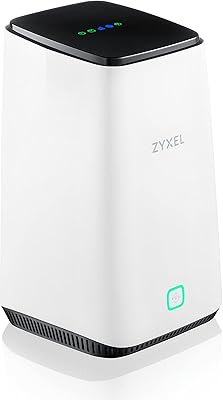
Zyxel FWA510 5G NR WiFi 6 Router
77%
78%
5G Connectivity Performance
83%
WiFi Coverage & Stability
81%
Cloud Management (Nebula)
61%
Value for Money
72%
Setup & Installation
More
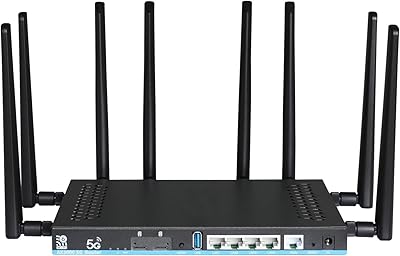
Wiflyer Z8102AX-T-RM520NGL 5G WiFi 6 Router
69%
74%
Cellular Performance
78%
Dual SIM Functionality
38%
US Carrier Compatibility
81%
WiFi 6 Performance
83%
Antenna System
More
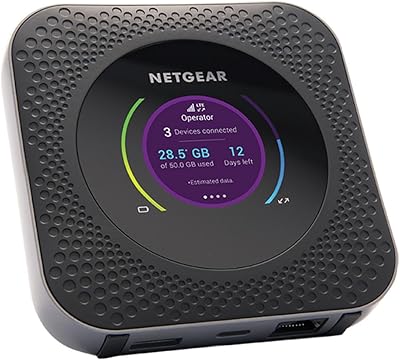
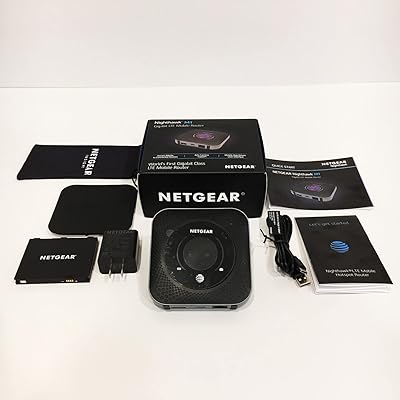
NETGEAR Nighthawk M1 4G LTE Mobile Hotspot
67%
58%
Carrier Compatibility
83%
Battery Life
76%
Signal Performance
81%
Multi-Device Capacity
78%
Ease of Setup
More
Asus TM-AC1900 Dual-Band Wi-Fi Router
69%
83%
Wi-Fi Range & Coverage
86%
Connection Stability
88%
Value for Money
79%
Built-in Security
31%
Carrier Compatibility
More
GL.iNet GL-A1300 Slate Plus Travel Router
78%
83%
VPN Performance
88%
Ease of Setup
91%
Portability & Form Factor
76%
Wireless Speed & Range
79%
Build Quality
More
Netgear Nighthawk MR1100 Mobile Hotspot Router
79%
93%
Carrier Flexibility
88%
Multi-Device Performance
86%
Signal Reception
61%
Battery Life
89%
Setup & Ease of Use
More
D-Link G530 5G WiFi 6 Cellular Router
75%
81%
5G Signal Reception
88%
Dual-WAN Failover
69%
WiFi Coverage & Range
86%
Setup Experience
62%
FALCON App Quality
More
Cudy TR1200 AC1200 Pocket-Sized Wi-Fi Travel Router
85%
93%
Portability & Size
87%
Wi-Fi Performance
91%
Ease of Use
85%
Setup & Installation
90%
VPN & Security Features
More

FAQ

The name is misleading. The Luqeeg Pocket 5G Mobile Router operates on 4G LTE networks only — there is no 5G hardware inside. This is one of the most common complaints from buyers, so it is worth knowing before you purchase if network speed is a priority for you.

It is designed with European 4G LTE network bands in mind, so SIM cards from major European carriers tend to work best. If you plan to use it outside Europe, there is no guarantee your local carrier frequencies will be compatible, and several users have reported issues with specific regional networks. Always check that your SIM card operates on supported LTE bands before committing.

Yes, and that is one of its more practical features. Because it is entirely USB-powered, any standard power bank will keep it running without needing a wall socket. Just make sure your power bank delivers at least a standard 5V USB output, which the vast majority do.

Officially it supports up to 10 devices, but real-world performance with that many active connections is inconsistent at best. For light usage — a few phones, a laptop, maybe a tablet — it handles things adequately. If everyone is streaming or downloading simultaneously, expect noticeable slowdowns.

For most users it is genuinely straightforward: insert your SIM card, plug in the USB cable, and the router starts broadcasting a Wi-Fi signal within a minute or two. There is no software to install on your phone or laptop. That said, some users have needed to manually enter APN settings depending on their carrier, which requires accessing a basic web admin panel.

Speeds depend heavily on your local 4G signal strength and your carrier data plan, but the router itself is capped by the 802.11n Wi-Fi standard, which is older and slower than more modern standards like 802.11ac or Wi-Fi 6. For everyday browsing, video calls, and standard-definition streaming, it is generally sufficient. Heavy bandwidth tasks will feel the ceiling.

It is functional but not impressive. The ABS plastic body is light, which helps for portability, but a meaningful number of buyers have flagged that it feels cheaper than expected when you hold it. It should survive careful day-to-day travel use, but this is not a device built to take knocks or rough handling.

There does not appear to be a dedicated mobile app for this router. Basic management is typically done through a web browser by accessing a local admin page, which is a fairly standard approach for budget routers. Do not expect a polished, user-friendly dashboard — it is functional but bare-bones.

Possibly, but it is not designed with global frequency coverage in mind. European LTE bands differ from those used in North America, Asia, and elsewhere, so SIM compatibility and signal quality outside Europe are not guaranteed. If you need a truly global travel router, a device with wider band support would be a safer choice.

WPS (Wi-Fi Protected Setup) allows you to connect compatible devices to the router by pressing a physical or virtual WPS button rather than typing in a password. It is a minor convenience for devices that support it, though many modern smartphones and laptops have moved away from WPS due to older security concerns. For most users it will rarely come into play.