Overview

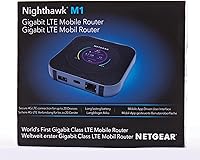
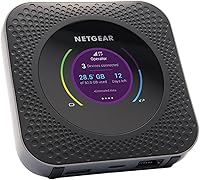
The NETGEAR Nighthawk M1 4G LTE Mobile Hotspot arrived in 2018 as a serious contender for travelers and remote workers who needed to share a reliable mobile connection across multiple devices. It's a GSM-only device — compatible with AT&T and T-Mobile, but completely incompatible with CDMA carriers like Verizon or Sprint. That distinction is not a footnote; it's the single most important thing to know before buying. Physically, the Nighthawk M1 hotspot is compact and well-built — a square slab of steel gray with a 2.4-inch LCD screen that punches above its weight for on-device management. At its mid-range price point, it sits firmly in premium portable hotspot territory.
Features & Benefits

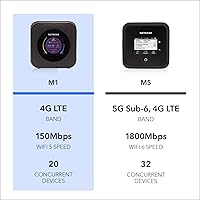
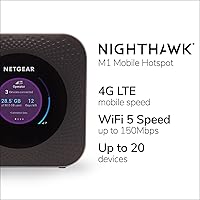
The Nighthawk M1 hotspot's most practical strength is its ability to connect up to 20 devices simultaneously across both 2.4GHz and 5GHz bands — genuinely useful for small teams or households where everyone needs a slice of the same data plan. The advertised 1Gbps download speed is a theoretical ceiling, not a daily reality; actual performance depends heavily on your carrier, location, and how congested the nearest cell tower is. The 5040mAh battery is a standout feature, comfortably lasting a full workday on a single charge and even offering USB pass-through charging for phones or tablets. The onboard screen lets you check signal strength and data consumption without ever opening an app.

Best For

This mobile router earns its keep in specific hands. If you're an AT&T or T-Mobile subscriber who regularly works from coffee shops, airports, or rental accommodations, it's a far smarter option than draining your phone through tethering. Small teams sharing a single data plan on the road will also get real value from the 20-device capacity. International travelers can slot in a local GSM nano SIM card and sidestep pricey roaming charges entirely. It also works well as a backup broadband solution for remote workers who can't afford a connectivity gap. Where it clearly doesn't fit: Verizon or Sprint customers, or anyone expecting 5G speeds from aging 4G hardware.

User Feedback

With a 3.7-star average across 107 ratings, the Nighthawk hotspot tells a story worth reading carefully. Satisfied buyers consistently cite reliable signal on AT&T, honest all-day battery life, and the convenience of managing settings directly from the screen rather than a companion app. The frustration side is equally real: a number of buyers purchased under the assumption that unlocked meant universal, only to find it useless on Verizon or Sprint. Others flag firmware reliability issues and the fact that this is aging hardware — NETGEAR's software support has understandably thinned out over the years. Against newer 5G hotspots, the value case narrows; for committed GSM users, it still holds its ground.

Pros

  • Connects up to 20 devices simultaneously — genuinely useful for families or small work teams sharing one data plan.
  • The 5040mAh battery comfortably lasts a full workday without needing a top-up.
  • Dual-band Wi-Fi lets you separate bandwidth-heavy devices from lighter ones for better overall performance.
  • The onboard LCD screen makes it easy to check signal, data usage, and connected clients without opening any app.
  • GSM unlocked design works with AT&T and T-Mobile, plus most international GSM carriers with a nano SIM swap.
  • USB pass-through charging means the Nighthawk hotspot can double as a power bank for phones in a pinch.
  • Guest mode keeps your primary network private while still letting others share the connection.
  • Compact square form factor fits easily in a bag or jacket pocket without adding noticeable bulk.
  • Strong reported signal performance on AT&T networks, consistently praised by buyers in good coverage areas.

Cons

  • Strictly GSM-only — Verizon and Sprint customers cannot use this mobile router under any circumstances.
  • The 1Gbps speed rating is a theoretical maximum; real-world speeds vary significantly by location and network load.
  • Hardware dates to 2018, meaning no 5G support and limited relevance as carriers expand next-gen networks.
  • Firmware updates have become increasingly rare, raising valid concerns about long-term software reliability.
  • The unlocked label has caused genuine buyer confusion — it does not mean universal carrier compatibility.
  • Competing newer hotspots at similar price points now offer 5G support, making the value case harder to justify.
  • No internal storage included; the USB media-sharing feature requires an external drive to be useful.
  • Reported firmware stability issues have frustrated some users, occasionally requiring resets to restore normal function.
  • Carrier BYOD data plan requirements add complexity — activation is not always straightforward with every GSM provider.

Ratings

The NETGEAR Nighthawk M1 4G LTE Mobile Hotspot was scored by our AI after analyzing verified buyer reviews from multiple global platforms, with spam, incentivized responses, and bot activity actively filtered out to ensure the scores reflect genuine ownership experiences. The ratings below capture both where this mobile router genuinely delivers and where it falls short — nothing has been softened to protect the product's image. Buyers at every level of technical familiarity are represented, from casual travelers to IT professionals managing remote teams.
Carrier Compatibility
58%
42%
For AT&T and T-Mobile subscribers, the GSM unlocked design works reliably and without fuss — pop in a nano SIM, activate a BYOD plan, and you are online within minutes. International travelers have also reported success using local SIM cards in Europe and Asia, where GSM networks dominate.
The single biggest source of buyer frustration is the CDMA incompatibility — Verizon and Sprint customers simply cannot use this device, and the unlocked labeling has misled a meaningful number of purchasers. For buyers who later switch carriers or travel to CDMA-heavy regions, the limitation becomes a hard wall.
Battery Life
83%
The 5040mAh battery is one of the Nighthawk M1 hotspot's most consistently praised attributes, with many users reporting full workday coverage across 8 to 10 hours of moderate use. The USB pass-through charging capability adds meaningful utility for travelers who use the device as a supplementary power source for their phones.
Battery performance drops noticeably when 15 or more devices are actively connected and pulling significant data simultaneously — users running video calls across multiple connected laptops report faster drain than expected. Long-haul travel scenarios requiring more than 12 hours of uninterrupted use will likely require a mid-day recharge.
Signal Performance
76%
24%
On AT&T's network in areas with strong LTE coverage, the Nighthawk hotspot consistently pulls better signal than most smartphones used as personal hotspots, which experienced users attribute to its dedicated antenna design. Buyers working from rural areas with decent AT&T coverage have noted it outperforms carrier-provided hotspot devices in marginal signal conditions.
Performance is highly location-dependent, and users in fringe coverage areas or dense urban environments with congested towers report frustrating inconsistency. The device's LTE band support is limited by its 2018 hardware, meaning it may not take advantage of newer network deployments on some carriers.
Multi-Device Capacity
81%
19%
Supporting up to 20 simultaneous connections across dual-band Wi-Fi is a standout feature that small teams and families genuinely rely on — connecting laptops, phones, a tablet, and a printer at once without degradation is something most competing travel routers cannot match at this tier. Users working remotely from vacation rentals particularly value not having to fight over bandwidth.
While the hardware supports 20 connections, the available bandwidth still depends entirely on the underlying cellular signal — in congested or weak coverage areas, 20 connected devices can result in frustratingly slow speeds for everyone. A handful of users have also reported occasional instability when the connection count approaches the maximum limit.
Ease of Setup
78%
22%
For most GSM users, setup is refreshingly straightforward — insert the nano SIM, power on, and the device auto-detects the carrier and APN settings without manual configuration. The onboard LCD provides enough guidance that many users never need to open a browser or install an app to get running.
Users unfamiliar with BYOD plan activation through their carrier can hit unexpected friction, particularly with AT&T's plan eligibility requirements for third-party devices. A small number of buyers have also reported that the device occasionally fails to auto-configure with less common GSM carriers, requiring manual APN entry.
Display & On-Device Management
74%
26%
The 2.4″ LCD screen is a practical differentiator that lets users check signal strength, data consumption, and active connections at a glance without opening any app — a feature that road warriors and IT administrators managing remote connections particularly appreciate. The interface is clean and readable even in bright outdoor environments.
The screen is functional rather than refined — navigation through menus via physical buttons feels dated compared to touchscreen alternatives available in newer hotspot devices. It displays the most essential information well, but deeper configuration still requires accessing the web-based dashboard from a connected device.
Build Quality & Portability
79%
21%
The compact square form factor and steel gray finish give the Nighthawk hotspot a premium, durable feel that holds up well to everyday carry — it does not flex, creak, or feel hollow in hand the way cheaper portable routers often do. At 8.5 ounces, it slips into a jacket pocket or laptop bag without adding noticeable weight.
There is no ruggedization or water resistance, which matters for travelers who regularly move through unpredictable environments. The glossy screen surface scratches more easily than expected, and the absence of a protective case in the box is a missed opportunity at this price point.
Real-World Speed
61%
39%
In strong LTE coverage areas on AT&T, this mobile router delivers speeds that comfortably handle video conferencing, cloud file syncing, and moderate streaming across several devices simultaneously. For basic remote work tasks in good signal conditions, it performs reliably without noticeable latency.
The advertised 1Gbps figure is almost entirely theoretical — most users see a fraction of that in real conditions, with typical downloads falling well below what the marketing implies. In congested urban areas or on overloaded carrier towers, performance can drop to levels that frustrate even light users, and there is little the device can do to compensate for poor network conditions.
Firmware & Software Reliability
53%
47%
When firmware is stable, the device runs quietly in the background without requiring attention — users who have not experienced issues report that it simply works without needing reboots or manual intervention for weeks at a time. The web dashboard, when accessible, offers reasonable depth for a consumer-grade hotspot.
Firmware reliability is one of the most divisive aspects of ownership — a notable portion of buyers report bugs including dropped connections, failed updates, and UI glitches that require factory resets to resolve. Given the device's age, NETGEAR's firmware update cadence has slowed considerably, leaving known issues unaddressed for extended periods.
Long-Term Software Support
44%
56%
The device still functions with its current firmware for everyday connectivity tasks, and users who purchased it several years ago and have had no major issues report it continues to perform its core job adequately. For buyers with modest expectations around updates, the existing software is stable enough.
This is a 2018 device, and NETGEAR has visibly deprioritized it in terms of new firmware development — security patches and feature improvements have become rare. Buyers with concerns about long-term network security or compatibility with evolving carrier configurations should weigh this seriously before purchasing.
Value for Money
62%
38%
For committed AT&T or T-Mobile users who need to connect many devices reliably and want a purpose-built hotspot rather than relying on phone tethering, the Nighthawk M1 hotspot offers a capable hardware package that justifies its mid-range price for the right buyer. The battery life and 20-device capacity are genuine differentiators that cheaper alternatives cannot always match.
The competitive landscape has shifted considerably since 2018 — newer hotspot devices at comparable or only slightly higher price points now offer 5G connectivity and more active software support, making the value proposition of aging 4G LTE hardware harder to defend. Buyers comparing options side by side will find it difficult to ignore what newer models offer for similar investment.
Guest Network Feature
71%
29%
Guest Mode works reliably and is easy to toggle from the device or the web dashboard, giving users a quick way to let friends, clients, or hotel colleagues share the connection without exposing their personal devices or network credentials. Small business travelers who regularly work from shared spaces find it a practical security measure.
The guest network offers basic isolation but no advanced parental controls, content filtering, or bandwidth throttling per user — features that some buyers at this price tier expect. Configuration options for the guest network are limited compared to what home routers or newer hotspot competitors provide.
USB Storage & Media Sharing
59%
41%
The ability to plug in a USB drive and share files or stream personal media across all connected devices is a useful bonus for travelers carrying a drive of work documents or entertainment content — it effectively turns the hotspot into a miniature NAS on the road. Road warriors who share files with a small team without reliable cloud access appreciate the workaround.
USB 2.0 throughput limits transfer speeds, which becomes noticeable when streaming larger video files or copying significant amounts of data across multiple devices simultaneously. The feature also requires users to bring their own external storage, which adds bulk to what is otherwise a compact travel setup.
Companion App Experience
55%
45%
The NETGEAR Mobile app provides a reasonable overview of connected devices, data usage, and signal status for users who prefer managing things from their smartphone rather than the device screen or web browser. Initial pairing is generally straightforward for most iOS and Android users.
App reviews and user reports indicate the companion app has become increasingly unreliable over time, with connectivity drops between the app and device, outdated UI, and limited functionality compared to the web dashboard. Given the hardware's age, the app has not kept pace with modern mobile OS updates, and some users report it simply stopped connecting reliably after OS upgrades.

Suitable for:

The NETGEAR Nighthawk M1 4G LTE Mobile Hotspot is a strong fit for AT&T or T-Mobile subscribers who regularly need to share a mobile connection across multiple devices without relying on a single phone's battery. Frequent travelers — whether for business or extended trips — will appreciate the all-day battery life and the ability to connect laptops, tablets, and phones simultaneously without juggling tethering settings. Remote workers who need a dependable backup connection when home broadband goes down will find it a practical insurance policy that actually works when it matters. Small teams sharing one data plan on the road get real utility from the 20-device capacity, which is well above what most competing portable routers offer at this tier. International travelers who pick up local GSM nano SIM cards will also find this mobile router a cost-effective way to stay connected abroad without expensive roaming plans.

Not suitable for:

The NETGEAR Nighthawk M1 4G LTE Mobile Hotspot is a hard pass for anyone on Verizon, Sprint, or any CDMA-based network — this is a GSM-only device, and no amount of unlocked labeling changes that fundamental incompatibility. Buyers expecting 5G speeds or future-proof connectivity should also look elsewhere; this is aging 4G LTE hardware launched in 2018, and the mobile network landscape has moved considerably since then. Users who rely on the manufacturer for ongoing firmware updates and security patches will find support has thinned out over the years, which is a legitimate concern for anyone treating this as a long-term primary connection. Those who only occasionally need to share a connection with one or two devices may find the feature set excessive for their needs, and a simpler or newer budget hotspot could serve them just as well for less. Anyone locked into a CDMA carrier or chasing cutting-edge 5G performance should invest in a more current device.

Specifications

  • Brand & Model: Manufactured by NETGEAR under the Nighthawk series, model number MR1100 (also referenced as MR1100-100EUS).
  • Connectivity: Operates exclusively on 4G LTE GSM networks and is unlocked for use with compatible GSM carriers such as AT&T and T-Mobile; CDMA networks are not supported.
  • Wi-Fi Bands: Broadcasts on both 2.4GHz and 5GHz frequencies simultaneously, allowing devices to connect to whichever band best suits their speed and range needs.
  • Max Devices: Supports up to 20 simultaneous Wi-Fi connected devices, making it practical for small teams or households sharing a single data plan.
  • Peak Download Speed: Rated for theoretical download speeds of up to 1Gbps on compatible LTE networks, though real-world speeds vary significantly based on carrier, signal strength, and congestion.
  • Battery Capacity: Equipped with a built-in 5040mAh rechargeable lithium battery designed to sustain all-day use and support USB pass-through charging of connected devices.
  • Display: Features a 2.4″ LCD screen that shows real-time data on signal strength, data usage, connected clients, and basic network settings without requiring a companion app.
  • SIM Requirement: Requires a nano SIM card from a compatible GSM carrier and activation of a BYOD (Bring Your Own Device) data plan.
  • USB Ports: Includes 2 x USB 2.0 ports that support external storage access and personal media streaming for connected wireless devices.
  • Dimensions: Measures 4.15 x 4.15 x 0.8 inches, making it a compact square form factor that fits easily in a bag or coat pocket.
  • Weight: Weighs 8.5 ounces, light enough for daily carry without adding meaningful bulk to a travel bag.
  • Operating System: Runs on a Linux-based operating system embedded in the device firmware, which handles all network routing and management functions internally.
  • Guest Mode: Includes a dedicated Guest Mode that creates a separate isolated network for visitors, keeping the primary connection and connected devices private.
  • Color & Finish: Available in Steel Gray with a matte finish that resists fingerprints and gives the device a professional, understated appearance.
  • Power Input: Rated for 220 Volts input, with the included charging adapter; travelers should verify plug compatibility when using internationally.
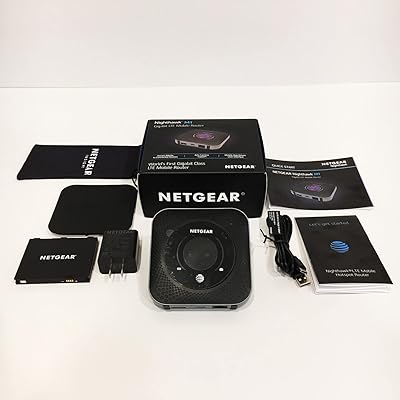
  • Battery Type: Uses one lithium metal battery that is included in the box and is integrated into the device rather than user-replaceable.
  • Launch Date: First made available in February 2018, making it a mature product in the portable hotspot category with an established support and firmware history.

Related Reviews
Netgear Nighthawk MR1100 Mobile Hotspot Router
79%
93%
Carrier Flexibility
88%
Multi-Device Performance
86%
Signal Reception
61%
Battery Life
89%
Setup & Ease of Use
More
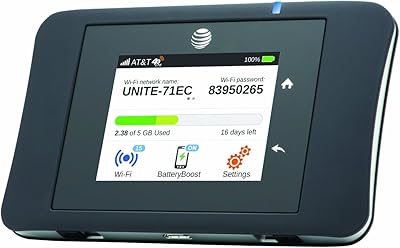
Netgear Unite Pro AC-781S Mobile Hotspot
68%
81%
Value for Money
74%
Connectivity Performance
67%
Carrier Compatibility
69%
Refurbished Condition
61%
Battery Life
More
Karbor MF833-4G Portable 4G LTE WiFi Hotspot
71%
82%
Ease of Setup
71%
Network Coverage
63%
Connection Speed
58%
Data Plan Value
66%
Battery Life
More
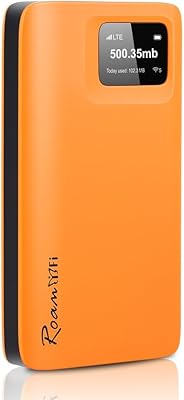
RoamFi RoamWiFi R10 Portable Mobile Hotspot
71%
92%
Ease of Setup
78%
International Coverage
61%
Data Value & Plan Inclusivity
69%
Connection Speed
71%
Battery Life
More
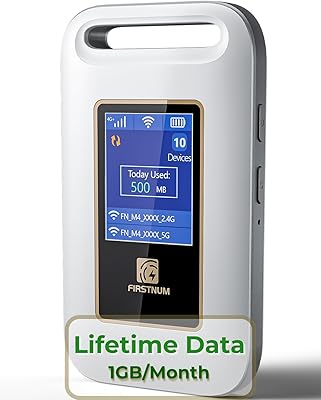
Firstnum M4 Portable 4G LTE Mobile Hotspot
73%
84%
Ease of Setup
61%
Battery Life
76%
Data Plan Value
69%
Signal & Coverage
73%
Value for Money
More
TP-Link M7350 4G LTE Mobile Hotspot
76%
93%
Portability
88%
Ease of Setup
71%
Connection Speed
58%
Battery Life
74%
Signal Stability
More
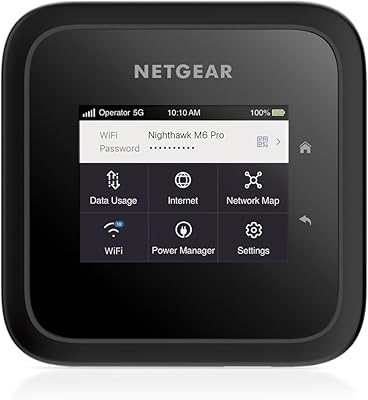
NETGEAR Nighthawk M6 Pro Mobile Hotspot
80%
79%
5G Performance
88%
Build Quality
61%
Battery Life
67%
Value for Money
91%
Carrier Compatibility
More
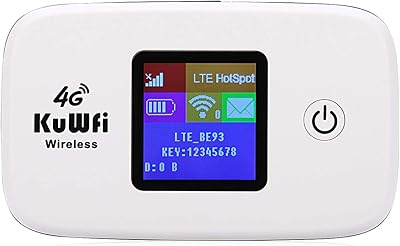
KuWFi L100EU 4G LTE Mobile Hotspot
69%
83%
Band Compatibility
58%
Ease of Setup
61%
Wi-Fi Performance
63%
Battery Life
88%
Portability
More
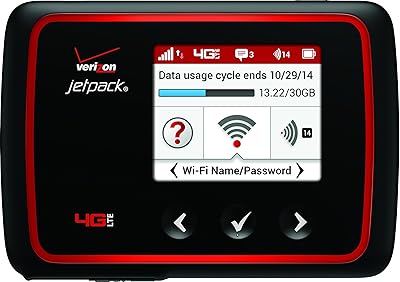
Verizon MiFi 6620L Jetpack 4G LTE Mobile Hotspot
84%
91%
Battery Life
87%
Connectivity Reliability
85%
Portability & Size
78%
Ease of Setup
88%
Performance for Multiple Devices
More
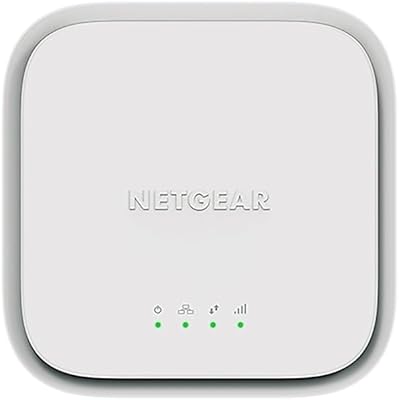
NETGEAR LM1200 4G LTE Broadband Modem
70%
83%
Ease of Setup
88%
Failover Reliability
71%
Carrier Compatibility
63%
Real-World Speeds
79%
Build Quality
More

FAQ

No, it will not. The Nighthawk M1 hotspot is a GSM-only device, which means it is fundamentally incompatible with CDMA carriers like Verizon and Sprint. Even though it is described as unlocked, that only applies to GSM networks. If you are a Verizon customer, you will need a different device built for CDMA or 5G sub-6 networks.

Yes, T-Mobile is a GSM carrier and the Nighthawk M1 hotspot is compatible with it. You will need to bring a T-Mobile nano SIM and activate a BYOD data plan through T-Mobile. Performance will depend on T-Mobile coverage in your area, but most users in well-covered regions report reliable connectivity.

In practice, almost certainly not. The 1Gbps figure is a theoretical maximum under ideal conditions on a fully loaded LTE-Advanced network — conditions that rarely exist in everyday use. Realistic speeds will depend on your carrier, your proximity to a cell tower, and how congested the network is at any given time. For most users, expect speeds that are useful but considerably below that ceiling.

With normal usage — say, 5 to 10 devices connected and moderate data traffic — most users report getting through a full workday on a single charge. Heavier loads with more active devices will drain it faster. The USB pass-through charging feature is a nice bonus, letting you top up a phone from the device while it is still running.

You can manage most essential settings directly from the 2.4″ LCD screen on the device, which displays signal strength, data usage, and the number of connected clients in real time. NETGEAR also offers a companion app and a browser-based dashboard for more detailed configuration, but neither is required for day-to-day use.

It can be, if you are traveling to countries that use GSM networks — which covers most of Europe, Asia, and beyond. You can pop in a local nano SIM card from a foreign carrier and use it without any unlocking process. Just keep in mind the 220V power input and verify your travel adapter, and double-check that the local carrier operates on LTE bands that the device supports.

It depends on your expectations. If you are an AT&T or T-Mobile customer who needs to connect up to 20 devices reliably and does not need 5G speeds, this mobile router still performs well for its intended purpose. However, if you are looking for long-term firmware support, cutting-edge speed, or 5G compatibility, newer options have entered the market that may serve you better. For focused, practical 4G LTE use with an established carrier, it remains a capable choice.

You need a BYOD (Bring Your Own Device) data plan from a compatible GSM carrier — AT&T and T-Mobile are the most common choices. These plans vary widely in data caps, throttling policies, and hotspot-specific allowances, so it is worth checking with your carrier about any restrictions before committing to a plan.

Yes, the USB ports on this mobile router support external storage, so connected devices on the same network can access shared files or stream media from a USB drive plugged into the hotspot. It is a handy feature for small teams sharing documents on the go, though transfer speeds are limited to USB 2.0 throughput.

Guest Mode creates a separate Wi-Fi network that runs alongside your primary connection. Guests connect to that secondary network and get internet access, but they cannot see or interact with the devices on your main network. It is a practical feature if you are in a shared space and want to let colleagues or clients get online without giving them access to your personal devices or files.

Where to Buy