Overview

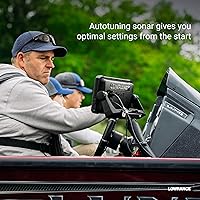
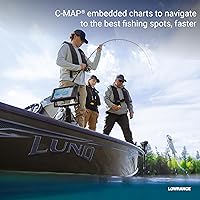
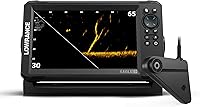
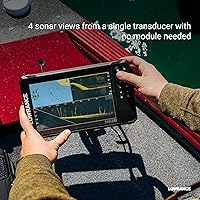
The Lowrance Eagle Eye 9″ Fish Finder arrived in late 2024 as one of the more capable all-in-one sonar units in the serious freshwater market, going head-to-head with established names like Humminbird Helix and Garmin Striker Vivid. What sets this Lowrance unit apart from the start is its single transducer handling CHIRP, DownScan Imaging, and live sonar — no add-on pods required. It ships with preloaded C-MAP Inland charts covering more than 17,000 U.S. lakes, so you can drop it on the boat and start navigating immediately. The twist-lock connector system is a genuine improvement over older Lowrance wiring setups, making installation noticeably less frustrating for anglers who dread running cables.
Features & Benefits

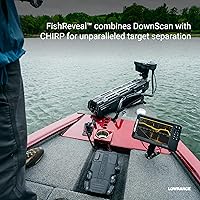
The live sonar capability is the headline feature here. Live Forward and Down modes show you what's happening underwater in real time — think of it as watching fish react to your lure as you work it through a brush pile, rather than piecing together a delayed sonar picture. The FishReveal overlay layers DownScan detail with CHIRP target separation to help distinguish fish from debris in busy returns — similar overlays exist on competing brands, but the execution is clean and easy to read. The 9-inch IPS display holds up well in bright conditions, staying usable through polarized sunglasses, and an SD card slot handles firmware updates and Genesis Live charting.

Best For

This fish finder makes the most sense for bass and walleye anglers who spend time on structure-heavy inland lakes where knowing exactly where fish are holding — not just whether they're nearby — changes the day. It's also a natural fit for kayak and small boat anglers who want serious sonar capability without juggling multiple transducer pods cluttering the hull. Anglers stepping up from a basic unit will find this Lowrance unit covers most of what a premium HDS system offers at a more accessible price point. Tournament anglers who need to read suspended fish quickly and move efficiently between spots will particularly appreciate the real-time sonar response. Built-in lake charts mean no extra subscription costs.

User Feedback

Buyers who've put the Eagle Eye 9″ to work on the water most consistently praise the clarity of the live sonar view and how much easier FishReveal makes reading a busy screen — especially in situations where traditional sonar returns a wall of noise. On the less positive side, menu navigation draws some criticism from anglers switching from other brands, with a learning curve that takes a few outings to work through. Display brightness gets solid marks overall, though some note it can wash out at extreme sun angles. The twist-lock installation generally lives up to expectations, but a handful of early buyers flagged concerns about transducer cable length. Lowrance's one-year warranty is standard for the category.

Pros

  • All-in-one transducer handles CHIRP, DownScan, and live sonar without requiring any extra pods or add-ons.
  • Live Forward and Live Down sonar modes show real-time underwater activity, making it easier to watch fish respond to your lure.
  • FishReveal overlay does a solid job of cutting through cluttered sonar returns to highlight fish targets clearly.
  • The 9-inch IPS display holds up well in direct sunlight and remains readable through polarized sunglasses.
  • Preloaded C-MAP Inland charts covering 17,000-plus U.S. lakes mean you are map-ready from day one.
  • Genesis Live compatibility lets you build your own custom contour maps while you fish, which adds long-term value over time.
  • Twist-lock connector system makes installation noticeably cleaner and less time-consuming than older Lowrance setups.
  • At roughly 2 pounds, the unit is light enough for kayak and smaller aluminum boat installations without adding meaningful weight.
  • SD card slot allows straightforward firmware updates and chart storage without needing a network connection.
  • The all-in-one package — display, transducer, mounting hardware, and cables — means fewer separate purchases out of the gate.

Cons

  • Menu navigation has a real learning curve, particularly for anglers switching over from Humminbird or Garmin interfaces.
  • Transducer cable length has been flagged by some early buyers as shorter than expected for certain installation layouts.
  • At its price tier, the one-year warranty feels conservative compared to some competitors offering two or three years of coverage.
  • The plastic housing, while lightweight, raises reasonable questions about long-term durability in rough-water or heavy-use conditions.
  • Bracket durability has drawn some early concerns, suggesting it may not hold up as robustly under sustained vibration.
  • This fish finder is locked into freshwater use cases; saltwater anglers will find little here that fits their needs.
  • Genesis Live mapping requires an SD card to store chart data, which is an easy-to-overlook extra purchase at setup.
  • Users who are new to live sonar in general may need several outings before they can interpret the real-time imagery confidently.
  • No built-in networking capability limits its appeal for anglers wanting multi-display or radar integration on larger boats.

Ratings

Our AI has analyzed verified buyer reviews from across the globe for the Lowrance Eagle Eye 9″ Fish Finder, actively filtering out incentivized, duplicate, and bot-generated feedback to surface what real anglers actually experience on the water. The scores below reflect both the genuine strengths that make this unit stand out in a competitive market and the real-world friction points that buyers consistently flag. No category has been softened — the ratings represent an honest cross-section of user sentiment.

Live Sonar Performance
91%
Anglers consistently describe the Live Forward and Live Down modes as a meaningful step up from traditional sonar, particularly when working submerged timber or rock piles where fish positioning matters. Being able to watch a fish move toward a lure in real time changes how experienced bass anglers make presentation decisions.
Users who are new to live sonar technology report a steep initial learning curve in interpreting what they see on screen, especially in high-traffic sonar environments with lots of debris returns. It takes several outings before the imagery becomes intuitive enough to act on quickly.
Display Clarity
87%
The 9-inch IPS panel earns consistent praise for its brightness and wide viewing angle, particularly from anglers who wear polarized sunglasses throughout the day. Most users note that the screen remains usable even during midday fishing when glare off the water is at its worst.
A subset of users fishing in extreme sun angles — especially in open, glare-prone conditions on large reservoirs — report that the display can wash out noticeably. It performs well for most conditions but is not immune to the brightness limitations that affect nearly all LCD-based fish finder displays.
FishReveal Accuracy
83%
FishReveal does a solid job of layering DownScan detail with CHIRP target arches to help distinguish fish from surrounding structure, which is especially useful when fishing dense vegetation edges or layered rock. Anglers targeting suspended walleye in open water find it particularly effective for separating fish from thermal layers.
In very shallow or heavily weedy environments, FishReveal can occasionally over-highlight returns that are not fish, leading to false reads. Comparable overlay features on competing brands perform similarly, so this is a category limitation rather than a unique flaw, but it does require users to calibrate their expectations.
Installation Experience
78%
22%
The twist-lock connector system draws genuine appreciation from anglers who have wrestled with traditional push-pin and threaded connectors on older Lowrance and competitor units. Most buyers report the physical mounting and wiring process as manageable even without professional installation.
Transducer cable length emerges as a recurring frustration, particularly for larger bass boats where the console sits further from the transom. A portion of early adopters found themselves needing an extension cable that was not included, adding an unexpected extra step to the setup process.
Menu & Interface
62%
38%
Users already familiar with the Lowrance ecosystem — particularly those coming from older HDS or Elite models — find the interface relatively intuitive and appreciate that core settings are accessible within a few button presses once learned. The layout is logical in structure even if the learning curve is real.
Anglers switching from Humminbird or Garmin consistently flag the menu system as one of the harder adjustments, citing unfamiliar terminology and non-obvious navigation paths for settings like sonar sensitivity and chart overlay options. Several buyers mention needing to watch tutorial videos before feeling comfortable on the water.
Chart Coverage
89%
Preloaded C-MAP Inland charts covering more than 17,000 U.S. lakes is a genuine convenience, especially for anglers who regularly travel to fish new bodies of water. Having accurate depth contours and lake structure data available from day one without an extra subscription purchase is a notable advantage over some competitors.
The chart coverage is strictly U.S. freshwater focused, which limits the unit's appeal for anglers who occasionally fish Canadian boundary waters or cross-border reservoirs. A small number of buyers also note that contour detail on smaller or lesser-known lakes can be thinner than on popular fisheries.
Genesis Live Mapping
81%
19%
For anglers who fish private ponds, lesser-charted reservoirs, or lakes with outdated existing maps, Genesis Live is a standout feature that builds real long-term value with each trip. The real-time map generation process is straightforward once set up, and the resulting contour accuracy impresses most users who have tested it.
Genesis Live requires an SD card to store generated map data, which is an easy-to-overlook purchase detail that catches some buyers off guard at setup. The feature also works best at consistent, slower trolling speeds — anglers who run fast often find the resulting map resolution less refined.
Transducer Design
86%
The all-in-one Eagle Eye transducer design eliminates the need for a separate live sonar pod, which is a meaningful practical advantage for kayak anglers and small boat owners who want to keep hull rigging clean and simple. The single-cable approach also reduces potential failure points compared to multi-transducer setups.
Some anglers with larger or faster boats note that the included transducer bracket feels less robust than aftermarket alternatives, raising questions about vibration resistance at higher speeds. A small number of early adopters also report the cable length being insufficient for their specific transom-to-console distances.
Build Quality
71%
29%
The unit feels solid in hand and the display bezel shows no obvious flex or creaking under normal handling. For kayak and smaller aluminum boat use where the unit is not subjected to heavy pounding at speed, the plastic housing performs without issue across normal fishing seasons.
At this price tier, buyers reasonably expect more confidence in long-term material durability than a plastic body provides, and some early owners have raised questions about how the housing will hold up after years of UV exposure and repeated vibration. The one-year warranty period does not fully alleviate these concerns.
Value for Money
73%
27%
For anglers who will genuinely use live sonar, DownScan, FishReveal, and Genesis Live mapping on a regular basis, the all-in-one package represents solid value compared to building a comparable system with a separate live sonar pod and chart subscription. The included transducer pack alone would add significant cost if purchased separately.
At this price point, buyers are making a premium commitment, and those who primarily fish casually or use only basic depth readings will find much of the feature set sitting idle. Competitors at a lower price point offer adequate sonar for general use, making this a hard sell for anglers who do not need the full capability stack.
Sunlight Readability
79%
21%
The IPS panel handles bright outdoor conditions better than many fish finder displays at this screen size, and the wide viewing angle means the image stays clear when the unit is mounted at an angle relative to the operator. Anglers fishing on open, sun-exposed lakes rate this aspect favorably overall.
True extreme-glare conditions — low sun angle combined with direct water reflection — can still push the display toward marginal readability, and a handful of users feel the maximum brightness ceiling could be higher for a unit in this price bracket. An anti-glare coating upgrade would help.
Kayak Compatibility
84%
At 2 pounds for the display and with a single transducer handling all sonar modes, this Lowrance unit is a genuinely practical choice for kayak anglers who want serious sonar without excessive weight or complex rigging. The gimbal bracket mount offers enough flexibility to work with most kayak console or RAM mount setups.
Kayak users running smaller lithium battery packs should verify that their power supply can sustain the unit through a full day of live sonar use, as power draw with live sonar active is meaningfully higher than traditional sonar operation. Cable management in tight kayak cockpits also requires some planning.
Software & Firmware
74%
26%
Lowrance has a track record of releasing firmware updates that address user-reported issues, and the SD card slot makes applying updates straightforward without needing a computer connection or app. Early adopters who have experienced post-launch firmware patches generally report noticeable improvements to interface responsiveness and sonar processing.
As a unit launched in late 2024, some early firmware versions have shipped with minor bugs that required updates to resolve, which is not unusual for new product launches but does mean the very first batch of buyers may have experienced a less polished out-of-box experience than later purchasers.
Warranty & Support
63%
37%
Lowrance's customer support team has a generally responsive reputation within the fishing community, and buyers who have needed warranty replacements for clear manufacturing defects report reasonable resolution timelines. The brand's longevity in the marine electronics space provides some confidence that support infrastructure will remain available.
A one-year warranty is on the shorter end for a premium-priced electronics purchase, and a meaningful portion of buyers feel that two years would better reflect the unit's price positioning. Some users report inconsistent support experiences depending on the channel and representative, which introduces uncertainty for buyers who encounter issues after the first year.

Suitable for:

The Lowrance Eagle Eye 9″ Fish Finder is built for anglers who want live sonar capability without assembling a piecemeal system from multiple components. Bass and walleye fishermen who spend most of their time on inland lakes — especially structure-heavy spots where reading fish position accurately changes outcomes — will get the most out of what this unit offers. Kayak anglers and small boat owners will appreciate the single-transducer design that keeps the hull clean and installation manageable. Tournament competitors who need to locate suspended fish fast and move on will find the real-time sonar response particularly valuable during time-pressured days on the water. Anglers who frequently explore unfamiliar lakes will also benefit from the preloaded C-MAP charts covering more than 17,000 U.S. bodies of water, eliminating the need to source maps separately before each trip.
Not suitable for:

The Lowrance Eagle Eye 9″ Fish Finder is not the right call for casual or occasional anglers who fish a few times a year from a bank or rental boat — the price point demands regular, serious use to justify the investment. Saltwater anglers targeting offshore species will find this unit's feature set oriented entirely toward freshwater, with no real optimization for coastal or bluewater environments. Buyers who are new to Lowrance and have no familiarity with its menu structure should be aware there is a learning curve involved; if you are coming from a Humminbird or Garmin unit, the interface will feel foreign at first. Anglers on a tight budget who primarily need basic depth and sonar readings would be better served by a mid-range unit costing significantly less. Finally, anyone hoping to mount this on a larger vessel with complex networking needs may want to look at Lowrance's HDS series instead, as this fish finder is designed as a standalone solution rather than a networked multi-display setup.
Specifications

  • Screen Size: The unit features a 9-inch IPS display with wide viewing angles and LED backlighting for sunlight-readable clarity.
  • Display Type: LED-backlit IPS panel designed to remain legible in direct sunlight, including when viewed through polarized sunglasses.
  • Sonar Types: Supports four sonar modes: CHIRP, DownScan Imaging, Live Forward, and Live Down, all handled by the included transducer.
  • Transducer: The all-in-one Eagle Eye transducer is included in the box and supports every sonar mode without requiring external pods or adapters.
  • FishReveal: FishReveal overlay combines DownScan Imaging detail with CHIRP target separation to help visually distinguish fish arches from structure returns.
  • Preloaded Charts: Comes loaded with C-MAP US Inland charts covering more than 17,000 U.S. lakes, ready to use without additional purchases.
  • Custom Mapping: Compatible with Genesis Live, allowing anglers to generate their own high-resolution lake contour maps in real time on the water.
  • Connector Type: Uses a twist-lock connector system for the transducer and power cable, designed for faster and more secure installation than traditional connectors.
  • Storage Slot: Includes one SD card slot for storing firmware updates, custom Genesis Live maps, and imported chart data.
  • Mounting Options: Supports both gimbal bracket mounting and panel mounting; a gimbal bracket is included in the box.
  • Power Source: Powered by a DC battery connection; the unit does not include an internal rechargeable battery and requires an onboard 12V power supply.
  • Dimensions: The display unit measures 11.3″ in length, 3.54″ in width, and 6.39″ in height.
  • Item Weight: The display unit weighs 2 pounds, making it practical for kayak and lightweight small boat installations.
  • Package Weight: The complete retail package, including all accessories and transducer, weighs approximately 3.05 kilograms.
  • Material: The housing is constructed from black plastic, keeping the overall weight low while providing a standard level of weather resistance.
  • Warranty: Lowrance covers this unit with a one-year limited manufacturer warranty from the date of purchase.
  • Part Number: The official Lowrance part number for this model is 000-16129-001.
  • In-Box Contents: The package includes the 9″ display, power cable, gimbal bracket, replacement twist locks, corner clips, and the live transducer pack.

Related Reviews
Lowrance Eagle 7″ Fish Finder
80%
88%
Display Clarity
84%
Sonar Performance
91%
Ease of Installation
76%
FishReveal Imaging
82%
Chart Coverage & Navigation
More
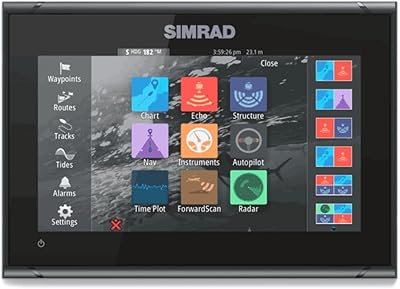
Simrad GO9 XSE 9″ Chartplotter and Fish Finder
80%
91%
Display Brightness
88%
Sonar Performance
61%
Included Transducer
86%
GPS Accuracy
84%
Chart Coverage
More
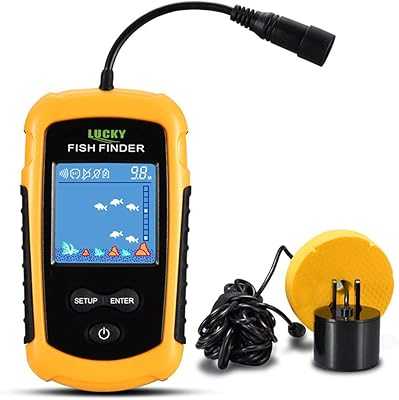
Lixada Wired Fishing Finder Sonar Sensor
70%
88%
Ease of Setup
76%
Display Clarity
63%
Depth Detection Accuracy
72%
Bottom & Structure Detection
58%
Audible Fish Alarm
More
Deeper START Castable Fish Finder
75%
88%
Ease of Setup
93%
Portability & Form Factor
67%
App Experience
71%
Sonar Accuracy & Fish Detection
76%
Battery Life
More
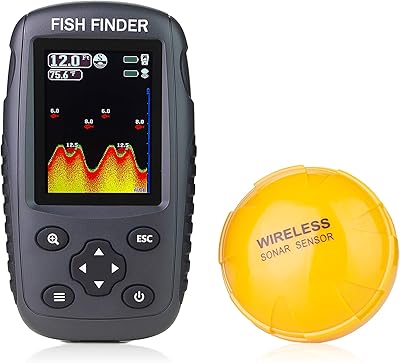
RICANK F12 Portable Fish Finder
72%
93%
Portability
91%
Ease of Setup
71%
Depth Accuracy
58%
Fish Detection Reliability
62%
Battery Performance
More
Venterior VT-FF005 Portable Castable Fish Finder
80%
91%
Ease of Setup
78%
Sonar Accuracy
84%
Display Readability
77%
Wireless Range & Connectivity
73%
Battery Life
More
TINVADO Gold Collagen Under Eye Patches
75%
79%
Depuffing Efficacy
84%
Hydration & Moisture
82%
Ingredient Quality
76%
Value for Money
86%
Skin Compatibility
More
Venterior VT-FF001 Portable Fish Finder
76%
93%
Ease of Setup
91%
Portability
62%
Sonar Accuracy
67%
Display Readability
58%
Battery Life
More
Atibin Handheld Portable Fish Finder
69%
88%
Portability & Form Factor
84%
Ease of Setup
76%
Sonar Accuracy (Shallow Water)
51%
Sonar Accuracy (Deep Water)
58%
Screen Legibility
More
Garmin Striker 4cv 3.5-inch Fish Finder
79%
88%
Sonar Image Quality
91%
Value for Money
87%
Ease of Installation
93%
Ice Fishing Performance
61%
Screen Visibility
More

FAQ

Technically the unit can function in saltwater, but it is designed and optimized for freshwater use. The preloaded C-MAP charts cover U.S. inland lakes only, and the sonar tuning is aimed at freshwater conditions. If you primarily fish inshore or offshore saltwater, a unit built with coastal charts and saltwater-specific sonar tuning would serve you better.

No — the included Eagle Eye transducer handles everything out of the box. CHIRP, DownScan Imaging, Live Forward, and Live Down are all supported by the single transducer that comes in the package. There are no external sonar pods or additional modules required.

The twist-lock connector system makes the wiring side noticeably simpler than older Lowrance models. Most anglers comfortable with basic boat wiring report a manageable installation. Where people tend to spend more time is learning the menu system, especially if they are coming from a different brand, so build in some time on the water to get familiar with the interface before a serious fishing trip.

Yes. The SD card slot accepts imported charts, and the unit is Genesis Live compatible, meaning you can create your own custom contour maps while you are out on the water. Those maps save to your SD card and can be reused on future trips. It is a genuinely useful feature for anglers who fish smaller or lesser-known lakes that are not well charted.

The IPS panel handles sunlight reasonably well and most users report it stays usable in direct midday light, including through polarized sunglasses. Extreme glare angles — like when the sun is low and reflecting off the water directly at the screen — can still cause some washout, but that is common across most fish finder displays at this screen size.

Live Down points straight below the boat and gives you a real-time view of what is directly underneath — fish, structure, and bottom detail. Live Forward projects ahead of the boat, so you can see what is coming before you position over it. For bass fishing around structure, Live Forward is particularly useful because you can watch fish respond to your lure as you approach a target area rather than after you have already passed over it.

The box includes a gimbal bracket, corner clips, replacement twist locks, the display unit, power cable, and the transducer. You will need to supply your own fasteners appropriate for your mounting surface and ensure you have an onboard 12V DC power source. Panel mounting hardware for flush installation is not included, so if that is your preferred setup, you will need to source a compatible panel mount kit separately.

FishReveal is Lowrance's implementation of a sonar overlay concept that other brands also offer — Humminbird has a comparable feature in its Helix line and Garmin uses a similar approach on some Striker and Echomap models. The core idea is the same: blending DownScan image clarity with CHIRP target identification to make fish easier to spot. In practice, the differences come down to personal preference for how the screen is laid out and how each brand processes the combined image. None of the three has an overwhelming advantage over the others in this specific area.

Yes, and it is a practical choice for kayak use. At 2 pounds for the display and with a single all-in-one transducer, there is no need to run multiple transducer cables along the hull. The gimbal bracket mount gives you flexibility on positioning, and the unit draws reasonable power from a small onboard battery. Many kayak anglers do run units in this size and price range, though you will want to make sure your battery setup can comfortably handle the draw for a full day of fishing.

This has come up in early user feedback as an occasional issue, particularly on larger jon boats or bass boats where the head unit mounts further from the transducer location. Lowrance offers transducer extension cables as accessories, and third-party options are also available. Before purchasing, measure the distance from your planned transducer mounting point to your display location and compare it against the included cable length to avoid surprises at install time.