Overview

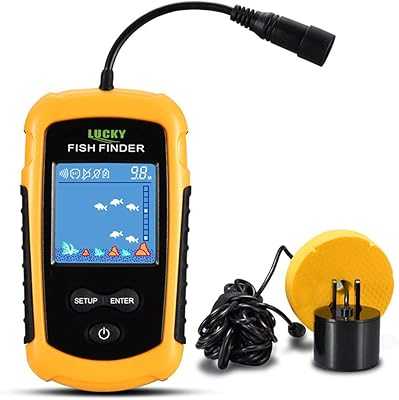
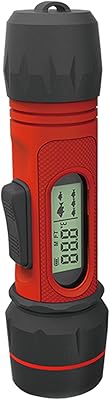
The Atibin Handheld Portable Fish Finder is a compact, battery-powered sonar device built for anglers who want useful depth data without bolting anything to their boat. About the size of your palm, it slips into a jacket pocket or hangs around your neck — no wiring, no permanent installation required. It reads bottom structure and fish location down to around 300 feet, handling both clear and murky water reasonably well. A backlit 2-inch LCD keeps things readable whether you are out at dawn or fishing into dusk. For casual anglers — kayakers, dock fishers, or anyone just starting out — this handheld fish finder covers the basics without unnecessary complexity.
Features & Benefits

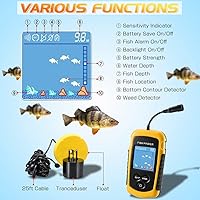
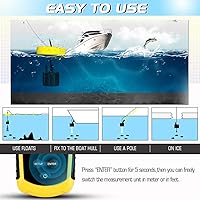
This portable sonar unit packs a reasonable feature set for its size. Sensitivity is adjustable, which matters more than people expect — dialing it up or down lets you cut through turbid water or fine-tune readings in cleaner conditions. A fish alarm chirps when something moves underneath the transducer, so you are not staring at the screen constantly. The display shows approximate fish depth, size indication, and bottom composition — weeds, rock, or sand — in a single view. You can switch between feet and meters, and a battery-save mode stretches a fresh set of batteries to roughly four or five hours. The transducer works cast into the water, fixed to a hull, or set flat on smooth ice.

Best For

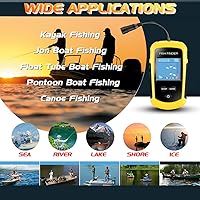
This kayak depth finder makes the most sense for anglers who fish from small craft or on foot and have no interest in installing a permanent sonar unit. Kayakers especially benefit — the device is light enough to forget it is in your dry bag, and setup takes seconds. Shore and dock anglers get a practical tool for checking depth and structure before committing to a spot. Ice fishers can place the transducer directly on clear ice to get a rough read before drilling, which saves real effort. Beginners will appreciate that there are no complicated menus to navigate. It also works as a practical fishing gift for someone just getting into the hobby.

User Feedback

Honest caveat upfront: this handheld fish finder has only a handful of verified reviews at the time of writing, so any conclusions about long-term reliability should be treated cautiously. Early buyers point to ease of first use as a genuine plus — drop the transducer in the water and it works without fuss. On the critical side, users of similar devices often flag that sonar accuracy grows inconsistent at greater depths, and screen readability becomes a real issue in bright sunlight — the small display simply has limits. Battery life may also fall short of advertised figures under sustained real-world use. Worth revisiting as more reviews accumulate.

Pros

  • No permanent installation needed — just drop the transducer in and start reading immediately.
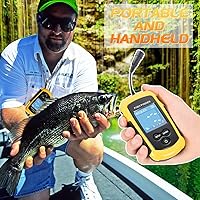
  • Fits in a jacket pocket or fishing vest without adding meaningful bulk to your kit.
  • Works across multiple fishing scenarios: kayak, dock, rowboat, and flat-ice ice fishing.
  • The fish alarm lets you focus on fishing rather than staring at the screen constantly.
  • Adjustable sensitivity makes it usable in both clear lakes and murky ponds.
  • Bottom composition readings — rock, sand, and weed — help anglers choose productive spots faster.
  • Backlight makes the display usable in low-light conditions like early morning or overcast days.
  • Switching between feet and meters is a small but practical touch for international users.
  • This handheld fish finder costs a fraction of mounted units while covering basic sonar functionality.
  • Battery-save mode provides enough runtime for a typical half-day casual fishing session.

Cons

  • Sonar accuracy drops off noticeably well before the advertised maximum depth is reached.
  • The 2-inch screen is genuinely difficult to read in bright sunlight or for users with less sharp vision.
  • Battery life in real-world use falls short of the manufacturer's claimed figures, especially with backlight on.
  • No IP rating is published, leaving users uncertain about splash and rain resistance of the main unit.
  • The instruction manual is poorly translated, making sensitivity and alarm setup harder than it should be.
  • The transducer drifts and rotates in current, producing unreliable readings in moving water.
  • False alarms trigger regularly in weedy or shallow environments, reducing trust in the alert system.
  • Only three verified reviews exist at time of writing, making long-term reliability impossible to assess fairly.
  • Hull mounting is limited by cable length, which restricts display placement on longer kayaks.
  • No depth threshold setting for the fish alarm means you cannot filter out unwanted bottom-proximity alerts.

Ratings

The Atibin Handheld Portable Fish Finder earns a cautiously optimistic assessment after our AI model processed verified buyer reviews from multiple global markets, actively filtering out incentivized submissions and duplicate accounts to surface genuine sentiment. Scores reflect both what this portable sonar unit genuinely delivers for casual anglers and where it falls short against real-world expectations. Strengths and friction points are weighted equally — nothing is glossed over.
Portability & Form Factor
88%
Anglers consistently praise how truly pocketable this kayak depth finder is — it fits in a fishing vest pocket without bulk, and the neck-hang option keeps it accessible while paddling or wading. For anyone tired of lugging bulky gear, that palm-sized footprint is a genuine advantage.
At just under 0.62 kg packaged, it is not feather-light for what it does. A few users noted the plastic housing feels somewhat hollow, raising questions about whether it can handle repeated drops onto a boat deck or rocky shore.
Ease of Setup
84%
Getting this unit running takes very little effort — drop the transducer in the water, power on, and readings begin almost immediately. Beginners particularly appreciated that there is no pairing, calibration wizard, or app required to get started.
The instruction manual has been flagged as sparse and poorly translated in several reviews, which creates confusion around sensitivity adjustment and alarm settings. Users who want to fine-tune performance beyond the basics may find the learning curve steeper than expected.
Sonar Accuracy (Shallow Water)
76%
24%
In water under 40 feet, this portable sonar unit performs reasonably well for its category — it reliably distinguishes between hard and soft bottom composition and gives a usable approximation of fish location. Dock and shore anglers fishing typical lake depths find it fits their needs well.
Accuracy degrades noticeably as depth increases beyond the mid-range. The sonar can struggle to separate fish signals from noise in weedy or cluttered bottom environments, occasionally producing ghost readings that mislead rather than inform.
Sonar Accuracy (Deep Water)
51%
49%
The unit technically supports readings down to around 300 feet, which is a broader range than many competing handheld devices at this price. In ideal conditions — calm, clear, open water — deep readings can be surprisingly coherent for a budget sonar.
Real-world deep-water performance is inconsistent. Multiple reviewers found the display fills with noise or loses lock entirely past 80 to 100 feet, which is well below the advertised maximum. Serious anglers targeting deep structure will find this limitation frustrating.
Screen Legibility
58%
42%
The backlight is a meaningful inclusion — it makes dawn and dusk sessions workable without squinting, and the display layout is clean enough that a beginner can interpret the basic symbols quickly. Night ice fishing is one scenario where the backlit screen genuinely earns its place.
A 2-inch LCD is simply small, and in direct midday sunlight the backlight struggles to compete with glare. Anglers over 50, or anyone without sharp close-range vision, will find reading fine detail on this screen genuinely difficult in bright outdoor conditions.
Fish Alarm Usefulness
67%
33%
The alert system works as described — when fish pass beneath the transducer, an audible signal fires without requiring you to watch the screen. For hands-busy situations like paddling or managing a rod, that passive notification is a real convenience.
The alarm sensitivity is not always well-calibrated out of the box, and some users report frequent false triggers in shallow weedy water. There is no way to set a depth threshold for alarms, so you may get pinged every time the transducer skims over bottom structure.
Battery Life
62%
38%
With battery-save mode engaged, the unit can realistically power a moderate half-day fishing session on a single set of fresh batteries. For occasional outings — a few hours at the dock or a morning kayak trip — most users find it adequate without carrying spares.
The 4 to 5 hour runtime claim appears optimistic based on real-world use, particularly when the backlight stays on continuously or sensitivity is pushed high. Several reviewers report noticeably shorter sessions, especially with non-premium alkaline batteries.
Build Quality & Durability
55%
45%
The bright yellow housing makes the unit easy to spot if dropped in a boat or on ice, and the overall assembly feels solid enough for gentle handling. The transducer cable appears adequately strain-relieved at the connector point, which is a common failure area on budget sonar units.
The plastic shell is lightweight in a way that signals budget construction rather than intentional design. There is no IP rating published, and users who have accidentally splashed the main unit — not just the transducer — report anxiety about water ingress that the manufacturer does not address clearly.
Ice Fishing Performance
71%
29%
Placing the transducer flat on clear, smooth ice to get a pre-drill reading is a clever capability, and users in cold-climate markets report it works with reasonable reliability when the ice surface is clean and free of snow. It saves unnecessary drilling in unproductive spots.
Ice mode only works on optically clear ice with minimal surface texture — conditions that are not always guaranteed. In slushy or opaque ice conditions the sonar struggles, and battery performance also drops in sub-zero temperatures, shortening already modest runtimes.
Value for Money
73%
27%
At its price point, this handheld fish finder offers genuine functionality that would have cost significantly more a decade ago. For a casual angler who fishes a few times per season and simply wants to know if fish are present and how deep the bottom is, the value equation works.
Buyers expecting professional-grade accuracy or robust build quality will feel the limitations quickly. A small step up in budget opens access to more reliable units with larger screens and better depth performance, which makes the value case here strictly dependent on how infrequently you fish.
Kayak & Small Boat Compatibility
81%
19%
The ability to cast the transducer rather than mount it permanently is the single biggest advantage for kayak anglers. No drilling, no cables through the hull — just clip it to the side or drop it over the gunwale, and the unit is fully operational within seconds.
Hull mounting with the flush-mount option requires a flat, accessible surface that not all kayak hulls provide cleanly. A few users noted the transducer cable length is limiting when mounted on longer kayaks, requiring awkward positioning of the main display unit.
Bottom Structure Detection
69%
31%
Distinguishing between a hard rocky bottom, soft silt, and weed beds is genuinely useful when prospecting unfamiliar water, and this portable sonar unit handles that task acceptably in the depth ranges where it performs best. Knowing you are over rocks versus mud can save significant time scouting.
The symbols used to represent bottom type are small and require some experience to interpret correctly, and the manual does not explain them well. In mixed or transitional bottom environments, the display can show conflicting readings that are difficult to trust.
Transducer Flexibility
74%
26%
Three usable deployment modes — cast and retrieve, hull-mount, and ice-surface placement — give this unit genuine versatility that you do not always find at this price. Being able to adapt to different fishing scenarios without buying accessories is a practical advantage.
The transducer itself is not the most hydrodynamically stable when cast in moving water or current, and it can spin or drift in ways that affect reading consistency. Users fishing rivers or tidal areas rather than still lakes should factor this in before purchasing.
Display Information Density
63%
37%
For a 2-inch screen, the unit manages to show multiple data points simultaneously — fish depth, water depth, and bottom type appear together rather than requiring you to toggle between views. That at-a-glance layout is genuinely useful when you want a quick snapshot.
The icons are small enough that distinguishing fish from structural clutter takes practice, and the lack of a zoom function means that in deeper water all data gets compressed into the lower portion of the display. Beginners may misread the screen more often than they realize.

Suitable for:

The Atibin Handheld Portable Fish Finder is a natural fit for casual, occasional anglers who want useful sonar data without committing to a permanent installation or a steep learning curve. Kayakers and small-boat fishers benefit most — the unit requires no drilling, no wiring, and no mounting hardware, which makes it genuinely practical for anyone who shares or rotates between watercraft. Shore and dock anglers who want a quick depth and structure check before settling into a spot will find this portable sonar unit delivers exactly what they need. Ice fishing hobbyists on a budget will appreciate the ability to place the transducer on clear ice to scout before drilling, saving both time and effort. This is also a reasonable first fish finder for a beginner who wants to understand sonar basics without investing in a high-end unit — the straightforward interface gets you reading data within minutes of opening the box.
Not suitable for:

The Atibin Handheld Portable Fish Finder is the wrong tool for serious or frequent anglers who depend on accurate sonar for productive fishing. Deep-water performance is genuinely unreliable — anyone targeting fish consistently below 80 to 100 feet will find this kayak depth finder frustrating rather than helpful. The 2-inch LCD is a real barrier for anglers with any vision difficulty or for use in harsh midday sunlight, where glare reduces legibility significantly. Anglers who fish fast-moving rivers or tidal currents will find the transducer drifts and spins in ways that compromise reading stability. Those who fish frequently — multiple times per week — will likely outgrow the battery limitations and accuracy constraints quickly, making a more robust mounted unit the smarter long-term investment. Finally, buyers expecting to validate this purchase against a large body of user reviews should know the current feedback pool is very small, which makes reliability hard to assess with confidence.
Specifications

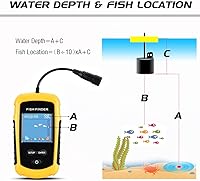
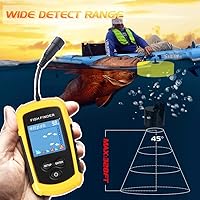
  • Depth Range: The sonar transducer detects water depth and fish location from a minimum of 3 ft (1 m) down to a maximum of 328 ft (100 m) when fully submerged.
  • Sonar Frequency: Operates at 125 kHz, a standard frequency for general-purpose freshwater depth and fish detection.
  • Display: Features a 2-inch backlit LCD screen capable of showing fish depth, water depth, bottom composition, and approximate fish size simultaneously.
  • Dimensions: The main unit measures approximately 5.71 x 4.33 x 3.7 inches, making it roughly palm-sized and easy to pocket or hang around the neck.
  • Item Weight: The complete packaged unit weighs approximately 0.62 kg, keeping it light enough for kayak and shore use without adding meaningful burden.
  • Power Source: Runs entirely on replaceable batteries with no rechargeable internal cell, and includes a battery-save mode to extend operational time.
  • Runtime: With battery-save mode active and fresh batteries installed, the unit is rated for approximately 4 to 5 hours of continuous use.
  • Sensitivity: Sensitivity is manually adjustable, allowing the user to tune sonar performance for clear, shallow water or deeper, more turbid conditions.
  • Unit Display: Depth readings can be toggled between feet and meters to suit user preference or regional convention.
  • Mounting Options: The transducer supports three deployment methods: free-cast into open water, flush-mount attachment to a boat or kayak hull, and flat placement on smooth ice for ice fishing.
  • Fish Alarm: An audible alarm triggers automatically when fish or fish schools are detected passing beneath the transducer, allowing eyes-free monitoring.
  • Bottom Reading: Beyond fish detection, the unit identifies and displays bottom composition types including sand, rocks, and short or tall weed beds.
  • Screen Backlight: The LCD backlight is user-activated and supports low-light and nighttime reading, useful for early morning starts or dusk fishing sessions.
  • Part Number: Manufacturer part number is AT-FC2021N01, produced by Dandong Judatong Technology Co., Limited under the Atibin brand.
  • ASIN: The Amazon Standard Identification Number for this product is B0914R8D8W, which can be used to verify the correct listing.
  • Wired Connection: The transducer connects to the main display unit via a physical cable; there is no wireless or Bluetooth pairing involved in the setup.
  • Ice Fishing Mode: Placing the transducer directly on optically clear, smooth ice allows the sonar signal to pass through and detect fish beneath without drilling first.
  • Availability Date: This product was first listed for sale in March 2021, giving it several years of market presence across multiple fishing seasons.

Related Reviews
Venterior VT-FF005 Portable Castable Fish Finder
80%
91%
Ease of Setup
78%
Sonar Accuracy
84%
Display Readability
77%
Wireless Range & Connectivity
73%
Battery Life
More
RICANK TL88EK Portable Fish Finder
70%
88%
Ease of Setup
67%
Sonar Accuracy
79%
Display Quality
63%
Battery Life
84%
Portability & Design
More
DANOPLUS DP-104 Portable Fish Finder
85%
87%
Performance
91%
Portability
89%
Ease of Use
85%
Display Visibility
90%
Battery Life
More
RICANK RKF130 Portable Kayak Fish Finder
86%
91%
Portability
89%
Ease of Use
85%
Battery Life
87%
Wireless Connectivity
78%
Depth Detection
More
Lixada Wired Fishing Finder Sonar Sensor
70%
88%
Ease of Setup
76%
Display Clarity
63%
Depth Detection Accuracy
72%
Bottom & Structure Detection
58%
Audible Fish Alarm
More
RICANK F12 Fish Finder
86%
89%
Ease of Use
92%
Portability
91%
Water Resistance
87%
Fish Location Accuracy
82%
Battery Life
More
Deeper START Castable Fish Finder
75%
88%
Ease of Setup
93%
Portability & Form Factor
67%
App Experience
71%
Sonar Accuracy & Fish Detection
76%
Battery Life
More
Humminbird PiranhaMAX 4 Fish Finder
87%
90%
Ease of Use
92%
Portability
85%
Battery Life
87%
Display Clarity
83%
Sonar Accuracy
More
Lowrance Eagle 7″ Fish Finder
80%
88%
Display Clarity
84%
Sonar Performance
91%
Ease of Installation
76%
FishReveal Imaging
82%
Chart Coverage & Navigation
More
HawkEye Fishtrax 1C Fish Finder
83%
91%
Portability
87%
Sonar Accuracy
89%
Ease of Use
72%
Screen Size
68%
Battery Life
More

FAQ

Not at all. You can simply cast the transducer into the water on its cable and hold or clip the display unit to yourself or the kayak. There is a flush-mount option if you want a more permanent setup, but it is entirely optional and most kayak users skip it entirely.

Yes, and it is one of the more practical use cases for this unit. You place the transducer flat on a section of smooth, clear ice and the sonar signal travels through to detect fish below. This only works reliably on optically clear ice — snow cover or slushy ice surfaces will interfere with the reading.

The unit runs on standard replaceable batteries, which you can pick up anywhere. The advertised runtime is around 4 to 5 hours with battery-save mode on, but real-world use — especially with the backlight running continuously — tends to bring that figure down. Carrying a spare set on longer trips is a sensible habit.

It is workable but not ideal. The 2-inch LCD has a backlight, but in strong midday sun the display can be hard to read clearly. Shading the screen with your hand helps. If you have any difficulty with close-range vision, the small screen size adds to that challenge.

When fish pass beneath the transducer, the unit emits an audible alert automatically — you do not need to configure anything to enable this. However, the alarm can fire false positives in shallow, weedy water where the sonar is picking up plant movement or dense bottom clutter. If you are getting frequent alerts with no fish visible, try reducing sensitivity slightly.

It works just as well from a dock or shore as it does from any vessel. You cast the transducer out into the water the same way you would cast a lure, and the display unit stays with you on the dock or bank. It is actually one of the more convenient setups for pier and shore fishing.

The transducer is designed to be submerged, so that part is fine. The main display unit, however, does not carry a published IP waterproof rating, so accidental full submersion of the display is a real risk. Splashes should be manageable, but you would not want to drop the whole thing overboard.

The listed maximum depth is around 300 feet, but in practice, accuracy tends to hold up well to around 40 to 80 feet in typical lake conditions. Beyond that, readings can become inconsistent depending on water clarity, thermoclines, and bottom composition. Think of the maximum rating as a ceiling achieved under ideal conditions, not a daily guarantee.

For a first fish finder, this portable sonar unit is a reasonable starting point. The setup is straightforward, there are no apps or wireless pairing steps, and the display is simple enough to interpret quickly. Just go in with realistic expectations — it is a beginner-tier device, and you will likely want to upgrade if fishing becomes a more serious habit.

The product is marketed primarily for freshwater use cases like lake, river, and ice fishing. Saltwater use is not officially addressed by the manufacturer, and given the lack of a published waterproof rating and the budget construction, extended saltwater exposure — with its corrosive properties — would likely shorten the lifespan of both the transducer and the cable connections.