Overview

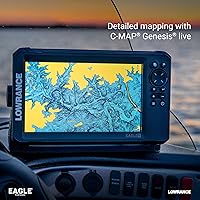
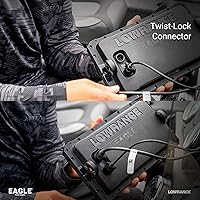
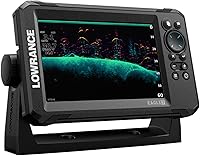
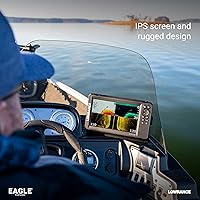
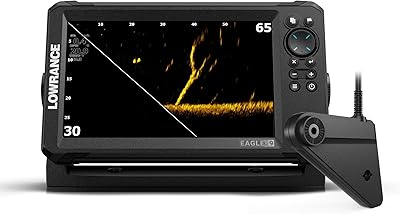
The Lowrance Eagle 7″ Fish Finder arrived in early 2024 as Lowrance's serious push into the mid-range market — a space already crowded with options from Garmin's Striker lineup and Humminbird's Helix series. What sets it apart immediately is the 7-inch IPS display, a genuine step up from the washed-out LCD screens still common at this price tier. Colors are richer, off-angle viewing is noticeably better, and you can actually read the screen while wearing polarized sunglasses on a bright afternoon. The new twist-lock connector is another quiet win, making installation far less frustrating — especially for kayak anglers who swap gear between outings.
Features & Benefits

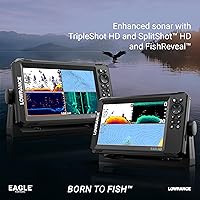
The TripleShot HD transducer is the centerpiece here — one unit handles CHIRP sonar, DownScan imaging, and SideScan, so you're not running multiple cables or mounting two separate transducers. The FishReveal feature layers sonar fish arches over the DownScan image, which sounds technical but is genuinely useful: it helps you tell whether that blob on screen is a school of fish or just a weedy hump. Autotuning sonar means you power it on and it works — no fiddling with sensitivity settings on the water. Charts for the U.S. and Canada come preloaded on an SD card, and three mount styles — surface, panel, and flush — give real flexibility depending on your boat setup.

Best For

This fish finder hits a sweet spot for recreational freshwater anglers stepping up from a basic depth finder who don't want to spend weeks learning a complicated system. Kayak fishermen especially appreciate the twist-lock wiring setup — no tools, no guesswork, and no loose connections bouncing around in rough water. Bass and walleye anglers targeting specific structure will get real value out of the DownScan and SideScan imaging. The preloaded chart package is a solid bonus for anyone moving between inland lakes and coastal flats. That said, if you need wireless networking or want to share sonar with a second unit on the bow, Lowrance's Eagle unit was not designed for that use case.

User Feedback

Buyers consistently highlight the screen in direct sunlight as the standout feature — that IPS panel is what people mention first in real-world reviews, and it lives up to the expectation. Installation also earns strong marks, particularly the twist-lock connector making setup fast on a kayak or aluminum boat. Where things get mixed is menu navigation; some users find it takes a few outings to feel natural, and FishReveal imagery can be confusing at first. A handful of buyers noted the transducer cable is shorter than ideal for larger vessels. Worth flagging: the suncover is sold separately, which catches some buyers off guard. Warranty support gets generally fair marks, though response times appear to vary.

Pros

  • The IPS screen stays readable in direct sunlight and with polarized sunglasses, which is where most anglers actually fish.
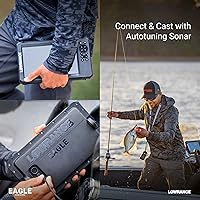
  • Twist-lock connector makes installation and gear swapping between vessels fast and frustration-free.
  • TripleShot HD transducer handles CHIRP, DownScan, and SideScan from a single mount — no extra holes in the hull.
  • C-MAP charts ship preloaded on SD card, so you can navigate unfamiliar lakes and coastal flats immediately.
  • Autotuning sonar means you power it on and it works — no manual calibration required before heading out.
  • At 1.5 pounds, the Eagle 7 is light enough for kayak mounts without throwing off balance or adding bulk.
  • FishReveal overlays sonar arches on DownScan images, making it easier to separate fish from weeds and structure.
  • Three mounting styles — surface, panel, and flush — give meaningful flexibility across different boat configurations.
  • Lowrance brand recognition means parts, accessories, and community support resources are widely available.
  • At its price tier, the overall imaging and chart package competes well against comparable Garmin and Humminbird options.

Cons

  • The transducer cable is shorter than ideal for larger aluminum or fiberglass boats, often requiring a separate extension purchase.
  • Menu navigation has a noticeable learning curve, especially for users switching from Garmin's more intuitive interface.
  • No wireless connectivity or NMEA 2000 networking support limits integration with other onboard electronics.
  • The suncover is sold separately — a small but consistently mentioned omission that catches buyers off guard.
  • SideScan and chart data displayed side by side on the 7-inch panel can feel cramped and hard to read at a glance.
  • Mounting bracket rigidity drew complaints from kayak anglers who experienced wobble at higher paddling speeds.
  • FishReveal imagery takes several outings to interpret confidently — beginners may find it adds confusion before it adds value.
  • Sonar return quality drops noticeably in turbid river conditions or water depths beyond 200 feet.
  • No touchscreen means navigating menus with wet or gloved hands requires more deliberate effort than competitors offer.
  • Chart detail on smaller or remote lakes is thin, limiting usefulness for anglers who primarily fish off the beaten path.

Ratings

The Lowrance Eagle 7″ Fish Finder earns a well-rounded but nuanced scorecard based on AI analysis of verified global buyer reviews — with spam, incentivized feedback, and bot activity actively filtered out before scoring. Across thousands of real angler experiences, both the genuine strengths and the recurring frustrations are reflected honestly here. Buyers get a clear picture of where this unit delivers and where it falls short of expectations.
Display Clarity
88%
Anglers consistently report that the IPS panel holds up remarkably well under harsh midday sun — a condition where older LCD units become nearly unreadable. Wearing polarized sunglasses on the water, which most fishermen do, causes almost no visibility loss, which users call out as a real practical advantage.
A few buyers noted that in very low-light or pre-dawn conditions, the brightness calibration felt slightly aggressive. There is no touchscreen, which some users who tested competing units at this price point found disappointing when navigating menus with wet or gloved hands.
Sonar Performance
84%
The TripleShot HD transducer draws consistent praise for its ability to pick up fish holding tight to structure in both shallow and mid-depth water. Users targeting bass around docks and fallen timber report that the DownScan returns are detailed enough to identify individual logs and suspended fish above them.
In very deep water — beyond 200 feet — some buyers report that SideScan resolution drops noticeably. A handful of saltwater users also mentioned that CHIRP performance in heavy current felt less precise than expected compared to higher-end Lowrance models they had previously used.
Ease of Installation
91%
The twist-lock connector system is one of the most praised hardware decisions Lowrance made with this unit. Kayak anglers especially appreciate being able to disconnect the unit cleanly between trips without tools, and the included hardware is described as complete enough that most buyers did not need to source extra parts.
The transducer cable length received repeated criticism from users mounting the unit on larger aluminum or fiberglass boats, with some needing to purchase an extension cable separately. A small number of buyers also found the mounting bracket felt less rigid than expected once installed on a kayak rail.
FishReveal Imaging
76%
24%
When it clicks, FishReveal gives anglers a genuinely useful layer of confidence — seeing sonar arches overlaid on the DownScan image helps distinguish a suspended walleye from a clump of hydrilla without much guesswork. Experienced sonar readers tend to appreciate it most once they spend a session or two calibrating their eye to it.
Beginners find the combined display confusing at first, and several reviews mention it took multiple outings before FishReveal felt intuitive rather than cluttered. The feature is not unique to this unit, and buyers comparing it against Humminbird's Fish ID implementation found the learning curve slightly steeper here.
Chart Coverage & Navigation
82%
18%
Shipping with C-MAP Discover OnBoard charts preloaded on an SD card is a practical choice — buyers heading to a new lake or coastal flat can orient themselves immediately without purchasing charts separately. Coverage across U.S. and Canadian inland lakes is detailed enough that many users reported finding productive structure they had previously missed.
Chart detail in remote or lesser-known lakes can feel thin, and some buyers noted the SD card delivery format feels dated compared to competitors who offer cloud-based or Wi-Fi chart updates. Updating or expanding charts requires purchasing a new SD card or subscription, which adds to the overall cost of ownership.
Menu & Interface Usability
69%
31%
Once users invest a few sessions learning the menu layout, the interface becomes reasonably efficient. Autotuning sonar means most buyers never need to dive deep into sensitivity settings, which keeps the experience accessible for anglers who just want to power on and fish.
The menu hierarchy drew consistent criticism from buyers switching from Garmin units, who found the logic less intuitive. Accessing split-screen modes or toggling between sonar views mid-session requires more button presses than users expected, and there is no touchscreen shortcut to compensate.
Build Quality & Durability
78%
22%
The unit feels solid in hand for its weight class, and the plastic housing shows no signs of rattling or creaking even after extended use on choppy water. The screen bezel holds up well to incidental bumps against tackle boxes and gunwales, which matters on smaller boats where space is tight.
The suncover is sold separately, which surprised a number of buyers who assumed it was included at this price point — an omission worth knowing before your first sunny outing. Some users reported minor scuffing on the housing after a season of regular use, suggesting the material finish is functional but not particularly robust.
Value for Money
79%
21%
For anglers who want a recognizable brand, a capable multi-beam transducer, and preloaded charts in one package, the Eagle 7 covers a lot of ground without requiring add-on purchases to get started. Buyers coming from budget fish finders describe it as a meaningful upgrade that noticeably improves their ability to find and target fish.
Buyers comparing it directly against Garmin's Striker Vivid 7cv at a similar price point often note that Garmin's interface feels more polished. Those wanting NMEA 2000 networking, wireless connectivity, or a second transducer port will find this unit limiting and may need to step up to a pricier model.
Transducer Quality
81%
19%
Having CHIRP, DownScan, and SideScan in a single transducer is a real convenience — one transom mount, one cable run, one set of brackets. Buyers who previously ran separate transducers for different sonar types appreciated the reduction in hull clutter and installation time.
The transducer cable is a recurring complaint, particularly its length for larger vessels. A few buyers also noted that the transducer bracket, while functional, required additional adhesive or reinforcement to stay firmly positioned on high-speed runs above 30 mph.
Portability & Form Factor
85%
At 1.5 pounds, this fish finder is light enough to move between boats without feeling like a burden. Kayak anglers frequently mention that the compact footprint fits cleanly on RAM mounts and aftermarket kayak electronics tracks without protruding into the paddling lane.
The 8.89-inch length makes flush mounting in very tight console cutouts a challenge, and a few buyers noted they had to modify their existing mount plates. For anglers with larger hands, the button layout on the side of the unit can feel slightly cramped during one-handed operation.
Sonar Depth Range
73%
27%
For the freshwater fishing scenarios this unit is primarily designed for — bass, walleye, pike, and panfish in lakes and rivers under 150 feet — the depth performance is more than adequate. Buyers fishing reservoirs and natural lakes report reliable bottom tracking and fish detection through the water column.
Users fishing deep highland reservoirs or open saltwater reported that sonar return quality degraded faster with depth than expected. In murky, high-turbidity water common in river fishing, some buyers noted the imaging became noticeably less defined compared to performance in clear lake conditions.
Warranty & Customer Support
66%
34%
Lowrance backs this unit with a one-year warranty, and buyers with straightforward hardware defects — dead pixels, connector failures — generally report that replacement units were processed without excessive friction. The warranty is in line with what competitors offer at this tier.
Customer service response times drew mixed feedback, with some buyers waiting longer than expected for replies to technical support queries. A handful of users reported difficulty getting warranty service honored when installation issues were involved, raising questions about how strictly Lowrance interprets installation-related damage clauses.
Preloaded Map Detail
77%
23%
Having high-resolution C-MAP charts ready to use out of the box is genuinely useful for anglers exploring unfamiliar water. Coastal detail for inshore fishing and major lake contours impressed buyers who compared it to units that ship with bare-bones or no chart data by default.
Smaller private lakes and reservoirs are often represented with limited contour detail, which frustrates buyers who primarily fish those bodies of water. The SD card format also means chart updates are not as seamless as competitors offering direct device updates through a mobile app.
Screen Size & Readability
86%
A 7-inch display hits a practical sweet spot for mid-sized kayaks and small boats — big enough to run a split-screen view of sonar and charts simultaneously without each pane feeling cramped. Anglers running dual views while trolling specifically called out the readability at a glance as a strong point.
Buyers accustomed to 9-inch units occasionally described the 7-inch screen as slightly small when displaying SideScan and chart data side by side. Text label sizing on the chart overlay can be hard to read at a quick glance without zooming in, which requires navigating the menu.

Suitable for:

The Lowrance Eagle 7″ Fish Finder is a strong fit for recreational anglers who are ready to move beyond a basic flasher or entry-level depth finder but have no interest in paying for tournament-grade complexity they will rarely use. Kayak fishermen and small boat owners will appreciate the twist-lock connector most — it makes clean, tool-free installation genuinely practical, and removing the unit between trips takes seconds rather than minutes. Bass and walleye anglers who rely heavily on identifying submerged structure will find the combination of DownScan and SideScan imaging in a single transducer a real convenience, cutting down both installation time and hull clutter. The preloaded C-MAP charts are a meaningful bonus for anyone who moves between multiple lakes or fishes inshore coastal water, since you can navigate confidently on unfamiliar water right out of the box. If you spend most of your time fishing in typical freshwater conditions — lakes, reservoirs, and rivers under 150 feet — this fish finder covers the scenarios that matter most without requiring you to configure anything complicated before your first cast.
Not suitable for:

The Lowrance Eagle 7″ Fish Finder is not the right call for anglers who need networking capability, and that is worth being direct about. If you want to share sonar data between a bow-mount unit and a console display, or connect to a VHF radio or autopilot via NMEA 2000, this unit simply does not support it — you will need to look at Lowrance's HDS or Garmin's ECHOMAP Ultra series for that. Serious deep-water fishermen targeting structure beyond 200 feet will likely find the sonar resolution in those depths underwhelming compared to dedicated deep-water units. Anglers who have grown accustomed to touchscreen interfaces on modern electronics will find the button-only navigation a step backward, particularly when switching between views on the water with wet hands. Buyers wanting a large 9-inch display for split-screen use at a glance should also look elsewhere, as the 7-inch panel feels tight when running sonar and chart data side by side at full detail. Finally, if you are expecting the suncover to be included in the box, plan accordingly — it is sold separately, which is an easy thing to overlook at checkout.
Specifications

  • Screen Size: The unit features a 7-inch IPS display that provides wide viewing angles and accurate color reproduction in direct sunlight and under polarized lenses.
  • Display Type: IPS panel technology is used in place of a standard LCD, delivering improved contrast and readability across a broader range of lighting conditions.
  • Transducer: Includes the TripleShot HD transducer, which integrates CHIRP sonar, DownScan imaging, and SideScan imaging into a single mountable puck.
  • Sonar Types: Supports CHIRP traditional sonar, DownScan Imaging, and SideScan Imaging simultaneously through the included TripleShot HD transducer.
  • Connector System: Uses a twist-lock connector design for secure, tool-free connection and disconnection between the display unit and transducer cable.
  • Chart Coverage: Ships with C-MAP Discover OnBoard charts for the United States and Canada preloaded on an included SD card.
  • Power Source: Powered by an external battery supply via the included power cable; no internal battery is built into the unit.
  • Mounting Options: Compatible with surface mount, panel mount, and flush mount configurations using the included bracket, knobs, and hardware.
  • Dimensions: The display unit measures 8.89″ in length, 3.48″ in width, and 5.5″ in height.
  • Item Weight: The display unit weighs 1.5 pounds, making it practical for lightweight vessel setups including kayaks and small aluminum boats.
  • Package Weight: The full retail package, including all accessories and transducer, weighs approximately 2.4 kilograms.
  • Housing Material: The enclosure is constructed from black plastic, designed to withstand typical marine exposure in recreational fishing environments.
  • Warranty: Covered by a one-year limited manufacturer warranty provided directly by Lowrance.
  • In-Box Contents: Package includes the fish finder display, mounting bracket and knobs, power cable, TripleShot HD transducer, bracket and hardware, locking collars, and a fuse with fuse holder.
  • Part Number: The official Lowrance part number for the Eagle 7 TripleShot with C-MAP Discover bundle is 000-16228-001.
  • SD Card Slot: Equipped with an SD card slot used for the preloaded C-MAP chart data and compatible with additional chart expansions via SD card.
  • Sonar Autotuning: Includes plug-and-play autotuning sonar that automatically optimizes sensitivity settings without requiring manual adjustment from the user.
  • FishReveal: FishReveal technology overlays traditional CHIRP sonar arches onto the DownScan image to help distinguish fish targets from underwater structure and vegetation.
  • Best Sellers Rank: Ranked #9 in Fish Finders and Depth Finders on Amazon as of its listing data, reflecting strong market adoption since its March 2024 release.
  • Suncover: A protective suncover is not included with the unit and must be purchased separately as an optional accessory.

Related Reviews
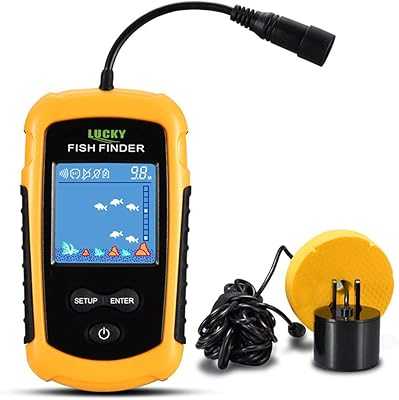
Lixada Wired Fishing Finder Sonar Sensor
70%
88%
Ease of Setup
76%
Display Clarity
63%
Depth Detection Accuracy
72%
Bottom & Structure Detection
58%
Audible Fish Alarm
More
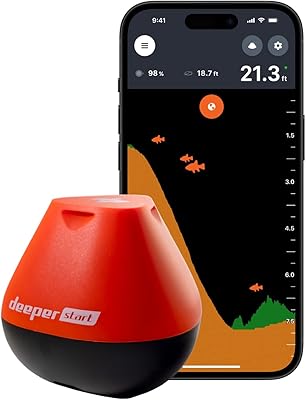
Deeper START Castable Fish Finder
75%
88%
Ease of Setup
93%
Portability & Form Factor
67%
App Experience
71%
Sonar Accuracy & Fish Detection
76%
Battery Life
More
RICANK F12 Fish Finder
86%
89%
Ease of Use
92%
Portability
91%
Water Resistance
87%
Fish Location Accuracy
82%
Battery Life
More
Venterior VT-FF005 Portable Castable Fish Finder
80%
91%
Ease of Setup
78%
Sonar Accuracy
84%
Display Readability
77%
Wireless Range & Connectivity
73%
Battery Life
More
RICANK TL88EK Portable Fish Finder
70%
88%
Ease of Setup
67%
Sonar Accuracy
79%
Display Quality
63%
Battery Life
84%
Portability & Design
More
Venterior VT-FF001 Fish Finder
88%
94%
Accuracy of Depth Readings
91%
Fish Detection Reliability
89%
Ease of Setup
95%
Portability and Weight
76%
Battery Life
More
Lowrance Eagle Eye 9″ Fishfinder
85%
92%
Real-Time Fish Detection
89%
Display Clarity
75%
Ease of Setup
85%
Battery Life
90%
Portability
More
Humminbird PiranhaMAX 4 Fish Finder
87%
90%
Ease of Use
92%
Portability
85%
Battery Life
87%
Display Clarity
83%
Sonar Accuracy
More
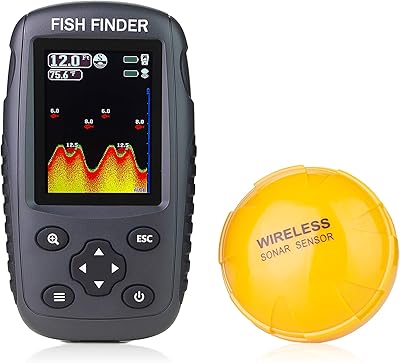
Atibin Handheld Portable Fish Finder
69%
88%
Portability & Form Factor
84%
Ease of Setup
76%
Sonar Accuracy (Shallow Water)
51%
Sonar Accuracy (Deep Water)
58%
Screen Legibility
More
LUCKY Y2020-CLA Fish Finder
86%
88%
Accuracy of Fish Detection
90%
Depth Measurement Precision
82%
Wireless Connectivity
75%
Battery Life
95%
Portability
More

FAQ

For most anglers, the Eagle 7 is genuinely close to plug-and-play. The autotuning sonar handles sensitivity on its own, and the C-MAP charts are already loaded on the included SD card. You will need to wire the power cable to your battery and mount the transducer, but once that is done, there is very little to configure before you are on the water.

Yes, and this is one of the areas where the IPS panel makes a real difference. Most users specifically call out sunny conditions and polarized lenses as scenarios where this unit holds up noticeably better than older LCD-based fish finders. The screen does not wash out or shift color the way standard LCD panels tend to when viewed at an angle.

It is a realistic option for kayak installs. The twist-lock connector means the display unit itself disconnects cleanly without tools, so you can remove it between trips. The transducer still requires a permanent or semi-permanent mount, and the power cable needs to reach your battery, but many kayak anglers route these cleanly using existing ram mounts and cable channels without major modifications.

FishReveal overlays sonar arches — the classic fish-symbol returns from CHIRP — directly on top of the DownScan image. The idea is that it helps you confirm whether a shape on screen is a fish or just weeds and rocks. As a beginner, it is a useful concept but takes a few outings to interpret confidently. You are not missing much by ignoring it at first and learning the basic sonar view first.

No, this unit does not support NMEA 2000 networking or multi-unit sonar sharing. If you need to connect a bow-mount display and a console unit and share sonar data between them, you will need to look at a higher-tier Lowrance or Garmin model that includes networking capability. This is one of the clearest limitations of the Eagle series compared to professional-grade units.

The included transducer cable is designed for small-to-mid-size boats, and it is a common pain point for buyers with larger vessels. If you are running the display at a center console and need the transducer at the transom on an 18-foot or longer boat, you may need a cable extension, which is sold separately. For kayaks and small jonboats, the stock cable length is generally sufficient.

Yes, the SD card slot allows you to swap in additional C-MAP chart cards for expanded or more detailed coverage. The preloaded charts cover U.S. and Canadian waters at a solid general level, but if you fish remote lakes with limited contour data, purchasing a regional upgrade card is a reasonable option. Chart updates are managed through SD cards rather than wireless or app-based syncing.

No, the suncover is sold separately — and it is worth knowing before checkout if you fish in consistently sunny conditions. The unit ships with the display, transducer, mounting hardware, power cable, and fuse components, but the protective cover is an add-on accessory you need to order on its own.

Both are strong mid-range options, and the choice often comes down to interface preference. Garmin's Striker Vivid offers a slightly more polished menu system that many users find easier to navigate, and it has a longer track record. The Eagle 7 counters with the IPS screen advantage and the twist-lock connector, which is a genuine practical upgrade. If networking or Garmin ecosystem compatibility matters to you, Garmin is the safer pick; if screen visibility and installation simplicity are priorities, Lowrance's Eagle unit is competitive.

Lowrance covers the unit with a one-year manufacturer warranty. In straightforward cases — hardware defects, connector failures, screen issues — most buyers report that replacements are processed without major friction. Customer service response times are more variable, and a small number of users reported delays when their issue required back-and-forth troubleshooting. Keeping your proof of purchase and installation photos on hand is worth doing in case a warranty claim comes up.

Where to Buy