Overview

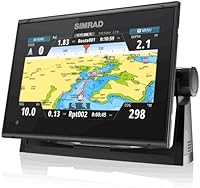
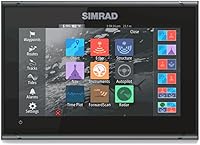
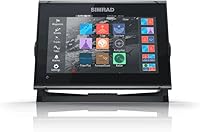
The Simrad GO9 XSE 9″ Chartplotter and Fish Finder sits firmly in the upper tier of recreational marine electronics, combining sonar, GPS navigation, and wireless connectivity into a single helm-mounted unit. Simrad has built a strong reputation among serious boaters for durability and performance, and this display carries that legacy. The 9-inch widescreen touchscreen is genuinely large enough to read at a glance while underway, which matters more than people realize. The bundle includes a transducer, C-MAP chart card, gimbal bracket, suncover, and power cable — so you are not hunting for accessories before your first trip out.
Features & Benefits

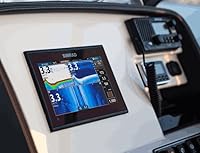
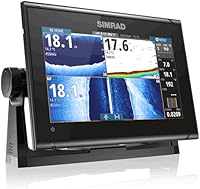
What sets the GO9 XSE apart from basic fish finders is the depth of its sonar suite. CHIRP technology produces sharper, more defined underwater images than traditional single-frequency sonar — and adding Downscan, Sidescan, and ForwardScan imaging means you can see structure ahead, below, and to the side simultaneously. Built-in GPS pairs with a preloaded C-MAP Discover chart card covering US coastal waters, the Bahamas, and inland lakes, so you have reliable navigation data right away. The display handles direct sunlight well, which is a legitimate concern on open water. NMEA 2000 connectivity lets you tie in autopilot and engine data, and built-in Wi-Fi handles chart refreshes and software updates without needing a laptop.

Best For

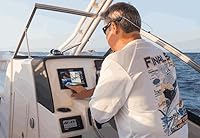
This chartplotter punches well above its class for anglers who want serious fish-finding capability without juggling two separate units on a crowded console. It is an especially strong fit for center-console and offshore setups where a reliable, bright display and combined sonar-navigation are non-negotiable. First-time MFD buyers will appreciate that everything needed for installation is included. Cruisers running US coastal or inland routes will find the C-MAP coverage thorough enough for most trips. And if you are thinking about adding radar down the line, the built-in radar port means you can expand the system without replacing the display — a practical long-term consideration.

User Feedback

Buyers who have spent time with the GO9 XSE consistently highlight touchscreen responsiveness and display performance in full sun as genuine strengths — two things that are easy to underestimate until you are squinting at a washed-out screen at noon. The learning curve on menu navigation draws regular criticism, particularly from users switching from simpler units, though most say it flattens out with time. The bundled transducer does its job at standard depths, but dedicated anglers often upgrade it. Wi-Fi connectivity gets mixed marks — reliable for most, finicky for some during software updates. Long-term durability and waterproofing hold up well according to owners with multiple seasons on the water.

Pros

  • CHIRP sonar with Downscan, Sidescan, and ForwardScan gives you a detailed, multi-angle picture of what is below and ahead.
  • The 9-inch touchscreen is genuinely bright and readable in direct sunlight — a real advantage on open water.
  • Preloaded C-MAP Discover charts cover US coastal, Bahamian, and inland waters right out of the box.
  • Built-in Wi-Fi lets you pull chart updates and software refreshes without plugging into a laptop.
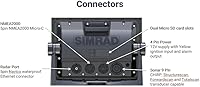
  • NMEA 2000 support means you can connect autopilot, engine data, and other onboard instruments to a single network.
  • The GO9 XSE arrives with everything needed for a basic install: transducer, gimbal bracket, suncover, chart card, and power cable.
  • Radar-port readiness lets you add a solid-state radar later without swapping out the display.
  • Build quality and waterproofing earn consistent long-term praise from boaters with multiple seasons of use.
  • Touchscreen responsiveness holds up well even with wet hands, according to experienced owners.
  • A 2-year manufacturer warranty provides reasonable coverage for a marine electronics investment at this tier.

Cons

  • The menu navigation has a steep learning curve that frustrates users switching from simpler, button-based units.
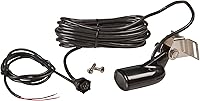
  • The included 83/200 kHz transducer is entry-level — serious deep-water anglers will likely need to upgrade it.
  • Radar capability requires purchasing a compatible Simrad radar unit separately, adding significant cost.
  • Wi-Fi connectivity works reliably for most users but has a known history of inconsistency during software updates.
  • Initial setup can be time-consuming, especially for first-time MFD owners unfamiliar with NMEA 2000 network configuration.
  • The GoFree mobile app experience receives mixed reviews and does not always perform as smoothly as the hardware itself.
  • At this price point, the lack of a built-in radar or a higher-grade transducer feels like an incomplete package for advanced anglers.
  • Chart coverage is strong for North America but limited internationally, making it less useful for boaters venturing beyond the covered regions.

Ratings

The Simrad GO9 XSE 9″ Chartplotter and Fish Finder scores here are generated by AI after analyzing verified buyer reviews from global markets, with spam, bot-generated, and incentivized feedback actively filtered out. The result is an honest, multi-dimensional picture of where this marine display genuinely earns its reputation — and where real owners have run into friction. Both the standout strengths and the recurring frustrations are reflected transparently in each category below.
Display Brightness
91%
Owners consistently single out the screen's visibility in harsh midday sun as one of the GO9 XSE's strongest real-world advantages. Running offshore with the sun directly overhead, the display remains readable without needing to shield the screen — a detail that sounds minor until you are actually trying to navigate in those conditions.
A small number of users note that maximum brightness does draw more power, which can be a consideration on smaller boats with modest electrical systems. At extreme viewing angles, the image quality softens slightly compared to top-tier IPS panels found on more expensive competing units.
Sonar Performance
88%
The multi-mode sonar suite — CHIRP combined with Downscan, Sidescan, and ForwardScan — genuinely impresses anglers who have used simpler units before. The image clarity when scanning structure and locating baitfish columns is noticeably sharper than single-frequency alternatives, and ForwardScan in particular adds a safety dimension when running unfamiliar shallow-water channels.
Performance is only as good as the transducer feeding it, and the bundled 83/200 kHz unit does not extract everything the echosounder is capable of. Anglers targeting species in deeper offshore water frequently find themselves upgrading the transducer within the first season to unlock the full imaging potential.
Included Transducer
61%
39%
For anglers fishing in moderate depths — say, inshore flats, bays, or inland lakes — the included transom-mount transducer does the job without complaint. It covers the basics and lets you get on the water immediately without additional purchases, which matters for buyers who are not yet sure how deep their fishing will take them.
The 83/200 kHz transducer is clearly an entry-level component bundled with a premium display, and experienced anglers notice the mismatch quickly. It underperforms in deep water and produces noisier returns at speed compared to higher-end thru-hull or higher-frequency alternatives, making a transducer upgrade almost inevitable for serious offshore use.
GPS Accuracy
86%
The built-in GPS tracks position reliably and acquires satellites quickly in open-water environments, which is exactly what coastal and offshore boaters need. Owners report consistent, steady position holding even at speed, and waypoint accuracy is strong enough to revisit productive fishing spots with confidence.
A handful of users note slower satellite acquisition in sheltered marina environments with obstructed sky view, though this is a hardware limitation common across most consumer-grade built-in GPS units rather than a specific flaw in this chartplotter.
Chart Coverage
84%
The preloaded C-MAP Discover card covers US coastal waters, the Bahamas, and a broad inland waterway network, which handles the majority of use cases for North American boaters without any additional purchases. The chart detail is solid for navigation and well-regarded by cruisers who run both coastal and interior routes regularly.
Boaters venturing beyond North American waters will need to purchase additional regional chart cards separately, and C-MAP Discover — while reliable — does not offer the premium detail layer of the higher-tier C-MAP MAX or Navionics+ alternatives that some power users prefer for complex tidal areas.
Menu & Interface
63%
37%
Once learned, the menu system is fairly logical and allows reasonably quick access to sonar modes, chart overlays, and network settings. Users who invest time during initial setup tend to find the interface becomes second nature by the second or third outing on the water.
First-time MFD owners frequently describe the initial menu experience as overwhelming, and the learning curve is steeper than expected for a touchscreen-forward device. Switching between sonar views and chart pages involves more button steps than it should, and a few users report that firmware updates have occasionally reshuffled menu locations they had already memorized.
Wi-Fi & Connectivity
71%
29%
Wi-Fi integration lets you push software updates and download new chart regions without ever connecting a laptop, which is a genuine convenience for boaters who do not have a dedicated marine electronics setup at home. Mobile mirroring via the GoFree app works adequately for basic monitoring from the cockpit.
The GoFree app draws consistent criticism for being less polished than the hardware itself, with connectivity dropping during prolonged mirroring sessions on some devices. Software update delivery over Wi-Fi has also produced occasional stall-outs reported by a recurring subset of owners, requiring manual restarts to complete the process.
NMEA 2000 Integration
87%
The NMEA 2000 network support is one of the GO9 XSE's strongest technical credentials, allowing it to pull engine data, control autopilot, and communicate with VHF radios and other instruments through a single backbone. Boaters with existing NMEA 2000 setups find integration straightforward and the data consolidation genuinely useful at the helm.
Users without an existing NMEA 2000 network face an additional installation investment — backbone cables, T-connectors, and terminators add up quickly and require some technical comfort to wire correctly. The manual documentation for network setup is functional but not always clear for first-timers.
Build Quality
89%
Multi-season owners are among the most positive voices in the review pool, consistently noting that the unit holds up to salt air, spray, and UV exposure better than expected at this tier. The housing feels substantial rather than hollow, and the suncover included in the box adds meaningful protection when the boat is moored.
The bezel edges show minor cosmetic wear after prolonged UV exposure on a few units, though this is largely cosmetic and does not affect function. Some owners note that the gimbal bracket knobs feel less premium than the display itself and could benefit from a more robust design.
Waterproofing
88%
Owners running in rough offshore conditions report that the unit handles spray, rain, and the occasional wave wash without any functional issues, reinforcing its suitability for serious on-water use. Long-term reliability in salt environments is consistently cited as a confidence-building strength of the overall Simrad build philosophy.
While waterproofing performance is broadly reliable, a small number of users have reported moisture ingress around the card slot cover after extended exposure, suggesting that physical port protection is the most vulnerable point in the unit's waterproofing design.
Radar Readiness
74%
26%
Having a radar port built in is a meaningful forward-looking feature — it means you are not forced to replace your entire display when you decide to add collision-avoidance capability to the boat. Boaters who planned the purchase with future radar expansion in mind appreciate that the upgrade path is clean and does not require rewiring the helm.
The radar unit itself is a substantial separate cost that catches some buyers off guard, particularly those who interpreted radar-readiness as meaning radar capability was included. There is no visual or pop-up indicator in the interface confirming radar is not connected, which can confuse first-time MFD owners during setup.
Out-of-Box Usability
82%
18%
The accessory bundle — transducer, chart card, gimbal bracket, suncover, and power cable — means the vast majority of buyers can mount and power up the unit in a single session without a parts run. For a marine electronics package at this level, that degree of completeness is not guaranteed and is a real value differentiator.
The power cable included is functional but on the shorter side for some helm configurations, and a handful of owners needed an extension for deeper or larger console installs. The quick-start documentation covers the basics but leaves more advanced setup scenarios to the full manual, which is only available digitally.
Value for Money
78%
22%
Measured against what you get — a capable sonar suite, solid GPS, preloaded charts, full connectivity, and a radar-ready display — the pricing holds up well against similarly equipped competing units. Buyers who factor in the total cost of a comparable Garmin or Lowrance setup often find the GO9 XSE package competitive once accessories are accounted for.
The entry-level transducer limits the real-world value slightly, since many buyers end up spending more within a season to unlock the display's full sonar potential. For boaters who already own a quality transducer and chart cards, the bundle elements feel less compelling and the per-feature value calculus shifts.
Touchscreen Responsiveness
83%
Day-to-day touchscreen performance earns consistent praise, especially the ability to interact accurately with wet hands — a scenario that is genuinely common when fishing or running in rain. Pinch-to-zoom on charts feels natural and the display registers inputs with minimal lag during normal operation.
In cold weather, particularly below 50°F, a subset of users note that touch sensitivity decreases noticeably, requiring more deliberate presses to register inputs. The touch surface is also more prone to smearing and reduced clarity in mixed spray-and-direct-sun conditions, occasionally requiring a quick wipe before reading fine chart detail.

Suitable for:

The Simrad GO9 XSE 9″ Chartplotter and Fish Finder is built for serious recreational boaters and anglers who want a single, capable unit handling navigation and fish-finding without compromise. It makes the most sense for center-console and offshore boat owners who spend real time on the water and need a display that holds up to sun, spray, and extended use. Nearshore and offshore anglers will appreciate the multi-mode sonar imaging — it reads structure and baitfish in ways that a basic depth finder simply cannot. Boaters operating across US coastal waters, the Bahamas, or inland lakes will find the preloaded C-MAP charts genuinely useful out of the box, skipping the hassle of sourcing charts separately. It also suits first-time MFD buyers who want room to grow — the NMEA 2000 port and radar-ready design mean you can expand the system as your needs change, rather than replacing the unit entirely in a few years.
Not suitable for:

The Simrad GO9 XSE 9″ Chartplotter and Fish Finder is not the right call for every boater, and it is worth being honest about where it falls short. Casual weekend boaters who rarely stray far from a familiar lake and just need a basic depth reading will find this chartplotter far more unit than they need — and more complexity than they want to deal with. The menu system has a real learning curve, and users who are not willing to invest time in setup and familiarization tend to get frustrated early on. The bundled 83/200 kHz transducer is adequate for general use but will disappoint dedicated deep-water anglers who need higher-frequency imaging or greater depth performance — plan on budgeting for a transducer upgrade if that is your situation. Radar capability is technically supported, but the radar itself is sold separately, so buyers expecting a complete radar solution in the box will be caught off guard by that additional cost. If your budget is tight and radar is a must-have right now, a competing bundle that includes it outright may be a more practical choice.
Specifications

  • Screen Size: The display measures 9 inches diagonally, offering enough real estate to run split-screen sonar and chart views simultaneously without squinting.
  • Display Type: A super-bright multi-touch widescreen panel is used, designed to remain clearly visible in direct sunlight conditions on open water.
  • Sonar Capability: The built-in echosounder supports CHIRP, Downscan, Sidescan, and ForwardScan imaging, providing detailed views of underwater structure from multiple angles.
  • Transducer: A 9-pin 83/200 kHz transom-mount transducer is included in the box, suitable for general-purpose depth and fish detection in most recreational scenarios.
  • GPS: A built-in GPS receiver is integrated into the unit, enabling real-time position tracking without any external antenna required for basic operation.
  • Preloaded Charts: The C-MAP Discover card included covers US coastal waters, the Bahamas, and a broad range of inland waterways, ready to use from first power-on.
  • Connectivity: The unit supports Wi-Fi, Bluetooth, and Ethernet, enabling mobile device mirroring, chart downloads, and integration with compatible onboard networks.
  • Networking: Full NMEA 2000 compatibility allows the GO9 XSE to communicate with autopilot systems, engine monitors, VHF radios, and other network-connected instruments.
  • Radar Port: A dedicated radar port accepts compatible Simrad solid-state radar units, allowing collision-avoidance capability to be added without replacing the display.
  • Mounting: The unit ships with a gimbal bracket and knobs for dashboard mounting, with the display also supporting flush-mount installation using an optional bracket.
  • Waterproofing: The GO9 XSE is built to a waterproof standard appropriate for marine environments, and long-term owners consistently report reliable performance after repeated exposure to spray and rain.
  • Dimensions: The unit body measures 10.35″ long by 3.54″ wide by 7.24″ high, making it a practical fit for most center-console and helm dash configurations.
  • Weight: The display unit weighs 3 pounds, which is light enough to mount on most standard dash panels without reinforcement concerns.
  • Package Weight: The full retail package, including all accessories, weighs approximately 3.49 kilograms (roughly 7.7 lbs) as shipped.
  • In the Box: The package includes the 9″ MFD unit, transom-mount transducer, C-MAP Discover chart card, gimbal bracket with knobs, a suncover, and a power cable.
  • Warranty: Simrad covers this unit with a 2-year limited manufacturer warranty against defects in materials and workmanship.
  • Part Number: The official Simrad part number for this configuration is 000-16293-001, which is useful when ordering replacement accessories or registering the warranty.
  • Audio and Control: Direct audio output, autopilot control, and engine management connections are available through NMEA 2000, consolidating multiple onboard systems through a single display.

Related Reviews
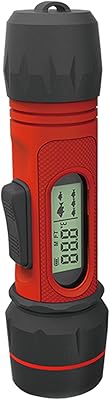
Lixada Wired Fishing Finder Sonar Sensor
70%
88%
Ease of Setup
76%
Display Clarity
63%
Depth Detection Accuracy
72%
Bottom & Structure Detection
58%
Audible Fish Alarm
More
RICANK F12 Fish Finder
86%
89%
Ease of Use
92%
Portability
91%
Water Resistance
87%
Fish Location Accuracy
82%
Battery Life
More
Venterior VT-FF005 Portable Castable Fish Finder
80%
91%
Ease of Setup
78%
Sonar Accuracy
84%
Display Readability
77%
Wireless Range & Connectivity
73%
Battery Life
More
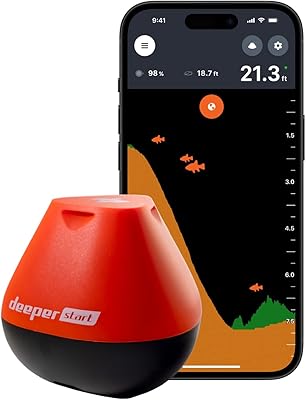
Deeper START Castable Fish Finder
75%
88%
Ease of Setup
93%
Portability & Form Factor
67%
App Experience
71%
Sonar Accuracy & Fish Detection
76%
Battery Life
More
HawkEye Fishtrax 1C Fish Finder
83%
91%
Portability
87%
Sonar Accuracy
89%
Ease of Use
72%
Screen Size
68%
Battery Life
More
Lowrance Eagle 7″ Fish Finder
80%
88%
Display Clarity
84%
Sonar Performance
91%
Ease of Installation
76%
FishReveal Imaging
82%
Chart Coverage & Navigation
More
Humminbird PiranhaMAX 4 Fish Finder
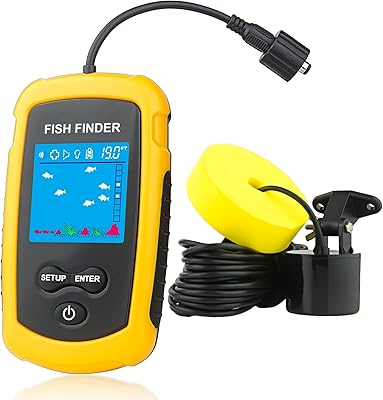
87%
90%
Ease of Use
92%
Portability
85%
Battery Life
87%
Display Clarity
83%
Sonar Accuracy
More
Garmin Striker 4cv Fish Finder
86%
93%
Sonar Imaging Clarity
89%
Ease of Use
91%
Portability
84%
Battery Life
85%
Build Quality
More
LUCKY Y2020-CLA Fish Finder
86%
88%
Accuracy of Fish Detection
90%
Depth Measurement Precision
82%
Wireless Connectivity
75%
Battery Life
95%
Portability
More
Venterior VT-FF001 Fish Finder
88%
94%
Accuracy of Depth Readings
91%
Fish Detection Reliability
89%
Ease of Setup
95%
Portability and Weight
76%
Battery Life
More

FAQ

Right out of the box, the GO9 XSE functions as a fully operational chartplotter and fish finder. The included transducer, chart card, mounting hardware, and power cable cover everything needed for a basic installation. The only things you would typically add yourself are the wiring connections to your boat's power supply.

The bundled 83/200 kHz transom-mount transducer is competent for everyday recreational use — it will handle standard depth readings and basic fish detection without issue. If you are serious about deep-water offshore fishing or want higher-resolution imaging at depth, upgrading to a higher-frequency or bronze-thru-hull transducer is worth budgeting for. For inshore and nearshore use, most anglers find the included unit performs well enough.

This marine display already has a dedicated radar port built in, so adding a compatible Simrad solid-state radar down the road is straightforward — no display replacement needed. Just keep in mind that the radar unit itself is a separate purchase and not included in the box.

Installation is not overly complex, but it does take time if you are running the NMEA 2000 network connections or integrating with other instruments. The physical mount, transducer, and power cable installation is manageable for a competent DIYer. First-time MFD owners often spend a few hours getting everything configured and learning the menu structure, so set aside a full morning rather than expecting a 30-minute job.

The included C-MAP Discover card covers US coastal waters, the Bahamas, and a wide range of inland waterways. If you need coverage beyond that region, additional C-MAP charts can be purchased and loaded via the SD card slot. You can also download chart updates and new regions via Wi-Fi through the Simrad GoFree platform.

For most users, yes — Wi-Fi connectivity works as expected for downloading chart updates and pushing firmware updates wirelessly. That said, a meaningful portion of owners have reported occasional hiccups specifically during software updates, where the process stalls or requires a retry. It is not a widespread failure, but it is consistent enough to mention. Keeping a stable connection and making sure the unit is fully charged during updates helps.

It connects to any NMEA 2000 network, which is an industry-standard protocol, meaning it will communicate with instruments from many manufacturers — not just Simrad. However, the radar port is specific to Simrad-compatible solid-state radar units, so you cannot plug in a competing brand's radar module directly.

Better than you might expect. Most owners report that the touchscreen remains responsive even with wet or damp hands, which is a legitimate concern for anyone fishing in spray or rain. It is not perfect in every condition, but it handles typical marine wet-weather use reliably.

Yes, the unit supports mobile mirroring through Simrad's GoFree app over Wi-Fi, allowing you to view the display on a compatible iOS or Android device. User opinions on the app itself are mixed — the hardware performs better than the app in most comparisons — but the mirroring feature does work for basic use cases like watching the sonar from the cockpit.

Long-term durability is one of the more consistently praised aspects of this unit across owner reviews. Boaters with two or more seasons of regular use in coastal environments generally report that the waterproofing and build quality hold up without significant degradation. As with any marine electronics investment, rinsing the unit with fresh water after salt exposure and using the included suncover when not in use will extend its lifespan noticeably.