Overview

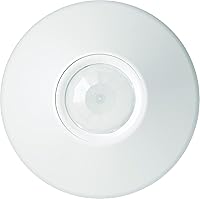
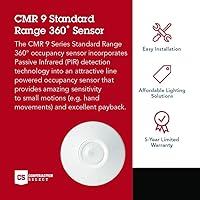
The Sensor Switch CMR 9 Ceiling Motion Sensor has been a reliable presence in commercial lighting control since 2010, and its staying power in that market is telling. Unlike residential sensors that depend on a separate power pack, this ceiling occupancy sensor runs directly on 120V line voltage with a self-contained relay — fewer components, cleaner wiring, less to troubleshoot on a job site. Its 360° conical detection field is sized to cover a private office or small room on its own, making it a practical single-device solution. The price positions it squarely in the professional tier; this is not a budget unit, and it makes no attempt to be.
Features & Benefits

What separates the CMR 9 from basic motion switches is its emphasis on small motion detection. Tuned to register subtle movements — typing at a desk, reaching for a file — it covers a 12-foot radial range when mounted between 8 and 15 feet high. Time delay adjusts from 30 seconds to 20 minutes through a straightforward push-button interface, no app or cable required. The sensor fits ceiling tiles, metal grid systems, or standard junction boxes using included hardware. A green LED indicator confirms operational status during setup. CSA certification covers both US and Canadian installs, and the -10°C to 60°C operating range handles most mechanical or utility rooms without concern.

Best For

This PIR light switch is purpose-built for commercial interiors where a single sensor per room does the job. A private office, a small conference room, a retail back-office — anywhere a single occupant or small group works, especially where people spend long stretches sitting still. That point matters: standard residential PIR sensors frequently cut lights on sedentary workers because they lack sensitivity to minor movements. The CMR 9 was specifically engineered around that problem. Facility managers handling a multi-room retrofit will value the ceiling tile compatibility and the absence of proprietary accessories. It also satisfies CSA-compliant project specs, a genuine requirement on many commercial and institutional jobs across Canada.

User Feedback

Electricians and facilities staff consistently highlight straightforward line voltage wiring as a practical advantage — if you can wire a switch, installation is not a challenge. Office managers who dealt with lights cutting off mid-meeting praise the sensitivity calibration for sedentary occupants. The recurring complaint, however, involves false-off events in extremely still environments, where even this sensor can miss a single, nearly motionless occupant for extended periods. Some buyers also find the push-button programming a bit coarse and wish for finer incremental control. On longevity, verified long-term users report consistent performance across several years of daily use. The price draws occasional hesitation, but most professional buyers find it reasonable for a unit built to this standard.

Pros

  • Self-contained relay means no separate power pack is needed, saving installation time and reducing potential failure points.
  • Tuned specifically for small hand and desk-level movements, making it genuinely reliable for seated office workers.
  • 360-degree conical coverage lets a single unit handle an entire private office without supplemental sensors.
  • Compatible with ceiling tiles, metal grid systems, and standard junction boxes, covering most commercial ceiling types.
  • Push-button time delay programming works without tools, apps, or manuals for most installers.
  • CSA certification satisfies compliance requirements on commercial and institutional projects in both the US and Canada.
  • Green LED indicator makes status verification quick during setup, without needing extra test equipment.
  • Long commercial track record since 2010 signals consistent manufacturing quality and proven field reliability.
  • Operates across a wide temperature range, making it practical for utility rooms, storage areas, and similar environments.

Cons

  • In extremely sedentary environments, even this sensor can occasionally cut lights on a motionless occupant.
  • Push-button programming offers limited granularity — finer time-delay increments are not available without additional hardware.
  • No smart home or building management integration; this is a purely standalone, local-control device.
  • The professional price tier is difficult to justify for single-room residential installs with modest lighting control needs.
  • Coverage tops out at a 12-foot radial range, requiring multiple units for any space larger than a small room.
  • Mounting hardware is included, but the installation still requires working knowledge of line voltage electrical wiring.
  • Matte white finish may look dated or mismatched in modern interior renovation contexts where design consistency matters.
  • Warranty documentation shows some inconsistency between listings, so buyers should confirm terms directly with the manufacturer.

Ratings

Our AI scoring engine analyzed verified global buyer feedback for the Sensor Switch CMR 9 Ceiling Motion Sensor, actively filtering out incentivized reviews, duplicate submissions, and bot activity to surface what real installers and facility managers actually experienced. The scores below reflect both the genuine strengths that keep this ceiling occupancy sensor in commercial specifications after more than a decade, and the honest friction points that buyers consistently flagged. Nothing has been smoothed over.

Motion Detection Accuracy
83%
For a sedentary office environment, the CMR 9 performs notably better than most residential PIR sensors. Users working at desks — typing, writing, or occasionally reaching — report lights staying on reliably through normal work sessions, which is the core promise of this product and largely delivers.
In extremely still conditions, such as a long stationary phone call with no hand movement, some users report false-off events where lights cut unexpectedly. A small subset of buyers found the sensitivity non-adjustable in ways that would address their specific edge cases.
Installation Experience
88%
Electricians consistently rate the wiring process as clean and uncomplicated. The self-contained relay removes the need for a separate power pack, which reduces parts count and speeds up the job — a point that recurring commercial installers specifically called out as a practical advantage over competing units.
For anyone without line voltage wiring experience, the installation is a legitimate barrier. A handful of buyers who attempted DIY installation without prior electrical knowledge reported confusion around proper termination, and the instruction guide received mixed marks for clarity from non-trade users.
Build Quality
81%
19%
The aluminum and plastic composite housing feels solid relative to similarly priced residential sensors. Long-term users who have had units in service for four or more years report no structural degradation, lens clouding, or relay failure under normal commercial use conditions.
The matte white plastic trim piece shows scuff marks and discoloration over time in high-traffic environments. A few buyers noted that the housing, while functional, does not feel quite as premium as the price point implies when held in hand before installation.
Coverage & Range
79%
21%
The 360° conical detection field handles a standard private office or small conference room with a single unit, which is exactly the use case it was designed for. Buyers using it in rooms up to approximately 200 square feet report consistent full-room coverage without dead zones.
Once you push beyond a small room, the 12 ft radial limit becomes a real constraint. Open-plan offices, larger meeting rooms, or L-shaped spaces require multiple units, and buyers who underestimated coverage needs before purchasing were notably less satisfied with the value equation.
Time Delay Control
67%
33%
The 30-second to 20-minute range covers the most common office scenarios adequately. Setting a longer delay — typically 5 to 10 minutes for office use — effectively reduces most false-off complaints, and the push-button process itself takes under a minute for an experienced installer.
The push-button programming offers preset increments rather than continuous adjustment, which frustrates users who want a specific delay between available steps. Several facility managers flagged that finer granularity would make the unit more adaptable across diverse room types in the same building.
Compatibility & Mounting
86%
The range of compatible mounting surfaces is genuinely broad for a single SKU — ceiling tiles, T-bar grids, octagon boxes, and handy boxes are all supported with hardware included. Facility managers retrofitting mixed-ceiling commercial spaces noted this flexibility as a meaningful practical advantage.
The sensor is limited to 120V line voltage, which rules out low-voltage control systems and some international installations. Buyers who assumed broader voltage compatibility based on the commercial positioning were occasionally caught off guard during project planning.
Value for Money
62%
38%
For a commercial electrician or facilities team installing across multiple rooms, the per-unit cost is defensible given the CSA certification, reliable small-motion detection, and absence of proprietary accessories. Long service life further amortizes the upfront cost over time.
For a single-room residential buyer or someone comparing it to lower-cost alternatives, the price is genuinely difficult to justify without a specific technical need. Several casual buyers expressed post-purchase regret when they realized comparable basic motion switching was available at a fraction of the cost.
Programming Simplicity
74%
26%
Experienced installers consistently describe the push-button setup as fast and intuitive — no app, no laptop, no proprietary tool required. For a commercial job where speed across multiple units matters, the simplicity is a legitimate operational benefit.
The lack of detailed feedback during programming means less experienced users sometimes second-guess whether their settings were properly saved. A few buyers noted they would have valued a digital display or more explicit confirmation mechanism rather than relying solely on the green LED.
Reliability Over Time
84%
Multi-year owners — some with units in continuous daily operation since the early 2010s — report consistent performance with no sensor drift or relay degradation. The commercial-grade construction clearly pays dividends in longevity compared to residential alternatives that tend to degrade within two to three years.
A small number of users reported intermittent false triggers in environments with strong HVAC airflow near the sensor, suggesting that thermal interference from heating or cooling vents can occasionally affect PIR performance in specific installation positions.
Smart Home Integration
18%
82%
There is effectively no smart integration to evaluate, which for its intended commercial use case is not a flaw — it is a design choice. Electricians appreciate that there is no firmware to update, no app dependency, and no cloud service that could be discontinued.
For any buyer hoping to incorporate this into a connected lighting ecosystem — whether consumer smart home or building management integration — this unit offers zero compatibility. It is a purely standalone device, and buyers who did not research this thoroughly before purchasing were consistently disappointed.
CSA Compliance & Certification
91%
CSA dual certification for US and Canadian standards is a genuine differentiator on commercial and institutional project specs where compliance documentation is required. Facility managers overseeing multi-site rollouts across both countries flagged this as one of the primary reasons the CMR 9 was specified over alternatives.
RoHS and CSA certification are solid credentials but represent baseline expectations for a professional commercial product at this price. Buyers outside North America noted that the certification scope does not extend to CE marking or other international standards, limiting its use in global projects.
Low-Profile Aesthetics
71%
29%
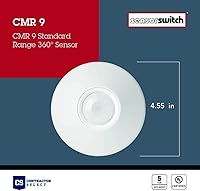
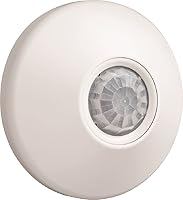
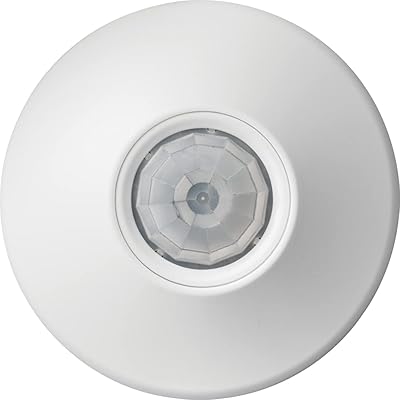
At 4.55″ in diameter and just 1.55″ deep, this PIR light switch sits flush and unobtrusive in a commercial ceiling. The matte white finish matches standard ceiling tile and grid colors well enough that most occupants never notice it after installation.
The design language is purely functional and dates from a 2010 commercial aesthetic. In contemporary office renovations with premium finishes or exposed architectural ceilings, the sensor looks utilitarian and somewhat dated compared to newer form factors from competing brands.
LED Indicator Utility
76%
24%
The green LED gives installers an immediate visual confirmation that the sensor is powered and active during setup, which saves time on multi-unit commercial installs where troubleshooting each sensor individually would otherwise require additional test equipment.
Some occupants in open offices find a persistently blinking indicator light distracting during quiet work. There is no documented option to disable the LED without voiding normal operation, which is a minor but recurring complaint in sedentary work environments.

Suitable for:

The Sensor Switch CMR 9 Ceiling Motion Sensor is the right tool for anyone managing lighting automation in a commercial or professional indoor environment. Electricians and facility managers retrofitting existing office spaces will appreciate the line voltage compatibility — there is no proprietary power pack to source or wire, which keeps the job clean and the parts count low. It is particularly well-suited to private offices, small conference rooms, and similar spaces where a single unit provides full coverage without overlap or zoning complications. Organizations with CSA-compliant project requirements across the US or Canada can specify this unit with confidence. It also performs well in spaces where occupants spend long periods seated and relatively still, which is precisely where cheaper residential sensors tend to disappoint.
Not suitable for:

The Sensor Switch CMR 9 Ceiling Motion Sensor is not a good fit for residential DIYers looking for a simple plug-and-play solution or a device that integrates with smart home platforms like Z-Wave, Zigbee, or app-based systems. This is a line voltage device intended for hardwired commercial installations — if you are not comfortable working with 120V wiring or do not have a licensed electrician available, this is not the right starting point. Its 12-foot radial range also means it will not adequately cover larger open-plan spaces or warehouses without multiple units, which drives up cost considerably. Buyers on a tight budget who only need basic on-off motion control in a low-stakes residential hallway or bathroom will find the price hard to justify compared to entry-level residential alternatives. It also offers no wireless connectivity or remote configuration, which disqualifies it for projects requiring centralized building management integration.
Specifications

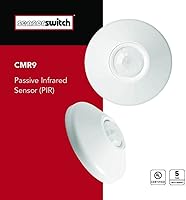
  • Detection Pattern: Uses passive infrared (PIR) technology with a full 360° conical field of view optimized for detecting small movements.
  • Radial Range: Covers a 12 ft radial detection range when mounted at the recommended height of 9 ft.
  • Mount Height: Designed for ceiling installation between 8 and 15 ft above the floor for effective occupancy detection.
  • Time Delay: Adjustable hold-on time delay ranging from 30 seconds to 20 minutes, set via push-button programming.
  • Voltage: Operates on 120V line voltage and connects directly into standard commercial wiring without a separate power pack.
  • Wattage Capacity: Supports a maximum load of 250W, suitable for controlling LED, fluorescent, or other compatible lighting loads.
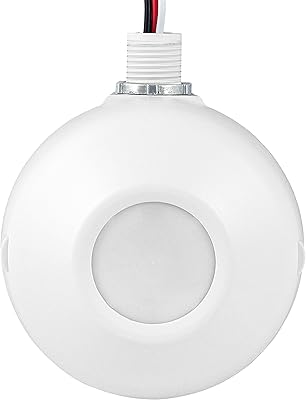
  • Dimensions: Measures 4.55″ in diameter and 1.55″ in depth, offering a low-profile ceiling-mount footprint.
  • Weight: Weighs 5.28 oz, light enough for single-person installation in standard ceiling configurations.
  • Material: Housing is constructed from a combination of aluminum and plastic for durability in commercial environments.
  • Finish: Matte white finish blends into standard commercial ceiling tiles and painted surfaces without drawing attention.
  • Relay Type: Includes a self-contained single-level relay, eliminating the need for an external power pack or accessory module.
  • Indicator: Green LED indicator provides a visible status signal during initial setup and confirms active operation.
  • Programming: Time delay and settings are configured via simple push-button pairing directly on the unit body.
  • Certifications: CSA certified to both US and Canadian safety standards, and complies with RoHS environmental directives.
  • Operating Temp: Rated for ambient operating temperatures from -10°C to 60°C, covering most indoor commercial and utility environments.
  • Mount Compatibility: Installs on ceiling tiles, metallic grid systems, 3.5″ octagon boxes, or single-gang handy boxes using included hardware.
  • Warranty: Covered by a 5-year limited manufacturer warranty per the product specification documentation.
  • Part Number: Officially designated as model CMR 9 by Sensor Switch, a division of Acuity Brands.
  • Market Availability: Has been commercially available since May 2010, reflecting a long production run with consistent specifications.
  • Smart Integration: Does not support wireless protocols such as Z-Wave, Zigbee, or app-based control; operates as a standalone line voltage device.

Related Reviews
Sensor Switch CMR 10 Ceiling Motion Sensor
73%
83%
Motion Detection Reliability
79%
Ease of Installation
67%
Coverage Area Accuracy
81%
Build Quality
84%
Time Delay Adjustability
More
ENERLITES MPC-50H High Bay Ceiling Motion Sensor
72%
83%
Detection Reliability
81%
Installation Experience
91%
Voltage & Load Compatibility
67%
Coverage Range
76%
Build Quality
More
Shaogax Wireless Motion Sensor Driveway Alarm System
71%
91%
Ease of Setup
83%
Wireless Range
88%
Alert Customization
58%
False Alert Rate
61%
Build Quality
More
Actpe Wireless Motion Sensor Driveway Chime
69%
93%
Ease of Setup
88%
Value for Money
76%
Detection Reliability
81%
Wireless Range
61%
Battery Life
More
Fibaro Motion Sensor
86%
91%
Motion Detection Accuracy
85%
Battery Life
88%
HomeKit Integration
93%
Ease of Installation
89%
Design and Size
More
Shelly BLU Motion Bluetooth Motion Sensor
74%
78%
Ease of Setup
81%
Motion Detection Accuracy
67%
Indoor Range
84%
Battery Life
76%
Lux Sensor Usefulness
More
eufy Security Motion Sensor
85%
90%
Detection Accuracy
95%
Ease of Installation
93%
Battery Life
87%
Sensitivity Adjustment
89%
App & Notification System
More
Aqara Motion Sensor P1
87%
91%
Detection Accuracy
95%
Battery Life
88%
Ease of Setup
85%
App Integration
89%
Zigbee Connectivity
More
Onvis SMS2 Smart Motion Sensor
78%
83%
Motion Detection Accuracy
88%
Response Speed
79%
HomeKit Integration
81%
Temperature Accuracy
78%
Humidity Monitoring
More
GREENCYCLE M-SF20R Wireless Driveway Alarm
78%
91%
Ease of Setup
78%
Detection Reliability
62%
Wireless Range
88%
Chime & Alert Volume
61%
Battery Life
More

FAQ

That is actually what the CMR 9 was designed to do. It is tuned to detect small movements like typing, reaching, or subtle hand gestures rather than requiring large body motion to stay triggered. That said, if you sit completely still for an extended stretch — think a long phone call with no movement at all — some users report occasional false-off events. Setting the time delay toward the higher end of the range helps reduce that.

You need to be comfortable working with 120V line voltage wiring. If you have replaced a light switch or wired a junction box before, the physical installation is straightforward. If that is outside your experience, bring in a licensed electrician — this is not a low-voltage plug-in device and should be treated accordingly.

No, it does not. This is a standalone line voltage occupancy sensor with a hardwired relay. It has no wireless radio, no Wi-Fi, no Z-Wave, and no Zigbee capability. It turns lights on and off based purely on detected motion and the programmed time delay — nothing more, nothing less.

At a 9 ft mounting height, the sensor covers a 12 ft radial range, which translates to roughly a 24 ft diameter circle at floor level. For a standard private office or small conference room, one unit is typically sufficient. For larger open-plan spaces, you would need multiple units placed strategically.

The time delay is set using a push-button on the sensor body and can be adjusted anywhere from 30 seconds to 20 minutes. The control is functional but not highly granular — you are selecting from preset increments rather than dialing in an exact number of minutes. For most office applications this is fine, but those needing very precise control may find it limiting.

Yes. The sensor carries CSA certification covering both US and Canadian safety standards, which means it can be specified on commercial projects in either country without additional compliance concerns.

It works with standard drop ceiling tiles, metallic T-bar grid systems, 3.5″ octagon electrical boxes, and single-gang handy boxes. Mounting hardware for these configurations is included in the box, so you typically will not need to source additional fasteners for common ceiling types.

Yes, and LED is generally the preferred load type for this kind of occupancy sensor. The unit supports up to 250W, which covers a significant number of LED fixtures. Just confirm your total lighting load stays within that wattage ceiling before wiring it in.

The CMR 9 has been available since 2010 and is listed as not discontinued by the manufacturer. Sensor Switch is part of Acuity Brands, a major commercial lighting controls company, so parts and support documentation remain accessible. The long production run is generally a positive sign for a commercial product.

The product is listed with a 5-year limited manufacturer warranty. As with most commercial sensor warranties, it typically covers defects in materials and workmanship under normal use conditions. It is worth confirming exact terms directly with Sensor Switch or your distributor before purchase, as warranty documentation across different sales channels can vary slightly.

Where to Buy