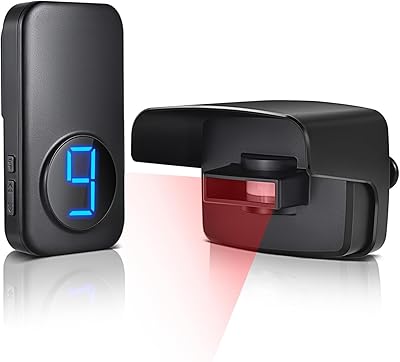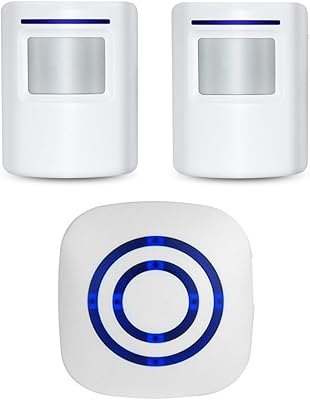


Overview

The GREENCYCLE M-SF20R Wireless Driveway Alarm sits in a crowded budget category, but it earns attention for a few legitimate reasons. Unlike most entry-level sensors that rely on a single infrared beam, this driveway alarm combines infrared and microwave radar detection — a dual-layer approach that meaningfully cuts down on nuisance alerts from passing shadows or temperature swings. It runs entirely on batteries and needs no Wi-Fi, no hub, and no monthly fee, which makes it genuinely practical for rural homes or anyone tired of cloud-dependent security systems. The IP64 weatherproof rating keeps it functional through rain and dust, and one receiver can grow with you, supporting a surprisingly large network of sensors over time.

Features & Benefits

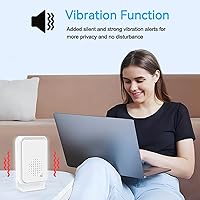
Where this wireless motion sensor separates itself from cheaper PIR-only options is its detection method. By layering infrared sensing with microwave radar, it registers both heat signatures and physical movement — reducing the false trips you would normally get from wind-blown foliage or a passing headlight. Four dedicated LED indicators on the receiver show you which zone triggered, a genuinely useful detail when sensors cover multiple entry points. There is also a silent vibration mode for discreet monitoring in quieter spaces. One practical caveat: while the receiver can run on USB-C or included batteries, the outdoor sensors are strictly battery-powered with no charging port — easy to miss when unboxing.

Best For

This perimeter alert system makes the most sense for homeowners with a long driveway who want a heads-up before someone reaches the front door — not a camera feed, just a reliable chime. It also works well for small business owners keeping an eye on a rear entrance or parking area without committing to a monitored security contract. Because the receiver needs no wiring and the sensor mounts with basic hardware, renters can set it up and take it down without leaving a mark. Rural users in areas with spotty internet will especially appreciate that the whole system operates completely offline. And if your property grows, adding sensors later is straightforward.

User Feedback

Buyers are generally happy with how fast setup is — most report having the system running in under fifteen minutes — and chime volume comes up often as a positive, loud enough to hear from another room or a detached garage. The dual-detection approach does seem to help with day-to-day reliability. That said, wireless range is a consistent point of friction. The advertised distance assumes open, unobstructed space; walls, trees, and building materials cut that figure noticeably, and some buyers on larger properties found the signal weaker than expected. Battery life gets mixed marks — reasonable under light use, but shorter when the sensor triggers frequently. A handful of users also mention occasional false alerts from animals or direct sunlight.

Pros

  • Quick setup — most buyers report having the system running in under twenty minutes with no tools beyond basic hardware.
  • Dual infrared and microwave detection meaningfully reduces false alerts compared to simpler single-sensor alternatives.
  • The chime is genuinely loud, audible from a separate room or a detached garage without straining.
  • No Wi-Fi, no hub, no subscription — it works completely offline right out of the box.
  • The receiver can pair with a large number of sensors, making future expansion straightforward and cost-effective.
  • Four LED zone indicators tell you exactly which sensor fired, useful when covering multiple entry points.
  • Silent vibration mode on the receiver is handy for offices or situations where a loud chime would be disruptive.
  • The rotating sensor mount allows precise aiming without needing additional brackets or adapters.
  • IP64 weatherproofing handles everyday rain and dust, making it viable for year-round outdoor use in most climates.
  • Batteries are included for the receiver, so you can test the system immediately without a separate store run.

Cons

  • Real-world wireless range falls noticeably short of the advertised figure whenever walls, trees, or structures are present.
  • The outdoor sensors cannot be recharged via USB-C — you must remove and replace batteries each time, which gets tedious on high-mounted units.
  • Battery life under frequent-trigger conditions is shorter than many buyers expect, potentially requiring changes every few weeks.
  • Animals and direct sunlight can still cause occasional false triggers despite the dual-detection design.
  • There is no smartphone app, no push notification, and no remote alert — you only know something triggered if you are within earshot of the receiver.
  • No event log or history is stored anywhere, so there is no way to review past alerts after the fact.
  • The sensor power requires AAA batteries that are not included in the box, which is easy to overlook before installation day.
  • Build quality feels budget-appropriate up close — the plastic housing is functional but not particularly rugged-feeling for the price.
  • The sensing footprint is relatively narrow in depth, so placement and aiming require some trial and error to cover the intended zone.
  • Pairing multiple sensors and customizing chime tones per zone can feel fiddly without clearer written instructions.

Ratings

The scores below for the GREENCYCLE M-SF20R Wireless Driveway Alarm were generated by our AI review engine after analyzing verified buyer feedback from multiple global markets, with spam, bot submissions, and incentivized reviews actively filtered out. Each category reflects the honest distribution of real user experiences — strengths and frustrations weighted equally — so you get a picture that is useful for making an actual purchase decision, not just a highlight reel.

Ease of Setup
91%
Buyers consistently describe unboxing to first alert in under twenty minutes, with no wiring, no app download, and no account creation required. The physical mounting hardware is included, and pairing the sensor to the receiver involves a straightforward button sequence that most users complete on the first attempt.
Customizing multiple sensors with distinct chime tones and zone assignments takes noticeably longer and the written instructions are thin on detail. A few buyers found the pairing process less intuitive when adding a second or third sensor after the initial setup was already complete.
Detection Reliability
78%
22%
The combined infrared and microwave approach gives this wireless motion sensor a meaningful edge over budget PIR-only competitors, catching vehicles and people dependably at the entrance of a driveway or gate in normal conditions. Most buyers in suburban and rural settings report that the sensor triggers consistently when it should.
Animals — particularly dogs, deer, and large birds — still cause false triggers with some regularity, and direct sunlight hitting the sensor during temperature swings can produce phantom alerts. The dual-detection advantage narrows in dense vegetation or areas with lots of ambient heat sources nearby.
Wireless Range
62%
38%
In genuinely open environments — a flat rural property with no structures between sensor and receiver — the range holds up well and gives users meaningful early warning before a vehicle reaches the house. For tight setups where the receiver is close to the sensor, range is never an issue.
Real-world range drops considerably once walls, wooden fences, or dense shrubs enter the path between the sensor and receiver, and buyers on larger or landscaped properties frequently find the signal weaker than the advertised maximum suggests. This is the single most common complaint in user reviews and represents a genuine gap between marketing and reality.
Chime & Alert Volume
88%
The receiver chime is loud enough to hear clearly from a connected garage or an adjacent room with the door closed, which is exactly what homeowners need when they cannot keep an eye on the driveway all day. Multiple selectable ringtones let users assign distinct sounds to different sensor zones, adding practical value in multi-sensor setups.
Volume is not adjustable on all models, which can be disruptive in smaller homes or apartments where a sudden loud chime is jarring at night. A small number of buyers also wished the chime selection were broader, finding the available tones somewhat generic.
Battery Life
61%
39%
Under light to moderate traffic — a typical residential driveway with several triggers per day — many buyers report the sensor batteries lasting a reasonable stretch before needing replacement. The receiver's USB-C power option eliminates battery concerns on the indoor unit entirely for those who keep it plugged in.
In high-traffic locations or where false triggers are frequent, sensor batteries drain much faster than expected, and several buyers on busier driveways found themselves replacing AAA cells more often than they anticipated. The fact that the sensor has no rechargeable option makes this a recurring cost and inconvenience rather than a one-time consideration.
Build Quality
69%
31%
The sensor housing feels solid enough for an entry-level outdoor device, and the rotating mount bracket is sturdier than some buyers expected at this price point. The overall assembly does not feel flimsy when handled, which gives reasonable confidence for a device that will live outdoors year-round.
Up close, the plastic construction reads clearly as budget-grade, and a handful of long-term buyers noted that the housing shows wear — minor cracking or discoloration — after a year or more of sun and temperature cycling. It holds together, but it does not inspire the same confidence as mid-range competitors with more robust enclosures.
Weatherproofing
74%
26%
The IP64 rating handles everyday rain, garden hose splashback, and dusty outdoor environments without issue, and most buyers in temperate climates report no weather-related failures over multiple seasons. Mounting it under a modest roof overhang extends its lifespan further and keeps direct water exposure minimal.
IP64 is not a fully waterproof rating, and buyers in regions with sustained heavy rainfall or frequent freezing temperatures have noted performance inconsistencies over time. The system was not designed for submersion or prolonged exposure to standing water, and treating it as fully weatherproof in extreme climates would be a mistake.
False Alarm Rate
67%
33%
Compared to single-sensor PIR alternatives, the composite detection method genuinely reduces the nuisance alerts caused by wind, passing headlights, or minor temperature shifts, which is one of the more tangible real-world improvements buyers notice after switching from cheaper devices.
Animal movement remains an unresolved trigger source, and buyers with active wildlife on their property — or those in neighborhoods with roaming pets — report enough false alerts to be mildly frustrating over time. Heat-related false positives in summer also appear occasionally in buyer feedback, particularly when the sensor faces south or southwest.
Expandability
84%
The ability to add sensors one at a time as budget allows is genuinely useful for buyers who want to grow their coverage gradually, and pairing additional units to an existing receiver is straightforward. The compatibility with door sensors and remote controls broadens what the system can monitor beyond just outdoor motion.
Buying additional sensors adds up, and since the ecosystem is brand-specific, you are committed to this manufacturer's product line once you invest in the receiver. Buyers hoping to mix sensors from other brands will find no cross-compatibility.
Zone Identification
81%
19%
Having four independent LED indicators on the receiver face — each corresponding to a specific sensor — is a practical feature that goes beyond what most competitors offer at this price. When covering a front gate, side entrance, and rear driveway simultaneously, knowing which zone fired without walking outside first is genuinely convenient.
Four zones is sufficient for most residential setups, but buyers with more complex properties who want to monitor five or more distinct areas will find the LED display runs out of dedicated indicators. The zone labeling on the unit itself is also minimal, which can cause confusion when setting up for the first time.
Sensor Adjustability
82%
18%
The wide rotation range of the sensor mount — both left-right and up-down — means you can aim the sensor precisely at a driveway lane or gate opening without needing additional angled brackets or adapters. This flexibility is especially appreciated by buyers dealing with non-standard mounting surfaces or angled walls.
The friction fit of the rotating joint loosens on some units over time, particularly in locations with strong winds or vibration, causing the sensor to slowly drift from its aimed position. A few buyers noted needing to re-aim and re-tighten the mount periodically as a minor maintenance chore.
Value for Money
83%
For a no-subscription, no-Wi-Fi perimeter alert that ships with batteries and installs in minutes, this driveway alarm delivers a solid return on a modest investment. The dual-detection method, zone LEDs, and expandability are features that justify the price compared to simpler single-sensor kits in the same range.
Once you factor in the cost of AAA batteries for the sensor — which are not included and need replacement more often under regular use — the ongoing running cost is higher than the upfront price implies. Buyers who need to cover multiple zones will also find that the per-unit cost of adding sensors accumulates quickly.
Discreet Operation
77%
23%
The option to disable the sensor indicator light is a thoughtful feature for buyers who do not want to advertise the presence or position of their security hardware to visitors. The silent vibration mode on the receiver adds another layer of discreet monitoring for offices or quiet living spaces.
Even with the probe light disabled, the sensor housing is a visible white plastic unit mounted on a wall — not exactly covert in appearance. Buyers seeking genuinely concealed monitoring will likely need a purpose-built hidden camera or sensor rather than this style of open-face detector.
Offline Independence
93%
Functioning entirely without a router, smartphone, or cloud account is a meaningful differentiator for this perimeter alert system, and buyers in rural areas with unreliable internet consistently highlight this as the feature that pushed them toward this device over smart-home alternatives. There are no outages, no server dependencies, and no privacy concerns tied to connected accounts.
The same offline independence that makes this system attractive also means there are zero remote alerts — if you are away from home, you will not receive any notification that a sensor has triggered. Buyers who discover mid-purchase that there is no app integration are sometimes caught off guard, particularly if they assumed all modern security devices offered some form of remote monitoring.

Suitable for:

The GREENCYCLE M-SF20R Wireless Driveway Alarm is a strong fit for homeowners who want a no-fuss early-warning system without committing to a monthly monitoring contract or a complicated smart-home setup. If your property has a long driveway, a detached garage, or a back gate that sits out of sight from the main living area, this driveway alarm fills that blind spot reliably and affordably. Rural households are a natural match — the system runs entirely on batteries and has zero dependence on Wi-Fi or a cellular connection, so spotty internet is never a problem. Renters benefit too, since the receiver requires no hardwiring and the sensor mounts with minimal hardware that leaves walls intact when you move out. Small business owners watching a side entrance, a stockroom door, or a modest parking area on a tight budget will also find the expandable sensor ecosystem practical, since coverage can be added one zone at a time as needed.

Not suitable for:

The GREENCYCLE M-SF20R Wireless Driveway Alarm is not the right tool for buyers who need long-range coverage across a sprawling property with trees, fences, or structures in between sensors and the receiver. The advertised wireless range assumes wide-open, unobstructed space — a condition that rarely exists in practice — and real-world signal distances can fall considerably shorter, which frustrates buyers on larger or heavily landscaped lots. This perimeter alert system also lacks any app connectivity, camera integration, or cloud logging, so if you want a record of when events occurred or remote alerts sent to your phone, you will need a different category of product entirely. The outdoor sensors are battery-only with no USB-C charging option — a genuine inconvenience if the sensor is mounted in a hard-to-reach spot and needs frequent battery changes under heavy use. Finally, buyers in extreme cold climates should note that IP64 protection handles rain and dust well but does not mean fully waterproof or freeze-proof; performance in sustained harsh conditions may vary.

Specifications

  • Detection Method: Uses a composite of passive infrared and microwave radar to detect both heat signatures and physical movement simultaneously, reducing false alerts compared to single-method sensors.
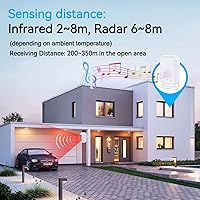
  • Wireless Range: Communicates between sensor and receiver at distances up to roughly 918ft (280m) in open, unobstructed outdoor conditions.
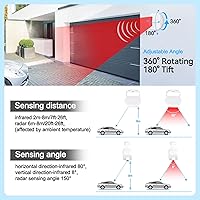
  • Sensing Distance: The infrared element detects motion within a 2–8 meter zone, while the radar element operates effectively between 6–8 meters depending on ambient temperature.
  • Weatherproofing: The outdoor sensor carries an IP64 rating, meaning it is protected against dust ingress and water splashing from any direction, but is not designed for submersion.
  • Sensor Power: Each outdoor sensor requires 3 AAA alkaline batteries, which are not included in the package and cannot be substituted with USB-C charging.
  • Receiver Power: The indoor receiver runs on 2 AA alkaline batteries (included) or can be powered continuously via a USB-C cable connection.
  • Receiver Capacity: A single receiver can be paired with up to 32 individual motion sensors and up to 8 remote controls simultaneously.
  • Zone Indicators: Four independent LEDs on the receiver face light up individually to identify which specific sensor zone triggered the alert.
  • Alert Modes: The receiver supports both an audible chime alert and a silent vibration mode, selectable based on the user's environment or preference.
  • Sensor Rotation: The sensor head rotates 360 degrees horizontally and 180 degrees vertically on its mounting base, allowing precise directional aiming after installation.
  • Mount Type: Both the sensor and receiver include a wall-mount base; the sensor attaches via a rotating bracket compatible with standard wall surfaces.
  • Package Weight: The complete package weighs 7.8 oz (approximately 0.22 kg), making it lightweight and manageable for a single person to install.
  • Package Dimensions: The retail box measures 6.65 x 3.98 x 2.09 inches, compact enough to store a spare unit without taking up significant shelf space.
  • Compatibility: The receiver is compatible with the brand's wireless motion sensors, door magnetic sensors, and remote controls within the same system ecosystem.
  • Expandability: Additional transmitters and receivers can be purchased separately and paired freely, allowing the system to scale across larger or more complex properties.
  • Chime Options: The receiver supports multiple selectable ringtones so users can assign a distinct sound to different sensors for easier zone identification by ear.
  • Probe Light: The sensor's indicator light can be disabled for more discreet outdoor placement where visible blinking would be unwanted.
  • Item Model: The manufacturer model number is M-SF20R-1PK-25, useful for ordering compatible add-on sensors or replacement parts directly from the brand.
  • Market Rank: As of the listing data available, this wireless motion sensor held a top-250 ranking in the Motion Detectors category on Amazon Electronics.
  • Availability Date: This product was first made available for purchase in May 2021, giving it several years of real-world buyer feedback to draw from.

Related Reviews
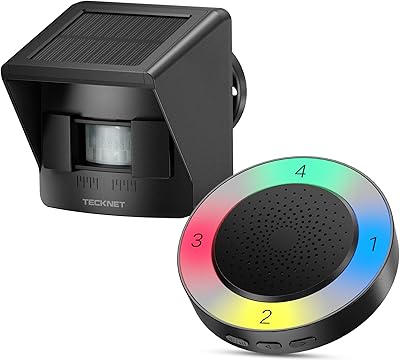
TECKNET EMD01001BA01 Solar Wireless Driveway Alarm
76%
91%
Ease of Setup
74%
Solar Charging Performance
68%
Detection Accuracy
86%
Wireless Signal Range
83%
Alert Customization
More
Bistee Wireless Driveway Alarm with Microwave-Infrared Sensor
83%
92%
Wireless Range
88%
Ease of Installation
85%
Motion Detection Performance
80%
Build Quality
89%
Weatherproof Design
More
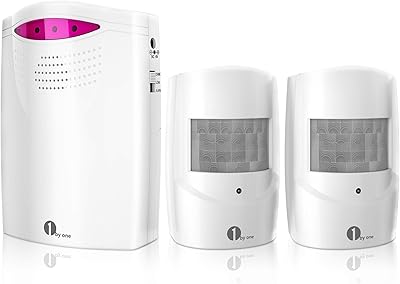
1byone Wireless Driveway Motion Sensor Alarm
71%
91%
Ease of Setup
67%
Wireless Range
63%
Detection Accuracy
88%
Alert Volume & Clarity
71%
Build Quality
More
Qualirey Driveway Alarm Wireless Motion Sensor System
86%
92%
Value for Money
94%
Ease of Installation
89%
Range of Detection
88%
Weather Resistance
85%
Alert Customization
More
Enegg Wireless Driveway Motion Sensor Alarm

69%
93%
Ease of Setup
81%
Wireless Range
74%
Detection Reliability
63%
Sound Quality
79%
Volume Output
More
HTZSAFE 808A Wireless Driveway Alarm System
76%
83%
Wireless Transmission Range
91%
Ease of Installation
72%
Motion Detection Accuracy
61%
Battery Life
68%
Receiver Alert Volume
More
FREETIM Wireless Driveway Motion Sensor Alarm System
74%
91%
Ease of Setup
78%
Detection Reliability
67%
Wireless Range
72%
Weather Resistance
58%
Battery Life
More
Chesbung Solar Driveway Alarm System
87%
93%
Ease of Installation
88%
Detection Range
90%
Battery Life
85%
Reliability of Motion Detection
87%
Build Quality and Durability
More
M Jiuyunmu Wireless Bluetooth Helmet Speakers
75%
78%
Sound Quality
83%
Bluetooth Connectivity
91%
Battery Life
61%
Helmet Compatibility
88%
Ease of Use & Controls
More
SKYLINK SK-200 Wireless Alarm System
82%
88%
Ease of Installation
85%
Smartphone App Experience
65%
Motion Sensor Accuracy
91%
Expandability and Flexibility
89%
Battery Life
More

FAQ

Yes, completely. The system communicates directly between the outdoor sensor and the indoor receiver using its own wireless signal — no router, no app, and no internet connection required. That makes it a reliable option for cabins, rural properties, or anyone who just wants something that works without a tech setup.

The advertised range assumes a clear line of sight with no obstructions between the sensor and receiver. In practice, walls, wooden fences, brick structures, and dense landscaping all reduce that distance. Many buyers find the effective range in typical suburban or rural settings is a meaningful step below the maximum spec, so if your receiver needs to sit far from the sensor and there are structures in between, it is worth testing placement before committing to a permanent mount.

No — and this catches people off guard. The receiver has a USB-C port for continuous power, which is handy if you want to plug it into a wall outlet. The outdoor sensor, however, is strictly battery-powered and has no charging port at all. You will need to swap out AAA batteries when they run low, so factor that into your placement decision if the sensor will be mounted somewhere hard to reach.

It can, yes. The dual infrared and microwave detection does a better job filtering out wind and shadows than a basic PIR-only sensor, but it still responds to warm-bodied animals moving through its zone. If wildlife or pets are common in your detection area, expect some false alerts — though most buyers find the rate manageable compared to cheaper alternatives.

The IP64 rating means it handles rain, splashing water, and dust reliably, which covers most year-round outdoor conditions in temperate climates. What it does not mean is fully waterproof or freeze-proof — it should not be submerged or left in standing water. In very cold winters, battery performance may also dip, which is normal for alkaline cells in low temperatures. Most buyers in moderate climates report no issues leaving it outside through the seasons.

Yes, and that is one of the more useful aspects of this system. The receiver can pair with a large number of sensors, so you can start with one and add more zones over time as your budget allows. Each sensor can also be assigned a different chime tone on the receiver, so you can tell by sound alone which area was triggered without looking at the LED indicators.

Most buyers describe the chime as genuinely loud — not just a soft beep. Whether it carries through your specific walls depends on your home layout, but the general consensus is that it is audible from an adjacent room or a connected garage without issue. There is also a silent vibration mode if you need something more discreet.

The 2 AA batteries for the receiver are included in the box, so you can power that up right away. The outdoor sensor requires 3 AAA batteries, which are not included, so you will want to have those on hand before you set everything up. It is a small but easy-to-overlook detail when unboxing.

Setup is straightforward. The sensor and receiver both come with mounting bases, and the physical installation involves just a couple of screws. Most buyers report the whole process taking well under half an hour. Pairing the sensor to the receiver is also simple, though navigating the chime and zone settings can take a few extra minutes if you are customizing multiple sensors.

Yes — the system supports pairing multiple receivers to the same sensors, which is useful if you want alerts audible in the main house and in a detached workshop or garage at the same time. Each receiver can be customized independently for volume, chime tone, and alert mode, giving you some flexibility in how each zone is monitored.