Overview

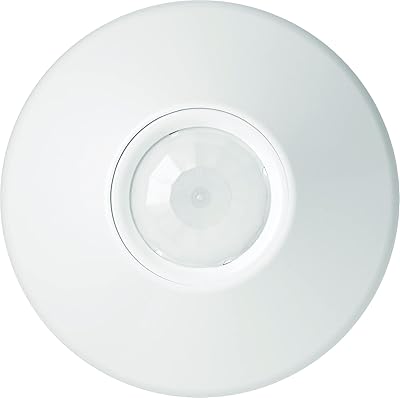
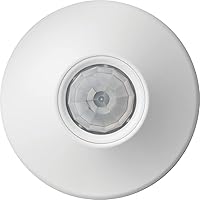
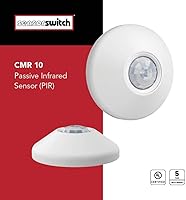
The Sensor Switch CMR 10 Ceiling Motion Sensor has been a fixture in commercial lighting control since 2011 — a run that says something about its practical durability in real working environments. Unlike many sensors that need a separate power pack, this ceiling occupancy sensor wires directly into line voltage, keeping installation straightforward and reducing hardware costs. Its round, matte-white profile sits flush against standard ceiling tiles or grid systems, so most occupants won't give it a second glance. At its price point, it's squarely aimed at professional installations and light commercial projects, not casual DIY home setups.
Features & Benefits

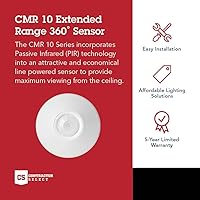
The CMR 10 covers an entire small-to-mid-sized room with a full 360-degree passive infrared sweep — optimized for catching the kind of motion that actually happens in offices, meaning people walking around rather than minor desk fidgeting. The time delay is push-button adjustable anywhere from half a minute to twenty minutes, which makes fine-tuning straightforward without opening an app or reading a manual. Crucially, the self-contained relay handles switching on its own, so there's no need to wire in a separate control device. It mounts to standard junction boxes or ceiling grid hardware, and a green LED indicator confirms activity during setup. CSA certification covers both US and Canadian code requirements.

Best For

This ceiling occupancy sensor earns its place in private offices, conference rooms, and compact retail spaces where lights left on unnecessarily translate to real operating costs, not just minor annoyances. It's a strong fit for facilities managers and licensed electricians handling lighting retrofits — particularly those who need a drop-in ceiling solution that integrates with existing wiring rather than requiring a system overhaul. Ceiling heights between roughly seven and fifteen feet put a single unit in range to cover an entire room footprint. Buildings needing to satisfy CSA certification requirements will appreciate that compliance is baked in. For anyone wanting minimal ongoing maintenance and long-term reliability, this sensor fits that expectation well.

User Feedback

On the whole, people who install the CMR 10 in professional settings tend to come away satisfied — detection consistency and the simple setup process draw consistent praise from electricians and facility staff who just want something that works without a steep learning curve. Longevity in commercial environments is another positive theme, with units holding up reliably over months of continuous daily use. That said, this PIR light switch shares a limitation common to passive infrared technology: it reads large movement well but can miss someone sitting fairly still at a desk. Users who expected it to keep lights on during quiet, focused work were sometimes disappointed. Real-world coverage in oddly shaped rooms may also fall short of the theoretical range, so mounting placement deserves careful thought.

Pros

  • Wires directly into line voltage with a self-contained relay, so there is no need to purchase or install a separate power pack.
  • Push-button time delay adjustment makes on-site programming quick without any special tools or technical manuals.
  • Full 360-degree PIR coverage reliably handles real-world office traffic — people moving through a room are detected consistently.
  • Broad mounting compatibility with ceiling tiles, grid systems, and standard junction boxes gives installers flexibility on the job.
  • CSA certification for both the US and Canada makes the CMR 10 straightforward to specify for code-compliant commercial projects.
  • The low-profile matte-white round form factor sits discreetly on most ceilings without drawing attention.
  • Long commercial track record since 2011 provides confidence that replacement parts and support are not going away anytime soon.
  • A single unit can cover an entire small-to-mid-sized room, reducing the number of sensors — and installation hours — needed per space.
  • The green LED indicator simplifies troubleshooting and confirmation during initial setup without needing additional test equipment.

Cons

  • Passive infrared technology will not reliably detect a person sitting still at a desk, causing lights to switch off during quiet work sessions.
  • Line-voltage wiring means this ceiling occupancy sensor is not a realistic DIY option for anyone without genuine electrical experience.
  • Real-world coverage in oddly shaped or partitioned rooms can fall noticeably short of the rated radial detection range.
  • No smart-home integration — there is no Wi-Fi, Bluetooth, or app control of any kind, which may disappoint buyers expecting modern connectivity.
  • The time delay minimum of thirty seconds may still feel abrupt in spaces where occupants leave and return frequently.
  • Buyers have occasionally reported confusion between the advertised range specification and what the sensor actually achieves under their specific ceiling height and room geometry.
  • Installation on non-standard or older ceiling types can require additional adapter hardware not included in the box.
  • No fine-motion or dual-technology detection mode means coverage gaps are essentially a fixed limitation of the sensor design, not something adjustable settings can fix.

Ratings

The Sensor Switch CMR 10 Ceiling Motion Sensor scores below are generated by AI after analyzing verified purchaser reviews from buyers worldwide, with spam, bot activity, and incentivized feedback actively filtered out. Ratings for the CMR 10 reflect its real commercial context — an indoor occupancy sensor used daily in offices, retail spaces, and institutional buildings — not wishful spec-sheet comparisons. Both consistent strengths and recurring frustrations are represented transparently across every category.
Motion Detection Reliability
83%
In active commercial environments — hallways, open offices, conference rooms with regular foot traffic — the sensor performs with strong consistency. Electricians and facilities managers repeatedly note that once properly positioned, it rarely misses an occupant entering a space, which is the core job it was built for.
The PIR technology's dependence on large body movement creates a well-documented blind spot for seated, stationary occupants. Workers sitting quietly at a desk frequently report the lights cutting out mid-task, which is a genuine daily frustration rather than a rare edge case.
Ease of Installation
79%
21%
Licensed electricians consistently describe the wiring process as clean and logical, particularly because the self-contained relay eliminates the extra step of sourcing and mounting a separate power pack. The included hardware covers standard junction boxes and ceiling grid mounts without improvisation.
For non-standard ceiling types — older plaster ceilings, unusual tile thicknesses, or retrofit situations with limited junction box depth — installation becomes noticeably more involved. A handful of installers reported needing additional adapter hardware that was not included in the box.
Coverage Area Accuracy
67%
33%
In symmetrical, open rooms with ceilings close to the nine-foot ideal, the coverage footprint performs reasonably close to the rated radial range. Single-unit full-room coverage is genuinely achievable in well-proportioned private offices and small conference rooms.
Real-world results in irregularly shaped spaces, rooms with partitions, or ceilings significantly taller or shorter than the rated optimum can fall well short of expectations. Multiple buyers expressed frustration that the coverage they experienced did not match what the range specification implied.
Build Quality
81%
19%
The aluminum and plastic composite construction feels intentionally commercial rather than consumer-grade, and the matte-white finish holds up well under the kind of long-term ceiling exposure typical of office environments. Units installed years ago are frequently still functioning without physical deterioration.
The plastic portions of the housing feel noticeably lighter than the body as a whole, and a small number of buyers commented that the lens cover feels less robust than expected at this price point. It is functional, but the tactile experience does not always match the commercial-grade positioning.
Time Delay Adjustability
84%
The push-button delay configuration is genuinely practical — no apps, no screwdrivers, no configuration manuals needed on a ladder. The range from roughly half a minute to twenty minutes covers the majority of real office lighting scenarios without feeling artificially limited.
The minimum delay of around thirty seconds can still feel abrupt in spaces where occupants step out briefly and return, leading to unnecessary light cycling. There is no granular fine-tuning between increments, so the adjustment lands close to but not exactly where some installers want it.
Value for Money
71%
29%
For a commercial installation where reliability, CSA certification, and line-voltage compatibility are non-negotiable, the pricing makes reasonable sense — particularly because the self-contained relay removes the cost of a separate power pack from the total project budget.
Home users or small business owners comparing this to consumer-grade motion switches will find the price difficult to justify, especially given the lack of smart-home integration and the PIR fine-motion limitations. The value proposition is strong for professionals but less compelling for casual buyers.
Stationary Motion Detection
41%
59%
The sensor does what it says — it detects active movement reliably, and for spaces where occupants are consistently mobile (stockrooms, hallways, retail floors), this limitation almost never surfaces as a practical problem.
For desk-based office work, this is the single most cited pain point across user feedback. PIR technology is structurally limited in its ability to detect a person sitting still, and the CMR 10 does not include any ultrasonic or microwave supplement to compensate. This is not a defect, but it is a dealbreaker for certain use cases.
Mounting Versatility
82%
18%
Compatibility with ceiling tiles, metallic grid systems, octagon junction boxes, and single-gang handy boxes gives this ceiling occupancy sensor genuine flexibility across different commercial building types. Installers working across varied job sites appreciate not having to stock multiple sensor SKUs.
Compatibility is broad for standard commercial construction, but older or non-standard installations occasionally require creative adaptation. A small percentage of buyers noted that achieving a flush, stable mount on certain tile types took more effort than the installation guide suggested.
Longevity & Durability
88%
The CMR 10 has a documented commercial track record stretching back to 2011, and buyer feedback consistently includes references to units still performing reliably after several years of continuous use in commercial settings. The five-year warranty aligns with the product's actual durability reputation.
Because this is a ceiling-mounted commercial device, failure modes are less visible to users until a sensor quietly stops triggering — a few buyers only discovered a unit had degraded when occupancy complaints surfaced. Proactive inspection schedules are advisable in critical-use installations.
Setup & Configuration
77%
23%
The push-button pairing process and green LED feedback loop make the initial setup intuitive enough that experienced installers can complete configuration quickly without consulting documentation repeatedly. The learning curve is minimal for anyone with prior occupancy sensor experience.
First-time installers without commercial sensor experience found the lack of a detailed digital setup guide frustrating, and the physical indicator LED alone is not always sufficient for diagnosing subtler calibration issues in larger or noisier spaces.
Code & Certification Compliance
91%
Dual CSA certification for the US and Canada, combined with RoHS compliance, makes this PIR light switch straightforwardly specifiable for commercial projects with strict regulatory requirements. Facilities teams and contractors consistently flag this as a meaningful advantage over uncertified alternatives.
The certifications cover the electrical safety and environmental compliance standards well, but buyers in jurisdictions with specific energy code requirements (such as Title 24 in California) should verify independently whether the CMR 10 satisfies those additional mandates before specifying it.
Smart Home Compatibility
22%
78%
The line-voltage relay design integrates cleanly with existing commercial lighting infrastructure, which is exactly the ecosystem it was built for — no hub, no bridge, no subscription required.
There is zero smart-home integration of any kind. No Wi-Fi, no Zigbee, no app control, no scheduling, and no remote monitoring. For buyers expecting any level of modern connectivity or automation beyond basic occupancy switching, this sensor is a complete mismatch.
Ceiling Profile & Aesthetics
76%
24%
The compact round profile and matte-white finish blend into standard commercial ceilings without drawing attention, which matters in client-facing spaces like reception areas or meeting rooms where visible hardware can feel out of place.
The sensor sits slightly proud of the ceiling surface rather than sitting fully flush, which in low-ceiling or design-conscious spaces is noticeable up close. It is subtle, but buyers expecting an invisible installation may find the physical presence slightly more prominent than anticipated.
Temperature Range Suitability
79%
21%
The rated operating window of -10°C to 60°C comfortably covers virtually every realistic indoor commercial environment, including server-adjacent rooms or sun-exposed retail spaces where temperatures can climb noticeably above typical office norms.
Despite the broad temperature rating, the product is explicitly not rated for outdoor or uncontrolled environments, so buyers hoping to deploy it in unconditioned warehouses or garages that see extreme cold in winter are working outside the product's intended parameters.
Indicator Feedback Quality
73%
27%
The green LED provides immediate, unambiguous confirmation of motion detection during setup, which electricians consistently describe as useful for verifying sensor placement and delay calibration without needing a second person or additional test tools.
Once installed in a ceiling tile, the LED is often too far away and too small to be practically useful for routine monitoring or troubleshooting from floor level. Its utility is largely limited to the installation phase rather than ongoing operational visibility.

Suitable for:

The Sensor Switch CMR 10 Ceiling Motion Sensor is a natural fit for facilities managers, building engineers, and licensed electricians who need a dependable, code-compliant occupancy sensor for commercial indoor spaces. If you're retrofitting lighting in a private office, conference room, or small retail environment, the drop-in ceiling installation and line-voltage compatibility mean you're not adding new hardware layers to an existing system — it wires in cleanly and takes over. Spaces with standard ceiling heights in the seven-to-fifteen-foot range will get full-room coverage from a single unit, which keeps both material and labor costs in check. Organizations operating across the US or Canada that need CSA-certified equipment to satisfy building codes or insurance requirements will find this PIR light switch checks that box without any workarounds. For anyone prioritizing a long-term, low-maintenance solution over a budget entry point, the CMR 10 is built with that kind of institutional reliability in mind.
Not suitable for:

The Sensor Switch CMR 10 Ceiling Motion Sensor is not the right tool for homeowners looking for a simple plug-and-play motion sensor to automate a bedroom or hallway light — the line-voltage wiring requires real electrical knowledge, and the price point reflects a commercial-grade product, not a consumer convenience device. Because it relies on passive infrared technology optimized for larger body movements, anyone expecting it to keep lights on while sitting still at a desk for extended periods will likely find themselves frustrated when the room goes dark mid-task. This ceiling occupancy sensor is strictly rated for indoor use, so outdoor applications, garages exposed to the elements, or unconditioned storage areas are not appropriate environments. Rooms with unusually irregular layouts, multiple partitioned zones, or very low ceilings below seven feet may not get the coverage a single unit promises on paper. If your priority is fine-motion detection, dual-technology sensing, or smart-home integration with an app or voice assistant, this PIR light switch won't satisfy those expectations.
Specifications

  • Brand & Model: Manufactured by Sensor Switch under the model designation CMR 10, part of the CMR Series ceiling mount occupancy sensor line.
  • Detection Type: Uses Passive Infrared (PIR) technology to sense changes in infrared energy caused by body movement within the coverage zone.
  • Coverage Angle: Provides a full 360-degree conical detection pattern centered directly below the ceiling mounting point.
  • Detection Range: Rated for a radial detection range of approximately 24 feet when mounted at a ceiling height of 9 feet, optimized for large-body motion such as walking.
  • Mounting Height: Designed for installation on ceilings between 7 and 15 feet high; performance outside this range is not guaranteed by the manufacturer.
  • Voltage: Operates on standard 120V line voltage, with a self-contained relay that eliminates the need for a separate external power pack.
  • Time Delay: The lights-off delay is adjustable via push-button from a minimum of 30 seconds to a maximum of 20 minutes.
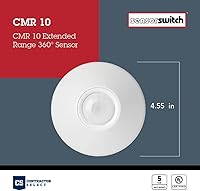
  • Dimensions: The sensor body measures 4.55 inches in diameter and 1.55 inches in depth, keeping the ceiling profile low and unobtrusive.
  • Weight: The unit weighs approximately 5.28 ounces, making it straightforward to support with standard ceiling hardware.
  • Materials: Housing is constructed from a combination of aluminum and plastic, finished in matte white to blend with typical commercial ceiling environments.
  • Mounting Types: Compatible with ceiling tiles, metallic grid systems, 3.5-inch octagon junction boxes, and single-gang handy boxes; mounting hardware is included.
  • LED Indicator: A green LED on the sensor body provides visual confirmation of detected motion, which is particularly useful during initial setup and calibration.
  • Certifications: Holds CSA certification for compliance with both US and Canadian electrical safety standards, and is also RoHS compliant.
  • Operating Temp: Rated for ambient operating temperatures ranging from -10°C to 60°C, suitable for typical indoor commercial environments.
  • Warranty: Covered by a 5-year limited manufacturer warranty, reflecting the product's positioning as a durable commercial-grade device.
  • First Available: Originally made available in March 2011, establishing a long commercial track record in the occupancy sensor category.
  • Relay Type: Includes a single built-in relay for single-level lighting control, with no requirement for an additional control module or power pack.
  • Battery: No batteries are required or included; the sensor draws power directly from the line-voltage circuit it is wired into.

Related Reviews

Sensor Switch CMR 9 Ceiling Motion Sensor
74%
83%
Motion Detection Accuracy
88%
Installation Experience
81%
Build Quality
79%
Coverage & Range
67%
Time Delay Control
More
ENERLITES MPC-50H High Bay Ceiling Motion Sensor
72%
83%
Detection Reliability
81%
Installation Experience
91%
Voltage & Load Compatibility
67%
Coverage Range
76%
Build Quality
More
Shaogax Wireless Motion Sensor Driveway Alarm System
71%
91%
Ease of Setup
83%
Wireless Range
88%
Alert Customization
58%
False Alert Rate
61%
Build Quality
More
Actpe Wireless Motion Sensor Driveway Chime
69%
93%
Ease of Setup
88%
Value for Money
76%
Detection Reliability
81%
Wireless Range
61%
Battery Life
More
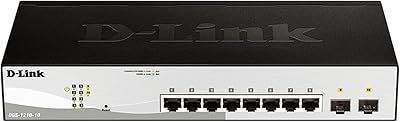
D-Link DGS-1210-10 10-Port Gigabit Smart Managed Switch
88%
88%
Performance & Speed
91%
Build Quality
85%
Ease of Setup
94%
Fanless Design (Noise Level)
90%
Security Features
More
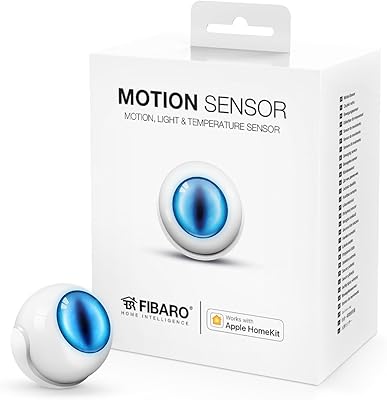
Fibaro Motion Sensor HomeKit Multisensor
71%
83%
Motion Detection Accuracy
88%
HomeKit Integration
61%
Setup Experience
54%
Temperature Accuracy
57%
App Experience
More
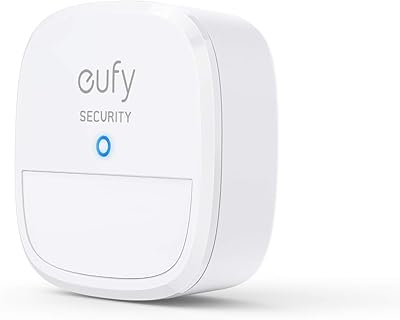
eufy Security Motion Sensor
85%
90%
Detection Accuracy
95%
Ease of Installation
93%
Battery Life
87%
Sensitivity Adjustment
89%
App & Notification System
More
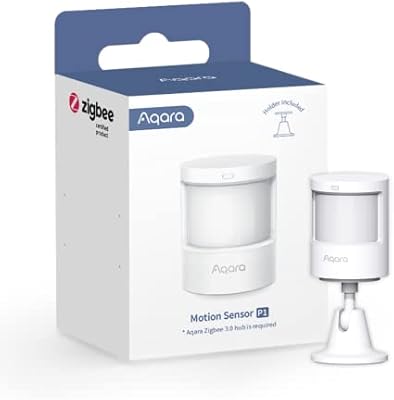
Aqara Motion Sensor P1 Zigbee Sensor
77%
93%
Battery Life
84%
Detection Accuracy
41%
Hub Dependency
76%
App & Configuration
81%
Detection Range & Angle
More
Shelly BLU Motion Bluetooth Motion Sensor
74%
78%
Ease of Setup
81%
Motion Detection Accuracy
67%
Indoor Range
84%
Battery Life
76%
Lux Sensor Usefulness
More
Aqara Motion and Light Sensor P2
80%
88%
Motion Detection Accuracy
84%
Light Sensor Functionality
91%
Thread Connectivity Reliability
89%
Battery Life
79%
Ecosystem Compatibility
More

FAQ

In most standard commercial installations, the CMR 10 wires directly into the existing line-voltage circuit at the ceiling junction box — no new runs are typically needed. That said, you do need a live hot, neutral, and a switched leg to the fixture at the mounting point, so if your ceiling box only has switch-loop wiring, some rewiring may be required. A licensed electrician can assess your specific setup quickly.

Almost certainly not — this is a well-known characteristic of passive infrared technology. PIR sensors detect changes in heat signatures caused by body movement, so they excel at catching people walking around but can easily miss someone sitting still and working quietly. If this is a consistent issue in your space, you may want to look at a dual-technology sensor that combines PIR with ultrasonic detection for better coverage of stationary occupants.

This ceiling occupancy sensor is rated strictly for indoor use. Exposure to moisture, rain, or temperature extremes outside the rated range could damage the unit and would void any warranty coverage. For outdoor or semi-conditioned spaces, you would need a sensor specifically rated for those conditions.

Realistically, this is a job for someone comfortable working with line-voltage wiring — meaning 120V circuits. If you are not experienced with electrical work, hiring a licensed electrician is strongly recommended both for safety and to ensure the sensor performs as intended. Installation itself is not complicated for a qualified person, and the included hardware covers most standard mounting scenarios.

The time delay is set using the push-button on the sensor itself — no apps, no tools, and no need to cut power to make the adjustment. You can dial it in anywhere from about thirty seconds on the short end to twenty minutes on the long end, depending on how your space is used. The green LED helps confirm the sensor is responding as you test the settings.

At a standard nine-foot ceiling height, the Sensor Switch CMR 10 Ceiling Motion Sensor is rated for a radial detection reach of roughly 24 feet, which translates to coverage of a moderately sized private office or conference room. Keep in mind that real-world coverage can be affected by room shape, partitions, furniture layout, and mounting position — so rooms with awkward layouts may benefit from careful placement planning or an additional unit.
Yes, the CMR 10 works with LED fixtures as long as the overall load falls within the sensor's relay ratings. LEDs draw significantly less current than older lamp types, so load compatibility is rarely an issue in practice. If you are controlling a large bank of LED fixtures, it is worth confirming the total wattage stays within the relay's specified load capacity.

This ceiling occupancy sensor carries CSA certification covering both US and Canadian electrical safety standards, so it is fully approved for commercial use in Canada as well. This dual-country certification makes it straightforward to specify in cross-border projects or facilities that need to satisfy Canadian electrical codes.

The green LED on the sensor body lights up when it registers motion, giving you immediate visual confirmation without needing any additional test equipment. This makes the initial positioning and calibration process much more practical — you can walk the space, watch the LED respond, and adjust mounting angle or time delay accordingly before finishing the installation.

The PIR light switch comes with a five-year limited manufacturer warranty, which is notably generous for a product in this category and reflects its commercial-grade design intent. Limited warranties typically cover manufacturing defects rather than damage from improper installation or use outside the specified operating conditions, so keeping the installation within the documented guidelines is important for keeping that coverage valid. For specific claims or warranty service, contacting Sensor Switch directly through their official channels is the recommended path.

Where to Buy