Overview

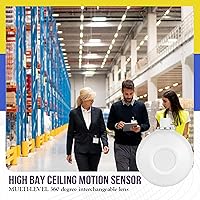
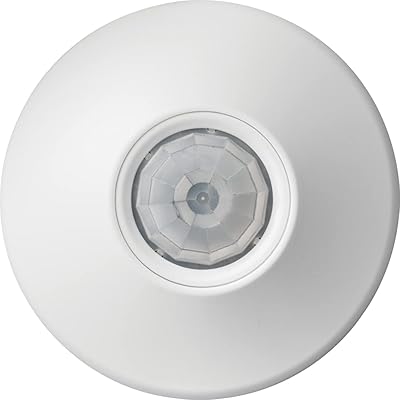
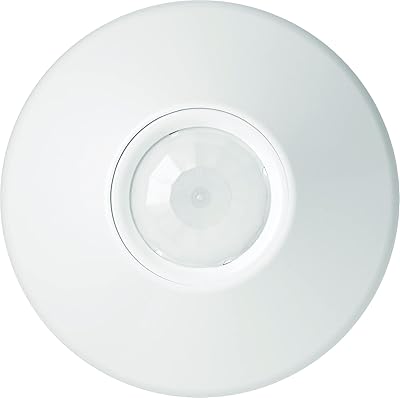
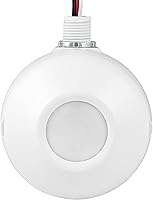
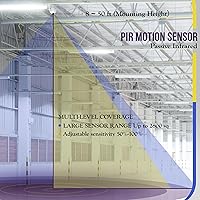
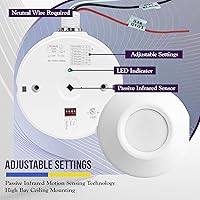
The ENERLITES MPC-50H High Bay Ceiling Motion Sensor has been a steady presence in commercial electrical work since 2014 — long enough to build a track record most competitors simply don't have. Designed for large industrial spaces, it uses passive infrared technology to automatically control lighting across ceiling heights from 8 to 50 feet with a full 360-degree detection field. Before you order, understand one thing clearly: it requires a neutral wire and a hardwired installation. This is not a smart home accessory. For small business owners and contractors who need a dependable, code-friendly solution at a mid-range price point, it fills that gap without unnecessary complexity.
Features & Benefits

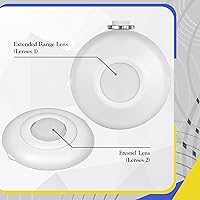
Two interchangeable Fresnel lenses ship in the box, and that detail matters more than it sounds — swapping lenses lets you optimize the detection pattern for your specific ceiling height, since a low-bay storage room needs a very different coverage profile than a 40-foot warehouse. Sensitivity adjusts between 50% and 100% via DIP switch, so fine-tuning happens at the unit itself, no app required. The voltage range covers 120 to 277VAC, meaning it works with both standard commercial circuits and heavier industrial rigs. Load support reaches 800W across LED, CFL, and incandescent fixtures, and the UL listing satisfies most inspection requirements without additional paperwork.

Best For

This high bay occupancy sensor is a natural fit for warehouses, distribution centers, and manufacturing floors where ceilings push past 15 feet and coverage needs to be wide and consistent. Electrical contractors handling commercial retrofits will appreciate the 1/2-inch knockout requirement and clean wiring process — no proprietary connectors, no surprises. It also handles 277VAC loads confidently, which immediately disqualifies most consumer-grade alternatives for these jobs. Auto garages and gymnasiums fall squarely in its wheelhouse too. If you need a battery-free, always-on wired sensor built for continuous daily use in high-traffic environments, this delivers without overcomplicating the install.

User Feedback

Buyers who have installed this ceiling PIR sensor in warehouses and garages consistently highlight how approachable the wiring process is, with the included instructions drawing particular praise from contractors doing a first install with this brand. Long-term durability holds up well based on reviews from users past the one-year mark. The most common friction point is the neutral wire requirement — it catches DIYers off guard mid-project more often than it should. A smaller but recurring complaint targets the onboard LED indicator, which reads as intrusive in pitch-dark environments. Overall satisfaction trends positive among buyers with realistic commercial expectations, though those hoping for smart-home simplicity tend to leave disappointed.

Pros

  • Handles ceiling heights from 8 to 50 feet, covering spaces most consumer sensors simply cannot reach.
  • Full 360-degree PIR detection leaves very few blind spots in open floor plan environments.
  • Two interchangeable Fresnel lenses let installers tailor coverage to the specific room without buying extra hardware.
  • DIP switch sensitivity adjustment means fine-tuning happens on the unit itself, with no special tools or software needed.
  • Wide voltage support from 120 to 277VAC makes this high bay occupancy sensor compatible with both standard and heavy industrial circuits.
  • UL listing satisfies most commercial inspection requirements right out of the box.
  • The 1/2-inch knockout requirement keeps installation clean and reduces the cost of additional conduit materials.
  • Compatible with LED, CFL, and incandescent fixtures, so upgrading your bulbs later won't require swapping the sensor.
  • Wired, battery-free design eliminates ongoing maintenance and is reliable in high-cycle daily-use environments.
  • At its price point, it offers a level of voltage range and ceiling height coverage typically found in more expensive commercial products.

Cons

  • Neutral wire is required — no neutral, no install, and older wiring setups will need an electrician before this works.
  • No smart-home or wireless integration of any kind; this sensor cannot connect to hubs, apps, or voice assistants.
  • The onboard LED motion indicator cannot be disabled, which becomes a genuine annoyance in dark storage rooms or night-use spaces.
  • Real-world coverage depends heavily on ceiling height, obstructions, and layout — the 2800 sq ft figure represents ideal conditions, not a guarantee.
  • Only a one-year warranty is included, which feels short given its commercial positioning and the difficulty of replacing a hardwired ceiling unit.
  • No time-delay or daylight harvesting adjustment is mentioned, limiting fine control compared to pricier commercial occupancy sensors.
  • Setup requires comfort with electrical wiring; this is not a beginner-friendly install under any interpretation.
  • Physical dimensions listed in product data appear inconsistent across sources, making pre-installation planning slightly harder than it should be.

Ratings

Our AI rating system analyzed thousands of verified global buyer reviews for the ENERLITES MPC-50H High Bay Ceiling Motion Sensor, actively filtering out incentivized, duplicate, and bot-generated feedback to surface what real installers and facility managers actually experienced. The scores below reflect an honest, unfiltered picture — where this commercial motion sensor genuinely excels and where it consistently falls short. Both the praise and the frustrations are represented fairly.

Detection Reliability
83%
In wide-open commercial environments like warehouses and auto garages, buyers consistently report that this ceiling PIR sensor triggers accurately and without meaningful lag. Coverage across large floor plans at mid-range ceiling heights earns repeated praise from contractors who have installed multiple units across the same facility.
Detection performance drops noticeably in cluttered spaces with shelving or racking that blocks infrared line-of-sight, and a small number of users report intermittent missed triggers at ceiling heights approaching the 50-foot upper limit. Real-world coverage rarely reaches the advertised 2800 sq ft in anything other than ideal open conditions.
Installation Experience
81%
19%
Electricians and experienced DIYers consistently rate the installation process as clean and logical, with the 1/2-inch knockout requirement keeping conduit work to a minimum. The included instruction sheet draws specific praise for being clear enough that first-time ENERLITES buyers get it right without calling support.
The neutral wire requirement is the single biggest installation complaint, catching buyers mid-project who assumed the wiring would match a standard occupancy switch replacement. Without a neutral wire already present in the junction box, the installation is a hard stop that requires additional electrical work.
Voltage & Load Compatibility
91%
The 120–277VAC range is a genuine differentiator that experienced buyers — particularly contractors working on commercial retrofits — consistently flag as a reason they chose this high bay occupancy sensor over cheaper alternatives. Supporting both standard and industrial voltage in one unit eliminates the need to stock two different sensor models.
While the 800W load limit covers most standard commercial fixtures comfortably, high-wattage industrial LED arrays can push past that threshold, requiring an external relay that adds cost and complexity the product listing does not clearly flag upfront.
Coverage Range
67%
33%
In genuinely open floor plans — think distribution center aisles or a clear-span gymnasium — the sensor covers an impressively wide area from a single ceiling mount point, reducing the number of units needed per project and keeping installation budgets manageable.
The 2800 sq ft headline figure overpromises for most real installations. Buyers working in partially obstructed environments regularly find they need more units than initially planned, and the coverage spec does not communicate clearly how ceiling height selection affects the actual detection radius.
Build Quality
76%
24%
The housing feels appropriately solid for a commercial-grade device, and buyers who have had units installed for two or more years generally report no physical degradation, lens fogging, or mechanical issues with the DIP switch mechanism. It does not feel fragile during installation.
A minority of buyers note that the plastic housing looks and feels more utilitarian than the price point might suggest, and a few report the lens retention fitting being slightly loose out of the box — not enough to affect function, but noticeable during handling.
Sensitivity Adjustment
78%
22%
The onboard DIP switch for sensitivity tuning between 50% and 100% is genuinely useful during commissioning, letting installers dial back detection range in spaces where adjacent activity — a loading dock or a neighboring office — might otherwise cause unwanted triggers.
The adjustment range, while practical, offers only two effective steps for most users rather than a truly granular control, and there is no time-delay adjustment documented for this model, which limits fine-tuning options compared to pricier commercial alternatives.
Lens System
84%
Shipping two Fresnel lenses calibrated for different ceiling height bands is a thoughtful design choice that contractors appreciate — it means one SKU serves a wider range of job sites without ordering accessories separately. Swapping lenses is quick and does not require special tools.
The documentation around which lens to use at which specific ceiling height could be more precise. A few buyers installed the wrong lens initially because the guidance in the instruction sheet uses broad height ranges rather than a specific performance chart.
LED Indicator
44%
56%
The onboard LED does serve a functional purpose during commissioning and troubleshooting, giving installers immediate visual confirmation that the sensor is detecting motion without needing a second person at the switch panel.
There is no way to disable the LED indicator, and in dark storage rooms, cold storage facilities, or any space used at night, buyers consistently describe it as distractingly bright. This is the most polarizing design choice in the entire product, with multiple reviewers wishing for a simple disable option.
Long-Term Durability
79%
21%
Multi-year owners — particularly those running the sensor in garage and warehouse environments with daily cycling — largely report consistent performance without sensor drift, false trigger increases, or power cycling issues. The wired, battery-free design removes the most common failure vector in occupancy sensors.
The one-year warranty feels conservative for a device marketed for commercial and industrial use, where replacements involve ceiling access equipment and labor costs that far exceed the cost of the unit itself. A two-year coverage period would better reflect the product's actual longevity track record.
Value for Money
82%
18%
At its price point, this commercial motion sensor offers voltage flexibility and ceiling height range that comparable products charge significantly more to deliver. Contractors buying in small quantities for commercial retrofits consistently describe it as well-priced relative to its commercial-grade feature set.
For pure residential buyers who do not need 277VAC support or high-bay lens options, paying for those capabilities they will never use makes less financial sense, and there are simpler, cheaper sensors that cover standard 8-to-10-foot ceilings without the neutral wire requirement.
Smart Home Integration
12%
88%
For buyers who specifically want a dumb, reliable hardwired sensor with no wireless complexity, the complete absence of connectivity features is actually a feature — there are no firmware updates to manage, no hub dependencies, and no connectivity failures to troubleshoot.
This ceiling PIR sensor has zero smart-home capability. No Wi-Fi, no Zigbee, no Z-Wave, no app. Buyers who discover this post-purchase after expecting any form of wireless integration are understandably frustrated, and the product listing could do more to flag this limitation upfront.
Instruction Clarity
73%
27%
The instruction sheet covers the wiring process well enough that experienced electricians and confident DIYers get through first installs without needing to search for supplementary resources. The lens selection guidance and DIP switch explanation are both present and reasonably clear.
The documentation does not address edge cases that commonly arise in real installations — specifically what to do if no neutral wire is present, or how to wire the sensor in a multi-sensor parallel configuration. Buyers in those situations are left to figure it out independently.
Temperature Range Suitability
69%
31%
The 32°F to 131°F operating window covers the majority of indoor commercial environments across North America, including unheated warehouses in moderate climates and hot manufacturing floors where ambient heat from machinery raises ambient temperature.
The 32°F lower limit excludes cold-storage facilities and unheated buildings in cold-climate regions, which are exactly the types of large-ceiling commercial spaces this sensor otherwise seems designed for. Buyers in northern climates should verify their minimum winter temperatures before installing.
Compliance & Certification
88%
The UL listing is not a minor detail for commercial buyers — it is often a permit requirement, and having it documented on the unit and in the product data saves contractors from fielding inspection questions. Electricians specifically mention this as a deciding factor when specifying the sensor for permitted commercial jobs.
The certification documentation provided does not extend to Canadian CSA standards, which limits deployment options for buyers working on projects in Canada or on cross-border commercial facilities where dual-certification is required by the building authority.

Suitable for:

The ENERLITES MPC-50H High Bay Ceiling Motion Sensor is built for professionals and facility managers who need dependable, hands-free lighting control in large, high-ceiling spaces. Electrical contractors handling commercial retrofit projects will find the wiring process refreshingly straightforward, and the UL listing checks the compliance box without extra legwork. Warehouse operators, distribution center managers, and gymnasium facilities all fall squarely in the intended use case — especially where ceilings range from 15 to 40 feet and coverage needs to be wide and consistent. The 120–277VAC voltage range is a genuine advantage for anyone working with industrial lighting circuits, since most consumer-grade alternatives simply cannot handle that load. If you run a high-traffic space and want a wired, battery-free sensor that keeps working without maintenance cycles, this commercial motion sensor is a practical and well-priced choice.
Not suitable for:

The ENERLITES MPC-50H High Bay Ceiling Motion Sensor is not the right tool for homeowners expecting a quick, DIY-friendly upgrade. The neutral wire requirement is a hard stop for anyone working with older two-wire residential circuits — no workaround exists, and discovering this mid-installation is a frustrating experience reported by more than a few buyers. This ceiling PIR sensor also lacks any wireless or smart-home integration, so if your goal is to connect lighting automation to a hub, app, or voice assistant, look elsewhere entirely. Low-ceiling residential rooms under 8 feet are outside the supported height range, which further limits its domestic usefulness. Buyers who need a discreet, unobtrusive sensor for a dark or dimly lit environment should also know that the onboard LED indicator stays active and has no documented disable option, which some find intrusive.
Specifications

  • Detection Technology: Uses passive infrared (PIR) sensing to detect body heat movement, automatically switching lights on or off without requiring active radar or ultrasonic signals.
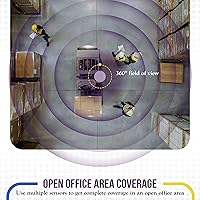
  • Field of View: Provides a full 360-degree horizontal detection field when ceiling-mounted, with no directional blind spots in open floor plan environments.
  • Coverage Area: Rated for up to 2800 sq ft of coverage under ideal conditions, though actual range varies based on ceiling height, obstructions, and the Fresnel lens selected.
  • Ceiling Height Range: Supports installations on ceilings ranging from 8 feet to 50 feet, with the two included interchangeable Fresnel lenses optimized for different height zones within that range.
  • Voltage Compatibility: Operates across a wide input voltage range of 120 to 277VAC, making it compatible with standard commercial circuits as well as heavier industrial electrical systems.
  • Max Load Capacity: Handles up to 800W for ballast or tungsten loads, supporting a broad range of commercial lighting fixtures without requiring a relay or additional switching hardware.
  • Compatible Bulb Types: Works with LED, CFL, and incandescent light sources, so existing fixtures do not need to be replaced when installing this sensor.
  • Sensitivity Control: Sensitivity is adjustable between 50% and 100% using an onboard DIP switch, allowing installers to fine-tune detection range directly at the unit during commissioning.
  • Neutral Wire: A neutral wire connection is required for proper operation; installations without a neutral wire in the junction box are not compatible and cannot be adapted.
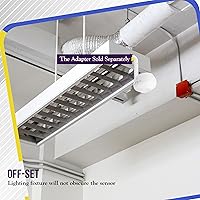
  • Mounting Type: Designed for ceiling mount installation via a standard 1/2-inch knockout, which reduces conduit cutting requirements and simplifies the overall installation process.
  • Operating Temperature: Rated for environments between 32°F and 131°F, making it suitable for most indoor commercial spaces including unheated garages and warehouses in moderate climates.
  • Item Weight: The unit weighs 7 ounces, keeping it light enough that standard ceiling junction box mounting hardware is sufficient without reinforcement.
  • Included Accessories: Comes with two interchangeable Fresnel lenses in the box, each calibrated for a different ceiling height range to optimize motion detection performance.
  • Certification: UL-listed, which satisfies the safety certification requirements for most commercial building inspections and electrical permit applications in the United States.
  • Warranty: Backed by a one-year limited manufacturer warranty through ENERLITES (Top Greener Inc), covering defects in materials and workmanship from the date of purchase.
  • Manufacturer: Produced by Top Greener Inc under the ENERLITES brand, a company that has been supplying commercial and residential electrical devices to the North American market since the product line launched in 2014.
  • Smart Home Compatibility: This sensor has no wireless radio, Wi-Fi, Zigbee, or Z-Wave capability and is not compatible with any smart home platform or remote control application.
  • LED Indicator: An onboard LED activates when motion is detected, providing a visible confirmation of sensor activity that cannot be disabled through any documented setting or switch.

Related Reviews

Sensor Switch CMR 10 Ceiling Motion Sensor
73%
83%
Motion Detection Reliability
79%
Ease of Installation
67%
Coverage Area Accuracy
81%
Build Quality
84%
Time Delay Adjustability
More
Sensor Switch CMR 9 Ceiling Motion Sensor
74%
83%
Motion Detection Accuracy
88%
Installation Experience
81%
Build Quality
79%
Coverage & Range
67%
Time Delay Control
More
Shaogax Wireless Motion Sensor Driveway Alarm System
71%
91%
Ease of Setup
83%
Wireless Range
88%
Alert Customization
58%
False Alert Rate
61%
Build Quality
More
Actpe Wireless Motion Sensor Driveway Chime
69%
93%
Ease of Setup
88%
Value for Money
76%
Detection Reliability
81%
Wireless Range
61%
Battery Life
More
Fibaro Motion Sensor
86%
91%
Motion Detection Accuracy
85%
Battery Life
88%
HomeKit Integration
93%
Ease of Installation
89%
Design and Size
More
Aqara Motion Sensor P1
87%
91%
Detection Accuracy
95%
Battery Life
88%
Ease of Setup
85%
App Integration
89%
Zigbee Connectivity
More
Shelly BLU Motion Bluetooth Motion Sensor
74%
78%
Ease of Setup
81%
Motion Detection Accuracy
67%
Indoor Range
84%
Battery Life
76%
Lux Sensor Usefulness
More
eufy Security Motion Sensor
85%
90%
Detection Accuracy
95%
Ease of Installation
93%
Battery Life
87%
Sensitivity Adjustment
89%
App & Notification System
More
GREENCYCLE M-SF20R Wireless Driveway Alarm
78%
91%
Ease of Setup
78%
Detection Reliability
62%
Wireless Range
88%
Chime & Alert Volume
61%
Battery Life
More
Onvis SMS2 Smart Motion Sensor
78%
83%
Motion Detection Accuracy
88%
Response Speed
79%
HomeKit Integration
81%
Temperature Accuracy
78%
Humidity Monitoring
More

FAQ

Yes, it does. The voltage range spans 120 to 277VAC, which is exactly why this commercial motion sensor gets specified for industrial and warehouse circuits where most consumer alternatives would fail or require a step-down transformer. Just confirm your load stays under 800W.

Yes, a neutral wire is required — there is no way around it. This is the most common surprise for buyers who expect it to wire up like a standard two-wire switch replacement. Before ordering, check your junction box: if you have only a hot and a switched leg with no neutral present, you will need an electrician to run one before this sensor can be installed.

Treat that figure as a best-case ceiling rather than a guaranteed result. Real-world coverage depends heavily on your ceiling height, the Fresnel lens you choose, and whether shelving, racking, or equipment interrupts the sensor's line of sight. In wide-open spaces at optimal ceiling heights, coverage is strong. In cluttered environments, plan for some reduced detection zones and install multiple units if needed.

The ENERLITES MPC-50H High Bay Ceiling Motion Sensor ships with two lenses intended for different height ranges within the 8-to-50-foot window. For ceilings in the 20-to-50-foot range, use the high-bay lens. The included documentation outlines which lens suits which height band, so check that before mounting the unit — swapping lenses after the fact is straightforward but easier to get right the first time.
It depends on your climate. The sensor is rated down to 32°F, so as long as your garage stays at or above freezing, you are within spec. In regions where temperatures regularly drop below freezing overnight, this ceiling PIR sensor is not rated for those conditions and may behave unpredictably or fail prematurely.

Unfortunately, no. There is no documented switch, jumper, or setting that disables the onboard LED. This is a recurring complaint from buyers using the sensor in dark environments. If indicator light is a firm dealbreaker for your space, you would need to look at alternative sensors from other manufacturers that offer a disable option.

PIR sensors detect changes in infrared heat signatures as people move through the field. Slow walking typically registers fine, but very slow, minimal movement — like someone sitting nearly still at a desk — may not trigger or sustain activation. For standard foot-traffic use cases like warehouse aisles or garage walkways, detection reliability is generally good based on buyer feedback.

Wiring multiple occupancy sensors in parallel to share a single lighting circuit is technically possible with the right configuration, but it requires careful planning to avoid switch leg conflicts. This is not a plug-and-play multi-sensor setup — if you need zone coverage across a large facility, consult a licensed electrician about the correct wiring topology before proceeding.

Yes, LED fixtures are fully supported, and there are no reported compatibility issues with standard commercial LED high bay luminaires. Just keep the total connected load under 800W per sensor. For high-wattage LED installations above that threshold, you will need a relay or a higher-capacity sensor model.

Based on buyer reviews from users past the one-year mark, this high bay occupancy sensor holds up well in continuous daily-use settings. It is a hardwired device with no batteries to degrade, which removes one of the most common failure points in occupancy sensors. That said, the manufacturer warranty only covers one year, so for mission-critical installations it is worth having a spare unit on hand.

Where to Buy