Overview

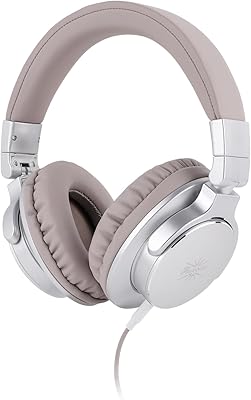
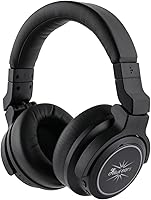
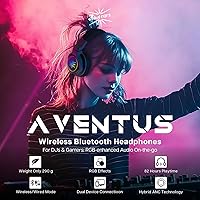
The Kiwi Ears Aventus arrived in January 2025 as a genuinely interesting mid-range option for DJs, gamers, and audio enthusiasts who want capable hardware without spending serious money. What sets these wireless headphones apart at this price point is the coaxial dual dynamic driver configuration — two independently tuned drivers working together inside a single housing, something you rarely see below the premium tier. Add hybrid ANC, RGB lighting, an impressive battery, and both wired and wireless connectivity, and the Aventus builds a surprisingly broad feature set. Early buyer reception has been positive, though the review pool is still growing.

Features & Benefits

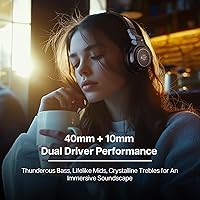
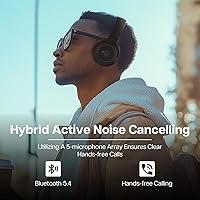
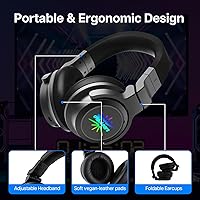
At the core of the Aventus is a 40mm + 10mm driver setup where the larger unit handles the full frequency range while the smaller one adds clarity and soundstage depth — a meaningful distinction in practice, not just on paper. The hybrid ANC uses a five-microphone array to cut ambient noise by up to 35dB, and it remains active in wired mode too, which is a less common touch. Bluetooth 5.4 supports dual-device pairing with low-latency performance for gaming. Battery life headlines need context though: 82 hours applies only with ANC and RGB both off; run everything simultaneously and you are looking at closer to 18 hours.

Best For

The Aventus makes the most sense for casual DJ use — the earcups rotate and fold back for single-ear monitoring, which is a practical booth necessity, though serious working DJs will likely want something more purpose-built. Gamers who care about both audio quality and aesthetics will appreciate the RGB alongside the low-latency wireless mode. Commuters and remote workers who prioritize endurance should find this over-ear headset comfortable through long sessions. Podcast creators and guitarists needing a reliable monitor on a tighter budget fit well here too. The dual-device switching is a quiet but practical bonus for anyone toggling between a laptop and phone throughout the day.

User Feedback

With roughly 60 ratings and a 4.4-star average, early responses lean positive — buyers frequently call out sound clarity and build quality as the standout strengths. Comfort during extended wear also earns praise, with the vegan leather cushioning holding up well in longer sessions. On the critical side, some users find that real-world ANC falls short of the rated 35dB figure in genuinely loud environments, which is worth noting if heavy commuting is your main use case. Battery performance generally matches expectations when settings are managed carefully. Given the relatively small review sample, the long-term durability picture is still taking shape.

Pros

  • Dual dynamic driver setup delivers noticeably layered sound that punches above its price tier.
  • Hybrid ANC works in wired mode too, a genuinely uncommon feature at this price point.
  • Bluetooth 5.4 dual-device pairing makes switching between a laptop and phone effortless.
  • Battery endurance with ANC off is exceptional, easily lasting multiple days of moderate use.
  • Ten-minute fast charge provides roughly four hours of playback for rushed situations.
  • Rotatable, foldable earcups make single-ear monitoring a practical reality for casual DJs.
  • The Aventus covers gaming, commuting, monitoring, and podcasting without forcing a trade-off.
  • Vegan leather cushioning is comfortable enough for two to three hour sessions without ear fatigue.
  • Closed-back design with 35dB-rated ANC keeps enough outside noise at bay for focused work.
  • RGB lighting hits without looking overdone, which is harder to pull off than it sounds.

Cons

  • Real-world ANC performance falls short of the rated 35dB in loud or unpredictable environments.
  • The 82-hour battery headline only applies with ANC and RGB fully disabled — typical use is far lower.
  • No companion app means zero EQ customization or the ability to change RGB behavior.
  • Built-in microphone struggles noticeably in any environment that is not a quiet indoor room.
  • Heat buildup under the earcups becomes uncomfortable during extended wear beyond two to three hours.
  • Plastic construction around the headband adjustment feels less confidence-inspiring over the long term.
  • Soundstage has real limits that become apparent when compared to open-back headphones at similar prices.
  • Heavier than travel-focused competitors, making it a less ideal choice for frequent flyers.

Ratings

The Kiwi Ears Aventus scores below reflect AI analysis of verified buyer reviews worldwide, with spam, bot-generated, and incentivized feedback actively filtered out before scoring. This over-ear headset launched in early 2025 and has collected a growing body of real-world impressions across gaming, commuting, and casual DJ use cases. Both the genuine strengths and the honest pain points are captured transparently in each category.

Sound Quality
83%
Buyers consistently point to a fuller, more layered sound than expected at this price tier, with the dual-driver setup delivering noticeably better bass texture and treble separation than single-driver competitors nearby. For music listening and casual gaming, the tuning feels engaging without being fatiguing over long sessions.
Audiophiles stepping down from higher-end headphones will notice the soundstage has real limits, and the low-end can feel slightly overemphasized on certain genres. It is a consumer-friendly tuning rather than a flat, reference-grade one, which matters if you mix or master audio seriously.
Active Noise Cancellation
71%
29%
In moderately noisy settings like offices or coffee shops, the hybrid ANC does a credible job of reducing background hum and air conditioning noise, making it genuinely useful for focused work or commuting on quieter transit. The fact that ANC works in wired mode is an underappreciated practical bonus.
In loud real-world environments — busy subway cars, construction zones, loud open-plan offices — the actual noise reduction falls short of the rated 35dB figure in many users' experience. It handles consistent low-frequency noise better than unpredictable or high-frequency sounds, so expectations need calibrating.
Battery Life
78%
22%
When used in Bluetooth-only mode with ANC switched off, the Aventus genuinely delivers exceptional endurance, easily covering several days of moderate daily use on a single charge. The fast-charge feature — roughly four hours of playback from a ten-minute top-up — is a practical lifesaver for rushed mornings.
The headline 82-hour figure requires running the headset with both ANC and RGB disabled, which is not how most buyers will actually use it. With ANC on and RGB active, real-world playtime drops to around 18 hours, which is a significant gap that some buyers feel is underemphasized in the marketing.
Build Quality
81%
19%
The frame feels solid and lightweight simultaneously, and the earcup hinges have a satisfying, controlled movement that does not feel like it will loosen with daily use. Several buyers noted the headset survived being tossed into bags without showing obvious wear after weeks of use.
A few users flagged that the plastic used on certain joints, particularly around the headband adjustment mechanism, does not inspire full confidence over the long term. At this price bracket it is acceptable, but it is not in the same league as metal-framed competitors costing significantly more.
Comfort & Fit
77%
23%
The vegan leather earcups are plush enough for two to three hour listening sessions without leaving ears sore, and the clamping force sits at a level that feels secure without becoming a pressure headache over time. Most buyers with average head sizes report a good fit straight out of the box.
Extended wear beyond three hours surfaces some heat buildup under the earcups, a common trade-off with closed-back designs using synthetic leather. Users with larger heads have noted the headband could offer more adjustment range before the fit starts feeling tight.
Gaming Performance
79%
21%
The low-latency Bluetooth mode keeps audio well-synced during fast-paced gameplay, and the soundstage, while not the widest, provides enough directional cues to be genuinely useful in competitive titles. The RGB lighting adds an aesthetic element that resonates with the gaming crowd without feeling excessive.
Dedicated gaming headset buyers who rely heavily on virtual surround or companion software ecosystems may find the Aventus lacks the deep software integration they are used to. The microphone performance, while adequate for casual voice chat, will not satisfy streamers or content creators expecting studio-level input quality.
DJ Usability
63%
37%
The rotating and foldable earcup design is a thoughtful inclusion that serves casual DJs practicing at home or performing at smaller, lower-stakes events. Being able to flip one cup back for cueing is a real functional feature, not just a marketing talking point.
Working DJs in professional settings will quickly reach the limits of what this headset can offer — the isolation is not tight enough for loud club monitor environments, and the sound profile is tuned for enjoyment rather than accuracy. This is firmly prosumer territory, better suited to bedroom producers than booth professionals.
Microphone Quality
61%
39%
For video calls, casual gaming voice chat, and podcast listening (rather than recording), the microphone array handles its duties without embarrassing itself. Call clarity in quiet rooms is generally acceptable to conversation partners.
Background noise pickup is noticeably high in anything other than a quiet indoor environment, and the voice capture lacks the warmth and presence you would want for actual podcast recording or streaming. Buyers expecting to use this as a podcasting input microphone will likely be disappointed.
Connectivity & Pairing
86%
Bluetooth 5.4 pairing is quick and stable, and the dual-device feature works reliably for users who switch between a laptop and a phone throughout the workday — it handles the transition without requiring manual re-pairing each time. Range held up well at typical room-to-room distances.
A small number of users reported occasional audio dropouts in heavily congested wireless environments, such as open-plan offices with many competing Bluetooth devices. The pairing process, while straightforward, lacks a companion app for customization, which limits fine-tuning options.
Value for Money
84%
When you total up the feature list — dual dynamic drivers, hybrid ANC, Bluetooth 5.4, RGB, wired mode with ANC active, and strong battery endurance — the Aventus represents a genuinely competitive package at its price point. Few direct competitors include all of these simultaneously without charging noticeably more.
The value calculation shifts depending on which features you actually use. Buyers primarily interested in pure audio quality or professional ANC will find more focused competitors at the same price that do one thing better. The Aventus is a broad generalist, and that is both its appeal and its limitation.
Wireless Stability
82%
18%
In standard home and office environments, the connection remained stable and consistent across typical usage distances with walls between devices. Gaming and video playback benefited from the low-latency mode without any noticeable lip-sync issues reported by most buyers.
In denser wireless environments — crowded apartments, busy coworking spaces — a minority of users experienced occasional brief interruptions. Nothing severe enough to be a dealbreaker for most, but worth noting for buyers in consistently high-interference settings.
Portability
74%
26%
The folding design makes the Aventus meaningfully more packable than a typical rigid over-ear headset, fitting reasonably well into a mid-sized backpack alongside other gear. The included case or carrying solution provides basic protection for daily transport.
At 1.07 kilograms total packaged weight, the headset itself is on the heavier side for long-haul travel compared to more travel-focused competitors. It is portable in the sense that it folds, but it is not the headset you would choose specifically for frequent flying.
Ease of Use
88%
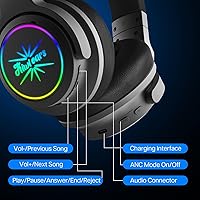
Physical controls are intuitive and accessible without needing to look at the headset, and mode switching between ANC states and input sources is straightforward enough that most buyers figured it out without consulting the manual. The dual-device pairing adds utility without adding complexity.
Without a companion app, there is no EQ customization or the ability to remap controls, which more experienced users will notice as a gap. The RGB settings in particular are locked to whatever cycling mode ships by default, with no way to personalize or disable specific effects selectively.
ANC in Wired Mode
72%
28%
The ability to keep ANC active while using the detachable 3.5mm cable is a genuinely uncommon feature at this price tier, and buyers who use the headset plugged into mixing equipment or a guitar interface found it practically useful for blocking out room noise during recording or practice sessions.
Some users noticed that enabling ANC in wired mode introduced a faint background hiss that was audible during quiet passages in music. It is subtle enough that it will not bother casual listeners, but those with sensitivity to noise floors during silent sections may find it occasionally distracting.

Suitable for:

The Kiwi Ears Aventus is a strong fit for buyers who want a versatile, feature-rich headset without committing to a premium price tag. Casual DJs practicing at home or playing smaller events will appreciate the rotatable earcups for single-ear monitoring and the wired mode that keeps ANC active during a set. Gamers who want low-latency wireless audio paired with RGB aesthetics will find the combination genuinely hard to match at this price point. Commuters and remote workers who need reliable all-day battery life with decent background noise reduction — especially in moderate environments like coffee shops or open offices — will get real daily value from the Aventus. Podcast hobbyists, guitarists, and bedroom producers looking for a do-it-all monitor headphone on a sensible budget are also well served here. If you regularly switch between two Bluetooth devices throughout the day, the dual-device pairing alone removes a small but persistent daily frustration that cheaper alternatives do not address.

Not suitable for:

The Kiwi Ears Aventus is not the right pick for buyers with a single, highly specific demand that requires best-in-class performance. Professional or working DJs who perform regularly in loud club environments will find the noise isolation insufficient and the sound profile too consumer-oriented for reliable cueing under pressure. Audiophiles or home studio engineers who need a flat, reference-accurate headphone for mixing and mastering should look elsewhere, since the tuning here is designed for engaging listening rather than clinical accuracy. If heavy commuting through genuinely loud transit is your primary use case, the real-world ANC will likely underwhelm — it handles office hum well, but it is not a match for dedicated noise-canceling travel headphones. Streamers and content creators expecting a built-in microphone capable of broadcast-quality voice capture will be disappointed by the mic performance under anything other than ideal conditions. Finally, buyers who rely on a companion app for EQ customization or control remapping will find the lack of software support a meaningful gap.

Specifications

  • Driver Configuration: Coaxial dual dynamic setup with a 40mm driver handling the full frequency range and an independently tuned 10mm driver adding clarity and soundstage depth.
  • Frequency Response: Rated from 20Hz to 40KHz, covering the full range of human hearing with headroom for high-resolution audio formats.
  • Impedance: 16Ω ±10% at 1KHz, making the headset easy to drive from smartphones, laptops, and portable audio sources without a dedicated amplifier.
  • Sensitivity: 102 ±3dB at 1KHz per milliwatt, meaning the headset reaches comfortable listening volumes without requiring high output power from the source device.
  • Acoustic Design: Closed-back over-ear design providing passive isolation in addition to the active noise cancellation system.
  • Bluetooth Version: Bluetooth 5.4 with support for simultaneous dual-device pairing and a dedicated low-latency mode intended for gaming and video playback.
  • ANC System: Hybrid active noise cancellation using a five-microphone array, rated to reduce ambient noise by up to 35dB, and functional in both wireless and wired modes.
  • Battery Capacity: 1000mAh internal battery delivering up to 82 hours of playback with ANC and RGB off, 45 hours with ANC on, or approximately 18 hours with both ANC and RGB active simultaneously.
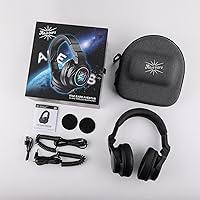
  • Fast Charging: Ten minutes of charging via the included cable provides approximately four hours of playback, reducing downtime during daily use.
  • Wired Connection: Detachable 3.5mm analog cable included for wired operation, with ANC remaining active when connected in wired mode.
  • Earcup Design: Each earcup can be independently rotated and folded back, enabling single-ear monitoring suitable for DJ cueing and similar applications.
  • Ear Padding: Earcups are lined with plush vegan leather material designed to balance comfort during extended sessions with ease of surface cleaning.
  • RGB Lighting: Integrated RGB lighting is built into the earcup design, with the feature toggleable to preserve battery life when aesthetics are not a priority.
  • Microphone Array: Five built-in microphones serve the hybrid ANC system and also function for voice calls and gaming chat in wireless mode.
  • Connectivity Options: Supports both Bluetooth 5.4 wireless and 3.5mm wired connections, allowing use across devices that lack Bluetooth or where a stable wired connection is preferred.
  • Package Weight: Total packaged weight is 1.07 kilograms, with package dimensions of approximately 8.54 × 8.11 × 4.41 inches.
  • Launch Date: The headset became commercially available in January 2025, making it a relatively recent release with a growing body of real-world user feedback.

Related Reviews
Linsoul Kiwi Ears Division Over-Ear Headphones
86%
92%
Sound Quality
89%
Comfort for Extended Use
75%
Noise Isolation
88%
Build Quality
85%
Ease of Use
More
Kiwi Ears Altruva
Kiwi Ears Altruva
81%
91%
Sound Quality
93%
Soundstage & Imaging
88%
Build Quality
74%
Comfort & Fit
89%
Driver Performance
More
Kiwi Ears Orchestra Lite
88%
93%
Tonal Neutrality
89%
Build Quality & Materials
91%
Imaging & Soundstage
76%
Long-Term Comfort
88%
Value for Money
More
Kiwi Ears Ardor
Kiwi Ears Ardor
78%
88%
Sound Quality
67%
Active Noise Cancellation
93%
Battery Life
61%
Build Quality
82%
Comfort & Fit
More
Linsoul Kiwi Ears Quartet 2DD+2BA Hybrid In-Ear Monitor
88%
94%
Sound Quality
91%
Bass Performance
83%
Treble Clarity
88%
Comfort & Fit
89%
Build Quality
More
Linsoul Kiwi Ears KE4 In-Ear Monitor 2DD+2BA Hybrid Earphone
86%
91%
Sound Quality
87%
Comfort & Fit
89%
Bass Performance
72%
Treble Sharpness
85%
Noise Isolation
More
Linsoul Kiwi Ears Aether Planar IEM
86%
94%
Sound Quality
91%
Soundstage and Imaging
88%
Build Quality and Durability
89%
Comfort for Extended Listening
72%
Bass Performance
More
Linsoul Kiwi Ears Attiva OWS Wireless Earbuds
85%
87%
Sound Quality
93%
Battery Life
84%
Comfort & Fit
79%
Active Noise Cancellation (ANC)
72%
Connectivity & Pairing
More
Kiwi Ears Allegro Mini
84%
88%
Sound Quality
91%
Build Quality
93%
Value for Money
94%
Portability
67%
Output Power
More
Kiwi Ears Forteza
Kiwi Ears Forteza
87%
92%
Bass Impact
84%
Vocal Clarity
89%
Ergonomics & Fit
87%
Gaming Performance
91%
Build Quality
More

FAQ

It depends on the environment. The ANC handles consistent low-frequency noise — like bus engines or air conditioning — reasonably well. In genuinely loud or unpredictable settings like a busy subway car, the real-world performance is noticeable but does not fully match the rated 35dB spec. Think of it as strong office-grade ANC rather than dedicated travel-headphone-grade isolation.

Yes, and this is one of the more practical features of the Aventus. When you connect the detachable 3.5mm cable, ANC remains fully active. That makes it useful for plugging into mixing equipment, a guitar interface, or a plane seat's audio jack while still blocking out background noise.

That figure is real but comes with an important condition: it only applies with both ANC and RGB completely turned off. In typical use with ANC enabled, expect closer to 45 hours. If you run ANC and RGB simultaneously, that drops to around 18 hours. Still solid endurance, but worth knowing which mode applies to how you actually plan to use it.

It is genuinely useful. Ten minutes on the charger gives you roughly four hours of playback, which is a meaningful return if you forget to charge overnight. It will not fully rescue a completely dead battery, but it takes enough of the panic out of a low-charge situation in the morning.

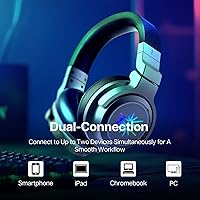
Yes. The dual-device Bluetooth pairing lets you stay connected to two devices simultaneously, so audio from either source will come through without needing to manually disconnect and re-pair. Most buyers find this works reliably for switching between a work laptop and a personal phone throughout the day.

For the first two to three hours, most users find the vegan leather earcups comfortable with a clamping force that feels secure without being tight. Beyond that, heat buildup under the cups becomes noticeable, which is a common trade-off with closed-back synthetic leather designs. If you regularly wear headphones for four or more consecutive hours, it is worth factoring that in.

Honest answer: not really, if you are performing regularly in loud club environments. The Kiwi Ears Aventus is better described as a prosumer option suited to home practice, bedroom production, and smaller casual gigs. The earcup rotation for single-ear monitoring works well, but the sound profile and isolation level are tuned for general listening enjoyment rather than the accuracy and isolation demands of professional booth use.

For everyday voice and video calls in a quiet room, it is acceptable — people on the other end can hear you clearly without complaints. For streaming, podcasting, or any recording where audio quality is visible to an audience, it falls short. Background noise pickup is high, and the voice capture lacks the presence and warmth a dedicated microphone provides.

Yes. The included detachable 3.5mm cable connects the headset to any standard analog audio output, including older stereos, mixing boards, guitar interfaces, and in-flight entertainment systems. ANC also remains active in this wired mode, which is a less common feature at this price tier.

It does have a real impact. Running both ANC and RGB together brings total playback time down to around 18 hours from the 45 hours you get with ANC alone. If battery longevity is a priority, turning off the RGB is the quickest way to recover a significant portion of that endurance without sacrificing noise cancellation.