



Overview

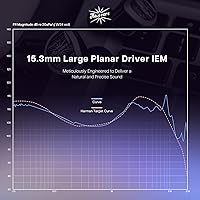
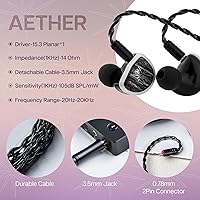
The Kiwi Ears Aether In-Ear Monitor is the flagship planar release from Linsoul's in-house audio brand, and it carries the largest driver the company has put inside an earphone so far. At the center of this in-ear monitor sits a 15.3mm planar diaphragm, a noticeable step up from the 12-14mm drivers found in most rival planar IEMs, and that extra real estate is the whole story behind how it performs. Build quality leans practical rather than flashy, with a detachable 0.78mm 2-pin cable that lets you swap connectors down the road instead of tossing the whole unit when a wire frays. Price-wise, this sits comfortably in the mid-to-upper audiophile tier, aimed at listeners who already know what they want rather than someone buying their first pair of earphones.

Features & Benefits

Sound-wise, this planar IEM earns its reputation through that oversized 15.3mm diaphragm and its multi-layered N52 neodymium magnets, which keep distortion low even when you push the volume into headphone-like territory. The chamber design and added shell ventilation give it an open, almost speaker-like soundstage that many dynamic-driver earphones simply cannot replicate. Bass digs in with real sub-bass slam, then eases into a warm mid-bass transition rather than staying flat and clinical. The core midrange, roughly 300 to 800Hz, stays accurate and uncolored, which matters if you are judging vocals or acoustic instruments critically. Treble avoids the artificial sparkle some competitors chase, landing instead on a natural top-end balance. And because the Aether uses a modular 2-pin cable, swapping or upgrading the wire later is a five-minute job, not a reason to retire the whole earphone.

Best For

This in-ear monitor makes the most sense for audio engineers, musicians, and anyone doing serious mixing or mastering work, since the tonal accuracy holds up under scrutiny in ways casual earphones rarely do. Gamers benefit too, particularly in competitive titles where a wide soundstage and precise imaging help you pinpoint footsteps or gunfire before you actually see them on screen. If you are coming from dynamic-driver IEMs and curious what planar technology actually sounds like, this is a reasonable entry point into that world. It also suits listeners who deliberately stick with wired setups, valuing consistent sound and zero latency over the convenience of Bluetooth. Where it makes less sense is for daily commuters who want active noise cancellation or a grab-and-go wireless experience, since neither is part of the package here.

User Feedback

Across 66 ratings, the Aether holds a 4.4 out of 5 average, which points to solid satisfaction without claiming universal praise. Owners tend to highlight strong detail retrieval, satisfying bass impact, and a cable system that feels more durable than what ships with cheaper earphones. Complaints, where they exist, cluster around fit, since smaller ears may need to experiment with eartip sizes to get a proper seal, and around isolation, given that passive-only noise blocking will not compete with active noise cancelling headphones on a loud train or plane. A handful of buyers also weigh the price against cheaper dynamic-driver alternatives and wonder if the jump to planar technology is worth the difference, which is a fair question depending on how critical your listening habits are.

Pros

  • Largest planar driver Kiwi Ears has built, delivering headphone-like output in an earphone shell
  • Wide, open soundstage that genuinely sets this in-ear monitor apart from typical dynamic drivers
  • Bass has real sub-bass slam without bleeding into a muddy midrange
  • Core midrange stays flat and accurate, great for critical vocal and instrument listening
  • Treble sounds natural rather than artificially boosted or harsh
  • Detachable 2-pin cable means a frayed wire does not retire the whole earphone
  • Strong 4.4 average rating across 66 buyers suggests consistent satisfaction
  • Wired connection avoids Bluetooth latency, which matters for gaming and studio work

Cons

  • Passive isolation only, so loud environments like flights or subways will let outside noise through
  • No Bluetooth support, ruling out anyone wanting a wireless, grab-and-go option
  • Fit may take trial and error for buyers with smaller ear canals
  • Mid-to-upper price tier puts it out of reach for casual, budget-focused buyers
  • Wired cable adds bulk and tangle risk compared to true wireless earphones
  • Some owners question whether the planar upgrade justifies the cost over dynamic-driver alternatives
  • Niche appeal mainly to critical listeners, less suited for background or casual music use

Ratings

Our scores for the Kiwi Ears Aether In-Ear Monitor are generated by AI after analyzing verified user reviews from buyers worldwide, with spam, bots, and incentivized feedback actively filtered out. The goal is to give you an honest snapshot of where this planar IEM genuinely excels and where it falls short. Both strengths and pain points are reflected here without any marketing spin.

Sound Detail & Resolution
91%
Listeners consistently note how much texture comes through on complex tracks, picking up small studio details that get lost on cheaper dynamic-driver earphones. The planar driver seems to resolve layered instrumentation cleanly even at higher volumes, which matters during late-night critical listening sessions.
A few buyers mention that this level of resolution can be unforgiving on poorly mastered or heavily compressed tracks, exposing flaws in the source recording rather than smoothing them over.
Bass Response
86%
Reviewers describe genuine sub-bass slam without the bloated mid-bass hump common in budget IEMs, making electronic and hip-hop tracks feel physical rather than muddy. The warm transition into the midrange keeps vocals from sounding thin during everyday listening.
Bass-head listeners coming from heavily boosted consumer tunings sometimes find the low end too restrained for casual gym or commute use, wanting more raw punch than this tuning provides.
Midrange Accuracy
89%
Mixing and mastering hobbyists praise how flat and uncolored vocals and acoustic instruments sound in the 300 to 800Hz range, making it easier to judge a recording rather than just enjoy it passively.
Casual listeners who prefer a more colored, forward vocal presence sometimes describe this accuracy as a bit clinical compared to consumer-tuned earphones they are used to.
Treble Clarity
83%
Users appreciate that cymbals and high-frequency detail come through clearly without the harsh sibilance that plagues some planar designs, making longer listening sessions comfortable rather than fatiguing on bright recordings.
A smaller group of treble-sensitive listeners still report occasional sharpness on certain tracks, particularly with poorly recorded live music or older masters with harsh high-end content.
Soundstage & Imaging
88%
Gamers specifically call out how well this earphone separates directional cues, helping with footstep and gunfire positioning in competitive shooters, while music listeners enjoy the open, speaker-like spread during orchestral or live recordings.
Because the soundstage is wide rather than narrow and centered, some buyers used to typical in-ear monitors note an adjustment period before imaging feels intuitive rather than diffuse.
Build Quality
84%
The shell and detachable 2-pin connector system feel solid in daily handling, and buyers like that a damaged cable does not mean replacing the entire earphone, extending the practical lifespan considerably.
A few owners mention the shells feel utilitarian rather than premium for the price point, lacking the polished finish or unique shaping found on some higher-end competitor IEMs.
Comfort & Fit
71%
29%
Most listeners with average ear sizes report comfortable extended wear during long mixing sessions or gaming marathons once they land on the right eartip size from the included set.
Buyers with smaller ear canals report needing to experiment with third-party tips to get a secure seal, and the shell size can feel bulky compared to more compact in-ear designs.
Cable Quality
85%
The stock cable feels more durable than what typically ships with earphones in this price range, and the detachable design means upgrading later is simple rather than requiring a full replacement purchase.
Some users find the stock cable a bit stiff or prone to minor microphonics during movement, prompting several to swap it out for a softer aftermarket option fairly early on.
Value for Money
78%
22%
Buyers upgrading from entry-level dynamic-driver IEMs feel the jump in detail and soundstage justifies the spend, especially given the detachable cable extends the earphone's usable life well beyond cheaper alternatives.
Price-conscious shoppers weighing this against budget dynamic-driver competitors sometimes question whether the planar upgrade delivers proportionally more performance, particularly for casual rather than critical listening use.
Gaming Performance
87%
Competitive gamers highlight the precise imaging as a real edge in fast-paced shooters, letting them react to directional audio cues faster than with stock earbuds or closed-back gaming headsets.
Players wanting wireless freedom or built-in mic convenience for voice chat find the wired-only, accessory-dependent setup less practical than dedicated gaming headsets designed around those features.
Noise Isolation
58%
42%
For quieter home or studio environments, the passive seal blocks enough ambient sound to stay focused during critical listening or mixing work without needing any active circuitry.
Commuters and travelers consistently note that passive-only isolation cannot compete with active noise cancelling headphones on planes, trains, or busy streets, letting noticeable ambient noise through.
Driveability
88%
With a 14 Ohm impedance and 105dB sensitivity, most buyers report comfortable volume levels straight from a phone or laptop jack without needing to invest in extra amplification gear.
A handful of detail-focused listeners still notice a worthwhile improvement when paired with a dedicated DAC or amp, suggesting the earphone scales somewhat with better source equipment.
Included Accessories
67%
33%
The included eartips and cable cover the basics needed to get started right out of the box, and the detachable connector means accessory limitations are not a long-term issue.
Some buyers expected a carrying case or a wider range of eartip sizes at this price tier, finding the included accessory set fairly minimal compared to competing premium IEMs.

Suitable for:

The Kiwi Ears Aether In-Ear Monitor makes the most sense for listeners who already have opinions about sound and want gear that can keep up with them. Audio engineers, mixing hobbyists, and musicians will likely appreciate the flat, accurate core midrange, since it is built for judging a recording rather than flattering it. Gamers who play competitive shooters or anything relying on positional cues stand to benefit from the wide soundstage, which can make a real difference in picking out distant footsteps. It also fits anyone deliberately staying wired, whether for lower latency, more consistent sound, or simply distrust of Bluetooth dropouts. Audiophiles curious about planar technology but not ready to spend on a flagship dynamic driver will find this a reasonable, mid-tier entry point into that sound signature.

Not suitable for:

This in-ear monitor is not built for someone who wants a single pair of earphones to handle gym sessions, commutes, and phone calls without a second thought. Anyone relying on active noise cancellation for flights or noisy offices will be disappointed, since isolation here is passive only and depends entirely on eartip seal. Buyers who prioritize true wireless convenience should also look elsewhere, as the Kiwi Ears Aether In-Ear Monitor is wired and has no Bluetooth option at all. People with smaller or unusually shaped ear canals may need to experiment with tip sizes before getting comfortable, which adds friction for anyone wanting an out-of-the-box fit. Finally, casual listeners unwilling to spend mid-to-upper tier money on earphones will likely find the price hard to justify against simpler alternatives.

Specifications

  • Driver Type: The earphone uses a planar magnetic driver rather than the dynamic drivers found in most earphones at this price.
  • Driver Size: The diaphragm measures 15.3mm, larger than the 12-14mm planar drivers typically used in competing in-ear monitors.
  • Magnet Type: Multi-layered N52 neodymium magnets are used to drive the diaphragm with lower distortion at higher output levels.
  • Impedance: The earphone has an impedance of 14 Ohm, making it relatively easy to drive from phones and laptops.
  • Sensitivity: Sensitivity is rated at 105dB SPL/mW, indicating it reaches comfortable listening volumes without requiring a powerful amplifier.
  • Frequency Range: The stated frequency response spans 20Hz to 20kHz, covering the full range of typical human hearing.
  • Cable Connector: A detachable 0.78mm 2-pin connector system allows the stock cable to be swapped for third-party alternatives.
  • Connectivity: This is a fully wired earphone with no Bluetooth or wireless functionality built in.
  • Noise Isolation: Noise control is passive only, relying on eartip seal rather than any active noise cancelling circuitry.
  • Earpiece Shape: The shell follows a standard in-ear monitor shape designed to sit within the outer ear and canal.
  • Included Accessories: The package includes a detachable cable and a set of eartips for fitting different ear sizes.
  • Item Weight: The earphones weigh 10.2 ounces as listed in the package weight, which includes the cable and accessories.
  • Package Dimensions: The retail packaging measures 6.38 by 4.49 by 2.13 inches.
  • Color Option: The earphone is sold in a black colorway.
  • Brand: The product is manufactured under the Kiwi Ears brand and distributed by Linsoul.
  • Control Method: Compatible cables can include an inline remote for basic call and media control on supported devices.
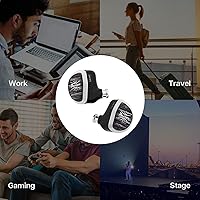
  • Primary Use Cases: The earphone is marketed for music listening, gaming, and professional monitoring applications.

Related Reviews
Kiwi Ears Orchestra Lite
88%
93%
Tonal Neutrality
89%
Build Quality & Materials
91%
Imaging & Soundstage
76%
Long-Term Comfort
88%
Value for Money
More
Linsoul Kiwi Ears Quartet 2DD+2BA Hybrid In-Ear Monitor
88%
94%
Sound Quality
91%
Bass Performance
83%
Treble Clarity
88%
Comfort & Fit
89%
Build Quality
More
Kiwi Ears KE4 Hybrid In-Ear Monitor

80%
88%
Sound Quality
86%
Bass Performance
91%
Midrange Clarity
83%
Treble Extension
78%
Soundstage & Imaging
More
Linsoul Kiwi Ears Division Over-Ear Headphones
86%
92%
Sound Quality
89%
Comfort for Extended Use
75%
Noise Isolation
88%
Build Quality
85%
Ease of Use
More
Kiwi Ears Altruva
Kiwi Ears Altruva
81%
91%
Sound Quality
93%
Soundstage & Imaging
88%
Build Quality
74%
Comfort & Fit
89%
Driver Performance
More
Kiwi Ears Aventus
Kiwi Ears Aventus
77%
83%
Sound Quality
71%
Active Noise Cancellation
78%
Battery Life
81%
Build Quality
77%
Comfort & Fit
More
Kiwi Ears Ardor
Kiwi Ears Ardor
78%
88%
Sound Quality
67%
Active Noise Cancellation
93%
Battery Life
61%
Build Quality
82%
Comfort & Fit
More
CCZ Melody In-Ear Monitors
84%
89%
Sound Quality
91%
Comfort and Fit
77%
Build Quality
68%
Cable Durability
84%
Ease of Use
More
DCMEKA IE68 In-Ear Monitor Earphones
76%
73%
Sound Quality
84%
Fit & Comfort
78%
Noise Isolation
81%
Cable & Connector
69%
Build Quality
More
CCA C12 In-Ear Monitors
85%
88%
Sound Quality
84%
Comfort for Long Listening
89%
Build Quality
87%
Noise Isolation
76%
Bass Performance
More

FAQ

Not really. With a 14 Ohm impedance and 105dB sensitivity, this in-ear monitor is efficient enough to run comfortably off a phone or laptop headphone jack. A dedicated amp or DAC can clean up the signal and add a bit more headroom, but it is not a requirement to enjoy the sound.

Yes, that is one of the bigger selling points here. The Aether uses a standard detachable 0.78mm 2-pin connector, so you can swap in aftermarket cables for tuning, ergonomics, or just personal preference without affecting the warranty.

Not in the active sense. Isolation here comes entirely from the eartip seal in your ear canal, which is decent for moderate environments but will not compete with active noise cancellation on a plane or in a loud office.

Both, honestly. The wide soundstage that benefits music listening also helps with positional audio in games, making it easier to pick out footsteps or directional cues. Plenty of buyers use this planar IEM for both purposes interchangeably.

No, this is a fully wired earphone with no Bluetooth support. If you need wireless freedom, you would have to pair it with a separate Bluetooth adapter that supports the 2-pin or 3.5mm cable connection.

Start with the medium tip included in the box and check for a snug seal without discomfort. If you are getting weak bass or sound leakage, you likely need a different size. Ear shapes vary a lot, so do not be surprised if you need to experiment a bit.

It leans tuned rather than flat. There is genuine sub-bass slam, and a mild warmth carries into the midrange, but it is not the kind of bloated, bass-heavy signature you would find in consumer-tuned earbuds. Critical listeners should find it controlled rather than overwhelming.

Because the cable is detachable, you simply unplug the damaged one and replace it with a new 2-pin compatible cable. You are not stuck replacing the entire earphone over a single frayed wire, which is a real advantage over fixed-cable designs.

Yes, that is part of their intended use. The midrange between 300 and 800Hz is tuned to stay accurate rather than colored, which helps when judging vocals and instruments critically rather than just enjoying casual playback.

It depends on what you are after. If you specifically want the speed, detail, and open soundstage that planar drivers are known for, this earphone delivers a clear step up. If you are mostly a casual listener on a tighter budget, a good dynamic-driver alternative might offer better value for your needs.