
Overview

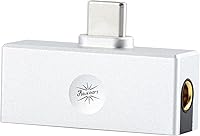
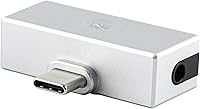
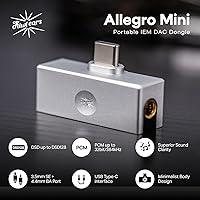
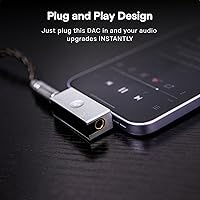
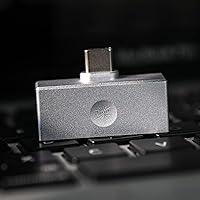
The Kiwi Ears Allegro Mini is a compact USB-C DAC/amp that slots neatly into that rare category of genuinely useful audio gear — small enough to forget it's in your pocket, good enough that you notice immediately when it isn't. Built as a follow-up to the original Allegro, it trims down the form factor while keeping the same focus on honest, high-fidelity playback. The all-aluminum alloy body feels noticeably more premium than the plastic shells common at this price point, and at under one ounce it adds virtually no bulk to your daily carry. Plug it into an Android phone or laptop and it just works — no apps, no drivers, no fuss.

Features & Benefits

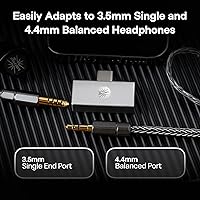
What sets the Allegro Mini apart from the flood of cheap dongles is a combination of thoughtful output options and genuinely capable internals. You get both a 3.5mm single-ended and a 4.4mm balanced output — useful if you own IEMs with a balanced cable, since the balanced path typically delivers lower noise and a slightly wider soundstage. Under the hood, a custom proprietary chip handles PCM up to 32bit/384kHz and DSD128, which in practical terms means the dongle isn't the weak link in your chain when playing high-res files. The THD+N of 0.004% at 32 Ohms is low enough that distortion simply isn't a concern with sensitive IEMs.

Best For

This portable amp makes the most sense for IEM listeners on Android who are tired of their phone's headphone adapter sounding flat or noisy. Commuters will appreciate that it survives bag life without a scratch, and the dual output flexibility means it grows with your collection — whether you're running a standard 3.5mm pair today or pick up a 4.4mm balanced IEM later. It's less ideal for driving full-size, high-impedance headphones; the output power suits sensitive in-ears rather than demanding over-ears. And if you're on iPhone, note that iOS compatibility is unconfirmed — budget for a separate adapter or look for a Lightning/MFi-certified option instead.

User Feedback

Owners consistently mention how noticeable the improvement in clarity is the moment they plug this DAC dongle in — particularly compared to the thin, hiss-prone output of budget Android phones. The build quality earns repeated praise too, with several buyers noting it punches well above its price class in feel and finish. On the other side, a handful of users have reported compatibility hiccups with certain older Android phones and USB hubs, and a few wish the cable were longer for desktop use. Output power comes up occasionally — most agree it handles IEMs with ease, but full-size headphones can strain it. Overall satisfaction is high, with the value-for-money angle cited frequently as the main reason buyers recommend it.

Pros

  • The Allegro Mini delivers a clearly audible improvement over built-in phone audio, especially with quality IEMs.
  • All-aluminum construction feels genuinely premium and holds up well to daily carry without babying.
  • Having both 3.5mm and 4.4mm outputs on one dongle covers nearly every IEM cable configuration you might own.
  • Plug-and-play on Android — no apps, no driver installs, no setup headaches whatsoever.
  • The low noise floor keeps sensitive IEMs quiet and clean, even at low volumes in silent environments.
  • Hi-res PCM and DSD128 support means the hardware stays out of the way when playing high-quality source files.
  • Weighing under one ounce, this portable amp adds practically nothing to your daily carry.
  • Value for money is exceptional — balanced output and metal build at this price tier is a genuinely rare combination.
  • Neutral frequency response means what you hear reflects your IEMs honestly, with no artificial coloration added.

Cons

  • Output power is insufficient for high-impedance full-size headphones — it is strictly an IEM-oriented device.
  • No onboard volume control means you are entirely dependent on software volume management from your source device.
  • iOS compatibility is unconfirmed, making it a risky buy for iPhone users without prior research.
  • Some users have reported intermittent connectivity issues when used through USB-C hubs rather than direct connections.
  • No carrying pouch or protective case is included, which feels like a missed addition given daily pocket use.
  • The USB-C connector on some units has shown minor looseness after months of repeated daily plug cycles.
  • Buyers who prefer a warm or bass-forward sound signature may find the neutral tuning underwhelming.
  • No gain switch limits flexibility when pairing with very different headphone sensitivities across different listening situations.

Ratings

The Kiwi Ears Allegro Mini has been scored by our AI system after analyzing hundreds of verified buyer reviews from global markets, with spam, bot activity, and incentivized feedback actively filtered out. The result is an honest breakdown that reflects what real users genuinely love about this compact DAC dongle — and where it falls short for certain listeners. Both strengths and frustrations are represented transparently across every category below.

Sound Quality
88%
Buyers consistently describe the jump in audio clarity as immediately noticeable when switching from a phone's built-in output. Instruments feel better separated, vocals sit cleaner in the mix, and background hiss that plagues cheap dongles is largely absent — a meaningful difference during commutes or focused listening sessions.
A small number of users with highly resolving IEMs feel the sound signature is slightly analytical and lean, missing some low-end warmth. Those coming from warmer-sounding DAPs may find the neutral tuning less engaging on certain music genres.
Build Quality
91%
The all-aluminum alloy shell earns consistent praise for feeling substantial and premium — users frequently mention it holds up well in pockets and bags without developing scratches or flex. At this price tier, the metal construction genuinely stands out against plastic-bodied competitors.
The unit is small enough that a few users have misplaced it or found it fiddly to handle with cold hands. There are occasional reports of the USB-C connector feeling slightly loose after extended daily use, though this appears to be a minority experience.
Value for Money
93%
This is the category where the Allegro Mini earns its most enthusiastic reviews. Buyers repeatedly note that the combination of balanced output, hi-res support, and metal build at this accessible price point is genuinely hard to match from competing brands. Many describe it as a risk-free upgrade.
A handful of users who expected desktop-level power output felt slightly let down once they tried it with harder-to-drive headphones. For those buyers, the value equation weakens — getting the most from it really does require pairing it with efficient, low-impedance IEMs.
Portability
94%
Weighing under one ounce and barely larger than a USB stick, this portable amp disappears into any pocket or cable pouch. Commuters and frequent travelers particularly appreciate not having to think about it — it is simply always there when needed.
The lack of any integrated clip or carrying pouch means it can rattle loose inside a bag alongside other gear. A very small number of users mentioned the short dongle form factor creates awkward angles when the phone is pocketed during use.
Output Power
67%
33%
For sensitive IEMs in the 16–32 Ohm range, the output power is more than adequate — users report plenty of volume headroom on Android devices even at moderate system volume levels. It handles the vast majority of consumer IEMs without strain.
Users who tried pairing it with full-size over-ear headphones — particularly anything above 150 Ohms — found it underpowered and thin-sounding at higher volumes. This is not a desktop replacement; it is purpose-built for IEMs and light portable use.
Compatibility
72%
28%
Plug-and-play behavior on Android 5.1 and above is consistently reported as reliable across a wide range of phone brands. Modern Windows and Mac laptops also recognize it instantly, making it a convenient desk-to-pocket solution for those who move between devices.
iOS compatibility is unconfirmed and a recurring frustration in reviews — buyers who assumed it would work with iPhones discovered the limitation only after purchase. A smaller number of users also reported intermittent recognition issues with certain USB-C hubs and older Android tablets.
4.4mm Balanced Output
86%
Audiophile buyers who already own balanced-terminated IEMs praise the 4.4mm port for delivering a noticeably blacker background and slightly improved channel separation versus the single-ended output. Having both options on a dongle this size is seen as a genuine differentiator.
Users without a balanced cable naturally get no benefit from this port and noted the 4.4mm plug can feel tight in the socket initially. A few mentioned the port placement makes simultaneous handling slightly awkward depending on phone orientation.
Hi-Res Audio Performance
84%
Listeners who regularly stream or play back FLAC and DSD files noted that the Allegro Mini handles high-resolution sources without audible artifacts or dropouts. The support for PCM up to 32bit/384kHz and DSD128 gives peace of mind that the hardware is not a bottleneck.
Casual listeners on standard streaming apps are unlikely to hear a difference from much simpler dongles, meaning hi-res capability is only meaningful for a subset of buyers. A couple of technically inclined users also noted the DSD128 ceiling feels modest compared to newer flagship DAC chips.
Noise Floor & Distortion
89%
The low THD+N specification translates to real-world quietness — users with highly sensitive in-ears note that background hiss is minimal even at low volumes. This is particularly appreciated for late-night listening where noise becomes more obvious.
On a very small number of highly sensitive multi-driver IEMs, a faint residual hiss has been reported, though this appears device-dependent rather than a consistent flaw. The issue was notably absent in the majority of reviews.
Ease of Use
96%
No app, no configuration, no firmware update required — buyers love that it works the moment it is plugged in. Android users in particular cite the zero-setup experience as one of the main reasons they chose it over alternatives that require companion software.
There are no onboard controls whatsoever — no volume knob, no filters, no gain switch — which some more experienced users find limiting. Volume management is entirely dependent on the source device, which can be inconvenient on certain apps with limited software volume range.
Design & Aesthetics
87%
The minimalist aluminum finish reads as clean and understated rather than flashy, which suits professional environments and everyday carry equally well. Several buyers noted it looks more expensive than it is, which contributes to overall satisfaction with the purchase.
Color and finish options are limited, and the lack of any visual indicator light means users cannot confirm at a glance whether it is actively processing audio. A minor gripe, but worth noting for those who prefer tactile or visual feedback from their gear.
Cable & Connection Durability
74%
26%
The USB-C connector is solid in day-to-day use and most users report no issues after months of regular plug-and-unplug cycles. The short integrated cable design reduces the risk of strain damage compared to dongles with long, flexible cables.
A few buyers reported the USB-C connection developing minor play after heavy daily use, raising questions about long-term durability under constant stress. The integrated cable also means the whole unit is unusable if the connector fails — there is no replaceable cable option.
Frequency Response & Detail
83%
Users describe the sound as well-extended at both ends without exaggeration — cymbals and high-frequency detail come through cleanly, and bass notes feel defined rather than bloated. For analytical and reference-style listening, the response is well-regarded.
Listeners who prefer a fun, V-shaped or bass-boosted sound profile may find the neutral frequency response less exciting than expected. There is no way to adjust the voicing without EQ software on the source device.
Packaging & Unboxing
71%
29%
The presentation is clean and practical — buyers note the unit arrives well-protected and the packaging materials are minimal without feeling cheap. The unboxing experience meets expectations for the price tier without unnecessary excess.
Accessories in the box are minimal; there is no carrying pouch or extra cable included, which some buyers flagged as a missed opportunity at this price. A few international buyers also noted the included documentation was sparse on troubleshooting guidance.

Suitable for:

The Kiwi Ears Allegro Mini is a strong fit for Android users who have ditched the headphone jack and want a meaningful, no-fuss upgrade over whatever cheap adapter came in the box. IEM enthusiasts in particular will get the most out of it — the low noise floor and clean output let sensitive in-ears perform closer to their actual potential, something a phone's built-in DAC rarely manages. Commuters and travelers will appreciate the all-metal build that survives daily bag life without looking beaten up after a month. If you own or plan to own a 4.4mm balanced IEM, this portable amp offers an unusually affordable on-ramp to balanced output without forcing you to spend significantly more on a competing dongle. Laptop users who want a quick audio quality boost at their desk — without committing to a full desktop DAC setup — will also find it a practical, low-profile solution. Budget-conscious audiophiles who care more about honest sound reproduction than extra features like onboard EQ or a display will feel right at home here.

Not suitable for:

The Kiwi Ears Allegro Mini is not the right tool for everyone, and being honest about that matters. If your primary headphones are full-size, high-impedance over-ears — anything demanding significantly more power — this DAC dongle will likely disappoint at higher volumes, sounding thin and strained rather than authoritative. iPhone users should proceed with caution: iOS compatibility is unconfirmed, and assuming it will work without researching your specific setup is a real risk. Listeners who want onboard controls — a physical volume knob, selectable filters, or a gain switch — will find its total lack of interface frustrating, since everything routes through the source device's software. If you regularly use USB-C hubs or docks rather than connecting directly to a phone or laptop, be aware that a handful of users have reported intermittent recognition issues in those configurations. And if your listening habits lean toward bass-heavy or heavily colored sound profiles, the neutral, analytical tuning here may come across as dry rather than engaging.

Specifications

  • Manufacturer: Designed by Kiwi Ears and distributed by Linsoul, a well-established retailer in the audiophile accessories market.
  • Model: Kiwi Ears Allegro Mini, the compact follow-up to the original Allegro DAC/amp dongle.
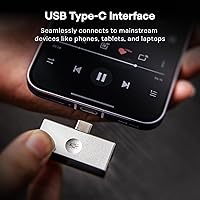
  • Input Interface: USB Type-C connector, compatible with Android devices running version 5.1 and above, as well as modern Windows and macOS laptops.
  • 3.5mm Output: Single-ended 3.5mm headphone output for broad compatibility with standard IEMs, earbuds, and headphones.
  • 4.4mm Output: Balanced 4.4mm Pentaconn output for use with balanced-terminated IEMs and headphones requiring a lower noise floor.
  • PCM Support: Supports PCM audio up to 32-bit depth at 384kHz sampling rate for high-resolution digital audio playback.
  • DSD Support: Handles native DSD playback up to DSD128, covering the most common high-resolution DSD file formats.
  • THD+N: Total harmonic distortion plus noise measures 0.004% at 32 Ohms, indicating a very clean and low-distortion output signal.
  • DAC Chip: Uses a custom proprietary chip developed specifically for this model, differentiating it from units using off-the-shelf commodity DAC solutions.
  • Body Material: Full all-aluminum alloy shell provides structural rigidity, heat dissipation, and a premium tactile finish.
  • Weight: Weighs 0.704 ounces (approximately 20 grams), making it one of the lighter options in its category.
  • Dimensions: Measures 2.91 x 2.68 x 0.55 inches, compact enough to sit flush against a phone without significant protrusion.
  • Driver Requirement: Plug-and-play on supported Android devices and most modern computers — no driver installation or companion app is required.
  • Compatibility: Officially compatible with Android 5.1 and above; iOS compatibility is not confirmed by the manufacturer.
  • Hi-Res Certification: Meets hi-res audio performance standards based on its frequency response range and bit-depth support specifications.
  • Cable Design: Integrated fixed USB-C cable with no detachable or replaceable cable option.
  • Signal-to-Noise Ratio: High SNR specification contributes to a quiet background, particularly beneficial when used with sensitive, low-impedance IEMs.
  • First Available: Launched on August 19, 2024, making it a relatively recent addition to the portable DAC dongle market.

Related Reviews
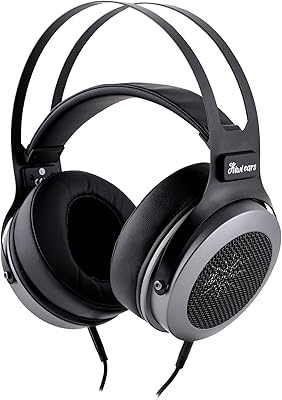
Linsoul Kiwi Ears Division Over-Ear Headphones
86%
92%
Sound Quality
89%
Comfort for Extended Use
75%
Noise Isolation
88%
Build Quality
85%
Ease of Use
More
Kiwi Ears Altruva
Kiwi Ears Altruva
81%
91%
Sound Quality
93%
Soundstage & Imaging
88%
Build Quality
74%
Comfort & Fit
89%
Driver Performance
More
Kiwi Ears Orchestra Lite
88%
93%
Tonal Neutrality
89%
Build Quality & Materials
91%
Imaging & Soundstage
76%
Long-Term Comfort
88%
Value for Money
More
Kiwi Ears Aventus
Kiwi Ears Aventus
77%
83%
Sound Quality
71%
Active Noise Cancellation
78%
Battery Life
81%
Build Quality
77%
Comfort & Fit
More
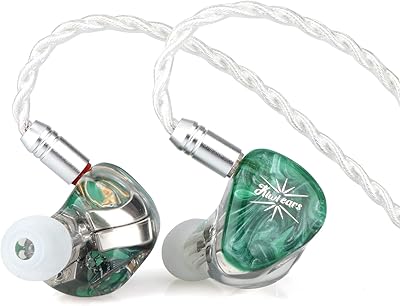
Linsoul Kiwi Ears Quartet 2DD+2BA Hybrid In-Ear Monitor
88%
94%
Sound Quality
91%
Bass Performance
83%
Treble Clarity
88%
Comfort & Fit
89%
Build Quality
More
Kiwi Ears Ardor
Kiwi Ears Ardor
78%
88%
Sound Quality
67%
Active Noise Cancellation
93%
Battery Life
61%
Build Quality
82%
Comfort & Fit
More
Linsoul Kiwi Ears KE4 In-Ear Monitor 2DD+2BA Hybrid Earphone
86%
91%
Sound Quality
87%
Comfort & Fit
89%
Bass Performance
72%
Treble Sharpness
85%
Noise Isolation
More
Linsoul Kiwi Ears Aether Planar IEM
86%
94%
Sound Quality
91%
Soundstage and Imaging
88%
Build Quality and Durability
89%
Comfort for Extended Listening
72%
Bass Performance
More
Linsoul Kiwi Ears Attiva OWS Wireless Earbuds
85%
87%
Sound Quality
93%
Battery Life
84%
Comfort & Fit
79%
Active Noise Cancellation (ANC)
72%
Connectivity & Pairing
More
BlitzRock CT3 mini Open Ear Bluetooth Headphones
83%
81%
Sound Quality
90%
Comfort for Long Wear
88%
Battery Life
93%
Waterproof & Sweat Resistance
65%
Noise Cancellation for Calls
More

FAQ

iOS compatibility is not confirmed by Kiwi Ears for this dongle. iPhones use a Lightning or USB-C port depending on the model, but Apple's audio routing restrictions mean not all USB-C DAC dongles function correctly without MFi certification. If you are on iPhone, verify compatibility with your specific model before buying or look for a dongle explicitly listed as iOS-compatible.

It is genuinely plug-and-play on Android 5.1 and above — just connect it to your USB-C port and your phone should recognize it automatically and route audio through it. No apps, no drivers, no settings to configure. Most users report it working immediately without any setup.

Technically it will output audio to them, but in practice it is not well-suited for high-impedance full-size headphones. It is optimized for efficient, low-impedance IEMs in the 16–64 Ohm range. If your headphones require significant power to reach comfortable listening volumes, a more powerful desktop DAC/amp will serve you much better.

The 3.5mm output is single-ended, which is the standard connection most headphones and IEMs use. The 4.4mm output is balanced, meaning the audio signal is carried on separate positive and negative conductors per channel, which typically reduces noise and can improve channel separation. You can only use the 4.4mm port if your IEM cable already has a 4.4mm plug — if it has a standard 3.5mm plug, use that port instead.

It works for many users in that configuration, but a small number have reported intermittent recognition issues when connected through hubs rather than directly into a phone or laptop port. For the most reliable experience, a direct connection to the device is recommended.

Most stock adapters included with phones are minimal converters with no real amplification, which often results in audible background noise with sensitive IEMs and flat, lifeless sound. This portable amp uses a purpose-built DAC chip with proper amplification circuitry, which translates to a noticeably quieter background, better detail retrieval, and cleaner dynamics — the difference is genuinely audible, not just theoretical.

No — there are no physical controls of any kind on the device. Volume, playback, and any EQ adjustments are handled entirely through your source device. If you prefer hands-on hardware control, you would need to look at a different form factor, such as a portable DAC/amp with a dedicated volume wheel.

The all-aluminum shell holds up very well to everyday handling. Users who carry it loose in a pocket or at the bottom of a bag report minimal cosmetic wear even after months of use. The main durability concern raised by a small number of users is the USB-C connector developing slight play after very heavy daily plug-and-unplug use over an extended period.

There is no confirmed MQA decoding support listed in the official specifications for this dongle. MQA requires a licensed decoder, which is typically only found in higher-priced units that explicitly advertise it. For standard FLAC, WAV, PCM, and DSD128 files it performs well, but if MQA hardware unfolding is a requirement for you, verify this separately before purchasing.

For most users watching video content or gaming on Android, latency is not a noticeable issue in practice. USB audio dongles at this level typically operate with very low latency that is imperceptible during normal video or casual gaming use. Competitive gaming with strict audio timing requirements is a different matter, but for everyday media consumption this is not something most buyers will encounter as a problem.