





Overview

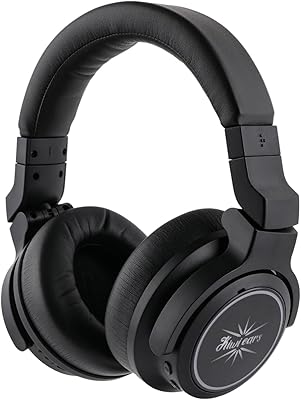
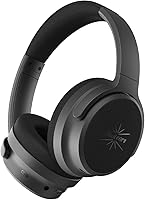
The Kiwi Ears Ardor marks the brand's first attempt at a wireless over-ear headphone, and it arrives with an unusually ambitious spec sheet for the price. Kiwi Ears built their reputation on in-ear monitors with audiophile-grade tuning, so this over-ear set carries real expectations from the community. The closed-back, foldable design signals a commuter-friendly product, but the Harman-target tuning underneath tells a different story — one aimed at listeners who care about tonal accuracy, not just bass punch. A dual dynamic driver configuration at this price tier is genuinely rare, and it's the kind of technical detail that separates these wireless headphones from the sea of generic budget options.

Features & Benefits

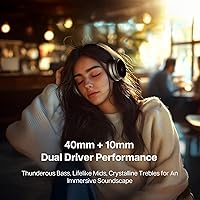
At the core of the Ardor sits a coaxial pair of drivers — a 40mm unit handling bass and mids, and a 10mm tweeter adding clarity and a wider soundstage. Bluetooth 5.4 via the Bluetrum chip keeps latency low enough for responsive video and casual gaming. The hybrid ANC uses a five-microphone array rated at up to 35dB of noise reduction; real-world performance won't rival Sony or Bose, but it handles office hum and transit noise competently. Battery life is the standout stat — 140 hours without ANC is an outlier figure at this tier, backed by fast charging that adds 8 hours in 10 minutes. Plugging in via USB-C activates an onboard DAC/AMP for wired high-fidelity playback — a genuine differentiator for desktop listeners.

Best For

These wireless headphones appeal most to buyers frustrated by mainstream budget brands but not ready to spend flagship money. The audiophile crowd will find the Harman-tuned signature familiar and satisfying; podcasters and home guitarists get honest monitoring without clinical sterility. Commuters and remote workers benefit from the ANC and a battery that removes charging anxiety from the equation. Gamers running long sessions will appreciate low-latency Bluetooth and all-day comfort from the lightweight build and vegan leather pads. Travelers get a foldable pair that slips into a bag without drama. This over-ear set is built less for hype-chasers and more for people who actually listen critically and want value that reflects it.

User Feedback

The Ardor holds a 4.5-star average from early buyers, though the review count remains modest — treat that figure as a promising signal rather than a settled verdict. Buyers consistently praise the sound quality and comfort for the price, noting that the tuning feels notably mature compared to similarly priced competitors. On the critical side, some users flag that ANC is decent but not transformative, and the plastic-heavy build draws occasional comments about long-term durability. Microphone quality for calls earns mixed marks. Comparisons to Anker Soundcore and EarFun alternatives generally favor the Ardor on audio, while those rivals sometimes edge ahead on build solidity. The early response largely aligns with what the specs and tuning philosophy promised.

Pros

  • Dual dynamic drivers deliver a surprisingly mature, balanced sound that punches well above the price point.
  • Harman-target tuning means natural mids and controlled bass without the bloated low end common in budget headphones.
  • 140-hour battery life with ANC off is an outlier figure that virtually eliminates charging anxiety for most users.
  • Ten minutes of fast charging adds 8 hours of playback — genuinely useful when you are rushing out the door.
  • The wired USB-C DAC mode improves audio resolution noticeably over a standard laptop headphone jack.
  • Bluetooth 5.4 provides stable, low-latency wireless performance suitable for video and casual gaming.
  • Multipoint pairing lets you stay connected to your laptop and phone simultaneously without manual switching.
  • The foldable design and lightweight build make these wireless headphones easy to pack without dedicating a separate case.
  • Vegan leather ear pads are softer and more comfortable than the synthetic foam found on most rivals at this tier.
  • Hybrid ANC with a five-microphone array handles steady background noise like HVAC and engine hum competently.

Cons

  • Plastic-heavy construction feels noticeably less premium than the audio quality suggests, especially around the headband.
  • No hard carry case is included, which is a real omission for a headphone marketed toward commuters and travelers.
  • ANC performance does not keep up with flagship noise-canceling headphones — irregular or sudden sounds cut through clearly.
  • No companion app means zero EQ adjustment, no ANC tuning, and no firmware update path after purchase.
  • Call microphone quality is mediocre in noisy environments, limiting its usefulness beyond quiet indoor calls.
  • Codec transparency is poor — it is unclear whether aptX or LDAC is supported, leaving audio quality ceiling uncertain.
  • Treble tuning can feel slightly forward on bright recordings, causing fatigue during extended listening sessions.
  • Long-term durability at the folding joints is unproven, and the review pool is still too small to draw confident conclusions.
  • Glasses wearers may experience a compromised ear cup seal, which reduces both passive isolation and ANC effectiveness.
  • No audible or visual indicator confirms when the onboard DAC mode is active in wired playback, which confuses initial setup.

Ratings

Our AI rating engine analyzed verified buyer reviews for the Kiwi Ears Ardor from across global marketplaces, filtering out incentivized and bot-generated feedback to surface what real users actually experience day to day. Scores reflect a balanced synthesis of recurring praise and genuine frustrations — nothing is inflated, and no weakness is buried. Whether this over-ear set delivers on its audiophile ambitions or stumbles where budget headphones typically do, the numbers tell that story honestly.

Sound Quality
88%
The dual dynamic driver setup produces a notably mature sound signature for the price — bass is present and textured without drowning out vocals, and the Harman-target tuning gives mids a natural weight that budget competitors rarely match. Listeners switching from entry-level Sony or Anker models frequently describe the difference as immediately noticeable.
The 10mm tweeter adds clarity, but some listeners find the treble slightly forward on certain recordings, which can cause fatigue during long sessions with bright-mastered tracks. Audiophiles used to planar or higher-end dynamic headphones will notice a ceiling in technical resolution.
Active Noise Cancellation
67%
33%
The hybrid ANC handles predictable low-frequency noise well — office HVAC systems, bus engines, and steady train hum are noticeably reduced, making these wireless headphones genuinely usable during commutes without cranking the volume. The five-microphone array gives it a clear advantage over single-mic ANC implementations at a similar price.
At this price tier, the 35dB spec claim does not translate to flagship-level isolation in the real world. Sudden voices, keyboard clatter, and irregular ambient sounds cut through more than users might expect, and anyone comparing directly to Sony XM5 or Bose QC45 performance will find it falls well short.
Battery Life
93%
140 hours of playback with ANC off is an outlier figure that genuinely stands out — frequent travelers and remote workers report going a week or more between charges under normal daily use. Even with ANC engaged, 72 hours is substantially above average for the category, and the fast-charge feature delivering 8 hours from a 10-minute top-up adds real practical value.
The 140-hour figure applies only in Bluetooth mode with ANC fully disabled, so users who rely heavily on noise cancellation will see runtime drop to roughly half that figure. Early review data on long-term battery degradation after 300-plus charge cycles is not yet available, so durability over a year of heavy use remains an open question.
Build Quality
61%
39%
The foldable hinge mechanism feels solid during normal use, and the overall assembly holds together without creaking during head movement. The lightweight chassis is a genuine comfort advantage for extended wear, and the vegan leather ear pads feel noticeably softer than the synthetic foam found on similarly priced rivals.
The plastic-heavy construction is the most common complaint in early buyer feedback — it feels noticeably less premium than the audio quality might suggest, and the headband in particular lacks the reassuring flex of higher-end builds. Some users have flagged concerns about long-term durability at stress points like the folding joints.
Comfort & Fit
82%
18%
The lightweight design and generously padded vegan leather ear cups make these headphones comfortable during sessions of two to three hours without significant pressure buildup. Users with mid-sized heads report a secure fit that does not clamp uncomfortably, which matters a lot during commutes or gaming sessions.
Buyers with larger heads note that the clamping force increases over time as the headband adjusts, and the pads can generate heat during warm weather or intense use. Glasses wearers occasionally mention that the seal around the ear cups breaks slightly, reducing both passive isolation and ANC effectiveness.
Microphone Quality
58%
42%
The five-microphone array handles voice pickup adequately for casual calls in quiet environments, and callers on the other end generally report being able to understand speech without issues during standard phone conversations or video meetings at home.
In noisier settings, the call microphone struggles to isolate voice cleanly, and background noise bleeds through more than users expect given the mic count. For podcasters considering this over-ear set as a monitoring and recording tool, the built-in mic is not a viable recording source — an external mic remains necessary.
Bluetooth Connectivity
84%
Bluetooth 5.4 via the Bluetrum chip provides a stable connection within the 10-meter range, and the multipoint pairing to two devices simultaneously works reliably for users who switch between a laptop and a phone throughout the workday. Latency is low enough for YouTube and streaming video without noticeable lip-sync drift.
Hardcore mobile gamers in competitive titles may occasionally detect micro-latency under stress conditions, particularly on older Android devices where Bluetooth stack behavior varies. The codec support documentation is not prominently disclosed, which leaves buyers uncertain about whether aptX or LDAC is available for higher-quality streaming.
Wired DAC/AMP Mode
86%
Plugging into a PC or Mac via USB-C activates an onboard DAC and amplifier that meaningfully improves audio resolution compared to using the headphone jack on most laptops — it is a real differentiator for desktop listeners who want better fidelity without buying a separate DAC dongle. Android and iOS compatibility adds versatility.
The wired DAC mode requires the USB-C cable rather than the included 3.5mm cable, and not all users immediately understand the distinction between the two wired input modes. There is no visual or audible indicator confirming when the DAC is active, which can cause brief confusion during initial setup.
Value for Money
91%
Stacking dual dynamic drivers, hybrid ANC, Bluetooth 5.4, a built-in DAC/AMP, and a 140-hour battery into one package at this price point is genuinely difficult to match in the current market. Buyers consistently describe a sense of getting more than expected, particularly on sound quality, which is where budget headphones most often disappoint.
The value equation tilts slightly if ANC performance is your primary reason for buying — there are dedicated ANC-focused models near this price that outperform it on noise cancellation specifically. Build quality also tempers the overall value perception; the audio experience punches above its weight more consistently than the physical product does.
Spatial Audio Performance
72%
28%
Spatial audio support adds a broader sense of width and depth to compatible content, and users watching immersive video content or playing open-world games report a noticeable improvement in directional cues compared to standard stereo playback. It works without requiring any companion app installation.
The spatial processing is software-driven rather than head-tracked, so the effect is consistent but static — the soundstage does not adjust as you move your head the way it does on Apple AirPods Max or equivalent. For music listeners, some find the spatial mode adds an artificial quality that they prefer to leave disabled.
Portability & Design
79%
21%
The foldable form factor makes these wireless headphones genuinely backpack-friendly, and the lightweight build means they do not weigh down a bag the way some over-ear sets do. The understated aesthetic avoids the flashy branding common in gaming-oriented headphones, which many buyers appreciate.
No hard carry case is included in the box, which is a notable omission for a headphone marketed toward commuters and travelers. Transporting the Ardor in a bag without a case risks scuffs on the plastic housing, and the folded footprint, while compact, is still larger than most on-ear alternatives.
Gaming Performance
76%
24%
Low-latency Bluetooth 5.4 keeps audio in sync with gameplay for casual and mid-level gaming, and the battery life means charging interruptions are practically eliminated during multi-hour sessions. The closed-back design provides enough passive isolation to keep environmental distractions out.
Dedicated gaming headsets at similar prices tend to offer more directional precision in competitive shooters, and the lack of a clearly documented low-latency gaming mode creates uncertainty for users prioritizing esports performance. Console users on PS5 or Xbox may find Bluetooth pairing more limited than on PC.
Ease of Use & Controls
74%
26%
Physical push-button controls are intuitive to learn and provide reliable tactile feedback without needing to look at the headphone, which matters during commutes or workouts. Switching between ANC modes and adjusting volume feels straightforward once the button layout is memorized.
There is no companion app for EQ customization or advanced ANC settings, which limits personalization compared to rivals that offer app-based tuning. Users who prefer touch controls will find the button-only interface feels dated, and the lack of multifunction button confirmation tones can make mode-switching slightly ambiguous.

Suitable for:

The Kiwi Ears Ardor is a strong match for listeners who have outgrown entry-level headphones but are not ready — or willing — to spend flagship money on a pair they might toss in a backpack daily. If you spend a meaningful chunk of your day on public transit, in co-working spaces, or commuting by car, the combination of functional ANC and an extraordinary battery means you are unlikely to be caught without charge or fighting through ambient noise. Budget-conscious audiophiles who have followed Kiwi Ears' tuning philosophy on their IEM lineup will feel right at home with the Harman-leaning sound signature here — it is balanced, honest, and notably more refined than what most competitors put out at this price. Remote workers who do double duty at a desk and on the go will also appreciate the wired USB-C DAC mode, which turns these wireless headphones into a credible desktop listening setup without needing a separate dongle. Casual podcasters, guitarists monitoring playback, and gamers running long evening sessions all fall comfortably within the sweet spot this over-ear set was clearly designed around.

Not suitable for:

If your primary reason for buying is best-in-class noise cancellation, the Kiwi Ears Ardor is probably not the right call — buyers who regularly work in loud open offices, fly frequently, or need to fully block out a busy household will find the ANC functional but not transformative, and should seriously consider spending more for a Sony or Bose alternative instead. Build quality is another honest sticking point: users who are rough on their gear, or who expect a premium physical feel to match the audio performance, may come away underwhelmed by the plastic-heavy construction and the absence of a hard carry case. Professional podcasters and content creators should also understand that the built-in microphone is not a recording tool — it handles calls adequately, but it will not replace a dedicated mic for any serious audio production work. Competitive gamers prioritizing split-second directional audio in fast-paced shooters may find the soundstage precision falls short of purpose-built gaming headsets. Finally, buyers who rely on a companion app for EQ customization or deep ANC control will find this over-ear set frustratingly bare — there is no app, and what you hear out of the box is what you get.

Specifications

  • Driver Configuration: Coaxial dual dynamic setup using a 40mm woofer for full-range output and a separate 10mm tweeter for enhanced clarity and soundstage width.
  • Frequency Response: The drivers cover a range of 20Hz to 40KHz, extending well beyond standard audible limits for a wide sonic envelope.
  • Impedance: Rated at 32 ohms with a 10% tolerance at 1KHz, making it easy to drive from smartphones, laptops, and portable sources without amplification.
  • Sensitivity: Sensitivity is rated at 100dB plus or minus 3dB at 1KHz per milliwatt, indicating efficient driver response at moderate input levels.
  • Bluetooth Version: Equipped with Bluetooth 5.4 via a Bluetrum chipset, providing low-latency wireless transmission and a stable signal up to 10 meters.
  • Multipoint Pairing: Supports simultaneous connection to two devices at once, allowing users to switch audio sources between a phone and laptop without re-pairing.
  • ANC System: Hybrid active noise cancellation uses a five-microphone array and is rated to reduce ambient noise by up to 35dB under optimal conditions.
  • Battery Capacity: The internal battery is rated at 1100mAh, supporting up to 140 hours of playback with ANC disabled or up to 72 hours with ANC active.
  • Fast Charging: A 10-minute charge via USB-C provides approximately 8 hours of playback, reducing downtime significantly during daily use.
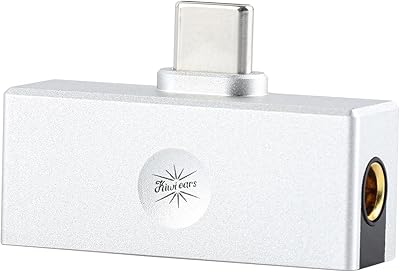
  • Wired Connectivity: USB-C wired mode activates an onboard DAC and amplifier for higher-fidelity playback on Windows, macOS, Android, and iOS devices.
  • Analog Input: A detachable 3.5mm cable is included for passive wired listening on devices without USB-C audio support.
  • Acoustic Design: Closed-back over-ear form factor provides passive isolation from ambient noise in addition to the active ANC system.
  • Ear Pads: Cushions are covered in soft vegan leather designed to reduce pressure fatigue during extended wear sessions.
  • Form Factor: The headphone folds flat at the ear cup joints for compact storage, fitting into most bags and backpacks without a dedicated case.
  • Spatial Audio: Software-based spatial audio processing is supported to widen the perceived soundstage on compatible content and streaming platforms.
  • Microphone Array: Five microphones are distributed across the headphone for dual-purpose use: ANC feedback and voice pickup during calls.
  • Charging Port: USB-C port handles both charging and wired DAC playback, serving as the single cable interface for all wired functionality.
  • Package Weight: The packaged unit weighs approximately 1.96 lbs, with the headphone itself being notably lighter than that figure suggests.
  • Tuning Profile: Sound signature is modeled after the Harman target curve, prioritizing controlled bass, natural midrange, and comfortable treble extension.
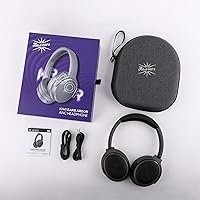
  • Package Contents: The box includes the headphones, a detachable 3.5mm cable, and a USB-C charging cable; no hard carry case is included.

Related Reviews
Kiwi Ears Altruva
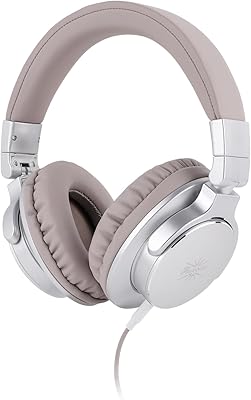
Kiwi Ears Altruva
81%
91%
Sound Quality
93%
Soundstage & Imaging
88%
Build Quality
74%
Comfort & Fit
89%
Driver Performance
More
Linsoul Kiwi Ears Division Over-Ear Headphones
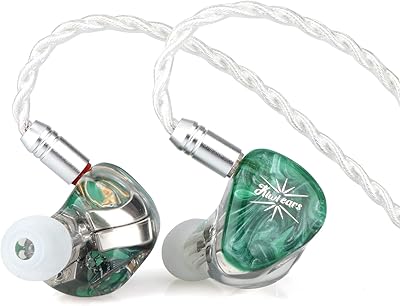
86%
92%
Sound Quality
89%
Comfort for Extended Use
75%
Noise Isolation
88%
Build Quality
85%
Ease of Use
More
Kiwi Ears Orchestra Lite
88%
93%
Tonal Neutrality
89%
Build Quality & Materials
91%
Imaging & Soundstage
76%
Long-Term Comfort
88%
Value for Money
More
Linsoul Kiwi Ears Quartet 2DD+2BA Hybrid In-Ear Monitor
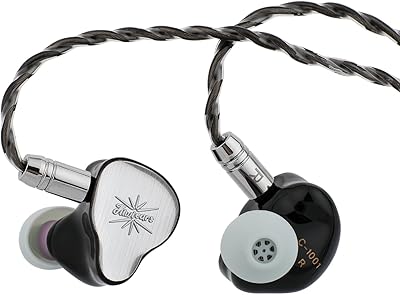
88%
94%
Sound Quality
91%
Bass Performance
83%
Treble Clarity
88%
Comfort & Fit
89%
Build Quality
More
Kiwi Ears Aventus
Kiwi Ears Aventus
77%
83%
Sound Quality
71%
Active Noise Cancellation
78%
Battery Life
81%
Build Quality
77%
Comfort & Fit
More
Linsoul Kiwi Ears KE4 In-Ear Monitor 2DD+2BA Hybrid Earphone
86%
91%
Sound Quality
87%
Comfort & Fit
89%
Bass Performance
72%
Treble Sharpness
85%
Noise Isolation
More
Linsoul Kiwi Ears Aether Planar IEM
86%
94%
Sound Quality
91%
Soundstage and Imaging
88%
Build Quality and Durability
89%
Comfort for Extended Listening
72%
Bass Performance
More
Linsoul Kiwi Ears Attiva OWS Wireless Earbuds
85%
87%
Sound Quality
93%
Battery Life
84%
Comfort & Fit
79%
Active Noise Cancellation (ANC)
72%
Connectivity & Pairing
More
Kiwi Ears Allegro Mini
84%
88%
Sound Quality
91%
Build Quality
93%
Value for Money
94%
Portability
67%
Output Power
More
Kiwi Ears Forteza
Kiwi Ears Forteza
87%
92%
Bass Impact
84%
Vocal Clarity
89%
Ergonomics & Fit
87%
Gaming Performance
91%
Build Quality
More

FAQ

It sits somewhere in the middle. The Kiwi Ears Ardor handles steady, predictable noise — like an office air conditioning unit or a train engine — reasonably well. What it does not do is approach the deep, immersive quiet you get from Sony or Bose flagships. If you are buying primarily for ANC in very loud environments, temper your expectations. For commuters and remote workers dealing with moderate ambient noise, it does a solid, practical job.

The 140-hour figure applies specifically to Bluetooth playback with ANC completely off and at moderate volume levels — so it is achievable, but not under typical mixed-use conditions. If you use ANC regularly, expect closer to 60 to 72 hours per charge. Even at that reduced figure, the battery life is well above average for the category, and most users find they charge these wireless headphones once a week or less.

Yes, and it is one of the more underappreciated features on this over-ear set. Connecting via USB-C activates an onboard DAC and amplifier that noticeably improves audio quality over a standard laptop headphone jack. This is genuinely useful for desktop listeners who want better fidelity without buying a separate DAC dongle. The 3.5mm cable is also included for analog wired use on devices that do not support USB-C audio.

Instead of a single driver handling the entire frequency range, these headphones use two: a 40mm driver for bass and mids, and a smaller 10mm driver dedicated to high-frequency detail. In practice, it gives the headphone better separation between the low end and the upper range — bass feels punchier without muddying the vocals, and treble has more air and clarity. It is an unusual design choice at this price tier, and most listeners who pay attention to sound quality notice the difference.

For quiet indoor environments, call quality is acceptable — people on the other end can hear you clearly without much issue. In noisier settings, the mic struggles to isolate your voice from background noise despite the five-microphone array. It is fine for routine work calls or voice assistants, but it is not a reliable tool for recording podcasts or any kind of content production.

Yes, multipoint connects to two devices simultaneously and handles switching reasonably smoothly for most users. The typical setup is a work laptop and a personal phone running at the same time. Audio priority generally favors whichever device starts playing, and you can switch manually when needed. It is not perfectly instantaneous, but it works well enough that most users appreciate not having to re-pair manually throughout the day.

Most users find them comfortable well into the two-to-three-hour range, with the vegan leather pads and lightweight build doing most of the heavy lifting. Glasses wearers are the main exception — the ear cup seal can press against frames and cause mild discomfort over time. In warm conditions, the closed-back pads also generate some heat, which some users find bothersome during extended use.

No companion app is currently available. What you hear out of the box is what you get — there is no EQ customization, no ANC intensity slider, and no firmware update pathway through an app. For many listeners the stock Harman-tuned sound will be satisfying enough, but if you rely on app-based EQ to tailor sound to your preference, that is a real limitation to factor in before buying.

The folding mechanism feels solid and the overall assembly is reliable for normal daily handling. The main concern is the plastic-heavy construction, which feels less durable than the audio quality might lead you to expect. The headband and folding joints are the areas buyers most often flag for potential long-term wear. For light-to-moderate daily use the build is adequate, but it would benefit from a protective case, which is not included in the box.

Early buyers who have used both generally favor this over-ear set for sound quality and tuning accuracy, particularly for music listening. Anker Soundcore models in the same range tend to offer more polished build quality and better ANC consistency, while EarFun alternatives can be competitive on features. Where these wireless headphones stand apart most clearly is the dual driver audio performance and the wired DAC mode — two features that most rivals at this price simply do not offer.