
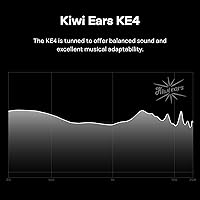

Overview

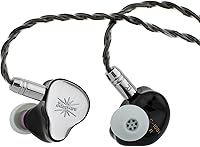
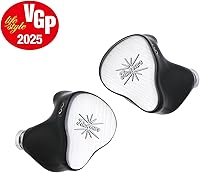
The Kiwi Ears KE4 Hybrid In-Ear Monitor sits in the mid-to-high tier of the wired IEM market, coming from a small boutique brand that has earned a reputation for careful, considered tuning rather than chasing flashy spec numbers. The concept behind a hybrid driver setup is simple but effective: two dynamic drivers handle bass weight and physical impact, while two balanced armature drivers pick up the finer midrange and treble detail work. Together, they produce a more layered, coherent sound than either driver type achieves alone. The shells are hand-assembled from medical-grade resin, and the 2-pin detachable cable lets you swap or upgrade without replacing the whole earphone. This is a deliberate, wired-only purchase — not a grab-and-go option.

Features & Benefits

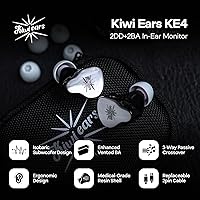
What makes the KE4 interesting technically is how each driver has been assigned a specific job. The two custom 10mm dynamic drivers work in an isobaric configuration — essentially one pushing air while the other controls it — which gives the sub-bass impressive depth and tightness without the bloat that plagues lesser designs. A custom-tuned balanced armature driver manages the midrange, keeping vocals grounded and instruments clear. Up top, a Knowles-made tweeter handles the high frequencies, adding air and detail without crossing into sharpness. A 3-way passive crossover keeps each driver working in its lane. At 28 Ohms and 102dB sensitivity, the KE4 doesn't demand an expensive amplifier — a phone or a simple USB dongle DAC drives it comfortably.

Best For

This hybrid IEM is a strong fit for listeners who want accuracy over flattery — people who care about hearing exactly what was recorded, not a pumped-up or artificially brightened version of it. Audiophiles chasing a natural sound signature will feel at home here, as will musicians who need a reliable reference point for on-stage monitoring or casual studio work. Gamers focused on positional cues and clean separation — rather than exaggerated bass rumble — will also find it useful. The detachable 2-pin cable makes it an easy choice for cable enthusiasts who want flexibility. That said, if you need wireless, sweat resistance, or a totally fuss-free experience, this is the wrong earphone. It rewards effort.

User Feedback

Kiwi Ears’ flagship earphone carries a 4.4-star rating across a growing pool of reviews, and the general sentiment is genuinely positive without being uniform. Buyers consistently praise the vocal clarity and bass control, particularly noting how the low end feels present without muddying the midrange — a common failing in cheaper hybrids. Build quality draws regular compliments too. On the other side, a handful of users flag that fit can be hit-or-miss depending on ear anatomy, and some find the stock cable stiff or unwieldy out of the box. On the question of value, opinions are split: enthusiasts who have tried similarly priced competitors tend to see it as a strong contender, while newcomers occasionally feel the price demands justification before the sound fully clicks.

Pros

  • The isobaric dual dynamic driver system delivers sub-bass that feels controlled, deep, and never muddy.
  • Vocal presence is a consistent highlight, with the midrange feeling warm and natural rather than recessed.
  • The Knowles tweeter adds high-frequency air without the harshness that trips up many competing hybrids.
  • At 28 Ohms, this hybrid IEM is easy to drive well straight from a phone or USB dongle.
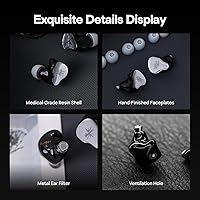
  • Hand-finished medical-grade resin shells feel premium and well-crafted for the price bracket.
  • The detachable 2-pin cable opens the door to affordable aftermarket upgrades without replacing the earphone.
  • Buyers upgrading from budget IEMs report a clearly noticeable improvement in detail and instrument separation.
  • Tonal balance holds up across a wide range of genres, from acoustic and jazz to electronic.

Cons

  • Fit can be hit-or-miss; buyers with smaller or unusually shaped ear canals may struggle to get a consistent seal.
  • The stock cable is reported by some users to feel stiff and awkward to manage out of the box.
  • Passive noise isolation, while functional, will not satisfy commuters in loud urban or transit environments.
  • Listeners accustomed to V-shaped or bass-heavy tuning may find the balanced signature underwhelming at first.
  • No microphone is included, making this a poor choice for calls or voice-chat-heavy gaming sessions.
  • The earphone is wired-only, which is a hard dealbreaker for anyone committed to wireless listening.
  • Newcomers to the IEM hobby may need several ear tip swaps before realizing its full sound potential.
  • Some buyers at this price point feel competing hybrid options offer more aggressive or varied tuning choices.

Ratings

The scores below for the Kiwi Ears KE4 Hybrid In-Ear Monitor are generated by AI after analyzing verified buyer reviews sourced from global marketplaces, with spam, bot activity, and incentivized feedback actively filtered out before any scoring took place. Thousands of real-world impressions from audiophiles, musicians, and everyday listeners informed each category, spanning a wide range of genres, source pairings, and listening environments. Both the genuine strengths and the recurring frustrations surfaced in real buyer feedback are reflected transparently in every score and explanation below.

Sound Quality
88%
Buyers consistently describe the overall sound as natural and well-organized, with each part of the frequency range doing its job without stepping on the others. Those coming from single-driver earphones often describe the jump in layering and instrument separation as immediately noticeable, particularly on jazz, acoustic, and well-recorded pop tracks.
A subset of listeners find the tuning too polite or restrained compared to more exciting V-shaped options in the same price range. Buyers who prefer a colored, bass-forward presentation may need an adjustment period before fully appreciating what the KE4 is actually doing.
Bass Performance
86%
The isobaric dynamic driver arrangement produces sub-bass with genuine depth and physicality — kick drums land with real weight, and bass guitar lines have body without overpowering the rest of the mix. Listeners who enjoy bass-heavy electronic or hip-hop report being pleasantly surprised by how controlled the low end stays even at higher volumes.
Those who prefer their bass quantity turned up high will find this hybrid IEM leans toward quality over quantity, which can feel underwhelming on first listen. A number of buyers also report that bass performance is highly dependent on achieving the right ear tip seal — a loose fit noticeably weakens the low end.
Midrange Clarity
91%
Vocals are where this hybrid IEM earns the most consistent praise — whether it is a singer-songwriter performing sparse acoustic material or a dense rock mix, voices come through with presence and texture that is genuinely hard to find at this price. Instrument-heavy genres like jazz and classical benefit particularly from the midrange driver's ability to keep everything separated and intelligible.
A handful of listeners who prefer a more scooped midrange feel the KE4 places vocals slightly too center-stage for their tastes, which can feel fatiguing on very dense mixes during extended sessions. This is a preference issue rather than a flaw, but worth knowing if your library skews heavily toward modern, densely produced pop.
Treble Extension
83%
The Knowles tweeter delivers a high-frequency presentation that reads as airy and extended rather than sharp or piercing, which is a common sticking point with lesser balanced armature tweeters. Cymbal decay, string harmonics, and breath sounds in woodwind recordings come through with a naturalness that attentive audiophiles tend to appreciate.
Treble-sensitive listeners occasionally note a subtle edge on certain recordings, particularly with poorly mastered tracks or compressed audio files that expose any upper-range roughness. The treble is also somewhat source-dependent — pairing the KE4 with a bright dongle DAC can occasionally push the upper frequencies closer to uncomfortable territory.
Soundstage & Imaging
78%
22%
The three-way crossover design contributes to a soundstage that feels wider and more three-dimensional than most single-driver IEMs at comparable prices, with instruments imaging in a way that makes them easy to place within a mix. Gamers using it for positional audio report the left-right separation is precise enough to be genuinely useful in competitive play.
The soundstage, while good for an in-ear monitor, still feels closed-in compared to open-back headphones, which can disappoint buyers expecting a speaker-like sense of space. Depth and height imaging are less convincing than width, meaning large orchestral recordings can feel somewhat compressed compared to the best open-back alternatives.
Build Quality
87%
The hand-assembled medical-grade resin shells feel solid and well-finished in ways that budget and mid-range IEMs rarely achieve — there is no flex, no visible seam gaps, and the faceplates have a tactile quality that communicates genuine craft. Long-term owners report no cracking, discoloration, or connector wear after months of regular use.
The overall build is strong, but the included stock cable is a common point of frustration — it feels stiffer than expected for this price tier and can develop microphonics over time. For an earphone that openly invites cable swapping, it would benefit from shipping with something more premium as a default inclusion.
Comfort & Fit
71%
29%
For buyers whose ear anatomy suits the round shell profile, the KE4 sits securely and comfortably during extended sessions, with the smooth resin surface avoiding the irritation that harder plastic shells can cause. Musicians who wear it for multi-hour rehearsals report acceptable comfort levels once the right ear tip size has been identified.
Fit is the single most divisive aspect in buyer feedback — those with smaller ear canals or less common ear shapes frequently struggle to achieve a consistent seal, which directly compromises the sound. Unlike custom-molded IEMs, there is no adjustment for individual anatomy, so buyers with known fit challenges should try the shell shape before committing.
Cable Quality
63%
37%
The 2-pin detachable system means the stock cable's shortcomings are not a permanent problem — the upgrade path is clear, widely supported, and affordable. For desk-based or seated listening, the cable is functional and free of obvious build defects that would interfere with daily use.
The stock cable is one of the more criticized inclusions at this price point — it arrives stiff out of the box, tangles easily on commutes, and the memory wire retention makes it awkward to manage during any kind of movement. Several verified buyers recommend replacing it as an immediate first upgrade step.
Value for Money
79%
21%
Experienced IEM buyers who have compared this hybrid IEM directly with similarly priced competitors tend to rate the value favorably, pointing to the combination of a genuinely good sound signature, solid build, and the upgrade flexibility afforded by the detachable cable system. For audiophiles stepping up from budget options, the improvement in resolution and coherence is widely considered worth the cost.
Newcomers occasionally feel that getting the best sound requires additional investment — better ear tips, an upgraded cable, or a DAC dongle — pushing the real-world cost higher than the sticker price alone suggests. At this tier, some competitors offer a more immediately exciting out-of-the-box experience without those supplementary costs.
Driver Coherence
84%
One of the harder engineering challenges in hybrid IEM design is making dynamic drivers and balanced armature units sound like a single unified source, and the KE4 handles this better than most in its price range. Transitions between bass, midrange, and treble feel smooth and cohesive rather than like separate frequency bands stitched together.
A small number of critical listeners detect a subtle disconnection between the dynamic driver bass and the BA midrange on certain transient-heavy tracks, perceivable as a slight texture mismatch at the crossover point. This is most noticeable on double-bass jazz recordings or orchestral pieces with rapid dynamic swings, and typically requires direct comparison to notice.
Noise Isolation
67%
33%
Passive isolation from the in-ear seal is adequate for home listening and quieter office environments, keeping enough ambient noise at bay to let the music come through without straining the volume. Buyers using it in libraries, quiet cafes, or on short commutes generally find the isolation sufficient for focused listening sessions.
Commuters on busy trains or subway systems find the passive isolation falls short of what active noise-cancellation earbuds can offer, often requiring higher volume levels to compete with background noise. Gym-goers and users in loud workplaces report the same limitation, and the absence of any active isolation technology is a clear gap for high-noise environments.
Source Compatibility
92%
At 28 Ohms and 102dB sensitivity, the KE4 is one of the more accessible audiophile IEMs to drive well — modern smartphones, budget dongles, and basic portable players all produce adequate volume and dynamic control without audible noise floor issues. Buyers can experience a meaningful improvement in sound quality without immediately needing to invest in dedicated amplification hardware.
While easy to drive, the KE4 is also resolving enough to expose the quality ceiling of cheap sources — a low-end dongle will function but a better DAC genuinely improves the presentation, which can feel like an implicit pressure to keep spending. Hiss-prone sources may also reveal a slight sensitivity to output impedance mismatches on older devices.
Packaging & Accessories
74%
26%
The unboxing experience is well-presented for a boutique earphone at this price, with a structured carry case, multiple ear tip size options, and documentation that reflects care in assembly and presentation. The range of included ear tip sizes is genuinely useful given how fit-sensitive in-ear monitors are in practice.
The accessory package does not include higher-quality ear tip variants — foam or wide-bore options that many audiophiles gravitate toward as an immediate upgrade — leaving that cost to the buyer. A more premium stock cable would also be a reasonable expectation at this price tier, and its absence is one of the more consistent notes in verified buyer feedback.
Tuning Versatility
81%
19%
Buyers across a surprisingly wide range of music genres report satisfaction with the natural, balanced presentation — jazz, acoustic, indie rock, electronic, and classical listeners all find their libraries well-served without needing heavy equalization. Its accuracy means well-recorded tracks from across decades of music tend to sound intentional and engaging rather than artificially colored.
Listeners with very genre-specific tastes — particularly fans of modern bass-heavy EDM or trebly, hyper-produced pop — sometimes find the neutral tuning adds less excitement than a more purpose-built earphone would. The KE4 rewards broad listening habits more than it serves any single narrowly-defined sonic preference.

Suitable for:

The Kiwi Ears KE4 Hybrid In-Ear Monitor is built for listeners who are genuinely invested in how their music sounds, not just that it plays. Audiophiles who prefer a balanced, natural tuning over heavily colored or bass-boosted signatures will find the sound profile here immediately satisfying. Musicians who need a trustworthy reference for on-stage monitoring or casual home studio work will appreciate the accuracy this earphone brings without sacrificing listenability over long sessions. Gamers who care about positional cues and instrument separation — rather than an artificial bass shelf — will also get real value from it. The KE4 is equally well-suited to buyers moving up from entry-level IEMs who want a meaningful jump in detail retrieval, vocal presence, and overall soundstage coherence. The 2-pin detachable cable system makes it a practical long-term choice for cable enthusiasts who enjoy experimenting with aftermarket options.

Not suitable for:

The Kiwi Ears KE4 Hybrid In-Ear Monitor is simply not the right tool for anyone who prioritizes wireless convenience — there is no Bluetooth, no active noise cancellation, and no hands-free flexibility here. If you exercise with headphones, commute in loud environments, or need reliable call functionality built in, the KE4 will frustrate rather than satisfy. Buyers who expect the deep, thumping bass coloration common in consumer-oriented earphones will find the tuning too restrained for their taste. The hybrid IEM category carries a real learning curve around ear tip selection and achieving a proper fit — without a good seal, the entire sound profile suffers, so first-time IEM users should be prepared to experiment. Those with no prior exposure to the audiophile hobby may also struggle to justify the cost relative to significantly cheaper alternatives that cover the basics just as well for casual listening.

Specifications

  • Driver Config: The earphone uses a hybrid driver array of two custom dynamic drivers and two balanced armature drivers housed within a single medical-grade resin shell.
  • Dynamic Drivers: Both dynamic drivers measure 10mm in diameter, are custom-designed by Kiwi Ears, and are arranged in an isobaric configuration focused on sub-bass reproduction.
  • BA Drivers: The balanced armature section pairs a RAD 33518 driver for midrange continuity with a Knowles RAB 32257 driver dedicated solely to high-frequency reproduction.
  • Crossover Type: A 3-way passive crossover divides the audio signal between driver groups to minimize frequency overlap and keep each driver operating within its optimal range.
  • Sound Tubes: Three independent internal sound tubes channel each driver group's output separately, reducing acoustic interference between frequency bands inside the shell.
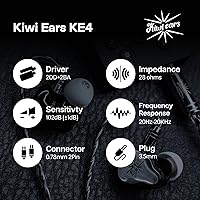
  • Impedance: Nominal impedance is rated at 28 Ohms, placing the earphone well within the range that phones, DAPs, and basic USB audio dongles can drive without issue.
  • Sensitivity: Sensitivity is rated at 102dB (±1dB), meaning the earphone reaches listenable volumes from low-output portable sources without requiring dedicated amplification.
  • Frequency Range: The specified frequency response covers 20Hz to 20kHz, spanning the full range of human hearing from deep sub-bass to the upper treble limit.
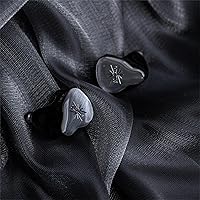
  • Shell Material: The earphone housings are formed from medical-grade resin and feature hand-finished faceplates applied individually during the assembly process.
  • Cable Connector: The cable terminates in a standard 3.5mm stereo audio jack, compatible with phones, portable audio players, and most USB-C audio adapters.
  • Cable System: The cable attaches via a 2-pin detachable connector, allowing the stock cable to be removed and replaced with any compatible aftermarket cable.
  • Cable Length: The included cable measures approximately 1.25 meters from the audio jack to the cable splitter, which is standard for portable listening use.
  • Noise Isolation: Isolation is passive and depends entirely on the physical in-ear seal formed by the ear tips; no active noise cancellation circuitry is present.
  • Connectivity: The earphone is strictly wired and contains no Bluetooth module, NFC, or any other wireless functionality.
  • Earpiece Shape: The earpieces are round in profile and designed to seat inside the ear canal in a standard over-ear-cable in-ear monitor configuration.

Related Reviews
Linsoul Kiwi Ears Quartet 2DD+2BA Hybrid In-Ear Monitor
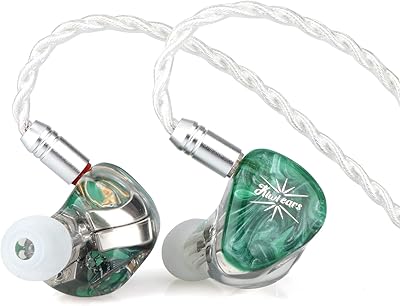
88%
94%
Sound Quality
91%
Bass Performance
83%
Treble Clarity
88%
Comfort & Fit
89%
Build Quality
More
Kiwi Ears Orchestra Lite
88%
93%
Tonal Neutrality
89%
Build Quality & Materials
91%
Imaging & Soundstage
76%
Long-Term Comfort
88%
Value for Money
More
KZ ZAR Hybrid In-Ear Monitors
86%
92%
Sound Quality
89%
Comfort & Fit
90%
Noise Isolation
84%
Build Quality & Durability
72%
Cable Durability
More
BASN Metalen In-Ear Monitors with Hybrid Drivers

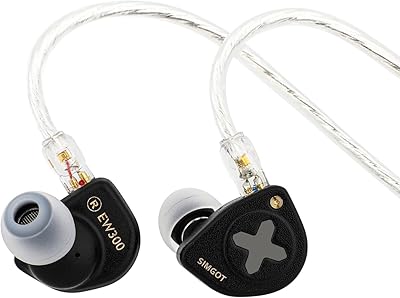
82%
91%
Audio Quality
87%
Build Quality
75%
Comfort & Fit
88%
Sound Isolation
82%
Durability
More
Linsoul ZiiGaat Arete 1DD+4BA Hybrid In-Ear Monitor
86%
91%
Sound Quality
76%
Bass Performance
88%
Comfort & Fit
89%
Build Quality
85%
Noise Isolation
More
SIMGOT EW300 DSP Hybrid In-Ear Monitor
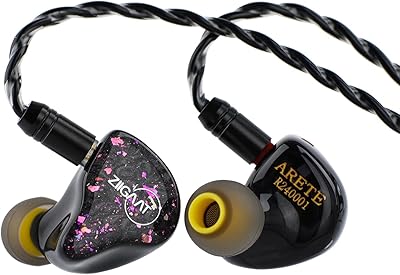
79%
86%
Sound Quality
88%
Build Quality
67%
Fit & Comfort
83%
DAC Performance
81%
Nozzle System
More
SIMGOT EM6L Hybrid In-Ear Monitor
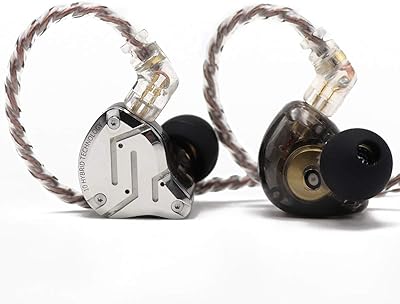
78%
88%
Sound Quality
91%
Soundstage & Imaging
72%
Bass Performance
86%
Midrange Clarity
79%
Treble Extension
More
Kiwi Ears Forteza
Kiwi Ears Forteza
87%
92%
Bass Impact
84%
Vocal Clarity
89%
Ergonomics & Fit
87%
Gaming Performance
91%
Build Quality
More
KZ ZS10 Pro Hybrid IEM Earphones
76%
88%
Sound Clarity
63%
Bass Performance
82%
Soundstage & Imaging
86%
Build Quality
54%
Cable Quality
More
MEE audio MX3 PRO In-Ear Monitor
76%
78%
Sound Quality
84%
Midrange Clarity
71%
Build Quality
58%
Cable Quality
74%
Comfort & Fit
More

FAQ

Your phone will work fine. At 28 Ohms and 102dB sensitivity, the KE4 is efficient enough to reach good listening volumes from a standard headphone jack or a basic USB-C audio dongle. That said, pairing it with even an inexpensive DAC dongle tends to bring out more of the detail and imaging it is capable of, so it is worth considering as an upgrade down the line.

The stock ear tips are a solid starting point, but many owners find that switching to a different size or material makes a meaningful difference. Wide-bore silicone or foam tips can open up the treble slightly, while a tighter seal emphasizes bass presence. The key thing is achieving a proper fit — without a good seal, the low end in particular will sound weak and thin, which is not a reflection of what the earphone is actually capable of.

Yes, easily. The cable connects via a standard 2-pin detachable system, and compatible replacement cables are widely available at various price points. Many owners actually use this as an opportunity to try aftermarket cables with different terminations, such as a 4.4mm balanced plug, which can pair well with DAPs or balanced amplifier outputs.

It can be, depending on what you prioritize. This hybrid IEM favors natural instrument separation and positional clarity rather than the bass-heavy, cinematic sound that many gaming headsets are tuned for. For competitive play where hearing directional cues and footsteps accurately matters, it holds up well. For casual or immersive gaming where impact and excitement are the goal, some listeners may find the neutral tuning less engaging.

Vocals are genuinely one of the stronger suits of this earphone. The midrange driver is tuned to keep voices sounding present, natural, and well-defined without that thin or pushed-back quality some multi-driver earphones can introduce. Acoustic guitar, piano, and strings come through with good texture and body, making it a comfortable match for singer-songwriter, jazz, classical, and similar genres.

Yes, and it is one of the scenarios it was genuinely designed for. The balanced, accurate tuning makes it a practical in-ear monitor during live performance, where knowing what the mix actually sounds like in real time matters. The passive isolation from the ear tips helps block stage noise, though it will not match the isolation of a custom-molded IEM for loud concert environments.

Remove the ear tips and wash them with mild soap and lukewarm water, then let them dry fully before reattaching. For the nozzle openings, a dry soft-bristle brush or a purpose-made IEM cleaning tool works well to clear earwax buildup — avoid pushing debris further into the tube. Keep the earphone body away from water entirely, as it carries no water resistance rating.

The Kiwi Ears KE4 Hybrid In-Ear Monitor is a fundamentally different listening experience compared to typical Bluetooth earbuds, and the gap is most audible in detail resolution, soundstage width, and tonal accuracy. The trade-off is real though: you lose wireless convenience and have to manage a physical cable. If sound quality is your primary motivation and you are willing to accept the wired format, the difference is genuine and easy to hear.

Yes, multiple sizes are included, so you can find the fit that works best for your ear canal and achieves a proper acoustic seal. This matters more than it might seem — a poor seal is the most common reason buyers underestimate the sound quality of any in-ear monitor, as the bass response in particular collapses without it.

At this price bracket the competition is strong, and the best choice depends heavily on personal tuning preference. The KE4 stands out for its natural, balanced signature rather than an exciting or colored presentation, which dedicated listeners tend to appreciate but newcomers occasionally find underwhelming next to more V-shaped alternatives. Buyers who have compared it directly with similarly priced options frequently cite the midrange coherence and build quality as genuine strengths that hold up over time.