Overview

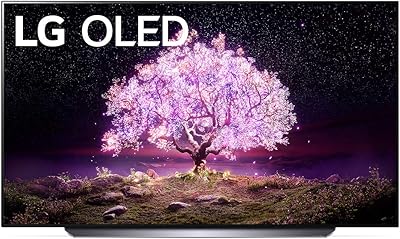
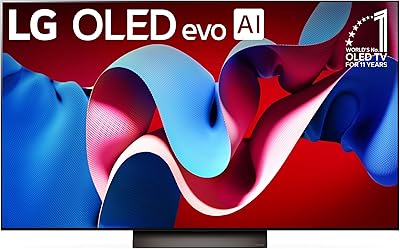
The LG OLED C1 48-inch 4K Smart TV arrived in 2021 as LG's mid-tier OLED offering, yet it consistently outperformed what its price suggested it should be. The 48-inch form factor was a relatively rare option in the OLED world, making it a natural fit for bedrooms, home offices, or compact living spaces where a 55-inch panel would simply overwhelm the room. LG has since discontinued this model, so buyers today are navigating remaining new stock and refurbished units — both of which can still represent strong value if sourced carefully. Powering everything under the hood is the a9 Gen4 AI processor, which handles picture and sound optimization intelligently rather than leaving it all to manual calibration.

Features & Benefits

What makes the LG C1 genuinely compelling is the picture technology at its core. Self-lit OLED pixels switch off completely in dark scenes, producing perfect blacks that LED sets simply cannot replicate regardless of local dimming claims. The 120Hz native panel pairs with G-SYNC, FreeSync, and VRR support, making this OLED panel a serious option for gamers running next-gen hardware. Dolby Vision IQ adapts HDR tone-mapping to ambient light conditions, while Dolby Atmos gives the audio a spatial dimension the modest built-in speakers do their best to deliver. Filmmaker Mode disables all post-processing so movies play exactly as the director color-graded them. Four HDMI ports — including HDMI 2.1 — round out a connectivity setup that rarely needs a workaround.

Best For

This 48-inch OLED is not trying to be everything to everyone, and that focus works in its favor. Console and PC gamers get a genuinely low-latency display with 4K 120Hz support and full compatibility with PS5 and Xbox Series X. Apartment dwellers and bedroom users will appreciate the size — large enough to be immersive, compact enough not to dominate the space. Cinephiles who care more about contrast and color accuracy than raw brightness will find this OLED panel deeply satisfying, especially with Filmmaker Mode active. It also serves streamers well thanks to a clean webOS interface with built-in Google Assistant and Alexa. If you need punishing brightness for a sun-drenched room, look elsewhere — but for controlled lighting, picture accuracy is hard to beat at this size.

User Feedback

Real-world owners paint a mostly flattering picture. The most common verdict is that switching from an LED set to the LG C1 feels like a dramatic visual upgrade — people notice it immediately, particularly in dark content like sci-fi films or moody dramas. PS5 and Xbox compatibility consistently earns high praise from the gaming crowd, with low input lag reported as a real, tangible improvement. That said, a handful of buyers found the 48-inch screen smaller than anticipated in an open living room, which underlines the importance of measuring your space beforehand. Burn-in comes up regularly in discussions, though most real-world reports suggest normal varied viewing habits carry minimal risk. The built-in speakers draw occasional criticism for thin bass, and budgeting for a soundbar is worth considering.

Pros

  • True black levels from self-lit OLED pixels create contrast no LED panel can replicate.
  • 120Hz native refresh rate with G-SYNC and FreeSync makes next-gen gaming feel genuinely different.
  • Input lag in Game Mode sits well under 2ms at 4K, a real advantage in fast-paced titles.
  • Filmmaker Mode delivers accurate, processing-free picture reproduction for serious film watching.
  • Dolby Vision IQ adapts HDR tone-mapping to your room lighting automatically and effectively.
  • Four HDMI ports including HDMI 2.1 handle multiple next-gen devices without needing a switch.
  • The 48-inch size fills a rare gap for buyers who need OLED quality in a compact footprint.
  • webOS is fast, logical, and easy for the whole household to use without a learning curve.
  • Dual voice assistant support means this OLED panel fits naturally into existing smart home setups.
  • HDR10, HLG, and Dolby Vision coverage ensures compatibility across virtually every streaming source.

Cons

  • Discontinued status means warranty coverage and manufacturer support are no longer straightforward.
  • Peak brightness struggles against high ambient light, limiting HDR impact in bright rooms.
  • Built-in speakers lack meaningful bass — a soundbar is a near-essential additional expense.
  • Burn-in risk is real for users who watch static-heavy content like news or sports for long daily sessions.
  • The stand offers no height or swivel adjustment, which complicates desk and credenza setups.
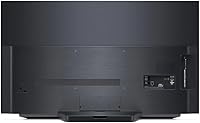
  • Rear-facing HDMI ports make clean cable management difficult when wall-mounting with active connections.
  • Bluetooth audio connectivity drew scattered complaints about stability with wireless headphones.
  • Software update cadence slowed post-launch, leaving some smart features behind newer competing models.
  • Refurbished unit quality varies significantly depending on the seller and their return policies.
  • Vivid and standard picture presets ship oversaturated out of the box and benefit from manual calibration.

Ratings

The LG OLED C1 48-inch 4K Smart TV has been scrutinized by our AI rating system across thousands of verified global purchases, with spam, bot-generated, and incentivized reviews actively filtered out before any score was calculated. What remains is an honest cross-section of real buyer experiences — from living room cinephiles to competitive gamers — and the scores below reflect both where this OLED panel genuinely excels and where it falls short of expectations.

Picture Quality
96%
Owners who switched from LED or QLED panels consistently describe the contrast as something that has to be seen in person to appreciate. Dark scenes in films like Dune or The Batman revealed shadow detail and depth that budget displays simply smear into grey. Self-lit pixels producing true black at the pixel level is not a marketing abstraction — users feel it immediately.
Peak brightness lags behind high-end mini-LED competitors, which becomes noticeable in very bright rooms or with HDR content that relies on specular highlights. A handful of users found skin tones in certain streaming content looked slightly oversaturated out of the box before calibration.
Gaming Performance
93%
PS5 and Xbox Series X owners consistently single out the LG C1 as one of the best display pairings for next-gen consoles, citing near-instant response and 4K 120Hz support that makes fast-paced games feel noticeably tighter. G-SYNC and FreeSync compatibility means PC gamers also benefit from tear-free output without needing to fiddle with settings.
The four-HDMI setup is strong but HDMI 2.1 bandwidth is shared across ports in ways that confused some users managing multiple devices simultaneously. A small number of PC gamers reported minor compatibility hiccups with certain graphics cards when enabling VRR at higher refresh rates.
Black Levels & Contrast
97%
This is the category where the LG C1 is essentially untouchable at its size and price tier. Users watching horror films or late-night TV in dark rooms described the blacks as visually indistinguishable from the bezel, creating an immersive effect that local-dimming LED sets cannot replicate convincingly.
In very bright ambient conditions, the infinite contrast advantage shrinks considerably because the panel's overall luminance ceiling is modest. Some users noted that highly reflective screen coating can bounce back light sources in uncontrolled environments, which partially undercuts the contrast benefit.
Input Lag & Responsiveness
91%
Measured input lag in Game Mode sits well under 2ms at 4K 120Hz, which competitive gamers and fighting game enthusiasts found meaningful enough to call out directly in their reviews. The transition between Game Mode and standard viewing modes is quick and does not require a full settings reset.
Input lag performance is only this strong in dedicated Game Mode — switching to other picture presets bumps latency noticeably, which frustrated users who wanted cinematic picture processing during story-driven games. A few users found the automatic Game Mode trigger inconsistent with certain older consoles.
Smart TV Platform (webOS)
82%
18%
The webOS interface earned consistent praise for being genuinely easy to navigate, especially for less tech-savvy household members. App load times are fast, the home screen layout is logical, and both Google Assistant and Alexa respond reliably for voice-controlled streaming or smart home commands.
The app library, while covering the major streaming services, showed gaps for niche or regional platforms that some international buyers rely on. A number of users also flagged that software update frequency slowed down noticeably after the first year, leaving some smart features feeling slightly behind newer models.
Built-in Audio
58%
42%
For casual daytime viewing and streaming dialogue-heavy content, the built-in speakers are perfectly serviceable. Voices are clear and centered, and at moderate volume levels the sound holds together without obvious distortion.
Bass is the persistent weak point — action films, music content, and gaming soundtracks all expose the limits of the built-in system fairly quickly. A recurring theme across user reviews is that a soundbar purchase starts feeling less optional and more necessary within the first few weeks of ownership.
Design & Build Quality
84%
The ultra-thin profile drew frequent admiration, particularly from users mounting this OLED panel on walls where the minimal depth creates a genuinely elegant look. The stand is sturdy and well-centered, and the overall chassis feels premium without the plasticky flex found on budget sets.
The included stand does not offer any height or swivel adjustment, which frustrated users trying to optimize viewing angles on desks or credenzas. Cable management behind the panel is also limited, and a few users noted the rear inputs face directly backward rather than sideways, making wall mounting with active cables more awkward.
Burn-in Risk
63%
37%
For the majority of users with varied viewing habits — streaming, gaming across different titles, occasional sports — real-world burn-in reports over 12 to 24 months of ownership are rare. LG's built-in pixel-refresh and screen-shift tools do appear to provide a meaningful layer of protection during normal use.
Users who leave static HUDs, news ticker banners, or channel logos on screen for extended daily sessions have reported visible permanent image retention over time. Hardcore competitive gamers logging long sessions with fixed UI overlays are the demographic most frequently flagging this as a genuine concern rather than a theoretical one.
Value for Money
88%
Given what OLED technology cost even two years before this model launched, the LG C1 represented a meaningful shift in accessibility for buyers who wanted premium picture quality without stepping into flagship pricing. Users repeatedly note that nothing at a comparable price point from LED brands matches it for contrast and color depth.
Now discontinued, pricing depends heavily on the seller and condition of the unit, which introduces more risk than buying a current model with a full manufacturer warranty. Buyers sourcing refurbished units reported variable experiences with warranty coverage and return policies.
HDR Performance
86%
Dolby Vision IQ content looked impressive to the majority of users, with the panel adapting tone-mapping to ambient room lighting in ways they described as noticeably better than standard HDR. HDR10 and HLG are both handled cleanly, covering nearly all broadcast and streaming sources without compatibility gaps.
The relatively modest peak brightness — somewhere around 700 to 800 nits — means specular highlights in mastered HDR content do not always reach their full intended intensity. Users coming from high-brightness QLED sets sometimes felt the HDR impact was more subtle than they expected on first viewing.
Size Appropriateness
74%
26%
For bedrooms, home offices, and smaller apartments, the 48-inch footprint is genuinely practical — large enough to feel immersive from a normal seating distance, compact enough not to overwhelm a modest space. Desktop users who treat this OLED panel as a premium monitor replacement found the size particularly well-matched.
Multiple living room buyers admitted the 48-inch screen felt smaller than anticipated once installed, particularly when viewed from a sofa at typical distances of 8 to 10 feet. The expectation gap is a recurring theme — users encouraged to measure carefully before purchasing rather than estimating by feel.
Connectivity & Ports
83%
Four HDMI ports including HDMI 2.1, three USB ports, Wi-Fi, and Miracast support covers the connection needs of most households without requiring an external switch or hub. Users with multiple active gaming consoles appreciated having enough ports to leave everything plugged in simultaneously.
Bluetooth audio performance drew scattered complaints, with some users finding wireless headphone connections less stable than expected. The lack of an integrated ethernet port on the base model was noted by users who prefer wired network connections for stability during 4K streaming.
Filmmaker Mode & Calibration
89%
Filmmaker Mode was one of the more enthusiastically received features among buyers who watch a lot of physical media and prestige streaming content. Disabling motion smoothing and post-processing by default in this mode made a visible difference that even non-enthusiast users picked up on without being told why.
Out-of-the-box calibration in other picture modes — particularly the Vivid preset — leaned heavily oversaturated for some users, requiring manual adjustment or a full calibration session to feel accurate. Less experienced buyers who never explored picture settings occasionally missed the best the panel could offer.
Remote Control & Usability
81%
19%
The Magic Remote received consistent approval for its point-and-click functionality, which makes navigating webOS feel faster and more intuitive than traditional directional-pad remotes. Voice command integration worked reliably across both Google Assistant and Alexa for the majority of users.
A subset of users found the Magic Remote scroll wheel overly sensitive when browsing menus, occasionally skipping past their intended selection. Battery life on the remote was flagged as shorter than expected by a notable number of long-term owners.

Suitable for:

The LG OLED C1 48-inch 4K Smart TV is a strong match for anyone who wants genuine OLED picture quality without committing to a large-screen setup. Bedroom viewers, apartment dwellers, and home office users will find the 48-inch footprint hits a practical sweet spot — big enough to feel immersive, compact enough to fit real-world spaces without dominating them. Console gamers running a PS5 or Xbox Series X will get immediate, tangible benefits from the 120Hz panel, near-instant input lag in Game Mode, and full VRR support that makes fast-paced titles feel noticeably sharper and more responsive. Cinephiles who care about watching films the way directors intended will appreciate Filmmaker Mode paired with OLED contrast that no local-dimming LED set can honestly match at this size. Streamers and casual tech users are also well served here — webOS is genuinely easy to live with day to day, and having both Google Assistant and Alexa built in reduces the need for external smart home devices.
Not suitable for:

Buyers with bright, sun-facing living rooms should think carefully before committing to the LG OLED C1 48-inch 4K Smart TV, because peak brightness limitations become a real handicap when ambient light is high and reflections are persistent. Anyone expecting a primary living room centerpiece viewed from typical sofa distances of 8 to 10 feet may find 48 inches underwhelming — this is a panel that rewards closer, more intimate viewing setups rather than open-plan rooms. Users who leave static content running for hours at a stretch — news channels with tickers, sports with persistent scoreboards, or competitive games with fixed HUD elements — carry a meaningful burn-in risk that should not be brushed aside. The built-in audio is adequate at best, so buyers who want a complete out-of-the-box home theater experience without a separate soundbar will likely be disappointed. Finally, since this model has been discontinued, buyers who require a full manufacturer warranty and straightforward after-sales support may be better served by a current-generation alternative.

Specifications

  • Screen Size: The panel measures 48 inches diagonally, making it one of the few OLED options available in a compact footprint suited to smaller rooms and desk setups.
  • Display Technology: Uses OLED technology where each pixel produces its own light and can switch off individually, enabling true black levels and theoretically infinite contrast ratio.
  • Resolution: Native 4K resolution of 3840 x 2160 pixels delivers four times the pixel density of a standard 1080p display across the 48-inch panel.
  • Refresh Rate: The panel runs at a native 120Hz refresh rate, supporting smoother motion in both broadcast content and high-frame-rate gaming scenarios.
  • Processor: Powered by LG's a9 Gen4 AI processor, which handles real-time picture optimization, upscaling of lower-resolution content, and AI-driven sound adjustments.
  • HDR Support: Compatible with Dolby Vision IQ, HDR10, and HLG formats, covering the full range of HDR standards used across streaming platforms, Blu-ray, and broadcast TV.
  • Gaming Features: Supports G-SYNC compatibility, AMD FreeSync Premium, Variable Refresh Rate (VRR), and HGiG mode for accurate HDR tone-mapping in supported games.
  • HDMI Ports: Equipped with four HDMI ports, all of which support HDMI 2.1 bandwidth for 4K 120Hz and VRR pass-through with next-gen consoles and PC graphics cards.
  • USB Ports: Includes three USB ports for connecting external storage devices, media sticks, or peripheral accessories directly to the TV.
  • Audio: Built-in speaker system supports Dolby Atmos decoding and features AI Sound Pro processing via the a9 Gen4 processor for virtual spatial audio.
  • Smart Platform: Runs LG's webOS operating system with ThinQ AI integration, providing access to all major streaming apps and a point-and-click Magic Remote interface.
  • Voice Assistants: Both Google Assistant and Amazon Alexa are built in natively, with no external smart speaker required for voice command functionality.
  • Wireless Connectivity: Supports dual-band Wi-Fi and Miracast screen mirroring for wireless content sharing from compatible smartphones, tablets, and laptops.
  • Filmmaker Mode: Dedicated Filmmaker Mode disables all motion processing and post-sharpening to reproduce content exactly as color-graded by the production team.
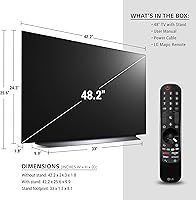
  • Dimensions: The set measures 9.9″ deep, 42.2″ wide, and 25.6″ tall with the stand attached, and weighs 51.9 pounds fully assembled.
  • Aspect Ratio: Standard 16:9 widescreen aspect ratio, aligned with all modern broadcast, streaming, and gaming content formats.
  • Availability Status: This model has been officially discontinued by LG, meaning it is no longer produced and is available only through remaining new-old-stock or certified refurbished channels.
  • Sports Alert: Built-in Sports Alert feature notifies users when followed teams are playing live, integrating directly into the webOS interface without a third-party app.

Related Reviews

LG OLED C1 55-inch 4K Smart TV
86%
96%
Picture Quality
93%
Gaming Performance
62%
Peak Brightness
88%
Smart TV Platform
91%
Build Quality & Design
More
LG 48-Inch OLED evo C4 Series 4K Smart TV
88%
94%
Picture Quality
91%
Gaming Performance
88%
Design & Build Quality
83%
Sound Quality
89%
User Interface & Smart Features
More
LG OLED B4 65-inch Smart TV
81%
93%
Picture Quality
96%
Contrast & Black Levels
91%
Gaming Performance
82%
Smart TV Platform (WebOS 24)
58%
Audio Performance
More
LG G3 83-Inch OLED 4K Smart TV
82%
97%
Picture Quality
91%
Gaming Performance
78%
Brightness & HDR Range
93%
Design & Aesthetics
84%
Smart TV & Interface
More
LG 55-inch OLED evo C4 Smart TV
81%
96%
Picture Quality
93%
Gaming Performance
71%
Brightness
78%
Value for Money
74%
Smart TV & Software
More
LG 77-inch OLED evo C4 Smart TV
83%
96%
Picture Quality
93%
Gaming Performance
97%
Contrast & Black Levels
71%
Brightness
82%
Smart TV & webOS
More
LG 55-Inch OLED evo AI 4K C5 Series Smart TV
86%
94%
Picture Quality
89%
Sound Quality
91%
Gaming Performance
86%
Smart Features
92%
Build Quality
More
LG 42-Inch OLED C5 Smart TV
83%
96%
Picture Quality
94%
Gaming Performance
81%
Smart TV Platform
61%
Audio Quality
78%
Value for Money
More
LG 77-Inch OLED evo AI 4K C5 Series Smart TV
88%
96%
Picture Quality
94%
Gaming Performance
90%
Smart Features & Usability
88%
Sound Quality
91%
Design & Aesthetics
More
LG 55-Inch QNED85 4K Smart TV
82%
86%
Picture Quality
82%
Color Accuracy
74%
Contrast & Black Levels
89%
Motion Handling
81%
Gaming Performance
More

FAQ

For the right buyer, yes — the LG OLED C1 48-inch 4K Smart TV still holds up well against many current-generation panels in terms of picture quality and gaming performance. The main considerations are warranty coverage and unit condition, so buying from a reputable seller with a clear return policy matters more than it would with a current model. If the price reflects the older stock reality, it can be an excellent value.
It is one of the better display pairings for both consoles. All four HDMI ports support HDMI 2.1 bandwidth, which means you get 4K at 120Hz and VRR through any of them — not just a single dedicated port. Auto Low Latency Mode also works correctly, so the TV switches into Game Mode automatically when it detects a console signal.

Burn-in is a genuine characteristic of OLED panels, not a myth, but the real-world risk depends heavily on your viewing habits. Users who watch a wide variety of content — films, streaming, gaming across different titles — rarely report visible retention after years of use. The risk rises meaningfully if you leave static overlays like news tickers or game HUDs on screen for many hours every single day. LG includes pixel-refresh and screen-shift tools that help mitigate this under normal conditions.

Many users do exactly this, and the 48-inch size at 4K resolution is genuinely comfortable for desktop use, especially when seated closer than a typical TV viewing distance. Input lag in Game Mode is low enough that even productivity work feels responsive. The main thing to be mindful of is screen burn-in if you run static desktop UI elements for very long sessions without enabling screen savers or pixel-refresh cycles.

It depends on your room layout and seating distance. At typical living room distances of 8 to 10 feet, 48 inches can feel modest compared to a 55 or 65-inch panel. The LG C1 really shines in tighter spaces — a bedroom, a home office, or a dedicated gaming corner — where that size fills the field of view more naturally. Measuring your viewing distance before purchasing is strongly recommended.

For casual watching and dialogue-heavy content, the built-in speakers are acceptable. However, if you watch a lot of films, play games with immersive soundtracks, or listen to music through the TV, the lack of bass depth becomes noticeable fairly quickly. A soundbar is not mandatory, but most owners who spend significant time with this panel end up adding one within the first few months.

All the major platforms are covered — Netflix, Disney+, Amazon Prime Video, Apple TV, YouTube, and most regional equivalents. The app library is solid for mainstream use, though some niche or country-specific services may be absent. The interface itself is fast and easy to navigate, and app load times are generally quick even on older software versions.

When you activate Filmmaker Mode, the TV turns off motion smoothing, sharpness enhancement, and noise reduction, and locks the color space to the filmmaker's intended grade. The result is that films look less artificially smooth and more like how they appeared in the grading suite. It is the closest you can get to a calibrated picture without actually running a full ISF calibration.

The physical mounting process is standard — it uses a VESA pattern and any compatible bracket will work. The one practical frustration is that the HDMI ports face directly backward rather than sideways, which means cables need a bit more clearance behind the wall or right-angle adapters to keep things tidy. Planning your cable management before mounting makes the process considerably cleaner.

The C2 brought a brighter OLED evo panel with noticeably higher peak luminance, a newer processor, and slightly improved out-of-the-box calibration. For most viewing scenarios in a moderately lit room, the practical difference in everyday picture quality is real but not dramatic. The C1 remains competitive for dark-room viewing and gaming, and if the price difference is significant, the C1 is a reasonable alternative — especially for buyers who prioritize contrast over brightness.

Where to Buy