Overview

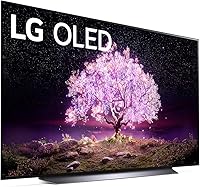
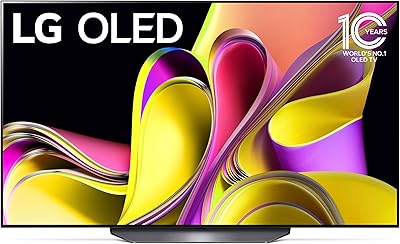
The LG OLED C1 55-inch 4K Smart TV arrived in 2021 as one of those rare releases that genuinely reset expectations for what a living room display could look like at its price tier. Home theater crowds and gamers alike gravitated toward the C1 because it punched well above its class — picture accuracy, build quality, and smart platform all landing at a level that felt almost too good. The ultra-thin chassis looks sharp against any wall, and LG's webOS platform with both Google Assistant and Alexa built in means setup is painless from day one. Worth noting: this LG OLED is discontinued by the manufacturer, so stock may be limited depending on where you shop.

Features & Benefits

What makes the C1 stand out starts at the pixel level. Every dot on this panel is self-lit and can shut off independently, producing true black levels that no LCD can replicate. The a9 Gen4 AI Processor handles upscaling and noise reduction on the fly, so even older content looks noticeably cleaner. For gaming, the 120Hz refresh rate combines with G-SYNC, FreeSync, and VRR to keep motion crisp and input lag minimal — a real advantage when milliseconds count. Dolby Vision IQ and Atmos work together to bring cinematic quality to streaming nights, while Filmmaker Mode ensures you see exactly what the director intended, with no artificial sharpening applied.

Best For

This 55-inch OLED panel is an obvious fit for anyone who builds their viewing room around the screen — dim the lights, and the contrast performance sits in a different league from most TVs at any price. Serious gamers will also find a lot to like; the four HDMI 2.1 ports mean next-gen consoles and a streaming device can all stay connected at once, with no compromise on refresh rate or resolution. Cord-cutters get a fast, clean smart platform with reliable voice control built right in. If you watch mostly in a bright, sun-drenched room, just know that peak brightness is one area where certain QLED rivals have a measurable edge.

User Feedback

People who own the C1 tend to talk about it the way you talk about a purchase you never regret. Dark-room picture quality draws consistent praise, with many owners describing it as the moment they finally understood what a real home theater setup could feel like. Gaming responsiveness earns similar enthusiasm, with near-instant input response mentioned repeatedly. On the other side, owners in sun-filled rooms note that brightness can feel underwhelming next to LED-based panels, and a small number flag rare image retention after extended static content. The webOS interface earns broadly positive marks for speed and ease of navigation. Overall, most buyers feel this LG OLED over-delivered against what they expected at purchase.

Pros

  • Self-lit OLED pixels produce true black levels and infinite contrast that no LCD panel can replicate.
  • Input lag in game mode is among the lowest measured in its class, making a real difference in competitive play.
  • Four HDMI 2.1 ports let you keep multiple next-gen consoles and devices connected simultaneously without swapping cables.
  • Filmmaker Mode delivers color grading and motion exactly as the director intended, with zero artificial processing applied.
  • The webOS smart platform is fast, well-organized, and covers every major streaming service without feeling cluttered.
  • Wide viewing angles keep picture quality consistent for everyone in the room, not just those seated dead center.
  • Dolby Vision IQ and Dolby Atmos support together bring a genuinely cinematic quality to compatible streaming content.
  • The a9 Gen4 processor upscales older HD content cleanly, without the harsh over-sharpening common on competing panels.
  • Dual voice assistant support with both Google Assistant and Alexa built in makes daily control genuinely hands-free.
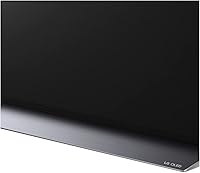
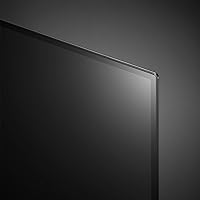
  • The ultra-thin chassis looks premium on any wall and holds its own aesthetically against far more expensive displays.

Cons

  • Peak brightness trails QLED and mini-LED rivals in bright, sun-filled rooms by a meaningful margin.
  • Image retention is a documented risk for anyone who regularly displays static on-screen elements for extended sessions.
  • Built-in audio lacks bass depth and volume headroom, making a separate soundbar a near-necessity for serious viewing.
  • As a discontinued model, retail availability is unreliable and remaining stock pricing can be inconsistent.
  • The stand has a narrower footprint than expected, which can feel less stable on shallow or narrow furniture surfaces.
  • Game mode disables some picture processing features, requiring owners to accept a minor image quality trade-off for lowest latency.
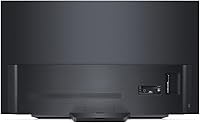
  • Rear cable management is tightly spaced, making initial port access fiddly on a wall-mounted installation.
  • Automatic software updates have occasionally reset custom picture mode settings, frustrating owners who spent time calibrating the display.
  • Standard-definition and heavily compressed streaming content still shows its limits despite the AI upscaling on board.

Ratings

The LG OLED C1 55-inch 4K Smart TV earns its reputation as one of the most praised displays of its generation — and these scores reflect exactly that, including where it falls short. Our AI has processed thousands of verified global buyer reviews, actively filtering out incentivized, duplicate, and bot-generated feedback to surface what real owners consistently experience. The result is an honest, balanced picture of where this 55-inch OLED panel genuinely excels and where a handful of real-world limitations are worth knowing before you buy.

Picture Quality
96%
Owners consistently describe the contrast performance as something that has to be seen to be believed — deep, inky blacks in a night scene, vivid highlights in HDR content, and color accuracy that holds up across every genre. The self-lit pixel technology makes dark-room movie nights a fundamentally different experience compared to any LCD panel at a similar price.
A small but consistent segment of owners notes that very bright highlights in HDR content — sunlight on water, stadium floodlights — lack the extra punch that some competing technologies can deliver. It is a narrow limitation, but for buyers prioritizing maximum brightness over contrast depth, it is worth considering.
Gaming Performance
93%
Gamers who switched to the C1 from lower-refresh-rate displays frequently describe it as a revelation for competitive play. Input lag in game mode measures exceptionally low, and the combination of G-SYNC, FreeSync, and VRR means screen tearing on both PlayStation 5 and Xbox Series X becomes a non-issue in daily sessions.
A handful of owners using the panel for extended high-contrast gaming content — static HUD elements, health bars — have flagged faint image retention after many consecutive hours. It typically resolves after displaying varied content, but it is a real edge case that high-frequency gamers should be aware of upfront.
Peak Brightness
62%
38%
In a dim or controlled-light room, the C1 produces enough brightness to make HDR content look genuinely dramatic. Streaming services like Netflix and Disney Plus look excellent during evening viewing, and most owners in average lighting conditions never find the brightness levels to be a practical limitation.
In sun-filled living rooms or spaces with large windows, this LG OLED can feel outgunned by QLED and mini-LED rivals that push significantly higher peak nits. Buyers who watch primarily during daylight hours in bright environments consistently note that reflections and subdued highlights are the panel's most noticeable real-world weakness.
Smart TV Platform
88%
The webOS interface draws consistent praise for feeling snappy and well-organized compared to the cluttered or sluggish platforms found on competing brands. App availability is broad, voice commands through both Alexa and Google Assistant work reliably, and the remote design is clean enough that most owners rarely need to dig through menus.
A subset of long-term owners has noted that the smart platform can feel slightly dated after a couple of years as streaming apps push updates optimized for newer firmware. Some users also report occasional minor UI lag when switching between multiple open apps during heavy use.
Build Quality & Design
91%
The ultra-thin profile draws genuine admiration from owners who care about how a display looks when it is not in use. The panel feels premium to the touch, the bezels are slim without feeling fragile, and wall-mounting it produces a nearly flush look that holds its own next to far more expensive alternatives.
The stand, while functional, has a narrower footprint than some buyers expect for a 55-inch panel — a few owners on shallow furniture mention it feels less stable than ideal. The thin build also means the rear connections are tightly spaced, which can make cable management slightly fiddly during initial setup.
Audio Performance
71%
29%
For a slim TV with no rear-facing bulk to accommodate large drivers, the built-in audio handles everyday dialogue and streaming content competently. Dolby Atmos pass-through works well for owners routing audio to a soundbar, and the virtual surround processing adds noticeable depth during cinematic content without requiring any manual calibration.
Owners who use the C1 without an external audio system frequently note that bass response is thin and volume headroom maxes out sooner than expected in larger rooms. The speakers are a clear step behind what the display itself offers, and most serious home theater setups will treat the built-in audio as a stopgap rather than a long-term solution.
Connectivity & Ports
89%
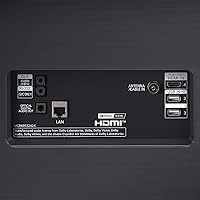
Four full-bandwidth HDMI 2.1 ports is genuinely generous for a 2021 release and gives owners the flexibility to keep a game console, streaming stick, Blu-ray player, and desktop GPU all plugged in simultaneously. Bluetooth and Wi-Fi both perform reliably, and Miracast support adds wireless display options for compatible devices.
Three USB ports are adequate but not exceptional, and owners with multiple USB peripherals occasionally wish there were a dedicated fast-charging port in the mix. A few buyers also note that the HDMI port placement on the rear panel makes hot-swapping cables less convenient on a wall-mounted installation.
Upscaling & AI Processing
84%
The a9 Gen4 processor handles sub-4K content noticeably better than expected, bringing older Blu-ray rips and cable broadcasts closer to the panel's native resolution without introducing harsh artificial sharpening. Owners who watch a mix of native 4K and older HD content appreciate that the transition between sources feels consistent rather than jarring.
Very low-resolution source content — older standard-definition broadcasts or compressed streaming at throttled bitrates — still shows its limits regardless of the upscaling applied. Processing occasionally over-smooths motion in fast sports sequences when default AI settings are left untouched, requiring some manual adjustment to find the right balance.
Value for Money
87%
The overwhelming consensus among owners is that this LG OLED delivered more than they anticipated for the investment, particularly when considering the picture and gaming performance together as a package. Buyers who compared it against LCD competitors at similar or higher price points consistently feel they made the right call.
The premium over a mid-range LCD is real, and buyers on tighter budgets who watch mostly in bright rooms may find the value case harder to justify when competing technologies close the gap in daylight conditions. As a discontinued model, pricing can also fluctuate significantly depending on remaining stock.
Filmmaker & HDR Modes
92%
Filmmaker Mode is one of the most consistently praised features among cinephile owners — enabling it produces color grading and motion cadence that genuinely reflects how content was intended to look, without any need to manually defeat motion smoothing or artificial enhancement settings. HDR format support across Dolby Vision IQ, HDR10, and HLG covers virtually every source a mainstream buyer will encounter.
Some owners find that Filmmaker Mode can look slightly dim compared to other picture presets, particularly on content that was not graded specifically for high dynamic range. A small number of buyers initially disable it without realizing what it does, meaning the out-of-box experience for less technical users does not always showcase the panel at its best.
Input Lag & Response Time
94%
Measured input lag in game mode consistently ranks among the best in the C1's class, and owners who came from 60Hz or higher-latency displays describe the difference in competitive games as immediately and tangibly noticeable. The response time holds up whether connected via HDMI 2.1 at full 4K 120Hz or at lower resolutions and refresh rates.
Game mode does disable some of the panel's picture processing features to achieve its low-latency numbers, meaning owners who want the absolute best image quality and the absolute lowest input lag simultaneously will need to accept a minor trade-off. It is a well-known characteristic of the technology rather than a flaw specific to this model.
Viewing Angles
91%
OLED's inherent wide-angle performance is a real advantage in shared living spaces where family members or guests are not always seated directly in front of the screen. Color and contrast hold up reliably from sharp off-axis positions in a way that IPS and VA LCD panels rarely match at any price.
At extreme angles — well past 45 degrees — some owners note a slight shift in brightness uniformity, though this is far less pronounced than any LCD panel and generally not a practical issue for real-world room layouts. It is relevant only in unusually wide or unconventional seating arrangements.
Setup & Ease of Use
83%
Most owners describe the initial setup process as straightforward, with the guided webOS onboarding covering Wi-Fi, streaming accounts, and voice assistant linking in a single flow. The magic remote with point-and-click navigation makes menu browsing feel more intuitive than a traditional directional-pad remote.
Owners who want to dig into advanced picture calibration settings find the menu structure moderately deep, and some color management options are not obviously labeled for non-technical users. A few buyers report that automatic software updates occasionally reset custom picture mode settings, requiring them to re-enter calibrated values.
Long-Term Reliability
78%
22%
The majority of long-term owners — those reporting one to three years of daily use — describe the panel as performing without meaningful degradation under normal mixed-use viewing habits. Build consistency and panel longevity are broadly in line with what premium OLED ownership has looked like across the wider LG lineup.
OLED image retention remains a documented risk for owners who display static content — news tickers, sports scoreboards, or game HUDs — for many consecutive hours without varying content. It is manageable with the panel's built-in pixel care tools, but it requires more active awareness than a comparable LCD panel would demand.

Suitable for:

The LG OLED C1 55-inch 4K Smart TV is purpose-built for viewers who treat their living room display as a genuine investment rather than a background appliance. Home theater enthusiasts who watch in controlled or dim lighting will find the contrast performance and color accuracy difficult to match at any comparable price point — dark scenes in films and series take on a depth that simply does not exist on LCD panels. Dedicated gamers, whether on a PlayStation 5, Xbox Series X, or a high-end PC, will appreciate the low input lag, 120Hz refresh rate, and full variable refresh rate support that make fast-paced games feel noticeably more responsive. Cord-cutters and streaming-first households also land squarely in the sweet spot, with a fast and well-organized smart platform, reliable voice assistant integration, and broad app support covering every major service. If you regularly gather a group around the screen, the wide viewing angle performance means people seated off to the side get a picture that stays consistent — a practical advantage that LCD alternatives struggle to replicate.

Not suitable for:

The LG OLED C1 55-inch 4K Smart TV is not the right call for every buyer, and being honest about that is more useful than glossing over the trade-offs. If your living room gets strong, direct sunlight through large windows and you watch frequently during the day, the C1 will feel outpaced by QLED and mini-LED competitors that can push significantly higher peak brightness levels — glare and washed-out highlights become genuinely noticeable problems in that environment. Buyers who plan to display static content for many consecutive hours — sports scoreboards, news tickers, desktop wallpapers, or menu screens — need to understand that OLED image retention is a real, documented risk that requires active management over time. The built-in speakers, while functional, will disappoint anyone expecting room-filling audio without a soundbar or external system. Finally, since this model has been discontinued by the manufacturer, buyers relying on finding a brand-new unit through mainstream retail channels may encounter limited availability or inflated pricing depending on timing.

Specifications

  • Screen Size: The panel measures 55 inches diagonally, providing a viewing area well-suited to living rooms and dedicated media spaces.
  • Display Technology: Uses self-lit OLED pixel technology, where each pixel produces its own light and can switch off independently for true black reproduction.
  • Resolution: Native 4K UHD resolution of 3840 x 2160 pixels delivers four times the pixel density of a standard 1080p display.
  • Refresh Rate: The panel runs at a native 120Hz refresh rate, supporting smoother motion in both fast-action content and high-frame-rate gaming.
  • Processor: Powered by the a9 Gen4 AI Processor 4K, which handles real-time upscaling, noise reduction, and automatic scene optimization.
  • HDR Support: Compatible with Dolby Vision IQ, HDR10, and HLG formats, covering the full range of HDR standards used by streaming platforms and physical media.
  • Audio Format: Supports Dolby Atmos object-based audio, enabling spatial sound reproduction when paired with compatible content and audio hardware.
  • Gaming Features: Includes G-SYNC compatibility, AMD FreeSync Premium, Variable Refresh Rate (VRR), and HGiG mode for optimized HDR gaming tone mapping.
  • HDMI Ports: Equipped with four HDMI 2.1 ports, all capable of supporting 4K at 120Hz and full bandwidth for next-generation consoles and PC graphics cards.
  • USB Ports: Provides three USB ports for connecting external storage devices, keyboards, or other compatible peripherals.
  • Smart Platform: Runs LG ThinQ AI on the webOS operating system, offering access to all major streaming apps alongside an AI-driven content recommendation interface.
  • Voice Assistants: Both Google Assistant and Amazon Alexa are built into the TV and accessible without any additional hardware or hub device.
  • Wireless Connectivity: Supports dual-band Wi-Fi, Bluetooth, and Miracast for wireless display mirroring from compatible smartphones and laptops.
  • Dimensions with Stand: With the stand attached, the TV measures 9.9″ deep, 48.3″ wide, and 29.1″ tall.
  • Weight: The unit weighs 50.4 pounds with the stand installed, which is typical for a premium 55-inch OLED panel.
  • Power Consumption: Rated at 106 watts under standard operating conditions, consistent with OLED efficiency characteristics at this screen size.
  • Aspect Ratio: Displays content in the standard 16:9 widescreen aspect ratio used by virtually all broadcast, streaming, and physical media formats.
  • Filmmaker Mode: Dedicated Filmmaker Mode disables motion smoothing and post-processing to reproduce content at the color and frame rate intended by the creator.
  • Sports Alert: Built-in Sports Alert feature notifies users of live game schedules and score updates for followed teams without leaving the current input.
  • Manufacturer Status: This model has been officially discontinued by LG Electronics, meaning it is no longer in active production as of its product lifecycle end.

Related Reviews
LG OLED C1 48-inch 4K Smart TV
83%
96%
Picture Quality
93%
Gaming Performance
97%
Black Levels & Contrast
91%
Input Lag & Responsiveness
82%
Smart TV Platform (webOS)
More
LG 55-inch OLED evo C4 Smart TV
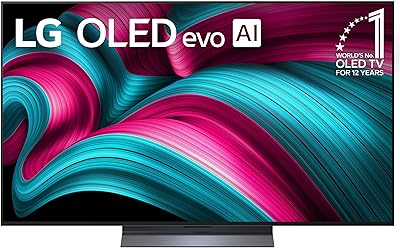
81%
96%
Picture Quality
93%
Gaming Performance
71%
Brightness
78%
Value for Money
74%
Smart TV & Software
More
LG 55-Inch OLED evo AI 4K C5 Series Smart TV
86%
94%
Picture Quality
89%
Sound Quality
91%
Gaming Performance
86%
Smart Features
92%
Build Quality
More
LG UQ7570 55-inch 4K Smart TV
75%
88%
Smart Platform
74%
Picture Quality
83%
Value for Money
61%
Gaming Performance
91%
Streaming Experience
More
LG 55-Inch QNED85 4K Smart TV
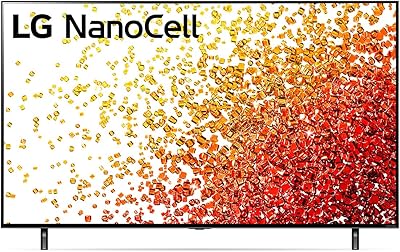
82%
86%
Picture Quality
82%
Color Accuracy
74%
Contrast & Black Levels
89%
Motion Handling
81%
Gaming Performance
More
FPD CG55-C1 55-inch Smart TV
75%
83%
Picture Quality
91%
Value for Money
88%
Smart TV Platform (Google TV)
72%
Motion Handling (MEMC)
61%
Audio Performance
More
LG 55NANO90UPA 55-inch 4K Smart NanoCell TV
86%
93%
Picture Quality
88%
Sound Performance
85%
User Interface & Smart Features
78%
Motion Handling (TruMotion 240)
80%
Gaming Performance (120Hz)
More
LG 55UP8000PUA 55-inch 4K Smart UHD TV
82%
88%
Picture Quality
85%
Smart Features
90%
Gaming Performance
92%
Value for Money
80%
Ease of Setup
More
LG 55UM7300PUA 55-Inch 4K Smart LED TV
82%
89%
Display Quality
85%
Smart Features
82%
Voice Control
92%
Value for Money
88%
Wi-Fi Connectivity
More
LG B3 55-Inch OLED Smart TV
80%
94%
Picture Quality
91%
Gaming Performance
97%
Contrast & Black Levels
63%
Brightness
82%
Smart TV Experience
More

FAQ

For most buyers, yes. Being discontinued affects production, not performance — the panel, processor, and gaming features are all still highly competitive by current standards. The main practical concern is finding new stock at a fair price, so it pays to compare listings carefully before committing.

Absolutely. The C1 has four HDMI 2.1 ports, so you can keep both consoles connected simultaneously alongside other devices without swapping cables. Both consoles will run at up to 4K 120Hz with VRR active, which is the full performance the hardware is capable of delivering.

This is where you need to be realistic. OLED panels do not push peak brightness as high as some QLED or mini-LED competitors, so in a room with large windows and direct sunlight, the picture can look washed out during daytime viewing. If your living room gets heavy ambient light throughout the day, it is worth seriously considering a brighter alternative.

Image retention is when a static element — a channel logo, game HUD, or news ticker — leaves a faint ghost on the screen after extended display. It is a real characteristic of OLED technology, but it is typically temporary and resolves after showing varied content. The C1 includes built-in pixel care features that help manage this risk, and for most mixed-use viewing habits it is not a day-to-day problem.

The built-in speakers handle casual TV watching and dialogue-heavy content well enough, but they run out of steam in larger rooms and lack meaningful bass. If you watch a lot of films or play games where audio atmosphere matters, a soundbar will make a noticeable difference and is worth budgeting for alongside the TV.

Switch the picture mode to Game Mode either through the quick settings menu or the dedicated game optimizer dashboard that appears automatically when a console is detected. This mode drops input lag to its minimum by disabling non-essential image processing — the trade-off is that some picture enhancements are turned off, but most gamers find the responsiveness gain well worth it.

Yes, both are built directly into the TV and accessible via the magic remote or voice button. You do not need a separate Echo or Google Home device to control the TV by voice or to use basic smart home commands through either assistant.

The app lineup covers all the major services — Netflix, Disney Plus, Apple TV, Amazon Prime Video, YouTube, HBO Max, and Hulu are all present, alongside a wide range of additional apps through the LG Content Store. The platform is well-maintained and the interface is genuinely faster and more intuitive than most competing smart TV operating systems.

It depends on what you are watching. For films and scripted drama, Filmmaker Mode is excellent — it removes artificial motion smoothing and preserves the original color grading. For sports or gaming, it can feel a little dim and motion may appear less fluid, so switching to a dedicated sports or game preset for those use cases makes more practical sense.

Wall mounting the C1 is straightforward for anyone comfortable with basic DIY work — the VESA mounting pattern is 300 x 200mm, and the ultra-thin profile looks excellent flush against a wall. A mounting bracket is not included in the box, so you will need to purchase one separately that is rated for the TV's weight of around 50 pounds without the stand.