
Overview

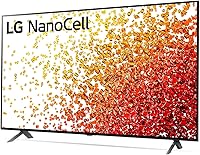
The LG NanoCell 90 55-inch 4K Smart TV sits in an interesting spot within LG's 2021 lineup — above the budget 4K crowd but below the QNED and OLED tiers where contrast gets genuinely impressive. NanoCell technology works by using nano-sized particles embedded in the panel to filter out impure wavelengths, producing colors that are noticeably cleaner than standard LCD displays at this price range. Think of it as LG's answer to Samsung's Crystal UHD — a meaningful step up in color accuracy without the OLED price tag. Available in sizes from 55 to 86 inches, this review focuses on the 55-inch variant, which is the sweet spot for most living rooms. It's a capable all-rounder, but if dark-room contrast is your priority, manage expectations accordingly.

Features & Benefits

The NANO90's picture quality starts with its panel tech, but the AI Processor 4K does a lot of the heavy lifting day-to-day. It upscales older HD and standard-definition content with a convincing degree of sharpness — not perfect, but noticeably better than most mid-range competitors handle the same material. The Full Array Dimming improves contrast over edge-lit panels, though buyers should know this is not the same as high-zone local dimming; dark scenes can still show some backlight bleed. Where this TV genuinely shines is gaming: native 120Hz, VRR, FreeSync, and ALLM mean your PS5 or Xbox Series X will handshake instantly and run without screen tear. Dolby Vision IQ adapts HDR to ambient light beautifully. The webOS interface is clean and fast.

Best For

This LG NanoCell TV is a natural fit for households that stream constantly — the built-in apps cover every major platform, and webOS makes switching between them quick and painless. Gamers running a PS5 or Xbox Series X will appreciate the low-latency handling and VRR support without needing to tweak settings manually. It also works well in bright living rooms where OLED panels tend to wash out; the NanoCell panel holds up respectably under ambient light. Smart-home users who rely on Alexa or Google Assistant can control compatible devices directly from the remote. And if you're stepping up from an aging 1080p set, the jump in clarity and color range will feel dramatic from day one.

User Feedback

With a 4.6-star average across a substantial number of reviews, the NANO90 clearly satisfies most buyers — but the minority who rate it lower have legitimate points worth hearing. Recurring praise centers on vibrant daytime colors and smooth motion during sports broadcasts, with many owners noting the webOS interface is one of the easiest they've used. The criticisms are just as consistent: black levels in a darkened room are mediocre by premium TV standards, and panel uniformity can vary unit to unit. The built-in speakers disappoint, which matters because Dolby Atmos sounds underwhelming without a separate soundbar. Those comparing this 55-inch LG set directly to OLED at a similar price will always find it lacking in contrast depth — a fair critique, though a narrow one.

Pros

  • NanoCell panel produces noticeably cleaner, more accurate colors than standard LCD sets in its price range.
  • Native 120Hz refresh rate with VRR and ALLM makes it a genuinely capable display for current-gen consoles.
  • Dolby Vision IQ adjusts HDR tone-mapping based on room lighting — a practical feature that most competitors skip at this tier.
  • The webOS interface is fast, well-organized, and far less cluttered than Roku or some Samsung smart TV menus.
  • Four HDMI ports give you enough connections for a console, streaming stick, soundbar, and cable box simultaneously.
  • The a7 Gen 4 AI processor does a credible job upscaling HD and older content to near-4K sharpness.
  • Works confidently in bright living rooms where ambient light would wash out an OLED panel.
  • Google Assistant and Alexa are both built in, covering virtually every major smart-home ecosystem.
  • FreeSync compatibility means PC gamers get tear-free gaming without needing an Nvidia GPU for G-Sync.

Cons

  • Black levels in dark or dim rooms are mediocre — shadow detail and contrast fall well short of OLED performance.
  • Full Array Dimming uses relatively few zones, so backlight bleed around bright objects on dark backgrounds is visible.
  • Built-in speakers are thin and flat; Dolby Atmos branding on this set is largely aspirational without a separate soundbar.
  • Panel uniformity can vary between units — some owners report clouding or slight brightness inconsistencies across the screen.
  • The NANO90 weighs 40.5 pounds and measures over 48 inches wide, so wall-mounting solo is genuinely awkward.
  • At this price point, OLED alternatives occasionally appear on sale, making the value case harder to defend.
  • TruMotion processing on aggressive settings introduces the soap-opera effect; buyers need to tune it down manually.
  • No Ethernet port listed among connectivity options, which can be a reliability concern for heavy 4K streaming households.
  • The Magic Remote, while clever, feels less durable than the TV itself based on longer-term owner reports.

Ratings

The scores below reflect an AI-driven analysis of thousands of verified global user reviews for the LG NanoCell 90 55-inch 4K Smart TV, with spam, bot-submitted, and incentivized feedback actively filtered out before scoring. Each category captures both what real owners genuinely appreciated and where the NANO90 fell short in day-to-day use. Nothing is glossed over — the strengths and the friction points are weighted equally.

Picture Quality
78%
22%
In well-lit rooms, the NanoCell panel delivers noticeably cleaner, more stable colors than most LCD sets at this price — sports broadcasts and nature documentaries in particular look vivid and detailed. Dolby Vision IQ adapts tone-mapping dynamically, which owners in rooms with shifting natural light found genuinely useful rather than gimmicky.
Switch the lights off and the limitations surface quickly — black levels are mediocre and backlight bleed is visible around bright objects on dark backgrounds. Users upgrading from an OLED or a high-zone local dimming panel frequently cited this as their biggest disappointment.
Color Accuracy
82%
18%
The NanoCell filter layer does meaningful work here — colors appear more saturated and consistent across the screen compared to standard edge-lit LCD competitors, and wide viewing angles hold color fidelity better than most IPS or VA alternatives at this tier. Streaming HDR content in Dolby Vision looked well-calibrated out of the box for the majority of users.
Color volume in very bright HDR highlights falls short of what high-brightness QLED panels can produce, and a minority of owners reported slight color uniformity inconsistencies — where one edge of the panel read slightly warmer than the center. These issues were more noticeable in static content than during regular TV watching.
Contrast & Black Levels
61%
39%
Full Array Dimming is a genuine step up over basic edge-lit panels — users watching sports or action films in moderately lit rooms noticed improved separation between bright and dark areas of the frame. It handles mixed-light scenes reasonably well when the room itself has some ambient brightness.
In a genuinely dark room, the backlight bleed and limited zone count become hard to ignore — dark cinema content and night gaming sessions revealed a greyish wash over what should be deep blacks. This is where the gap between NanoCell and OLED is most visible, and users who prioritized contrast consistently rated this aspect poorly.
Gaming Performance
88%
This is one of the NANO90's clearest strengths — native 120Hz, VRR, ALLM, and FreeSync work together to give PS5 and Xbox Series X owners a smooth, low-latency experience that kicks in automatically without manual configuration. Fast-paced titles like first-person shooters and racing games felt responsive and tear-free in a way that genuinely impressed mid-level gamers.
The game mode disables some picture processing features to achieve its low input lag, which can make the image look slightly flatter during gameplay than in standard modes. PC gamers using Nvidia GPUs also noted the absence of G-Sync support, limiting some of the adaptive sync benefits on that platform.
Motion Handling
81%
19%
Sports broadcasts and action-heavy content track cleanly at 120Hz, and most users watching Premier League or NBA games noted significantly less blur than their previous 60Hz sets. TruMotion at moderate settings struck a good balance between smoothness and preserving the natural cinematic look of films.
TruMotion on its higher settings introduces noticeable soap-opera effect on movies and scripted drama — a complaint that surfaced consistently among film-focused buyers who had to dial settings back manually. Getting the motion processing dialed in requires some patience with the picture menu.
Smart TV Platform
87%
webOS is consistently praised as one of the more responsive and logically organized smart TV platforms — apps load quickly, the home bar is easy to navigate, and switching between Netflix, Disney+, Prime Video, and Apple TV+ takes only a couple of remote clicks. Owners who had previously used Roku or Samsung's Tizen noted webOS as a clear step up in day-to-day usability.
A small number of users reported occasional app crashes after longer continuous use sessions, and LG's push for its own LG Channels content in the interface felt intrusive to some owners who simply wanted a clean app launcher. Software update timing also drew mild criticism.
Built-in Audio
53%
47%
For background news, casual daytime streaming, or content watched at lower volumes in a small room, the built-in speakers handle dialogue clearly enough. Most users found them perfectly functional for everyday use when audio quality was not a priority.
The Dolby Atmos branding on this TV overpromises what the hardware can actually deliver — there is no real sense of spatial or immersive audio from the built-in array, and action films or music content sounded noticeably thin and compressed at higher volumes. Virtually every owner who cared about sound upgraded to a soundbar within weeks of purchase.
Voice Assistant Integration
79%
21%
Having both Google Assistant and Alexa built directly into the Magic Remote removes the need for a separate smart speaker just to control the TV, and smart home users found the integration practical for controlling lights, thermostats, and other devices without switching remotes. Setup for both assistants was straightforward and completed in minutes.
Recognition accuracy in noisier living environments — families with kids, open-plan kitchens — was inconsistent, with some commands requiring repetition. The assistant response speed also lagged slightly behind a dedicated smart speaker, which frustrated users who expected instant responses.
Remote Control
72%
28%
The Magic Remote's point-and-click cursor navigation is genuinely quicker than traditional directional-pad remotes for browsing apps and web content, and most owners adjusted to the motion controls within a day or two. The shortcut buttons for major streaming apps were appreciated by households that use those platforms daily.
Long-term reliability of the Magic Remote drew consistent criticism — several owners reported the scroll wheel becoming unresponsive or the pointer drifting inaccurately after six to twelve months of regular use. Build quality felt noticeably cheaper than the TV itself, which became a recurring complaint in extended-ownership reviews.
Upscaling Quality
76%
24%
The a7 Gen 4 processor does a credible job with HD and standard-definition content — older TV shows and cable broadcasts looked noticeably sharper and less noisy than they did on entry-level 4K sets, which users with mixed content libraries appreciated. Streaming at 1080p source quality also translated well to the 4K panel.
True 4K native content made the upscaling look less impressive by comparison, and some users noticed artificial-looking edge sharpening on certain upscaled content — a tell-tale sign of aggressive AI processing. Standard-definition content from older cable sources still looked soft despite the processor's best efforts.
Viewing Angles
74%
26%
For a non-OLED panel, viewing angles are a relative strength of NanoCell technology — color and brightness held up reasonably well when sitting off-center, which owners in wider living room setups or those who watch from a couch to the side of the TV appreciated more than expected. It outperformed VA panels meaningfully in this regard.
At very wide angles — beyond about 40 degrees off-axis — color shift and brightness rolloff became noticeable, and this was more obvious on dark content than bright scenes. Users with a particularly wide seating arrangement, or who wall-mount the TV in a corner, consistently flagged this as a limitation.
Build & Design
83%
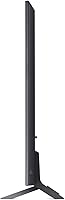
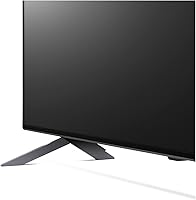
The slim profile and clean bezel design were frequently praised — the NANO90 looks premium on a TV stand or wall-mounted, with nothing about the physical build that reads as budget. The stand legs give it a stable, wide-set footing that held steady even in households with pets or young children bumping furniture.
At 40.5 pounds, solo wall-mounting is awkward and realistically a two-person job — several owners mentioned struggling with the installation process alone. The stand design also requires a fairly wide media console to accommodate the leg spread, which caught some buyers off guard.
Connectivity
84%
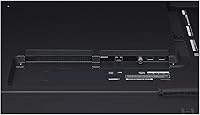
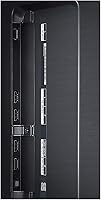
Four HDMI ports is a practical complement for a TV used as a household hub — owners connected a console, a streaming stick, a soundbar via ARC, and a cable box simultaneously without needing a switch. The three USB ports added further flexibility for external storage or keyboard input.
The absence of a dedicated Ethernet port is a notable omission for a TV at this tier — households with congested Wi-Fi networks or large 4K streaming files reported occasional buffering that a wired connection would have resolved. Bluetooth connectivity also had limited range for some users pairing third-party accessories.
Value for Money
71%
29%
For buyers who want 120Hz, VRR gaming support, Dolby Vision IQ, and a polished smart platform without paying OLED prices, the NANO90 represents a reasonable package — the combination of features at this price point has few direct competitors that check every box simultaneously. Owners upgrading from older 1080p sets almost universally felt the jump in quality justified the spend.
When OLED panels enter similar price territory during promotional sales, the value case for this 55-inch LG set weakens considerably — a recurring frustration among buyers who purchased just before a sale event. Those who researched direct competitors like the Sony X80J or Samsung QN85A before buying sometimes felt the NanoCell panel did not differentiate itself enough to justify a premium.

Suitable for:

The LG NanoCell 90 55-inch 4K Smart TV is built for the kind of household where the TV works hard all day — streaming in the afternoon, gaming in the evening, and maybe catching a sports match on the weekend. Console gamers with a PS5 or Xbox Series X will find the native 120Hz panel, VRR, and ALLM support genuinely useful, not just a spec-sheet talking point; games load into the correct frame rate and sync mode automatically. Heavy streamers will feel at home immediately, since webOS handles Netflix, Prime Video, Disney+, and Apple TV+ from a clean, responsive interface without the sluggishness common in cheaper smart platforms. The NanoCell panel also holds its own in brighter rooms — if your living room gets a lot of afternoon sun, this set maintains watchable, colorful picture quality where an OLED panel would struggle with reflections and perceived washed-out contrast. Smart-home users already invested in the Alexa or Google Assistant ecosystem can fold this TV in without friction.

Not suitable for:

Buyers who plan to watch in a fully darkened room — think dedicated home theater setups or late-night movie sessions with the lights completely off — should think carefully before committing to this set, because the LG NanoCell 90 55-inch 4K Smart TV was not engineered for deep-black performance. The Full Array Dimming system is a genuine improvement over basic edge-lit panels, but it does not come close to the contrast depth of a high-zone local dimming display or any OLED, and backlight bleed in dark scenes is a real and recurring complaint. Audiophiles or anyone who takes sound seriously should budget for a soundbar from day one — the built-in speakers handle casual viewing but fall short of doing Dolby Atmos content any real justice. If your primary benchmark is pure picture quality per dollar and you are open to previous-generation OLED pricing, the value proposition here gets harder to defend. Similarly, buyers who frequently watch in pitch-dark conditions and treat contrast as non-negotiable will almost certainly be disappointed by what this panel delivers.

Specifications

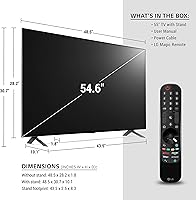
  • Screen Size: The panel measures 55 inches diagonally, with overall set dimensions of 48.5″ wide, 30.7″ tall, and 10.1″ deep including the stand.
  • Panel Type: NanoCell LED LCD — a filter layer of nano-sized particles sits over a standard LED backlight to reduce color impurity and improve wide-angle viewing consistency.
  • Resolution: Native 4K UHD at 3840 x 2160 pixels, with AI-assisted upscaling applied automatically to lower-resolution source content.
  • Processor: Powered by LG's a7 Gen 4 AI Processor 4K, which handles picture optimization, upscaling, and auto-adjustment of both picture and sound modes.
  • Refresh Rate: Native 120Hz panel refresh rate, augmented by TruMotion 240 processing for additional motion smoothing on supported content.
  • HDR Support: Compatible with Dolby Vision IQ, HDR10, and HLG — Dolby Vision IQ dynamically adjusts tone-mapping based on the ambient light sensor reading.
  • Dimming: Full Array Dimming divides the LED backlight into zones across the full panel surface, offering improved contrast over basic edge-lit designs, though zone count is limited compared to premium local dimming implementations.
  • Audio: Dolby Atmos decoding is supported, though peak audio output relies on the built-in speaker array; a separate soundbar is strongly recommended for full effect.
  • Smart Platform: Runs webOS with LG ThinQ AI, giving access to Netflix, Prime Video, Disney+, Apple TV+, and LG Channels from a single, unified home screen.
  • Voice Assistants: Both Google Assistant and Amazon Alexa are built into the TV and accessible via the Magic Remote without any additional hardware.
  • Gaming Features: Supports Variable Refresh Rate (VRR), AMD FreeSync, Auto Low Latency Mode (ALLM), and HGiG tone-mapping for HDR gaming — all active automatically with compatible consoles and PCs.
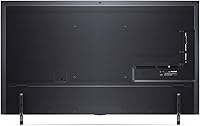
  • HDMI Ports: Four HDMI ports are included; HDMI 2.1 bandwidth supports 4K 120Hz input for current-generation gaming consoles on the appropriate ports.
  • USB Ports: Three USB ports allow connection of external storage drives, keyboards, or other peripherals directly to the TV.
  • Connectivity: Wireless connectivity includes built-in Wi-Fi and Bluetooth; the set also supports HDMI ARC for soundbar audio passthrough.
  • Weight: The set weighs 40.5 pounds with the stand attached, which is typical for a 55-inch LCD panel of this build tier.
  • Aspect Ratio: Standard 16:9 widescreen aspect ratio, suited to virtually all broadcast, streaming, and gaming content available today.
  • Included Items: The package includes the TV panel, stand legs, a Magic Remote, and a power cable — no soundbar or HDMI cable is included.
  • Model Number: The specific model identifier for the 55-inch 2021 variant is 55NANO90UPA, which is useful when checking firmware updates or contacting LG support.

Related Reviews
LG 55-Inch QNED85 4K Smart TV
82%
86%
Picture Quality
82%
Color Accuracy
74%
Contrast & Black Levels
89%
Motion Handling
81%
Gaming Performance
More
LG UQ7570 55-inch 4K Smart TV
75%
88%
Smart Platform
74%
Picture Quality
83%
Value for Money
61%
Gaming Performance
91%
Streaming Experience
More
LG 55UM7300PUA 55-inch 4K Smart LED TV
74%
74%
Picture Quality
83%
Smart TV Experience
78%
Voice Control & AI
86%
Viewing Angles
62%
HDR Performance
More
LG 55UP8000PUA 55-inch 4K Smart TV
72%
74%
Picture Quality
88%
Smart Platform
79%
Value for Money
62%
Motion Handling
57%
HDR Performance
More
LG SM8600PUA 49-inch NanoCell 4K Smart TV
78%
82%
Picture Quality
86%
Color Accuracy
84%
Viewing Angles
71%
HDR Performance
88%
Smart TV Platform
More
LG OLED C1 55-inch 4K Smart TV
86%
96%
Picture Quality
93%
Gaming Performance
62%
Peak Brightness
88%
Smart TV Platform
91%
Build Quality & Design
More
LG UK6090 55-Inch 4K Smart LED TV
71%
71%
Picture Quality
84%
Viewing Angles
66%
Smart TV Platform
78%
Value for Money
88%
Ease of Setup
More
LG SM8600PUA 65-inch NanoCell 4K Smart TV
78%
81%
Picture Quality
88%
Viewing Angles
58%
Contrast & Black Levels
84%
Motion & Refresh Rate
77%
HDR Performance
More
LG 55-inch OLED evo C4 Smart TV
81%
96%
Picture Quality
93%
Gaming Performance
71%
Brightness
78%
Value for Money
74%
Smart TV & Software
More
LG QNED80 Series 55-Inch 4K Mini LED Smart TV
85%
94%
Picture Quality
89%
Gaming Performance
80%
Sound Quality
85%
Ease of Use
88%
Design & Build Quality
More

FAQ

It is genuinely good for gaming at this price level. The 120Hz panel is native, not interpolated, and the TV supports VRR and ALLM — which means a PS5 or Xbox Series X will automatically switch into a low-latency, variable refresh mode without you needing to dig through settings. FreeSync support also makes it compatible with AMD-based PC graphics cards. Input lag in game mode is competitive.

NanoCell sits below both in pure picture quality terms. Compared to standard LCD, it produces cleaner, more stable colors — especially at wider viewing angles. But against OLED, the contrast gap is significant; OLED blacks are true black, while this panel shows a backlit glow in very dark scenes. If contrast is your top priority and you watch mostly in a dim or dark room, stretching the budget toward an OLED is worth considering. For bright-room, mixed-use viewing, the gap narrows considerably.

Yes, Alexa is built directly into the TV — no Echo device needed as a go-between. You can use voice commands via the Magic Remote to control compatible smart home devices, check your routines, or control playback. Google Assistant is also built in if you ever switch ecosystems.

For casual daytime viewing, the built-in speakers are adequate. But if you care about audio quality at all — or want Dolby Atmos to actually mean something — a soundbar is not optional, it is necessary. The built-in array simply cannot move enough air to reproduce the spatial depth that Atmos content is designed to deliver. Even a mid-range soundbar will transform the experience.

This is actually one of the stronger scenarios for this TV. NanoCell panels handle ambient light reasonably well, and the set's brightness levels hold up during daytime viewing better than most OLED panels, which can appear washed out under direct sunlight. It is not a high-brightness HDR monster, but it performs confidently in typical living room conditions.

It means the backlight is divided into zones across the entire panel rather than just along the edges, which helps the TV dim sections of the screen independently for better contrast. In practice, dark scenes look more controlled than they would on a basic edge-lit set — but the zone count is modest, so you can still see some backlight bleed around bright objects on dark backgrounds, especially in a dark room. It is a real improvement, just not a dramatic one.

Setup is straightforward for most users. Attaching the stand takes about ten minutes with a screwdriver, and the on-screen setup wizard walks you through Wi-Fi, account login, and channel scanning clearly. The Magic Remote pairs automatically. Expect to spend 20 to 30 minutes from unboxing to watching, longer if you want to calibrate picture settings manually.

You can, and it works reasonably well for that purpose, especially for casual use or gaming. HDMI 2.1 ports support 4K at 120Hz, and the TV's game mode keeps input lag low. That said, the large screen size and typical TV pixel density make it less ideal for extended productivity work where small text clarity matters. For gaming or media playback on a desk or from a distance, it is a solid option.

Most long-term owners report no significant hardware issues, and the set generally holds up well over extended use. Some users note minor panel uniformity variations — slight clouding or brightness inconsistencies across the screen — particularly in darker scenes. The Magic Remote also draws occasional criticism for feeling less durable than the TV itself. Overall, the reliability track record is in line with what you would expect from an LG panel at this tier.

Yes, this 55-inch LG set supports AirPlay 2 for wirelessly mirroring or casting content from Apple devices, and it is compatible with Apple HomeKit for smart home control through the Home app. This makes it one of the few sets in its range that works fluidly across both the Apple and Google or Amazon ecosystems simultaneously.