
Overview

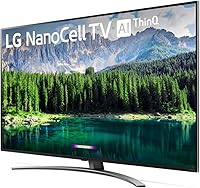
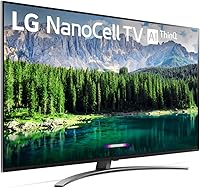
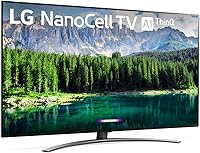
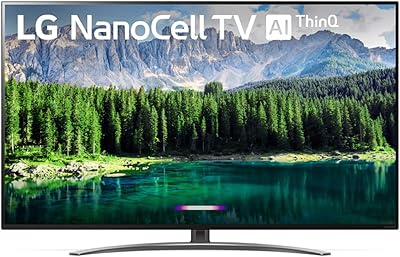
The LG SM8600PUA 65-inch NanoCell 4K Smart TV sits in the upper-mid tier of LG’s 2019 lineup, offering a genuine step up from entry-level 4K sets without crossing into OLED territory. NanoCell technology works by filtering impure wavelengths at the pixel level, delivering more accurate, saturated colors and a wide viewing angle that holds up across a large room. The α7 Gen 2 processor handles upscaling and picture optimization ably, though it sits one step below LG’s flagship α9 chip. Full Array Dimming improves local contrast, but don’t expect inky blacks here. Think of this as a capable, well-rounded set — not a dedicated dark-room performer.

Features & Benefits

The IPS NanoCell panel is the headline feature — sit off to the side in a wide living room and the picture barely shifts, something VA-based sets simply can’t match. The 120Hz refresh rate keeps fast action clean, making sports and motion-heavy content look sharp without obvious judder. HDR coverage spans Dolby Vision, HDR10, and HLG, so virtually every streaming platform and Blu-ray disc is covered. The built-in ThinQ AI platform runs Netflix, Disney+, and other major apps without an external stick. Forty watts of Dolby Atmos audio won’t blow anyone away, but it’s a solid starting point before adding a soundbar. Four HDMI ports handle multiple devices without juggling cables.

Best For

This 65-inch LG makes the most sense for larger shared living spaces — think a room where people spread across sofas at different angles, because the IPS panel keeps color and brightness consistent no matter where you’re seated. Sports fans will appreciate the motion clarity and steady color rendering during fast-moving broadcasts. Cord-cutters will find webOS genuinely easy to navigate day-to-day, with voice control via Alexa or Google Assistant covering most routine commands. Casual gamers get a large, HDR-capable screen with reasonable response. If deep black levels for late-night movies in a darkened room are your priority, an OLED or VA-panel set would serve you better.

User Feedback

Owners of the SM8600PUA consistently praise the out-of-box picture quality — colors impress right away without extensive calibration, and most buyers find the Magic Remote intuitive from the start. The webOS interface draws frequent compliments for being responsive and uncluttered. On the critical side, viewers who watch dark or night-heavy content regularly flag light blooming around bright objects on black backgrounds, an inherent IPS trait no firmware update fully resolves. A handful of buyers have raised questions about how long LG will push app and software updates to a 2019 model. Built-in sound divides opinion: perfectly adequate for casual viewing, but underwhelming for anyone serious about audio quality.

Pros

  • Wide IPS viewing angles keep picture quality consistent for large groups spread across the room.
  • NanoCell filtering produces noticeably more accurate, vibrant colors than standard LED panels.
  • 120Hz refresh rate handles sports and action content cleanly without obvious motion blur.
  • Full Dolby Vision, HDR10, and HLG support covers every major HDR format across streaming and disc.
  • webOS is one of the more intuitive smart TV platforms — fast, clean, and easy to pick up.
  • The Magic Remote pointer-style navigation makes browsing apps and menus much less frustrating than a standard d-pad remote.
  • Built-in Google Assistant and Alexa work reliably for everyday voice commands and smart home control.
  • Four HDMI ports comfortably accommodate a console, soundbar, streaming stick, and Blu-ray player simultaneously.
  • Out-of-box picture calibration is strong enough that most buyers won’t need to touch advanced settings.
  • At 65 inches, this LG NanoCell TV delivers a genuinely cinematic screen size without pushing into premium price territory.

Cons

  • IPS black levels are mediocre — dark scenes show visible light bloom that VA and OLED panels handle far better.
  • Full Array Dimming implementation is modest; local contrast improvement is real but limited compared to higher-end zone systems.
  • Built-in 40W audio starts to strain at higher volumes and lacks the bass presence a room this size deserves.
  • As a 2019 model, long-term app support and OS updates are not guaranteed beyond a few years.
  • The α7 Gen 2 processor handles most tasks well but can feel sluggish when multitasking across multiple apps.
  • Bright room performance is decent but not exceptional — high-glare environments can wash out darker image areas.
  • The stand footprint is wide, requiring a TV console at least 55 inches across to sit safely without wall-mounting.
  • HDR peak brightness, while adequate, falls short of what high-end LED TVs deliver for truly punchy HDR highlights.

Ratings

The scores below reflect AI-driven analysis of verified global buyer reviews for the LG SM8600PUA 65-inch NanoCell 4K Smart TV, with spam, bot-submitted, and incentivized feedback actively filtered out before scoring. Each category is weighted against real-world usage patterns reported by confirmed purchasers, not manufacturer claims. Both the standout strengths and the recurring frustrations are reflected transparently so you can make a genuinely informed call.

Picture Quality
81%
19%
Color accuracy is consistently praised, particularly for sports and nature content where greens and reds stay true rather than blooming into adjacent hues. Buyers in bright living rooms report that the picture holds up well during daytime viewing without heavy calibration out of the box.
Dark scene performance is the persistent weak spot — IPS panel blacks are noticeably grey in a dimmed room, and side-by-side comparisons with OLED sets reveal a clear gap in depth and shadow detail that some buyers find difficult to overlook.
Viewing Angles
88%
This is where the IPS NanoCell panel genuinely earns its keep. Families watching from different seats across a wide sofa report minimal color shift or brightness drop-off, even at seating angles of 40 degrees or more from center. It is one of the most consistent wide-angle LED TVs in its tier.
While angles are strong compared to VA-based competitors, there is still a slight luminance drop at extreme off-axis positions that purists will notice. It is not quite as consistent as the best OLED panels when viewed from near-perpendicular angles.
Contrast & Black Levels
58%
42%
Full Array Dimming does provide a modest improvement over edge-lit panels, and in mixed-lighting content the difference is real enough that most casual viewers never actively miss OLED-level contrast during everyday streaming sessions.
This is the most frequently cited limitation in verified reviews. Blooming around bright objects on dark backgrounds — subtitles, lamp posts, scoreboards — is a consistent complaint from buyers who watch in darkened rooms. The dimming zone count is not sufficient to eliminate the halo effect in high-contrast scenes.
Motion & Refresh Rate
84%
The native 120Hz panel makes a tangible difference during live sports, with fast lateral panning and player movement staying sharp rather than streaking. Buyers who switched from 60Hz sets frequently mention how immediately noticeable the improvement is for football and basketball broadcasts.
LG’s TruMotion motion processing can introduce a noticeable soap-opera effect on cinematic content if left on default settings, and some buyers report it took experimentation to find comfortable motion settings for film viewing.
HDR Performance
77%
23%
Dolby Vision support is well-implemented and noticeable on compatible Netflix and Disney+ content, with highlights and color volume stepping up meaningfully compared to SDR. HDR10 and HLG compatibility means virtually no format gaps across streaming or disc playback.
Peak brightness falls short of the top-tier LED sets, which limits how punchy HDR specular highlights actually look in practice. Buyers expecting the dramatic HDR pop seen on higher-brightness or mini-LED panels may find the real-world HDR impact more modest than anticipated.
Smart TV Platform
86%
webOS draws consistent praise for its clean layout and quick response times — switching between apps and inputs rarely requires waiting. The breadth of available streaming apps covers Netflix, Disney+, Prime Video, Apple TV, YouTube, and Hulu without needing an external stick, which cord-cutters specifically appreciate.
A handful of buyers have raised concerns about app store depth for niche international content services, and as a 2019 platform build, some users report occasional app crashes that have not been resolved through system updates.
Voice Control & AI
79%
21%
Having both Google Assistant and Alexa built in without needing a separate smart speaker is genuinely convenient for users already embedded in either ecosystem. Basic commands — switching inputs, adjusting volume, opening apps, checking the weather — work reliably and respond quickly.
More complex or nuanced voice queries occasionally misfire or default to a web search rather than a direct action. Buyers accustomed to dedicated smart speakers report that the TV’s microphone sensitivity is lower, requiring them to speak more deliberately and at closer range.
Remote Control
83%
The Magic Remote consistently earns positive mentions in verified reviews for making app navigation feel closer to using a smartphone than a traditional TV remote. The pointer function is especially appreciated when navigating the webOS home screen or typing in search fields.
The cursor-based navigation has a small learning curve for buyers coming from conventional remotes, and a few users report that the pointer drifts slightly after extended use, requiring occasional recalibration by pointing at the screen and pressing a button.
Built-in Audio
63%
37%
For a built-in system, the 40W Dolby Atmos output is adequate for daytime TV, news, and standard streaming content in rooms up to around 300 square feet. Dialogue clarity is decent and buyers who are not audiophiles generally find it satisfactory for casual use.
Bass response is thin for a screen this size, and the speakers show strain at high volumes with distortion creeping in during loud action sequences. A significant portion of buyers at this price tier report adding a soundbar within the first few months of ownership.
Gaming Performance
74%
26%
Input lag in game mode measures in the low-to-mid teens in milliseconds, which is responsive enough for most console gaming genres. The 120Hz panel and HDMI 2.0 ports handle current-generation consoles without issue, and HDR game content looks noticeably better than on 60Hz alternatives.
There is no HDMI 2.1 support, which means 4K at 120Hz input from newer consoles is not available — a limitation that was less obvious at launch but becomes more relevant as PS5 and Xbox Series X titles increasingly target that spec. VRR and ALLM are also absent.
Setup & Installation
87%
Buyers consistently describe the initial setup process as fast and intuitive, with on-screen prompts walking through Wi-Fi connection, account login, and picture calibration in under 15 minutes. The stand attaches without tools in most configurations and the packaging is well-designed for safe solo unboxing.
Wall-mounting requires a separately purchased VESA bracket, and the TV’s 56.9-pound weight means two people are strongly advised for safe lifting and positioning. A few buyers noted the included quick-start guide skips some of the more advanced picture and audio settings.
Build & Design
76%
24%
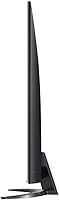
The slim bezel and clean matte black finish look appropriately premium for a TV at this tier, and buyers report the overall build feels solid with no creaking or flex in the panel surround. It sits well on a media console and does not look out of place in a modern living room.
The stand design is wide-stance rather than center-pedestal, which requires a considerably wider console than some buyers expect. The rear cable management is functional but not particularly elegant, and the back panel plastic feels less refined than the front presentation suggests.
Connectivity
82%
18%
Four HDMI and three USB ports cover the realistic needs of most households, accommodating a gaming console, soundbar, streaming stick, and Blu-ray player simultaneously without any port juggling. Both wired Ethernet and Wi-Fi are available, giving flexible networking options.
None of the HDMI ports are version 2.1, which matters increasingly for next-generation gaming use cases. Some buyers also note the USB ports deliver limited power output, which may not reliably charge certain devices or power higher-draw accessories.
Value for Money
72%
28%
When assessed against its original positioning, this LG NanoCell TV delivers a competitive package of screen size, smart features, and color performance for buyers who do not need OLED-level contrast. The wide-angle IPS performance in particular represents genuine value compared to cheaper VA alternatives at the same screen size.
As a 2019 model now several years into its life cycle, the absence of HDMI 2.1, the modest peak brightness, and the aging software platform make the value proposition harder to justify against newer mid-range sets that have incorporated those updates at similar or lower price points.

Suitable for:

The LG SM8600PUA 65-inch NanoCell 4K Smart TV is purpose-built for households where the TV is a shared, central fixture rather than a personal screen. Families with a wide living room will immediately notice the IPS panel's consistency — colors and brightness hold steady whether you're sitting directly in front or at a sharp angle from the side, which is rare at this display tier. Sports fans in particular get a lot of value here: the 120Hz refresh rate keeps fast motion crisp, and the color accuracy means jerseys and stadium greens look true-to-life rather than oversaturated. Cord-cutters will find the webOS platform genuinely practical for day-to-day streaming, with Dolby Vision support covering everything from Netflix 4K to HDR Blu-ray. Casual gamers who want a large, HDR-capable screen without spending significantly more will also find this a comfortable fit.

Not suitable for:

Buyers with a dedicated dark home theater room should think carefully before committing to the LG SM8600PUA 65-inch NanoCell 4K Smart TV. The IPS panel, while excellent for wide viewing angles, cannot compete with OLED or even a good VA-panel LCD when it comes to black levels — light blooming around bright objects against dark backgrounds is a real and recurring complaint, not an edge case. If you primarily watch atmospheric films, dark TV dramas, or horror content in a light-controlled room, the contrast limitations will be noticeable and persistent. Audiophiles or anyone who takes sound seriously should also budget for a soundbar from day one, as the built-in speakers are adequate but not a long-term solution at this screen size. Finally, buyers who demand the latest app ecosystem and guaranteed long-term software updates should note this is a 2019 model, and platform support for older sets has limits.

Specifications

  • Screen Size: The panel measures 65 inches diagonally, well-suited for living rooms where seating is roughly 8 to 12 feet from the screen.
  • Display Type: NanoCell IPS LED-LCD technology filters out impure light wavelengths to deliver more consistent color and wider viewing angles than standard LED panels.
  • Resolution: Native 4K UHD resolution at 3840×2160 pixels provides four times the detail of a 1080p display.
  • Refresh Rate: The panel runs at a native 120Hz, which visibly reduces motion blur during fast sports broadcasts and action-heavy content.
  • Processor: The α7 Gen 2 Intelligent Processor handles picture upscaling and AI-assisted optimization, one tier below LG’s flagship α9 chip.
  • HDR Support: Compatible with Dolby Vision, HDR10, and HLG, covering all major HDR formats used by streaming services and physical media.
  • Dimming: Full Array Dimming adjusts backlight zones across the panel to improve local contrast, though zone count is modest compared to premium implementations.
  • Smart Platform: Runs LG ThinQ AI on webOS, with access to Netflix, Disney+, Amazon Prime Video, Apple TV, and other major streaming applications.
  • Voice Control: Both Google Assistant and Amazon Alexa are built directly into the TV, allowing hands-free control without any additional hardware.
  • Remote: The Magic Remote is included in the box and uses a gyroscope-based pointer for cursor-style navigation rather than a traditional directional pad.
  • Audio: Built-in 2.2-channel speaker system outputs 40W total with Dolby Atmos decoding for virtual height and surround processing.
  • HDMI Ports: Four HDMI 2.0 ports support 4K sources including gaming consoles, Blu-ray players, and AV receivers simultaneously.
  • USB Ports: Three USB ports allow connection of external storage drives, media sticks, or peripheral devices.
  • Connectivity: Built-in Wi-Fi enables wireless network access; a wired Ethernet port is also available for a more stable connection.
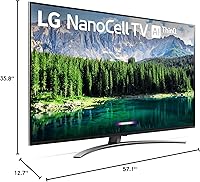
  • Dimensions: With the stand attached, the TV measures 57.1″ wide, 35.8″ tall, and 12.7″ deep; wall-mount depth is significantly less.
  • Weight: The set weighs 56.9 pounds with the stand, which typically requires two people for safe installation and mounting.
  • Power Draw: Rated at 65W under standard viewing conditions, which is reasonable for a 65-inch panel in this class.
  • Aspect Ratio: Standard 16:9 widescreen aspect ratio, matching native output from broadcast TV, streaming, and most gaming content.

Related Reviews
LG SM8600PUA 49-inch NanoCell 4K Smart TV
78%
82%
Picture Quality
86%
Color Accuracy
84%
Viewing Angles
71%
HDR Performance
88%
Smart TV Platform
More
LG 65UA7700P 65-inch 4K Smart TV
83%
92%
Picture Quality
72%
Sound Quality
88%
Ease of Setup
85%
Smart Features / WebOS
90%
Gaming Performance
More
LG NanoCell 90 55-inch 4K Smart TV
76%
78%
Picture Quality
82%
Color Accuracy
61%
Contrast & Black Levels
88%
Gaming Performance
81%
Motion Handling
More
LG UN7300 65-inch 4K UHD Smart TV
73%
74%
Picture Quality
88%
Smart Platform (webOS)
91%
Magic Remote Usability
83%
Viewing Angles
61%
HDR Performance
More
LG OLED B4 65-inch Smart TV
81%
93%
Picture Quality
96%
Contrast & Black Levels
91%
Gaming Performance
82%
Smart TV Platform (WebOS 24)
58%
Audio Performance
More
LG 65UK6300PUE 65-inch 4K Smart TV
71%
71%
Picture Quality
83%
Viewing Angles
58%
Backlight Uniformity
62%
Motion Handling
67%
HDR Performance
More
LG UQ7570 65-inch 4K Smart TV
78%
82%
Picture Quality
61%
Refresh Rate & Motion Handling
88%
Smart TV Platform (webOS 22)
86%
Value for Money
53%
Audio Quality
More
LG 65UK6090 65-inch 4K HDR Smart LED UHD TV
85%
92%
Picture Quality
89%
Smart Features
88%
Ease of Setup
85%
Design & Aesthetics
90%
HDR Performance
More
LG QNED85 65-inch Mini-LED Smart TV
79%
91%
Picture Brightness
88%
Color Accuracy
67%
Contrast & Black Levels
84%
HDR Performance
82%
Gaming Performance
More
LG Nano 9 65-inch 4K NanoCell TV
77%
83%
Picture Quality
67%
Contrast & Black Levels
88%
Color Accuracy
84%
Motion Handling
86%
Smart TV Platform
More

FAQ

It holds up reasonably well in moderately lit rooms thanks to the IPS panel’s decent off-angle performance, but the screen has a semi-gloss finish that can catch direct sunlight. If your room gets intense afternoon glare on the screen, you may want to consider pairing it with blackout curtains during peak viewing hours. It’s not a matte anti-glare panel, so a very bright room will challenge it.

Standard LED TVs often produce colors that look slightly washed out or shifted, especially reds and greens, because the backlight bleeds impure wavelengths into adjacent colors. NanoCell adds a nano-particle filter layer that absorbs those stray wavelengths before they reach the screen, resulting in cleaner, more accurate colors. The difference is most obvious with saturated content like sports, nature documentaries, and animated films.

Casual gaming works fine on this 65-inch LG. The 120Hz refresh rate keeps motion smooth, and the TV supports HDMI 2.0 for connecting current-generation consoles. Input lag in game mode measures roughly 13 to 15 milliseconds, which is responsive enough for most genres. Competitive fast-reaction gamers might prefer a dedicated gaming monitor, but for couch gaming it performs well.

Yes, webOS on this model supports the Apple TV app natively, and AirPlay 2 is available via a firmware update, allowing you to mirror or cast content from iPhones, iPads, and Macs directly to the screen without any additional hardware.

It’s noticeable if you watch dark content regularly in a dimmed room. Bright objects like subtitles or light sources against a black background will show a soft halo of backlight around them — this is an inherent characteristic of IPS panels with LCD backlights and no firmware update will eliminate it. If you primarily watch atmospheric dramas or horror films in a dark room, it will likely bother you. In a normally lit room during everyday viewing, most people don’t find it distracting.

Netflix, Amazon Prime Video, Disney+, Apple TV, YouTube, Hulu, and several other services are available directly through the webOS app store without needing an external streaming stick. The app library is broad and LG updates it regularly, so you’re unlikely to find a major service missing.

For casual daytime TV watching, news, and general streaming, the 40W built-in speakers are adequate and get reasonably loud. For movies or music where audio quality matters, the bass response is thin and the soundstage is fairly narrow for a 65-inch screen. A soundbar would be a noticeable improvement if you care about audio, but it’s not an immediate necessity for everyone.

With the stand attached, the TV spans 57.1 inches wide, so your console or media unit should ideally be at least 58 to 60 inches wide to provide stable support along the full base width. If your furniture is narrower, wall-mounting is a safer option — the TV is VESA compatible for standard wall brackets.

Setup is straightforward — the remote pairs automatically when you insert batteries and power on the TV. The pointer function works like a computer cursor, which takes a day or two to get used to if you’re coming from a traditional d-pad remote. Most users find it faster for navigating apps and menus once they adjust. Battery life is decent but not exceptional; rechargeable AAA batteries are worth considering.

LG has historically supported webOS TVs for three to four years with meaningful updates, though the pace of new features slows as a model ages. The core apps like Netflix and YouTube push their own updates independently of the OS, so streaming functionality tends to remain current longer than the system software itself. That said, if long-term software support is a top priority, a newer model would give you more runway.