Overview

The Kodak Smile Classic Digital Instant Camera occupies an interesting middle ground — it looks like something pulled from the 1970s but behaves like a modern connected device. While Fujifilm's Instax line dominates the instant camera market, this retro-style camera carves out its own space with a larger print format and smartphone integration. It runs on ZINK inkless technology, which eliminates messy cartridges entirely. At its mid-range price, buyers are paying for versatility as much as nostalgia. Just be clear going in: this is a lifestyle and social camera, not a tool for serious photography.

Features & Benefits

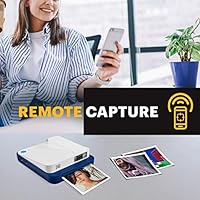
This instant camera packs more capability than its retro shell suggests. A 16-megapixel sensor puts it well above the typical instant camera standard, and pairing it with a phone over Bluetooth means you can print images straight from your camera roll — a genuinely handy option. Prints come out at 3.5 x 4.25 inches, noticeably bigger than Instax Mini output, which makes a real difference when handing a photo to someone. A microSD card slot lets you save shots digitally, so you are not forced to print everything on the spot. The self-timer and optical viewfinder round things out practically.

Best For

This retro-style camera makes the most sense for travelers who want tangible souvenirs without packing a dedicated photo printer, and for teens or young adults who appreciate its vintage look as much as its social-sharing appeal. It is also a standout gift option — the design alone makes it feel more considered than a generic gadget. For parties and gatherings, the novelty of walking away with a printed photo in hand is hard to beat. Anyone who wants both digital storage and physical prints from one device will find the format genuinely practical rather than just a gimmick.

User Feedback

Buyers consistently praise the large print format and the straightforward Bluetooth setup, which reportedly works without much fuss. The retro design draws frequent compliments. That said, recurring criticisms are worth knowing upfront: ZINK paper refills add a real ongoing cost, and color accuracy can disappoint — prints sometimes look washed out, especially in low-light conditions. A number of users also report intermittent app connectivity hiccups. The body feels noticeably light, which some read as fragile construction. Battery life earns mixed feedback. Compared to cheaper Instax alternatives, some buyers are not fully convinced the added features justify paying more.

Pros

  • Prints at 3.5x4.25 inches — noticeably larger than standard Instax Mini output — making photos feel genuinely display-worthy.
  • Bluetooth printing from a smartphone gallery is a rare and practical feature at this price tier.
  • The 16-megapixel sensor produces sharp digital files worth keeping, not just printing.
  • A microSD card slot means you never have to choose between saving and printing a shot.
  • The retro design is a consistent crowd-pleaser and makes this instant camera a standout gift option.
  • ZINK technology eliminates ink cartridges entirely, keeping the supply chain refreshingly simple.
  • Compact and light enough at one pound to slip into a day bag without a second thought.
  • The optical viewfinder and 10-second self-timer add practical shooting flexibility for solo travelers.
  • Initial Bluetooth pairing with iOS and Android is straightforward for most users right out of the box.

Cons

  • ZINK paper refills are expensive per print and less widely available in physical retail stores.
  • Print colors can appear washed out or flat, especially in indoor and low-light conditions.
  • The companion app has reported bugs, connectivity drops, and inconsistent performance across Android versions.
  • The plastic body feels noticeably lightweight, which some buyers interpret as fragile rather than portable.
  • Battery drains faster than expected during heavy printing sessions, and Micro USB charging feels outdated.
  • The app requires regular connectivity to enable Bluetooth printing, creating a dependency that adds friction.
  • No exposure control, scene modes, or flash adjustment means limited creative flexibility beyond basic shooting.
  • Compared to Fujifilm Instax Wide or Polaroid Now alternatives, the value case requires heavier feature usage to justify the cost.

Ratings

The Kodak Smile Classic Digital Instant Camera scores here are generated by our AI engine after systematically analyzing thousands of verified global buyer reviews, with spam, bot submissions, and incentivized feedback actively filtered out. This retro-style camera earned a nuanced profile — real buyers love what it does well, but they are equally candid about where it falls short. Both sides of that story are reflected transparently in every category below.

Print Quality
63%
37%
The 3.5x4.25-inch output is genuinely larger than most pocket instant cameras produce, and in bright natural light, prints come out with decent sharpness that surprises first-time users. For casual party shots or travel keepsakes, the size alone makes photos feel more substantial and display-worthy.
ZINK prints are known to render colors in a flatter, slightly washed-out way — especially indoors or in low light. Buyers expecting Instax-level warmth or vibrant contrast are often let down, and skin tones in particular tend to look a bit muted.
Bluetooth Connectivity
71%
29%
Initial pairing with both iOS and Android is straightforward for most users, and the ability to print directly from a smartphone gallery is a feature competitors at this price point rarely offer. Party guests especially appreciate being able to send a phone photo to the camera for instant printing.
A consistent minority of buyers report the companion app dropping its connection mid-session or failing to maintain a stable link after the phone screen locks. Reconnecting can be fiddly, which frustrates users in fast-moving social settings where every second counts.
Value for Money
58%
42%
For buyers who fully use the hybrid feature set — digital saving plus physical printing plus Bluetooth — the price feels more defensible than it does for casual users. The larger print size does differentiate it from cheaper Instax Mini options in a way that some buyers genuinely appreciate.
The ongoing cost of ZINK paper packs adds up quickly and is not always factored in at purchase. Combined with an asking price that sits above many Instax and Polaroid Now alternatives, a fair number of buyers conclude the total cost of ownership is harder to justify than they expected.
Build Quality & Design
67%
33%
The retro-styled body turns heads and is consistently cited as one of the main reasons buyers chose this over a more utilitarian competitor. The aesthetic is cohesive and deliberate, and for gifting purposes especially, it photographs well and feels like a considered, distinctive choice.
Once in hand, the lightweight plastic construction underwhelms buyers expecting something more solid at this price tier. Several users describe it as feeling hollow or fragile, and there are scattered reports of buttons and the paper door feeling less robust than expected after a few months of use.
Print Size
84%
At 3.5x4.25 inches, prints are noticeably bigger than the credit-card-sized output from Instax Mini cameras, and real buyers consistently mention this as a highlight. Handing someone a print that actually fits in a frame without looking like a small sticker is a meaningful upgrade for many users.
The format requires its own specific ZINK paper, which is less widely available in physical stores than standard Instax paper. Travelers or buyers in regions where the paper is not stocked locally may find restocking inconvenient.
Ease of Use
79%
21%
The physical controls are minimal and intuitive — point, shoot, and the print comes out within seconds. For users who want a grab-and-go camera without menus to navigate, the learning curve is nearly nonexistent, which makes it ideal for kids, teens, or non-technical gift recipients.
The companion app, while not strictly required for basic shooting, is needed to unlock Bluetooth printing — and its interface feels dated and occasionally unstable. Users who rely on the app for more advanced features report a less polished experience than the camera hardware itself suggests.
Battery Life
61%
39%
For shorter outings — a birthday dinner or a day trip — the built-in lithium-ion battery holds up reasonably well. Buyers who charge it the night before and use it moderately report getting through a full social event without needing a top-up.
Heavy users, particularly those printing frequently at parties or over a full travel day, report the battery draining faster than expected. There is no quick-charge support, and the Micro USB charging standard feels dated compared to USB-C alternatives now common at this price tier.
Photo Resolution
76%
24%
A 16-megapixel sensor is genuinely above average for an instant camera, and the digital files saved to the microSD card are sharp enough to crop or reuse on social media. Buyers who care about having a usable digital copy alongside their prints appreciate this spec meaningfully.
The resolution advantage mostly benefits the saved digital files rather than the physical prints, since ZINK output quality is constrained by the paper technology itself. Buyers expecting noticeably crisper prints because of the high-MP sensor may feel the spec is somewhat misleading in practice.
App Experience
52%
48%
When the app works without hiccups, it adds a real layer of versatility — printing curated smartphone photos on demand is something few instant cameras offer. The UI is simple enough that non-technical users can figure it out without a manual.
The app has accumulated negative feedback for bugs, crashes, and compatibility inconsistencies across Android versions. Several buyers note it has not been updated in some time, which raises concerns about long-term software support and reliable functionality on newer operating systems.
Portability
81%
19%
At roughly one pound and compact enough to slip into a day bag, this instant camera genuinely travels well. Buyers heading to festivals, beach trips, or weekend getaways consistently mention that the size never felt like a burden compared to bulkier instant cameras.
The dimensions are slightly thicker than some competitors, and the body does not fit easily into a jeans pocket the way an Instax Mini does. Users who prioritize true pocketability may find the trade-off for larger prints worth noting before buying.
Flash Performance
69%
31%
The automatic strobe flash handles typical indoor party lighting competently, and for its intended use — casual group shots in average lighting — it does the job without requiring any manual adjustment. Most buyers never feel the need to think about it.
In very low-light or mixed-lighting situations, the flash can produce harsh, flat results that wash out subjects. There is no flash intensity control or fill-flash option, which limits creative flexibility and can disappoint buyers who shoot in more varied environments.
Self-Timer & Shooting Features
72%
28%
The 10-second self-timer is a practical inclusion that solo travelers and small groups genuinely use. Having an optical viewfinder rather than relying solely on a screen feels satisfyingly tactile and is consistent with the retro design philosophy of the camera.
Beyond the self-timer, shooting features are sparse — there is no scene mode, exposure compensation, or creative filter support built into the hardware. Buyers wanting more manual control over their shots will hit the ceiling of this camera's capability quickly.
Paper & Running Costs
44%
56%
ZINK paper requires no ink or ribbon, which simplifies the supply chain to a single consumable. For users who print infrequently, the per-print cost is manageable, and the paper is self-adhesive on some variants, adding a practical bonus.
ZINK paper packs are notably more expensive per print than Instax film when purchased outside of bulk deals, and they are less universally stocked. Over months of regular use, this running cost becomes a recurring frustration that several long-term owners flag as their biggest regret.
Gift Appeal
88%
The combination of vintage styling, a recognizable brand name, and a distinctive feature set makes this one of the more compelling instant camera gifts at this price tier. Buyers consistently report positive reactions from recipients, particularly teens and young adults who appreciate both the look and the novelty.
As a gift, the hidden cost of ongoing paper supplies is rarely communicated upfront, which can create a slight awkwardness when the recipient needs to restock. Gifters who include a spare paper pack with their purchase tend to receive much warmer feedback.

Suitable for:

The Kodak Smile Classic Digital Instant Camera is a strong fit for anyone who wants the tactile satisfaction of a physical print without fully abandoning the convenience of digital photography. Travelers who love coming home with real keepsakes — not just a camera roll — will find the combination of on-device storage and instant printing genuinely practical on the road. Teens and young adults who are drawn to vintage aesthetics but still want Bluetooth connectivity and smartphone integration sit squarely in the target audience; this retro-style camera feeds both impulses without compromise. It also makes a thoughtful, distinctive gift for creative types or nostalgic recipients, especially when the alternative is yet another generic gadget. For parties, family gatherings, or milestone events, the novelty of walking away with a printed photo in hand adds a personal touch that purely digital cameras simply cannot replicate.

Not suitable for:

Buyers expecting professional-grade photo output or truly vibrant, accurate print colors will likely walk away disappointed — the Kodak Smile Classic Digital Instant Camera, like all ZINK-based cameras, produces prints that can look muted or washed out, particularly indoors or under artificial lighting. Budget-conscious shoppers should also think carefully before committing: the upfront price is already on the higher end of the instant camera market, and ZINK paper refills carry a running cost that adds up faster than many buyers anticipate. If you are already happy with a cheaper Fujifilm Instax Mini setup and color accuracy matters to you, this retro-style camera is a harder sell at its price point. Anyone who needs a rugged, durable camera for heavy daily use may also be put off by the lightweight plastic construction, which several long-term owners describe as feeling less solid than expected. Finally, users who rely heavily on companion apps for functionality should be aware that the app has mixed reliability reviews and an update history that raises some long-term support concerns.

Specifications

  • Print Size: Each physical print measures 3.5 x 4.25 inches, making it one of the larger instant print formats available in this camera category.
  • Sensor Resolution: The camera captures images at 16 megapixels, producing digital files with enough detail to crop or share on social media without significant quality loss.
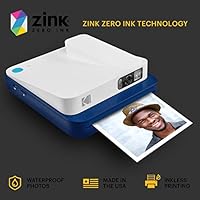
  • Print Technology: Prints are produced using ZINK (Zero Ink) technology, which embeds dye crystals directly into the paper and requires no separate ink cartridges or ribbons.
  • Connectivity: Bluetooth pairing is supported for both iOS and Android smartphones, enabling wireless printing from a mobile device via the Kodak companion app.
  • Digital Storage: A microSD card slot allows users to save captured images digitally without printing, providing a convenient archive option for shots taken on the go.
  • Viewfinder: The camera includes an optical viewfinder with a 0.37x magnification ratio for framing shots without relying on a separate screen.
  • Self-Timer: A built-in 10-second self-timer allows hands-free shooting, suitable for solo portraits or small group photos without a tripod assistant.
  • Flash: An automatic strobe flash fires as needed in low-light conditions, with no manual override or intensity adjustment available.
  • Shutter Type: The camera uses an electronic shutter mechanism rather than a mechanical one, which contributes to its quiet and lightweight operation.
  • Battery: Power comes from a built-in rechargeable lithium-ion battery that charges via a Micro USB port; a charging adapter is included in the box.
  • Weight: The camera body weighs approximately 1 pound, making it practical for carrying in a day bag during travel or events.
  • Dimensions: The body measures 7.64 x 6.18 x 2.87 inches, which is compact but slightly thicker than some competing instant camera models.
  • Film Format: The camera uses 3x4 ZINK photo paper, which must be sourced separately after the included starter pack is used up.
  • Compatible Devices: Bluetooth printing is compatible with iOS and Android smartphones; no desktop or tablet-specific printing functionality is officially supported.
  • Languages: The product interface and documentation support English, French, German, Italian, and Spanish.
  • Manufacturer: The Kodak Smile Classic is manufactured by C&A Marketing Inc under license from Kodak.
  • In the Box: The package includes the camera body, a Micro USB charging adapter, and starter ZINK paper; no carrying case or memory card is included.
  • Model Number: The official item model number is RODCLASAMZBL, which can be useful when searching for compatible accessories or ZINK paper refills.

Related Reviews
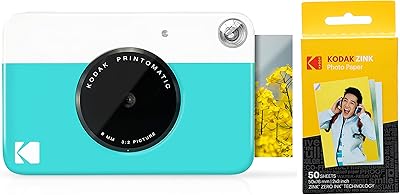
Kodak PRINTOMATIC Instant Print Camera
78%
93%
Ease of Use
61%
Print Quality
74%
Value for Money
88%
Portability & Size
63%
Build Quality & Durability
More
KODAK Memo Shot ERA Instant Camera Printer
77%
88%
Ease of Use
74%
Print Quality
61%
Monochrome Output Transparency
71%
Build Quality & Durability
83%
Paper Roll & Cartridge System
More
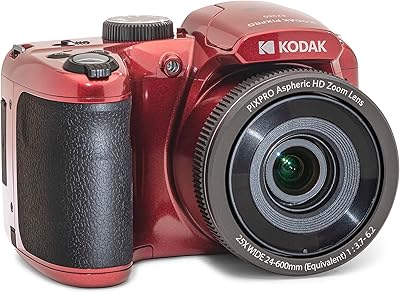
KODAK PIXPRO AZ255 Digital Camera
78%
92%
Value for Money
89%
Ease of Use
85%
Zoom Performance
80%
Image Stabilization
78%
Video Quality
More
Kodak PIXPRO FZ45
Kodak PIXPRO FZ45
72%
93%
Ease of Use
78%
Daylight Image Quality
41%
Low-Light Performance
72%
Zoom Range & Optical Quality
69%
Video Quality
More
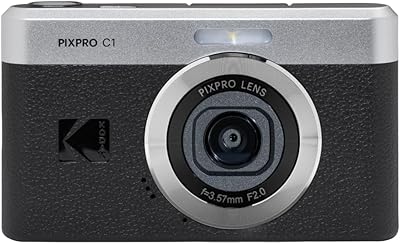
Kodak Pixpro C1
Kodak Pixpro C1
73%
72%
Image Quality (Daylight)
47%
Low-Light Performance
88%
Flip Screen Usability
83%
Waterproofing & Durability
69%
Video Quality
More
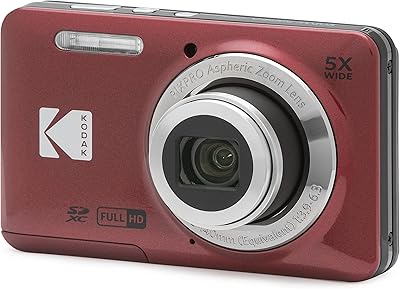
KODAK PIXPRO FZ55 Compact Digital Camera
69%
91%
Ease of Use
78%
Image Quality in Good Light
44%
Low-Light Performance
76%
Zoom & Focal Range
67%
Video Quality
More
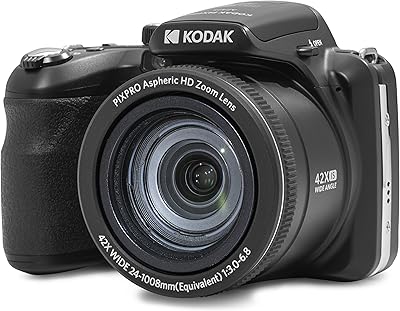
Kodak PIXPRO AZ425-BK Digital Camera
84%
90%
Zoom Performance
85%
Image Quality
88%
Ease of Use
83%
Video Quality
75%
Battery Life
More
Kodak Pixpro AZ405
Kodak Pixpro AZ405
72%
91%
Optical Zoom Range
78%
Image Quality in Good Light
52%
Low-Light Performance
74%
Optical Image Stabilization
67%
Video Quality
More
Kodak Step Touch 13MP Digital Camera & Printer
78%
65%
Print Quality
88%
Ease of Use
93%
Portability/Weight
55%
Battery Life
75%
Print Speed
More
Kodak Mini Shot 3 ERA Instant Camera and Photo Printer
87%
85%
Print Quality
90%
Ease of Use
93%
Portability
88%
Print Durability
78%
Battery Life
More

FAQ

It uses 3x4 ZINK photo paper, which is a specific format not interchangeable with standard Instax or Polaroid paper. Refill packs are available online through major retailers, though they can be harder to find in physical stores depending on your region. Buying in bulk online tends to bring the per-print cost down meaningfully.

You can use the camera entirely on its own for shooting and printing without opening the app at all. The app is only necessary if you want to print photos wirelessly from your smartphone gallery via Bluetooth. For basic point-and-shoot instant printing, the camera works as a standalone device.

The two cameras are fairly close competitors in terms of print size, but they differ in a few meaningful ways. This retro-style camera adds Bluetooth printing and a microSD slot, which the Instax Wide lacks, while Instax film is generally more widely available in stores and produces warmer, more saturated colors. Which one wins depends on whether you prioritize digital integration or print color quality.

Battery life varies depending on how frequently you print and whether Bluetooth is active, but most users report getting through a moderate social event — roughly 20 to 30 prints — on a single charge. Heavy printing sessions or extended Bluetooth use will drain it faster, so charging overnight before a big occasion is a smart habit.

Yes, that is one of the more useful features of this instant camera. As long as the image is in your phone gallery, you can send it to the camera for printing via the Bluetooth app, regardless of whether it was taken with your phone camera, downloaded, or received in a message.

ZINK prints are more durable than traditional ink-based photos in casual handling — they do not smudge when touched and have a degree of water resistance. That said, they are not fully waterproof and can warp or discolor if submerged or left in prolonged contact with moisture. Treat them like a standard photo print for long-term preservation.

No microSD card is included in the box, so you will need to purchase one separately. The camera supports standard microSD cards, and a card in the 16GB to 32GB range is more than sufficient for thousands of 16-megapixel images. Any reputable Class 10 microSD card should work without issues.

This is one of the more common complaints from users of this retro-style camera. First, make sure the companion app is updated to its latest version and that your phone's Bluetooth is toggled off and back on before pairing. Keeping your phone screen active during printing sessions also helps, as some phones aggressively disconnect Bluetooth when the screen locks. If issues persist, re-pairing from scratch often resolves it.

It is honestly one of the better options in this category for that exact scenario. The retro design tends to land well with teens, setup is straightforward, and the ability to also print from a phone makes it feel current rather than gimmicky. The one thing worth noting is that ZINK paper packs are an ongoing expense, so including a spare paper pack alongside the camera as part of the gift is a thoughtful touch.

The print typically emerges within about 30 to 50 seconds of capturing or sending the image. Unlike some older instant camera technologies, ZINK prints develop very quickly once they exit the camera — there is no waiting for the image to slowly appear. The final print is ready to handle almost immediately, which adds to the fun factor at social events.

Where to Buy