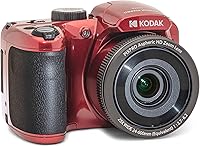
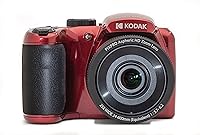
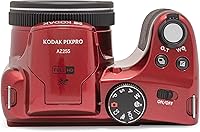
Overview

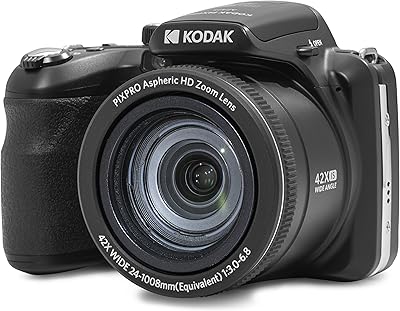
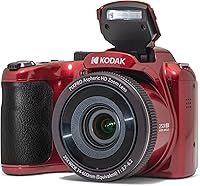
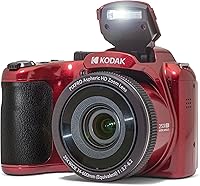
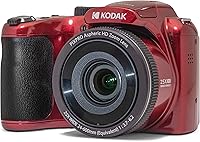
The Kodak PIXPRO AZ255 Bridge Digital Camera sits in an interesting spot in the market — capable enough to outperform any smartphone, yet approachable enough that you won't spend your first weekend buried in a manual. Kodak's PIXPRO lineup has long targeted casual photographers who want real hardware without the complexity of interchangeable lenses, and this bridge camera continues that tradition. Priced for the budget-conscious buyer, it sets clear expectations from the start: what you're genuinely getting here is impressive zoom reach and real ease of use, not professional-grade image quality. That's not a knock — it's just honest positioning.

Features & Benefits

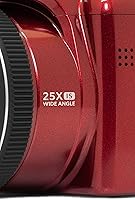
The 25x optical zoom is where the AZ255 genuinely earns its keep. Starting at 24mm wide-angle, you can frame a full mountain vista and then, without switching lenses or changing position, pull in a bird perched on a distant branch. Optical Image Stabilization helps keep those long-range shots usable when handholding at full zoom — not flawless, but meaningfully better than nothing. The 1/2.3-inch sensor handles solid daylight shots for social media or standard prints, though low-light performance will disappoint if that's a priority. The AA battery setup means replacements are available at any corner store abroad, though frequent shooters will find the ongoing cost adds up.

Best For

This zoom camera makes the most sense for someone who has outgrown their phone's camera but isn't ready to invest in a mirrorless or DSLR system. Casual travelers will appreciate the all-in-one convenience — one body, no extra lenses, and a weight that won't wreck your shoulder by midday. It also suits parents shooting youth sports from the sidelines or birdwatchers wanting something more grab-and-go than a spotting scope. If you're buying this as a gift for someone who finds technology overwhelming, the straightforward menus and familiar Kodak branding make it an easy, low-risk recommendation for anyone just starting out.

User Feedback

Across nearly 800 ratings, the AZ255 holds a steady 4.0 average — a score that reflects a camera largely delivering on its promises for its intended audience. Buyers consistently highlight the zoom range and portability as standout qualities, and many mention how quickly they felt comfortable with the controls. The honest criticisms are worth noting: low-light shots come out noticeably grainy, the fixed LCD struggles in direct sunlight, and video autofocus tends to hunt rather than lock cleanly onto moving subjects. Opinions on AA batteries split fairly evenly — genuinely handy for some, an annoying recurring expense for others. Menu navigation occasionally gets flagged as feeling a bit dated.

Pros

  • The 25x optical zoom delivers impressive reach for a camera at this price, covering everything from wide-angle landscapes to distant wildlife.
  • Optical Image Stabilization noticeably reduces blur when shooting handheld at longer zoom lengths.
  • AA batteries mean you can find a replacement literally anywhere in the world — no charging cables required on the road.
  • Lightweight at 16 ounces, this zoom camera is comfortable to carry all day without a dedicated camera bag.
  • Setup is genuinely quick and beginner-friendly, with intuitive menus that do not require reading the manual cover to cover.
  • 1080p Full HD video at up to 60fps is more than adequate for casual vlogging or sharing clips with family.
  • The built-in flash covers multiple modes including red-eye reduction, which is useful for indoor family portraits.
  • At its price point, the range of shooting modes — including aperture priority and shutter priority — gives beginners room to learn.
  • The SD/SDHC card slot is a practical, widely supported storage choice that keeps file transfers straightforward.

Cons

  • Low-light image quality is a consistent weak point — indoor and evening shots often come out grainy and flat.
  • The fixed LCD screen cannot tilt or swivel, making overhead shots or awkward angles genuinely difficult to frame.
  • Video autofocus tends to hunt and drift on moving subjects rather than locking on cleanly.
  • AA batteries are convenient to source but become an ongoing expense for anyone shooting frequently.
  • The 1/2.3-inch sensor is too small for large-format prints or any serious image quality ambitions beyond social sharing.
  • Outdoor LCD visibility is mediocre in bright sunlight, which can make composing shots a guessing game.
  • The menu interface feels dated compared to more modern cameras in the same price bracket.
  • No RAW file support limits post-processing flexibility for buyers who eventually want to edit their photos more seriously.
  • At full zoom, image sharpness drops off noticeably, and even OIS cannot fully compensate in anything less than ideal light.

Ratings

Our team trained an AI model on thousands of verified global purchases of the Kodak PIXPRO AZ255 Bridge Digital Camera, actively filtering out incentivized, spam, and bot-generated reviews to surface what real buyers genuinely experienced. The scores below reflect both the strengths that earned consistent praise and the pain points that generated repeated complaints — nothing has been smoothed over or inflated. Whether this zoom camera fits your needs or falls short will depend heavily on how its specific trade-offs align with how you actually plan to shoot.

Zoom Performance
88%
The 25x optical zoom is the single biggest reason most buyers choose this camera, and it consistently delivers on that promise. Reviewers describe confidently photographing wildlife at nature reserves, distant performers at outdoor concerts, and shorebirds from a pier — situations where any smartphone would simply give up. The 24mm wide-angle starting point adds genuine versatility that many in this category lack.
At the far end of the zoom range, softness creeps into images — especially if lighting is anything less than ideal. A handful of buyers also noted that the zoom motor produces an audible whirring sound during video recording, which gets picked up by the built-in microphone and can be distracting in quiet environments.
Daylight Image Quality
76%
24%
In good outdoor light, the AZ255 produces sharp, vibrant images that hold up well for social sharing, 4x6 prints, and online albums. Reviewers frequently describe being pleasantly surprised by how colors render on sunny days — landscapes, garden shots, and travel photos all come out looking clean and detailed enough for most casual photography needs.
Pixel-peepers and anyone hoping to crop heavily will notice the limitations of the small sensor fairly quickly. Fine detail in foliage, fabric textures, and complex backgrounds can become mushy when zoomed in on screen, and the JPEG-only output leaves little room to recover problem shots in post-processing.
Low-Light Image Quality
39%
61%
With the built-in flash engaged, the camera handles close-range indoor portraits at family gatherings reasonably well, and the multiple flash modes — including slow sync — give slightly more flexibility than a basic auto flash. For subjects within a few feet in a lit room, snapshot quality is acceptable.
This is where the AZ255 genuinely struggles, and buyers who were not warned tend to feel misled. Indoor shots without flash, evening scenes, and anything in a dimly lit venue produce noticeably grainy, flat images that lack detail. Cranking the ISO above 800 makes the problem significantly worse, and no amount of editing fully rescues the results.
Ease of Use
87%
Reviewers who describe themselves as complete beginners consistently praise how quickly they felt comfortable with this camera. The auto mode genuinely handles itself well in normal conditions, and the physical layout — zoom lever, shutter button, and mode dial — feels intuitive without needing to consult the manual for basic operation. It is a camera that rewards just picking it up and shooting.
The menu system, while navigable, feels dated compared to more modern cameras in this price range and occasionally requires more button presses than necessary to reach common settings. A few reviewers noted that switching between shooting modes took longer to learn than expected, and the menu labels are not always self-explanatory for true first-timers.
Value for Money
78%
22%
For a buyer whose primary goal is long zoom reach in a beginner-friendly package, the AZ255 represents fair value at its price point. The included batteries, broad zoom range, and multiple exposure modes give it a feature set that would have cost considerably more a decade ago. Many reviewers conclude their reviews with some version of being satisfied with what they got for the price.
Buyers who compare it directly against similarly priced competitors from brands like Canon or Panasonic often feel the AZ255 gives up ground on sensor quality and autofocus refinement. The absence of WiFi connectivity — now standard on many cameras at this level — is the most common frustration cited by buyers who expected wireless photo transfer.
Image Stabilization
77%
23%
Optical Image Stabilization makes a meaningful difference when shooting handheld at 15x or 20x zoom, where even slight hand movement would otherwise produce blurred results. Reviewers shooting birds, distant signage, and faraway wildlife note that OIS allows them to get usable shots they simply could not have captured without it.
At the full 25x telephoto extreme, OIS compensates for minor movement but cannot fully eliminate blur caused by stronger hand shake, especially in lower light where the camera must use slower shutter speeds. A monopod or wall to lean against is still advisable for consistently sharp maximum-zoom shots.
Video Quality
62%
38%
For casual vlogging, family event recordings, and travel clips, the 1080p footage at 60fps looks clean and fluid in decent light. Colors come out naturally, and the wide-angle starting point makes it practical for recording while walking or capturing environmental context without awkward framing.
The autofocus system hunts visibly during video when subjects move or the camera pans, producing a pumping in-and-out effect that undermines otherwise decent footage. The zoom motor noise also gets recorded when zooming during a clip, which limits practical zooming while rolling — a frustration flagged by multiple reviewers attempting more polished video content.
Portability
83%
At 16 ounces, the AZ255 is light enough to carry comfortably in a small shoulder bag or even a roomy jacket pocket for short trips. Reviewers on walking holidays, day hikes, and theme park visits consistently mention appreciating that it does not weigh them down the way a DSLR kit would.
It is still noticeably larger and heavier than a true pocket camera or any smartphone, so it does require intentional packing. Buyers used to the slip-into-a-pocket convenience of compact cameras may find themselves leaving it behind on casual outings where they do not want to commit to carrying a bag.
Build Quality
66%
34%
The camera feels solid enough in hand for everyday use, with a grip that sits comfortably even for extended shooting sessions. Most reviewers report no issues with buttons, the zoom lever, or the battery door over normal use, and the overall fit and finish is adequate for a camera in this price bracket.
The body is predominantly plastic, which gives some buyers an impression of fragility compared to more premium builds. A few reviewers mention the battery compartment feeling a bit flimsy, and the camera is not weather-sealed in any way — a bump or an unexpected rain shower during a hike is a genuine risk to consider.
LCD Display
57%
43%
The 3″ screen is large enough for comfortable image playback and menu navigation in most indoor or shaded environments. Resolution is adequate for checking whether a shot is in focus or well-exposed before moving on, and the screen size is a step up from smaller budget cameras.
In direct sunlight, the display washes out significantly and makes framing shots a frustrating exercise in guesswork. The fixed mounting is the deeper issue — with no tilt or swivel function, overhead shots, low-angle compositions, and any vlogging setup where the shooter wants to see themselves become unnecessarily difficult.
Battery System
68%
32%
The AA battery format genuinely removes charging anxiety from travel, particularly in countries where power adapters and available outlets are unpredictable. Picking up a fresh pack at a petrol station or convenience store mid-trip is a level of flexibility that Li-Ion camera users simply do not have.
Regular alkaline AA batteries are an ongoing expense that adds up quickly for frequent shooters, and the per-charge capacity is lower than most dedicated camera battery packs. Reviewers who shoot heavily — several hundred frames a day — find themselves burning through batteries faster than anticipated, making rechargeable NiMH AAs a near-necessity rather than an optional upgrade.
Autofocus Performance
59%
41%
In straightforward conditions — a stationary subject in decent light with good contrast — the contrast-detection autofocus locks on quickly and accurately enough for casual shooting. For landscape shots, travel snapshots, and posed portraits, most reviewers find it responsive and reliable.
Moving subjects expose the system's limitations fairly quickly, with the camera occasionally locking onto the background rather than a walking person or an animal in motion. Low-contrast scenes and dim lighting make the hunting behavior more pronounced, and the 17-point system offers no subject tracking or face-detection sophistication that might compensate.
Menu & Controls
71%
29%
The control layout is clean and uncluttered, which suits the beginner audience this camera targets. Core functions like exposure compensation, self-timer, and flash mode are accessible without diving deep into menus, and the mode dial makes switching between auto and semi-manual modes fast.
The menu interface looks and behaves like it belongs to a camera from several years ago — text-heavy, without icons or visual previews that make navigation feel modern. Reviewers who use newer smartphone interfaces as their reference point find it noticeably clunky, and customization options are limited for buyers who like to configure their setup.
Connectivity
51%
49%
The HDMI output is a practical inclusion that lets users plug the camera directly into a television for photo slideshows or video playback, which is a feature that older gift recipients in particular tend to appreciate. The Micro USB port covers wired file transfer to a laptop without any additional hardware.
The complete absence of WiFi or Bluetooth is the most common connectivity complaint in the review base, and it is a meaningful gap given that wireless transfer is now standard on most competing cameras at this price. Getting photos onto a smartphone requires either a card reader or a computer as an intermediary step, which breaks the social sharing workflow many buyers expect.
Flash Performance
72%
28%
The built-in flash covers the range of modes most casual shooters actually need, and red-eye reduction works reliably enough for group portraits at indoor birthday parties or family dinners. Slow sync mode is a thoughtful inclusion that helps balance ambient and flash light in evening scenes.
Effective flash range is limited to around 3–4 meters, meaning subjects at the back of a large room or at events with any distance between shooter and subject will appear underexposed. The flash also takes a noticeable moment to recycle between shots in rapid succession, which can cause missed moments in fast-moving social situations.

Suitable for:

The Kodak PIXPRO AZ255 Bridge Digital Camera is built for people who have hit the ceiling of what their smartphone can do and want a real camera — but without the intimidating leap into DSLR territory. If you regularly find yourself wishing you could zoom in further at a family event, a sports game, or on a hiking trail, this camera was essentially designed around that exact frustration. Travelers who pack light will appreciate having one compact body that covers everything from wide landscapes to far-off subjects without carrying a bag full of lenses. It also makes a genuinely thoughtful gift for older adults or first-time camera owners who want something straightforward from a brand they already recognize and trust. Anyone heading to a safari, a zoo, or a coastal wildlife reserve where subjects are distant and unpredictable will get real value from the 25x zoom range at this price point.

Not suitable for:

If you plan to shoot regularly indoors, at concerts, at night, or in any low-light environment, the AZ255 will leave you frustrated — the small 1/2.3-inch sensor simply cannot gather enough light to produce clean, usable images in those conditions, and no amount of post-processing will fully rescue grainy, flat shots. Enthusiast photographers who want to grow into manual controls, shoot in RAW format, or eventually swap lenses should skip this and invest in an entry-level mirrorless system instead. Videographers expecting smooth, reliable autofocus for moving subjects will find the video performance too basic for anything beyond casual clips. The fixed LCD screen is another genuine limitation — if you shoot a lot of overhead or low-angle content, the inability to tilt or swivel the display becomes a real daily annoyance. In short, the Kodak PIXPRO AZ255 Bridge Digital Camera is a capable beginner tool, but it has a clear ceiling, and buyers who are already brushing up against that ceiling should look elsewhere.

Specifications

  • Sensor: The camera uses a 16-megapixel 1/2.3-inch CMOS sensor, which is standard for this class of bridge camera and produces clean images in good daylight conditions.
  • Optical Zoom: A 25x optical zoom lens covers a focal range equivalent to 24mm at the wide end and 600mm at full telephoto reach.
  • Image Stabilization: Optical Image Stabilization (OIS) is built into the lens to reduce camera shake, particularly useful when shooting handheld at longer zoom lengths.
  • Video Resolution: Full HD 1080p video can be recorded at either 30fps or 60fps, with footage saved in MOV format.
  • LCD Screen: A fixed 3″ LCD screen with 460,000 dots provides the primary live view and playback display; it does not tilt or swivel.
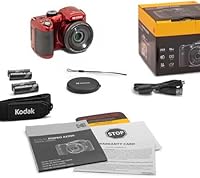
  • Battery Type: The camera runs on two AA alkaline batteries, which are included in the box, and does not use a proprietary rechargeable pack.
  • ISO Range: Sensitivity is adjustable from ISO 100 to ISO 3200, though noise becomes clearly visible at the higher end of this range.
  • Aperture Range: The lens aperture ranges from f/3.7 at the wide-angle end to f/6.2 at full telephoto zoom.
  • Shutter Speed: Shutter speed spans from 30 seconds for long-exposure shots down to 1/2000 of a second for freezing fast-moving subjects.
  • Storage: Images and videos are stored on an SD or SDHC card (sold separately) via a single memory card slot.
  • File Formats: Still images are saved as JPEG files only; RAW capture is not supported on this camera.
  • Autofocus: The camera uses contrast-detection TTL autofocus with 17 focus points and an automatic AF mode as the primary focus system.
  • Connectivity: The camera offers a Micro USB 2.0 port for data transfer and a dedicated HDMI output for connecting directly to a television or monitor.
  • Flash: A built-in flash supports six modes: auto, fill-in, off, red-eye reduction, slow sync, and slow sync with red-eye reduction.
  • Shooting Modes: Available exposure modes include full auto, program, aperture priority, shutter priority, and manual, giving beginners room to gradually explore manual controls.
  • Weight: The camera body weighs 16 ounces, which is manageable for all-day carry without a dedicated camera backpack.
  • Form Factor: The AZ255 is a bridge camera — a single fixed-lens body that sits between a basic point-and-shoot and a full interchangeable-lens system.
  • Warranty: Kodak provides a one-year manufacturer warranty covering defects in materials and workmanship from the original date of purchase.

Related Reviews
Kodak PIXPRO FZ45
Kodak PIXPRO FZ45
72%
93%
Ease of Use
78%
Daylight Image Quality
41%
Low-Light Performance
72%
Zoom Range & Optical Quality
69%
Video Quality
More
Kodak Pixpro C1
Kodak Pixpro C1
73%
72%
Image Quality (Daylight)
47%
Low-Light Performance
88%
Flip Screen Usability
83%
Waterproofing & Durability
69%
Video Quality
More
Kodak Pixpro AZ405
Kodak Pixpro AZ405
72%
91%
Optical Zoom Range
78%
Image Quality in Good Light
52%
Low-Light Performance
74%
Optical Image Stabilization
67%
Video Quality
More
KODAK PIXPRO FZ55 Compact Digital Camera
69%
91%
Ease of Use
78%
Image Quality in Good Light
44%
Low-Light Performance
76%
Zoom & Focal Range
67%
Video Quality
More
KODAK PIXPRO AZ425 Digital Camera
72%
91%
Zoom Range & Reach
76%
Image Quality (Daylight)
54%
Low-Light Performance
83%
Optical Image Stabilization
58%
Video Quality
More
KODAK PIXPRO WPZ2 Waterproof Digital Camera
72%
88%
Waterproof Performance
83%
Build & Durability
71%
Image Quality (Outdoors)
47%
Image Quality (Low Light)
69%
Video Quality
More
Kodak PRINTOMATIC Instant Print Camera
78%
93%
Ease of Use
61%
Print Quality
74%
Value for Money
88%
Portability & Size
63%
Build Quality & Durability
More
Kodak Smile Classic Digital Instant Camera

69%
63%
Print Quality
71%
Bluetooth Connectivity
58%
Value for Money
67%
Build Quality & Design
84%
Print Size
More
Kodak Step Touch 13MP Instant Print Camera
71%
74%
Print Quality
67%
Camera Image Quality
84%
Ease of Use
71%
Print Speed
58%
Battery Life
More
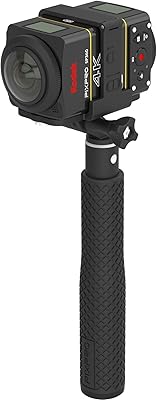
Kodak PIXPRO SP360 4K 360-Degree Action Camera
67%
71%
Video Quality
58%
Stitching Quality
93%
Portability
44%
Battery Life
56%
Mobile App
More

FAQ

No memory card is included, so you will need to pick one up separately before you can start saving photos or video. The camera accepts standard SD and SDHC cards — a Class 10 card of 16GB or 32GB is plenty for most users and easy to find at any electronics store.

Battery life varies depending on how much you use the zoom motor and LCD, but most users report getting somewhere between 150 and 250 shots per set of fresh alkaline AAs. Using the flash heavily or shooting lots of video will drain them faster, so carrying a spare set is a smart habit, especially on a full day out.

Yes, standard NiMH rechargeable AA batteries work fine in this camera. They are actually a cost-effective choice if you shoot regularly, since the per-shot cost drops considerably compared to disposable alkalines. Just note that NiMH batteries have a slightly lower voltage than alkalines, so the battery indicator may behave a little differently.

Honestly, this is one area where the AZ255 struggles. The small 1/2.3-inch sensor does not gather light efficiently in dim conditions, and cranking the ISO to compensate produces noticeably grainy results. For occasional indoor family snapshots with the flash, it is adequate, but if low-light or night photography is a regular priority, you would be better served by a different camera.

Yes — the camera has an HDMI output port, so you can connect it directly to any TV or monitor with an HDMI input and browse your photos or play back video on the big screen. You will need to supply a compatible HDMI cable, as one is not included in the box.

No, the AZ255 does not have built-in WiFi or Bluetooth connectivity. To get photos onto your phone or computer, you will need to either use the included Micro USB cable to connect directly or remove the SD card and use a card reader. It is a notable omission compared to some competitors, so it is worth factoring in if wireless transfer matters to you.

At full 25x optical zoom, the lens reaches the equivalent of 600mm, which is substantial for a handheld camera. In practice, that means you can comfortably frame a bird on a distant branch, pick out a player at the far end of a sports field, or shoot wildlife at a zoo without needing to get dangerously close. Optical Image Stabilization helps keep those shots steady, though very bright or very windy conditions will still challenge it.

It is a reasonable first step. The full auto mode handles everything for you, but the availability of aperture priority, shutter priority, and manual modes means you can ease into understanding exposure at your own pace without being forced into the deep end immediately. The menus are fairly straightforward, and the physical controls are not overwhelming for a first-time camera user.

No — the 3″ screen is fixed and does not articulate in any direction. This means composing selfies or shooting from unusual angles requires a bit of guesswork. If a tilting screen is important to how you shoot, this is a genuine limitation to consider before buying.

It works acceptably for slow or moderately paced movement, but faster subjects can cause the autofocus to hunt — briefly losing focus before locking back on. For relaxed recordings like a school play or a family gathering, it performs well enough. For fast action or any situation where reliable continuous autofocus is critical, the video performance of this zoom camera may fall short of expectations.

Where to Buy