Overview

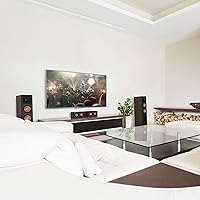
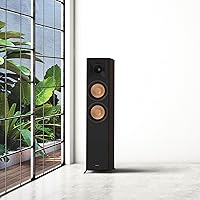
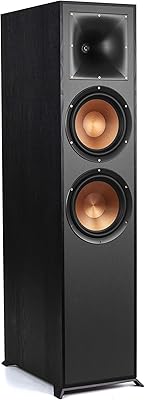
The Klipsch RP-6000F II Floorstanding Speaker is the second-generation refresh of one of Klipsch's most popular Reference Premiere towers, and the updates go well beyond cosmetic tweaks. Standing nearly 40 inches tall and weighing 50 pounds per cabinet, it commands attention in any room — the ebony MDF finish looks sharp without being flashy. Klipsch aimed this speaker at listeners who want room-filling dynamics without stepping into exotic audiophile territory. At this price tier, it competes directly with offerings from SVS and Polk, so buyers have genuine alternatives worth considering before committing. But this floorstander brings a distinct, recognizable character to that comparison.
Features & Benefits

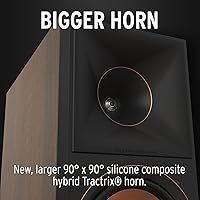
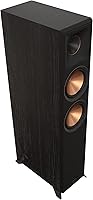
The most notable upgrade is the enlarged Tractrix horn, now covering a 90-by-90-degree dispersion angle using a silicone composite hybrid material. In practice, that wider spread means the listening sweet spot extends across more of the room, not just one couch cushion. The 1-inch titanium tweeter in its vented housing keeps high-frequency distortion in check over long sessions. Dual cerametallic woofers handle the midrange and low end with excellent stiffness-to-weight ratios, resisting distortion even at higher volumes. Rear Tractrix ports cut down on the chuffing and bass bloat common in cheaper ported designs. The bi-amp terminal pairs let system builders separate high and low-frequency paths for cleaner output, and hidden rear connections accept a Dolby Atmos elevation module — sold separately — for future surround upgrades.

Best For

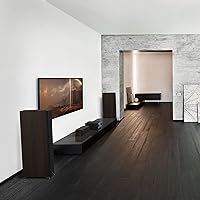
This Klipsch tower speaker is built for rooms that can match its ambitions. Medium to large spaces — dedicated home theaters, open-plan living areas — give it room to breathe and project properly; in a small bedroom it can overwhelm. Stereo listeners running a 2.0 or 2.1 setup will find this floorstander capable of credible bass extension without leaning heavily on a subwoofer for most music and movies. It also anchors a full Klipsch ecosystem naturally alongside matching center and surround channels. Its high sensitivity rating means a mid-tier AV receiver can drive it to satisfying volumes without straining, and anyone planning a future Dolby Atmos setup will appreciate not having to swap out main speakers down the road.

User Feedback

With a rating near the top of its category and around 59 reviews at time of writing, the early consensus on the RP-6000F II skews strongly positive — but treat that as directional rather than definitive given the sample size. Buyers repeatedly highlight dynamic punch and clarity as standouts, along with solid build quality and a clean unboxing experience, an important detail for 50-pound towers shipped long distances. Some buyers note a useful break-in period, and a few flag that smaller rooms can feel pressurized at higher volumes. Receiver pairing also comes up — underpowered gear can leave dynamics feeling compressed. Owners upgrading from the first-generation RP-6000F tend to call the improvements genuinely worthwhile.

Pros

  • Delivers genuinely room-filling dynamics that punch well above expectations for the price tier.
  • The enlarged Tractrix horn creates a wide listening sweet spot, not just a narrow center-seat advantage.
  • High sensitivity means a mid-range AV receiver can drive the RP-6000F II to satisfying volumes without strain.
  • Cerametallic woofers keep bass tight and controlled even at higher output levels.
  • Tractrix rear ports reduce the bass bloat and port noise common in budget floorstanders.
  • Built-in bi-amp terminals give system builders a genuine upgrade path without buying new speakers.
  • Hidden Dolby Atmos connections future-proof the setup for 3D audio without extra wiring.
  • Solid MDF cabinet construction and a clean ebony finish hold up well aesthetically in a living room.
  • Five-year manufacturer warranty offers meaningful long-term protection on a substantial investment.
  • Verified buyers upgrading from the original RP-6000F consistently report the second-generation improvements as worthwhile.

Cons

  • Requires a medium-to-large room to perform at its best; small spaces can sound overwhelmed.
  • Dolby Atmos capability is incomplete out of the box — the elevation module costs extra.
  • At 50 pounds per cabinet, unboxing and positioning solo is genuinely awkward.
  • Klipsch's forward, energetic sound signature is polarizing; it does not suit every listener's taste.
  • The current review sample size is relatively small, making long-term reliability patterns hard to assess.
  • Underpowered receivers will noticeably compress dynamics, negating a key strength of this floorstander.
  • No grille or accessory bundle included — just the bare speaker, which feels sparse at this price point.
  • Competing options from SVS and Polk at similar prices offer alternative sound signatures worth auditioning before deciding.

Ratings

The scores below for the Klipsch RP-6000F II Floorstanding Speaker were produced by our AI rating engine after parsing verified global buyer reviews, actively filtering out incentivized submissions, duplicate accounts, and bot-generated feedback. Each category reflects both the consistent praise and the honest frustrations real owners have reported — nothing has been softened or inflated.
Sound Dynamics
93%
This is where the RP-6000F II earns its reputation. Buyers consistently describe a visceral, wide-open soundstage that makes movie action sequences and live concert recordings feel genuinely immersive. The jump from quiet passages to loud ones is handled with a snap and authority that cheaper towers simply cannot match.
A small subset of listeners find the dynamic presentation almost too much — particularly with compressed modern pop or streaming audio at lower bitrates, where the forward character can expose the recording's limitations rather than flatter them.
High-Frequency Clarity
88%
The titanium tweeter and vented housing combination draws repeated praise for delivering crisp, detailed highs without the harshness that plagues some horn-loaded designs. Listeners report that extended sessions — multi-hour movie marathons or late-night music listening — rarely produce ear fatigue the way earlier Klipsch Reference models sometimes did.
At higher listening volumes in untreated rooms with lots of hard surfaces, the top end can tip into brightness for some listeners. Those sensitive to forward treble may want to experiment with room treatment or tone controls on their receiver before declaring the setup dialed in.
Bass Performance
84%
The Tractrix rear ports and cerametallic woofers work together to produce bass that is notably clean and controlled for a non-subwoofer setup. In medium to large rooms, this floorstander handles bass-heavy film soundtracks and acoustic music with genuine authority, reducing the urgency for a subwoofer on most everyday content.
Deep sub-bass extension below around 40 Hz starts to thin out noticeably — buyers who watch action films or listen to electronic music with heavy low-end expect will likely still want a dedicated subwoofer to fill that gap completely.
Build Quality
91%
Owners consistently comment on how substantial and well-assembled this tower feels out of the box. The MDF cabinet produces a satisfying knock with no hollow resonance, the binding posts feel robust, and the ebony finish holds up to real-world handling without peeling or scratching under normal use.
The finish is a vinyl wrap rather than real wood veneer, which some buyers find underwhelming at this investment level when compared to competitors that offer genuine wood options. It looks the part from across the room but less so on close inspection.
Soundstage Width
89%
The redesigned 90x90-degree Tractrix horn is the headline upgrade of the second generation, and buyers who A/B tested it against the original RP-6000F specifically call out the wider, more even sound dispersion as a tangible real-world improvement. Off-axis listening positions across a wide sofa are far more satisfying than on narrower-horn predecessors.
The wider dispersion is a double-edged sword in rooms with strong parallel reflective surfaces — side walls in particular can create comb filtering artifacts if the speakers are placed too close to them without absorption panels.
Amplifier Compatibility
86%
The high sensitivity rating makes the RP-6000F II a practical partner for a wide range of receivers, including mid-tier options that many buyers already own. Owners report satisfying loudness and punch from standard Denon and Yamaha receivers without pushing those components anywhere near their limits.
Buyers who pair this floorstander with budget entry-level receivers report noticeably compressed dynamics and a flat, unexciting presentation — the speaker essentially exposes the amplifier's ceiling. Getting the best from it does require a receiver with at least competent current delivery.
Value for Money
82%
18%
Within the context of the premium floorstanding segment, owners generally consider the RP-6000F II a solid return on investment, particularly given the five-year warranty and the genuine second-generation improvements over the original. The Dolby Atmos upgrade path adds a layer of long-term utility that competitors at similar prices do not always offer.
Buyers cross-shopping against SVS and Polk at comparable price points note that the competition offers genuinely different sound signatures and sometimes better included accessories. The value case is strong but not uncontested, and it depends heavily on whether the Klipsch sound signature is your preference.
Room Size Suitability
71%
29%
In medium to large living rooms, open-plan spaces, and proper home theater rooms, this floorstander is consistently described as a natural fit — it fills space without straining and produces a coherent, full-room presentation that smaller speakers cannot replicate.
Multiple buyers in smaller apartments or compact rooms explicitly warn that this speaker overwhelms the space at even moderate volumes. The physical footprint and acoustic output are simply not scaled for close-quarters listening, and the rating reflects how frequently this mismatch comes up in real-world feedback.
Dolby Atmos Readiness
67%
33%
The hidden rear-panel connection point for a Klipsch elevation module is a thoughtful future-proofing feature that lets buyers invest in a 3D audio upgrade later without replacing their main towers. Buyers who understand it as a planned upgrade path appreciate the built-in flexibility.
The Dolby Atmos framing in product marketing frustrates buyers who assume it means out-of-the-box Atmos capability — the required elevation module is a separate purchase entirely. Several one-star reviews trace directly to this expectation gap, pulling down the category score meaningfully.
Unboxing & Shipping
83%
For 50-pound tower speakers traveling through a standard shipping network, buyers report a generally positive unboxing experience with solid protective packaging. The presentation on arrival feels proportionate to the investment, and damage complaints are notably sparse given the product category.
A minority of buyers received units with cosmetic scuffs or minor cabinet edge damage on arrival, which is an inherent risk with heavy speakers shipped by standard carriers. Klipsch warranty coverage helps in those cases, but the inconvenience of a return or replacement for a 50-pound item is non-trivial.
Bi-Amp Usability
74%
26%
For buyers with separates or AV receivers that offer multi-channel amplification, the dual terminal pairs open up a genuine system upgrade path. Those who have taken advantage of bi-amping consistently report a cleaner midrange separation and a quieter noise floor.
Most standard AV receiver users never use the bi-amp terminals at all, and the lack of clear setup guidance in the documentation frustrates the buyers who want to try. The feature scores well in principle but poorly in accessibility for the average buyer.
Break-In Period
72%
28%
Buyers who allowed 20 to 40 hours of varied-content listening before critical evaluation consistently reported a smoother, more cohesive sound compared to first-listen impressions. The improvement in bass warmth after break-in is the most frequently cited positive shift.
New listeners unfamiliar with speaker break-in sometimes write early negative reviews based on out-of-box brightness, only to revise their opinion later. The break-in dependency is a real friction point that Klipsch could address more proactively in documentation.
Aesthetic Design
79%
21%
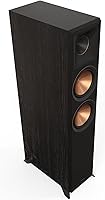
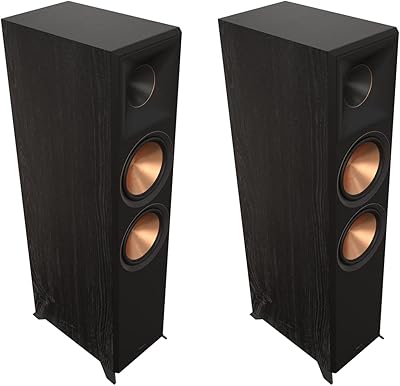
The clean lines, copper driver accents, and tall tower silhouette earn consistent compliments from buyers who want a speaker that looks intentional in a well-decorated living room or theater space. The ebony finish reads as premium in photos and in most real-room contexts.
The vinyl-wrapped finish does not age or wear as gracefully as genuine wood veneer, and the copper woofer cones — while visually distinctive — polarize some buyers who prefer a more understated aesthetic. It is a style choice, not a universal design win.
Warranty & Support
88%
A five-year manufacturer warranty is a meaningful differentiator in a category where two-year coverage is common. Buyers who have had to engage Klipsch support describe the process as responsive and straightforward, which matters a great deal when you are dealing with a 50-pound speaker.
Some buyers note that warranty claims involving shipping large tower speakers back to the manufacturer are logistically cumbersome and can involve coordination delays. The warranty is strong on paper but the practical execution of a claim on a large item takes real effort.

Suitable for:

The Klipsch RP-6000F II Floorstanding Speaker is built for listeners who take their audio seriously and have the room to back it up. Home theater enthusiasts building a dedicated viewing space will find it a natural anchor for a multi-channel Klipsch system, pairing cleanly with matching center and surround channels. Stereo music fans who want live-concert dynamics without stacking a rack full of equipment will also be well served — this floorstander delivers enough low-end authority for most recordings without demanding a subwoofer on every listening session. Its high sensitivity rating makes it practical for buyers running a mid-grade AV receiver, not just those with high-end separates. And if a Dolby Atmos upgrade is on your horizon, the hidden rear connection means you can add an elevation module later without swapping out the whole speaker.
Not suitable for:

Buyers working with smaller rooms should think carefully before committing to the Klipsch RP-6000F II Floorstanding Speaker — at nearly 40 inches tall and 50 pounds per cabinet, it physically dominates compact spaces and can sound pressurized at moderate volumes in tight quarters. Apartment dwellers or anyone sharing walls with neighbors may find the dynamics more liability than asset. This floorstander also expects a reasonably capable amplifier or receiver; underpowered gear will compress the very dynamics that make it worth buying. Listeners who prefer a warm, laid-back sound signature may find Klipsch's characteristically forward, high-efficiency presentation fatiguing over time. Budget-conscious shoppers should also know that meaningful Dolby Atmos functionality requires purchasing a separate elevation module — it is not included.
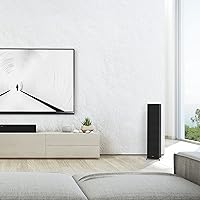
Specifications

  • Speaker Type: Floorstanding tower design intended for freestanding placement in living rooms or dedicated home theater spaces.
  • Woofers: Dual 6.5-inch cerametallic cone drivers combine ceramic stiffness with metallic rigidity for low-distortion bass and midrange reproduction.
  • Tweeter: A 1-inch titanium diaphragm linear travel suspension tweeter sits inside a vented housing to minimize distortion at high frequencies.
  • Horn Design: A 90x90-degree silicone composite hybrid Tractrix horn provides wide, consistent sound dispersion across both horizontal and vertical axes.
  • Power Handling: The cabinet is rated to handle up to 400 watts, giving it substantial headroom with high-output amplifiers and receivers.
  • Frequency Response: Rated frequency response extends from 20 Hz upward, covering the full audible range including deep bass without a dedicated subwoofer for most content.
  • Impedance: Nominal impedance is 8 ohms, making this floorstander compatible with virtually all standard home theater receivers and stereo amplifiers.
  • Signal-to-Noise: A signal-to-noise ratio of 60 dB reflects clean amplifier-to-speaker signal transfer under rated conditions.
  • Cabinet Material: The enclosure is constructed from MDF (medium-density fiberboard), a dense material that dampens internal resonance effectively.
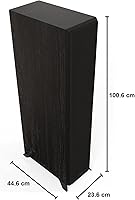
  • Dimensions: Each cabinet measures 17.57″ deep by 9.29″ wide by 39.6″ tall, making it a substantial floor presence in any room.
  • Weight: Each speaker unit weighs 50 lbs, requiring two people for safe unboxing and placement.
  • Connectivity: Dual bi-wire and bi-amp input terminals allow separate high- and low-frequency signal paths for improved clarity with compatible amplification.
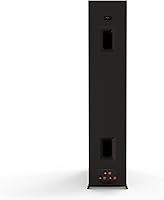
  • Dolby Atmos: Hidden rear-panel connections accept a separately purchased Klipsch elevation speaker module to enable Dolby Atmos height channels.
  • Finish: Available in an ebony finish that suits both modern and traditional room aesthetics.
  • Warranty: Covered by a 5-year manufacturer warranty, which is notably generous by floorstanding speaker industry standards.
  • Audio Driver Type: Dynamic driver technology is used across all driver elements, prioritizing efficiency and output over electrostatic or planar alternatives.
  • Port Design: Rear-facing Tractrix ports use a geometry-optimized flare to reduce turbulence and port noise during high-volume bass reproduction.
  • Surround Config: Configured as a single-channel unit; buyers typically purchase a matched pair for stereo or front left and right home theater channels.

Related Reviews

Klipsch RP-8000F II Floorstanding Speakers
82%
93%
Sound Quality
88%
Bass Performance
79%
Treble & Clarity
91%
Soundstage & Imaging
89%
Build Quality
More
Klipsch RP-600M II
Klipsch RP-600M II
80%
91%
Sound Quality
88%
Treble & High-Frequency Detail
83%
Bass Performance
94%
Sensitivity & Efficiency
79%
Midrange Clarity
More
Klipsch RP-502S II Surround Sound Speakers
81%
93%
Sound Immersion
96%
Tonal Matching with Klipsch Systems
91%
Build Quality & Cabinet Construction
88%
High-Frequency Clarity
74%
Mid-Bass Performance
More
Klipsch RP-500C II Center Channel Speaker
82%
94%
Dialogue Clarity
91%
Sound Dispersion
88%
Build Quality
86%
System Integration
83%
Ease of Setup
More
Klipsch RP-404C II Center Channel Speaker
83%
94%
Dialogue Clarity
91%
Build Quality
89%
Placement Versatility
74%
Value for Money
61%
Bass Performance
More
Klipsch RP-140D Speaker
86%
91%
Sound Quality
87%
Ease of Installation
90%
Design & Aesthetics
89%
Value for Money
85%
Build Quality
More
Klipsch RP-500M Bookshelf Speakers
89%
94%
Sound Quality
88%
Bass Performance
91%
Build Quality
93%
Ease of Setup
89%
Design & Aesthetics
More
Klipsch R-625FA Dolby Atmos Floorstanding Speaker
83%
93%
Sound Dynamics
74%
Dolby Atmos Height Effect
81%
Bass Performance
91%
Build Quality
86%
Ease of Setup
More
Klipsch RP-250C Center Channel Speaker
87%
92%
Sound Clarity
91%
Dialogue Performance
85%
Bass Quality
90%
Build Quality
88%
Compatibility with Klipsch Systems
More
Klipsch RB-61 II
Klipsch RB-61 II
81%
91%
Sound Clarity
94%
Sensitivity & Efficiency
72%
Bass Performance
86%
Sound Staging & Imaging
83%
Build Quality
More

FAQ

Yes, the listing covers a single cabinet. For stereo listening or front left and right home theater channels, you will need to purchase two units. Most buyers order a matched pair to ensure consistent tonal character across both sides.

Most likely, yes. The RP-6000F II has a high sensitivity rating, which means it produces strong output from relatively modest amplifier power. A mid-range receiver from Denon, Yamaha, Marantz, or Sony in the 75–100 watts per channel range should drive these cleanly. Where buyers run into trouble is with very budget entry-level receivers — those can feel underpowered and compress the dynamics.

No, the Dolby Atmos capability requires a separately purchased Klipsch elevation speaker module that attaches to the top of the cabinet. The Klipsch RP-6000F II Floorstanding Speaker has hidden connection points on the rear panel specifically designed for this add-on, but the module itself is not included in the box. Think of it as a future-proofing feature rather than an out-of-the-box Atmos solution.
Several buyers mention a noticeable improvement after 20 to 40 hours of varied-volume listening, particularly in bass response and overall smoothness. It is not mandatory, but playing music at moderate levels for the first week or so before critical listening sessions is a reasonable habit with any new driver-based speaker.

Technically yes, but they are genuinely overkill for a small space and can sound overly aggressive at even moderate volumes in tight rooms. These floorstanders are engineered to pressurize and fill medium-to-large spaces. If your room is under roughly 150 square feet, a quality bookshelf speaker on stands would almost certainly suit you better.

Bi-wiring means running separate speaker cables from your amplifier to the high-frequency and low-frequency terminals on the back of the speaker. In practice, most listeners in a typical home setup will hear little to no difference from standard single-wiring. Where bi-amping — using two separate amplifier channels per speaker — makes a more audible case is with high-end separates gear. If you are running a standard AV receiver, use the jumpers included and a single quality cable per speaker.

Owners who upgraded from the first generation consistently describe the II as a meaningful step forward rather than a minor refresh. The larger, redesigned Tractrix horn is the most cited improvement, producing a noticeably wider listening area. The updated cerametallic woofers are also credited with tighter, more controlled bass. If you already own the original and are debating a switch, the feedback suggests it is a genuine upgrade rather than a spec-sheet shuffle.

Klipsch uses reinforced packaging for the Reference Premiere line, and buyers generally report a positive unboxing experience. Damage during shipping is always a risk with 50-pound speaker cabinets, but complaints about this specific model appear to be the exception rather than a pattern. Inspect the outer box for damage upon delivery and document any issues immediately before signing off.

They genuinely do both well. Klipsch speakers are known for a forward, dynamic sound signature that works especially well for rock, jazz, and orchestral music where dynamics and immediacy matter. Some audiophiles who prefer a warmer, more relaxed presentation find the Klipsch house sound a bit bright, so it is worth auditioning if you can before committing. For home theater, the efficiency and dynamics are excellent across the board.

The ebony finish is a wood-grain vinyl wrap over the MDF cabinet, not real wood veneer — which is standard at this price tier across most competing brands as well. In person it reads as clean and upscale, particularly in lower-light home theater environments. Buyers generally describe the build quality as solid and appropriate for the investment.

Where to Buy