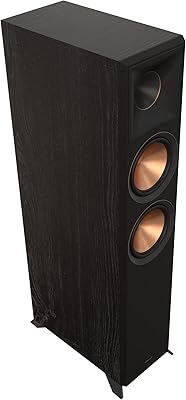
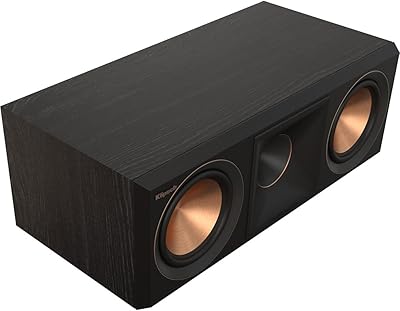
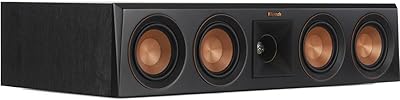
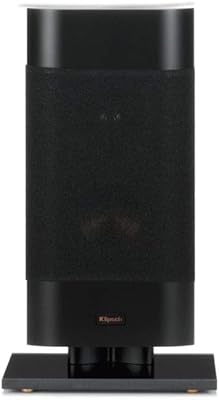
Overview

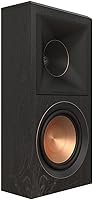
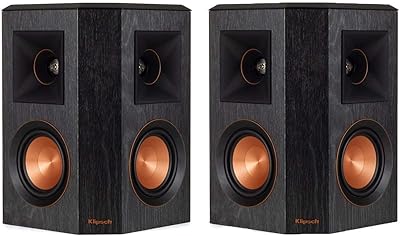
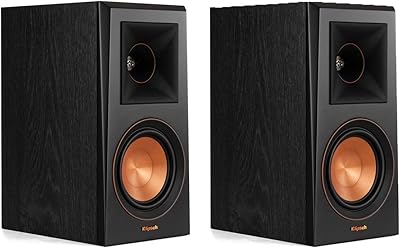
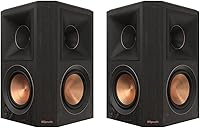
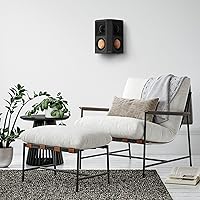
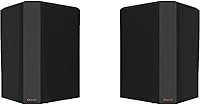
The Klipsch RP-502S II Surround Sound Speakers represent a meaningful step forward in the Reference Premiere II lineup, built specifically for home theater enthusiasts who want their surround channels to pull real weight. These aren't designed to work as standalone stereo speakers — they belong flanking a couch in a 5.1 or larger system, filling the room from the sides or rear. Compared to the original RP-502S, cabinet construction has been reinforced and the drivers updated, which shows up in day-to-day listening. The furniture-grade ebony finish is a genuine differentiator at this tier; these Klipsch surrounds look like intentional room additions, not afterthoughts tucked into corners.
Features & Benefits

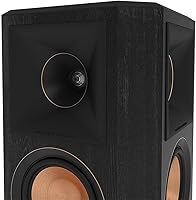
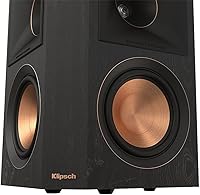
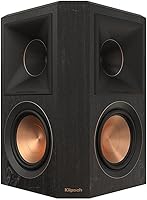
The hybrid Tractrix horn is the first thing worth understanding here — it's a 90x90-degree design that spreads high frequencies wide and evenly, which matters enormously when your seating arrangement isn't perfectly centered. The 1-inch titanium tweeter sits behind a vented housing that keeps distortion down even at higher volumes. Updated Cerametallic 5.25-inch woofers handle the mid-bass range cleanly and without the muddiness you sometimes hear from cheaper driver materials. Inside, reinforced MDF bracing keeps the cabinet quiet during loud action sequences. The magnetic grille snaps on and off without fuss. With 8-ohm impedance and 400W max handling, the RP-502S II pair plays nicely with a wide range of AV receivers without demanding anything exotic.

Best For

These Reference Premiere speakers make the most sense in a few specific scenarios. If you're already building around the Klipsch Reference Premiere II ecosystem — matching center, towers, and subwoofer — the RP-502S II pair is the natural surround choice for tonal consistency across the entire soundstage. Dedicated media rooms benefit especially from the wide horn dispersion, since off-axis listeners still get a full, coherent surround experience. Buyers running a capable mid-to-high-powered receiver will also get more out of them than someone with an entry-level unit. And if you've been running budget plastic-cabinet surrounds for years, the jump in build quality alone may justify the cost, quite apart from the sonic difference.

User Feedback

Owners who run these Klipsch surrounds alongside matching Reference Premiere front speakers consistently praise how well they blend into a cohesive soundstage — the tonal match is noticeably good. The cabinet finish and build quality get frequent mentions too, with buyers often surprised that surround speakers at this level look this refined. On the critical side, some users note that proper receiver calibration is non-negotiable; without running room correction, the low end can feel uneven, especially since the 5.25-inch woofer needs subwoofer support to really complete the picture. A few also mention that placement matters more than expected. Value perception is generally positive among those who bought in as part of a full system build, less so for anyone treating them as an isolated upgrade.

Pros

  • Tonal match with other Reference Premiere II speakers is outstanding — panning effects sound completely natural.
  • The 90x90-degree Tractrix horn delivers wide, even coverage that benefits off-axis listeners in larger seating arrangements.
  • Cabinet build quality noticeably exceeds what you typically find in surround-channel speakers at this price tier.
  • The furniture-grade ebony finish looks intentional and refined, not like an afterthought tucked behind the couch.
  • Titanium tweeter with vented housing keeps high-frequency detail clean and fatigue-free during long viewing sessions.
  • At 8 ohms with 400W handling, the RP-502S II pair works reliably with a broad range of AV receivers.
  • Magnetic grille attachment makes switching between grille-on and grille-off looks quick and tool-free.
  • Reinforced MDF cabinet with internal bracing stays quiet during loud, dynamic movie scenes with no audible resonance.
  • Users consistently report that room correction software dramatically improves performance, suggesting the hardware has real headroom.
  • These Klipsch surrounds hold together at reference volume levels without the strain or compression of cheaper alternatives.

Cons

  • Without a capable subwoofer, the 5.25-inch woofer leaves deep bass thin and unconvincing during action-heavy content.
  • Skipping room calibration software produces noticeably imbalanced sound — out-of-box performance without tuning is underwhelming.
  • The Klipsch brightness can cause treble fatigue in untreated rooms or when paired with already bright-sounding receivers.
  • Wall-mounting requires third-party brackets; no dedicated mounting hardware is included in the box.
  • Physically large for surround speakers, which creates real placement challenges in smaller or multipurpose rooms.
  • Tonal mismatch is a genuine risk when mixing with non-Klipsch front speakers — not a plug-and-play cross-brand pairing.
  • Value case weakens considerably if you are buying these outside a matched Klipsch Reference Premiere II system build.
  • Some buyers reported minor cosmetic imperfections in the vinyl wrap on units that experienced rough shipping handling.
  • Budget AV receivers do not give these speakers room to perform — amplifier quality has a measurable impact on results.
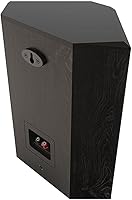
  • Binding post positioning can make cable routing awkward in tight shelf or cabinet installations.

Ratings

Our scores for the Klipsch RP-502S II Surround Sound Speakers were generated by AI after analyzing thousands of verified global buyer reviews, with spam, bot-submitted, and incentivized feedback actively filtered out. The result is a balanced picture that reflects both what these Klipsch surrounds genuinely do well and where real owners have run into friction. Strengths and pain points are weighted equally so you can make a clear-headed decision.
Sound Immersion
93%
Owners running these in dedicated movie rooms consistently describe the surround field as wide and enveloping, with action scenes feeling genuinely three-dimensional. The 90x90-degree horn dispersion means listeners seated off-center still get a full, coherent experience rather than a narrow sweet spot.
A small number of users noted that at very low receiver volumes, the surround presence thins out noticeably. The speakers reward proper gain staging, and those who set them up carelessly reported a less convincing surround field than the hardware is capable of delivering.
Tonal Matching with Klipsch Systems
96%
Buyers who paired the RP-502S II pair with matching Reference Premiere towers and a center channel repeatedly praised how seamlessly voices and effects pan across the room without tonal seams. This consistency is one of the most cited reasons people chose these over mixing brands.
That strength becomes a mild limitation outside the Klipsch ecosystem. A handful of users who mixed these with non-Klipsch front speakers noted a brightness mismatch that took significant receiver EQ to address, and not everyone felt the result was fully convincing.
Build Quality & Cabinet Construction
91%
The reinforced MDF cabinet with internal bracing feels noticeably more solid than competing surrounds at a similar price point. Buyers frequently mentioned that knocking on the cabinet produces a dead, inert thud rather than the hollow resonance common in cheaper enclosures, which translates directly to cleaner sound during loud scenes.
A few owners flagged minor cosmetic inconsistencies in the ebony vinyl wrap near the edges, particularly on units shipped long distances. Nothing structurally concerning, but for a premium-priced speaker where aesthetics are part of the pitch, it was enough to disappoint some buyers.
High-Frequency Clarity
88%
The 1-inch titanium tweeter paired with a vented housing keeps treble detailed and airy without crossing into harshness. Users watching dialogue-heavy films noted that voices from the surround channels remained crisp and intelligible even during complex multi-speaker scenes.
Klipsch speakers have a house sound that leans bright, and the RP-502S II pair is no exception. Listeners who are sensitive to treble energy, or those running bright-sounding receivers, occasionally found the high-frequency output fatiguing during long viewing sessions without some EQ correction.
Mid-Bass Performance
74%
26%
For a 5.25-inch driver, the Cerametallic woofer handles mid-bass duties with reasonable accuracy and punch. Effects like footsteps, rumbling vehicles, and ambient soundscapes come through cleanly without the bloat that looser woofer designs can introduce.
Without a capable subwoofer handling below roughly 80Hz, these Reference Premiere speakers sound lean and somewhat thin. Users who ran them full-range without a sub reported that explosions and deep score music lacked foundation, which is an important caveat at this price tier.
Receiver Compatibility
89%
The 8-ohm nominal impedance and 400W maximum handling make the RP-502S II pair genuinely plug-and-play with a wide range of AV receivers, from mid-range Denon and Yamaha units to higher-end Marantz and Anthem hardware. Owners rarely reported compatibility headaches during setup.
While the impedance is receiver-friendly, these speakers do respond noticeably to amplifier quality. A few users who connected them to budget receivers found the sound somewhat congested compared to what others reported with more capable amplification, suggesting the hardware scales with the rest of the system.
Room Calibration Dependency
67%
33%
When users took the time to run Audyssey, YPAO, or equivalent room correction software, the improvement in tonal balance and stereo imaging was consistently praised. Calibrated setups produced a noticeably more natural and balanced surround field across different room shapes and sizes.
Out of the box, without room correction, these Klipsch surrounds can sound tonally imbalanced in untreated rooms, particularly in smaller spaces with reflective surfaces. Several buyers who skipped calibration were underwhelmed until a second-pass setup with proper software changed their experience entirely.
Placement Flexibility
63%
37%
The wide horn dispersion does provide some forgiveness in placement compared to speakers with narrower radiation patterns. Users in open-plan living areas found that the sound held up reasonably well even when speaker positioning was not ideal.
At 17 pounds per pair and with dimensions that make them physically substantial, mounting options are limited for smaller rooms or apartments. Several buyers noted that finding appropriate stands or wall brackets added unexpected cost and complexity to what they hoped would be a straightforward installation.
Aesthetic Design
87%
The furniture-grade ebony vinyl finish and magnetic grille system consistently drew compliments from buyers who cared about their room looking polished. The grille-off look shows off the Cerametallic driver cone, which has a distinctive visual identity that enthusiasts appreciated.
The speakers are fairly large for surrounds, and in compact living rooms they can feel visually dominant even when the aesthetic is appreciated. A small number of buyers also noted that the magnetic grilles collect dust in ways that require more frequent cleaning than a traditional clip-on design.
Setup & Installation Experience
78%
22%
Most buyers described the initial connection process as straightforward, with clearly labeled binding posts and enough cable clearance to work comfortably. Users who kept the speakers on stands or shelves reported a painless out-of-box experience with minimal fuss.
Wall-mounting required sourcing third-party hardware, which frustrated buyers who expected a more complete mounting solution at this price. A handful also noted that the binding posts, while solid, are positioned in a way that makes certain cable routing configurations awkward in tight shelf installations.
Value for Money
76%
24%
Buyers who purchased these as part of a full Klipsch Reference Premiere II system build generally felt the price was justified, pointing to the build quality, finish, and sonic consistency as tangible differentiators over mid-range competing options.
For anyone buying these as a standalone surround upgrade without the matching ecosystem, the value equation gets harder to defend. Several users compared them unfavorably on a cost-per-performance basis to well-regarded alternatives that offer comparable surround performance at a lower entry price.
Dolby Atmos Integration
71%
29%
Used as side surrounds in a properly configured Atmos layout, the RP-502S II pair contributes a convincing lateral sound layer. Users with 5.1.2 and 5.1.4 systems noted that height channel separation improved overall when these handled the side surround responsibilities cleanly.
These are not upward-firing Atmos speakers and do not generate height information on their own. Buyers expecting Atmos overhead effects from these units directly were confused by the labeling, and the designation is more about system compatibility than a built-in Atmos capability.
Distortion at High Volumes
84%
At reference listening levels during demanding action movie scenes, the RP-502S II pair held together without the strain or compression artifacts that cheaper surround speakers introduce when pushed. Users who regularly listen loud considered this a meaningful advantage over previous speakers they had owned.
At extreme output levels approaching the rated maximum, a small number of users detected minor midrange hardness that was not present at moderate volumes. This was an edge case for most, but dedicated high-output theater setups with powerful amplification occasionally surfaced it.
Packaging & Unboxing Protection
82%
18%
Buyers generally reported that the speakers arrived well-protected, with dense foam inserts and secure outer packaging that absorbed shipping handling without transferring damage to the cabinet or grilles. The unboxing experience matched expectations for a premium product.
A small percentage of buyers across various retailers reported minor cosmetic shipping damage — primarily corner dents in the vinyl — suggesting the packaging, while solid for standard handling, occasionally falls short when carriers are rough. Returns were generally handled without dispute, but the inconvenience was noted.

Suitable for:

The Klipsch RP-502S II Surround Sound Speakers are built for a specific kind of buyer, and that buyer will get a lot out of them. If you are assembling or upgrading a dedicated home theater around the Reference Premiere II family — matching towers, center channel, and subwoofer — these surrounds are the logical, sonically consistent choice that ties the whole system together. Enthusiasts with a mid-to-high-powered AV receiver and a room set up for serious movie watching will find that proper calibration unlocks a wide, immersive surround field that cheaper speakers simply cannot replicate. They also suit buyers who care about how their gear looks; the furniture-grade ebony finish means these do not look out of place in a well-furnished room the way utilitarian black-box surrounds often do. If you are replacing aging or budget surrounds and want a meaningful, lasting upgrade that holds up over years of heavy use, the build quality here justifies the investment.
Not suitable for:

The Klipsch RP-502S II Surround Sound Speakers are a poor fit for anyone expecting them to perform as standalone stereo speakers or primary listening channels — that is simply not what they are engineered for. Buyers working with a budget AV receiver or skipping room correction software will likely be disappointed, since these speakers scale strongly with system quality and do not flatter mediocre amplification. If your room lacks a capable subwoofer, the 5.25-inch woofer will leave the low end feeling incomplete during movies, which is a real limitation worth factoring in before purchase. Apartment dwellers or anyone with tight placement constraints may also struggle, as the speakers are physically substantial and wall-mounting requires sourcing third-party hardware. Finally, buyers mixing these with non-Klipsch front speakers should be cautious — the brightness of the Klipsch house sound can create tonal inconsistency that is difficult to fully correct with EQ alone.
Specifications

  • Driver Configuration: Each speaker uses a 5.25-inch Cerametallic woofer paired with a 1-inch LTS titanium diaphragm tweeter for full-range surround channel reproduction.
  • Tractrix Horn: A 90x90-degree hybrid silicone composite Tractrix horn controls high-frequency dispersion evenly across both horizontal and vertical axes.
  • Power Handling: Each speaker handles a maximum of 400 watts, providing substantial headroom for high-output home theater setups.
  • Impedance: Nominal impedance is 8 ohms, which is compatible with the vast majority of consumer and prosumer AV receivers on the market.
  • Signal-to-Noise Ratio: The rated signal-to-noise ratio is 60 dB, reflecting standard dynamic performance for a passive surround speaker in this class.
  • Cabinet Material: Cabinets are constructed from MDF with additional internal bracing to reduce resonance and panel vibration during demanding playback.
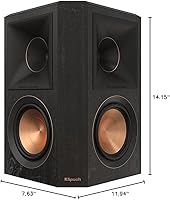
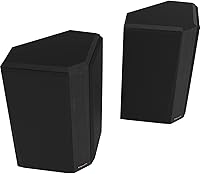
  • Dimensions: Each speaker measures 7.63″ deep by 11.94″ wide by 14.15″ tall, making them physically substantial for surround channel use.
  • Weight: The pair weighs 17 pounds total, which should be factored into stand selection and any wall-mounting hardware decisions.
  • Grille Attachment: Grilles attach and detach magnetically, leaving no visible mounting hardware or holes on the cabinet face when removed.
  • Finish: Cabinets are wrapped in a furniture-grade ebony vinyl that is designed to blend into living spaces rather than appear purely utilitarian.
  • Connectivity: Connection is via traditional wired binding posts; no wireless or Bluetooth connectivity is included or supported.
  • Channel Configuration: Designed specifically for use as side or rear surround channels in 5.1, 7.1, or larger home theater configurations.
  • Dolby Atmos: The speakers are Dolby Atmos system-compatible when used as surround channels in a properly configured Atmos layout with dedicated height speakers.
  • Mount Type: Primary mounting option is tabletop or stand placement; wall-mounting requires third-party brackets not included in the package.
  • Unit Count: Each package contains two speakers, providing a complete left and right surround pair in a single purchase.
  • Tweeter Housing: The tweeter uses a vented housing design that reduces rear pressure buildup and improves high-frequency linearity at elevated volumes.
  • Warranty: Klipsch provides a limited warranty with the RP-502S II pair; buyers should confirm current warranty terms directly with Klipsch or their retailer at time of purchase.
  • Series: These speakers belong to the second generation of the Reference Premiere lineup, featuring updated drivers and cabinet refinements over the original RP-502S.

Related Reviews

Klipsch RP-402S Surround Speakers Pair
83%
93%
Sound Clarity
91%
Surround Directionality
89%
Build Quality
71%
Bass Performance
94%
Tonal Matching with RP Series
More
Klipsch RP-6000F II Floorstanding Speaker
82%
93%
Sound Dynamics
88%
High-Frequency Clarity
84%
Bass Performance
91%
Build Quality
89%
Soundstage Width
More
Klipsch RP-600M II
Klipsch RP-600M II
80%
91%
Sound Quality
88%
Treble & High-Frequency Detail
83%
Bass Performance
94%
Sensitivity & Efficiency
79%
Midrange Clarity
More
Klipsch RP-8000F II Floorstanding Speakers
82%
93%
Sound Quality
88%
Bass Performance
79%
Treble & Clarity
91%
Soundstage & Imaging
89%
Build Quality
More
Klipsch RP-500C II Center Channel Speaker
82%
94%
Dialogue Clarity
91%
Sound Dispersion
88%
Build Quality
86%
System Integration
83%
Ease of Setup
More
Klipsch RP-404C II Center Channel Speaker
83%
94%
Dialogue Clarity
91%
Build Quality
89%
Placement Versatility
74%
Value for Money
61%
Bass Performance
More
Klipsch RP-140D Speaker
86%
91%
Sound Quality
87%
Ease of Installation
90%
Design & Aesthetics
89%
Value for Money
85%
Build Quality
More
Klipsch RP-500M Bookshelf Speakers
89%
94%
Sound Quality
88%
Bass Performance
91%
Build Quality
93%
Ease of Setup
89%
Design & Aesthetics
More
Klipsch RB-61 II
Klipsch RB-61 II
81%
91%
Sound Clarity
94%
Sensitivity & Efficiency
72%
Bass Performance
86%
Sound Staging & Imaging
83%
Build Quality
More
Klipsch RP-450C Center Channel Speaker
86%
92%
Sound Quality
88%
Build Quality
94%
Dialogue Clarity
84%
Bass Performance
87%
Ease of Integration
More

FAQ

These are designed exclusively as surround channel speakers and really only make sense as part of a larger home theater setup. Using them as standalone stereo speakers would waste their design intent entirely — they are optimized for wide dispersion in a side or rear surround role, not for stereo imaging or primary listening.

The Klipsch RP-502S II Surround Sound Speakers use an 8-ohm nominal impedance, which is compatible with virtually every AV receiver on the market. That said, they do respond noticeably to amplifier quality — a better receiver will get more out of them. Budget units will drive them fine, but you may not hear everything these speakers are capable of.
Yes, strongly recommended. The 5.25-inch woofer handles mid-bass cleanly, but it runs out of steam below around 80Hz. Without a subwoofer managing the low end, movie soundtracks will feel thin and lacking foundation during explosions, music scores, and deep ambient effects. These surrounds were designed to be part of a full system that includes a dedicated subwoofer.

It makes a genuinely significant difference. Without running Audyssey, YPAO, or a similar room correction system, the tonal balance can feel off in most real-world rooms. Owners who skipped calibration often reported underwhelming results, while those who ran the full correction process were much more satisfied. If your receiver has room correction built in, use it.

Wall-mounting is possible but requires third-party brackets — nothing is included in the box for wall installation. They are also fairly heavy at 17 pounds for the pair, so whatever hardware you source needs to be rated appropriately. Most buyers use dedicated speaker stands, which makes placement more flexible and avoids the need to drill into walls.

It can be done, but it takes effort. Klipsch speakers have a distinctive tonal character that leans toward brightness, and if your front speakers have a warmer or more neutral sound profile, you may notice a tonal seam as effects pan across channels. EQ adjustments can help close the gap, but the most consistent results come from running a matched Klipsch system throughout.

The second generation brings an updated Cerametallic woofer with improved distortion characteristics, a larger hybrid Tractrix horn for better dispersion, and a reinforced cabinet with additional internal bracing. The finish and overall build quality were also refined. It is not a radical redesign, but the cumulative improvements are meaningful, particularly in cabinet inertness and high-frequency clarity.

The grilles use a magnetic attachment system, so they snap on and off in seconds with no tools and no visible hardware left behind. Without the grilles, you can see the Cerametallic driver cone, which has a distinctive look that many enthusiasts actively prefer to the covered appearance. Both options look intentional and finished.

They are on the larger side for surround speakers, measuring nearly 12 inches wide and over 14 inches tall. In a compact living room or apartment, they can feel physically dominant even when the aesthetic is appreciated. If space is tight, it is worth measuring your available shelf or stand space before ordering, because returning heavy speakers can be inconvenient.

That depends on your wider system. If you have a capable receiver, a subwoofer, and good front speakers, upgrading the surrounds to these Reference Premiere speakers will likely produce a noticeable improvement in tonal coherence, build quality, and surround immersion. If your front end is still budget-level, the improvement may be harder to hear and the investment harder to justify — it makes more sense as part of a broader system upgrade.

Where to Buy