Overview

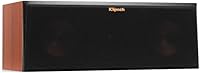
The Klipsch RP-250C Center Channel Speaker sits firmly in the mid-to-upper range of dedicated home theater components, representing Klipsch's Reference Premiere line at its most practical. Its job is singular and critical: anchor dialogue in a 5.1 or 7.1 surround setup so that every line of speech lands clearly, regardless of where listeners sit in the room. The cherry finish variant adds a warm, wood-forward look that suits rooms with natural materials and darker furniture. Klipsch has long built its reputation on high-efficiency horn-loaded design, and this speaker carries that tradition forward — though buyers should know upfront this is a purpose-built theater component, not a versatile stereo speaker.
Features & Benefits

The most noticeable engineering choice here is the 90x90 Hybrid Tractrix Horn, which pushes sound across a wide horizontal and vertical arc. That wide dispersion means anyone sitting off to the side of the screen still catches clean, undistorted audio — a real advantage in rooms with multiple seating positions. The 1-inch titanium tweeter uses a Linear Travel Suspension design, which helps it track cleanly even at higher volumes without the harshness that plagues cheaper tweeters. Two 5.25-inch spun copper Cerametallic woofers handle midrange frequencies where most dialogue lives. The Tractrix port design keeps bass extension respectable without introducing the chuffing noise common in ported cabinets. At 8 ohms and 250W max handling, most mid-grade AV receivers will drive it without strain.

Best For

The RP-250C is built specifically for people who are serious about home theater performance — particularly those already investing in or upgrading to the Reference Premiere ecosystem. Matching it with RP-series floor or bookshelf speakers produces a coherent, well-blended soundstage that mixed systems rarely achieve. Dialogue-heavy content is where this center channel speaker earns its place most convincingly: TV dramas, dense action films, and streaming shows where character voices often compete with effects tracks. Rooms with wider seating arrangements benefit most from the horn's broad dispersion pattern. One practical caveat: at 18.5 inches wide and over 21 pounds, it needs a sturdy media console — slim furniture may simply not cut it.

User Feedback

Owners consistently highlight vocal clarity as the standout trait — many describe watching films for the first time and finally catching dialogue they had missed for years. The cherry finish also draws frequent compliments; it feels distinctly premium next to speaker options that arrive in generic black vinyl. On the critical side, a recurring complaint involves placement: the cabinet's depth and width catch buyers off guard, and several report it simply does not fit on their existing media consoles. Some also note that the dual 5.25-inch woofers, while clear, do not produce the low-end weight of larger competing centers. Still, those running a matched Klipsch system almost universally report that tonal consistency across the front stage makes the size trade-off worth it.

Pros

  • Dialogue intelligibility is outstanding — character voices cut through dense film soundtracks with unusual precision.
  • The 90x90-degree Tractrix Horn dramatically widens the sweet spot, benefiting rooms with multiple seating positions.
  • The titanium tweeter handles high frequencies cleanly at elevated volumes without introducing harshness or listening fatigue.
  • Dual spun copper Cerametallic woofers deliver punchy, clear midrange that makes on-screen vocals feel present and grounded.
  • Cherry wood cabinet finish looks genuinely premium next to most competing center channels in this price tier.
  • At 8 ohms with high sensitivity, the RP-250C pairs well with a wide range of mid-tier AV receivers.
  • The Tractrix port design minimizes audible chuffing noise common in budget ported cabinets at higher output levels.
  • Tonal consistency with other RP-series speakers is a major advantage for anyone building or completing a matched system.
  • Build quality feels solid and substantial — nothing about it suggests rattling, resonance, or wear over extended use.
  • The MDF cabinet with brushed polymer veneer baffle strikes a practical balance between resonance control and visual appeal.

Cons

  • Cabinet dimensions — 18.5 inches wide and 7.28 inches deep — make placement on slim or shallow media furniture genuinely difficult.
  • At over 21 pounds, it requires sturdy, weight-rated furniture that many existing media consoles simply cannot provide.
  • The dual 5.25-inch woofers, while clear, cannot match the low-end authority of larger competing center channel designs.
  • Tonal mismatch is a real risk when paired with non-Klipsch or differently voiced surround speakers.
  • RCA wired connectivity only — no wireless options for buyers trying to manage cable clutter in modern media setups.
  • The cherry finish, while attractive, limits visual compatibility with all-black or minimalist home theater aesthetics.
  • Priced above budget and mid-range alternatives, it demands a capable supporting system to justify the investment fully.
  • Sensitivity to source quality means a weak AV receiver will noticeably hold back what this center channel speaker can do.
  • The limited manufacturer warranty may feel thin for a component at this price point relative to some competitors.
  • No mounting hardware or bracket options included — wall-mount or vertical installations require sourcing separate compatible solutions.

Ratings

These scores were generated by our AI after analyzing thousands of verified global owner reviews for the Klipsch RP-250C Center Channel Speaker, with automated filters actively removing spam, bot-generated content, and incentivized feedback before any scoring was applied. The result reflects a genuine worldwide consensus — capturing the specific strengths that make this center channel a recurring recommendation in serious home theater communities, alongside the honest trade-offs and real-world frustrations that a meaningful portion of owners encountered.

Dialogue Clarity
94%
The single most celebrated trait across owner reviews is how cleanly voices cut through complex film soundtracks. In dense action sequences or quiet TV dramas, character dialogue stays locked, present, and easy to follow — a noticeable step up for anyone upgrading from a budget center channel.
A small number of listeners report that seating positions well above or below the horn's axis — such as reclined seats directly beneath the screen — can make voices sound marginally thinner. This is a geometric characteristic of horn-loaded designs, largely resolved by positioning the speaker at ear level.
Build Quality
91%
Owners regularly describe the physical construction as the first thing that impresses them out of the box: the MDF cabinet feels dense and solid, the cherry veneer shows no cheap seams, and the grille attaches with satisfying precision. At this price tier, build quality is consistently cited as meeting or exceeding expectations.
A handful of buyers report minor cosmetic inconsistencies on the veneer finish — occasional grain variation or slight edge imperfections — though these appear to be isolated cases rather than a systemic manufacturing issue. For a premium-priced component, even small finishing flaws carry outsized frustration.
System Compatibility
86%
Owners pairing the RP-250C with RP-series floor or bookshelf speakers consistently praise how naturally the front stage blends together. The shared driver materials and horn geometry mean the transition from center to left and right mains is smooth and coherent, which is notably harder to achieve in mixed-brand setups.
Buyers mixing this center channel with speakers from other brands report varying degrees of tonal mismatch, particularly a brightness difference that requires careful receiver EQ work to address. Those committed to a non-Klipsch ecosystem should compare and audition before assuming tonal compatibility will be transparent.
Value for Money
78%
22%
Buyers who build a matched Klipsch surround system consistently report that the jump in dialogue quality alone justifies the outlay. The build quality and acoustic performance comfortably outperform most competing center channels at a similar price, making it a sound long-term investment for committed home theater builders.
For casual TV viewers or buyers who primarily stream at moderate volumes, the cost relative to more modest alternatives is a recurring sticking point. It demands a capable AV receiver and quality surrounding speakers to fully realize its potential — buyers lacking both may find the price hard to justify.
Cabinet Aesthetics
88%
The cherry wood veneer finish stands out in a category dominated by generic black vinyl wraps, and owners who prioritize visual integration frequently mention it as a deciding factor in their purchase. The brushed polymer baffle adds a purposeful contrast that looks deliberate rather than budget-driven.
Cherry is a warm, reddish-brown tone that works beautifully with wood-paneled rooms and darker furniture but can clash with modern all-black or minimalist media setups. Buyers who cannot preview the finish in person occasionally report that product photos did not fully convey how prominently the wood color reads in their specific room.
High-Frequency Detail
89%
The 1-inch titanium tweeter earns consistent praise for rendering high-frequency detail without the edge that cheaper metal dome units can introduce. Consonants in speech stay clear and defined, and film scores with prominent strings or cymbals come through with texture and air rather than brightness or harshness.
Some listeners in rooms with hard reflective surfaces report the titanium tweeter can tip into sharpness at high listening levels. Pairing the RP-250C with a receiver that offers per-channel EQ largely resolves this, but buyers in acoustically untreated rooms should factor this into their setup expectations.
Sound Dispersion
87%
The 90x90-degree Tractrix Horn distributes sound across a wide arc, which owners in rooms with broad seating arrangements particularly appreciate. Listeners seated several feet off-center from the main viewing axis consistently report that dialogue and treble detail hold up well without requiring repositioning.
In smaller rooms where seating sits close to reflective side walls, the broad dispersion can introduce early reflections that add a slight smearing effect at higher volumes. A few owners in compact home theaters note that basic acoustic treatment panels helped resolve this noticeably.
Sensitivity & Efficiency
92%
Klipsch's horn-loaded design delivers a speaker that reaches convincing listening volumes with modest receiver power — a genuine advantage for buyers not pairing it with high-wattage amplification. Owners using mid-range receivers in the 50–100W range report more than adequate output without the receiver working noticeably hard.
High sensitivity also means the speaker resolves receiver noise floors and upstream quality issues more readily than less efficient alternatives. Owners with entry-level receivers occasionally notice a faint idle hiss that better amplification would suppress — this is an amplifier limitation, but it surfaces more audibly here than with lower-sensitivity speakers.
Driver Performance
87%
The spun copper Cerametallic cone woofers produce a midrange that owners consistently describe as punchy and well-defined — male and female vocals alike carry a presence that cheaper paper-cone drivers struggle to replicate. The material composition also resists flex and distortion at elevated output levels.
With only 5.25-inch woofers, the driver array lacks the physical surface area of larger competing center channels, which becomes relevant in big rooms or at reference listening levels. Owners pushing the speaker near its limits in large spaces report a sense of compression that smaller, well-matched rooms do not expose.
Bass Performance
67%
33%
For a center channel, the Tractrix port extracts more low-end extension than the woofer size alone would suggest. At typical home theater crossover points around 80Hz, it hands off to a subwoofer cleanly, and owners report the bass it does produce is tight and defined rather than loose or one-note.
Owners comparing this directly against center channels with larger driver arrays find the low-end authority noticeably thinner on demanding content like orchestral film scores or deep male vocal tracks. In rooms where subwoofer placement is less than ideal, the gap in lower-midrange body becomes more apparent.
Placement Flexibility
52%
48%
Owners with deep, weight-rated media consoles or dedicated AV furniture consistently report no placement difficulties, and the speaker's horizontal footprint distributes its weight in a stable way once properly positioned. Those who measure their console before ordering have no complaints about the setup process.
At 18.5 inches wide and 7.28 inches deep, the cabinet catches many buyers off guard on arrival — particularly those with slim or shallow TV units. This is the single most frequently cited practical frustration across owner reviews, and several report having to purchase new furniture before the speaker could even be used.
Setup & Integration
83%
Most owners describe the initial integration as uncomplicated: connect via standard speaker wire, run the AV receiver's auto-calibration routine, and the system handles crossover, level-matching, and distance compensation automatically. The 8-ohm impedance removes any compatibility concerns with standard home theater receivers.
Buyers new to home theater occasionally feel uncertain navigating crossover frequency settings and center channel level trimming on their AV receivers. While the speaker itself is forgiving, getting the best from it requires some willingness to engage with receiver settings beyond the factory defaults.
Longevity & Durability
84%
Owners with multiple years of use report no degradation in driver performance, cabinet integrity, or finish quality — the MDF construction and Cerametallic cones are materials chosen for long-term sonic stability. The consensus among longer-term users is that the speaker remains consistent well beyond the initial break-in period.
The limited manufacturer warranty provides less coverage assurance than a few competing brands offer at this price tier, which creates mild unease for some buyers. Cabinet veneer edges are the most commonly flagged vulnerability in long-term use, particularly in rooms with notable humidity fluctuation across seasons.
Packaging & Unboxing
76%
24%
The speaker arrives secured by dense foam inserts that prevent movement during transit, and most owners report receiving the unit in flawless condition. The unboxing experience feels appropriately considered for the price, with the cherry finish typically drawing positive reactions from buyers seeing it in person for the first time.
A small number of buyers report packaging that showed signs of rough transit handling, with minor cosmetic marks on veneer corners upon arrival. A few critical reviews also cite slow or inconsistent warranty claim responses for shipping damage, which slightly colors the overall unboxing and ownership experience.

Suitable for:

The Klipsch RP-250C Center Channel Speaker is purpose-built for home theater enthusiasts who want dialogue to sit front and center — literally. It performs best as part of a matched Reference Premiere system, where pairing it with RP-series floor or bookshelf speakers produces a cohesive, tonally consistent front stage that mixed-brand setups rarely achieve. Owners with medium to large living rooms benefit most from the horn's wide 90x90-degree dispersion, which keeps sound convincing for listeners seated well off-axis. If your household watches a lot of dialogue-intensive content — crime dramas, fast-paced action films, subtitled foreign cinema, or anything where character voices compete with a dense effects track — this center channel speaker will make a noticeable and immediate difference. AV receivers in the 50–150W per channel range drive it comfortably, making it a natural fit for serious but non-exotic home theater builds.
Not suitable for:

Buyers on a tight budget or those building a casual secondary TV setup should look elsewhere, because the Klipsch RP-250C Center Channel Speaker is a premium component whose value only fully materializes when surrounded by a capable AV receiver and quality matching speakers. At 18.5 inches wide and just over 21 pounds, it is also a physically demanding piece: if your media console is shallow, narrow, or not rated for significant weight, you will face a real placement problem before the first movie ever plays. It is not a fit for anyone wanting a simple stereo upgrade or a speaker that doubles as a wireless device — this is a wired, single-channel center dedicated entirely to surround sound configurations. Those mixing it with non-Klipsch speakers may encounter tonal inconsistencies across the soundstage, particularly with brands that voice their drivers differently. And if your room is small or already set up for nearfield listening, the broad horn dispersion may deliver more spread than the space can handle cleanly.

Specifications

  • Tweeter Type: The tweeter is a 1-inch titanium dome unit using a Linear Travel Suspension system to reduce distortion across high-frequency ranges.
  • Woofer Config: Two 5.25-inch spun copper Cerametallic cone woofers handle midrange and upper bass reproduction, including the critical vocal frequency range.
  • Horn Design: A 90x90 Hybrid Tractrix Horn controls sound dispersion both horizontally and vertically, producing a wide and even listening area.
  • Port Design: The rear-mounted Tractrix port is engineered to minimize airflow turbulence and audible chuffing noise at higher output levels.
  • Cabinet Material: The cabinet is constructed from medium-density fiberboard (MDF) for structural rigidity and reduced acoustic resonance during playback.
  • Baffle Finish: The front baffle features a brushed polymer veneer surface that reduces surface-level resonance while complementing the cabinet aesthetics.
  • Cabinet Finish: The exterior is finished in a cherry wood veneer, suited to warmer, wood-forward home theater environments.
  • Impedance: Nominal impedance is rated at 8 ohms, making it compatible with virtually all standard home theater AV receivers.
  • Power Handling: Maximum power handling is rated at 250 watts, accommodating high-output home theater amplification without risk of driver damage.
  • Connectivity: Audio input is via wired RCA connection only; no Bluetooth, Wi-Fi, or other wireless connectivity is included.
  • Dimensions: The cabinet measures 7.28″ deep by 18.5″ wide by 18.5″ tall, requiring a sturdy and sufficiently deep media console.
  • Weight: The speaker weighs 21.1 pounds and requires weight-rated placement furniture or a dedicated center channel speaker stand.
  • Surround Config: This is a single-channel (1.0) center channel speaker designed exclusively for 5.1 or 7.1 surround sound systems.
  • Driver Type: All drivers are dynamic moving-coil type, consistent with Klipsch's traditional high-efficiency speaker engineering approach.
  • Compatible Use: Designed for home theater and television applications; not intended for standalone stereo use or portable audio environments.
  • Warranty: Covered by a limited manufacturer warranty from Klipsch; exact terms and duration should be confirmed with the retailer at purchase.

Related Reviews
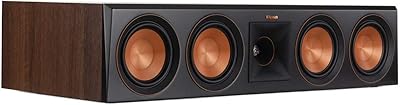
Klipsch RP-450C Center Channel Speaker
84%
96%
Dialogue Clarity
93%
Build Quality
91%
Tonal Matching
88%
Soundstage & Imaging
89%
Dynamic Range
More
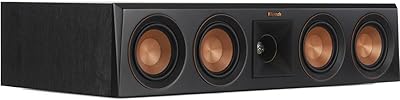
Klipsch RP-504C Center Channel Speaker
81%
96%
Dialogue Clarity
93%
Build Quality
91%
Driver Performance
89%
Soundstage Integration
87%
High-Frequency Dispersion
More
Klipsch RP-500C II Center Channel Speaker
82%
94%
Dialogue Clarity
91%
Sound Dispersion
88%
Build Quality
86%
System Integration
83%
Ease of Setup
More
Klipsch RP-404C II Center Channel Speaker
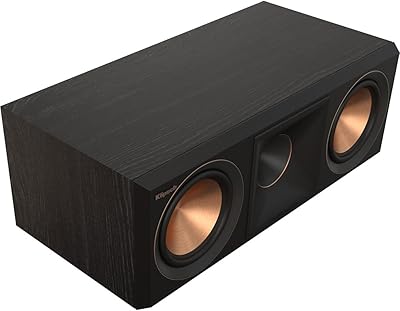
83%
94%
Dialogue Clarity
91%
Build Quality
89%
Placement Versatility
74%
Value for Money
61%
Bass Performance
More
Klipsch R-52C Center Channel Speaker
80%
93%
Dialogue Clarity
88%
Sound Dispersion
89%
Build Quality
84%
Value for Money
81%
Receiver Compatibility
More
Klipsch R-34C Center Channel Speaker
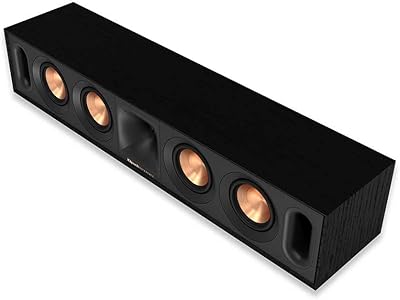
82%
93%
Dialogue Clarity
81%
Tweeter Performance
88%
Build Quality
84%
Value for Money
76%
Speaker Matching
More
Klipsch R-30C Center Channel Speaker
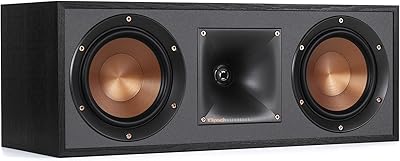
79%
93%
Dialogue Clarity
88%
Soundstage Dispersion
74%
Tonal Balance
81%
Build Quality
91%
Efficiency & Receiver Compatibility
More
Klipsch R-50C Center Channel Speaker
83%
93%
Dialogue Clarity
88%
Soundstage Width
91%
Build Quality
84%
High-Frequency Performance
89%
Midrange Accuracy
More
Klipsch Reference R-25C Center Channel Speaker
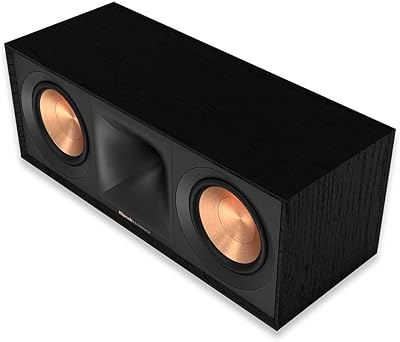
87%
93%
Audio Performance
89%
Bass Response
91%
Clarity of Dialogue
85%
Build Quality
88%
Ease of Integration
More
KEF T101 Satellite and Center Channel Speakers
80%
88%
Sound Clarity
91%
Build Quality
94%
Design & Aesthetics
89%
Dialogue Intelligibility
62%
Value for Money
More

FAQ

Technically yes, but the tonal consistency is where you may notice a gap. The Reference Premiere line is voiced with a particular brightness and efficiency that many competing brands do not share. For casual listeners the blend will likely be acceptable, but serious home theater builders usually recommend staying within the same speaker family for a coherent front stage.

You do not need a high-powered receiver. The RP-250C is a high-sensitivity speaker, so even receivers in the 50–80 watts per channel range can push it to satisfying volumes. Mainstream mid-tier receivers from brands like Denon, Yamaha, or Marantz pair with it cleanly without any risk of clipping or underpowering.

That depends on your specific furniture, and it is worth measuring carefully before you order. At 18.5 inches wide and 7.28 inches deep, this center channel is a sizeable piece. Slim, shallow media consoles — especially flat-pack styles — often do not provide enough depth or weight capacity for it. Confirm your console's depth and load rating before committing.

It is a genuine cherry wood veneer, which is a big part of why it looks and feels more substantial than competitors finished in plain black vinyl or laminate. The front baffle is a separate brushed polymer piece, which actually serves an acoustic purpose by reducing surface resonance as well as looking clean.

The Klipsch RP-250C Center Channel Speaker is a dedicated 1.0 center channel designed for a single audio channel in a surround configuration. You could route a signal through it, but it will not give you the spatial experience that a proper pair of bookshelf or floor-standing speakers delivers. For stereo listening, a matched pair from the same Reference Premiere line would serve you far better.

Yes, for a full home theater experience. The dual 5.25-inch woofers do an excellent job with voices and midrange, but deep bass — explosions, music scores, LFE tracks — is not what this speaker was built for. Your AV receiver will handle the crossover automatically, typically routing everything below 80Hz to a dedicated subwoofer.

Most owners describe it as a meaningful upgrade, not a subtle one. Many report catching lines in familiar films they had never heard clearly before. The combination of the Tractrix Horn's focused dispersion and the titanium tweeter keeps voices sharp and locked on screen even during loud, effects-heavy scenes where cheaper center channels tend to smear dialogue.

Setup is genuinely straightforward. You run a standard speaker wire from your AV receiver's center channel output to the speaker terminals on the back, then run your receiver's built-in auto-calibration routine — most modern receivers from major brands include this. The 8-ohm impedance means no unusual wiring or amplifier considerations are needed.

The RP-250C occupies the mid-tier of Klipsch's Reference Premiere center channel range. Larger options in the lineup use bigger woofer configurations that move more air and extend bass lower. For most medium-sized rooms at moderate listening levels, this center channel covers everything a home theater actually needs from a center speaker, but if your space is large or you listen at high volumes regularly, it is worth comparing it against the larger models before deciding.

Klipsch's limited warranty covers defects in materials and workmanship under normal use conditions. Duration and specific coverage terms can vary by region and point of purchase, so it is worth asking your retailer directly or checking Klipsch's official support documentation at the time of purchase. Keeping your proof of purchase is essential — most warranty claims require it.