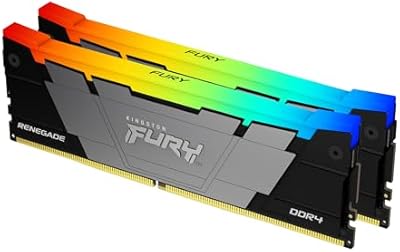
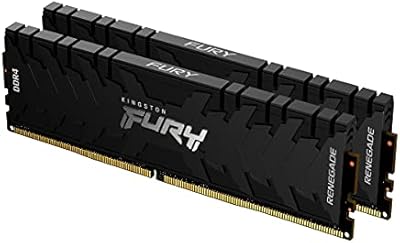
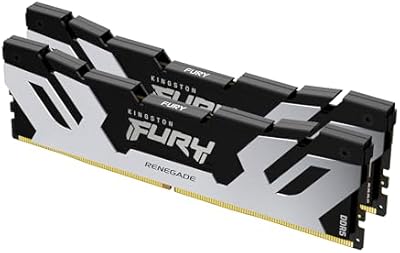
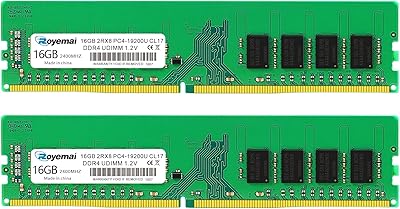
Overview

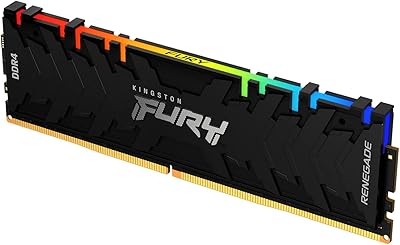
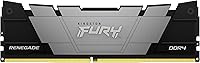
The Kingston Fury Renegade 32GB DDR4 RAM Kit sits at the top of what DDR4 can offer for desktop enthusiasts — a 2x16GB dual-channel configuration running at 4000MT/s, launched in late 2023 when DDR5 was already gaining traction. That timing matters. Choosing this high-speed DDR4 kit today is a deliberate trade-off: you get the absolute ceiling of a mature, well-supported platform rather than the early-adopter headaches of DDR5. The dual-channel setup genuinely helps with memory-intensive workloads — video editing, heavy multitasking, gaming at high framerates. If your CPU and GPU are already strong, memory bandwidth can be a real bottleneck, and this kit is built to remove it.
Features & Benefits

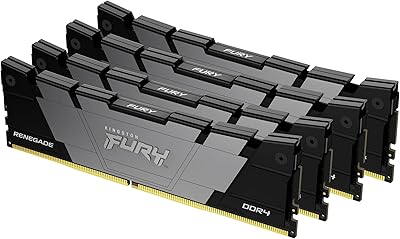
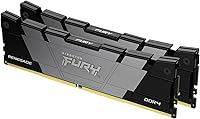
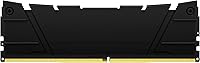
At 4000MT/s with CL19 latency, this high-speed DDR4 kit pushes throughput to the practical ceiling of the DDR4 spec. CL19 is not an especially tight timing at this speed, but that is the trade-off at 4000MHz territory — raw bandwidth tends to matter more than ultra-tight numbers here. Intel users benefit from a straightforward XMP profile: one BIOS toggle and the kit runs at rated speed without manual intervention. AMD Ryzen buyers should double-check their motherboard's profile support, since XMP is Intel's native standard and compatibility is not always guaranteed. The 1Gx8 die layout helps with signal integrity and overclocking stability, while the 1.35V operating voltage keeps power draw modest. The two-tone black aluminum heat spreader looks sharp in dark builds and aids passive cooling.

Best For

The Fury Renegade 32GB set makes the most sense for builders running Intel Z-series platforms — Z690, Z790, and similar chipsets where XMP plays to its full strengths. It also suits AMD X570 or B550 rigs, provided you verify memory compatibility with your specific board beforehand. The core audience is someone who has already invested in a strong CPU and GPU and wants to ensure memory is not the weak link holding everything back. Content creators juggling large project files, and gamers chasing consistent high-framerate performance, will find 32GB at this speed a meaningful step up over standard 3200MHz kits. If your platform still runs DDR4 and DDR5 is not yet justified, this speed tier is a sensible high-water mark.

User Feedback

With a 4.4-star average across around 60 ratings, sentiment is cautiously positive — though the sample size is modest enough that you should not over-index on individual outliers. The most consistent praise centers on XMP setup reliability: buyers report the kit clocking in at advertised speeds right out of the gate on compatible Intel boards, with no stability issues during extended use. Build quality draws approving comments too — the heat spreader feels solid and looks premium in person. On the flip side, a handful of users ran into AMD compatibility hiccups on certain boards, and a few raise a fair question about whether high-end DDR4 at this price still makes sense compared to entry-level DDR5 options. Both concerns are worth weighing seriously.

Pros

  • Hits its rated 4000MT/s on compatible Intel boards with XMP enabled — no manual tuning required.
  • The 2x16GB dual-channel configuration provides real bandwidth headroom for both gaming and creative workloads.
  • 1Gx8 die density improves signal integrity and adds stability headroom at the top end of DDR4 speeds.
  • At 1.35V, this high-speed DDR4 kit draws less power than older high-frequency modules, helping manage system thermals.
  • The aluminum heat spreader does meaningful passive cooling work and looks sharp inside dark-themed builds.
  • Kingston's track record for reliability gives long-term confidence that most generic or lesser-known brands simply cannot match.
  • 32GB total capacity handles heavy multitasking, large game caches, and professional applications without running short.
  • Rated speed and timings hold consistently stable during extended use, based on early buyer reports.
  • Compact stick height of under 1.69 inches preserves clearance for most tower-style CPU coolers.
  • Launching in late 2023 means the Fury Renegade 32GB set was tuned for compatibility with current-gen Intel and AMD chipsets from day one.

Cons

  • Priced at the premium end of DDR4, making it genuinely difficult to justify against entry-level DDR5 alternatives.
  • Only around 60 buyer ratings exist — too small a sample to draw firm conclusions about long-term reliability.
  • AMD compatibility is listed but not certified via EXPO; Ryzen users must verify board support independently before buying.
  • CL19 latency is not especially tight for this speed tier, so the kit trades timing precision for raw throughput.
  • DDR4 is a maturing standard — a top-shelf kit purchased today may have no place in your next platform upgrade.
  • No RGB lighting option at all, which may be a dealbreaker for builders investing in a visually curated showcase rig.
  • Not every Z-series motherboard will reach 4000MT/s stably out of the box; some may still need BIOS refinement.
  • Real-world gaming frame rate gains over well-tuned 3600MHz DDR4 are modest for the majority of titles.
  • The two-DIMM kit format offers no upgrade path — you cannot simply add more sticks to increase capacity later.
  • As industry investment shifts toward DDR5, long-term firmware updates and compatibility support for high-end DDR4 kits may gradually decline.

Ratings

The scores below were generated by AI after systematically analyzing verified buyer reviews for the Kingston Fury Renegade 32GB DDR4 RAM Kit from global sources, with spam, bot-generated submissions, and incentivized feedback actively filtered out. Each category reflects both the consistent praise and the recurring frustrations that real users report, giving you a transparent, balanced picture of exactly where this high-speed DDR4 kit earns its reputation — and where it has room to improve.
XMP Setup Experience
91%
Intel users consistently praise how quick the XMP activation process is — enable the profile in BIOS, save, reboot, and the kit locks in at 4000MT/s without touching a single timing manually. For builders who dread deep BIOS configuration, this reliability is a genuine selling point that saves real time and frustration.
The frictionless XMP experience is largely limited to Intel Z-series boards; on AMD Ryzen systems the profile loading is less predictable and some users have needed to manually enter timings to achieve rated speeds. Buyers expecting identical plug-and-play simplicity across all platforms may be caught off guard.
Speed Performance
88%
At 4000MT/s, the Fury Renegade 32GB set sits at the practical ceiling of what DDR4 can deliver, and bandwidth-hungry tasks like gaming at high frame rates and 4K video editing genuinely feel the difference compared to mainstream 3200MHz kits. The throughput gains are most tangible when the CPU is strong enough not to create a separate bottleneck.
The performance delta over a well-tuned 3600MHz CL16 kit is measurable in benchmarks but can feel incremental in everyday gaming workloads where the GPU remains the dominant constraint. Users expecting a dramatic transformation from mid-range DDR4 speeds may find the real-world uplift underwhelming relative to the price premium.
Stability & Reliability
86%
Buyers running this Kingston DDR4 memory kit on compatible Intel boards report stable 24/7 operation at rated speeds, with no memory errors or unexpected crashes even during extended stress testing and gaming marathons. The 1Gx8 die configuration is widely credited for the clean signal behavior under sustained load.
A recurring cluster of reports points to instability on certain AMD motherboards when running near rated frequency without manual timing adjustments, and these cases appear board-specific rather than kit-wide. They add a layer of uncertainty for Ryzen users who want zero-hassle stability straight from installation.
Value for Money
63%
37%
For a builder committed to a DDR4 platform who wants to push memory bandwidth as far as the standard allows, this kit represents the top of what is achievable without exotic specialist modules, and the lifetime warranty adds tangible long-term value that cheaper alternatives simply cannot match.
The price sits firmly at the premium end of DDR4, and the value equation is genuinely difficult when entry-level DDR5 kits are now available at comparable or lower prices on newer Intel platforms. Buyers who are not already platform-locked to DDR4 will find this a hard purchase to justify purely on performance grounds.
AMD Compatibility
67%
33%
Kingston lists the kit as AMD Ryzen Ready, and a meaningful portion of AMD users achieve stable operation at or near rated speeds on well-supported X570 and B550 boards with recent BIOS updates that handle XMP-to-EXPO translation reasonably well. Those who land on a compatible board report a satisfying outcome.
XMP is natively Intel's standard, and AMD compatibility depends heavily on how well a given motherboard interprets the profile — behavior that varies widely across board manufacturers and BIOS revisions. Some Ryzen users have reported defaulting to lower speeds or requiring manual intervention, making this a less reliable proposition than on Intel.
Build Quality
89%
The two-tone black aluminum heat spreader feels genuinely premium — solid without being excessive — and installation is smooth with no flex or contact resistance in properly maintained DIMM slots. Buyers frequently note that the sticks look and feel more expensive than competing kits at the same price tier.
The heat spreader design offers no RGB illumination whatsoever, which frustrates builders who have invested in a coordinated lighting theme across their components. At this price point, the absence of even a basic lighting zone feels like a deliberate omission that some buyers specifically wish Kingston had reconsidered.
Thermal Management
84%
Operating at 1.35V keeps heat generation modest for a 4000MT/s DDR4 module, and the aluminum spreader provides enough passive dissipation that the sticks stay comfortably warm rather than hot during extended memory stress tests. No active cooling is needed under normal enthusiast desktop workloads.
Users pushing this kit beyond its rated speeds in manual overclock territory may find thermal headroom tighter than expected, and the passive-only spreader design offers no path to additional cooling beyond improving general case airflow. In poorly ventilated builds, sustained temperatures could edge toward the upper comfort zone.
Overclocking Headroom
77%
23%
The 1Gx8 die density gives experienced overclockers a useful starting advantage — signal integrity at this configuration supports tighter secondary timings without sacrificing stability, and some users report modest CL tightening with careful voltage and timing work beyond the rated XMP profile.
Starting at 4000MT/s already leaves relatively little frequency headroom to push further without meaningful voltage increases and board-dependent behavior. The CL19 primary timing is also difficult to tighten aggressively without trading raw frequency for latency in ways that can negate the original performance gains.
Latency Performance
72%
28%
In throughput terms, the 4000MT/s and CL19 combination delivers strong memory bandwidth numbers that benefit rendering pipelines, simulation workloads, and game streaming scenarios where sustained data movement matters more than raw access delay. For these use cases, results clearly outperform what mid-tier DDR4 achieves.
CL19 is not a tight primary timing by enthusiast standards, and buyers prioritizing raw memory access latency — particularly competitive gamers targeting minimal delays — may prefer a lower-frequency kit with CL14 or CL16 timings, which can deliver better absolute latency even if total bandwidth is technically lower.
Dual-Channel Efficiency
93%
The matched 2x16GB configuration is engineered for dual-channel operation from the start, and users report that installing the sticks in the correct slots immediately unlocks the full bandwidth advantage without any additional configuration. Both benchmark results and real-world multitasking reflect the expected dual-channel gains over single-stick setups.
The two-DIMM kit format offers no practical path to adding a third or fourth stick without risking instability or XMP incompatibility. Users who planned to scale up to 64GB by purchasing a second kit later often find that mixing kits compromises the stable dual-channel behavior the original pair delivered.
Aesthetic Design
82%
18%
The two-tone black finish is clean and understated, integrating naturally into dark or all-black builds without clashing against other components. Many buyers specifically cite the restrained, premium appearance as a factor in choosing this Fury Renegade 32GB set over more aggressively styled competitors.
Without any RGB, the kit looks visually plain inside heavily lit builds where neighboring components illuminate the interior. The design offers zero customization — no lighting zones, no swappable shrouds — so buyers seeking visual flexibility need to consider competing DDR4 options that include lighting at comparable speed ratings.
Intel Platform Fit
92%
On Intel Z690 and Z790 motherboards specifically, compatibility is broad and well-documented across major board manufacturers, with XMP profiles loading reliably and the full 4000MT/s speed accessible to most users within minutes of first boot. The experience on these platforms is consistently positive across the buyer pool.
Compatibility narrows on older Intel platforms — Z490 and earlier boards may not support 4000MT/s without significant BIOS effort, and budget Intel H-series or B-series boards that lack XMP support entirely leave the kit running well below its potential with no straightforward path to improvement.
Packaging
78%
22%
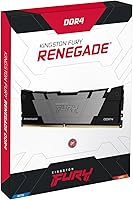
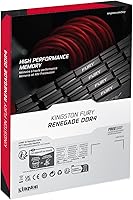
The kit arrives in Kingston's durable clamshell packaging that protects both sticks securely during shipping, and the unboxing experience feels appropriate for the price — nothing rattles or sits loose, and the matched pair is clearly labeled so there is no guesswork during installation.
Beyond adequate protection and clear labeling, the packaging adds nothing notable — no detailed installation guide, no accessory pouch, and no QR code linking to setup resources or XMP activation instructions. For buyers new to BIOS configuration, a more informative insert would be a welcome and low-cost addition.
Long-term Durability
83%
Kingston's Fury Renegade line has an established track record for holding stable speeds over extended use, and the brand's engineering reputation in the memory market gives buyers reasonable confidence that these sticks will remain consistent long after other components in the same build have been swapped out.
The review pool for this specific kit is still relatively small at around 60 ratings, which limits long-term durability data compared to kits that have been available for several years. Buyers seeking strong statistical certainty about multi-year failure rates will find the current evidence base too limited for firm conclusions.
Warranty & Support
87%
Kingston backs the Fury Renegade series with a lifetime warranty, one of the most comprehensive guarantees available on consumer RAM, giving buyers lasting confidence that a defective stick will be replaced without a time-limited claims window creating pressure. The RMA process is generally regarded as responsive by the enthusiast community.
The lifetime warranty covers manufacturing defects under normal operating conditions, but damage from overvolting, improper installation, or compatibility failures on unsupported boards may fall outside its terms. Users who push the kit beyond rated specifications without careful documentation may encounter difficulty making a successful warranty claim.

Suitable for:

The Kingston Fury Renegade 32GB DDR4 RAM Kit is purpose-built for enthusiast desktop builders who want to extract the most from a DDR4 platform before making the eventual jump to DDR5. It makes the most sense on high-end Intel Z690 or Z790 boards, where certified XMP profiles let the kit run at its full 4000MT/s speed with nothing more than a single BIOS toggle. AMD users on X570 or B550 platforms can also get strong results, provided they verify their specific motherboard supports the speed rating before committing. Gamers and content creators who have already invested in a capable CPU and GPU — and want to rule out memory as the remaining bottleneck — will find this high-speed DDR4 kit a meaningful step up over mainstream 3200MHz or 3600MHz alternatives. The 32GB total capacity also gives creative professionals genuine breathing room when running memory-hungry applications like video editors, 3D renderers, or large virtual machines simultaneously.
Not suitable for:

If you are starting a new build from scratch and have not yet locked into a platform, the Kingston Fury Renegade 32GB DDR4 RAM Kit deserves careful consideration rather than an automatic purchase. DDR5 is now mainstream across Intel 12th Gen and newer chipsets, and spending a premium on top-tier DDR4 when your next motherboard might not even support it is a real strategic risk. Budget-oriented buyers will also struggle to justify the cost — capable 32GB DDR4 kits at 3600MHz deliver very similar day-to-day performance for far less money in most typical workloads. This is strictly a desktop DDR4 DIMM, so laptop users, mini-ITX SFF builders using SO-DIMM slots, and anyone on the AMD AM5 platform should look elsewhere entirely. Finally, buyers who expect zero setup friction on AMD Ryzen systems should be cautious — XMP is Intel-native, and achieving rated speeds on certain Ryzen boards may require manual BIOS adjustments that not everyone wants to deal with.
Specifications

  • Form Factor: Standard unbuffered DIMM format designed for full-size desktop motherboards with DDR4 memory slots.
  • Kit Configuration: Ships as a matched pair of two 16GB sticks, optimized for installation in dual-channel mode.
  • Total Capacity: 32GB of DDR4 SDRAM total across both sticks in the kit.
  • Transfer Speed: Rated at 4000MT/s (4000MHz), representing the upper range of what DDR4 SDRAM can reliably sustain.
  • CAS Latency: CL19 primary latency, a typical trade-off for achieving stable operation at this frequency tier.
  • Operating Voltage: Runs at 1.35V, which is moderately lower than many older high-frequency DDR4 modules and helps limit heat output.
  • Die Density: Uses a 1Gx8 die configuration per module, which contributes to improved signal integrity and overclocking stability.
  • XMP Support: Carries Intel XMP certification, enabling automatic speed configuration on compatible Z-series motherboards via a single BIOS toggle.
  • AMD Compatibility: Listed as AMD Ryzen Ready, though XMP-to-EXPO support varies by motherboard and should be verified against the board's memory compatibility list.
  • Heat Spreader: Covered by a two-tone black aluminum heat spreader that assists with passive thermal dissipation and suits dark-themed builds aesthetically.
  • Stick Dimensions: Each module measures 5.25 x 0.32 x 1.69 inches, placing it on the shorter end of the DDR4 DIMM height range.
  • Kit Weight: The full two-stick kit weighs approximately 3.22 ounces combined.
  • Memory Type: DDR4 SDRAM — not compatible with DDR3 or DDR5 slots, which use physically different connector configurations.
  • Model Number: Official Kingston part number is KF440C19RB12K2/32, which uniquely identifies this specific speed, latency, and capacity variant.
  • Brand Series: Part of Kingston's FURY Renegade lineup, which targets the performance enthusiast segment of the desktop memory market.
  • Release Date: First made available in October 2023, positioning it for compatibility with current-generation Intel and AMD desktop platforms.
  • Warranty: Backed by Kingston's lifetime warranty, covering manufacturing defects under normal operating conditions.

Related Reviews

Kingston FURY Renegade RGB 32GB DDR4 RAM
82%
93%
Stability & Reliability
84%
Speed Performance
91%
XMP Setup Ease
78%
Single-Stick Flexibility
82%
RGB Lighting Quality
More
Kingston Fury Renegade 64GB DDR4 Desktop Memory
81%
88%
Raw Performance
62%
Value for Money
74%
Compatibility
91%
Ease of Setup
89%
Stability & Reliability
More
Kingston FURY Renegade RGB 32GB DDR5 Kit
78%
91%
XMP Setup Experience
88%
Stability & Reliability
86%
Real-World Performance
83%
RGB Lighting Quality
81%
RGB Sync Reliability
More
Kingston Fury Renegade 16GB DDR4 RAM Kit
79%
91%
Performance at Rated Speed
62%
Value for Money
88%
Ease of Setup
74%
Platform Compatibility
92%
Stability & Reliability
More
Kingston FURY Renegade RGB 64GB (2x32GB) 3200MT/s DDR4 Memory Kit
84%
88%
Performance
93%
Ease of Installation
75%
RGB Customization
81%
Heat Dissipation
89%
Build Quality
More
Kingston FURY Renegade Silver 32GB DDR5 Memory
81%
91%
Raw Performance
88%
XMP Compatibility
86%
Build Quality
83%
Thermal Management
89%
Aesthetic Design
More
D DUOMEIQI DDR4 32GB 2400MHz RAM Kit
85%
92%
System Performance Boost
90%
Ease of Installation
88%
Reliability
85%
Compatibility with Systems
91%
Price vs Performance
More
Gigastone Game Turbo 32GB DDR4 RAM
80%
88%
Value for Money
91%
Installation Ease
86%
XMP Performance
83%
Gaming Performance
84%
RGB Lighting Quality
More
D DUOMEIQI 32GB Kit DDR4 3200MHz Desktop RAM
87%
91%
Performance for Gaming
88%
Ease of Installation
85%
System Compatibility
92%
Value for Money
87%
Multitasking & Productivity Performance
More
NEMIX RAM 32GB DDR4-2666 ECC SODIMM Kit
81%
91%
NAS Compatibility
93%
ECC Reliability
88%
Installation Ease
78%
Value for Money
89%
Warranty & Support
More

FAQ

The Kingston Fury Renegade 32GB DDR4 RAM Kit ships with a certified Intel XMP profile, so on a compatible Z-series motherboard you just enable XMP in your BIOS — usually a single toggle — and both sticks lock in at 4000MT/s. Without enabling XMP, the kit will default to the JEDEC standard speed of 2133MHz, which is well below rated performance. It takes about 30 seconds to set up correctly.
It can, but it is not as guaranteed as on Intel boards. XMP is technically Intel's native standard, and on Ryzen platforms whether the kit runs at 4000MT/s depends significantly on your specific motherboard model. Some AMD boards handle XMP profiles without issue; others may require manual timing entry to hit rated speeds. Always cross-reference your motherboard's memory QVL before purchasing.

The most noticeable gains show up in bandwidth-sensitive workloads: video editing, 3D rendering, and games that are heavily CPU-bound at high frame rates. For general browsing, office work, or games that are primarily GPU-limited, the difference is far less dramatic. If your CPU and GPU are already strong and memory is the remaining bottleneck, upgrading from 3200MHz to this speed tier will make a measurable difference — otherwise the gains are real but modest.

At 4000MHz, CL19 is actually a normal and expected timing. Higher frequencies require looser primary latencies to remain electrically stable — it is a fundamental constraint of DDR4 at this speed tier, not a sign of a lower-quality product. The raw throughput advantage of running at 4000MT/s generally outweighs the marginal latency difference compared to, say, a 3600MHz CL16 kit.

If your current motherboard uses DDR4, upgrading to a fast DDR4 kit is a perfectly rational decision — you get real performance headroom without the cost of replacing your entire platform. If you are planning a brand-new build from scratch, it is worth knowing that DDR5 is now the default on Intel 12th Gen Alder Lake and newer boards, so investing heavily in high-end DDR4 could limit your upgrade options down the road. The honest answer depends on where you are in your build cycle.

Running two sticks in dual-channel mode gives your CPU two simultaneous memory pathways, effectively doubling available bandwidth compared to a single-channel setup. At 4000MT/s this bandwidth advantage is tangible, particularly in gaming and creative workloads. A lone 32GB stick would technically function, but you would lose the dual-channel benefit and take a noticeable throughput hit.

Each stick stands 1.69 inches tall, which is on the shorter side for high-performance DDR4 — most standard tower coolers clear that height easily. The main edge case to watch for is wide low-profile coolers that overhang the DIMM slots on certain motherboard layouts. If your cooler is particularly bulky, it is worth measuring the clearance above your first and second DIMM slots before ordering.

In theory you can add a second matched kit to fill four DIMM slots, but mixing RAM kits — even from the same product line and speed rating — introduces stability risks. The safest approach is to buy the full 64GB kit upfront if that is your target capacity. Adding a second kit later may prevent XMP from operating correctly, or may cause the system to default to lower speeds to maintain stability.

Kingston covers the Fury Renegade series with a lifetime warranty against manufacturing defects under normal operating conditions. That is one of the most generous guarantees in the RAM market and reflects Kingston's long-standing confidence in this product line. Keep your purchase receipt in case you ever need to initiate a claim.

For gaming, 32GB is well beyond what current titles require — most games peak around 16GB under heavy load, so this Fury Renegade 32GB set gives you meaningful headroom for background applications and future-proofing. For content creation it depends on your specific workflow: 4K video editing, large Photoshop composites, and moderate 3D scenes are all comfortable at 32GB. If you regularly work with 6K or higher footage, complex multi-layer compositing, or large simulation caches, 64GB becomes worthwhile.

Where to Buy