Overview

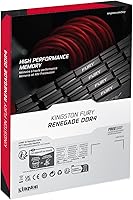
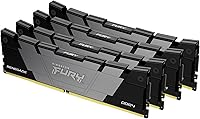
The Kingston Fury Renegade 64GB DDR4 Desktop Memory arrives as a kit of four 16GB modules, making it a serious option for enthusiast builders who need bulk capacity alongside respectable clock speeds. Running at 3600MT/s with CL16 timings, it hits a sweet spot where bandwidth and latency work together rather than one sacrificing the other. Both Intel XMP and AMD Ryzen platforms are supported, which keeps your options open at build time. That said, the premium price puts this 64GB DDR4 kit firmly in prosumer or workstation territory — casual gamers will likely find 32GB a more sensible starting point.
Features & Benefits

What separates a well-designed memory kit from a spec-sheet numbers game is how those specs translate in daily use. The Fury Renegade quad-pack runs at 1.35V, which is conservative for this performance class and helps keep thermals in check during extended workloads. Enabling the XMP profile in BIOS takes about ten seconds — no manual subtiming adjustments needed. The aluminum heat spreader is low-profile enough to clear most large tower coolers, which matters in dense builds. On HEDT platforms like Intel X-series or Threadripper, all four modules running in quad-channel mode deliver noticeably higher memory bandwidth than a two-stick setup ever could.

Best For

This Kingston memory set makes the most sense for a specific type of builder: someone running Premiere Pro, DaVinci Resolve, or Blender where RAM is not just idle headroom but actively cycling large data sets through the processor. Video editors juggling 4K or 8K timelines, 3D artists working with high-polygon scenes, and professionals on multi-core HEDT platforms will feel the difference that 64GB provides. It also suits future-proof gaming rigs where the builder expects their system to serve them for five or more years. For standard gaming on a Z790 or X670 board, though, this much RAM is hard to justify today.

User Feedback

With 61 ratings and a 4.4-star average, the sample size is modest but consistent in its themes. Buyers who left positive notes frequently mention how quickly the kit was running at rated speeds and how it held those speeds rock-solid through months of use. A few comments highlight the low-profile clearance as a practical bonus under wide air coolers. The main point of friction in mixed or negative reviews is value: the price-per-GB step up from a 32GB kit is significant, and a handful of users on budget B-series boards hit compatibility snags. Rival comparisons to Corsair or G.Skill kits are sparse at this review count.

Pros

  • Rated 3600MHz with CL16 timings strikes a practical balance between speed and latency for gaming and productivity workloads.
  • XMP profile reaches rated speed with a single BIOS toggle — no manual subtiming or voltage adjustments required.
  • Operating at 1.35V keeps power consumption reasonable for a kit at this performance tier.
  • Works across both Intel XMP and AMD Ryzen platforms, giving builders flexibility regardless of CPU choice.
  • Low-profile heat spreader design clears most large tower CPU coolers without any clearance headaches.
  • Four-module setup fully exploits quad-channel bandwidth on HEDT platforms for measurably higher memory throughput.
  • Kingston backs the kit with a lifetime warranty, which matters for workstations expected to run for years.
  • User reviews consistently report stable clocks straight out of the box, with very few instability complaints.
  • 64GB of total capacity gives content creators and professionals real headroom for demanding, memory-intensive workloads.

Cons

  • Price-per-GB is significantly higher than comparable 32GB DDR4 kits, making it hard to justify for most desktop users.
  • 64GB is overkill for gaming on current titles; few games show any benefit beyond 32GB of system RAM.
  • Quad-channel bandwidth is only available on HEDT platforms — standard Z or B-series boards still run four sticks in dual-channel.
  • A handful of users report XMP activation hiccups on certain budget B-series motherboards, requiring manual workarounds.
  • With only 61 reviews at time of writing, the long-term reliability picture is not yet fully established.
  • Filling all four DIMM slots leaves no path for future memory upgrades without fully replacing the existing kit.
  • DDR4 is a maturing platform; heavy investment here may be harder to rationalize as DDR5 becomes more affordable.
  • No RGB lighting option in this colorway, which may disappoint builders with illuminated or themed system aesthetics.

Ratings

Our AI scoring engine analyzed verified purchase reviews for the Kingston Fury Renegade 64GB DDR4 Desktop Memory from buyers across multiple global markets, actively filtering out suspected bot submissions, incentivized posts, and outlier ratings to isolate what real users actually experienced. The category scores below reflect both the strengths that builders and content creators consistently praised and the friction points — including value concerns and platform compatibility nuances — that surfaced repeatedly across the review pool. No category has been softened or inflated: the numbers represent a transparent picture of where this kit delivers and where it asks buyers to make real trade-offs.
Raw Performance
88%
At 3600MHz with CL16 timings, this kit sits at a point where speed and responsiveness work in tandem rather than trading one for the other. Content creators running DaVinci Resolve or Blender report noticeably smoother data throughput compared to their previous 3200MHz kits, and gamers on HEDT platforms with RAM-heavy simulation titles see real-world gains rather than just benchmark improvements.
The performance ceiling is not meaningfully higher than well-tuned competing kits at the same speed tier, and users who skip enabling XMP in BIOS will never see the rated clocks — a surprisingly common oversight among first-time builders. On standard consumer boards, the four-module bandwidth advantage over a two-stick setup is also essentially negligible.
Value for Money
62%
38%
For workstation professionals who actually need 64GB to prevent memory paging during large project renders or virtual machine workflows, the cost can be rationalized as a productivity investment rather than a luxury purchase. The lifetime warranty softens some of the sting over a multi-year build lifespan.
The price-per-GB is steep compared to 32GB DDR4 alternatives at the same 3600MHz tier, and for users who do not routinely push past 28GB of active RAM, the extra capacity adds no practical benefit while significantly inflating the build budget. Several reviewers noted they would have preferred a 32GB kit and redirected the savings toward a GPU or storage upgrade.
Compatibility
74%
26%
Cross-platform support for both Intel XMP and AMD Ryzen AM4 builds removes a common pre-purchase headache, and most users on Z690, Z790, X570, and B550 boards report clean installs with XMP profiles loading without incident. The model number is also widely listed across major motherboard QVL databases, reducing guesswork for careful builders.
A subset of users on entry-level B-series motherboards encountered XMP activation issues requiring BIOS updates before the kit would run stably at its rated speed. Critically, this kit has no compatibility path with AM5 or any DDR5 platform, so buyers planning a Ryzen 7000 build will need to look at entirely different options.
Ease of Setup
91%
The single-toggle XMP activation is the most consistently praised aspect across reviews — builders report going from unboxing to rated 3600MHz in under fifteen minutes with no manual timing adjustments required. The modules seat firmly in DIMM slots, and the documentation covers the correct four-stick slot population order clearly enough for most builders.
The default post-install boot at slower JEDEC speeds catches a handful of users off-guard, with some initially believing the kit was defective before realizing XMP had not been enabled. First-time builders who skip the BIOS step entirely may run this kit well below its rated clocks for months without realizing it.
Stability & Reliability
89%
Once XMP is properly configured, the Fury Renegade quad-pack earns consistently strong marks for long-term stability — users running round-the-clock workstation loads, extended rendering sessions, and overnight gaming marathons report no crashes, blue screens, or memory errors over months of active use. Kingston's established track record in memory reinforces what buyers are actually experiencing.
The review pool remains relatively small at 61 ratings, which limits how confidently anyone can draw conclusions about edge-case failure rates or durability beyond the one-to-two year window most current reviewers have experienced. A handful of users did encounter stability hiccups on budget B-series boards before applying BIOS updates to address XMP handling.
Thermal Management
83%
The dual-tone aluminum heat spreader keeps module temperatures stable during sustained multi-hour workloads, and users running demanding rendering software note that the modules stay well within safe operating ranges even in cases with moderate airflow. No active cooling solutions or case modifications were required in the vast majority of reported setups.
The heat spreader is entirely passive, which means builders running four sticks in thermally constrained or poorly ventilated cases may want to verify that heat is not building up around the DIMM area during peak loads. There is no active cooling option, though this is standard across the DDR4 category rather than a specific shortcoming of this kit.
Build Quality
86%
The aluminum heat spreader feels solid and well-fitted on each module, with no reported flex or rattle even after repeated installation cycles during multi-build testing setups. The dual-tone black finish holds up without discoloration or peeling over time, which puts it a clear step above cheaper plastic-shrouded alternatives in the same price bracket.
At this price point, some buyers expected more premium finishing touches, and the lack of any RGB option or visual differentiation from budget-tier black spreaders leaves design-conscious builders feeling the aesthetic does not match the investment. No structural failures have been reported, but the look alone does not signal premium the way the price tag does.
Platform Versatility
71%
29%
Supporting both Intel and AMD AM4 platforms makes this 64GB DDR4 kit usable across a wide range of current desktop builds without locking buyers into one CPU ecosystem. Builders who rotate between Intel and AMD platforms for client work or multi-system labs can carry this kit across multiple DDR4-era builds.
This kit has no compatibility path with AM5, LGA1851, or any DDR5-required platform, which limits its long-term relevance as newer platforms gain ground. True quad-channel bandwidth — one of the kit's headline selling points — is also restricted to HEDT boards, making the four-module configuration a bandwidth non-event for the majority of consumer desktop builds.
Capacity Headroom
93%
For workloads that actively consume large amounts of system memory — multi-track video editing, dense Blender scenes, simultaneous virtual machines, or RAM-disk setups — 64GB provides the kind of breathing room where applications stop competing for memory and simply run without interruption. This is where the Fury Renegade quad-pack most clearly earns its price premium over a 32GB alternative.
For mainstream gamers or standard productivity users, 64GB means a substantial portion of this investment sits idle indefinitely, with no application ever touching the upper capacity range. The headroom advantage only translates to tangible gains in specific, memory-intensive workflows — buyers outside those use cases are paying for capacity they will never realistically fill.
Aesthetic Design
77%
23%
The clean dual-tone black finish works well for understated builds, stealth-themed cases, or professional workstations where the focus is on performance over visual flourish. The low-profile height keeps the modules from visually overwhelming the motherboard area, which builders with minimal interior layouts tend to appreciate.
The complete absence of RGB will frustrate buyers whose builds feature glass panels and illuminated components, as these modules offer no integration with ARGB headers or lighting sync software. For the price, a factory RGB configuration at the same speed tier would have broadened the kit's appeal to a meaningfully larger share of the enthusiast market.
Warranty & Support
87%
Kingston's lifetime warranty is one of the strongest guarantees in the memory market and applies without any registration hoops or time-limited claims windows. Builders investing in a long-term workstation gain real peace of mind knowing the manufacturer stands fully behind these modules for the entire life of the build.
Warranty claims require proof of purchase and typically involve shipping modules back for replacement, which creates downtime for users who depend on their workstation daily and cannot afford a return-and-replace cycle. Support response times, while generally adequate, are not immune to the delays that affect most major memory manufacturers during periods of high demand.
Bandwidth Efficiency
79%
21%
On HEDT platforms like Intel X-series or AMD Threadripper, running all four modules in quad-channel mode delivers a meaningful throughput boost for workloads that can saturate memory channels, such as large file rendering or data-processing pipelines. Users on these specific platforms report measurably faster completion times on memory-bound tasks.
On standard consumer motherboards — which is where the majority of buyers will install this kit — all four sticks still operate in dual-channel mode, meaning the bandwidth benefit of the four-module configuration is functionally zero compared to a two-stick 32GB setup. Buyers expecting a quad-channel bandwidth upgrade on a Z790 or B650 board will find no difference in throughput.
Power Efficiency
84%
Running at 1.35V is conservative for this speed tier, and users building compact workstations or systems in thermally constrained cases appreciate that the kit does not push unnecessary heat into the surrounding component environment. Power draw across all four modules stays modest even under continuous, heavy workloads.
While 1.35V is efficient per module, total system power draw across four active sticks still adds up versus a two-module configuration at the same speed — a consideration for users managing strict power budgets or building in small form factor cases where thermal density around the DIMM area is already a challenge.
Packaging & Documentation
76%
24%
Each module arrives individually protected in well-organized packaging, and the included documentation covers four-stick slot population order clearly enough that most builders can proceed without consulting third-party guides. Kingston's online support resources effectively fill in the gaps for less experienced installers who run into questions during setup.
The packaging does not include a performance tuning guide or a QVL quick-reference for common motherboard pairings, leaving buyers to troubleshoot XMP compatibility issues on less common boards largely on their own. For a kit at this price point, a QR code linking to board-specific setup resources would have been a practical and welcome addition.

Suitable for:

The Kingston Fury Renegade 64GB DDR4 Desktop Memory is built for builders who have outgrown what 32GB can offer and need a kit that handles serious workloads without compromise. Content creators are the obvious target: video editors cutting 4K or 8K footage in DaVinci Resolve or Premiere Pro, 3D artists managing dense scenes in Blender, and engineers running large simulation datasets will all find that 64GB stops the memory paging and stuttering that a smaller kit starts to show under sustained pressure. On Intel HEDT platforms like X-series or AMD Threadripper builds, this four-module configuration unlocks full quad-channel bandwidth, translating to measurably faster data throughput for parallel workloads. Builders who dislike digging through BIOS menus will appreciate that XMP profiles load reliably in a single toggle, reaching rated 3600MHz without any guesswork. Anyone building a long-term workstation or high-end creative rig will find this level of capacity pays off in practice rather than just on paper.
Not suitable for:

The Kingston Fury Renegade 64GB DDR4 Desktop Memory is the wrong purchase for the vast majority of PC gamers running standard consumer platforms. If your board is a mainstream Z790, B650, or similar consumer-grade motherboard, you will not unlock quad-channel bandwidth from four sticks — you still run dual-channel, which offers no meaningful advantage over a well-chosen two-stick 32GB kit at considerably lower cost. Even enthusiast gamers playing the most demanding AAA titles will see no frame rate difference between 32GB and 64GB; that budget is almost always better directed toward a faster GPU or NVMe storage. The price-per-GB premium is steep relative to entry-level DDR4 alternatives, and the real-world performance gap between 3200MHz and 3600MHz RAM in typical gaming scenarios is marginal. Anyone with a two-DIMM slot motherboard cannot physically install all four modules, and builders already eyeing a DDR5 platform transition may find the investment difficult to rationalize.
Specifications

  • Total Capacity: This kit provides 64GB of total memory across four individual 16GB DDR4 DIMM modules.
  • Module Count: The kit ships with four separate 16GB modules, all of which are required for a complete installation.
  • Memory Type: Uses DDR4 SDRAM technology, the established standard for high-performance desktop builds before the DDR5 generation.
  • Speed: Rated at 3600MHz (3600MT/s), delivering strong memory throughput suited to both gaming and content creation workloads.
  • Latency: Operates at CL16 primary latency, a well-balanced timing configuration for a 3600MHz DDR4 kit.
  • Voltage: Runs at 1.35V, an efficient operating voltage for this performance tier that supports stable thermals under load.
  • Form Factor: Standard DIMM form factor designed exclusively for desktop motherboards and not compatible with laptop SODIMM slots.
  • Dimensions: Each module measures 5.25 x 0.32 x 1.69 inches, with a low profile that clears most large tower CPU coolers.
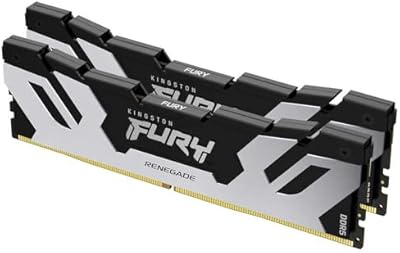
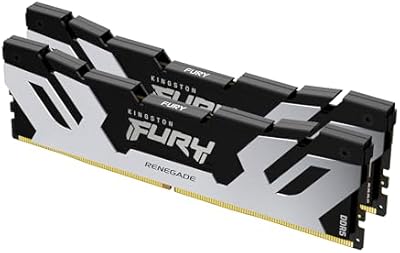
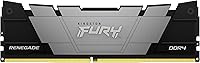
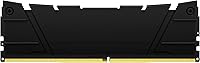
  • Heat Spreader: Features a dual-tone black aluminum heat spreader that aids thermal dissipation during extended, sustained workloads.
  • XMP Support: Intel XMP certified profiles allow the kit to reach its rated speed via a single BIOS toggle without manual timing adjustments.
  • AMD Support: Validated for AMD Ryzen AM4 platforms, making it compatible with Ryzen 3000 and 5000 series desktop builds.
  • Channel Support: Supports dual-channel mode on standard consumer boards and achieves full quad-channel bandwidth only on HEDT platforms such as Intel X-series or AMD Threadripper.
  • Color: All four modules are finished in black with no RGB lighting, suited to clean or understated build aesthetics.
  • Warranty: Covered by Kingston's lifetime warranty against manufacturing defects for the entire lifespan of the product.
  • Model Number: Official model number is KF436C16RB12K4/64, useful for cross-referencing against motherboard QVL compatibility lists.

Related Reviews
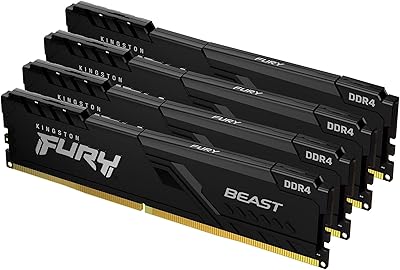
Kingston FURY Beast 64GB DDR4 Desktop RAM
85%
93%
Out-of-Box Compatibility
91%
Installation Ease
94%
Stability & Reliability
88%
XMP Profile Accuracy
58%
Overclocking Headroom
More
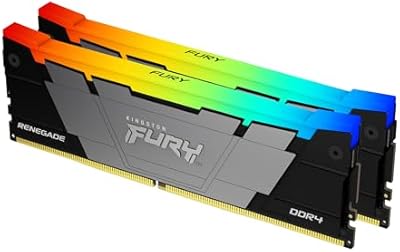
Kingston FURY Renegade RGB 64GB (2x32GB) 3200MT/s DDR4 Memory Kit
84%
88%
Performance
93%
Ease of Installation
75%
RGB Customization
81%
Heat Dissipation
89%
Build Quality
More
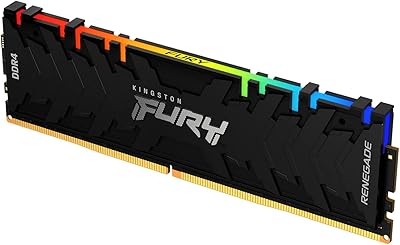
Kingston FURY Renegade RGB 32GB DDR4 RAM
82%
93%
Stability & Reliability
84%
Speed Performance
91%
XMP Setup Ease
78%
Single-Stick Flexibility
82%
RGB Lighting Quality
More
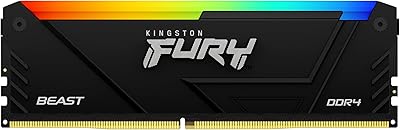
Kingston FURY Beast 32GB 3600MT/s DDR4 RGB Desktop Memory
87%
88%
Performance
93%
RGB Lighting Customization
91%
Ease of Installation
85%
Compatibility with AMD Ryzen
86%
Overclocking Potential (Intel XMP)
More
Kingston Fury Renegade DDR5 96GB RAM Kit
80%
91%
Raw Performance
86%
XMP Setup Ease
78%
Capacity Value
74%
Compatibility
83%
Thermal Management
More
Kingston FURY Beast 64GB (2x32GB) 3600MT/s DDR4 RGB Memory Kit
85%
91%
Performance
87%
RGB Aesthetics
92%
Ease of Installation
89%
Compatibility with Intel and AMD Systems
85%
Overclocking Stability
More
Kingston FURY Beast 128GB (4x32GB) 3600MT/s DDR4 Desktop Memory Kit
87%
94%
Performance
90%
Ease of Installation
92%
Compatibility with Intel and AMD Systems
75%
RGB Syncing
88%
Build Quality
More
Kingston Fury Renegade 16GB DDR4 RAM Kit
79%
91%
Performance at Rated Speed
62%
Value for Money
88%
Ease of Setup
74%
Platform Compatibility
92%
Stability & Reliability
More
Kingston FURY Renegade Silver 32GB DDR5 Memory
81%
91%
Raw Performance
88%
XMP Compatibility
86%
Build Quality
83%
Thermal Management
89%
Aesthetic Design
More
Kingston Fury Renegade 32GB DDR4 RAM Kit
82%
91%
XMP Setup Experience
88%
Speed Performance
86%
Stability & Reliability
63%
Value for Money
67%
AMD Compatibility
More

FAQ

It depends on your specific platform. This 64GB DDR4 kit is compatible with AMD Ryzen processors on AM4 motherboards, covering Ryzen 3000 and 5000 series CPUs. Ryzen 7000 on the AM5 platform uses DDR5 exclusively, so this kit will not work with those newer builds. If you are on AM4, enabling the XMP profile in BIOS should bring you to 3600MHz without any manual adjustments needed.

You need a board with four DIMM slots, which most standard ATX and many mATX boards provide. True quad-channel operation, however, only works on HEDT platforms like Intel X-series or AMD Threadripper. On a consumer Z790 or B650 board, four sticks still operate in dual-channel mode, which works fine but offers no bandwidth advantage over a well-matched two-stick setup.

For most gamers, not really. The majority of PC titles today peak at under 32GB of active RAM usage, so you would not see frame rate improvements by stepping up from 32GB. This capacity starts making sense if you frequently combine gaming with streaming, video capture, or memory-intensive creative work in the same session. For pure gaming performance, 32GB and a GPU upgrade will return more value.

After installing the modules, your system will likely boot at a slower JEDEC default speed such as 2133MHz or 2400MHz. To reach 3600MHz, enter your BIOS on first boot and enable the XMP profile — on AMD boards this may appear as EXPO. One setting change is all most users need, with no requirement to manually adjust individual timings or voltages.

In most cases, yes. Each module stands 1.69 inches tall, which clears the NH-D15 and most other popular large tower coolers without any issues. If you are running a particularly wide or unusually shaped cooler, check the clearance spec in your cooler's documentation before committing to the purchase.

No, this specific model does not include RGB lighting. It uses a clean dual-tone black aluminum heat spreader with no illumination whatsoever. Kingston does offer RGB variants in other FURY line products, but those are separate SKUs that may carry different speed and latency specifications.

Mixing RAM kits is generally not a good idea. Even modules sharing the same speed rating from the same brand can cause instability when combined with a different kit, and XMP profiles often fail to activate correctly in mixed configurations. For reliable performance, remove any existing sticks and run only the four modules from this kit together.

The speed and latency specs sit at the same tier, so the difference is purely available capacity. A 32GB kit handles virtually every gaming and general productivity task with headroom to spare. The extra 32GB only pays off if your workloads routinely push past 24-28GB of active RAM usage, such as large video editing timelines, heavy virtual machine setups, or memory-intensive 3D rendering sessions.

It covers manufacturing defects for the life of the product, which is a solid commitment for a memory kit at this price point. To file a claim, you typically need proof of purchase and the serial number printed on each module's label. Kingston handles warranty submissions through their official support portal, and their team is reachable by chat or phone if you need assistance.

Start by confirming XMP or EXPO is enabled in your BIOS, as most boards default to slower JEDEC speeds even with a high-speed kit installed. If XMP is already enabled and speeds are still off, verify that all four modules are fully seated and installed in the correct slots per your motherboard manual, since slot population order matters at higher speeds. As a final step, look up your board's QVL list and confirm that model number KF436C16RB12K4/64 is listed, as some motherboards have specific compatibility requirements at 3600MHz.