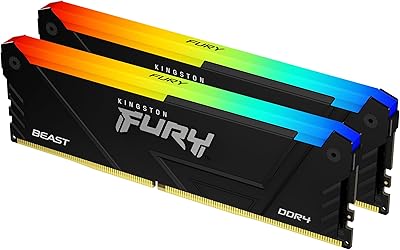
Overview

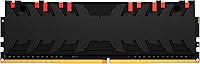
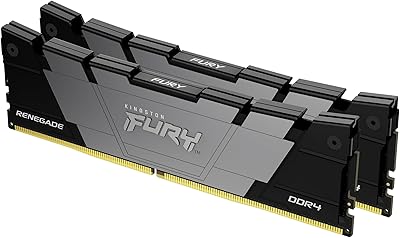
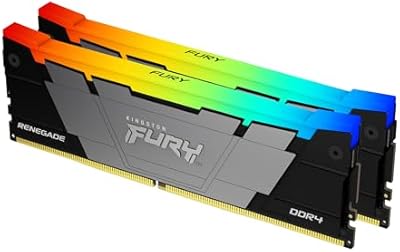
The Kingston FURY Renegade RGB 32GB DDR4 RAM is Kingston's enthusiast-grade answer for desktop builders who want serious capacity and speed without stepping into DDR5 territory yet. DDR5 attracts plenty of attention right now, but DDR4 at 3600MHz remains a cost-effective, capable choice for anyone still on an AM4 or LGA1700 platform — particularly when pairing with a mature, well-supported ecosystem. This FURY Renegade stick ships as a single 32GB module, which is actually a useful advantage: it fills one slot today and leaves room to drop in a matching stick later. Kingston's memory credentials are well established, and the FURY line sits firmly at the top of their consumer stack.
Features & Benefits

Running at 3600MHz with CL18 latency, this FURY Renegade stick delivers solid real-world performance in gaming and productivity workloads alike. The CL18 timing deserves an honest mention — a handful of competing kits from G.Skill or Corsair reach CL16 at similar speeds, which can matter in latency-sensitive scenarios. That said, Intel XMP certification makes configuration effortless: flip XMP on in the BIOS and the module self-configures to rated speed. Ryzen users should know AMD's platform officially uses EXPO, but XMP profiles load reliably on most Ryzen boards in practice. The 1.35V operating voltage runs cool and efficient, and Kingston's infrared RGB sync eliminates extra cables for lighting coordination.

Best For

This RGB memory kit is a strong fit for mid-to-high-end Intel or AMD desktop builds — especially gamers and content creators who need 32GB of headroom without committing to a full dual-channel kit upfront. Purchasing a single stick now and adding a matched second later is a practical, budget-conscious strategy that this module supports well. Builders already invested in the FURY ecosystem will appreciate how the RGB lighting coordinates with other FURY components. It also suits anyone who wants plug-and-play speed without touching manual BIOS overclocking settings. It is less ideal for those chasing peak memory latency or anyone building on a DDR5-capable platform from scratch.

User Feedback

Sitting at a 4.7-star average across roughly 440 ratings, the Kingston DDR4 module earns that score with consistent feedback around stable operation, clean RGB output, and effortless XMP activation. That said, the critical notes are worth reading carefully. Running a single stick places the system in single-channel mode until a second is added — a real bandwidth trade-off compared to a matched pair working in tandem. Some users also flag that RGB synchronization across boards may require Kingston's software running in the background, which not everyone finds acceptable. Compatibility issues are uncommon but do appear occasionally, so cross-referencing your motherboard's QVL list before purchasing is a practical step worth taking.

Pros

  • 3600MHz speed hits a sweet spot for DDR4 performance across both gaming and productivity tasks.
  • XMP certification makes one-click speed activation simple — no manual BIOS tinkering required.
  • A single 32GB stick preserves two open slots for future dual-channel upgrades on most boards.
  • Infrared RGB sync works across FURY components without requiring an additional sync cable.
  • Operating at 1.35V keeps thermals and power draw low, even during sustained workloads.
  • Compatibility with both Intel XMP and AMD Ryzen platforms covers a wide range of builds.
  • Kingston's manufacturing track record gives reasonable confidence in long-term module stability.
  • Buyers report clean, consistent RGB output that holds up well compared to pricier alternatives.
  • The FURY Renegade series carries a lifetime warranty, which adds meaningful long-term reassurance.
  • At 32GB in a single stick, there is genuine headroom for memory-hungry applications right out of the box.

Cons

  • CL18 latency at 3600MHz is not class-leading — competing kits offer CL16 at comparable speeds.
  • Running as a single stick means single-channel mode until a second module is added, which limits bandwidth.
  • RGB lighting synchronization may require Kingston software running in the background on some setups.
  • Occasional motherboard compatibility reports exist, so checking your board's QVL before buying is advisable.
  • DDR4 as a platform is maturing — buyers starting fresh builds should weigh whether DDR5 makes more long-term sense.
  • The RGB feature adds cost that buyers focused purely on performance metrics may not want to pay for.
  • Ryzen users should note that AMD's official standard is EXPO, not XMP — most boards handle it fine, but it is not guaranteed.
  • 440 ratings is a reasonable sample, but thinner than some rival kits with thousands of verified reviews to draw from.

Ratings

Our AI scoring system analyzed verified global buyer reviews for the Kingston FURY Renegade RGB 32GB DDR4 RAM, actively filtering out incentivized, duplicate, and bot-flagged submissions to surface genuine user sentiment. The scores below reflect both the consistent strengths buyers praise and the friction points that real users have reported in day-to-day use. Nothing has been smoothed over — where the module earns high marks, it earns them; where it falls short of expectations, that is reflected too.

Stability & Reliability
93%
Across hundreds of verified reviews, rock-solid daily operation is the single most consistent compliment this FURY Renegade stick receives. Users running it through extended gaming sessions, video rendering projects, and multi-tab workloads report no unexpected crashes or memory errors, even months into use. Kingston's manufacturing consistency is clearly a genuine strength here.
A small but non-trivial number of users report instability specifically when running at the rated 3600MHz without XMP enabled manually in the BIOS — a setup step that catches less experienced builders off guard. It is a configuration issue rather than a hardware defect, but it does generate some negative impressions among first-time builders.
Speed Performance
84%
At 3600MHz, this RGB memory kit lands in a well-regarded performance tier for DDR4, offering tangible gains over standard 2666MHz or 3200MHz modules in memory-bandwidth-sensitive applications like game loading, asset streaming, and video timeline scrubbing. For most desktop use cases, the speed advantage is real and noticeable.
The CL18 latency is the honest weak point in the performance story. Rival kits from G.Skill and Corsair deliver CL16 at comparable speeds, which translates to lower access latency in benchmarks and latency-sensitive workloads. For competitive users who run timed benchmarks or memory-heavy simulations, this gap is measurable rather than theoretical.
XMP Setup Ease
91%
Buyers consistently highlight how painless the XMP activation process is — enter the BIOS, select the XMP profile, save, and the module runs at full 3600MHz on the next boot. For builders who have previously wrestled with manual memory overclocking, this one-click approach removes a significant frustration from the build process.
A handful of users on AMD Ryzen platforms encounter minor confusion because Ryzen officially uses EXPO rather than XMP, and not all boards present the option identically in their BIOS interface. The profile still loads correctly on most Ryzen boards, but the terminology mismatch trips up less experienced AMD builders more often than it should.
Single-Stick Flexibility
78%
22%
Buying a single 32GB stick is a practical strategy for phased builds — users appreciate having a fully functional 32GB system immediately while keeping two slots free for a future matched pair. It is a smarter approach than buying a smaller dual-channel kit when a capacity upgrade is already planned.
The unavoidable trade-off is that running a single stick means operating in single-channel mode, which imposes a real bandwidth ceiling compared to dual-channel configurations. Users who did not anticipate this limitation report feeling misled when benchmarks show lower memory throughput than expected for a 3600MHz module.
RGB Lighting Quality
82%
18%
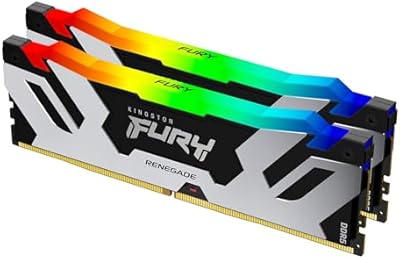
The infrared sync technology genuinely impresses users who have other FURY components in their build — lighting effects stay coordinated across devices without the messy daisy-chain cables that plague some competing RGB ecosystems. The LED diffusion through the heatspreader produces even, smooth lighting rather than harsh individual hotspots.
Customization beyond basic effects requires Kingston's FURY CTRL software running in the background, which some users find intrusive or resource-wasteful. A few buyers also note that synchronizing with non-Kingston RGB ecosystems, such as ASUS Aura or MSI Mystic Light, requires additional steps and is not always reliable.
AMD Ryzen Compatibility
76%
24%
The Kingston DDR4 module performs reliably on the majority of tested AM4 Ryzen boards, including popular models from ASUS, MSI, and Gigabyte. Most users report that enabling the XMP profile on Ryzen simply works, with no need for manual timing adjustments or voltage tweaking beyond the profile itself.
Because AMD's official overclocking standard is EXPO rather than XMP, compatibility is board-dependent rather than guaranteed. A subset of users — particularly those on older or budget AM4 boards — report that the module defaults to lower JEDEC speeds and requires manual sub-timing adjustments to run stably at 3600MHz.
Heatspreader & Thermals
88%
The FURY Renegade's aluminum heatspreader does its job without drama — module temperatures stay well within safe operating ranges even during extended rendering or gaming sessions, and the 1.35V operating voltage keeps heat generation low compared to higher-voltage DDR4 kits that push 1.4V or beyond.
The heatspreader height, while within standard DDR4 DIMM dimensions, can cause clearance issues with particularly wide tower air coolers in some mid-tower cases. It is not a common problem, but users with large coolers like the Noctua NH-D15 should verify slot and cooler clearance before assuming a clean fit.
Build & Physical Quality
89%
Buyers who handle the module in person frequently comment on how solid and premium it feels compared to budget DDR4 sticks — the heatspreader finish is clean, the PCB shows no rough edges, and the RGB diffuser integrates neatly rather than looking tacked on as an afterthought.
There is no meaningful criticism of physical build quality in the review pool, but a few users note the heatspreader is non-removable, which limits low-profile use cases if someone wanted a smaller thermal solution for a compact ITX build where height clearance is tighter than average.
Value for Money
73%
27%
For buyers who specifically want a single 32GB DDR4 stick with RGB, Intel XMP certification, and Kingston's lifetime warranty backing, the price sits at a fair point in the premium DDR4 tier. The lifetime warranty alone is a meaningful long-term benefit that cheaper alternatives do not always offer.
Users who compare this module directly against non-RGB or no-frills DDR4 alternatives find the premium harder to justify on raw performance metrics alone. Given that CL16 competing kits exist at similar price points, buyers paying partly for the RGB aesthetic should go in with eyes open rather than expecting a performance-per-dollar lead.
Motherboard Compatibility
81%
19%
The module is widely compatible with mainstream DDR4 desktop boards across Intel and AMD platforms, and Kingston maintains a thorough online compatibility checker that makes pre-purchase verification straightforward. Most users experience no compatibility issues whatsoever when buying for a supported platform.
Isolated but recurring compatibility reports exist for certain older or budget motherboards that struggle to post cleanly at 3600MHz without manual intervention. The 440-rating sample size, while respectable, is not large enough to map every edge-case board interaction with full confidence.
Packaging & Unboxing
77%
23%
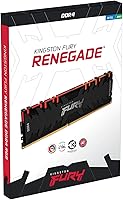
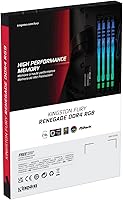
The module arrives in a clean, protective retail package that holds up well during shipping — buyers rarely report physical damage on arrival, and the packaging presents the product in a way that feels appropriate for a premium-tier memory product rather than a generic blister pack.
The packaging does not include any installation guide beyond the most basic reference card, which can leave first-time builders without clear guidance on enabling XMP or understanding single-versus-dual channel slot configuration. A more informative insert would reduce setup confusion noticeably.
Software & Ecosystem
67%
33%
For users already invested in the Kingston FURY ecosystem, the FURY CTRL software provides a unified interface for RGB customization and profile management. The infrared sync concept is genuinely clever for keeping multiple FURY components visually coordinated without physical sync cables cluttering the build.
The software itself receives mixed feedback — some users describe it as functional but uninspiring compared to the polished interfaces of Corsair iCUE or ASUS Aura Sync. Others simply resent needing background software to unlock full RGB functionality, particularly on systems where background process count is actively managed.
Long-Term Durability
86%
The lifetime warranty is the strongest durability signal Kingston offers, and the FURY lineup has a long track record of sustained reliability across thousands of builds. Users who have owned Kingston memory for years consistently return to the brand based on positive long-term experience rather than marketing alone.
Because this specific module launched in 2021, the long-term field data at extreme DDR4 end-of-life conditions is still accumulating. Most durability concerns in the review pool are speculative rather than based on observed failure rates, but it remains a younger track record than some rival products with deeper historical data.

Suitable for:

The Kingston FURY Renegade RGB 32GB DDR4 RAM is a well-matched choice for PC builders and gamers who are firmly planted on DDR4 platforms — whether that is Intel's LGA1700 or AMD's AM4 — and want a large single-stick capacity without the cost or platform commitment of DDR5. It makes particular sense for anyone doing a phased build: drop in this 32GB stick now to get the system running, then add a matched second stick down the line to unlock dual-channel bandwidth. Content creators who need memory headroom for video editing, 3D rendering, or large project files will find 32GB at 3600MHz more than adequate for most DDR4-era workloads. Buyers already using Kingston FURY components — coolers, SSDs, or other memory — will appreciate how the infrared RGB sync keeps lighting consistent without extra software overhead. Those who value plug-and-play simplicity over manual tuning will find the XMP certification a genuine time-saver.
Not suitable for:

The Kingston FURY Renegade RGB 32GB DDR4 RAM is not the right call for builders starting a new platform from scratch, especially if DDR5-capable motherboards and processors are on the table — the long-term value proposition of DDR4 narrows considerably on a fresh build in 2024 and beyond. Competitive overclockers or enthusiasts chasing the lowest possible memory latency should also look elsewhere, since the CL18 timing at 3600MHz leaves room for improvement when compared to CL16 alternatives from G.Skill or Corsair at similar price points. Anyone hoping to run dual-channel performance from day one will be disappointed — this is a single stick, and single-channel mode carries a measurable bandwidth penalty in memory-sensitive workloads. Users who dislike background software dependencies may find the RGB synchronization feature more of a nuisance than a perk. Finally, system integrators or IT buyers stocking multiple machines will find better value in no-frills ECC or value DDR4 options rather than paying a premium for RGB aesthetics they do not need.

Specifications

  • Capacity: This module provides 32GB of DDR4 SDRAM in a single stick configuration.
  • Memory Type: Uses DDR4 SDRAM technology, compatible with DDR4-supporting desktop motherboards.
  • Speed: Operates at a rated clock speed of 3600MHz under XMP profile activation.
  • Latency: CL18 primary latency timings apply when running at the rated 3600MHz speed.
  • Voltage: Runs at 1.35V, which is within standard DDR4 low-voltage operating parameters.
  • Form Factor: Standard DIMM form factor designed exclusively for desktop motherboard memory slots.
  • XMP Support: Intel XMP certified profiles allow automatic speed configuration directly through supported BIOS settings.
  • AMD Support: Compatible with AMD Ryzen platforms, though Ryzen officially uses EXPO rather than XMP natively.
  • RGB Lighting: Features customizable RGB lighting synchronized via Kingston's patented infrared technology without a physical sync cable.
  • Dimensions: Each stick measures 5.25 x 0.31 x 1.66 inches, fitting standard full-size ATX and mid-tower cases.
  • Weight: The module weighs 2.29 ounces, consistent with a standard full-height DDR4 DIMM with a heatspreader.
  • Model Number: Official Kingston model number is KF436C18RBA/32, used for warranty registration and compatibility verification.
  • Series: Part of the Kingston FURY Renegade DDR4 RGB lineup, sitting at the top of Kingston's consumer memory range.
  • Launch Year: This module was first made available in July 2021 and remains an active product in Kingston's catalog.
  • Warranty: Kingston covers this module with a lifetime warranty, which is standard across the FURY memory product family.

Related Reviews

Kingston Fury Renegade 32GB DDR4 RAM Kit
82%
91%
XMP Setup Experience
88%
Speed Performance
86%
Stability & Reliability
63%
Value for Money
67%
AMD Compatibility
More
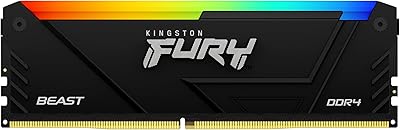
Kingston FURY Beast 32GB 3600MT/s DDR4 RGB Desktop Memory
87%
88%
Performance
93%
RGB Lighting Customization
91%
Ease of Installation
85%
Compatibility with AMD Ryzen
86%
Overclocking Potential (Intel XMP)
More
Kingston FURY Renegade RGB 64GB (2x32GB) 3200MT/s DDR4 Memory Kit
84%
88%
Performance
93%
Ease of Installation
75%
RGB Customization
81%
Heat Dissipation
89%
Build Quality
More
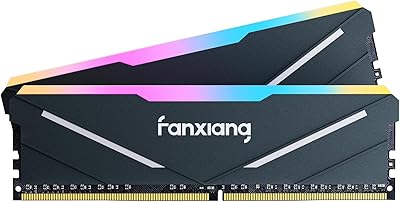
fanxiang RGB DDR4 32GB 3600MHz RAM
80%
88%
Value for Money
91%
Installation Ease
79%
XMP & BIOS Compatibility
82%
Gaming Performance
84%
RGB Aesthetics
More
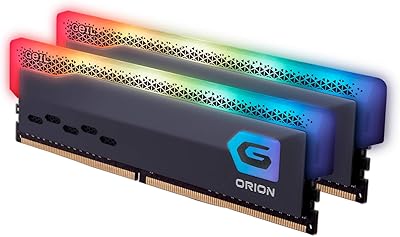
GeIL Orion RGB DDR4 RAM 32GB (2x16GB) 3600MHz
88%
92%
Gaming Performance
89%
RGB Customization
88%
Ease of Installation
87%
Value for Money
85%
Multitasking Performance
More
fanxiang RGB DDR4 32GB Desktop RAM
76%
91%
Value for Money
88%
Installation Ease
79%
XMP Performance
83%
RGB Lighting Quality
54%
RGB Software Integration
More
Kingston Fury Renegade 64GB DDR4 Desktop Memory
81%
88%
Raw Performance
62%
Value for Money
74%
Compatibility
91%
Ease of Setup
89%
Stability & Reliability
More
Kingston FURY Renegade RGB 32GB DDR5 Kit
78%
91%
XMP Setup Experience
88%
Stability & Reliability
86%
Real-World Performance
83%
RGB Lighting Quality
81%
RGB Sync Reliability
More
Kingston FURY Beast 64GB (2x32GB) 3600MT/s DDR4 RGB Memory Kit
85%
91%
Performance
87%
RGB Aesthetics
92%
Ease of Installation
89%
Compatibility with Intel and AMD Systems
85%
Overclocking Stability
More
Kingston Fury Renegade 16GB DDR4 RAM Kit
79%
91%
Performance at Rated Speed
62%
Value for Money
88%
Ease of Setup
74%
Platform Compatibility
92%
Stability & Reliability
More

FAQ

It works with both, though there is a small nuance worth knowing. AMD Ryzen platforms officially use EXPO for memory overclocking profiles, while this stick uses Intel XMP. In practice, most Ryzen motherboards will read and apply the XMP profile without issue, but it is worth double-checking your specific board's compatibility list to be sure.

No — a single stick always runs in single-channel mode regardless of the speed or capacity. You will need a second matched stick installed in the correct paired slot on your motherboard to unlock dual-channel bandwidth. If that matters to your workload, consider buying two sticks from the start.

For existing DDR4 platforms, 3600MHz is genuinely a strong operating point — it sits near the bandwidth sweet spot for both Intel and AMD Ryzen DDR4 systems without pushing timings too aggressively. If you are building on a brand-new DDR5-capable platform, the calculation changes, and DDR5 likely makes more long-term sense. But for anyone already on a DDR4 board, this is not a compromise purchase.

The module ships running at JEDEC standard speeds — typically 2133MHz or 2400MHz — until you enable XMP in your BIOS. Go into your BIOS settings, find the XMP or memory profile option, select Profile 1, save, and reboot. That is all it takes to hit the rated 3600MHz speed.

CL18 at 3600MHz is competitive but not class-leading. Some alternatives, particularly from G.Skill and Corsair, offer CL16 at similar speeds. For gaming, the real-world difference is usually small. For latency-sensitive workloads or competitive benchmarking, tighter timings do matter more, so it is worth factoring in if that is your priority.

The RGB lighting functions out of the box without any software, but customizing effects or syncing with other components typically requires Kingston's FURY CTRL software. Some users find running background software acceptable; others would rather avoid it. If software-free RGB is important to you, factor that into your decision.

Yes, and that is actually one of the more practical aspects of this module. As long as you buy the same model — the Kingston FURY Renegade RGB 32GB DDR4 RAM at the same speed and timings — and install it in the correct paired slot, your system will run dual-channel. Just verify your board's slot pairing layout in the manual before installing.
The safest approach is to check Kingston's online compatibility tool at their website, where you can search by motherboard model. You should also cross-reference your motherboard manufacturer's Qualified Vendor List, commonly called a QVL. The vast majority of modern DDR4 boards handle this module without issue, but checking first avoids any unpleasant surprises.

At 1.66 inches tall, this stick is within normal DDR4 DIMM height range, but larger tower-style air coolers can overhang the first memory slot on some boards. Check your CPU cooler's clearance specifications — most manufacturers list this — and if your cooler is particularly wide, seat your RAM in the outer slots first and verify clearance before finalizing the build.

Kingston backs this module with a lifetime warranty, which is one of the stronger commitments in the consumer memory space. If the module fails, Kingston's support process generally involves contacting them directly, providing proof of purchase, and going through their RMA process. Kingston has a long-standing reputation for honoring these claims without excessive friction, which is worth factoring into the overall value assessment.

Where to Buy