Overview

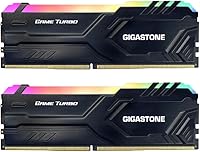
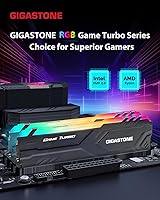
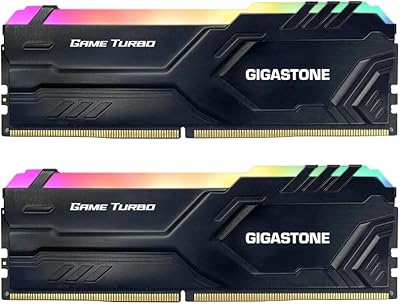
The Gigastone Game Turbo 32GB DDR4 RAM is a dual-channel memory kit aimed squarely at desktop builders who want solid performance without paying flagship prices. It arrived in mid-2023 and has quietly built a respectable reputation, sitting at #88 in Computer Memory with a 4.6-star average across nearly 450 ratings. That's not bad for a brand most people outside the PC building community wouldn't immediately recognize. The two 16GB sticks run at DDR4 3200MHz with RGB lighting on each module — enough visual personality to look good in a windowed case without requiring you to spend extra on a well-known name.
Features & Benefits

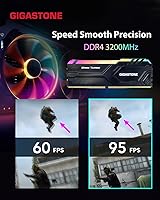
The 3200MHz clock speed with CL16-18-18-40 timings is a practical sweet spot for gaming — not the tightest latency you can buy, but genuinely capable for titles like open-world RPGs or shooters where memory bandwidth matters more than nanosecond differences. What makes this DDR4 memory upgrade particularly easy to set up is XMP 2.0 support — essentially a pre-configured profile you enable in your BIOS with one click, so the kit runs at its rated speed without any manual tuning. It works on both Intel and AMD Ryzen platforms, and at 1.35V it draws less power and runs cooler than older, higher-voltage sticks. Standard 288-pin UDIMM compatibility means it slots into virtually any modern desktop motherboard without fuss.

Best For

This Gigastone RAM kit makes the most sense for someone building or upgrading a mid-range gaming desktop without a big memory budget. If you're still running 16GB and finding that newer games are chewing through it — particularly anything with large open worlds or background multitasking — jumping to 32GB dual-channel here is a reasonable move. It suits Intel 10th and 12th Gen platforms equally well, and Ryzen users will find the XMP profile fires up cleanly in most cases. It's worth noting that DDR4 is a mature standard; DDR5 systems are increasingly common. But if your board is DDR4, this kit offers solid value per gigabyte without the cost premium of brands like Corsair Vengeance or G.Skill Trident Z.

User Feedback

With nearly 450 ratings and a 4.6-star score, the feedback on these gaming memory sticks is broadly positive — and notably consistent. Most buyers highlight hassle-free installation and the fact that XMP kicked in without any BIOS wrestling. The RGB comes up often too, with people calling it bright and evenly lit, which matches the product photos closely. On the downside, a handful of users recommend double-checking your motherboard's QVL list before buying, particularly if you're running an older or budget board. The brand's relative obscurity also comes up, though buyers generally conclude that real-world stability has held up over time. Given the review count is still modest, the picture is encouraging but not yet as thoroughly battle-tested as kits from more established names.

Pros

  • 32GB in dual-channel mode handles modern gaming titles and background multitasking without breaking a sweat.
  • One-click XMP 2.0 support makes hitting rated speeds straightforward, even for first-time builders.
  • Works reliably on both AMD Ryzen and Intel platforms, so it's not locked to one ecosystem.
  • The 1.35V operating voltage keeps thermals and power draw lower than older higher-voltage DDR4 modules.
  • RGB lighting is bright and evenly diffused — it genuinely looks good in a windowed case.
  • At this price tier, the cost per gigabyte is competitive compared to branded alternatives.
  • Installation is plug-and-play for most standard desktop motherboards with no adapter or extra hardware needed.
  • A 4.6-star average across nearly 450 ratings suggests consistent build quality and low failure rates.
  • The black heatspreader design is understated enough to fit builds without clashing with other components.
  • Buyers report that real-world stability holds up well over time, despite the brand being lesser known.

Cons

  • Gigastone is not a household name in PC memory, so long-term brand support and warranty experience are less proven.
  • The review count, while positive, is still modest compared to kits from Corsair or G.Skill with thousands of ratings.
  • CL16-18-18-40 timings are fine for most users but won't satisfy anyone hunting ultra-tight latency for competitive play.
  • DDR4 is a maturing standard — buyers planning a platform upgrade soon may find this kit obsolete sooner than expected.
  • A small number of users report needing to verify motherboard QVL compatibility, particularly on older or budget boards.
  • No ECC support makes it unsuitable for workstation or data-integrity-sensitive use cases.
  • The RGB ecosystem may not integrate with all motherboard lighting control software, limiting customization for some users.
  • Limited independent long-term reliability data exists compared to more established brands with decades of track records.

Ratings

The scores below for the Gigastone Game Turbo 32GB DDR4 RAM were generated by our AI engine after analyzing verified purchase reviews from buyers worldwide, with spam, bot-submitted, and incentivized feedback actively filtered out. Each category reflects a genuine synthesis of what real users praised and where they ran into friction. Both the strengths and the honest shortcomings are represented transparently so you can make a confident buying decision.
Value for Money
88%
For mid-range desktop builders, the cost-per-gigabyte on this DDR4 kit is genuinely competitive against better-known brands at the same speed tier. Buyers repeatedly note that they got performance nearly identical to pricier alternatives without paying the brand premium — a meaningful win when stretching a build budget.
As DDR5 platforms become more mainstream, the long-term value case for DDR4 investment weakens slightly for users who might upgrade their platform in a year or two. The price advantage also narrows when DDR5 kits go on sale, making the value equation less clear-cut than it once was.
Installation Ease
91%
The vast majority of buyers report a completely frictionless setup experience — sticks seat cleanly, the system posts without issue, and the XMP profile is detected immediately. For first-time builders especially, not having to wrestle with BIOS settings manually is a genuine relief.
A small but consistent group of users with older or entry-level motherboards found they had to manually verify slot compatibility or update BIOS firmware before the kit was recognized correctly. It is not a widespread problem, but it catches enough people off guard to be worth flagging.
XMP Performance
86%
Enabling XMP 2.0 — essentially flipping one switch in the BIOS — reliably brings the kit to its rated 3200MHz speed without any manual intervention. Users on both Intel and Ryzen platforms report that the profile loads cleanly and the system runs stably at rated speed without crashes or resets.
The CL16-18-18-40 timings, while adequate for everyday gaming, leave some headroom on the table compared to enthusiast kits with tighter sub-timings at the same speed. Power users who care about memory latency benchmarks will notice the gap against premium CL14 or CL15 options.
Gaming Performance
83%
Running at 3200MHz in dual-channel mode gives modern gaming titles the bandwidth they need for smooth frame delivery, particularly in open-world games and titles with large streaming assets. Users upgrading from a single 16GB stick report an immediately noticeable improvement in responsiveness.
For competitive players who live and die by frame timing consistency, the latency profile of this kit is merely solid rather than exceptional. Games that are particularly memory-sensitive — certain strategy titles or emulators — may show a small but measurable gap compared to higher-binned alternatives.
RGB Lighting Quality
84%
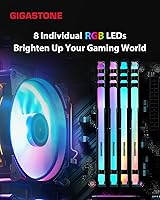
Buyers consistently describe the RGB as brighter and more evenly diffused than they expected for a kit in this price range. The eight LEDs per module produce a smooth, well-lit bar effect that looks polished through a windowed side panel and holds up well during color cycle animations.
Deep software integration with motherboard RGB ecosystems like Asus Aura Sync or MSI Mystic Light is not guaranteed, which limits customization options for users who want their memory lighting to sync with the rest of their build. Default cycle modes work fine, but advanced control is hit or miss.
Build & Heatspreader Quality
79%
21%
The black aluminum heatspreader feels solid and uniform, with no flex or rattling in the translucent RGB diffuser strip. For a mid-range kit, the physical construction looks and feels a step above the bare-board modules found at lower price points.
Compared to the thick, machined heatspreaders on flagship kits from G.Skill or Corsair, the finish here reads as functional rather than premium. A few buyers noted minor surface marks out of the box, which is cosmetically minor but noticeable when scrutinized up close under case lighting.
Thermal Performance
81%
19%
Operating at 1.35V keeps heat generation meaningfully lower than older 1.5V DDR4 modules, and the aluminum heatspreader does its job under normal gaming loads without throttling or instability. In well-ventilated mid-tower cases, thermals are essentially a non-issue.
The heatspreader is not thick enough to handle sustained workstation-level memory stress for extended periods in poorly ventilated cases without temperatures creeping up. It is a consumer gaming kit, not a workstation module, and should be treated as such.
Compatibility Range
74%
26%
The kit covers a broad range of platforms well — modern Intel 10th, 11th, and 12th Gen systems alongside current Ryzen 5000 and 7000-series DDR4 boards are all supported without any special configuration. For the vast majority of desktop builds from 2020 onward, compatibility is straightforward.
Older budget motherboards from the pre-2019 era require closer scrutiny, and a handful of users have needed to cross-reference their board's QVL list before installation. DDR5-only platforms are completely excluded, which is an increasingly relevant constraint as newer chipsets launch.
Brand Reliability
71%
29%
Despite being a lesser-known name in the memory market, the field data paints a reassuring picture — the defect rate appears low based on review patterns, and long-term stability reports from buyers who have been running the kit for six months or more are broadly positive.
Gigastone simply does not have the decades of brand history that Corsair or Kingston carry, and independent long-term reliability studies covering this specific product are scarce. Buyers who factor in brand trust as a major purchase criterion may reasonably feel more comfortable paying more elsewhere.
Multitasking Headroom
85%
Jumping to 32GB makes a real-world difference for users who game while streaming to Twitch, run virtual machines, or keep dozens of browser tabs open alongside their games. The capacity headroom means the system stops reaching for the pagefile in situations where a 16GB setup would visibly stutter.
For users whose workloads sit comfortably within 16GB — casual gaming, light content consumption, basic productivity — the extra capacity sits idle and the upgrade benefit is harder to justify. It is very much a forward-looking capacity investment rather than an immediate performance unlock for light users.
Packaging & Unboxing
72%
28%
The kit ships in a compact clamshell-style blister that keeps both modules secure during transit, and buyers report that units arrive without physical damage in the great majority of cases. The presentation is clean and functional for the price tier.
There is nothing particularly impressive about the unboxing experience compared to premium brands that use collector-style boxes or include branded accessories. For a gift build or showcase PC, the packaging feels budget-tier and does not add to the excitement of the build.
Documentation & Support
63%
37%
Basic installation guidance is included, and Gigastone's website provides general support resources for its product lines. For buyers who are comfortable with standard DDR4 installation and BIOS navigation, the included materials cover the essentials adequately.
The support infrastructure is noticeably thinner than what established memory brands offer — community forums, detailed compatibility databases, and responsive customer service are not strengths here. Users who run into edge-case compatibility issues may find troubleshooting resources limited compared to Corsair or G.Skill.
Dual-Channel Stability
87%
The matched pair configuration is factory-validated, and user reports of dual-channel instability or mismatched module behavior are rare. Running both sticks in the recommended paired slots produces stable, consistent dual-channel bandwidth that aligns with the advertised specs.
A small number of users report that one stick was occasionally not recognized on first boot until reseated, which is not unique to this brand but is worth noting. It resolved itself quickly in most cases and appears to be an edge-case rather than a systemic defect.

Suitable for:

The Gigastone Game Turbo 32GB DDR4 RAM is a practical choice for desktop PC builders who want a meaningful memory upgrade without stretching their budget toward premium brands. It suits anyone currently running 16GB who's noticing slowdowns in modern open-world games, video editing applications, or heavy browser multitasking — 32GB in dual-channel mode gives those workloads noticeably more breathing room. Ryzen-based builds and Intel 10th or 12th Gen systems are both well-served here, and the one-click XMP profile means even less experienced builders can get the kit running at its rated speed without touching manual BIOS settings. If you're building a mid-range gaming rig with a windowed case and want RGB that actually looks good without paying a premium for it, this kit delivers that too. It's also a reasonable pick for students or home office users running demanding productivity software alongside gaming on the same machine.
Not suitable for:

The Gigastone Game Turbo 32GB DDR4 RAM is not the right call for buyers who are building or upgrading on a DDR5-compatible platform, since DDR4 and DDR5 are not interchangeable — if your motherboard supports DDR5, this kit simply won't fit. Competitive gamers chasing the absolute lowest memory latency will also find better options among higher-end kits with tighter sub-timings, since the CL16-18-18-40 profile, while solid for general use, isn't tuned for maximum competitive edge. Workstation users who need error-correcting memory for data-sensitive tasks like scientific computing or financial modeling should look elsewhere, as this is a non-ECC kit by design. Buyers with older budget motherboards should verify compatibility before purchasing, since a small number of users have reported needing to cross-reference their board's supported memory list. Finally, anyone who prioritizes buying from well-established, long-track-record memory brands may prefer sticking with names like Corsair or G.Skill, even if it costs more.
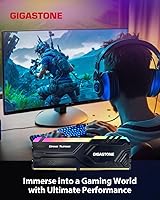
Specifications

  • Total Capacity: The kit provides 32GB of total memory across two 16GB DDR4 UDIMM modules designed for dual-channel operation.
  • Memory Type: Both modules use DDR4 SDRAM technology, the standard for most desktop platforms released between 2015 and 2023.
  • Clock Speed: The modules are rated at 3200MHz (PC4-25600), delivering a practical balance of bandwidth and everyday responsiveness for gaming workloads.
  • CAS Latency: Primary timings are set at CL16-18-18-40, which represents a solid mid-range latency profile suitable for gaming and general desktop use.
  • Operating Voltage: Each module operates at 1.35V, running cooler and drawing less power than older DDR4 sticks rated at 1.5V.
  • Form Factor: Both sticks use the standard 288-pin Unbuffered UDIMM form factor compatible with the vast majority of consumer desktop motherboards.
  • ECC Support: These are non-ECC modules, meaning they do not include error-correcting memory circuitry and are intended for consumer desktop use only.
  • XMP Profile: Intel XMP 2.0 is supported, allowing the kit to reach its rated 3200MHz speed via a single BIOS toggle without manual timing adjustments.
  • AMD Compatibility: The kit is explicitly validated for AMD Ryzen platform compatibility, in addition to supporting Intel-based desktop systems.
  • RGB Lighting: Each module features 8 individually addressable RGB LEDs housed within a translucent light bar running along the top of the heatspreader.
  • Heatspreader: A black aluminum heatspreader covers both modules, providing basic thermal dissipation and a clean aesthetic for windowed case builds.
  • Module Count: The kit ships as a matched pair of two 16GB sticks, factory-tested together to ensure dual-channel compatibility.
  • Pin Count: Each module uses the standard 288-pin configuration required for all DDR4 desktop memory slots.
  • Kit Weight: The complete two-module kit weighs approximately 2.08 ounces, consistent with standard DDR4 UDIMM modules with heatspreaders.
  • Module Dimensions: Each stick measures approximately 6.02″ x 0.59″ in length and height, fitting standard ATX and mid-tower clearance requirements in most cases.
  • Release Date: This memory kit became available in July 2023, positioning it as a relatively recent DDR4 release as the platform matured.
  • Bestseller Rank: As of the most recent data, the kit holds the #88 position in Amazon's Computer Memory category with a 4.6-star average rating.
  • Manufacturer: The kit is designed and sold by Gigastone, a consumer electronics brand that also produces storage and mobile accessories.

Related Reviews
Gigastone Game TURBO 16GB DDR4 Desktop RAM
74%
88%
Value for Money
91%
Installation Ease
86%
XMP Activation
78%
RGB Lighting Quality
54%
RGB Software Compatibility
More
Gigastone Game Turbo 64GB Kit DDR4 RAM
77%
88%
Value for Money
84%
Performance at Speed
91%
XMP Setup Ease
87%
Stability & Reliability
82%
Platform Compatibility
More
Gigastone Game PRO 64GB DDR4 RAM Kit
77%
91%
Value for Money
88%
Installation Experience
86%
XMP Performance
83%
Stability & Reliability
79%
Build Quality
More
Gigastone Game PRO 32GB DDR4 RAM Kit
77%
93%
Value for Money
91%
Installation Ease
88%
XMP Performance Stability
82%
Platform Compatibility
76%
Build & Module Quality
More
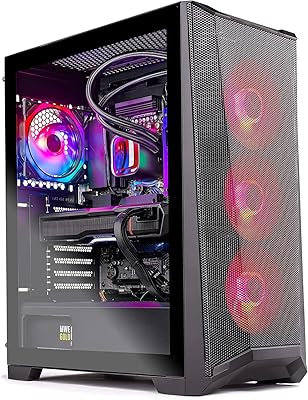
Skytech Gaming Azure 3 Gaming PC, AMD Ryzen 7 5700, NVIDIA RTX 5060, 32GB RAM, 1TB SSD
87%
92%
Performance
94%
Graphics Quality
89%
Multitasking Performance
91%
Ease of Setup
88%
Cooling System
More
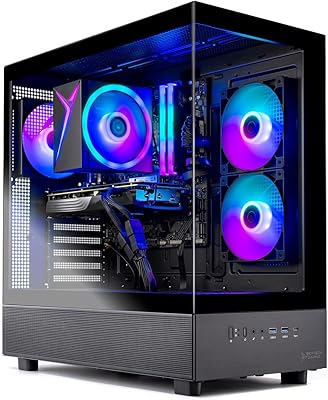
Skytech Chronos II RTX 4070 Gaming Desktop
76%
88%
Gaming Performance
83%
Thermal Management
79%
Build Quality
71%
Value for Money
91%
Out-of-Box Experience
More
Skytech Gaming Azure 3 Gaming Desktop
78%
88%
Gaming Performance
76%
Value for Money
92%
Setup Experience
83%
Build Quality
72%
Thermal Management
More
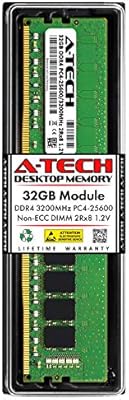
A-Tech 32GB DDR4 3200MHz Desktop RAM
81%
91%
Installation Ease
74%
System Compatibility
83%
Performance at Rated Speed
86%
Value for Money
82%
Long-term Reliability
More
Wlizedle DDR4 3200MHz 32GB Desktop RAM Kit
79%
91%
Value for Money
88%
Installation Ease
74%
XMP & BIOS Compatibility
83%
System Performance Impact
81%
Thermal Performance
More
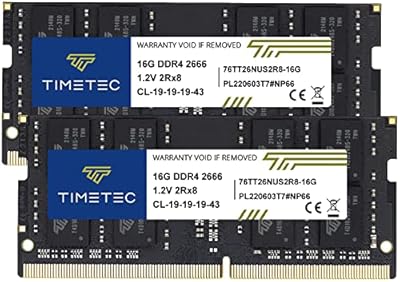
Timetec 32GB Kit (2x16GB) DDR4 2666MHz SODIMM
83%
91%
Value for Money
78%
Compatibility
93%
Installation Experience
82%
Performance Impact
87%
Long-Term Reliability
More

FAQ

Yes, the kit is explicitly listed as Ryzen-compatible. Most modern Ryzen motherboards will recognize the XMP profile automatically, though it's always worth checking your board's memory support list (QVL) if you're using an older or budget model.

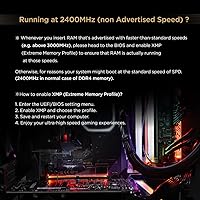
XMP stands for Extreme Memory Profile — it's basically a pre-set configuration stored on the memory stick that tells your motherboard exactly how to run it at full speed. Without enabling it in your BIOS, the kit will default to a slower speed like 2133MHz or 2400MHz. You just go into your BIOS on startup, find the XMP or DOCP setting, and switch it on. It takes about 30 seconds.

You can use a single 16GB stick if needed, but you'll get noticeably better performance with both installed in the correct dual-channel slots. Check your motherboard manual for the right slot configuration — typically that means slots 2 and 4, not 1 and 2.

No. DDR4 and DDR5 modules use different physical slots and are not interchangeable. If your motherboard supports DDR5, you'll need DDR5 memory. Make sure to confirm which generation your board supports before purchasing.

In terms of raw specs — speed, timing, voltage — the kits are broadly comparable at 3200MHz CL16. The main difference is brand heritage: Corsair and G.Skill have much larger track records and more extensive user communities. Gigastone's ratings suggest it performs reliably, but if long-term brand confidence matters to you, the established names offer more peace of mind.

It depends on your motherboard. The LEDs will always light up and cycle through colors by default, but full software control (syncing with Asus Aura, MSI Mystic Light, etc.) may not be supported on all boards. If deep RGB integration is a priority, confirm compatibility with your specific motherboard brand before buying.

For most gaming alone, 16GB still gets the job done, but 32GB becomes worthwhile if you multitask heavily while gaming — streaming, running Discord, having a browser open with multiple tabs, or playing memory-hungry titles like flight simulators or large open-world games. It also gives your system more runway as game requirements keep climbing.

Gigastone typically backs its memory products with a limited lifetime warranty, though you should confirm current warranty terms directly with Gigastone or the retailer at the time of purchase, as specific coverage details can vary by region.

Each module is approximately 0.59″ tall from the slot, which is on the slimmer side for a heatspreader-equipped DDR4 kit. Clearance conflicts with large CPU coolers are unlikely, but if you're running an oversized air cooler, check the cooler's RAM clearance spec just to be sure.

No drivers are needed. RAM is plug-and-play at the hardware level. The only step most people miss is enabling XMP in the BIOS after installation — without that, the kit runs slower than its rated speed. Outside of that one setting, there's nothing else to configure.

Where to Buy